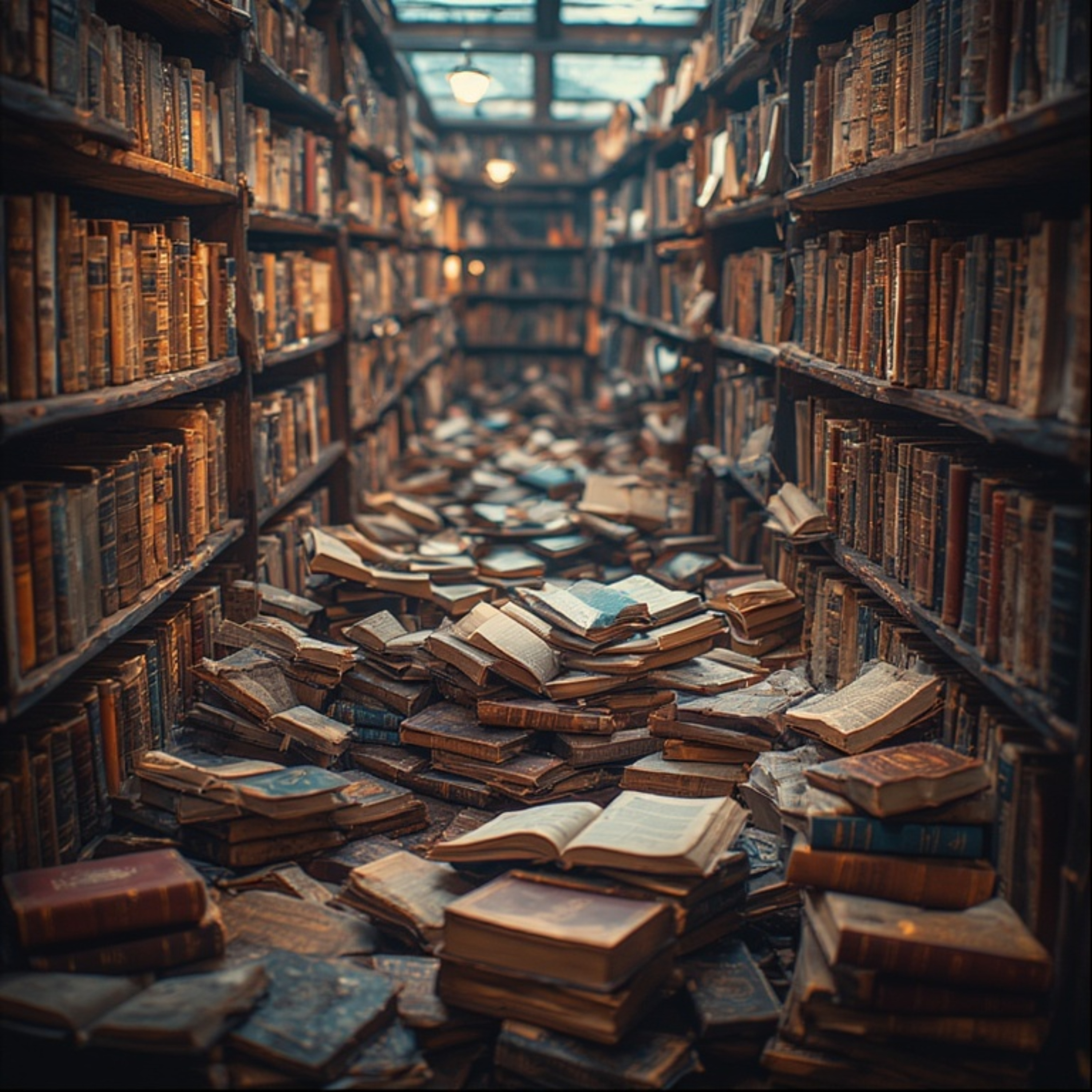
⚔️ To Green Angel Tower Part 1 by Tad Williams | The Storm King Rises Explained🏰🔥
About this episode
The final battle for Osten Ard is approaching—and the fate of the kingdom may depend on a young man who once worked in a castle kitchen. 🏰🔥Tad Williams' To Green Angel Tower brings the Memory, Sorrow, and Thorn trilogy toward its massive conclusion. Simon, once an ordinary kitchen boy, has been transformed by war, magic, and the mysterious power of dragon blood.But the kingdom faces an enemy unlike any it has known. The undead Storm King is gathering his forces, while King Elias has betrayed his own people and fallen under dark influences. ☠️👑With Osten Ard threatened by supernatural forces and political treachery, Simon and his allies must find the three legendary swords capable of giving them a chance against the coming darkness.📖 In this deep dive, we explore:⚔️ Simon's transformation from kitchen boy to hero🐉 The mysterious power of dragon blood☠️ The rising threat of the Storm King👑 King Elias and his terrible betrayal🗡️ The three legendary swords🏰 The struggle for Osten Ard🔥 The culmination of The Dragonbone Chair and Stone of Farewell🌑 The final confrontation between ancient powers💀 The kingdom is collapsing, the dead are rising, and an ancient enemy is preparing to reclaim the world.💬 Can Simon and his allies possibly defeat the Storm King—or has the darkness already won?🔔 Subscribe to BookOdyssey for daily deep dives into fantasy, science fiction, mysteries, thrillers, classics, and epic adventures.#BookOdyssey #ToGreenAngelTower #TadWilliams #MemorySorrowAndThorn #EpicFantasy #StormKing #OstenArd #FantasyBooks #BookAnalysis #booktube The secret most readers never notice—uncover it now: https://youtube.com/playlist?list=PL-w3P2xrJQL5PfdJRWVqlreJMKS_7zBJP&si=V0lsv4By9gS2v-wNV I D E O S T O W A T C H N E X T :➡️Book of the Day: https://youtube.com/playlist?list=PL-w3P2xrJQL5MvC2yXGvY6briZlNhqDbu&si=qa-IMBVB4ksYKPPZ➡️Weekly Selection: https://youtube.com/playlist?list=PL-w3P2xrJQL5FitorsTIqrOH9BKB25B7P&si=TsmeYMH3ObZV13xm --------------------------------------------🔔 WHY SUBSCRIBE?📚 Daily 30-min book analyses (3/day)🎬 Daily 2-min book trailers (3/day)📖 3,000+ book database and growing🧠 Psychological & thematic insights --------------------------------------------SUBSCRIBE FOR DAILY LITERARY INSIGHTS:https://youtube.com/@bookodyssey-k1x --------------------------------------------“There is some good in this world, and it’s worth fighting for.” — J.R.R. Tolkien, The Two Towers --------------------------------------------🎧 Listen to the full podcast on your favorite platform:👉 Spotify: https://open.spotify.com/show/3waefxaXMoKFw2L2NqCyvG👉 Apple Podcasts: https://podcasts.apple.com/us/podcast/bookodyssey/id1852788134👉 Amazon Music: https://music.amazon.com/podcasts/8dfd75fc-a60b-4c3b-b9a7-a842cf2053a8/bookodyssey --------------------------------------------#BookAnalysis #DeepDive #LiteraryAnalysis #BookReview #BookLovers #ReadingCommunity #BookTube #BookRecommendations #Storytelling #FictionAnalysis #DailyBookDigest #BookInsights
Get every episode summarized
Each time BookOdyssey publishes, we email you a written briefing from the transcript — the topics, who appeared, and any specific claims, with the ad reads skipped.
Email me new episodesFree for 3 shows. No card needed.
Hosts & guests
Transcript ready
662 searchable segments. Every word is indexed and playable.
Full transcript
BookOdyssey — ⚔️ To Green Angel Tower Part 1 by Tad Williams | The Storm King Rises Explained🏰🔥. Machine-transcribed; use the interactive transcript above to jump the player to any line.
You know that feeling when you try to pack for a massive trip and you're just, you're just shoving things into a suitcase. Oh, yeah. Every single time. Right. You've got all your clothes, your shoes, your books, and you're doing that whole, you know, sit on the lid maneuver just to get the zipper closed, desperately trying to make it all fit into this one tiny space. Exactly. But eventually, no matter how hard you push or how cleverly you fold everything, the physical container just fundamentally fails. Yeah, the fabric tears zipper bursts. Yeah. The material world violently rebels against your ambition because it simply cannot hold the sheer mass of what you're trying to put inside the structural integrity of the container gives way to the density of the contents. It's a great analogy. And we are looking at a text today that did exactly that to its own physical binding, which is just wild to think about. It really is. We are doing a deep dive into the opening materials of Ted Williams, a green angel tower, part one. But before we even touch the lore or the politics or, you know, the magic of
Austin, we actually have to look at the physical artifact of the book itself. Right. The actual object you hold in your hands because right at the beginning, there is this letter addressed directly to dear readers from the Dell books, publishers. That's Elizabeth R. Wollheim and Sheila E. Gilbert, which is such a rare thing to see. Yeah. They step entirely out from behind the curtain to explain that they literally could not fit this story into a single paperback volume without like completely destroying the book, which as you said is a remarkably rare breach of the fourth wall in publishing. I mean, particularly in epic fantasy, usually they want you completely immersed from page one, right? Exactly. Usually the publisher's hand is totally invisible. The goal is to preserve that immersion from the exact moment you open the cover. But here, Wollheim and Gilbert felt compelled to actually explain the physical limitations they encountered. They had to justify why this thing is split into two massive 800 plus page paperbacks. Right. And they state quite plainly that the decision to split the book was
neither easy nor obvious. They would have vastly preferred a single volume, you know, mirroring the hard cover release. But they point out that doing so would have forced them to sacrifice all their standards of high quality publishing. Yeah, they refuse to use tiny, unreadable type. Oh, I hate that. Right. Or that cheap, thin paper that would just degrade and fall apart in your hands, just to cram it into one single spine, which I think is a deliberate choice to prioritize the resolution and the longevity of the world over just the convenience of having a single object on your shelf. It absolutely is. And the implications of that choice are fascinating when you consider the nature of world building. How so? Well, what they're communicating to you, the reader before a single line of narrative is even read is a testament to the sheer density of Williams's creation. Oh, well, yeah, think about the geographical sprawl, the layered histories of the city and mankind, the dozens of intersecting geopolitical and personal narratives. It's massive.
Right. The physical mundane world of our reality literally lacked a standard binding strong enough to contain the metaphysical weight of Austin art. Okay, let's unpack this because it makes me think of like a filmmaker who shoots a four hour cinematic masterpiece. Right. Oh, that's a good comparison. And the studio demands it be cut down to two hours so they can squeeze in more theater showings per day. And naturally, but the director refuses because cutting the film means, I don't know, compressing the aspect ratio, destroying the audio fidelity and just ruining the deliberate pacing, preserving the integrity of the art becomes way more important than the packaging. Yes. Tad Williams backed by his publishers, basically refused to compromise the resolution of his world, which is incredible for us as readers. But I also know that hearing about thousands of pages of dense lore can give you a bit of information overload. Oh, it's incredibly intimidating. It is. But that's exactly why we're doing this deep dive today.
We wanted to still this massive volume into digestible, thrilling insights. We're going to respect your time while delivering those big aha moments. And that concept of resolution, the detail of the world is exactly what we need to carry with us as we move into the synopsis provided for the first two books, the Dragon Bone Chair and Stone of Farewell. Right. Because before we jump into the new stuff, we have to understand the chess board. Exactly. Because the synopsis isn't merely a recap of events you already know, it's a recalibration of the stakes. It sets the tone. When we read the summary of the fallout following the death of Prestor John, we aren't just looking at a standard political succession crisis between King Elias and Prince Joshua, which is how it starts outseeming right. Just two brothers fighting over a throne. Right. But we are actually watching the unceiling of a geological and historical pressure cooker. Yeah. Because we already know the broader history here. We know about mankind driving the sithy out of azzua building the human castle, the hayhold right over its ruin, the ultimate insult.
Truly. And we know about in a luki, the storm king ruling as this terrifying bodyless spirit from storm spike. Yes. But the synopsis reframe Elias' ascension to the throne, not just as, you know, a bad king taking over, but as the specific catalyst that allows the past to violently invade the present. That's a crucial distinction. Elias is alliance with the red robed priest, prierates and his subsequent bargains, essentially unlock the door that was keeping the ancient sins of humanity at bay. It's like he handed the keys to the kingdom to a demon. He basically did. And consider the mechanism of in a luki's revenge here. He doesn't simply march an army of norms down from the north in a conventional way. No, it's way worse than that. His wrath manifests as an unnatural creeping winter. The weather itself is weaponized. It was just a brilliant concept. It is. This is where the story shifts from political fantasy to something resembling a metaphysical climate crisis. Oh, I like that phrasing a metaphysical climate crisis. The winter is the physical manifestation of stolen city history,
freezing the human present. It's this suffocating creeping death that ignores borders, ignores treaties, ignores human politics entirely. It doesn't care if you're loyal to Elias or Jeswa. You're still going to freeze exactly. The environmental collapse perfectly mirrors the societal collapse and look at how systematic that societal collapse actually is in the recap. Yeah. It highlights a very specific chain of devastating losses. It's not just random battlefield casualties. No, it's incredibly targeted. Right. First, Neglimund, which is the stronghold of Prince Jeswa and basically the symbol of human military resistance. Yeah. It is completely slaughtered by the storm king's undead Red Hand. Just wiped off the map gone. Then you have the brutal murder of Lector Renaissance, who was the head of mother church, and that was orchestrated by prior rates. A massive blow to the spiritual foundation of the world. Huge. And then deep of the L. T. Orte forest, first grandmother, Emirassu, the ancient matriarch of the city, who was actually trying to understand and counter Inaluki's plans is
assassinated by the mortal Huntsman engine Jagger. It is a surgical dismantling of cultural pillars. Inaluki and his agents are systematically destroying the foundations of opposition. They're taking out the biggest pieces on the board first. Precisely. Neglimund represents the martial and political hope of humanity. Lector Renaissance represents the spiritual and moral anchor of the human populace. Emirassu represents the ancient wisdom and historical memory of the Immortals. So by eliminating all three by eliminating all three, the storm king isn't just winning a war. He is plunging ostinard into an era of profound isolation and despair. He is blinding the world before he freezes it. Man, that is bleak. Which brings us to the prophecy of the three swords. The League of the Scroll believes these three legendary blades, sorrow, miniar, which we actually now know is bright now. Yes, revealed by the Doro's. Right. And thorn. They believe these three are the only things capable of turning back inaluki's magic. That's the hope anyway.
But the distribution of these weapons is an absolute nightmare. I mean, sorrow is in the hands of King Elias and it is actively corrupting him. It's eating him alive. Miniar was buried with Prestor John and his whereabouts are super precarious. And thorn was rescued, but only through an incredibly traumatic ordeal. Yes. But I have to ask, does this grand prophecy actually help anyone? Or does it just ruin lives? So what does this all mean for the regular folks? I mean, the nobles are playing magical chess, but guys like Simon are the ones getting covered in scalding, dragon blood. That is exactly the point. The focus on the swords is crucial because they function as much more than physical weapons. They are metaphysical anchors anchors to what? They resonate with the ancient magic of the world, but acquiring or even just surviving proximity to these anchors, exacts a devastating toll on the human characters. And we see this most clearly through the evolution of Simon. Yes. Simon's journey completely deconstructs that glamorous hero's journey trope were so used to really does.
It doesn't just find a magic sword hold it a loft and suddenly become this pristine, glowing champion. There's no magical montage where he just gets stronger and better. No. When he confronts the slumbering white dragon, Igerjouk, the needy ice and swings the black sword thorn, the physical reality of that act permanently damages him. It's a brutal scene. The dragon's scalding black blood spurts all over him, physically scarring his skin and literally bleaching a swath of his hair, stark white, earning him the siffy name Snowlock. Right. And that baptism in dragon blood is a profound violation. It is not a blessing of strength. It is a permanent visible corruption of his youth. It's like he's marked by the trauma. The siffy recognize that he has been irrevocably marked by the deep chaotic magic of the earth. The narrative basically forces us to acknowledge that surviving a mythic encounter does not leave a person whole. You don't just walk away from that unscathed. Exactly. The nobles and immortals might be maneuvering these legendary swords across
a grand geopolitical chessboard. But individuals like Simon are the ones actually absorbing the physical and psychological trauma of that magic. And Williams doesn't let us look away from that trauma at all. Because after setting up this massive macro level conflict in the synopsis, you know, the moving armies, the creeping winter, the cosmic prophecies, he pivots sharply the tone shifts dramatically. The forward doesn't open on a battlefield or a war council. It plunges us straight into the suffocating micro level horror of a single man trapped at the epicenter of this corruption. Earl Guthwolf of Utanjit. Yes, sitting at the great table in the hailed. The shift in perspective here is masterfully jarring. Guthwolf is a hardened military captain. He was formerly King Elias' most favored friend. They were incredibly close, but he crossed prirates by trying to protect a chambermaid and the priest literally blasted his sight away, which is just so cruel. So now we're experiencing the epicenter of the world's evil through the perspective of a man who is entirely blind.
Williams utilizes this sensory deprivation to build an atmosphere of extreme claustrophobia and paranoia. And here's where it gets really interesting because Guthwolf lacks sight. His auditory and tactile senses are hypertuned to the rod around him. He notices everything else. The description of the great table is chilling. The vast dining hall is unnaturally still. Only a dozen or so people are left eating with the king and they're doing so in this funereal, terrified silence. Just trying not to be notice. Yeah. Guthwolf notes all these tiny minutia, the noisy breathing of the cup air, the hesitant clank of spoons against trenches, the murmurs of guests, trying desperately not to draw any attention to themselves. Because they are navigating a psychological minefield, Elias has become completely unhinged, totally unpredictable. The environment is ruled by an erratic lethal volatility. The text notes that merely weeks prior, a mercenary captain made a crude, drunken joke about nabani women. Oh, I remember this part.
Right. Momentarily forgetting that Elias' late wife was from nabin and by dessert, that captain's head was mounted on a spike. Just brutal. So the silence at the table isn't just politeness. It is a profound, shared terror. Every scrape of a chair or clearing of a throat could literally be a death sentence. And Guthwolf is absorbing all of this in total darkness. He can hear the madness taking root in Elias. He notices the king's voice, straining and thinning out. He hears the physical toll it's taken. He hears the terrified whispers of the servants noting how rapidly the king is wasting away, becoming basically skeletal. But the true horror for Guthwolf isn't just his old friend's physical deterioration. No, it's much worse. It is the overwhelming suffocating presence of the sword, sorrow. Sorrow transcends the definition of a tool. Williams writes it almost as an entity with a gravitational pull. It really feels alive. Guthwolf had been forced by Elias to touch the gray blade previously,
and that brief contact infected him. He describes a blade as feeling like a living thing, waiting quietly with a terrible awareness. Oh, creepy. He says it resembles a stalking animal that has caught his scent. The psychological weight of that proximity is just staggering. He says that sometimes in the dead of night, he thought he could feel the blade right through the hundreds of qubits of stone, separating his chambers from the kings through solid rock. He describes it as a gray heart, who's beating heel-own could hear. Wow. The idea of an object emanating a pole so malicious that a blind man can feel it vibrating through hundreds of feet of solid castle architecture. It completely changes the nature of the threat. It absolutely does. The enemy isn't just an army outside the walls. The enemy is radiating from the very center of the keep, altering the environment itself. And this oppressive atmosphere shatters completely over a seemingly mundane argument. Right. The dinner table conversation. Elias is debating with an ancient, respectable knight, Sir Flurin,
about Duke Benegaris of Nabun. Elias pushes back his chair, and the wood squeaks sharply against the stone, a sound Guthwolf registers vividly, and snarls his defense of his political maneuvering. He's getting really defensive. Yes. Elias says, I helped Benegaris to his throne, and I gave him a lector who would not interfere. The entire table must have stopped breathing. It is the fatal slip. The exact moment the veil of plausible deniability is ripped away. Guthwolf hears Elias pause, realizing what he just admitted out loud. But what seals the horror for Guthwolf isn't just Elias's admission. It's the sound that follows. The reaction. Yes. Across the table, Guthwolf hears a sharp, involuntary intake of breath from pry rates. We really have to analyze the mechanics of that specific reaction. Pryrate is a sociopath. He is a master manipulator who orchestrates atrocities without a second thought. He never loses his cool. Never. So for a man like pry rates to gasp involuntarily, means that Elias's brazen admission caught even him
entirely off guard. He couldn't believe Elias just said it. Exactly. It signals to Guthwolf that the king's madness has accelerated beyond even the control of the dark priest who initiated it. That gasped confirms to Guthwolf the horrific rumor he had only half suspected. Pryrates arranged the brutal murder of God's highest priest, Lector Anessen, and King Elias either explicitly ordered it or was fully complicit. They're both guilty. They haven't just made bargains with dark magic. They have assassinated the moral center of the human world and Elias is casually bragging about it at dinner. The realization completely dismantles Guthwolf's internal reality. It breaks him. We are talking about a seasoned warrior who has survived dreadful military campaigns and the visceral horrors of physical combat. Violence does not break him. He's seen it all. But the profound absolute moral rot of the man he swore his life to, combined with the supernatural malignancy pulsing from sorrow, shatters his endurance. He realizes that the foundation of his entire life is fundamentally diseased.
So he makes the choice right then. He decides he would rather navigate the world as a blind beggar, starving and assessed pit, than spend one more night in a keep governed by demons and a murderer. It's a massive leap into the dark literally. He waits until midnight, steps out of his chamber and begins his escape. And the incredible irony here is just so thick. Guthwolf is the only physically blind person who sat at that dinner table. Yet he is the absolute only one who clearly perceives the true nature of the rot. That's a great point. The others are paralyzed by the illusion of power. Guthwolf sees the reality of the damn nation. And his flight through the pitch black corridors of the hay halt is where the narrative shifts from intense psychological tension to a literal terrifying breakdown of physical reality. Yeah, things get really weird here. Guthwolf attempts to navigate using a strict, rational military method. He counts his steps, 35 paces to the turning, two dozen to the landing. Just stick into the facts. He relies on his memory of the castle's architecture,
but the architecture itself begins to betray him. He is walking through halls he is known for years, but suddenly he feels a feather-like presence, a breath of air where there should be stone, yet no one is there. It's completely disorienting. Then the pervasive aura of the gray sword intensifies. He notes that for a terrifying moment, he thought the walls had simply fallen away. A harsh alien wind passes over and street through him and then vanishes. He reaches out to touch the familiar, polished wooden balusters to ground himself, but his hands encounter impossible objects. Things that shouldn't be there. Right. He feels delicate furnishings and intricate carvings that do not belong in the brutal utilitarian human construction of the hay-hold. The physical reality of his environment is destabilizing. He turns down the chaplain's walking hall, expecting the damp, night-cold stone of a winter evening. Instead, the air suddenly turns blazingly hot. The temperature just spikes. He touches a wall and snatches his hand back because the stone is searing.
And then he hears a thin, wailing cry echoing in an entirely alien language. Tee-ee-se-ha-a-sir-igoo. He pushes through a heavy wooden door that should lead out to the bitter freezing night air of the inter-balee commons. Where the winter is happening. Exactly. But he doesn't step into winter. He steps into a suffocating hot wind and the overwhelming heat of massive fires. Yeah, man. He smells the acrid stench of charred timbers, precisely where the doctors' chambers used to be. Crackling flames leap up all around him and he can physically feel the crushing, legal heat of an inferno trapping him. He is a blind man trapped in a burning building. But the building isn't actually on fire in his present time. Precisely. This is where we see the mechanical impact of the Storm King's magic. Guthwulf hears ghostly voices crying out from beyond the phantom flames. Rewaka, Rewaka, Asua. Asua is the name of the ancient Sikki Palace that stood exactly where the hayhold was later built. Right, when they burned themselves. Yes. The Sikki burned their own magnificent city rather than let it fall to humanity.
And at the exact moment Guthwulf is trapped in this phantom fire, he feels the presence of sorrow pulsing deep inside his mind, accompanied by its unearthly music, and fainter the echoing songs of its unnatural brothers, the other two swords. The concentration of ancient, malicious magic emanating from sorrow is literally acting as a temporal anchor, ripping the fabric of reality. It's tearing a hole in time. It isn't just a hallucination brought on by stress. The swords are vibrating at the frequency of the ancient past, causing time itself to collapse in localized pockets. The burning of Asua from five centuries ago is physically bleeding into the stone corridors of the present day hayhold. It's incredible. Guthwulf is caught in a temporal overlay, experiencing the destruction of a city he never lived in. It is a profound visualization of the past, refusing to stay buried. The sins of history are resurfacing to consume the present. But Guthwulf has that survival instinct. He does. It overrides the temporal collapse.
He hears a rustle like massive beating wings, perhaps an echo of a seethy mechanism or an ancient creature, and senses an opening appearing in the wall of phantom flame. Oh, way out. He feels a draft of cool, present day air, and he stumbles through it, plunging down into the quieter, colder, rational shadows of the human castle. He literally walks through a ghost wall of fire to escape his former life. It is the ultimate manifestation of choosing the terrifying, unknown, over a comfortable, toxic familiarity. It takes so much courage. But as we leave Guthwulf stumbling into the dark and transition to chapter one, under strained skies, the narrative makes a brilliant parallel shift. A completely different kind of isolation. Yeah. Guthwulf is desperately fleeing the echoes of the seethy in the hailed. Meanwhile, hundreds of miles away, our scarred young hero Simon, is sitting entirely still right in the middle of a physical seethy ruin, experiencing those exact same ancient echoes. The transition from the blind terrified Earl to the wide-eyed, traumatized boy
is a masterclass in thematic juxtaposition. It connects them beautifully. Simon is awake in the dead of night, sitting in the seethy observatory at Cesswada, the mountain refuge, also known as the Stone of Farewell. Guthwulf was plunged into literal darkness. Simon is enveloped in darkness, staring up at a night sky that feels fundamentally wrong to him. Simon is trying to map the constellations he knows, trying to find some sense of normalcy. He looks for the grouping of stars known as the spinning wheel, but he notes that it looks oddly elliptical. It's distorted. He thinks it looks as though the very sky in which the stars hung had been stretched into an unquivocal shape, even the heavens are warping under the pressure of the Storm King's magic. The physical laws of the universe are bending. And as he struggles to comprehend the distorted sky, his gaze falls to his own body. He looks at his arms and begins tracing the physical remnants of his trauma, the scars. He feels the jagged ridges where a Hooney's blackened monstrous nails tore into his flesh. He touches the scars from where he was dashed against unyielding stone
on a phrase in mountain. He looks at his hands, marked by the dragon's acidic blood. He traces these wounds and thinks a truly devastating thought. So now I am a man, almost. That's heartbreaking. He is equating the transition from childhood to adulthood entirely with the accumulation of physical damage. He is trying to extract some profound wisdom from his suffering, wondering what he's supposed to have learned from being hunted, frozen and nearly killed repeatedly. We are witnessing the total collapse of his childhood worldview. He's losing his innocence. He reflects on his time in the Heyholt, specifically the sermons of Father Dreosong. In those religious teachings, morality was presented as a clean, binary choice. There was evil's way, and there was the A-dons way. Good versus bad, light versus dark. Exactly, but Simon's lived experience has entirely shattered that paradigm. The reality of Ostenard does not offer clean choices. His new internal monologue is bitterly utilitarian. He thinks, don't let your friends get killed.
That's one. Don't go out in the world and get chased by monsters and madmen. Don't make enemies. What's very practical? It is the philosophy of a survivor who realizes that staying alive doesn't grant you a halo or a clean conscience. It just leaves you exhausted. His choices are no longer between good and evil. They're merely choices between one agonizingly unpleasant possibility and another slightly less fatal one. And this profound sense of alienation is perfectly mirrored by his physical environment. Prince Jazuis forces fled to Cessuadre, seeking a safe haven, a fortress against the storm kings encroaching armies. But it's not a human fortress. Right. Cessuadre was built by the city, and its architecture is entirely alien to the human mind. Williams describes the observatories having strangely angled, purlisant walls. He glows. The structure was carved into the rock without visible joints or seams, flowing organically, yet geometrically in a way that defies human engineering. Summoned notes that the proportions were designed to please an alien sensibility. He realizes that no matter how long the humans camp there,
it will never feel quite comfortable to mortals. It's unsettling. It lacks the right angles, the heavy timbers, the understandable physics of human castles. He even wonders, who touch a paranoia, if the city knew when to stop carving, or if they hollowed out the hills so much that the entire structure might collapse under them. It is not a sanctuary. It is a beautiful, glowing, geometric haunted house that tolerates their presence but does not welcome them. I love that description, a glowing haunted house. The city lived in a different relationship with time and nature, and their architecture reflects a mind that does not perceive the world the way mortals do. And because Simon has been fundamentally altered by his trauma, because of the dragon's blood and the sheer proximity to the raw magic of the world, he is uniquely susceptible to the haunting of this alien geometry. He climbs up onto the crumbling wall of the observatory, dangling his legs over the sheer drop, staring out at the moon, illuminating the pale, twisting ruins below. It's a very lonely image. He's overwhelmed by an intense crushing loneliness.
And in that moment of profound vulnerability, the physical world slips away from him entirely. He falls into a forced trance plunging onto the Dream Road, the onset of the vision is visceral and terrifying. I can't move. He becomes entirely paralyzed. The text describes his limbs growing remote and nervous until nothing of his physical body seems to remain except his two eyes, suspended in the dark. His initial reaction is just pure panic. He assumes the storm king has finally come for him, bringing eternal suffocating blackness. But the blackness gives way to tiny pinpoints of light, torches. He watches as a procession of cloaked and hooded figures begins climbing the winding path of the hill of Susuadra. And as the scene unfolds, he realizes he is no longer looking at the crumbling abandoned ruins he was just sitting on. It's whole again. He is witnessing Siswadora fully restored. Every pearlescent pillar stands unbroken. Every sweeping wall is pristine. The torchbearers move out onto the broad, flat expanse of the central plateau.
They methodically place their torches into specific niches carved into the stone, creating a literal fire garden. A fire garden. A massive, organized field of flickering light blooming against the ancient night. And in the very center of this fire garden, stands Aseitho woman. She has hair blacker than shadow and is wearing a flowing sky blue robe. She raises her hand and she is literally writing in the empty air. Drawing with fire. She is scribing intricate additions to a glowing ethereal table, her movements leaving trails of brilliant finger flaying hanging in the night. Simon observes her and recognizes subtle elements of first-grandmother Amarasu and her features and bearing. Yet he intrinsically knows it is not her. It's someone else. He is witnessing a profound echo, whether it is a vision of the deep past, capturing Siswad at the height of its glory or a fragmented glimpse of a possible future. The mechanics of the event are deeply concerning. The implication of him slipping onto the dream road so easily is terrifying. He wasn't performing a ritual.
He wasn't holding a magical artifact. No, he was just sitting there. He was just a sad, lonely kid staring at the moon, and his mind essentially fell through a trap door into the metaphysical ether. First-grandmother Amarasu previously told him that his nature put him closer to the dream road than other mortals. Which used to sound like a compliment. But in this current climate, that proximity isn't a gift. It's a massive glaring vulnerability. Because the Storm King in a luki is a bodyless spirit. He does not rule through physical presence. He rules through the manipulation of magic, weather, and the dream road itself. The ether is his domain. So if Simon's mind is there. If Simon's mind is this permeable, if his trauma and his physical markings have thinned the veil between his consciousness and the ancient pulsing magic of ostinate, then he is walking completely unprotected through the enemy's stronghold. It's like turning on a massive radio beacon in the middle of a dark forest where you know wolves are hunting. He is perceiving the true timeless nature of the city.
Witnessing their majestic fire gardens and fingerflame calligraphy. But he's doing so with zero defenses. The very trauma that matured him is the exact thing keeping his mind wedged open to the most dangerous force in the world. The physical boundaries of the character's realities are failing them, mirroring the physical failure of the massive books binding we discussed at the very beginning. It all comes back to that. Guthwolf's reality warped under the localized temporal pressure of the sword sorrow. Simon's reality dissolves because his own internal trauma acts as a conduit to the dream road. The structural integrity of ostinate is giving way to the density of its own haunted history. Which brings us to a fascinating synthesis of everything we've explored today. It ties it all together. We started with the sheer physical weight of a story too massive for a single spine. We examined the geopolitical chessboard where ancient species are using human armies in a natural winter to settle millennial old grievances. Macroscale.
We walked through the suffocating phantom fire corridor as of a castle, warping under the pressure of a demonic sword. And we ended on a cold, perlissant ruin, watching a scarred boy fall out of his own body into a vision of fire and sky blue robes. The narrative meticulously constructs a world where the physical and the metaphysical are inextricably violently linked. So consider this final thought as we wrap up. The grand overarching narrative, the quest that occupies kings, princes, and immortals, is the prophecy of the League of the Scroll. Hunt for the Swords. The desperate hunt for the three great Swords. Sorrow, miniar, and thorn. Everyone operates under the assumption that these are physical weapons required for a physical victory. But look at the evidence of the text today. The Swords are actively dismantling the mines of those who possess or even approach them. Exactly. Earl Guthwolf was nearly destroyed simply by living in the same castle as Sorrow. The sword altered his perception of time and space. Simon is slipping between realities.
His mind acting as an unprotected antenna for ancient ghosts. What if the real apocalyptic battle for the survival of Austin Art is it going to be a clash of armies or the crossing of seal on a frozen battlefield? A physical war is entirely secondary if the combatants' minds have already been conquered by the past. What if the true war, the one that fundamentally decides the fate of humanity in the city, is actually going to be fought inside the fragile, haunted corridors of the mind and memory? The physical container of the world is broken open. The boundaries of time and sanity are bleeding. The final battle isn't about what legendary weapon you can physically hold in your hand. It's about what historical and psychological horrors you can withstand in your own mind before you shatter. A profound lens through which to view the coming devastation. Thank you so much for joining us on this deep dive of Tat Williams' incredible world. Keep questioning the boundaries of the reality around you, and we will catch you on the next deep dive.
More episodes
More from BookOdyssey

🚀 The Battle for Terra Two by Stephen Ames Berry | Parallel Earth, Alien War &...
BookOdyssey
Book of the Day | 2026-09-10 |🩸 Carrie by Stephen King | Nightmare Waiting to E...
BookOdyssey
💔 Say You’re One of Them by Uwem Akpan | Childhood, Poverty & Survival Explaine...
BookOdyssey
🧬 Why Evolution Is True by Jerry A. Coyne | Darwin, Natural Selection & the Evi...
BookOdyssey