About this episode
Get every episode summarized
Each time Round Table China publishes, we email you a written briefing from the transcript — the topics, who appeared, and any specific claims, with the ad reads skipped.
Email me new episodesFree for 3 shows. No card needed.
Hosts & guests
Transcript ready
252 searchable segments. Every word is indexed and playable.
Full transcript
Round Table China — Train hard, heal harder. Machine-transcribed; use the interactive transcript above to jump the player to any line.
Discussion keeps the world turning. This is Round Table. First, we joke that we're training for the Olympics. Then, the joke is about the ultimate destination of exercise is rehabilitation. For millions of young Chinese, that punchline is now a medical bill. From marathons to batminton to skiing, a fitness-obsessed generation is limping into clinics faster than the system can handle them. So what's breaking here? Is it just the bodies? Or the culture that tells us to rest and wait? Coming to you from our studios here in Beijing, this is Round Table. I'm Feifei for today's program. I'm joined by Steve Hadley and Yushan. Not long ago, going to see a doctor in China meant something was seriously wrong and could be a fever, a fraction, you know, basically something that puts you in a hospital bed.
That idea of walking into a clinic because you need felt a little off after a run. Wom-tav registered as a real reason to go to that place. You'd rest, rub it, and wait. But that mindset is now disappearing. You can see it happening in real physical terms. Sports, rehabilitation, and physiotherapy clinics, opening across Chinese cities at a pace that would have been unthinkable a decade ago. Not because more people are getting seriously injured in dramatic ways. But because this entire new generation really obsessed with things like running, tennis, skiing, marathons is discovering that getting active comes with an unexpected side effect. They're filing away a growing list of eggs, springs, the strings that finally, finally, warrant them walking through that clinic door. So we're talking about sports, rehabilitation, physiotherapy clinics.
But let's, you know, make this clear about what can, I mean, what the treatment or services people can get when they're visiting this kind of rehab clinic. So a hospital fixes the problem and they're a rehab clinic rebuilds the function. Basically, when you injure yourself badly enough, a hospital orthopedics department is where you go first, right? For imaging like X-ray or MRI to see if there's actually something wrong inside your body like your bones or something. For surgery, if you need it for a diagnosis and or are a cute treatment plan. Once the structural problem is addressed and you are stable, the hospital's job is largely done and the doctor will just send you home. A rehab or physioclinic picks up from there or increasingly becomes the first stop for something too minor for a hospital visit but too persistent to just ignore.
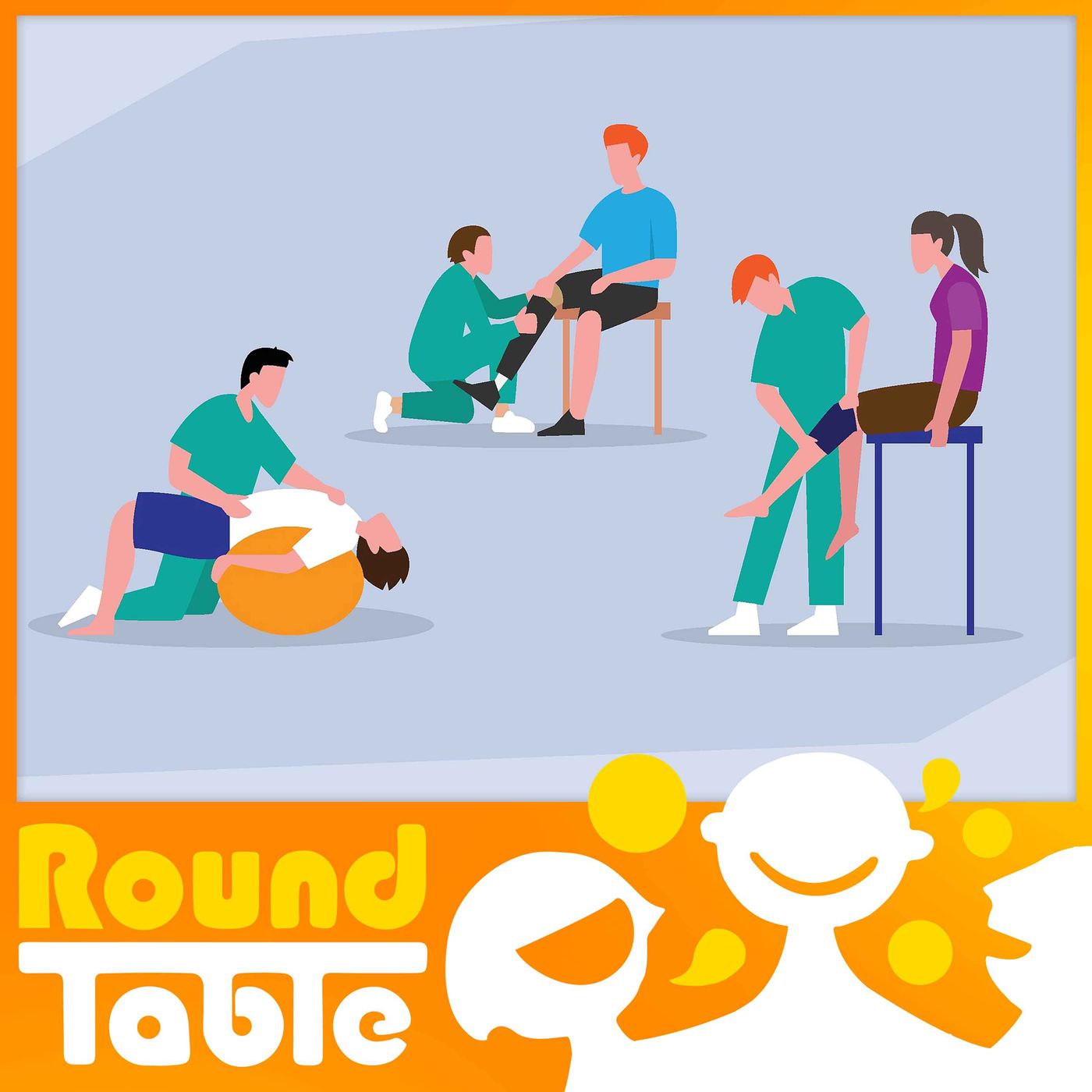
So instead of one intervention and a discharge, it's weeks or months of personalized hands on work, which means that the doctor or the physiotherapist will help you rebuild your muscle strength, restore your joint mobility, correct your movement patterns and gradually return your like the whole function of your whole body. So this is a whole process of basically make you perform better if not like hurt yourself when you're doing some of these exercises. Yeah, I've been to a physiotherapy clinic when I was in Canada. I had surgery on my knee a couple of times as a matter of fact. And so after the surgery, just very minor surgery, arthroscopic surgery where they just send a little cable in with a little camera and a knife on it and they pick out stuff. Yeah, so it's a day surgery you're in and you're out in the same day. But after that, you have to get your knee rehabilitated. So they send you to physio.
And then what you do at the physio clinic, well, for my case, because the knee needed so much rest means they meant that I couldn't walk for over a month. So what I would do is go there and get some muscle stimulation. So what they would attach would be those little they look like little squares or little rectangles. And they're attached to a machine via cables and they they attach those squares to your quads to your to your legs, the upper part of your legs and it stimulates the blood to go there and it stimulates muscle growth. And they did that because you're not going to be using your leg for over a month, right. So it's just to keep the blood flowing and it helps with the knee recovery too. These are the types of things that happen at physiotherapy clinics and rehab centers. So are these services part of the hospital system? Well separately. No, well, for Canada, it was included. So I didn't have to pay for the physio separately. But it's different depending on where you are in the world.
I think if I were to go to a physioclinic independently, then I may have to end up paying for that myself. Yeah, but things like wrist sprains or knee issues, ankle issues, back problems, any type of stuff related to that. Yeah, hearing China, it is quite different because physiotherapy, it is not that common in a lot of these hospital departments. So, but still some of the hospitals has this department. And then that's covered in your like medical insurance, if you got assigned to these kind of departments, that's within the hospital though. But if you're going to some like private clinics or private hospitals for these kind of personal, lised services, for example, after exercise your muscles, just fuel sore, and then you can go to these places. And these will charge you like per time and also kind of expensive. If you're comparing to something can be covered by medical insurance.
Yeah, because in a lot of this similar, I won't say clinics, but services or treatment plans offered by hospitals, it's sort of something you needed after, for example, a major surgery. I used to have a had a friend who did a major major knee surgery. And that's the reason that this hospital can refer her to one of these rehabilitation centers or service providers. But for someone like me, like I'm feeling a bit of something's wrong with my right knee, for instance, but it's not to the point of really going to a hospital for a specialist to give me any treatment plan. I don't really have a place to go. And that really translates into I think a broader scale when it comes to the industry development. In China, a lot of people are like me are in search for such services and treatment that can be translated into a major, I think growth on some levels on an industrial level.
Oh, 100%. I mean, there's a place in, I believe it's in Shanghai. And the English name is reborn. And it's kind of an appropriate name because of what it does. It focuses on recovery. And it was founded back in Beijing in 2016, I think. And then they operate different clinics in, in different parts of the country, Beijing and Shanghai and Hangzhou and Guangzhou and Chen Zhen. They have teams of therapists there. They have backgrounds actually really interesting to know working with China's national teams and CBA basketball players. So obviously very, very, very qualified. They've handled over 100,000 patient visits to date. And they focus on kind of the things you're talking about. Some of the things are very serious like recovery from ACL reconstruction surgery. They do meniscus injury rehab. That's what I had done in Canada. But they do things like posture correction. They have corporate health management programs. They have rehab support for major sporting events.
So it's an approach that kind of combines physical therapy models with movement correction and manual therapy and then functional training into an individualized plan for a patient. If that's what the patient wants. And some other cities, of course, as you mentioned, Shanghai, they have their own like some areas has their own community health center, the four sports reabt reabt, sorry, what's that again rehabilitation rehabilitation clinic. And then some newer community based rehab providers explicitly describes themselves as offering like Qing Kong for light rehab deliberately breaking from what they call the traditional idea that you only come to rehab after you are already injured. Instead, they're positioning rehab as something people use proactively for like general aches or your posture problems or simply just staying ahead of injury to I think not just as a last resort after something's already gone wrong.
It is something that you can choose and you can kind of prepare for your own muscles before they got injured. The place in Shanghai that I was trying to talk about before is in the young poo district, the other places I mentioned was founded in Beijing. The place in Shanghai is called the Yin Han community health service center. And maybe this is a little bit more in line with what you're talking about, you should they call themselves a sports rehabilitation clinic. And what they do, it's aimed squarely at people with sports injuries and office workers, maybe with chronic neck or back pain from sitting in a chair all day at the office. Yeah, sure, they have patients recovering from different types of surgery with limited mobility there. But they also have things like stationary bikes and treadmills and resistance bands and some more advanced tools too. So yeah, it's not just when we're talking about physiotherapy clinics and rehabilitation centers, it's not just for pro athletes.
It can be for anyone who has any type of need that lies somewhere in between I don't want to do anything about it. I'll just stay home and hope it gets better. And I need to go to the hospital right now. It's that kind of gray area that exists for people. And now we're seeing increased growth in this market because people are realizing, hey, I need this type of treatment. Yeah, and so in this case, let's talk about numbers when it comes to the growth of such such facilities, I will say sports rehabilitation, physiotherapy. There are a lot of in many cities, the growth is kind of real that we are seeing more and more and more such service providers as facilities opening across many cities, right? You shouldn't. Yeah, some industry data cited by China sports daily is showing that in many Chinese cities, the number of these facilities has grown by more than 20% of compared from just past few years.
And in Hangzhou specifically, new sports health and rehabilitation spaces kept opening through the first quarter of 2026 alone with services becoming increasingly specialized rather than just generic. And China currently has roughly one sports rehabilitation facility for every 1.8 million people. That's kind of big when we're like, you know, just showcasing how many we have. But there are stats that is showing in the United States. The ratio is one facility for every 7,000 people. Yeah, China is still kind of starting from a lower number or a lower base. But that just means there's room for a lot of growth there, right? And that's why the growth seems so dramatic. It's still in the very beginning of building out the supply because the demand now is starting to be there. Whereas before, like you said in the opening, Fei, Fei,
you would maybe 25, 30 years ago, people wouldn't even consider this as a possibility, right? If you heard your wrist or your ankle or something like that, you would just say, ah, whatever, I'll just wait for it to get better at home. Yeah, there was no demand at that time. So, but now the demand is growing and then the supply is starting to catch up. Yeah, and a lot of these clinics, I will say, sort of still also seen in like big cities like Shanghai Beijing, Hangzhou, and Shenzhen. And sometimes they come as small medical clinics. Sometimes as part of the outpatient departments of a hospital. And so they're also sort of rehab centers and studios. So in many different forms. I will say most of them are sort of on a smaller scale. They are. Yeah, about 79% of the rehab brands currently operate with a single location. There's only 15% of them that have two or three different locations and only 6% have grown to four or more.
So what that tells us is this isn't an industry yet that has big national chains. These are more in the lot in the style of individual shops operating on their own. Yeah, sure. A couple of a couple have two or three locations, but still they're quite small. And if you're like asking somebody saying that are you like have an idea of going to a rehabilitation center or these physiotherapists, they wouldn't say, yeah, I've got a doctor or something. It is something that only people do like very frequent exercise would do. And people will have that kind of need and know that there is some somebody who can do these kind of services for you. So there's a lot of regular and frequent exercise practice practices practitioners. I'm not sure they're using with the word the right word for them. But there are a lot of young Chinese people who are very, very active. And I remembered on some level, some people are joking that they are training for the Olympics.
They're trying so hard on a regular basis have their own routines. Is that where this demand for more rehabilitation, physiotherapy comes from? Kind of. It can be one of the reasons because now young people are always joking themselves as preparing for the Olympics. But actually is most of them have obviously no intention of, you know, participating Olympics or becoming an athlete. The phrase is used ironically by young people who suddenly become obsessed with running or doing tennis skiing climbing marathons high rocks we mentioned we talked about it before. Just you know high intensity of workout that they recently are doing someone who's just started running may buy professional shoes or start tracking every kilometer having their smart wearables. A person who picked up tennis recently made decide to play six days a week someone who spends most of the day sitting at a desk may suddenly decide to train for a marathon.
Yeah, so what so then what happens next right so if you're a person who sits in a desk all day and then suddenly you start training very hard. The likelihood of you injuring yourself is pretty good. But that's maybe not even a fair statement because in a sports injury can happen to a seasoned veteran of exercise as well. I think high rocks is the thing that stood out to me you should have the things that you just mentioned. Yeah, we covered high rocks in the growing popularity in China right more events now happening more people training. And if you've seen high rocks videos or high rocks training videos you will know that is about that is about as intense as you can get. So injuring yourself is almost inevitable. I would say right so yeah these types of sports injuries high rocks marathon rock climbing places we've talked about that on the show as well.
So tennis skiing all the things that you should mention they are an injury waiting to happen. Yeah, I suppose and then so the first joke was I'm preparing for the Olympics and then the second joke was the ultimate destination of exercises rehabilitation. Kind of along those lines. So are these strokes true like young people are really getting injured that often. Well, the data that we're seeing is surprisingly clear a survey of more than 1,300 young people conducted by the by China youth daily and also windian calm found that 90% of respondents had experienced some form of activity related injury in their daily life or exercise. Even more surprisingly more than 67% had experienced accidental springs or falls in every day live not during a marathon or a football match but simply just walking downstairs. Yeah, that's a great point. It doesn't even have to be related. Yeah, yeah, any time. And the incidents in the cases of scenarios can be as so like you know, usual in your daily life stepping off a curb when you were traveling and doing maybe long walk doing housework and walking or hiking or just to losing their balance.
Or just yeah, we're just waking up and getting out of bed in the morning. And then you're like, you know, you're not injured yourself. You're almost almost. I tried to stretch myself and I feel like my waist around my waist area or something. You know, for me, sports related injuries kind of feel kind of cool or tough. You know what I mean? Cause you're like, at least you're doing something cool. Your exercising, like that type of mentality. And you injure your back because you stood out of your get bed in the morning. There's nothing cool about that. And you just feel kind of stupid, stupid and silly. But yeah, these numbers show that of course, and we shouldn't be surprised by these numbers. People get minor injuries every single day related to sports or not. But with more people exercising and growing interest and working out, however they want to do it, then we should expect these types of numbers.
For sure. Now what about the consequences of these injuries? So here's a couple of more stats for you. Almost 50% said improper treatment led to repeated injuries in the same area. So they'll hurt their ankle or their wrist or their knee or something. They don't get it treated properly. And then they hurt it again later because it wasn't taken care of the first time. About 43% said the injury became a chronic problem. That's something you definitely do not want. And then 40% said their range of motion had decreased. And this just isn't for young people or old people. People born in the 1990s, almost 93% said that they had some form of active activity related injuries. So it's not an age thing. It's not even a sports thing. It's just for everyone. And if you don't get it taken care of properly, it might come back to haunt you later. So it's just, it feels like you're like you're joined, you're in knees, your bones.
They are somebody told me they are just, you know, consumer products as long as you are using them, as you're, as long as you're aging. Oh, they're going to break down. Yes, you're consuming them. So at some point, they will eventually just appear some problems. Something, something we went wrong along the way. So I want to check here very interestingly. Some maybe something to do with the culture itself. It's like we're thinking about rehabilitation, not only just about sports, but in general of rehabilitation and recovery basically. All the time, most of the time is linked to some sort of diseases, sickness, injury. But since there are more people that are sorting this kind of services and treatment, not because they suffered certain injuries or sickness or diseases. They're just sort of proactively trying, they're predicting that maybe my knee is going to have a major breakdown along somewhere in the future.
So maybe I need to do something before that happens. Like a knee sleeve. I've seen people wearing those at the gym or like wrist guards or something. I have all of that. Oh, do you really? Yeah. When I was doing like a like Frisbee, it hurts my knee. And I can totally relate the idea of now rehabilitation or physiotherapy is becoming a thing. And more people are aware of that. Because for a long time, the default response to injury was like rest immobilize or just wait. Because that's also what my doctor was telling me. I hurt my knee. I think I have the same problem with you. You have you. Sounds like your problem was worse than mine. You were telling me before the show. Yeah. I feel years ago, I injured my knee while exercising and tore my ACL that the party might need. And tear your cruciate ligament? Yeah. I think that's that's that's tiered. And at that time, my doctor's advice was simply just to rest. It probably said if you like hurting for one week, then you probably need to triple your rest time of that.
So I probably rest for one or two months. And yes, my knee eventually got better. But whenever I return to Frisbee, the pain would come back. Because you didn't get it taken care of properly. No, I just rest really well. I didn't do any sports during that time. But the thing is that during that time, my muscle also got weakened. And I think that is the problem. And that is why people need to go to these kind of rehab clinics. Because you didn't take care of it properly. That's kind of because it's not connected directly to the knee. And I'm not criticizing you, by the way. But the muscles around your knee, the support your knee, you didn't take care of those when you were not active, when you weren't walking around. So that's kind of it's kind of what this whole thing is about. And these are the things I guess that people don't usually think about. It's like, oh, I hurt my knee and I can't walk for a couple of months. I have to be on crutches. I better make sure I take care of my quad muscles.
Because those are going to lag behind if I don't do something about it. And in Chinese, we have, when we're talking about recovering from a certain disease or injury, we'll call them young being. I think young being, the concept of young being is basically rest and weight. Immobilized. Immobilized. Immobilized on some level, but in a very quiet motion that you don't move a lot, you try to move as least as possible. But on some level, for problems like your friend's knee problem, that's the exact opposite of the exact cure to his problem, is building up more muscles surrounding that joint so that similar issues won't happen in the future. And I think that is a sort of a change of mindset when it comes to how to treat your diseases, all your future diseases. We currently have a new term called, zhuei bing, is kind of confusing in Chinese, basically meaning preventing diseases before it develops.
And that can translate into having certain knowledge is about how you move and your body posture, posture is a big thing. It can be the course, the cause of your injuries and can also be the cure for your injuries. And getting to know your body is something I think a lot of people don't have that knowledge. Yeah, I mean, sometimes there's, yes, absolutely. Taking care of your body and going to the gym and exercising in different ways is part of that zhuei bing, is that what the cure is? Zhewei bing, yeah. It's part of that, right? Helping to prevent anything that might happen, but sometimes things just happen. And it's a good idea to go get it taken care of. I've done this so many times. The Canada example was just one, playing hockey. I've injured myself so many different times. One time in Korea, this is the last time I went, I injured like my, it's like at the top of my butt. There's like a muscle that goes and it wraps around to your thigh. It was so incredibly painful. It was really funny. I went and I paid for that one.
I went there maybe six or seven times for like an infrared treatment. Like they turn on and then they put some gel on you and then warm the, like to warm it up. So I'm laying there on the, on the bed. And the person who's doing it, you know, I have my pants down a little bit and they're rubbing gel on me. And they said, like, oh, so what do you do? And I said, oh, I work in the radio and she stopped. She said, are you Steve? And I said, oh, wow. Yeah. And she's like, oh my gosh, I love your show. She's rubbing gel on my backside. And I was like, this is awkward. Can we talk about this later, please? And just do the job that you're supposed to do for the help. So, so that's something I think that's very interesting. But that's very interesting example Steve actually. But is that how you sort of getting some basic understanding on knowledge about your muscles, the bones, how you work, you know, basically your well-being and health? And is that sort of common among young people here in China? You know, the reason that they are getting injured?
That's how the mindset shift is going on among a lot of young Chinese people now because they're moving away from these, you know, passive and reactive medicine or treatment towards some active and ongoing body management with these kind of prevention or true way being increasingly replacing only seek care once something's wrong as the mainstream mindset. And you mentioned some of the phrases that Chinese people will always have. And another one is, shang zing donggu, i bai tiang, like if you hurt your joint and your bones, you need to rest at least for 100 days. Of course, that makes sense, right? It will, if the doctor saying, and you are going to a doctor saying, this part is hurting me or this heart is hurt. And of course, the most direct treatment is resting. And what this doctor can manage is that they can help you feel better. And that is the only area that this probably the doctor is working on.
Yeah, but when it comes to treatment for rehabilitation, physiotherapy is a long-term thing, isn't it? And also very personalized. So we're seeing a lot of it, men's coming from cities and the whole country. But I would say when it comes to seeking these kind of services, the industry isn't quite mature. The reason I said that is that I had a friend who hurt her ankles at one point when she was trying to walk down the street. And it's a pretty serious injury. And to try to find certain sports rehabilitation centers to help you rebuild her muscles. Yeah, I mean, outside of the serious athlete realm, if you will, elite competitive sports. I think it's fair to say that the industry for active sports rehabilitation is pretty still pretty new, I think, to the general public. If you look at regions like Tianjin and maybe parts of northern China practitioners there report that the industry is still very much in its baby stage.
There are large portions of the public that are completely unaware that this profession even exists at all. And I think Yushan, what you said before and Fei Fei, the expression that you use, it seems like the hurt yourself then take a rest is built into the language through different expressions. So therefore it's built into the culture and the mindset so that when people do get these types of injuries, it doesn't even occur to them that, you know, maybe this is something you should go get treated because they've heard their entire life. Perhaps just take a rest and it'll get better on its own. And another point I think Yushan can be very prominent is even though we have the demand on the market, we are seeing much mind, this is sad being shifted, culturally speaking, and on the whole society, the supply side of this kind of services that's a little bit of a sort of lagging behind the demands among the general public.
Yeah, when I was, you know, preparing for this topic and I searched on these kind of group buying platforms, lifestyle platforms, to see if there are any like, physiotherapy clinics or agencies around us, there are quite a lot to be honest. But the thing is that for one session is probably don't cost you 200 yuan. And you're for thinking about whenever you, because this is ju-waping, right, prevents something. So you're probably going to need every session before you go to or after you go to an exercise. Yeah. And that is kind of a daily thing. It's very rarely just one visit. Yeah. Yeah, it's sometimes a whole plan for several years. And that is the reason you know, a lot of, I would say, experts are calling for better training of certain personnel and certain talents that can really fill in this gap when it comes to the differences between demands and supplies. But it's a good reminder to everybody else.
If you're hurting on me, the only cure is not just rest and wait. You can do squats, but you just need some knowledge and training for. We'll check in more, maybe in the certain future we'll see more specialists and demands on the market. Thank you.
More episodes
More from Round Table China

Where do we draw the AI music line?
Round Table China

China's new standards on kids' cosmetics
Round Table China

Seven gourds, one grandpa, and the price of going viral
Round Table China

Generation Global EP8: Cooling Vests
Round Table China