About this episode
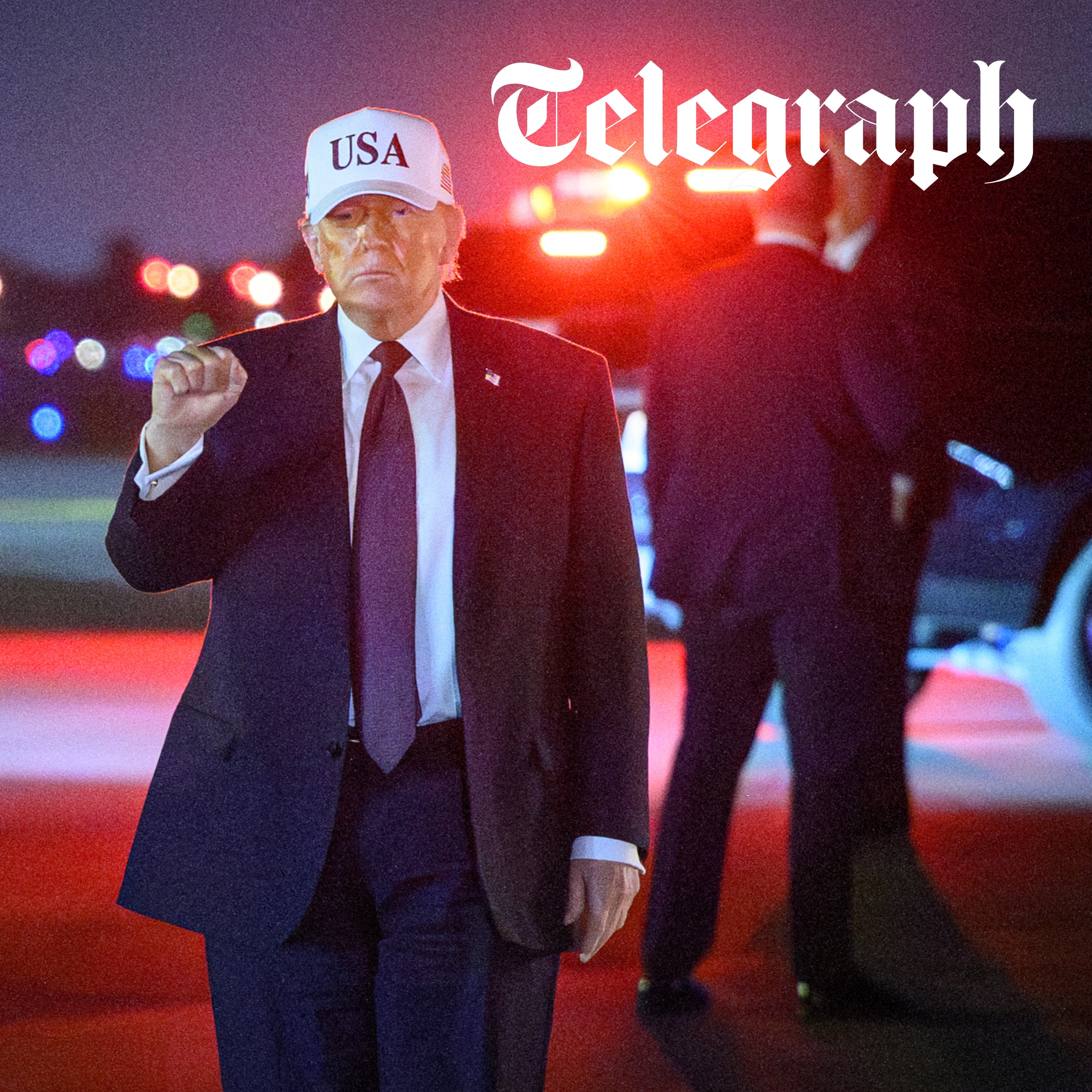
Donald Trump has told The Telegraph that he is “very disappointed” in Sir Keir Starmer, after the Government initially refused the US permission to use UK bases to stage an operation that killed Iran's supreme leader Ayatollah Ali Khamenei.
After the PM belatedly gave Trump the go-ahead, Camilla and Tim speak to former chief of MI6 Sir Richard Dearlove, who bemoans Starmer’s “flip-flopping” on the issue.
While he does not think Iran presents an “imminent nuclear threat”, Sir Richard does believe the Prime Minister forfeited the right to be consulted ahead of time about the joint US-Israeli operation when he took his position. He also believes Mr Trump’s aim may be for Iran to be run by a “more compliant” group of Ayatollahs, rather than complete regime change.
We want to hear from you! Email us at [email protected] or find @dailytpodcast on TikTok, Instagram and X
► Sign up to our most popular newsletter, From the Editor. Look forward to receiving free-thinking comment and the day's biggest stories, every morning. telegraph.co.uk/fromtheeditor
Producers: Lilian Fawcett
Senior Producer: John Cadigan
Executive Producer: Charlotte Seligman
Video Producer: Will Walters
Studio Operator: Meghan Searle
Social Producer: Nada Aggour
Editor: Camilla Tominey
Hosted on Acast. See acast.com/privacy for more information.
Get every episode summarized
Each time The Daily T publishes, we email you a written briefing from the transcript — the topics, who appeared, and any specific claims, with the ad reads skipped.
Email me new episodesFree for 3 shows. No card needed.
Hosts & guests
Transcript ready
913 searchable segments. Every word is indexed and playable.
Full transcript
The Daily T — Trump attacks weak Starmer over Iran dither and delay. Machine-transcribed; use the interactive transcript above to jump the player to any line.
Howdy Howdy Ho, and welcome to Fantasy Fanfellas, I'm Hayden, producer of the Fantasy Fan Girls podcast, and your resident lover of all things Sanderson. And I'm Stephen, your bookish internet goofball, but you can call me the smash daddy. And we are currently deep diving Brandon Sanderson's fantasy epic, Mistborn, but here's the catch. Stephen here has not read Mistborn before. That's right, hey, hey, so each week you'll get my unfiltered raw reactions to every single chapter. And along the way, we'll do character deep dives, magic explainers, and Stephen will even try to guess what's next. Spoiler alert, he'll be wrong. News flash, I'm never wrong. Episodes come out every Wednesday and you can find fantasy fanfellas wherever you get your podcasts. Middle East is close to all out war as the US and Israel take out Iran's ayatollah.
As always with Keir Starmer, the UK is a laughing stock, with Donald Trump exclusively telling the Daily Telegraph that he is disappointed that he wasn't allowed to use UK bases. We'll be joined by the former head of MI6, Sir Richard Dearlove, who accuses the Prime Minister of being indecisive. Welcome to the Daily Tea with me Tim Stanley. And me Kimmel Atomini. Tim, I know you're going to start channeling your inner Jeremy Corbyn and we will have that row a little later. I'm going to assume the role of Dick Cheney. So I'm going to be Trump. You're going to be Starmer. We'll do that a little later because this whole bombing raid has worried you. Yes. It's worried the CND supporting student in you. Well, it's really worried the ayatollah as well. Yes. Who's now dead? Who's now dead. Mr. Have been killed in the very first wave of strikes. Yes. Speaking to the Daily Telegraph, Donald Trump said that he had thought that the campaign
would take up to four weeks, but instead he seems to have removed much of Iran's leadership on the very first day. You do question the wisdom, don't you, of the ayatollah and his top team, all meeting in the same compound at the same time. I only say that. It's a little bit like members of the raw family all flying together. Donald Trump did give us some forewarning of all this. We did have the 12-day war in June. Yes. The facility wiped out. We did have him saying to the Iranian people, don't worry, help us at hand. I will come and support you. It's interesting. Richard Deerlove, the former head of MI6, is going to be coming on the Daily Telegraph a little later. He can take us inside the situation room because how on earth do you coordinate that kind of strike that's so effective? Also, let's just mark the historic moment. It was quite astonishing. I was planning my GB News Show and one of my producers posted ayatollah dead, which I kind of overlooked and I was looking at the positioning of another guest on the show and then I kind of went, what, sorry, and it wasn't confirmed until it was later confirmed and then even the Iranians confirmed it and then we knew.
But this idea of the end of a regime which has terrorised the Iranian people since 1979 is a fairly significant moment. It's up there with tyrant in his pants and a Samabin Laden being found in a hole in the ground, isn't it? But we must ask, why does it happen so rarely? And that's because we don't usually practice assassination like this. No. Either we try to arrest people or we encourage a regime to fall or best of all, it would be nice if people could go on trial, but instead Trump seems to have adopted an old-fashioned gunboat diplomacy policy of just removing the leadership of a regime and then inviting what's left to come back to the table. But wasn't that because when they did go to the table, no progress was really bad. The progress was made, but also America has raised its demands. So hitherto, this was about the enrichment of uranium. This was about the reach of Iran's missiles and it was about stopping the development of
a military nuclear program, but now it has become about regime change, everything's on the table in a way that it wasn't before. The key words are imminent threat. What's there an imminent threat and we'll get onto that in a minute because that is absolutely critical to understanding Keir Starmer's positioning on this throughout the weekend. And let's be honest, there's been some flip-flopping. But should we just get up to speed with exactly what's happened? So Ayatollah killed along with most of his top team, Iran has fired back at U.S. bases in Bahrain and Doha, several drone attacks on the UK base in Cyprus, no casualties, Saudi Arabia has intercepted missiles and Abu Dhabi, Dubai and Kuwait have also been attacked. We've obviously got a lot of brits in all of those areas, a huge mission underway to evacuate these countries, people traveling across the desert to Amman and I think also to Riyadh to try and get flights. It's being described as potentially the biggest evacuation since the Second World War. Yes. And it raises questions about why Iran has chosen to widen the war by attacking the Sunni
Gulf states. It didn't have to do that. And I guess the answer is Iran obviously cannot fight back, fire with fire in the way that America is attacking Iran, but what it can do is use terrorism, proxies and draw other people into the conflict in such a way that you create such economic and political disruption that eventually the Western world puts pressure on Trump to step down. Also, they might just be of the opinion they've got nothing left to lose now. Yes. Their proxies Hamas, Hezbollah and the Houthi significantly weakened since the nuclear facility was taken out. Well, one of those proxies Hezbollah has now been firing rockets into Israel, which means that Lebanon is now drawn into the conflict. A drone was going towards a British base, so Britain shot it down and Britain has now been drawn into the conflict. And this expansion, again, it might seem counterintuitive, why do you want to fight even more people? Well, it's a revolutionary regime, which has always used guerrilla tactics and terrorism tactics to try to destabilize its opponents.
It's also a regime which, of course, survived a grueling war in the 1980s in which there was an international coalition against it supporting Saddam Hussein and Iraq. So it has some form on this. The bigger, the more violent, the more destabilizing the war, the more Iran probably calculates that that works to its advantage. The US military says that three of its service members have been killed in its Iran operation with five additional personnel reported seriously wounded. We've had several US fighter jets downed over Kuwait, although we think that's friendly fire, and indeed all the crews survived. And then we have this provocation over the use of Diego Garcia that's obviously been in the headlines because of the Chagos Island deals, Tim, initially when the first strike started raining down on Tehran, the UK apparently told the US it couldn't use Diego Garcia. We then have this strange vault fast, so I had the defense secretary John Healy on my show on Sunday morning. Do we support the US and Israel in this military action in Iran or not?
We, the British, were no part of the strikes yesterday and overnight. We share the primary aim that the US have, and allies in the region have, that Iran should never be allowed to develop a nuclear weapon. And our UK actions, with stepping up our UK defences in recent weeks, flying the skies yesterday as we will do again today as part of a coordinated regional defensive action, is all about defending our UK personnel, our bases, and our regional allies, and we're doing that alongside those allies, including with the US. Respectfully defense secretary that hasn't answered my question. Do we support the US in Israel in this military action? We haven't actually answered that direct question. Well, I've said to you, we were no part of the strikes. I know we want, but do we support our efforts? We're concentrating all our efforts on the defensive actions.
He was in a very difficult position. My interpretation was he's inclined to be more hawkish. He has got the Prime Minister, who is being advised by Lord Hermer, the Attorney General, that they consider perhaps at that point that this assault by the US and Israel is in contravention of international law. We heard such language from figures within the party, like Emily Thumbrie, who, although she isn't in the cabinet, she does have a significant role as the chair of the Foreign Affairs Select Committee. So I think there is this thinking within government, should we go full-throughtedly in support of this? And let's be honest, we had more liberal leaders, if you could put it like that, like Mark Carney over in Canada, seeming to be more supportive of Trump, let's be honest, they aren't natural bedfellows. No. So we have Starmony as well. Germany as well. Germany as well. France not consulted. Okay, not quite at the races. And again, question marks over the special racership, because how much did we know, Evet Cooper, the Foreign Secretary, is on the radio this morning saying, well, we weren't really consulted in there, so I can't comment on whether we supported it or not, which of course
begs the question, well, Starmor and Trump can't be very close then, can they? And we'll get on to our colleague, Connor Stringer's brilliant exclusive with the US President in just a minute. So I get this degree of fabrication from John Healey, who is struggling to cope with questions about whether or not we support this on the broadcast round yesterday, pass forward a few hours, and then we get this statement tip from the Prime Minister. The best way forward for the region and for the world is a negotiated settlement, one in which Iran agrees to give up any aspirations to develop a nuclear weapon. But Iran is striking British interests nonetheless, and putting British people at huge risk, along with our allies across the region. That is the situation we face today. Our partners in the Gulf have asked us to do more to defend them, and it is my duty
to protect British lives. We have British jets in the air as part of coordinated defensive operations, which have already successfully intercepted Iranian strikes. But the only way to stop the threat is to destroy the missiles at source, in their storage depots or the launchers which are used to fire the missiles. The United States has requested permission to use British bases for that specific and limited defensive purpose. We have taken the decision to accept this request. So Tim, that was Keir Starmer speaking on Sunday night. He then came to the House of Commons today on Monday to explain his thinking, or perhaps that should be his flip-flopping, after having been heavily criticised by President Trump.
We all remember the mistakes of Iraq, and we have learned those lessons. Any UK actions must always have a lawful basis, and a viable thought-through plan. I say again, we were not involved in the initial strikes on Iran, and we will not join an offensive action now. But in the face of Iran's barrage of missiles and drones, we will protect our people in the region and support the collective self-defense of our allies. Because that is our duty to the British people, it is the best way to eliminate the urgent threat, to prevent the situation spiraling third, and support a return to diplomacy. It is the best way to protect British interests and British lives. That is what this government is doing. Well, the Tenergras Washington correspondent Connor has spoken to Donald Trump, and Trump
said that Keir Starmer took, quote, far too long to change his mind, adding, that's probably never happened between our countries before. It sounds like he was worried about the legality. Trump suggested Starmer should have always approved American use of Diego Garcia, because Iran was responsible for killing, quote, a lot of people from your country. Now, the background to this is the roul over the Chegos Islands, a deal, which initially Donald Trump seemed to favor, but has now been persuaded is not in the best interest of the West, and has now effectively torpedoed just before the weekend, the government announced that it was pausing the deal to go back to conversations with its ally. So the fact that Diego Garcia has played such an important role, that there's been a wrangling over whether or not the Americans could use it, surely this is now going to totally kill the deal. Yes. So I tried to put it to John Healey, that the reason that the deal had to be paused before
the US and Israeli strikes on Iran began is because there had been a roul about the use of Diego Garcia. Now that then concedes that there was a conversation with the UK in advance of these strikes, and I managed to get an admission that yes, they did know about it, but no confirmation as to whether our blocking of the use of Diego Garcia caused Trump to then publicly denounce the deal for a second time. He had called it an extraordinary act of stupidity. Then he basically said, no, that's it, I don't support it. And let's not forget, David Lamy himself said when he was foreign secretary, that Trump didn't support the Chegos deal that the deal was, quote, dead. So let's just put that to one side. I don't know what the future of the deal is now. That we've allowed Diego Garcia to be used. He described it as, quote, Trump described it as, quote, a very woke thing when speaking to Connor, saying it would have been much better on the legal front if he, Stammer, just kept the ownership of the land and had not given it to people that weren't the rightful owners. So we have got to divide now in politics.
And I say divide, maybe it's a three way race. We've got on the hard left, the likes of Jeremy Corbyn, Zach Polanski, the green leader, other figures like Zara Sultana, also involved with Corbyn in your party, and all those hard lefties basically saying, oh, and by the way, liberal Democrat, cuddly liberal Democrat leader, Sir Ed Davie. And we can't dismiss these people because the Greens have just won their first ever biodexion. Indeed. And in fact, actually, there is a link to domestic politics and concerns about sectarianism in all this, even though it's a foreign affairs story at its heart. They're all very much on the side of suggesting that the rogue states in all this are the US and Israel, that this shouldn't have happened, that we don't want to involve ourselves in another quote's illegal war. Have we not learned the lessons of Iraq in Afghanistan? Do we not remember the humiliation of the withdrawal from Kabul? He's gone in there with Operation Epic Fury. That's phase one. What's your phase two, three, four, and five? You're calling on the Iranian people now to rise up.
I mean, what a huge responsibility on their shoulders when they've just spent recent weeks witnessing protesters being gunned down in the street, or by the way, murdered in their own hospital beds, apparently. So we have that strain. Then I'd say we have the middle lane, and Starmer's driving down the middle lane, sometimes he's going into the left hand lane, somehow he's going into the right hand lane. He doesn't quite know which lane to occupy. He starts up being dovish, then he becomes more hawkish. He knows where he might go next. OK, it's not quite you turning on this motorway, but he is struggling to find a sense of direction. And then we have the righties Faraj was speaking earlier today at a reform press conference. I do believe the American president of the Israeli is right in what they're doing. And I find the actions of our Prime Minister, or the inactions, perhaps I should say, of our Prime Minister, frankly, pathetic. I think to have said to the Americans that they could not use UK bases or Diego Garcia
to carry out any of their missions is something that the president has responded to. We're ready by saying that he's deeply disappointed. I suspect that, for once from Trump, is actually a mild understatement. We have Nigel Faraj, we have Kemi-Bade, knock on others, full-throatedly in support of the police. Who are now all for war? Are they all for war? The same people who will tell you? Who are the same people? Who will tell you if you ask that the Iraq war was a dreadful idea and an indictment of the Westminster political class? But we perhaps have people on the right saying this. There is a very strong moral case to be made for supporting the US and Israel in disposing of the so-called Tyrant of Tehran, who's absolutely medievalist and indeed murderous rule has ruined the lives of Iranians for decades, since 1979. Same argument can be made of the Taliban, carry on. Same argument can be made of all, I mean, there is something in common with all of these
dispots that you are mentioning, though, and that is a degree of extremism that has been imported into foreign lands. And that is where we see people even at UCL, University College London, which by the way was the first university in Britain to accept Jewish students back in the day. We have a student society, a Shia Muslim student society, which is holding a commemorating the fallen mourning of the Ayatollah day. I mean, I'm sorry, this is on the streets of the capital, we've got a bit of understanding about what the deputy green leader, Mothin Ali, has attended. Some people are saying he's just attended a stop-the-war rally. Well, no, it was a rally that featured pro-IRGC sentiment and flags. So that's confusing, isn't it? Why would you, when you've got Iranians infincially, aligned with Jews infincially, celebrating the end of this dictator's horrendous legacy? And then we've got some people thinking it's a shame that the Ayatollah has been toppled.
But look, either sectarianism and Middle Eastern politics should stay out of British discourse. Well, it's not. It's in British discourse. But either it should, in which case, the way in which Gaza has transformed our politics is disturbing, or we're all for it, in which case, let's have right-wing politicians advocating regime overthrow in Iran. I see that just as much about involving Middle Eastern politics in Britain as I do discussion about Gaza. We've gone in 48 hours from saying that the Gordon and Denton by election was driven with sectarianism, was an unhealthily obsessed with the Middle East. To some of those same sorts of politicians, like Richard Tyson, going around saying we must have war in Iran to change the regime in Iran, which is it? Are they saying we don't have war in Iran? We don't want troops on the ground, but we don't want Britain to be chamberlain-esque in the face of a request from the US and, indeed, in Israel, which last time I checked were both our democratic allies to overthrow an undemocratic, despotic regime. We just sit on, have we become a nation of a relevance on the sidelines sitting on the
fence when, really, we should be summoning some degree of moral support at least. Well, that's a good place to start. Let me do some pushback here. Number one, I don't weigh up whether or not Britain is a good country by whether or not it's involved in wars. I don't care about our relevance. I'm cared about what's in the best interest of my people. And if an ally takes us to a war that I think is wrong, I'm not going to say for the sake of bravado, we must get involved because Britain is only a good country when it's getting involved. That to me is madness. But why is the war wrong? Okay. That's my first point. Okay. Well, come on to that second. What you've done by highlighting all these whack jobs in the UK is you have conflated all of those niche crazies, but everyone else who has perfectly reasonable concerns about this war, which are based upon 20 or 30 years of experience, they're not niche. One of these crazies, or by association, the crazies that are now the Greens, are on the rise in British politics and have just won a by-election, they've just won the safest
Labour seat or one of the safest Labour seats in the country, Tim. But I'm not going to back a war. So they're not niche. I'm not going to back a war. Just to distance myself from the green parts. Is the overthrow of the IOTO wrong? So I think it's an unfair to conflate those things. Is the un... Of course not. This is why I rate bear with me to the point. I know, I'm listening. I'm listening. The reason why I'm criticizing that niche approach is because that confuses us and gives us the idea that people who are skeptical of this war are in favor of the IOTO or don't want to see some sort of change in Iran. We absolutely do. It's a question of method. And the real divide has been in the last few years the question over whether or not we're going to do this militarily or through economics and diplomacy. And most of the West was on the economics and diplomacy path until Trump got elected. And Trump, who himself was elected, saying no more Middle Eastern wars. For some reason has been persuaded this is the one war that America absolutely must have. But the arguments against it, well, I fear we're already seeing the potential costs of
this approach, be it Iran now striking out at our citizens in the Gulf, be it the activation of groups like Hezbollah, be it an inevitable shock in oil prices. We should not assume that like in Venezuela, the regime is so weak that you remove one man and they just toppled. That's not Iran's MO, that's not how it's behaved. It proved itself willing to kill 30,000 demonstrators in 48 hours in the last uprising. This is a regime that is willing to slaughter its own people to stay in power. Okay. So the question is not, is the IOTO a bad? The question is not, should we have democracy in Iran? Absolutely, we should. But those of us who are skeptical about the war are saying the method is wrong. And to come round to the point about Britain's particular role, we weren't consulted, which is not just rude, but absurd to not consult us. And then when you go ahead with the war, express confusion as to why we're not involved. That's madness.
And it speaks to, I suspect, Trump lacking any plan in this, because you can go through half a dozen interviews in the last few hours in which you will say, this is my goal, or that is my goal, or even in some places just implies that we're going to carry on bombing and then work out what the objectives are afterwards. There was a degree of consultation clearly, because there was a row over the use of Diego Garcia. Second of all, you could make a very cogent argument, which suggests that after the 2015 signing of the Iran nuclear deal, which did turn out to be completely and utterly ridiculous, but actually the Iranians had no intention at all of playing ball with the deal. The deal was a mistake. It was a total and utter mistake. It was a mistake. And it was once again revelatory of the West being completely asleep at the wheel. Yes. Like, oh, the Ayatollas can be trusted in the same way that Putin could have been trusted, not to have invaded Crimea. And in the same way that we rolled out the red carpet with the state banquet for President Xi back in the day and cozyed up to all of these people. And by the way, there can be no coincidence can they and the first people to back around
its actions being, first of all, Putin, Russia. We're right behind you. Yes. Second of all, the Charities. And now we're right behind you, too. And now we're cozying up to Mohamed and Salman in Saudi Arabia, with other regimes like Iraq. Why are we doing that? Following the Abraham Accords, it may well be that there has been a calculation here that actually, regardless of what we think of Mohamed bin Salman or, indeed, their own regime, really the sands, pardon the pun, in the Middle East in general, are shifting. You've got countries like Jordan, I remember interviewing one of the ambassadors to the UK from Jordan, saying, good God, you know, we are taking so many refugees from these displaced countries, which are ravaged by war and medievalism. We're all trying to move forward, they're holding us back. This is a nightmare. You then get potentially missiles, drones, whatever, raining down on some of these other nations. They are then more likely to double down on the Abraham Accords in a desire to isolate completely Iran, which helps the US and Israel, surely.
The central question here on nuclear disarmament is whether the Iranians can be trusted. Yes. I think we've understood from the last 24 hours that they can't be in any effort to trust them under a farmer, was absolutely ludicrous. They cannot be trusted, which is why the deal was wrong, and it's why America attacked Iran's nuclear installations last year in Operation Midnight Hammer, after which we were told that they had been successfully depleted. No one in the world right now believes that Iran is minutes away from getting WMDs, and this is Britain's point about the use of Diego Garcia. It is probably a legal and international law, because there's no immediate pretext for this war. The shadow attorney general disagrees with the analysis of Lord Hamer and people like you. There's a legal justification for this war, other Western leaders do not think that this is illegal. OK. But the British government's possession. But the British government's possession. No, we're not. We're not. We're not. And heavens, there are plenty of them in this government.
But this government concluded that it could not support the unilateral action of the United States. But once America had taken that action, Iran then started attacking us. And then we can justify our own retaliation against Iran. If you were compelled to get involved, it is a little like America is your drunk friend who goes into a bar and thumps someone, and the person he has thumped starts thumping you too. Yes. So you have to join in on our face. OK. So now we're being thumped. Are you more in favor of us now? I'm in favor of us taking action necessary to defend our citizens and our bases. Yes. I'm not in favor of us taking action that means regime change. But my point is, is everyone has attacked Kirstama. I can't believe I'm defending them, but everyone has attacked him for being too slow. This is too slow. We're talking about events. You're concentrating events that have taken place over 48 hours. Yeah. And I can only repeat, he wasn't told this was going to happen. OK. So you think him holding his counsel was a good idea.
The reaction he has taken has been appropriate. It has been considered. And on this rare occasion, I will say, I'm far happier that Kirstama was prime minister than say a chemibade knock or a Nigel Farage, who apparently are just gagging for America to invade anywhere in the world so they could jump on the bus and join it. I don't think they've said they're gagging for America to invade anywhere in the world. It's just because they keep talking about the Allied. They keep saying about the Allied. No, no, no, no. They keep framing it. Can he be not what's critical of the Donald Transpahedron Greenland, correct? We're not talking about. Another good reason for Britain to be cautious of the European Allies. I think you're generalizing a little bit about them. I'm happy to be what you think they're gun-toting around the world. But let us agree. Donald Trump decides to invade Canada. You think Farage and Baidnock are going to bring up the rear. So let us agree then we have both generalised in this debate. Yes, we have suggested that everybody who is critical of the war loves the IOTO. No, that's not. And I have suggested that the Tories in the form would probably do whatever America wants to do. Excuse me, I never said that. I said there were three lanes.
And I do agree that there may be a great many people who do not want us to be involved in any other foreign wars that still despise the IOTO. But I'd also like us not to be blinkered, not least because of what we've witnessed in Gordon and Denton. And frankly, what we've witnessed since October the 7th, that there are some people in this country who actually are mourning the death of the IOTO. And to be fair, Tim, can be Baidnock, the Conservative leader, echoed my thinking in linking what's going on with Iran to sectarian politics in the UK with a speech at lunchtime basically talking about segregated societies and how we must do more to challenge extremism on the streets of Britain. Two Jewish worshippers murdered at Heaton Park Senegal in Manchester during Yom Kippur. Just last month in Brighton and in Sheffield, activists went door to door urging boycotts of Israeli goods. Let's be honest about what that is. A political movement turning up on your doorstep,
demanding that you prove that you're on the right side and recording those who do not comply. This is intimidation, pure and simple. And what do we local green MP have to say about it? She said that the campaigners were well-intentioned. It is normalising the targeting of Jews in their own neighbourhoods just to pick up boots, shameful, and no other party seems to care about this except conservatives. And I'm saying that's why these events that happen miles away from here have a huge bearing because we have got a weaponised caucus of people in this country who seem to think that there's nothing wrong with a tyrannical regime that kills women because they remove hijabs in public, that poisons people in hospital beds, okay? That terrorises its own people and that we should all be standing back in Britain saying, oh, well, that's a shame because actually Israel and the US are even more evil. No, I'm picking a side here. And my side, despotic regime of medievalists versus democratic allies,
I'm going to go with the democratic allies. People you described are nuts because those people are nuts. Does not mean I have to support what Trump is doing in Iran. But we do have to have a very... We have to have an open and honest debate about this so that we can counter the narrative that the US and Israel are the rogue states and not Iran. At no point did Palantzky and Davey... I'm afraid that narrative has just been reinforced by Trump's actions in the last 40 years. So it's okay for Davey, Palantzky, Corbin, Sultana and all these apparently niche nutbacks. By the way, these people could be forming the next government together. They're not niche, they're not fringe players, Tim. These people could form a so-called progressive alliance. I've never heard such an oxymoron and leave this country to further ruin come 2021-29. But it's perfectly okay, you think, for them to describe the US and Israel as rogue states, but not Iran. I think a far left alliance is more likely to get elected if there's a disastrous war in the Middle East that leads to thousands of Muslims being killed
and a spike in oil prices that crashes the economy. Okay. Shall we get the view of Sir Richard Dearlove, the former head of the United States? Someone who actually knows what he's talking about. Okay. He's coming up next. Hey, this is Paige de Sorbo from Giggly Squad. And today I want to talk to you about Boost Mobile. Quick question, why are we letting our phone bills bully us? Here's a money tip. Stop paying a carrier tax. When you bring your own phone and switch to Boost Mobile's $25 unlimited forever plan, you can unlock up to $600 in savings. That's real-life money, not money trapped in a pricey phone bill. $600 is a trip, a shopping spree, or paying something off. Your money belongs in your life. You get unlimited data, talk, and tax for $25 a month with no contracts and no minimum line requirement. Your phone, your rules, had to boostmobile.com to switch today and unlock the savings you actually deserve. After 30 gigabytes, customers may experience lower speed. Customers pay $25 per month while active on Boost Mobile unlimited plan.
Savings claim based on a January 2026 Boost Mobile Survey, comparing average annual payments of major carrier customers to 12 months on the Boost Mobile unlimited plan. Visit BoostMobile.com for details. Howdy, howdy ho, and welcome to Fantasy Fanfellas. I'm Hayden, producer of the Fantasy Fan Girls podcast and your resident lover of all things Sanderson. And I'm Stephen, your bookish internet goofball, but you can call me the smash daddy. And we are currently deep diving Brandon Sanderson's fantasy epic, Miss Born. But here's the catch. Stephen here has not read Miss Born before. That's right, hey, hey, so each week you'll get my unfiltered raw reactions to every single chip. And along the way, we'll do character deep dives, magic explainers, and Stephen will even try to guess what's next. Spoiler alert, he'll be wrong. News flash, I'm never wrong. Episodes come out every Wednesday and you can find Fantasy Fanfellas wherever you get your podcasts. Hi, this is Pablo Torei from Pablo Torei finds out. And today I want to talk to you about Boost Mobile because we spent a lot of time analyzing inefficiencies in sports, overvalued contracts,
money tied up in the wrong places, and so on. But those inefficiencies aren't just on a roster. Sometimes they're in your own monthly expenses. Boost Mobile says switching to their $25 unlimited forever plan can unlock up to $600 in savings a year. That's $25 a month for unlimited data, talk, and text when you bring your own phone. If that money is trapped in a pricey phone bill, it might be worth a second look. Visit boostmobile.com to learn more. After 30 gigabytes, customers may experience lower speeds, customers pay $25 per month as long as they remain active on the Boost Mobile and Limited Plan. Davings claim based on a January 2026 Boost Mobile Survey of 1,000 Americans with single line unlimited plans, comparing average annual payments of major carriers to 12 months on the Boost Mobile and Limited Plan. For full offer details, visit boostmobile.com. When I joined by Sir Richard Dear Love for my head of MI6, including at the onset of the Iraq War.
Sir Richard, I'd love to know your reaction to Donald Trump describing Keir Starmer as disappointing. Well, I think disappointing because of the refusal to use the Fairford US Air Force base in the UK, but more than that, a reluctance for us to agree, although technically the Americans didn't need it to the use of Diego Garcia. And I mean, the whole Chagos issue comes into this because clearly Trump wasn't really focused on it until they started planning the attack on Iran, which was several weeks back, I think. And in doing so, he suddenly focused on Diego Garcia and realized the strategic importance, which, look, it probably hadn't just registered in his head. It might have registered with Rubio and others who said that they would go along with it,
but Trump then looked at the issue and said, God, you must be mad. We basically need this base badly. And I'm pretty sure that this accounts for Trump's change of mind and the fact that he's expressing disappointment because within 24 hours, the UK is changed its position with some esoteric description of the difference between offense and defense in terms of the use of these bases. But you know, the government could against act together quickly enough. And well, Kamila, you saw Healy being interviewed and squirming yesterday, not sure what he could say about the legality of the US attack on Iran. Yes, Richard, Tim and I have just had a debate about all this. Tim, making the point, well, it's very difficult to be able to comment when you haven't been adequately consulted and then have a US president complain that you're not at the races
when you haven't really been invited to take part, okay? So just to clarify, what's your understanding of what you think the British were told in advance of these strikes? Frankly, not much. I think that this was an operation planned by Admiral Brad Cooper for Trump and that Cooper's a pretty extraordinary military figure together with the Israelis. And I think all the evidence suggests because the government was caught on the back foot. Look, the attack was always going to happen. It was pre-planned. I think the only question was the date that they chose and it looks as though the date was chosen very hurriedly. You know, it may have been going to happen 10 days later. And I don't think the US would have run up on a secure line
the Prime Minister and said, we're about to attack. I mean, they did it. Isn't that disappointing, Richard? I mean, that strikes me as disappointing. Isn't disappointing that Britain wasn't consulted amidst it's an odd way to treat our life? We're not party, we weren't party to the attack. And it's pretty clear from making an interpretation the government's legal position that the attorney general would almost certainly have been opposed. Look, Starma is in a very tricky place politically at the moment. And he is the prisoner of his party, which is split on issues like this. And I think the Americans understand that very well or that they got on with the business of the attack. And OK, the UK have joined rather late on the justification presumably that the Iranians started flying drones at the software base areas in Cyprus.
Yes. Then suddenly you've got a change of policy. I mean, yet another slip. How many have the been with this government? I'm sorry to label this point, but that seems quite reasonable to me to say on the first instance because you yourself as sensor, Richard, we were not part of the attack. We were probably not consulted on the attack. So doesn't it make sense that for the first 24 hours in which the attack was going ahead? We were not involved. But then when the people who were attacked started to attack us, we then became involved. Is that a flip or is that just adapting to circumstance? Well, it is adapting to circumstances. But what I'm saying is if we had agreed to the use of effort in Diego Garcia in the preparations for the buildup, we almost certainly would have been consulted. And in fall, the fact that we had said you can't use for effort. And obviously the Americans didn't want to use Diego Garcia without the government having said yes. Although my understanding is technically,
they can use Diego Garcia without consultation. So Richard, do you think that Iran poses an immediate or imminent nuclear threat to us? Now that we know that the US took out a key facility last June? I don't think at the moment it presents an imminent nuclear threat now. They may have some fissile material, which is left over. But it's quite clear that the American attack destroyed the program and the installations. That doesn't mean that they deprived Iran of all the fissile material and the possibility that they could still make a bomb. But on the other hand, I don't think there was an imminent nuclear threat at the moment. No. In the median term, yes. In the median to longer term, yes, probably. OK. So therefore, this was about regime change.
Yes. I think one has to conclude that the objective. Well, I think one needs to be careful with that concept. What I would say is that if you tried to dig into the strategy of the White House, and I agree there's a certain confusion here, what we may be looking at is a more compliant attitude in terms of negotiation by the Iranians. That doesn't necessarily imply a completely new regime. It might imply a new leadership, a new group of biotologists who realize that if they're going to survive as a regime, I'm, you know, the parallel maybe is Venezuela. They would have to negotiate away their nuclear program and their ballistic missile capabilities and possibly support for sheer militias as well in the region. So Richard, the very fact that none of us are quite sure why Donald Trump did this,
isn't that a good argument for Britain's caution and refusing to sign off on it in the first instance? Well, I would argue with that that this war started on the 7th of October 2023 with the invasion of Israel by Hamas. And what I would argue personally is this is a further chapter in the continuation of a war in the region, which has been running for a long time. To an extent, we are involved or had, as it were, supported Israel in that respect. So you could make an interpretation that this is a continuation of a conflict, which has been going for a long time. And, you know, why suddenly is there a separation? I mean, the whole destabilization of the Middle East over the last 20 years or more has been caused
by Iran and the access of resistance. And, you know, this is an ongoing conflict. It's an existential conflict about the future of the Middle East. So trying to make an interpretation of international law in respect of this is complicated. I could definitely find you international lawyers in the United States who would say that this is entirely justified. How long do you think the IRGC can fight back for? And we've been discussing on the podcast earlier, terrorism being perpetrated now by a desperate Iranian regime and by its proxies. We've witnessed that in the Middle East. Is there now a threat of domestic terrorism in the UK? How does this play out over the coming days and weeks? Well, first, let's take the IRGC. I think that, ultimately, it's an organization which has been militarily defeated outside of Iran.
Now, that's an important distinction because it has conducted arms-length warfare in a number of places which include terrorism. However, it is still probably relatively potent force on the streets of Iran and therefore has the ability to do what it did the last time there were mass demonstrations and kill an awful lot of Iranian residents, their own people. Yeah, there's a threat of terrorism because the IRGC has not got many other military resources or alternatives left outside of Iran and it could try to organize terrorist attacks. I mean, I think most likely because the logistics are more straightforward in the Middle East and you have seen Iran strike out that sunny targets or let's say the allies of the United States
across the Middle East. I think that's the most likely response. And obviously, now that we're involved after an Iranian attack on Cyprus, yeah, we become a target too. But I think it's much more complex for the IRGC to do something in London or in Paris than it is nearer to home. But I'm not saying that the threat that, of course, there's a threat. So Richard, you spoke earlier about the dilemma that the Prime Minister faces not least after the result in Gordon and Denton. He's got people to the left of him nipping at his heels, describing the US and Israel as rogue states, expressing a huge amount of anti-American sentiment being rather Corbinister in their approach. There will be other more moderate Labour-backed benches just simply worried about history repeating itself. Do you see parallels between now and what happened in Iraq in 2003?
Not yet. And why I say not yet, because there are not boots on the ground. And we're not expecting the Americans or the Israelis to go in to the country, which would be completely impractical anyway. So I mean, what we end up with is the possibility of some sort of uprising of the population in Iran at the moment that looks unlikely or a different group of Ayatollahs without regime change, but who are compliant and understand the need for Iran to negotiate. OK, you could argue you may get an even more extreme Ayatollah group as a result of the attack. But then I would say, look, Iran's effectively been militarily defeated by Israel.
I mean, that's happened. It's over. The problem now is what is going on inside Iran and what's going to happen inside Iran. And I agreed, look, this is a huge gamble. We just don't know what the consequences are going to be. And in a way, that's the vulnerability of American policy at this point in time. But let's not forget that this is a ghastly brutal regime that has done dreadful things to its own country and its own population. And I think we should be clearer in terms of our moral view. And I can't believe that we've got people here in the UK who are demonstrating in favor of Ayatollahs. Send them off to Lebanon and see what effect it has on their lives, catastrophic. Sir Richard Dealer, thank you very much for joining us.
Sir Richard there, a man who has been in the situation room at these key moments. So observe so much. I just struck there. I hadn't quite considered that alternative. Let's find some friendly Ayatollahs that might be a bit more westernized in their thinking. I didn't know that such things existed. No, but this is the question who critics of the conflict are asking, which is, what is the game plan? What is the end? And who are these people who are going to take over? If we cannot guarantee that the people will rise up and demand free and fair elections, isn't it more likely that actually an equally or even more militant group of people will take power in Iran? And if Iran's whole history for the last 100 years is one of being pushed around by Western states, including when under brutal ghastly regimes that deserve to be pushed around. But nonetheless, if I were a young politician in Iran looking for a career there, I would make enriching uranium and getting a nuclear bomb my priority because the lesson of North Korea is, that is the only way to prevent America from deposing you.
Yes, I think it's interesting. There's never been any coordinated resistance movement in Iran, so there are a few key figures. There's also not the galvanizing of support behind the son of the ex-Artshar Reza Palavi because he's lived a Western life and hasn't been in the country for years. You've then got to consider the disparate nature of the actual population, which is, I mean, multicultural within itself, right? Persians, Arabs, Kurds, all in one mixing and melting port and who would they all galvanize behind. It sounds like a crude thing to say, but they don't have their equivalent of Alexei Navalny. They don't have a one person to mount a counter revolution behind. Well, and that's because, to be fair, the alternatives have been shot or sent abroad. Yes. So, yeah, exactly. And also, what role are the young going to play in it now that we're in a world which is increasingly open because of social media? I found it interesting at the weekend to read that the Americans were trying to get starlink communications in
so that people could get more global internet access. Obviously, we've seen some different videos and e-king out, but I wrote a story, I think, 18 months ago, about the role that women were taking in trying to overthrow the Ayatollas in the aftermath of the death of Masa Amini, the girl who took off her hijab and was brutally murdered. So, women are playing a role, young people are playing a role, sort of generational support for this. But it is asking a lot of the public, isn't it? Both Netanyahu and Trump saying, right, it's down to you now. And then, why didn't the attack happen when the riots were taking place? This is what I don't understand. But then they couldn't because they didn't have the intelligence that the Ayatollar and his top team would be together at that compound until at this moment, perhaps, I don't know. Fair enough, fair enough. But yeah, it's a few weeks too late. I just listening to Sir Richard, if a man who knew everything in Britain does not know why the President is doing this, then I don't think it's unreasonable for some Westerners
to express reservations about joining him. OK, you're off to release a double piece. I'm off to where my make America great again have. And we will be back tomorrow, 5 p.m. Howdy, howdy ho, and welcome to Fantasy Fanfellas. I'm Hayden, producer of the Fantasy Fan Girls podcast and your resident lover of all things Sanderson. And I'm Stephen, your bookish internet goofball, but you can call me the smash daddy. And we are currently deep diving Brandon Sanderson's fantasy epic, Mistborn. But here's the catch. Stephen here has not read Mistborn before. That's right. Hey, hey, so each week, you'll get my unfiltered raw reactions to every single chip.
And along the way, we'll do character deep dives, magic explainers, and Stephen will even try to guess what's next. Spoiler alert, he'll be wrong. News flash, I'm never wrong. Episodes come out every Wednesday, and you can find Fantasy Fanfellas wherever you get your podcasts. Every organization is talking about AI. But how are leaders actually making it work? KPMG's You Can with AI podcast breaks down how leading organizations are moving faster, operating smarter, and driving value with AI. Plus, what the rise of AI agents meet for business right now. Hosted by Nathaniel Wittemore of the AI Daily Brief. Listen to You Can with AI on Spotify, or at www.kPMG.us forward slash AI podcasts.
More episodes
More from The Daily T

‘Always whingeing’: King’s former aide slams Harry & Meghan for playing ‘blame g...
The Daily T

Burnham’s ‘stupid’ tourist tax trashed
The Daily T

Another Burnham bungle: Out of depth PM refuses to answer Qs at PMQs
The Daily T

‘Vote-grabbing’: Backlash over Burnham’s Israel sanctions
The Daily T