Loading...
newsdaily
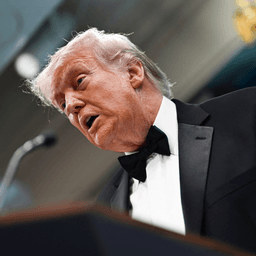
Trump hailed the ceasefire deal — but cracks are already showing
About this Episode
The ceasefire deal between the U.S., Israel, and Iran is already showing signs of fraying. Avi Salzman from Barron’s tells us there’s little sign of movement in the Strait of Hormuz.
Wisconsin voters passed a first-of-its-kind law restricting future data centers. Politico’s Tyler Katzenberger explains what the referendum says about how some voters feel about the AI boom.
Golf’s most prestigious tournament, the Masters, starts today. The Athletic’s Brody Miller joins to discuss the field — and why Tiger Woods’s absence carries extra weight this year.
Plus, the Justice Department says former Attorney General Pam Bondi won’t testify before the House regarding the Epstein files, last month was the hottest March in the U.S. on record, and the massive monument erected in honor of a land-mine-sniffing rat.
Today’s episode was hosted by Cecilia Lei.
Hosts & Guests

Transcript
Good morning, Iran accuses the U.S. in Israel of violating the ceasefire.
And so far, there's little sign that the regime is willing to end its chokehold over oil
supplies.
We're in for a pretty long blockage to the oil situation.
I think consumers are going to fail that for a long time.
Politico explains the length some states are going to keep data centers out of their towns.
And why talk of tiger woods is still dominating the masters, even though he's not competing.
It's Thursday, April 9th.
I'm Cecilia Lay, and this is Apple News Today.
The first day of the ceasefire was dominated by confusion about who was involved, how it
might work, and whether it had already been breached.
One of the big questions has been whether Lebanon is included here.
Israel has been sending missiles into the country on a constant basis, as it targets
the Iran-backed militia, Hezbollah.
Those strikes have displaced a million people and killed over 1,500.
And the strikes haven't stopped.
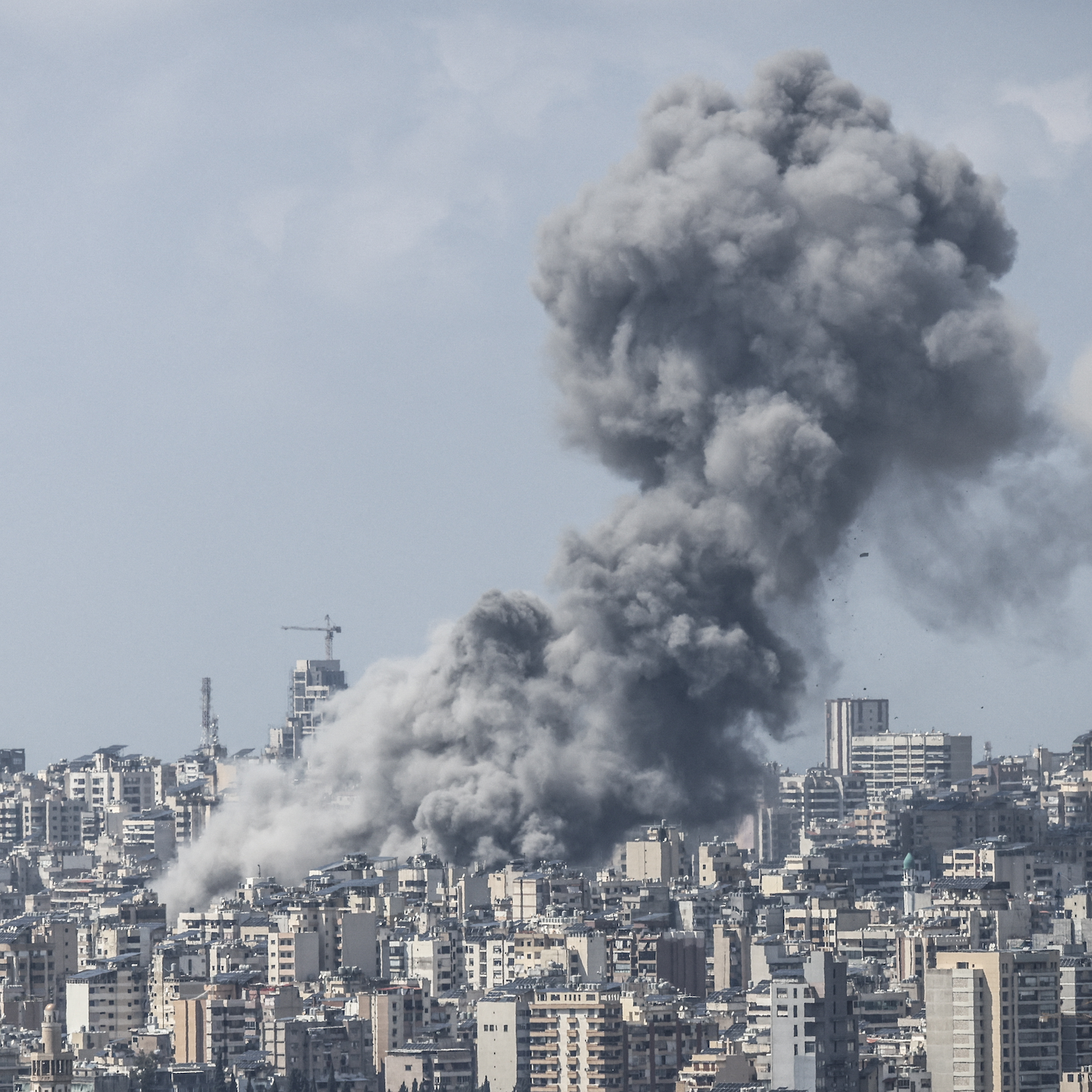
Mayor Hours, after the ceasefire announcement, Israeli strikes barraged Beirut, including
dense commercial and residential areas, according to the AP.
Local journalist Rainia Abouzad told France 24 about the situation on the ground.
There has been an urgent call for doctors across the country to head to hospital.
There have been repeated calls for blood donations of every type.
The ambulances from the north of Lebanon are heading to Beirut, and to the south to
try and assist.
So it's a case of all hands on deck.
This is much, much bigger than anything that was seen in this war.
Or even the previous one, actually.
Last night, Hezbollah said it had responded with strikes into northern Israel.
Iran said that the ceasefire terms had been violated because of Israel's continued
attacks, and they warned of a, quote, regret inducing response if they didn't pull back.
Vice President J.D. Vance suggested Lebanon was never part of the deal.
I think this comes from a legitimate misunderstanding.
I think the Iranians thought that the ceasefire included Lebanon, and it just didn't.
We never made that promise.
We never indicated that was going to be the case.
What we said is that the ceasefire would be focused on Iran, and the ceasefire would
be focused on America's allies, both Israel and the Gulf Arab states.
But he did suggest Israel had offered to, quote, check themselves a little bit to keep
his negotiations on track.
Following Israel's bombardment, Iranian state media said it had closed the strait again.
Yesterday, Trump's press secretary Caroline Levitt said that was false.
This is the case of what they're saying publicly is different privately.
We have seen an uptick of traffic in the strait today, and I will reiterate the president's
expectation and demand that the strait of Ramos is reopened immediately, quickly and
safely.
That is his expectation, and it has been relayed to him privately.
Oil prices fell on news of a deal last night.
But those private words and expectations have yet to translate into real change.
Right now, it's kind of like, oil's down on paper.
But as far as the free flow of oil and gas, that's just not happening.
Avi Salzman covers energy for barons and has been tracking tanker movement.
So far, he told us, it's very quiet out there with few ships passing through.
The last 24 hours have shown us that Iran appears to have full control of the strait, and
it doesn't show much sign of loosening that they see themselves as having leverage.
And right now, it appears that that's the status quo.
Iran is reportedly charging toll payments from tankers, and the financial times rights
that they have demanded crypto fees as the price of entry.
That would violate established trade norms and represent a new source of income for the
regime.
Yesterday, Trump said he was considering a joint venture toll system with Iran.
But even if the strait does begin to open up, Salzman says it could be a long time before
things return to normal.
To start with, many companies are wary of even entering the dangerous waters.
Companies are telling me they're just not willing to take that risk right now.
I checked in with mask, which is the biggest publicly traded shipping company, and they
said, there are too many uncertainties right now.
It's just the life and health of the crew are, I think, their number one concern.
There's also the issue of the disruption and backlog, which Salzman says could take
months to figure out.
Even in the best case scenario, it would be an enormous undertaking.
There are hundreds of ships just sort of waiting to go through.
So it would be like waiting in a line for your favorite concert, except everyone behind
you is more than a hundred feet long.
The strait is likely to be central to the upcoming talks.
This Saturday, Vance is set to be in Pakistan's capital city, Islamabad, to negotiate a more
permanent end to the war.
He'll be joined by special envoy Steve Whitkopf and Trump's son-in-law Jared Kushner.
Across the country, the local backlash against building AI data centers is gaining momentum.
Politicians from both sides have taken note.
President Trump has urged his party in Congress to put the burden of electricity costs onto
companies.
In last month, Senator Bernie Sanders and Representative Alexandria Ocasio-Cortez introduced a bill
that would put a moratorium on their construction.
But it's at the local level where some change actually seems to be happening.
It may become the first state to fully freeze the construction of new centers soon, and
more than 10 states have proposed at least temporary bans.
And on Tuesday night, a city in Wisconsin issued its verdict on a first-in-the-nation referendum.
Port Washington, which is a small town, just north of Milwaukee, targeted zoning policy
and specifically created a measure that would allow voters to have the final say and whether
or not to approve a certain tax incentive for future large developments like data centers.
Tyler Katzenberger is a reporter with Politico covering technology.
There was a lot of uncertainty about how Tuesday's vote would go, and so the fact that it passed
by a two-to-one majority, I think might have been surprising to some folks, I think it signals
that these types of referendums clearly have some kind of ground to stand on, and in other
communities as we look forward.
The campaign gained momentum after the city signed off on open AI in Oracle's 15 billion
dollar facility.
The project will still move forward, but this referendum could lead to future developments
getting blocked by requiring voter approval.
Katzenberger told us that this grassroots effort in a city of around 12,000 people could
set a national precedent, providing a tool for grassroots activists who want to halt
data center projects.
At least three other communities across the country are set to vote on similar ballot
measures this year, and in Ohio, there's an effort to put a ban on certain facilities
on a statewide ballot.
Over the last several decades, rest belt cities like Port Washington have seen investments
decline.
So, naturally, some city leaders are attracted by the prospect of jobs and investment,
but it also brings big political risks and strong feelings.
In one extreme example earlier this week, a city counselor in Indianapolis said that his
home was shot at over construction of a proposed data center.
For many residents, the development of AI data centers in their communities are seen
as a hit on their quality of life.
Folks, they are really protective of their natural resources.
They love their lake.
It's part of the identity and part of the culture there.
They love the nature that surrounds the town, and so when they see this data center proposal
come in, and I think for some folks they feel like they haven't been told enough about
it, or maybe feel like it wasn't transparent enough, I don't know if I want this project
coming in and discerbing the nature around me, the way of life that I have, and also
I'm worried about noise pollution.
I'm worried about, you know, as my water is still going to be fresh.
Katsenberger told us that in the coming months, many more residents from California to Michigan
will have their chance to cast their ballots and put the breaks on development.
As for Wisconsin, a regional business group is seeking to block the measure on the grounds
that it violates state law, but the ballot results is enough for advocates to keep pushing
their opposition.
Today marks the start of the Masters, professional golf's most prestigious tournament of the year.
The annual event is held at Augusta National in Georgia, where players compete to win
the coveted and legendary green jacket.
Yeah, it feels like one of the most fascinating masters we've had in probably at least seven
years.
Brody Miller is a staff writer for the athletic who covers golf and spoke to us from Augusta.
Miller says the tournament will feature big name threats like last year's winner,
Rory McElroy from Ireland, and the currently ranked world number one player, Scotty Schuffler.
But this year, there might be some surprises.
It feels like we might be due for a kind of really out there winner, but on the other hand,
you know, I think it could just mean somebody less established, but on the come up might
break through whether that's a Cameron Young who just won the players, whether that's
a Ludwig Oberg, you know, guys like that that have contended, but haven't made the leap.
The masters holds a special place in the hearts of fans and players.
The course, traditions, and prestige all add up to one of the most anticipated sports
events of the year.
But the 2026 tournament will feel different, missing are two major golfers, Tiger Woods
and Phil Michelson.
It'll be the first masters not to feature either one of these players since 1994.
Three time champion Michelson withdrew from the competition due to a family health matter,
but it will be Woods' absence that is most conspicuous and is still dominating parts
of the coverage.
Woods was arrested and charged with DUI offenses in Florida where he rolled his SUV and was
discovered with two hydrocodone pills in his pocket.
Some players are speaking up about what it all means to them.
Here's Australian pro Jason Day speaking to reporters on Tuesday.
The only thing that I don't understand is that it's a little bit selfish of him to
drive and put other people in harm's way as well.
But he was my hero, you know, he was my hero growing up.
The reason why I play golf is because of this tournament and Tiger and, you know, it's
hard to see him go through what he's going through and especially under the microscope.
This is Woods' fourth incident involving a vehicle since 2009.
He recently traveled to Switzerland where he apparently entered a treatment facility.
He said in a statement, he was stepping away from golf to focus on his health.
Miller says, despite those numerous incidents, the 50-year-old has a reputation of being
able to come back from any challenge.
Tiger Woods is about that Shakespearean arc of this guy falls, but then he comes back
and then each time now, like, the more things that happen to fall, the more you're like him
winning that 2019 Masters or him surviving that 2021 crash and then still making three
more Masters cuts as insane as that is in his late 40s with like half of a working body.
When these incredible acts keep happening, it just keeps propelling this notion that there's
nothing he can't come back from.
And as I wrote, it's becoming dangerous in that sense of, okay, but now this is officially
a problematic series of behavior and I'm not trying to cancel him or dunk on him, but
he's doing reckless things.
And finally, a few other stories we're following.
It seems former Attorney General Pam Bondi won't speak to the House Committee investigating
Jeffrey Epstein after all.
Bondi received a subpoena last month to testify in her government role, but now that she's
gone, the subpoena is invalid.
That's according to a letter sent by the Department of Justice.
President Trump reportedly fired Bondi at least in part over her handling of the Epstein
files.
She was subpoenaed to answer questions over whether the DOJ had acted in compliance with
the law passed requiring the release of all the documents.
Lawmakers complained that redactions in the files were more than the law allowed.
One Democrat on the panel had threatened to begin contempt proceedings if she didn't appear,
though he would need Republican support to move them forward.
If you live in the western and southern parts of the country and felt like it was unseasonably
warm in recent weeks, you weren't wrong.
Last month was the hottest march on record in the U.S. and was the first month where temperatures
exceeded long-term averages by more than nine degrees Fahrenheit.
Ten states recorded their warmest march on record, including California, Idaho, Texas,
and Colorado.
The figures are part of a new report released by the National Oceanic and Atmospheric
Administration.
The report says things are also getting drier.
Last month also ranked as the driest march across the lower 48 states since 2013.
Researchers say that climate change is increasing the frequency of extreme heat events, which
bring with them shorter winter seasons and earlier spring warmth.
And finally, rats are not your typical neighborhood hero, and people don't usually like to celebrate
their presence.
But a new monument was just erected in Cambodia, honoring a very special rodent for its bravery.
Magawa, who weighed less than three pounds, was a giant poached rat that sniffed out more
than a hundred landmines in the country over five years.
A seven-foot statue of Magawa was unveiled last week to honor, quote, one of the best rats
we've ever had, according to the organization of Popo, a non-profit embellagem that trains
animals to detect mines.
Magawa could cover the area of a tennis court in about 20 minutes compared to the several
days it would take humans to do the same job.
Rats are uniquely suited for this kind of work because of their highly developed sense
of smell and compact size, which is light enough not to trigger a landmine.
Better that they are there than in your home.
You can find all these stories and more in the Apple News app.
And if you're already listening in the news app right now, we've got a narrated article
coming up next.
The Wall Street Journal reports on the company's charging Medicaid big sums for in-demand
autism therapy offering services with little regulatory oversight to attach.
If you're listening in the podcast app, follow Apple News Plus narrated to find that story,
and I'll be back with the news tomorrow.