Loading...
About this Episode
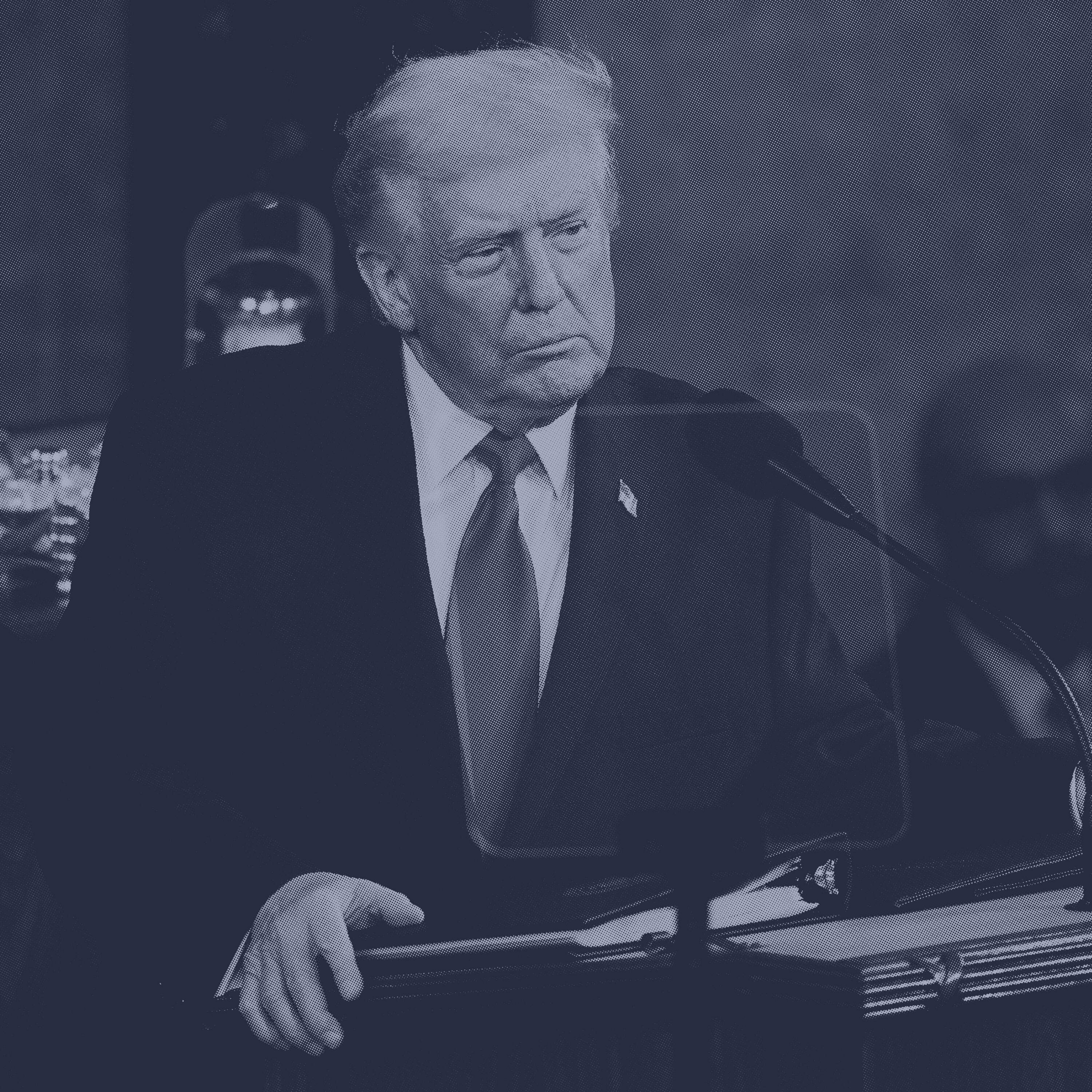
President Trump continues to suggest the federal government should take control over how elections are run. We discuss what he has said about the ways he could do that, whether those tactics are legal, and the impact of the president even suggesting it.
This episode: political correspondent Ashley Lopez, voting correspondent Miles Parks, and senior political editor and correspondent Domenico Montanaro.
This podcast was produced by Casey Morell and Bria Suggs, and edited by Rachel Baye.
Our executive producer is Muthoni Muturi.
Listen to every episode of the NPR Politics Podcast sponsor-free, unlock access to bonus episodes with more from the NPR Politics team, and support public media when you sign up for The NPR Politics Podcast+ at plus.npr.org/politics.
To manage podcast ad preferences, review the links below:
See pcm.adswizz.com for information about our collection and use of personal data for sponsorship and to manage your podcast sponsorship preferences.
NPR Privacy Policy
This episode: political correspondent Ashley Lopez, voting correspondent Miles Parks, and senior political editor and correspondent Domenico Montanaro.
This podcast was produced by Casey Morell and Bria Suggs, and edited by Rachel Baye.
Our executive producer is Muthoni Muturi.
Listen to every episode of the NPR Politics Podcast sponsor-free, unlock access to bonus episodes with more from the NPR Politics team, and support public media when you sign up for The NPR Politics Podcast+ at plus.npr.org/politics.
To manage podcast ad preferences, review the links below:
See pcm.adswizz.com for information about our collection and use of personal data for sponsorship and to manage your podcast sponsorship preferences.
NPR Privacy Policy
Hosts & Guests

Transcript
This message comes from Intuit TurboTax, with TurboTax expert full service, match with a dedicated expert who will do your taxes for you from start to finish getting you every dollar you deserve.
It's that easy. Visit TurboTax.com to match with an expert today.
Hey there, it's the NPR Politics Podcast. I'm Ashley Lopez, I cover politics.
I'm Miles Parks, I cover voting. And I'm Dominican Montenoro, senior political editor and correspondent.
And today on the show, President Trump continues to suggest the federal government should take more or maybe complete ownership of how elections are run.
Just last night he wrote on social media, quote, America's elections are rigged, stolen, and a laughing stock all over the world.
We are either going to fix them or we won't have a country any longer, end quote.
So I want to talk about this, Miles, I want to start with you.
Trump has teased steps that he could potentially take to give the federal government more control over elections.
That includes an executive order. He's been sort of teasing for a while or declaring a national emergency.
Can you explain some of the possibilities here?
Sure, yeah, I feel like this is really the last couple of weeks that's really heated up.
We have a sense that it's coming in early February. He posted on truth social that he had come across some sort of novel legal argument that would allow more federal government involvement in elections and currently exists.
The Constitution's pretty clear we can get into this that states and local governments run elections.
But that post a couple of weeks ago kind of applying that he had some novel legal theory as part of this.
And then last week the Washington Post also reported that there is this draft emergency executive order on elections that's floating around election denial circles being circulated by a guy named Peter Tickton, who's an attorney for Tina Peters, who's the Colorado clerk who's in prison for trying to chase 2020 election conspiracy theories.
All this is to say there is this draft executive order that's been floating around the far right and then it kind of coincides with President Trump posting about this a lot.
Yeah, and you've seen it, right? Like what are some of the top line things we can draw from like what's in there?
I mean what's so interesting is it is it is a purported executive emergency order, but it is not targeted at any one specific thing about the elections.
It is basically a nationwide rewrite of how American elections are run.
I mean it would get rid of all vote by mail for most American voters for instance.
It would force every single American to re-register to vote if they want to vote in 2026.
It would ban printing ballots in anything other than English.
It would institute hand counts across the country.
I mean literally the sort of fringe conservative view on elections.
It is basically a wish list of all of those things.
I'm just gonna say it's a wish list, but Trump doesn't have the power to do that because the elections in this country are decentralized.
They're run by the states, local municipalities, run their elections.
And what that has served to do is to prevent any kind of centralization of power, which is something that we know Trump has tried to do.
So look, Trump is someone who's going to push the limits, push the guardrails regardless of what the law is because he wants to be able to have more control over every aspect.
And I do think a lot of people are taking this idea of an elections emergency being called more seriously because Trump has also used presidential emergency powers more than any other modern president.
And so it just doesn't seem that crazy based on everything else he's done in his first year.
Yeah, but would that apply to elections?
It wouldn't. I mean I've been calling a lot of legal experts this week and asking him just that question.
Like, is there any reading of the law that gives the president this sort of authority in elections sense?
And here's what Michael Morley told me from Florida State University's election law expert.
And he said it is true that the law does give the president a lot of authorities in emergency situations, but not in voting.
There's certainly no laws that purport to give the president a particular emergency authority in connection with elections or that allows the president to promulgate what effectively comes down to a complete code for the conduct of federal elections or just just just because an emergency has been prepared.
So I mean, it's not equivocal. I mean, I can't find the legal experts who even is able to entertain this idea.
Yeah, I want to mull over a scenario here, Domenico, like let's say for a moment that Trump issues an executive order in October.
But the court strike it down as would be expected or state elected officials just simply don't obey it. Does that matter?
I mean, could this still affect the trust that voters have in November's elections?
I think part of this might not be to prevent voting in November, but to delegitimize the results afterward.
Because the fact of the matter is Trump has said this many times that midterm elections are not good to the party in power regardless of what party is in power.
And if that's the case this time around and with Trump being as unpopular as he is, the likelihood is that at least in the House, given the very close margin there, that Democrats would be the favorites to win control of the House.
And what has Trump done every time that he's lost? He has delegitimized the process in the elections. He's blamed immigrants.
He said that there's illegal voting that's happened, even though not only is there no evidence of that, it's been proved otherwise.
I mean, it's so interesting. I think when you talk about this idea of an election's emergency, I'm really curious if this does come to pass and I mean, regardless, it's clear that President Trump is trying to kind of create this narrative about American elections.
I don't get the sense that the American people feel the same way though. I mean, if you look at polling data after President Trump won in 2024, roughly nine in 10 voters thought the election was run well or somewhat well.
And I mean, that is a universal feeling about the election system for the most recent federal election that we had.
I think there's a little bit of hollowness in that number, though, only because the Republicans who said that the 2020 elections were not legitimate weren't feeling that way in 2024 because they're preferred candidate one.
And I think that if you were to have somebody lose who they wanted to win and you had a president on their side saying this was all cooked up. It was all wrong.
It was not legitimate. You would see that nine in 10 suddenly dropped pretty precipitously. Now I do think it's true that independence and Democrats overwhelmingly have said that the elections in this country have been legitimate.
But I don't think that that's something that Trump has necessarily concerned himself with. He's concerned himself with whether or not he can keep his base on board.
And if his base is on board, then he feels that he can push for a legacy that says that he won anyway.
I do want to just say, though, that like we're talking about two different things a little bit in terms of there is the perception part of this.
But I want to still want to drill down on the practical aspects of this that even if President Trump were to declare the exact executive order that we've seen that this draft idea, states would not be required to follow it.
It's not like he could just immediately change how voting happens or the rules around voting in October of 2026.
And so I just want to make that very clear for listeners that states currently run their elections.
And so I think that's what's interesting about this. Even if he puts an executive order out there, states can basically look at that as just words on paper until court step in.
Yeah. And depending how close it is to an election, it might logistically be impossible, right?
That's right. I mean, we're talking about it.
I mean, it's probably honestly logistically impossible right now to do all the changes that are in this proposed executive order considering voting is happening today.
You know, voting has been happening for the last couple of weeks related to the midterm elections.
So that's the other part of this that it's just not realistic to expect this sort of overhaul this close to an election cycle.
Yeah. I think that's largely true.
I do think though that not to be totally conspiratorial, that I think three words define the next two years and 10 months or so of the Trump presidency.
And that's anything as possible.
I think that we've seen a lot of things that Trump had run on then to do something different.
Depending on his whim or his mood, what he's tried to push for, I think is well beyond what most people would think in many cases would have been the norm or what was legal.
Until the courts maybe stepped in and told him otherwise. So I think that we have to keep an open mind to the potential for things but also be realistic as miles is laying out to what is actually possible.
What has the president said though about this draft executive order?
It's interesting. He said he was actually asked directly last week by a PBS news reporter, whether he was planning on implementing this draft executive order.
And he said he had not seen it. And so he is distancing himself from that though. I will also note that he has said that about a lot of things that kind of ended up coming to pass over the years.
So I think there's some degree of skepticism that's warranted with regards that, especially because he's posted online multiple times a week, the last few weeks calling for the same changes that this proposed executive order calls for.
And he has explicitly said things like there will be voter ID for the midterm elections, whether approved by Congress or not. So I mean, he has definitely voiced an openness to massive federal action in elections.
It's almost like when you see him do that, he sort of like is you can see him weighing whether or not this is going to be popular or people are going to accept it.
And then he sort of has this hedging statement on a lot of these.
Well, not to like over analyze like a 25 second video clip, but it's interesting when the reporter asked him about this executive order.
The first thing he said was who told you that and then he responded that he hadn't seen it. And so I don't know. It was just one of those like again, you like it's a Rorschach test for sure, but it was a very interesting response.
All right. Well, let's take a quick break more in a moment.
This message comes from Rinse, who knows that greatness takes time.
So does laundry. So Rinse will take your laundry and hand deliver it to your door, expertly cleaned. And you can take the time pursuing your passions.
Time one spent sorting and waiting, folding and queuing, now spent challenging and innovating and pushing your way to greatness.
So pick up that Irish flute or those calligraphy pens or the daunting beef Wellington recipe card and leave the laundry to Rinse.
Rinse, it's time to be great.
This message comes from Intuit TurboTax. With TurboTax expert full service, match with a dedicated expert who will do your taxes for you from start to finish getting you every dollar you deserve. It's that easy.
Visit TurboTax.com to match with an expert today.
This message comes from Comcast. Nothing brings people together quite like Team USA at the Olympic Winter Games.
From NBC Universal's iconic storytelling to the innovative technology across Xfinity and Peacock, Comcast brings the Olympic Games home to America, sharing every moment with millions.
When Team USA steps on to the world stage, people are not just watching, they're cheering together.
This winter, everyone's on the same team. Comcast, proud partner of Team USA.
And we're back. And Miles Trump has also been pushing in remarks, but also social media posts, for Congress to pass the save act.
This is one space where he is looking to Congress to do something. Can you explain what this bill is and what its prospects are in Congress right now?
Yeah, and I mean, it's also worth noting that this is the one way that legally the president can actually institute some change by pushing for this change because the Constitution says states run their own elections, but Congress can step in with federal laws as they have in the past.
So the save act is essentially the sort of Republican wish list on elections as well, but it's the sort of legislative answer nationally.
It would require nationwide photo ID to vote. It would require people to show some sort of proof of citizenship, either a passport or a birth certificate when they registered to vote to make sure that their citizens is a few other requirements in there.
Those are the two top line things. It passed the House, but it does not currently look to have much of a future in the Senate to be able to pass.
You would need to get some democratic support to overcome a Senate filibuster. That looks very unlikely at this point. So election officials are kind of operating as if the save act is not going to pass at the national level, though I will say there are a number of bills floating around state legislatures, especially legislatures that are controlled by Republicans that potentially could still add some of these new restrictions.
Because research has been very clear on this that if you implement some of these new bureaucratic requirements to vote, there are millions and millions of Americans who would not be able to meet them.
I know the average person might think, oh, I have a photo ID or even I have a passport, but roughly half of Americans do not have a passport. I think one in 10 Americans says they wouldn't have easy access to proof of citizenship documents, even if they are citizens.
And so when you put that at scale to the millions and millions of voters in the country, those sort of requirements could make a difference.
And Dominica, what do we know about public opinion on these kinds of provisions?
Well, a lot of them are popular. I think that Miles is alluding to the fact that most people have a driver's license. For example, there are some instances where people have a harder time being able to get any kind of identification.
And that's where people who are against this kind of thing to try to bring that up for a lot of people who are older voters, for example, rural voters who might not have access.
It's a smaller percentage, but when you're looking at the polls because it's such a small percentage, that's why you have an overwhelming number of people usually like 8 and 10 or a little more, who will say that they think that voter ID, for example, is something that should be used at polling places.
What I do think that's interesting also politically about the Save Act is that if it was more narrow, I've heard that a lot of election officials talk about that, that if it was narrowly focused only on photo ID to vote because that's such a popular issue, that would put those Senate Democrats, many of those swing state Senate Democrats in a much tougher position than the Save Act that's currently drafted now.
But the proof of citizenship issue, the reason that Republicans put that in, I would think, is because a lot of states are giving out drivers licenses to people even if they're in the country illegally.
So that's the argument that you'll hear conservatives make for why they think that there should be proof of citizenship to be able to vote, even though it is a really high bar.
I don't know about you guys, but whenever I'm trying to get my birth certificate together or so security cards for my kids, that stuff is not always the easiest to pull out of the file.
It's not, and again, I also want to note that research has looked into this issue of non-citizen voting exhaustively, and states have spent a lot of money and resources in the last year trying to find the few non-citizen voters that are on roles and that are voting every election cycle, and it has shown to be a tiny, tiny number.
I do want to talk about how Trump is selling this to the American public. He claims that Democrats want to cheat in elections, which is why the Save Act is necessary.
Let's listen to this clip from the State of the Union last week.
Why would anybody not want voter ID? One reason, because they want to cheat. There's only one reason. They make up all excuses. They say, it's racist. They come up with things. You almost say, what imagination they have.
They want to cheat. They have cheated, and their policy is so bad that the only way they can get elected is to cheat, and we're going to stop it.
I mean, if Trump needs some Senate Democrats to support the Save Act, I mean, this seems like a tough sell, which is basically calling all Democrats cheaters.
Right. Saying that any time a Democrat wins, the election is illegitimate, right? And I think that is the broader point of this sort of statement is not, I would argue, not really actually aiming for a policy goal, but just kind of building this shroud of concern or this shroud of doubt around any election Democrats win to then set up the situation where you can contest that election after the fact.
Yeah, it's about narrative in some respects. It's about political messaging. I will say, though, that even though that it's unlikely that the Save Act could overcome a filibuster, the 60 votes needed in the Senate to be able to pass something like that.
Other states that have been kind of moving in this direction. Florida, for example, is kind of moving down the road of passing its own version of the Save Act.
And I think that overall, when you look at the panoply of the ways that different states run their elections, you have Democratic run states, you have Republican run states, and there are red states that do seem to want to be able to go along with almost anything that Trump has said that he wants done.
Just because those states are, quote unquote, red in a presidential election, that might not matter. But when you're talking about a midterm election, where each of these states will have swing districts in those states, I think about places like Florida, like Texas, where these things that Trump wants done, these restrictions put in place, could make a difference in some of those places and we're talking about control of the House.
Something else that's been floating around miles is that immigration enforcement officers could potentially be present at polling places. First of all, where is that coming from and how likely is that to actually happen?
Yeah, I mean, it's coming from allies of President Trump, frankly. I mean, I think the most high profile example was a couple of weeks ago, Steve Bannon said it on his very widely listened to podcast that he wanted ice to, I think, surround the polls was the direct quote.
And then the White House was asked directly after Bannon said that Caroline Levitt Press Secretary was asked what the administration thought about that. And she said she couldn't guarantee that ice wouldn't be present at polling locations in November. So I think that this is something that I would say concerns started last summer when we saw the National Guard deployments across the country is something that
oh, the Trump administration is using these sort of the broader federal government in novel ways and then it's kind of morphed over the last few months and weeks, though I will say a big update on all of this came in the last week.
A high ranking official at the Department of Homeland Security woman named Heather Honey had a call with a bunch of state voting officials last week and told them unequivocally that ice will not be present at polling locations that any suggestion otherwise was disinformation and then today,
Christy Nome was testifying before the Senate and she said roughly the same thing to Senator Alex Bidia she wasn't as unequivocal she said something long lines of there are no current plans for ice to be at polling places which he noted that that's not the same thing is saying there won't be ice at polling places, but it was still similar to this idea that they they seem to be playing down this notion probably because it's illegal. I mean there is again no gray area here on whether having ice at polling places
around the election infrastructure would be legal there is explicit federal laws that say the military armed forces and civil forces of the federal government cannot be involved in the election infrastructure.
You know it doesn't mean though that the threat of this might not have a chilling or suppressing impact on a lot of communities because you know just because we're talking about the legality of it not everybody is listening to our podcast not everybody is paying attention to what those rules are what they are seeing is the harsh ice tactics that are making the news and that seems to be intentional from the administration as well.
I mean that's when Trump at the state union also talks about the almost zero border crossings part of that is because of what has been seen on TV those very public tactics from federal law enforcement and if you're putting that out there and you're saying that hey you know we might send people to polling places even though they might not actually do it that might make people be a little concerned
that even if they're in the country legally that they could get you know pulled aside or tackled or have their entire household looked through for example.
But counterpoint to that is that there's another potential political outcome here which is that I've talked to democratic pollsters who have found that the most effective turnout message for democratic voters is a voter suppression narrative.
This idea that people do not want you to vote and though you need to go out and show them and so there is a version of this where this really backfires where we already are talking about all the headwinds pointing in the democratic direction this midterm election.
And so if you toss in this kind of very motivating voter suppression narrative into it I could see that potentially juicing turnout for some population.
And that is something that we've seen in places like Georgia with black voters the souls to the polls efforts that we've seen a lot of the messaging around that is hey they don't want you to vote so go out there and do it.
Well back to the minute goes point that it sort of depends like if we're looking at some swing districts or swing states for example this could be potentially more contentious.
I mean are there any specific states or areas that you guys are watching out for that could be right for fights over the validity of elections.
I think everybody winds up talking about Texas these days it's right at the center of everything actually is you know have been come from there.
But you know I would look at places like South Texas which has heavy Latino population where Trump had really tried to win over Latino voters in the 2024 election.
Polling has shown them sliding away pretty heavily and we've seen that governor Greg Abbott in the state is certainly willing to do almost anything that Trump is saying you know is necessary for their state or for election security or for anything else.
I think that a lot of places in Texas where they're going to have redrawn maps a lot of potentially competitive places that's one place I'd look.
Like there's kind of two buckets for where these sort of election conspiracy theories really focus and that one is really close elections were just a handful of votes could change the direction one way or the other the other is when unexpected results happen where voters were rooting for one candidate are so confused.
And how could this possibly happen and I think Texas could potentially hit both of those things if you see a very close election that's decided by a few hundred or a few thousand votes either in the statewide race or in some of these competitive house districts.
Or if a Democrat wins the Senate for the first time in 40 years I think you definitely could see both those things converging to really create a tough tough election conspiracy way escape.
Well let's leave it there for today speaking of Texas tomorrow we will be talking about the results of the primary elections in North Carolina and Texas.
Make sure you don't miss it by hitting the follow button wherever you get your podcasts. I'm Ashley Lopez I cover politics.
I'm Miles Parks I cover voting and I'm a Dominican Montenegro senior political editor I'm your spot.
And thank you for listening to the NPR politics podcast.
This message comes from Jerry many people are overpaying on car insurance why switching providers can be a pain Jerry helps make the process painless.
Jerry is the only app that compares rates from over 50 insurers in minutes and helps you switch fast with no spam calls or hidden fees.
Drivers who save with Jerry could save over one thousand three hundred dollars a year before you renew your car insurance policy.
Download the Jerry app or head to Jerry dot AI slash NPR.
This message comes from NPR sponsor one password anyone else feel like 99% of your emails and texts are password reset codes trusted by millions of users and over 175 thousand businesses.
One password let's you skip the resets and sign in securely with strong unique passwords that auto feel across all your devices.
Then safely share logins store cards and files and finally stop using your pets name as a password.
Try it free for two weeks at one password dot com slash NPR.


