About this episode
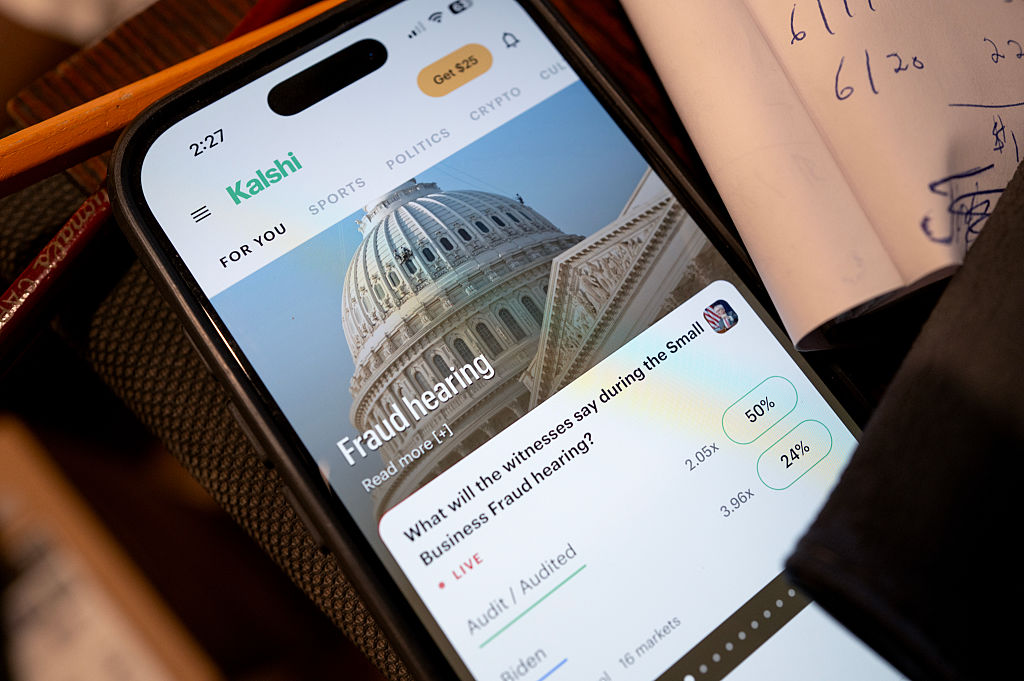
On today’s edition of The Briefing, Dr. Mohler discusses 5 MLB teams partnering with prediction markets in states where betting is illegal, Kalshi’s George Soros ban, the moral complexities of data centers, and why secularism is not a sufficient worldview to keep students from using A.I. to cheat in school.
Part I (00:13 – 07:58)
Pete Rose Would Like a Word: Five MLB Teams Partner with Prediction Markets in States Where Betting is Illegal
- Kalshi partners with MLB teams in latest prediction market marriage by USA Today (Adam Kaufman)
Serial Fraudster Gets Lifetime Ban from Kalshi: George Santos Receives First Lifetime Ban From Kalshi For Betting on His Own Attendance to State of the Union Address
- Ex-Congressman George Santos Receives Kalshi’s First-Ever Lifetime Ban by The Wall Street Journal (Brian Schwartz and Jack Morphet)
The Moral Complexities of Data Center: There are Many Things to Consider Morally and Politically Here
Part IV (20:30 – 27:28)
A.I., Secularism, and Students Cheating: A Secular Ethic is Not Enough to Create Honest Students and to Prevent Them From Cheating
Sign up to receive The Briefing in your inbox every weekday morning.
Follow Dr. Mohler:
X | Instagram | Facebook | YouTube
For more information on The Southern Baptist Theological Seminary, go to sbts.edu.
For more information on Boyce College, just go to BoyceCollege.com.
To write Dr. Mohler or submit a question for The Mailbox, go here.
Get every episode summarized
Each time The Briefing with Albert Mohler publishes, we email you a written briefing from the transcript — the topics, who appeared, and any specific claims, with the ad reads skipped.
Email me new episodesFree for 3 shows. No card needed.
Hosts & guests


Transcript ready
458 searchable segments. Every word is indexed and playable.
Full transcript
The Briefing with Albert Mohler — Tuesday, September 1, 2026. Machine-transcribed; use the interactive transcript above to jump the player to any line.
It's Tuesday, September 1, 2026. I'm Albert Moeller, and this is The Briefing, a daily analysis of news and events from a Christian worldview. Going all the way back through the Christian tradition, we come to understand there have been very serious moral concerns about what would be defined as gambling. Gambling itself is not a morally neutral activity. As a matter of fact, going all the way back to Scripture, going all the way back to the wisdom literature and the Old Testament, there's a very clear condemnation of doing stupid things with money and putting things at risk when it comes to gambling. And instead, the Christian moral tradition is based upon the understanding that there should be a righteous reward for the right kind of work, the right kind of investment. And indeed, that it should be the Christian understanding that when you are looking at labor and reward, you're looking at investment and reward, you should be looking at a clear
moral calculus. The problem, of course, with gambling is that the moral calculus gets completely broken. And now, the Christian tradition is looked at the moral problem of gambling at about three different levels. Number one, the thing itself. And so this is where there has been, in general terms, a Christian consensus that gambling as an enterprise is, let's just use a very mild phrase, morally dubious, that is to say, it is likely that it is immoral. The second thing has to do with the Christian concern about the effects on, say, families and on individuals of habitual gambling and the losing that comes with it. The third level has to do with the fact that gambling is almost never taking place and anything even like some kind of morally neutral context, just taking place, at least in terms of history, in terms of, you know, games that are hidden away from the authorities, often with the involvement of organized crime, you have again, the criminal activity,
you have the big business of gambling and casinos and all the rest. And let's just say it flies in the face of what is classically defined in Christian thought as the Protestant work ethic. And the fact that work has dignity, that investment has dignity and that dignity is rewarded with a salary, with income and that business is good. So long as it is incentivized the right way, organized the right way and where there is a Christian understanding of right and wrong and where there is a reward for doing the right thing. The problem with gambling that is right at the heart of the Christian concern is that you're incentivized to do the wrong thing, which is to put your money at risk. Now one of the things that is very clear in the history of gambling is just take the state lottery in the United States where you have so many states that are enriching themselves by means of an official legal state lottery. This became very popular at the end of the 20th century and they're just a fact of the
moral landscape these days. But the reality is if you look at where those lottery tickets are sold, there is direct targeting of disadvantaged neighborhoods. That should tell you something right there. The states have turned predatory upon their own vulnerable citizens. But of course the big issue in gambling right now is even what is legally defined as gambling and is not. And this is where the new reality of prediction markets comes in. And the prediction markets, most famously, Colchie and Polly market, are saying that they're not involved in gambling at all. They say to the state regulators, you can't classify us as gambling because we are instead an investment vehicle. And you have the same thing in the federal government and frankly, the Trump administration has been pretty much for the prediction market business and against any kind of regulation. But inevitably we have to define it two ways, morally and legally. Now I think for Christians, the moral definition is just easy. It's it's natural. It's almost impossible not to get the point.
When you're looking at how Colchie and Polly market work, they work by incentivizing what can only be described as betting. Now it may be disguised in terms of some kind of futures investment, but the fact is it is not only gambling, it is one of the most ridiculously undisguised forms of gambling. The big headlines right now have to do with whether or not you could for instance gamble on your own business. You could be involved in prediction markets on your own team. We have members of the government that are now openly accused. And in some cases, criminally charged of placing, let's just say, prediction market investments on things that haven't yet happened most famously, that includes some military strikes in which you have people in the military who have faced and are now facing criminal charges. But you also have this in in sports and frankly, it's not just professional sports. It's now also collegiate sports. Very interesting headline of the sports section of USA Today, five major league baseball teams partner with prediction bet company. Now in moral terms, this is one of the most shocking developments of the last, say, 20
years. When you look at major league baseball, that was once an organization that knew it had nearly been absolutely ruined by a gambling scandal or repeated gambling scandals to the extent that they were absolutely determined to have nothing to do with gambling. But that began to break down with the emergence of widespread legalized gambling and sports gambling. And now with the prediction markets and all the rest. And so again, what you have here is a news story USA Today's Adam Kaufman reports, quote, call she is expanding its presence and professional sports with partnerships involving five of major league baseball's most recognizable franchises, including four located in states where traditional sports betting remains illegal. Boom, boom. Did you hear that? So now you have major league baseball getting involved in this, which is a form of betting. It really is. It's, I think it's undeniable. That's what it is. But it's disguised as an investment scheme. And now you have major league baseball teams located in states where gambling is illegal.
They are going to be involved in this. And they're now announcing the signed deals with Calche. It's very, very interesting. This is not the only big development in recent days. Another big development is what took place in a courtroom. And in this case, it was the US Court of Appeals for the Ninth Circuit in San Francisco, where that court has now ruled. And you're talking about the appellate courts that are just under the Supreme Court. This appellate court in California has ruled that the prediction market business is a form of gambling. Okay. Now here's what you need to know in terms of how our court system works. There have been other similar level decisions, one in particular that said that the prediction markets are not gambling. And so you have one appellate court in one circuit saying, no, you're looking here at undeniable gambling. The other saying it's not a form of gambling. That sets up what is almost certainly going to be an appeal and an inevitable involvement by the Supreme Court of the United States. And that's because when you have two different circuits, two different courts at the level of the US courts of appeal, when they differ, you really have a huge problem.
Now on some issues, it's regional in effect, but we're talking here about something that's national in scope. And so I don't think there's any way the Supreme Court's going to be able to avoid taking this. Now, by the way, this court in California, the US Court of Appeals for the Ninth Circuit, for the course of the last several decades, it's been known as a pretty liberal court. It's hard to say, however, if this is a liberal or a conservative issue, you have Zach Fulton, a spokesman for the Commodity Futures Trading Commission, the CFTC, the federal agency that oversees the industry. He said, quote, the Ninth Circuit has now teed up a circuit split that calls out for resolution by the Supreme Court. So it's going to be really interesting. It's going to be very interesting where you have argument saying, no, this isn't gambling. This is a form of futures investing, but then you see how it actually works. I mean, even the people involved in it basically admit it's a form of gambling. And one of those, by the way, is someone who's now banned, absolutely banned from Calche. And that is former US Congressman George Santos.
He's back. He's back in the headlines. George Santos is back. You may remember him because he had to resign his seat in Congress because he was about to be expelled, by the way, for lying about his own story in the background and financing and all the rest. He later went ahead and pled guilty to crimes, including aggravated identity theft and wire fraud. He was pardoned by President Donald Trump, a very colorful character, pardoning another very colorful political character. But in this case, you now have George Santos banned from Calche. Why would he be banned? Because he basically bet on himself and his own future behavior. That's like the perfect bet. Bet on yourself and what you're going to do. And in this case, Calche is over the line. So as the Wall Street Journal reported, quote, Calche said on Monday that it would ban former Republican representative George Santos from using its platform for life. So he's banned for life after a federal regulator alleged that the ex-congressman made more
than $17,000 by placing bets on his attendance at President Trump's state of the Union address. End quote. It's almost impossible to talk about this without some kind of rye, ironic smile, because you're talking about someone who is just a serial fraudster. And in this case, someone who is now banned for life from Calche, but in this whole picture is basically the admission that it was a form of betting on whether or not he would attend the state of the Union address. And he got caught. Let's just put it that way. You have far greater moral issues at stake in many other of these gambling issues, gambling related, betting related issues. It's going to be very interesting to see how these arguments come down. But it is the definition of the fact that in an economy, you have both laudable and not laudable areas in the economy, honorable and less honorable. And so there are some people who just want to argue that the market is a non moral environment
which things just work out over time. But for Christians, that's a very hard argument to make, because Christians have to understand cause and effect in moral terms. And when you're talking about something like this, the incentivizing of people to put money at risk. And frankly, in this case, doing so in such a way that it is spreading rampantly throughout the community. One of the things about these prediction markets is that there are some places where teenagers who could not legally bet even where there is state legalized betting, they can be involved in this. And I can tell you institution by institution school by school, you have educators at the high school level and at the college level. This is overwhelmingly an issue with young men and in particular, a sports betting. But it is also clear that the pattern is spreading beyond sports betting to other areas as well. By the way, another news story that came also yesterday, quote, Calche suspends Republican House candidate for betting on her own race. So in this case, we're talking about a congressional race in North Carolina where the candidate was suspended this coming from the New York Times, from the trading platform.
We are told that she, quote, purchased less than a thousand dollars of contracts related to her own candidacy that that violates the platforms rules. She said in a statement, quote, I bet on myself literally it was a dumb mistake. And as soon as I learned there was an issue, I worked to make it right, safe to say, my career as a Calche trader was short lived, end quote, you know, whether or not this has traction in the campaign or not, it's just one of the statements about how widespread this is. I think most Americans, all of us, frankly, would be shocked to know how widespread some of this involvement now is across our economy and society. All right, next we're going to shift to another big story in the headlines. And this is when we have to think through in worldview terms a bit. I'm talking about the controversy over technology, flock cameras, one big moral debate, more widespread even than that are the controversies over artificial intelligence and the data centers. And in particular, the fact that so many data centers are now being built and we're talking about thousands across the United States, not just dozens or hundreds, but we're talking
about a huge number that are either under construction already existing or planned. But we look at this and we understand there's a big political backlash here. And the interesting thing to so many in the media is that it is a bipartisan backlash. You have Democrats and Republicans involved in the backlash against these data centers. You also have liberals and conservatives that are upset about it. You have Republican governors and Democratic governors that are having to respond to this. And you have politicians all over the place who are deeply involved in opposition to the increase in these data centers. Now let me just make a prediction. I'm making a prediction here that I will, I'm not making this as a bet. I'm just telling you, I think this is the way things are going to unfold. These data centers will continue to be built. I want to tell you why I am absolutely certain that is so. It is because we as an economy and as a culture and as a system depend upon them. And so there's some big world view dimensions here that I think the mainstream media are missing. And so I will tell you, I think President Trump is right when he says, these things are
going to happen. I do think they're going to happen. I don't think necessarily they're going to happen the way they've been happening. And I think they may happen now with greater restrictions. And in particular with protections built in for citizens of a state or a location that their electricity prices are not going to go up and that their vulnerability to blackouts is not going to increase. So there's going to have to be some assurance that these data centers will be able to operate on their own and not endanger local communities. Now there are moral complications. This is a big issue in the Christian world view. We understand that the larger an issue, the more complicated it becomes and the parts sometimes need to be, well, let's just say pointed out. So for one thing, you look at this explosion in data centers. Why is it happened? Well you are the problem, dear listener. And I am the problem because we're using up data. We're using up wireless data, digital data. We're using up computing capacity. When you use the app on your phone that helps you with that with navigation, maps, all
of this is using up computing power. By the way, Americans are just absolutely used to having it at our disposal. We actually expect to have almost instantaneous delivery of this. And furthermore, you just multiply it by millions upon millions upon millions and the data draws are enormous. And that doesn't even get to the larger draw, which is the institutional organizational business, the governmental giant digital draw in terms of this computing power. So let me just say you depend upon it. When you go to the hospital, your hospital depends upon it, your university depends upon it, your factory and industry, all that depends upon it. There's going to be a greater need for this computational capacity in one way or another. It's going to be built. President Trump is also right when he says this is a national security issue. The need for a widely distributed, generally available and less likely to be isolated, computing source behind all of these data centers. What is a national security issue for the United States of America?
The ability of our armed forces, our defense forces, national security forces, all the rest to operate is based upon massive, massive, massive computational power. And it grows all the time as the economy grows. And eventually you have to have data centers that coordinate the work of other data centers that back up other data centers. That's just the way it works. I am not saying that politicians and citizens are wrong to be concerned, to be complaining, to call for a moratorium or a suspension. And that's because clearly there need to be changes in the way these data centers are built. There need to be changes in the way they themselves are fueled. There need to be changes that on both the right and the left, we understand there are some ecological issues that are involved, including water use that's never neutral. And in some parts of the country, that's one of the most pressing issues imaginable. And so the prediction that I think is pretty safe here is that there will be an abundance of data centers built. But likely in a different context in which there are new expectations about how they're
going to be built, how they're going to operate, and protections built in for citizens of areas. And so they are not endangered by a lack of access to electricity, nor are they paying and subsidizing a vast increase in price in that electricity. So you have Republican governors like Greg Abbott and Texas, and you have liberal governors like Gavin Newsom in California. They're actually pretty much on the same page, at least for the short term. You also have a Democratic governor like Josh Shapiro in Pennsylvania running for reelection. And let's just go back to Texas, a Texas governor, Greg Abbott, a Republican, both of them were pretty much for the data centers before they were against them. And I'm not even criticizing them. It's because the landscape of the question changed and you have public concerns. So you have the headline, and again, USA Today's kind of an indicator of barometer of the age. Here's the headline, Americans unite and fight against big tech. Well, that's an interesting story. You know, Americans are divided on so many different issues, but when it comes to whether
they want one of these things, you know, as they are currently built without restrictions and many of these concerns, you know, the answer is Americans have big concerns. I just want to come back and say the needs won't go away. And as a matter of fact, the needs aren't just the national security state there, and not just, you know, big institutions, the needs are everything we depend upon as just ordinary citizens. And even the computational power that we depend upon to just organize our lives and make our lives work. Not to mention the fact that in a lot of homes, everything from your thermostat to, you know, you name it is increasingly a part of this large digital data system. Now are there moral concerns about that? There are certainly big control concerns about all of that. But the point is it's all very hungry and thirsty for computational power. So in the worldview analysis here, I think it's very interesting to understand you have a collision of interests. You have a disequilibrium in terms of politics. It's not a Democrat versus a Republican. It's not a Republican versus a Democrat.
You have Republicans who disagree, Democrats who disagree on this issue. But it is also the kind of concern that spreads community by community very quickly. And so it's going to be interesting to see what new arrangements are put in place. But I come back to the fact that even the Americans complaining about these data centers are using vast amounts of data to complain. By the way, when I speak of the complexity here, let's understand that there really are several levels. I will just simply say that I believe the future in terms of how these data centers are thought about how the political arrangements are eventually worked out. I think it's going to come down to adding electrical capacity. So you have the generation of electricity that doesn't put people in danger. I think you're going to have a big concern about minimizing impact to communities. I think you're also going to have a situation in which you're going to have a concern about indirect and direct costs and the impact. But another big issue that people are really thinking about is the impact upon labor. And here's the big thing.
This giant explosion of construction and all the rest when it comes to these data centers has a lot to do right now with a renaissance in the trades. So you're talking about data computation, but strangely right now it's untold billions of dollars of investment that is leading to jobs for electricians and construction workers and others. And so you also have big American labor unions that have a stake in this and they're saying, you know, if you don't build these things, we're going to lose jobs. So once again, we understand as Christians that the more complex and entity becomes the more complex, the system becomes the exponentially the moral issues can also develop. And that's inevitable. And as Christians, we're the people who are not supposed to be surprised by that. But as we are in a system right now that allows deliberation and public input and all the rest, let me just say, I'm absolutely certain of this bet. We're in for a very interesting political season ahead. All right. We have back to school season.
It's well underway. And as a matter of fact, today we have opening convocation ceremonies at the Southern Baptist Theological Seminary and Boyce College. It is a, it's an historic event. It's a festive event. It's a formal event. It's a worship service for us. It's in many other institutions, not a worship service, but it certainly is here. And there are big issues that swirl around in terms of education at the beginning of every academic year, whether it's a kindergarten or high school, middle school or college and graduate school. There are big issues. One of them has to do these days with cheating. And of course, the arrival of so many technologies defined as artificial intelligence, the opportunities for cheating have just gone up exponentially. Adam Grant, who's a contributing opinion writer for The New York Times, he's also an organizational psychologist at the Wharton School, that's the Business School, Graduate Business School, the University of Pennsylvania. He's written an article to stop cheating in school, address the root cause. Okay, as a Christian, I'm in to find out what this root cause is.
He says, if you want to end cheating, if you want students to stop cheating, address the root cause. So it's a big article. It's half a page in the opinion section of Sunday's edition of The Times. And so he says the problem is that students are not being educated in terms of the ethical weightiness of these issues. He also says that there is a change and that change is that in the past, and I quote him here, research showed that students who cheated felt guilty about it. It was a last resort stigmatized enough that many wouldn't emit doing it to estimate how common it was. Researchers had asked students about the rate of cheating in their class or run anonymous polls. Everything's changed though. He says this quote last year, when I surveyed students at elite universities about their views of cheating, plenty of them admitted to doing it to get into college. And they signed the survey using their full names. He then summarizes quote, AI hasn't just made cheating harder to catch. It's made cheating so effortless, enticing and available that many students no longer
believe it's wrong. One Ivy League student in a survey wrote quote, cheating is a creative expression in a form of problem solving. If you can get around the restrictions put in place and not get caught, then good on you. Now this professor who's writing the opinion says, really? How would you feel if you found out your surgeon cheated to get into medical school or cheated in medical school? Okay. So then he goes to psychology. And again, he is a professor of organizational psychology, the Wharton School at the University of Pennsylvania. And he says, according to psychologists, quote, many people judge their integrity using a system of credits and debits. After doing something virtuous, people feel like they've earned a license to indulge in a vice. He goes on saying students need to be educated in the ethics of the fact that it's wrong to cheat. And he says, quote, ethics education can make a difference. But we need to be thoughtful about how we deliver it. Integrity wasn't instilled by hectoring or lecturing. It was up to the financial advisors, he speaks about one study. To do more than memorize rules, they learned a whole moral code as they grappled with what
was ethical. They persuaded themselves it was important. He summarizes by saying in every home and in every school, we should be inviting kids to think about how cheating is unfair to their friends, how it undercuts efforts to build a just society and how it undermines the quest to become a person of principle. End quote. Now I just want to say very sadly, that's basically all he has to say. So in other words, the strong moral argument against cheating is supposed to be down to this, how it undercuts efforts to build a just society, it's unfair to their friends, it undermines the quest to become a person of principle. Do I think those things are right? I think they are right. Do I think they are morally binding? I think that's a laugh. I think what we see here is the absolute vacuity, sterility and just minimal impact of a totally secular ethic. If all you have to say is that this is unfair to your friends, if all you have to say is that this undercuts efforts to build a just society.
If all you can say is that this is going to harm your effort to become a person of principle, I can just say that you better get used to cheating becoming a part of life everywhere. And I'm just trying to make this point as a Christian, as a Christian theologian, as one involved in Christian ethics. Let me just tell you, if it is not wrong and if it's not understood to be morally wrong, then kids are going to do it. And frankly, you know, others are going to do it too. And so our point is Christians is this. We don't believe that our ethics comes down primarily just to something that's unfair to our friends or something that undercuts efforts to build a just society or just the quest to become a person of principle. We believe that there is a God who is absolutely holy, absolutely righteous and absolutely just who has created us in his image as moral beings. And we believe we have been addressed both in Scripture and in nature around us with the moral knowledge that is binding upon us.
We believe that things are not just right and wrong as if we're saying we're paying a compliment to the first and a critical word to the second. No, we think there is absolutely truth and falsehood. There is absolute right and absolute wrong because God who created all things secures it. It's wrong because it's wrong. Once again, I go back to the word ontology. We believe as Christians that there are things that are ontologically that is in the entire universe and the cosmos and even in the character of God, these things are right. And the opposite are things that are wrong. There is absolute good and there is also what is truly evil. And it's hard to imagine how you can organize any sane society without that kind of moral authority. The most you can say to students on a campus is this is not going to help you to become a person, a principal. This doesn't help to build a just society. This is unfair. You will be, I think, very disappointed in the lack of traction your moral arguments make.
What we have here, by the way, is the loss of any concept of sin in so much of our society. All you have left is this kind of moral argument. I think, you know, put forward in good faith. I mean, if this is all you've got, you haven't got much. Thanks for listening to the briefing. And for more information, good on my website at AlbertMotor.com. You can follow me on X or Twitter, simply by going to x.com forward slash AlbertMotor for information on the Southern Baptist Theological Seminary, go to spts.edu. For information on voice collids, just go to voicecollege.com. I'll meet you again tomorrow for the briefing.
More episodes
More from The Briefing with Albert Mohler

Friday, September 11, 2026
The Briefing with Albert Mohler

Thursday, September 10, 2026
The Briefing with Albert Mohler

Wednesday, September 9, 2026
The Briefing with Albert Mohler
Tuesday, September 8, 2026
The Briefing with Albert Mohler