About this episode
Get every episode summarized
Each time Full Story publishes, we email you a written briefing from the transcript — the topics, who appeared, and any specific claims, with the ad reads skipped.
Email me new episodesFree for 3 shows. No card needed.
Hosts & guests

Transcript ready
709 searchable segments. Every word is indexed and playable.
Full transcript
Full Story — Tupac’s murder: solved at last?. Machine-transcribed; use the interactive transcript above to jump the player to any line.
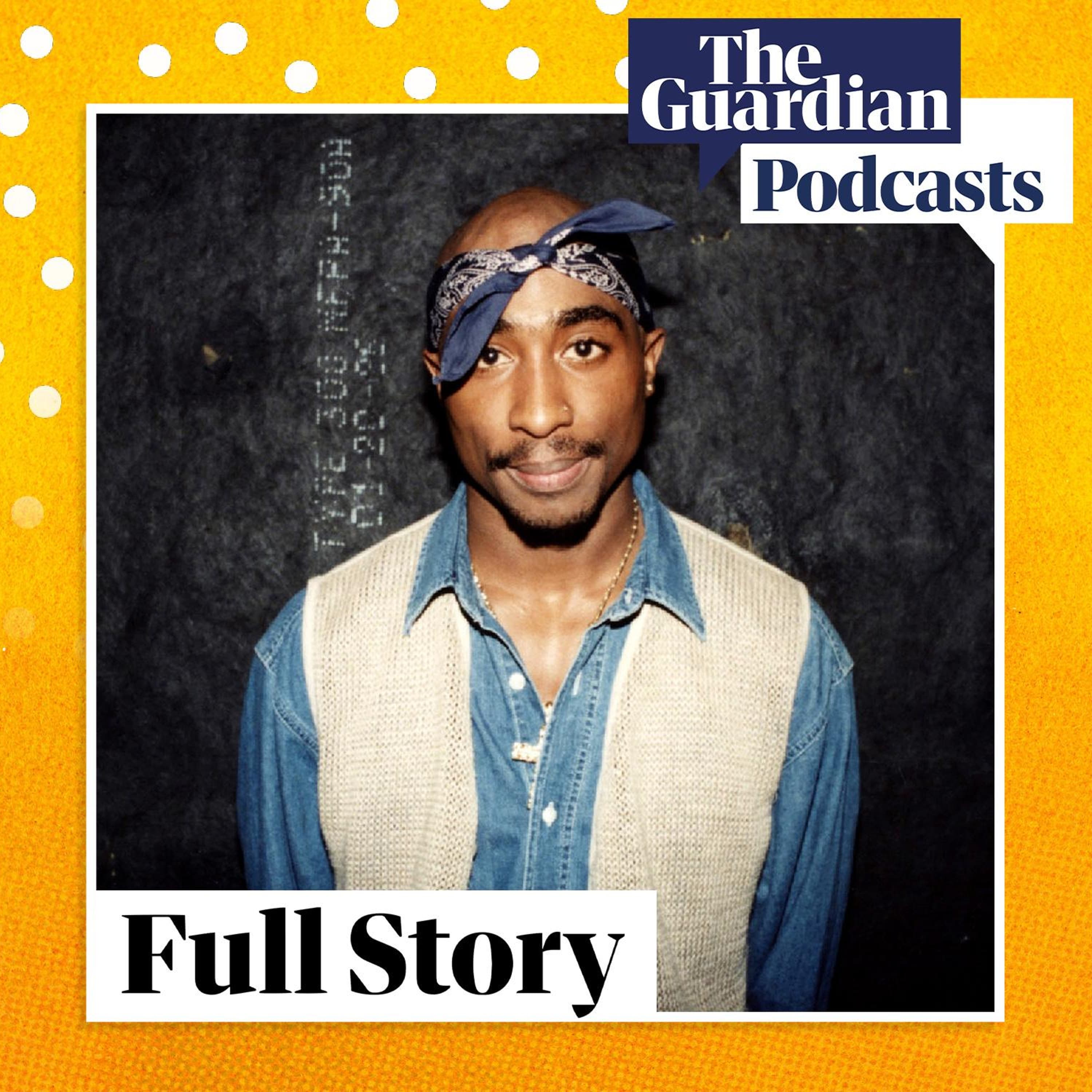
This is the Guardian. Regidarmate here on Gadigal land. In 1996, rapper Tupac Shakur was killed in a drive-by shooting. Nearly 30 years on, no one has been held to account for his murder. Until now. On Monday afternoon in a Las Vegas courtroom, a jury handed down its verdict. Today, the Guardian's International News podcast today in focus on the conclusion of Tupac's murder trial. It's September 1996, and we are at a NAS concert at the Naso Coliseum in Queens, New York. The show has been halted midway through for some big breaking news. Six days earlier, Tupac Shakur had been shot in a drive-by ambush in Las Vegas.
He was just 25. And already, one of the biggest artists in America. He just released a huge album, All Eyes On Me, which spawned two number one singles. It worked with some of hip-hop's greatest. The first time he was shot in Hollywood films.
And then he died. For 30 years, no one has been held to account for his murder. Meanwhile, his legend has only grown, along with the conspiracy surrounding his death. Then on Monday afternoon, in a Las Vegas court, came a resolution of sorts. From the Guardian, I'm Helen Pitt, today in focus. The life, death and legacy of Tupac Shakur. William Shaw, in the late 1990s, you were spending a lot of time in Los Angeles researching your book, West Sideers, about the West Coast hip-hop scene.
And you actually met Tupac, didn't you? Take us back there. What was it like? I did on a couple of occasions, actually. Yeah, I was being sent to interview him by an American magazine. This time was actually in the Beverly Hills Hotel, in this swanky, swanky restaurant, just after he got out from his prison sentence up in Danomora prison. So we were at this restaurant having a meal and he was looking over there. He was going, and it was Emma Thompson and Anthony Hopkins. And of course, he was a huge Anthony Hopkins fan. So it was a bizarre contrast for him. And he was almost remembered the sort of like peach-colored tablecloths and the fine cutler in. He was a lot of conversation, talking about his time in prison and then putting this luxury life in Los Angeles. So we remind us what he was in prison for? So he was serving a prison sentence for sexual assault on a young woman, a sentence, I think, between 18 months to four years he was going to serve. And it had been allegedly a very brutal assault. And the judge may specifically said it was a brutal assault on a young woman.
He always denied it. And he was out on appeal from the prison in Danomora. Shug Knight basically bailed him out with all the money he was making from the record business. He really wanted to pack on his labels. So he got him out of prison literally with money. Yeah. And Shug Knight, real name, Marion Shug Knight was the boss of death row records, which he co-founded with Dr. Dre and others. And it was a massive label in the 90s. They had artists like NWA, Snoop Dogg, people like that. Yeah. So, Tupac was finally out of prison. He was leading his best life really. He was leading his perfect sort of life that the one that he had yearned for a long time where he had a great position to make a lot of music, a lot of people around him. And here I was in the Beverly Hills, Hilton having a very posh dinner with him. And quoting Robert Frost poetry at me. Because he was an incredibly erudite man, came from a very rich cultural kind of family. Give me a characterization of your childhood. How would you describe what it was like growing up? I was a total opposite of what I am right now.
I was quiet, withdrawn. I read a lot. I wrote poetry, I kept a diary. His mother was a phanish accur. One of the black Panthers, she had been tried in the 70s, I think, as one of the sort of principal black Panthers. And had called him Tupac Amaru Shukur, naming him after these South American kings. Something which you regarded as he was proud of, but you also kind of regarded as a massive burden. And obviously everybody at school took piss out of him because he was called Tupac, One Pack, or whatever. And he had to carry around this thing of coming with this incredible political legacy of his shoulder, of black resistance. His mother had then descended into kind of a terrible period of cocaine addiction. He was carrying a lot, but he was also incredibly well read and understood a lot of the history around that. So you met Tupac in 1995. How big a star was he by that point? He was becoming a massive at that point.
Ladies and gentlemen, please welcome a claimed rap artist and Grammy nominee Tupac. I'm not a massive hip-hop head, weirdly enough. I was really interested in the whole hip-hop scene around Los Angeles at the time. So I was chasing round, asking my others a kind of hip-hop stars because I was really fascinated with what was going on in that West Coast hip-hop scene, which you have to remember at the time was quite reviled by a lot of the East Coast. Suddenly you got these people like Tupac moving from the east to the west to be with that sort of new energy, which was a very narrative-based rap. Let me alone knock off amongst the time, breathe. It's like my mind couldn't find a place to rest until I got that girl. And so he was suddenly blown up into the biggest rap star in the states at the time. Tell me about the West Coast world of LA that he entered into when he moved over. I mean, I moved to Los Angeles to report on what was going on there
because it became really obvious when the first of the gangsta rappers were coming through that something very bizarre and very dark was happening in Los Angeles and Los Angeles was the first city to really take the focus away from New York in the hip-hop scene. The West Coast scene was narrative and then describing all these kind of outrageous murders. And when it was first reported over here, people really took it on as a kind of, oh, they're just making up these really violent gangster fantasies. And then I went to interview people. I remember interviewing Cullio and of course Cullio was sort of like thought of as pop rap. Gangsters paradise. I've ever said to him, have you ever seen a dead body? And he began to list all the people he'd seen killed, actually witnessed murders of. And at that point, the penny started to drop that this was a real cataclysm going on in Los Angeles and the Reagan legacy was to cut a lot of welfare to the inner cities. And that had thrown people on the Black economy, which meant car wash,
it's all those sorts of things like that, but also a lot of drug sales. Other gangs can't come here and sell to open your area. You control this area. Yeah, they're the infamous LA gangs known across the country for their violent criminal activity drive-by shootings, drug dealing and fierce turf rivalry. The place had really become vulcanized and there's a really interesting sort of cultural logic you can follow in Los Angeles from this ghetto that had been established when workers were invited there in the 40s and 50s to work in all the factories and the industrial Los Angeles. And then the Jim Crow laws that forced them into these ghettos and the decline in standard of life and the competition between individual neighborhoods for basic resources, which kind of fed into these gang conflicts, which eventually ended up being labeled in the colors wars of the bloods and crits. Why be in a gang? What's in it for you? What's in it? I mean, you get killed, right? Yeah. Well, you mean some of your friends been killed? Yeah. So... What's the simple cause? What's the simple cause?
I'll be in a blood, going down with the blood. And this was a maelstrom. At the time, I can remember just looking at murder figures and thinking these were absolutely outrageous and trying to do the calculations. And I was working out in an America during that period that I was there. If you compared it to the Vietnam War, the death rates amongst the African American population were between 150% and 200% higher than the entire Vietnam curl. And the real point, I think, what's... What Tupac was going into was... It was an open wound at the time of this horrendous amount of death rate happening on those streets around a really geographically not a huge part of California. You've just grabbed so vividly the violent world that Tupac found himself in. Did he get involved in any of that gang culture? Or was he just wrapping about it? No, he got involved in it. He got involved with the mob Pyrus, which was from Shugs neighborhood. They were surrounding him as bodyguards and stuff like that. So he was sort of like... He was around those people.
There were the sort of people that were surrounding him when he was in Kenham Studios. He had misled himself. He had a very fragile sense of his own masculinity. When we went to Kenham Studios and he was talking about that, because he was surrounded by it and he had plainly tracks from the upcoming album. He was talking a lot about that, about his need not to be challenged and his need to prove himself as a man. And he's talking about his father a lot. His upbringing, because he didn't know his father. And another person who his mother lived with was supposedly his father. And he believed it was his father. Then he found his biological father. He was really messed up by a lot of that. And he said, I cannot, if somebody challenged me and said, says, you know, in any kind of way, challenges I have to fight. And he said, this is weird and I shouldn't be doing it. I know, but he was in that kind of mindset. I mean, who's a young man in his 20s? Interesting that he was self-aware enough to recognize that. Definitely. He was definitely self-aware about that sort of thing. I mean, he was kind of slightly horrified, but he also said it has a kind of, you know, he was talking about how his, you know, in his dreams,
he'd wake up, gnashing his teeth and stuff like that. And he knew there was something completely unresolved in him about all that stuff. And, you know, I think that was shared by a lot of young men at the time. And I don't know how well that works, psychologically, but there was obviously huge amount of our absent father head within that sort of community. Because also, there are other amazing things in that community. I mean, the extended family network in a lot of those African-American communities and Los Angeles was phenomenal and strong. But, you know, there was a query about what was causing male violence and at the time, a lot of the explanation was going on to absent fatherhood. And two packs certainly believed that was a major part of his own psyche. I needed a male influence in my life and these were the males. The other males who could have been a more positive influence on me were too scared to come where I was. Or they didn't have the money, or they didn't have the heart, or whatever. There's a two pack had already been the victim of gun violence in 1994. Because that is when he was shot five times and robbed in New York in the lobby of Quad recording studios. He survived and he long believed that it was all a set up
by figures in the music industry. Did he seem kind of paranoid or hypervigilant when you met him? So we drove from the restaurant to Cannes Am studios. And I'm pretty sure I was in two packs, Jaguar. Yeah, I was in, and he was, he had this Jaguar. I was an open top Jaguar. I'm so aware I was driving down the streets with two packs. And a car backfired and he flinched. And I noticed that and he talked about it afterwards. And he said, I said, did you think that was a gunshot? And he said, yeah. So he was kind of, you know, he was primed and he was laughing about it afterwards. But yeah. And he was only 25 when he died. Yeah, shocking, isn't it? What had he achieved in such a short career? I mean, I think even before his death, he had become an iconic and incredibly charismatic. He was one of the most beautiful men of the time. I mean, he was incredibly, he was really gorgeous. You know, I met so many other sort of female hip hop stars who kind of was saying, yeah, me and Tupac, we have a thing.
You know, he was, he attracted people. Because he was a great actor as well. And that's kind of forgotten. He did a couple of films where his acting is really great. And I'm sure if he'd lived, his acting career would have carried on. Because the camera loved Tupac. And that might have been a way out of for this kind of very confrontational life that he'd got himself stuck into. Let's talk about the 7th of September 1996. Of course, we shot four times after leaving the Mike Tyson boxing match in Las Vegas in a car driven by Marion Shug Knight the head of his label, Death Row Records. When did you first hear that Tupac had been shot and then when he subsequently died a few days later? I remember hearing that evening, and I can remember being aware because it took a while for the importance of it to register in here. But having been in Los Angeles, you'd kind of thought this is going to be huge. Having this is going to really affect people a lot. When I heard that Tupac died, I was cooking in the restaurant. It was a sports bar, so there was a big TV screen. And we all just kind of watched it just like, you know, just dazed.
A lot of people had worked at the job that I worked at. I didn't understand Tupac. I didn't understand the music. So we're looking at us like, what's wrong? What's the big deal? Get over it. It's like, no, this is a really fucked up day for the longest. It becomes a cultural moment, doesn't it? A death of somebody or other who seems to embody so much of the zeitgeist at the time, especially when he dies by the very thing he's talking about? I mean, I do remember, I just want to say that when we were in the studio that same day, the first time I met him, he said, I know I'm going to die in violence. And I said, you know, and he said, yeah, I know. And that wasn't an extraordinary thing to say in some ways because a lot of young men did. But on the other hand, he also kind of, he clearly wasn't running away from some of that conflict at the time. That sound could mean a lot of things.
And when something's going wrong at home, the hardest part can be figuring out what the problem actually is. At Thumbtack, you can upload a voice message or a photo. And our AI-powered search will help diagnose your project. Plus, the pros we know have over 14 million five star reviews so you can hire with confidence. Thumbtack, we know homes. Hire the right pro today. Jessica Hill, you're a reporter for the Associated Press. And you have been in court in Nevada in the past few weeks, covering the trial of the only man to ever be charged in connection with two packs murder. Set the scene for us. What was it like being there and just how big a deal has it been? Yeah, for sure. So it's definitely a big deal. People have, you know, thought about this for close to 30 years. Tons of people have shown up, you know, some very dedicated fans all over the country have taken a bus or flown just to, you know, be part of this trial. Two packs family has been present during the entire trial as well.
And there's just a lot of tension sometimes throughout the whole trial process. But, you know, a lot of people have talked about how this could finally come to a resolution after 30 years. It's been a major notorious cold case for so long. So tell me about the man who's been on trial, Dwayne Davis. He, by his own account, is a former LA gangster on a drug dealer from Compton. He's 63 years old now and was charged with effectively orchestrating two packs murder and handing the gun to the person who shot him, which under Nevada law, constitutes a murder judge. Yes, so Dwayne Davis, also known as KVD, is a self-proclaimed former gang leader at the Southside Compton Crips. His defense attorney say that he has like left the narcotics trade and worked like a normal job for several years until illness forced him to retire. And so take us back to the 7th of September 1996. So almost 30 years ago, the day that two pack was shot, remind us what happened that day. Yes, so two pack was in town for the Mike Tyson fight at the MGM grand.
And then he got into an altercation with Dwayne Davis's nephew, Orlando Anderson. And after that, they had left and apparently, allegedly Orlando Anderson had informed Dwayne Davis through some of other members of the gang that he had been beaten up. And in order to get retaliation, they decided to try to find Tupac Shakur and Marion Shug Knight. Yeah, and Shug Knight, of course, was the boss of death row records, which signed Tupac and many other very famous rap artists at the time. Yes. Dwayne Davis and three other people. They had gone to a club where Tupac was going to perform and waited around for Tupac and Marion Shug Knight. They did not come. And so then they left and went to a liquor store and then other way, after leaving the liquor store, they had run into Tupac Shakur and Marion Shug Knight in their BMW. And they were at like a red light near the Las Vegas strip. And a white Cadillac pulled up to the side
and Shug's were fired from his white Cadillac at Shug Knight and obviously Tupac Shakur. Shug Knight survived his injuries and Tupac Shakur died six days later. Crucially for this case, Dwayne Davis is the only living witness from the car from which shots were fired at Tupac Shakur. He was riding in the Cadillac with his nephew, Orlando Anderson and some others. And in the other car was Tupac and his record label boss, Shug Knight. Yes, that is correct. And I think what was so fascinating about this trial was the evidence that the prosecution used to convict Davis because it wasn't forensics or CCTV or anything like that. It wasn't even people who saw him at the scene. There was kind of nothing conventional at all, actually. Yes, so prosecutors made this pretty clear from the beginning during jury selection that the kind of evidence that jurors will be seeing is different from murder case that might be happening right now. We're not seeing blood that was found at the scene that connects Davis to his crime. There's something like that. There's very little physical evidence that we've seen so far.
Yeah, but what there was was Davis's own words. And he wrote a memoir called Compton Street Legend, which I imagine he now regrets. It came out in 2019. And he talked in detail in this book about the day that Tupac was shot. Tell me about it. Yeah, so in this book, he actually co-authored it with use of job. And the defense has said, there's no way to know which parts. He has written versus which parts Davis has written. But the book kind of goes into Davis's background. His grown up in Compton, how he joined, it got involved in the Southside Compton Crips. And then it goes into some pretty lengthy detail about what happened that night from his perspective. He has called it and made interviews like the real truth of what happened. He describes what I just said, going to Las Vegas that night. He was also there to see the Mike Tyson fight. He had gotten it through a scalper, different tickets for him and his friends. He talked about hearing that his nephew was beaten up and then how they need to get revenge.
He had said something about we couldn't let any studio rap wannabes do us like that. And we had to get revenge. And my nephew was just a kid. He described how he passed the gun to the back seat. His like segments kind of varied depending on which interview it is or the book. And the book he doesn't say who actually pulled the trigger. He just kind of says that he tossed it to someone in the back. And other interviews that he's dealt with police, he has said that it was his nephew that did actually pull the trigger. Yeah, I mean, I was just looking at some quotes from the memoir and it's pretty unambiguous. And as you said that he's distancing himself from this book now, I'm just going to read a few quotes from there. So one of the stories ends, the moral of this story is that real gangsters are nothing to fuck with. Them jumping on my nephew gave us the ultimate green light to do something to their ass. I mean, what do you make of those kind of statements? Yeah, I mean, it's pretty blatant in this, like how he was feeling at the time. And it's like justification allegedly,
if we believe what he says is true. There is one part of the book too, where he said like he regrets what has happened and then he feels bad for a two-pock's mother. And you've referred to a few interviews that he has given over the years. So was it not simply the memoir that the prosecutors used to say that he was guilty of his part in the murder? Yeah, that's correct. The prosecutors have really relied on previous statements that he has given. In 2008 he participated in a proper agreement. So it allowed him to talk to them without fear being prosecuted for what he said in this interview. Was it a clock? Yeah, 40. Not every fellow wanted to serve him. Didn't that feel good when you get up the chest? Just a weighing down, man, like 20 years. Oh, oh, oh. And so in that interview, he gave a similar story as to what he said in the book. That actually became like a major part of this whole trial and like leading up to the trial was whether or not this interview could be used
during the trial. When in fact this agreement was that what he said here couldn't be used against him. However, prosecutors argued that that agreement kind of went out the window when he decided to make public statements and decided to write the book. And then throughout the trial, we've seen a bunch of different interviews with the media, some documentary folks that were making murder rap, for instance. And I'm every fellow wanted to serve him. Murder rap. And like a BET documentary that he participated in. Who shot? Too bad. I keep it for the cold of the streets. It just came from the back seat, bro. And so under Nevada law, given all of the evidence that the prosecutors had against him in his own words, how was he able to plead not guilty? His defense has basically argued that, you know, my client was just trying to make money and that none of this was true and that there's no physical evidence tying Davis to the crime. Davis just said that he wasn't even in Vegas that night.
And what we've seen throughout the trial is really prosecutors just relying on these words. And you're not seeing so much physical evidence. His defense lawyer, who seems to be quite a colorful character, Michael Sulfed, has said that Davis had a habit of talking, quote, bullshit. Yeah, so he actually said that, like outside of court, a bunch of reporters were basically asking, like, you're just trying to say that your client is a liar. And he's like, yeah, like he's just talking bullshit. And we're all like, okay. And his opening statements, he had like a slideshow that said, like fact-versus-fiction and made this case at the beginning that his client is just lying. Yeah, which is the opposite of what, he's an upside down case, isn't it? The opposite of what a defense lawyer would normally do. He was like, believe my client. Whereas this guy's like, don't believe my client. He's full of bullshit to use, it's good. Yeah, yeah. And it's like, that argument makes sense since like the only thing that prosecutors seem to really have is, you know, Davis's own words. Did tell me a bit about the witnesses
who were called to this trial. So the prosecution called 25 witnesses and the defense only called three. But I think there was a huge list of maybe hundreds of potential witnesses who's evidence struck you as most compelling. And did anybody say that they actually saw Davis, QEFIDI in the car, or even in Las Vegas that night? Yes, so we have not seen that. There were some witnesses that they were trying to get to come to the stand who had previously said that, that then they had seen Davis in Las Vegas. However, one person has not responded to the subpoena to come on an appearing court. And obviously, as you know, like Mary and Shugnai has said that he wants no part in, you know, just finding this case. And he's the person that I think would make the biggest difference if he weren't satisfied because he's the only remaining, you know, person that was around the city. He was there, he got shot that night, didn't he? Exactly. He survived. And now he's in prison for a hit and run. Is that right? A fatal hit and run? Yes. Could they not have propelled him? Why didn't they compel him to give evidence? I mean, they could compel him to come to court but they can't compel him to like say what they want him to say.
You know, he could just like take the fifth each time. And that is kind of what he has said in media interviews that if they do call him to the stand, he's not going to be helpful. And so from like, you know, a taxpayer perspective is a worth bringing someone all the way off from California if you know that they're not going to be helpful. And so as you've told us, KVD Davis has written and said previously that the person who did shoot to Pac was his own nephew, Orlando, Baby Lane Anderson. How much evidence is there that he was indeed the gunman? I think for the same kind of evidence that's being used against Davis is that there's not a lot of physical evidence that is trying to go into the scrim. It's all, you know, a word on the street, rumors, what people have said in the past. And again, like Davis is on words. But given that his name has been so killing for decades now, was the finger of suspicion really pointing at him and we see sort of cast out of the scene at the time, what happened to him? So Anderson was actually shot and killed pretty close to the murders.
In 1998, he was shot and killed in like a unrelated gang instant at a car wash in California. Coming up, will a guilty verdict put the two Pac conspiracies to bet? When everything is moving all at once, your workforce, your tech stack, your business, you don't need more tools. You need one solution. That's why Paylossity built a single platform to connect HR, finance, and IT with AI-driven insights and automated workflows that simplify the complex and power what's next. Because when everything comes together in one place, growth comes easy.
Experience one place for all your HCM needs. Start now at Paylossity.com slash one. One. He looked at me and he said, if something ever happens to me, release the AI. Your husband goes down an AI rabbit hole. How do you pull him out? I just kept asking myself, what is happening? Black box, the chatbots, a new series from the Guardian Investigates about the strange things happening between AI and us, all episodes coming soon. Search for Black Box, wherever you get your podcasts. William, on Monday, a jury in Las Vegas took just three hours to convict Duane Davis of murder. I'm sure you are watching it, following the verdict. What did you make of it? I thought it was astonishing myself. It's clear and retrospect exactly what happened. Because Duane Davis was stupid enough
pretty much to write it down in his own book. Yes, he must regret that now. Yes. We don't know who pulled the trigger. That's the only thing we don't know. Two-pack was there after the Tyson fight. Absolutely pumped up. If you think Tyson had come out of prison not long before and now he's on top of it and two-pack saw himself as exactly that. You know, I am the man on top of the world coming out of prison. I can prove that we can still run the world whatever they throw at us. Tyson had just knocked out somebody in some ridiculously short post-ime and he was absolutely pumped. Everybody who is with, including Shred Knight was with him at the time, was really pumped by this and they meet this one guy who they know's a known gang member. And two-pack was the one who took it on him to go and confront this guy and said, you from the south, which is a gang thing to say. It's all about location. And so he was a south side-crip. Orlando has an initiated that controversy. So we know now that after that Duane Davis was the big kingpin, a massive drug dealer at the time. And Orlando's uncle, of course, yet. Yeah, and Orlando's uncle. Yeah, took this as a massive slight in the fence. And kind of it looks like he felt that
Orlando should settle a score. Orlando, from what his brother, Poo said, was nothing like that. He was a massive two-pack fan. Quite well-educated boy. Everybody was involved to a certain extent, especially if your key fee Davis's nephew, you're involved. But you can just see that whole scenario if you have to make this right. It's a terrible sort of, you know, Italian... New York Italian movie kind of scene, isn't it? You know, you've got to somehow justify the on and somehow they all got into a car with guns and found two back and shot him. Who pulled the triggers almost kind of irrelevant? Because everybody else in the car who might have pulled the triggers dead. Well, indeed. And you said that you were astonished by the verdict. And yet, as you said, as you said, key fee D laid it all out in his memoirs. He talked about it on podcasts. He talked about it to the LAPD. That's not a smartest thing to do, is it? I mean, that's, you know, key fee D made a lot of mistakes in his life. You know, he bragged about being a drug dealer, which wasn't a very good idea either. And apparently all the Colombian cartels threw up their hands and said, we're never dealing with this idea again. He's bringing too much heat.
I'm astonished mainly because, you know, being a man of a certain age, I've seen so many celebrity related American trials just go nowhere. But I just think the clarity of it, first of all, in murder. I mean, that's pretty brutal. With 30 years on from the murder, Davis is going to be spending a long time in jail, potentially the rest of his life, he's 63 now. As you say, we still don't definitively know who pulled the trigger. There are plenty of theories still swirling. There are people who don't believe two back is even dead. Do you think that this guilty verdict for key fee D Davis will put all of that to bed once and for all? There's no accounting for conspiracy theories and nutcases and this on there. And they worked so we'll never put it to bed. I hope it's time to examine what happened and what went wrong around that time. And things went massively wrong and people weren't looking and people didn't care. I mean, the thing is in the 24 hours after two perk was murdered through other people were killed, lots of people were injured. Nobody cares about their names either. And that was exactly the same thing going on.
Two pack was just the celebrity and that sort of thing. And I think that type of expression of manhood, which went really unchallenged at the time. There was no way in which you could say to two pack, yeah, but what do you consider? Is this the right role for young men to be fee doing? There wasn't a dialogue about that, but I think it needs to be recontextualised. And I suspect that won't happen because it's a pop legend story, isn't it? But it's sort of time for people to start almost sort of morning everything that went on at that time. Because the police were absolutely hopeless at the time. They went off running after all sorts of other conspiracy theories. And it was about a bigger thing, really, wasn't it? It was about this terrible, terrible situation of massive drug sales going on in there, which was funding massive going by. And then this fact of this community was incredibly historically maltreated. You know, the legacy of everything that happened since the reconstruction, since slavery was all sort of condensed in these tiny communities who were being forced to fight for schooling and housing and stuff like that.
It was crazy. That's how we feel. We die. It's like we go kill one of them and then it's a few until they don't want them or until everybody just drop it. But ain't nobody going to drop it. I never met anybody who was under 25 in Los Angeles who hadn't witnessed violence, who hadn't been victim violence, who hadn't had a close friend or relation murdered without ever finding out who did it. It wasn't just two-packed murder, nobody found out. Nearly all the murders happening in South Central at that time went unsolved. So I suppose the remarkable thing is we found a murder that we don't, there's a solution to this murder. You're willing to die for whatever this causes? If that's what it takes. Yeah, I'm not saying you want to. I'm saying you want to. I'm not. How old are you? I'm 17. That was William Shaw. He is a novelist these days and his latest book The Burning Tide is Out Now. My thanks to him and also to Jessica Hill from the Associated Press. And that is all for today. This episode was produced by Guy Zafman, Sasuke Collette, Ruth Abrams and Tom Glasser
and was presented by me, Helen Pyd. Sound Design was by Ross Burns and the executive producer was Hummer Khalili. We will be back in your feed this afternoon with the latest. This is The Guardian. Thumbtack presents Uncertainty Strikes. I was surrounded. The aisle and the options were closing in. The Repaint Rollers, Satin and Matt Finish, Angle Brushes and Natural Bristles. There were too many choices. What if I never got my living room painted? What if I couldn't figure out what type of paint to use? What if I just used Thumbtack? I can hire a top rated pro that knows everything about interior paint. Easily compare prices and read reviews. Thumbtack knows homes. Download the app today.
More episodes
More from Full Story

Greg Jericho on One Nation’s superannuation ‘sugar hit’
Full Story

Decoding America: How Trump is powering the global right
Full Story

Why the tobacco tax is lighting up Australian politics
Full Story

How much control should we have over the algorithm?
Full Story