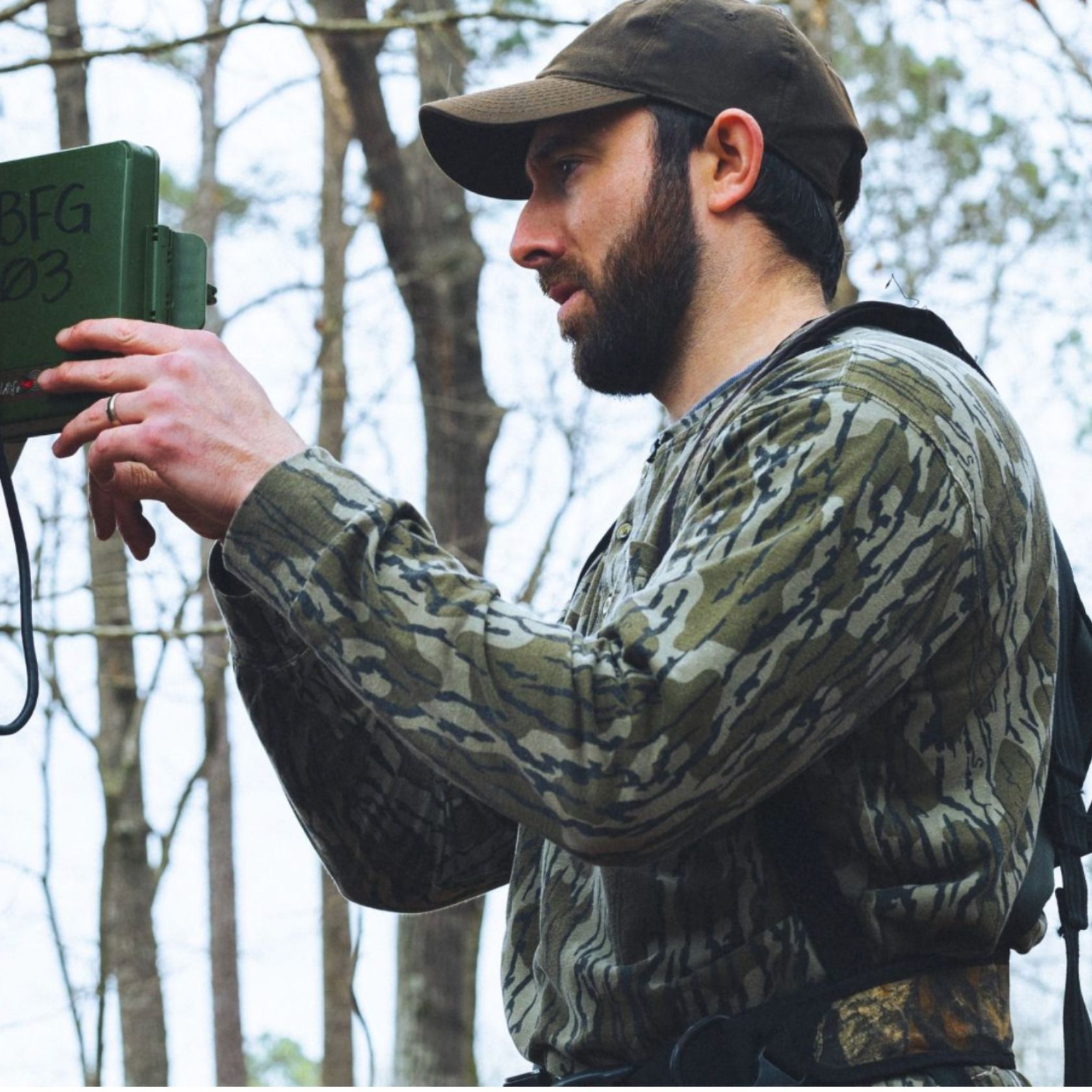
Turkey Research Priorities with Patrick Wightman
About this episode
The NWTF is doubling down on science-led conservation strategy
A dedicated research leadership role signals a new era of coordinated, national-scale research
Investments in research and partnerships are driving data-backed wildlife management decisions
Conservation is not just about wildlife—it’s about preserving outdoor traditions and ecosystems for future generations
Get every episode summarized
Each time Land & Legacy - Habitat + Hunting publishes, we email you a written briefing from the transcript — the topics, who appeared, and any specific claims, with the ad reads skipped.
Email me new episodesFree for 3 shows. No card needed.
Hosts & guests

Transcript ready
791 searchable segments. Every word is indexed and playable.
Full transcript
Land & Legacy - Habitat + Hunting — Turkey Research Priorities with Patrick Wightman. Machine-transcribed; use the interactive transcript above to jump the player to any line.
All right. All right, guys. All right, guys, here we go. This is the Lantelikes and Pockets with us, NWT by Whitetail Properties Real Estate. Where are your hosts? Adam Keep. And Matt Dodd. Why don't you give us a call. This is your weekly resource for habitat management. Wow, live management and recreational real estate. We hope you guys enjoy the show. That's a tough one to do. There we go. So Patrick Boydman is a guy who loves investors in New York. There's a voice that's one that has a bad taking route. Yeah, I'm gonna listen. Turkey hunting as a really young kid became super passionate with the outdoors conservation involved with my local NWTF chapter in high school.
It's fortunate enough to be around some biologists and knew that I kind of wanted to go down this career path right out of high school. So I went to a pulse miss in the Adirondex of New York. Got my bachelor's degree there in wildlife sciences. After I finished up there, I actually went out to South Dakota and was working for the Fish and Wildlife Service doing waterfowl research. Thought I was gonna stay in the waterfowl world and saw a really cool master's project working on wild turkeys with Dr. Brett Collier out at LSU. And it was like, man, that's my dream right there. Go chase turkeys around. So I applied for it. It was fortunate enough to get it. Did a project in the low country of South Carolina. Yep. Finish that up. Got a call from Mike Chamberlain who I'm sure most of your listeners are aware of. Offered me a PhD position to do research in the Piedmonts of Georgia. A little bit over in South Carolina as well. And when I finished that up, I post-doc for a year and then got voted on as a research professor for two years.
And then three weeks ago, I took this position as the National Director of Wild Turkey Research with the NWTF. And I'm pretty excited, pretty excited to be here in this role. It's very, very exciting. Three minutes. You might have done that in about two and a half. I'm not even proud of you. Look at that. I looked a lot behind. You said three minutes. Let's do it. Yeah, we're part of Western New York. Finger Lakes region. So QQ Lake is the lake that I kind of grew up on, which would be corning area, I don't know how familiar you are. I've worked around there. OK, very nice, beautiful part of the country. I've said this for a lot of people that ask me with our job, traveling around. It's like, where would you move if you weren't in Missouri? And I'm like, obviously I go west towards the mountains, but they're like, what about East? And I'm like, my answer's probably going to shock you. But if it wasn't for New York City, and the thinking that all New York is, I love Western New York. So it's a beautiful stuff. Yeah, it is. It is rolling hills, vineyards, finger lakes. It's, yeah, that's where I'll be. Still their operations would last.
It's a great balance. Absolutely. That's a lot of crops. Mixed in, yeah, it's beautiful. I love it. So what's cool and the reason we wanted to have you on the podcast is obviously, this is also kind of a newer or maybe a revitalized position within NWTF as an organization. Absolutely. And so kind of moving forward with your duties, what does that great sounding title, what day to day? Yeah, yeah. So day to day, I'll kind of have three big, I would say duties. The first one being overseeing the, what we call the RFP, hopefully we can change the name to that because it's request for proposals. And if that sounds, we need to call it a little sexier, right? Yeah. And so how that works is, I'll be the liaison to the tech committee, which is the Turkey Technical Committee. They're meeting here currently at convention. And that's state representatives from each state across the country, the Turkey biologist, the specialists in their state come and meet, identify research priorities and needs
to help them do their job, which is conserve the wild turkey, which is also the mission of the NWTF. We boil that down to priorities that align with the organization. And then we request proposals for research projects that can help us answer those questions. And so I'll be kind of overseeing that. And then also from that, the NWTF had a huge investment really starting in about 2022 back into research. And they've funded over 35 projects in the last four years, about $2 million worth of research. And so we should be on the back end of some of those projects finishing up. And so I really want to work towards doing some more outreach about what we're finding. Okay, we funded all of this research, but what are we finding? What does that mean to the landowner? What does that mean to your average hunter? What does that mean to the state agencies? Kind of providing a status update on that and then figuring out where we need to move forward in the future so that'll be one big part of it.
I love it, yeah. And then second, growing the endowed professorships is also something that I'm going to be working closely with with this organization to try to get representatives like Mike, who's currently in Georgia. You know, he holds the first one, but try to get positions like that spaced out across the country, specifically in eco regions of concern. You know, the interview gets moving towards their hub initiatives, you know, getting hubs in each eco region, management region of concern. And so trying to spread those out in a way that we have specialists that have someone dedicated to researching the bird and perpetuity at universities in that area. And I think that's important for the research and obviously the conservation of Turkey, but also for training the next generation of conservationists like myself, right? And so having someone with a Turkey focus in those positions in my opinion is really important in this day and age so that students are seeing like, hey, there's someone that's doing it, there's value to this exposure. Right.
And so I'm excited to help along the way with that. Yeah. I love the mission of the duties and responsibilities of it because Adam, it's something that we've talked about a lot. And I would say that we do this but just kind of disseminating breakdowns from the research information, right? That comes from peer-reviewed articles and then take it into a translate, I guess, into like, okay, this is what a landowner can take from this. This is how this actually applies from paper print to landscape or property level. Here's what you can do and there's been a missing gap from the research to the landowner. Now social media has changed a lot of that, right? But now you can get that information. It wasn't just, you know, through a Turkey call magazine or whatever. So now there's a position and yourself, Patrick, is filling it within the organization to not only disseminate that research information
and communicate it to landowners, the audience, but you're actually also probably helping shape some of the research and make sure that, even before it begins, that it's gonna help answer some of these common questions of areas of concern and that money's going towards the right and proper research that at the end of the day, we're gonna have some, I don't wanna say guaranteed results, but there's nothing guaranteed. Correct, correct. But no, I know where you're going. A better understanding. A more efficient way of dollars that hopefully is gonna answer specific questions and then taking the next step further of continued communication. Correct. And I'm like, ooh, wow, that's a need. No questions asked for, there's so many coffee shop conversations. Yeah, the birds doing this, or it's not doing this, or I tell you what, that right there is a problem. It's like, we need the bridge.
Yeah, absolutely, and need the research because some things that seem obvious, just they're not always as simple as you think. There's a lot of nuances to ecology and nature than we oftentimes think. And so anytime we're making any sort of whether it's habitat management, recommendation, regulation, recommendations, it needs to be built off of strong integrity, applied science. And so yeah, that's kind of what I'll be trying to ensure happens, moving forward, that we're not basing those decisions off of guesswork, right? That's not how we operate and that's not how it's- We're feelings and emotions. Correct, the same time. Correct, correct. So yeah, I'm very excited to try to help shepherd that. And obviously we'll be working with a lot of staff that we already have, and like I said, the technical committee and everything to ensure that we're all doing that and communicating it and working as a whole, because we all have the same goal,
right? That's the mission of the NWTF, to conserve the wild turkey. And so science should be an integral part in that. Do you see with one of your last statements, you see a future where, you know, when it came to wild turkeys, it felt like Mike Chamberlain, some of these other researchers. A lot of that research was coming out of the south and spreading, but you don't really see a lot of research for the wild turkey from the north coming out, where you're like, you know what, north I got turkeys everywhere in the south or struggling, that's where all the research is at, like, do you see in the future a more culmination of different researchers in these regions all coming together and trying to say this is what we're dealing with up here, this is what we're finding. Or, you know, right now it just seems like the guys in the south have steering wheel and everybody else is kind of full of suit. No, absolutely. That is the goal of the hubs. It kind of seems counterintuitive because we're breaking it off and we're making it into eco regions. But yet my goal or vision, so to speak,
with those endowed chair positions is not to have them just sitting in their silo at their university answering problems in their corner of the world, obviously doing that, but also collaborating with other, and as you can imagine, you know, you're not gonna have a Mike Chamberlain in every single one of these positions, different researchers are gonna bring different assets to the table, have different expertise. And so they might be able to help somebody in the southeast, but maybe they're out west, but they're more water quality, habitat, you know, base, bigger picture landscape scale. And so, yeah, I mean, I would like it to be a goal that to eventually have all of those people, not even just addressing the problems in their regions, but also, yeah, working collaboratively together and pooling data and trying to learn from, yeah, a lot of the research is from the southeast, but that's also where the biggest declines and concerns are. But, you know, I think there's some bells that are starting to alarm and other parts of the country, and there's also people that don't wanna get to where we were in the southeast
where we're working from behind a little bit. I wouldn't be proactive. And that's science typically, you know, that's kind of how we were always playing from behind, and it always takes longer than we want to get results. And so I think there's obviously an awareness of that, but also an eagerness to try to make sure that people in other parts of the world that are starting to see some of those warning signs. Like, hey, let's start investing a little bit in research. Let's not wait until we're, you know, been declining for 15 years to speak before we start asking questions. I think that that's one exciting, exciting for me, because when you look at, you know, a lot of the chatter on social media or talk them with land owners like we do, where it's like, we talk about, oh, what are the struggles? And so many times I hear that, well, that was research down south. That's not, and it's like, ah, you know, there's certain things we can take or not take, not used, but in reality, like we're talking about the wild turkey and the research. And so the bird and the needs of the birds are the same.
The resources you're managing does change. Yeah, yeah, yeah. Yeah, there's nuances when you start moving to different ecosystems. And there are things that you can't apply that you might see in the southeast compared to other, but there's also things that you can share. Oh, yeah. And also we see, which always cracks me up, is we, and I get it to an extent, but it's like, even within a region, like, let's say the southeast, it's like, we might do a study in Georgia and South Carolina, but yet people in Alabama don't, then they're like, oh, well, we got Alabama turkeys. These turkeys act different. It's like, well, I mean, sure, there might be some different challenges, but like dominated landscape. Exactly, exactly. And so that's why, you know, the hub's initiatives are kind of focusing on those, the regions. Cool. Just had a, you know, basic information. I don't think we've ever covered it on the podcast, but let's just talk about a research project. It's presented to someone and then there's money collected at what's that process look like? Yeah, so like I said, we end out the request for proposals. We'll receive a bunch of proposals back
with researchers ideas and methods and you know, study designs on how they're going to help us answer a question. Those then get sent back to the technical committee and us representatives from the NWTF and the technical committee and we vote on them, based on priorities and how they align. And then moving forward, we figure out which ones we were going to fund, how much money and then we write the check, send it off and support that research. So those dollars are coming from NWTF fundraising. Absolutely. Yeah, what about someone who's not working directly with NWTF or you're a grad student or you're working with Brett Collier and you're getting funds not from NWTF or they're matched from NWTF. Where do those other dollars come from? Yes, I mean, that's that's date agency dollars that are coming from PR, Pippin Robertson tax, you know, the 11% or 12% I think it is, you know, excise tax. Yeah, a lot of that's PR dollars going back to the states that they're pumping out into research. And so we're, yes, to your point, we match, you know,
a lot of the projects we also, we require a match to make sure that our dollars are being spent on bigger projects and we can make, have bigger impacts. But yeah, most of that's being funded through, through PR dollars. Cool. Life span of a typical research, most landowners have no idea like, how long it's going to take to conduct an average study. I mean, I know they range, right? But like, are we talking six months? So we're talking eight years. We're talking two to three years. And then, you know, like, what does that look like for most research? Yeah, that's a good question. I would say probably in that three to four year range is what I would say the average bigger studies are. To your point, there's a spectrum, right? Like the stuff I've been working on with Mike and Georgia, we've been able to keep that going on for almost 10 years now, at least we hit the ground in 2017 where this will likely probably be the last field season in a lot of those places, but we've, but I would say that that long term, because it's expensive, right? I mean, it costs a lot of money to do that. Those are rare, but man, they're so critical.
They're so important. And not that the little, the short durations, it all depends on the questions being asked. Well, and the information that you're getting from this 10 year study, one, that's a massive data set that you can go to answer some questions into smaller research, though, too. So it's not like it's just 10 year project, we get one answer out of that. Oh, no, no, no, no, no, no. I mean, you take, we probably published 20 some manuscripts already out of those 10 years asking questions that were at a smaller scale, two, three year intervals. Well, you know, just in a nutshell, what's the 10 year study that you're referencing, and what is some of the stuff you guys have learned? Oh, boy. Yeah, that's a big one. But it was a large GPS study started in the Piedmont region of Georgia, so we were doing GPS work, tagging about 60 birds each year, 40 females, 20 males, pairing that with gobbling data, so putting the recording devices out on the trees across the landscape.
And the idea was to get an idea of gobbling chronology, reproductive timing, and kind of just what's going on with these birds, what are survival rates like? What, where are they using, you know, brood rearing habitat? We've, I think we published probably three different manuscripts, brooding ecology based out of that study, which I think is some of the more important findings of that, that research showing a lack of early successional habitat and birds having to travel very far from their nesting locations in order to get to those, get to those areas, and they do seek it out. And anytime they have to travel more than about 500 yards, survival starts plummeting in those first six days. And so when I'm presenting to like your audiences, you know, landowners that are doing habitat work, I think that's some of the, A, the need for open early successional habitat, they're seeking out, they needed, they needed for insect diversity. And putting that on a checkerboard pattern
across the landscape is critical. So, I mean, that's one, you know, one finding of that study that I think is important. Like I said, a lot of the gobbling work, reproductive timing to help guide, you know, Georgia's decided to delay seasons based off some of the findings that we provided them. Just like, hey, this is when you're timing is, this is what looks like the population's doing. And they've taken that information and decided, hey, we want to push it back a little bit. Man, there's, yeah, there's so much more we could talk. We could talk hours about that one, that one project. And that's not even talking about the South Carolina project, our non-hunted population that I'm sure you've heard. Mike referenced a lot. We've kind of been doing that through South Carolina DNR in, you know, at the same relative same time. It didn't start quite as early. The gobbling work there started as early as the Georgia stuff, but the GPS stuff was a little lagged. We didn't start there until later in 2000s. But that, yeah, and so there's that work as well that we've been able to make inferences between the two studies at the same time.
Oh, but hunter impact, right? Yeah, a lot of that's been hunter impact base. How that influences gobbling chronology. You know, a hunter satisfaction, we all want to hear Turkey's gobbling myself included. And so for sending season days based off gobbling activity, we, through research, we know that we 100% influence gobbling activity by being out there. A, removing them, changing their behaviors. So, in order to make inferences about when a season should be without having a population that's non-hunted, it's hard to do, right? Because work, work, it it, there you go, guesswork. And so, now granted, it's only one unhunted population. We get that all the time, Patrick, that's it. That's a NO1. And I'm like, I know, but it's the best we have. And we're, hopefully we've identified some other potential areas. It's, you know, it's hard to find a large tract of land in the southeast that there's not Turkey hunters. But it's a lot harder than you think. So. Well, I think you have to have the comparison, the,
okay, this is what researchers telling us here in this context, but in another context, the bird is responding differently. And there's a lack of hunting pressure. So, like, as hunters, that's conservation, right? If we tote that and wear that as a hat, as a label, we need to have an understanding of the impact that we are having just outside of non-lethal means, right? So, right, you're, you're looking at two different populations, right? Unhunted and then hunted. And it's important to kind of have that control, right? Okay, here's our impact as hunters to be able to look at and know the impacts that we have, whether it's harvesting impacts or just disturbing the breeding cycles in the goblin activity, the nesting, right? You can see that through GPS data in the audio. Yeah, it provides us the baseline. The baseline that we need to make inferences about hunting, like I said, I'm not, I'm not saying that we shouldn't hunt turkeys. I'm a turkey hunter. I'm a turkey hunter. What I'm saying in order to make not guesses. Yes.
Educated inference that we need to have those baselines. And, and, you know, moving forward, the challenges are going to be using that. It's like, okay, we know we've got hunted populations, the harvest rates, typically around 30%, maybe that's too high. And a lot of our populations, it sure looks like it is. And so we might have to reduce, you know, season length or bag limits, but it's, it's just as important to continue to monitor once those changes are made, right? And so make sure that was the right call. Yeah, because we, yeah, ideally what we want to figure out is like, I mean, at all boils down to us, we just need to make sure we're not shooting more turkeys than we're making, right? Exactly. And so we need to figure out a harvest rate that's appropriate. Yeah, obviously there's different levers on the way you get to that harvest rate, whether it's opportunity or bag limits, but we're ultimately deciding how many of these birds should we be removing based on how many we're recruiting. Exactly. And so the challenge for research moving forward
will be trying to figure out like, okay, where or how can we implement a 15% harvest rate and see what that looks like, so that we can get that gradient from 30% zero, 20, 15, 10, you can see where I'm going with that. So we can get an idea of... Measure responses. Exactly. And up until this point, yeah, we haven't done that. Yeah, but hopefully we'll get there. Sure, sure. Let's talk about like real application. I guess now, you know, you're a turkey hunter first. Researcher, you've been around a ton of different sites. You've been around poor quality habitat. You've been around good, moderate, adequate. You've probably been around highly intensively managed stuff. We see the gradient as well. Outside of the Southeast, across the entire country, our air quote findings are, you know, if someone's putting in work, like just quality work for the bird,
they're not having issues typically on improving turkey numbers. Like they have loud springs, they have opportunity year after year with good quality work. But one, are you seeing that? And then two, what would you describe as good quality habitat work? Like what's the importance that you can see as a result of your time in the field that that's a positive response? Create this and you're kind of set. And let's ask for a silver bullet. No, no, no, no, no, no, no, I'm picking up what you're putting in here. No, I would absolutely say yes. 90% of the time landowners that I see or work with that are putting in the work don't have problems. Like there, I know plenty of places in the southeast, the turkey population's not a problem. Absolutely. So it can be good. And that's what excites me every day when I get up out of bed, because otherwise it would be due main gloom. Like I've seen this success stories.
Like we can do hard areas and areas that are suffering. They're still diamonds in the rough, right? Now operationalizing that at scale. Oh, it's something not, you know, that's where I draw them ahead. But yes, we can absolutely impact. And typically speaking, if you're doing the work, you'll see the response. But it's also not perfect. I work with landowners that, you know, you own 150 acres and you're in the middle, you're in the island in the middle of plantation pine that hasn't been burned ever. I'm like, yeah, you're on the challenge so much. Yeah, yeah. Your footprint is in it, talking about scalability, et cetera. There's going to be limited success. I mean, I've even seen it on a couple thousand anchor places that historically had a ton of turkeys. The population got way down. Whether that was due to over harvesting, or whatever, the population took a hit. And when it gets really, really low, and you say you've only got five or six hens in a couple of times on, you know, 2000 acres, you can do all the habitat work you want, but percentages are percentages.
Exactly. It's going to take a long time to build that, build that flock back up. And I'm seeing those landowners, they're seeing positive responses. It's just taking longer. But yes, to your point, yes, you have to do, you have to do the work. Doing the work is going to most of the time result into having more turkeys. What is that work for like, it's not like, oh, improving roost. It's not like, oh, I plant X. I know we have our answer, what we've seen and what works. But like your answer, what is the practices that you could say definitively? Man, if you can generally solve X this time period, provide X, you're probably going to be set. Yeah, and I hinted at it earlier with those studies and that's providing broodering habitat. I think I like this guy. I think that's the number one take home from my opinion. But like I said, doing it calculated. I mean, literally like, get a map out,
put dots on that map, and if a hen nest there and she has to go more than 500 meters to find it, then you're not create more of it. I think that's a huge point, because a lot of people now, they listened enough, they're listening to research, talking broodering. Okay, great. You can't do it from like a check box, right? Like, okay, that over there is good quality. Like I have it represented on my property, but there's the spatial distribution across a property that it needs to be. Can't just be like in a singular location. Yeah, I think we see it more in, I got broodering and they have like 20 anchor patch or whatever it's like. Right? So I get this, this is one of my, I wouldn't say pet pee, but this is about driving. I get a question all the time, well, what percentage of my property should be in brood or habitat? And I'm like, we can't talk percentages, because to your point, you could have the correct percentage, but if it's all in one corner, one square on your property, well, first off, they're not using the interiors of it. They're only using the edges of it. So you're not realizing that the center of that
isn't having a big impact, and yet that's different than taking that same percentage, chunking it up. Distributing it across the landscape. And closer proximity is to areas that you've probably managed at a higher intensity for specifically some nesting cover adjacent to that, right? Or at least in close proximity. And it's also, I will say you can't have just all early successional habitat either, right? Like to your point, you do need to have some roosting habitat and hardwoods and mass crops are important. Obviously, you can go to the southeast on some really well-managed quail plantations come in mind, and they've got a lot of turkeys, but I also see that they're limited by the hardwoods that they have in the mast, that those birds have available to them. Whenever you can seem to get a lot of that early successional habitat near big hardwood stands that provide that, you know, mash crop during the winter, and they're coming out of that winter in good health, good body condition, going into the reproduction season. That's where I, I mean, that's where you see some
amazing nesting turkey populations in mind. Obviously, a well-rounded landscape. You got good winter habitat, successful breeding opportunities, good healthy birds going into reproduction. I mean, that's just logic, right? Hey, we're gonna have some extra ordinary reproduction rights out of that, but I'm encouraged by that, right? Because hopefully our listeners are hearing right a common thread there of that's working. That's, I'm seeing that result, we're seeing that result. Fortunately, landowners are seeing that. Research is supporting it. Research is supporting it. I would like to see, I would like to see some more research, but it's hard, it's hard to implement, but I think we can, like a lot of those studies I'm talking about, like we know it's limited, we know if they travel to get there, that their survival decreases, but what we really haven't done is then go out there in those areas and then change it, like I'm saying, like implemented in a mosaic, get it every 500 yard and then study the response
and like, and I get that can be frustrating from landowners because I get this all the time. Well, it's expensive, it's expensive to manage. How much am I, what am I going to get in return? And right now, I don't have a number to tell them. I can just trust it, it's gonna work, but I would like to see some more science around that, but those studies are, you know, those before or after during control studies, they're time intensive, they're expensive, and you know, we hopefully we'll get there and there'll be some need for that. And maybe this is the right question or a question that, but when you say it's expensive, what is somebody, like when we're talking about a research project like that, what, how much are we talking? Like, like a three, four year big GPS study, like we're doing millions, yeah, we're talking millions. Yeah, 1.5. But when you do that, when you commit that level of money, it's like this could have made your impact for almost the whole country with wild targets. You could probably do it cheaper, some things are getting cheaper, but it's not, it's not, you know, $50,000. You're paying salaries of multiple people
and all the equipment, locations, housing. Students, you know, people to analyze the data on the back end, it adds up in a hurry. And that's, and that's why, you know, as a researcher and now in this new role, I'm thankful for organizations like the NWTF and the state agencies that are, you know, especially in the last 10 years spending money. Yeah. And so we've had some, you know, little studies like that are important, but, you know, there was bigger fish to fry. Sure. So to speak. Well, it's important to spend the money, but see it adequately utilized as well and put into the right places that, again, it's going to likely yield some positive results or just information that says, okay, that's, it's just as valuable to say, I think that's not the direction we need to go. That's not as important, like that's, that's very, very useful. So all in all, it's just like, yeah, I see from an NWTF organizational standpoint, it's like valuing quality information, but having good guardrails around it too to say,
this is not just money spent towards, you know, research, this is money very well spent in research that's going to perpetuate the mission, the objectives, the improvement of the turkey for us all to enjoy and partake in. So that's one just super refreshing, but also like, yeah, I love it. Yeah, I love the new push from NWTF to kind of really look at this. Yeah, absolutely. It was a big push by the new leadership when they stepped in in 2022. They saw it as a, we need to get back, we need to get back to this. It's not that they had left it completely yet, but it wasn't, you know, as front and center as it is right now. And so yeah, they deserve the credit for that. And I'm excited to be part of it. Absolutely, thanks for joining us. Yeah, appreciate you joining us. Open invite, come back, share information. This is a platform that we want to utilize to reach the landowners with good information. So as researchers coming in, yeah, just open invite. Cause that's what this is platform is for.
Absolutely. Absolutely. Thanks for coming.
More episodes
More from Land & Legacy - Habitat + Hunting

Back to What Works: Building a Simple, Effective Spring Food Plot Plan
Land & Legacy - Habitat + Hunting

Fantasy Land Management: When Habitat Advice Sounds Good… But Fails in the Field
Land & Legacy - Habitat + Hunting
LandBeat Review: How to Improve Timber for Wild Turkeys
Land & Legacy - Habitat + Hunting
Does Burning Create more Turkeys?
Land & Legacy - Habitat + Hunting