religionAug 29, 20267:25pending
Twenty-second Sunday in Ordinary Time (Year A) - A Stark Contrast
About this episode
Read Online
A Stark Contrast
“Get behind me, Satan! You are an obstacle to me. You are thinking not as God does, but as human beings do.” Matthew 16:23
This scene likely unfolds in or near Caesarea Philippi, a Gentile region steeped in pagan worship. There, at the mouth of a cave long associated with the entrance to the netherworld—believed by some pagans to be the very gate of Hades—Jesus had just questioned His disciples: “Who do people say that the Son of Man is?” and then more directly, “But who do you say that I am?” (cf. Matthew 16:13–15). Peter, speaking with conviction on behalf of the Twelve, boldly proclaimed, “You are the Messiah, the Son of the living God” (Matthew 16:16). Jesus responded by declaring him “Peter,” the rock upon which He would build His Church, promising that “the gates of hell shall not prevail against it.”
Just moments later, Jesus issues one of the strongest rebukes recorded in the Gospels: “Get behind me, Satan!” The same Peter who had just spoken divine truth now speaks human fear and shortsightedness. In trying to dissuade Jesus from His suffering and death, Peter unknowingly opposes the very mission of the Messiah. Jesus calls this mindset not merely a mistake, but a diabolical temptation—echoing the same temptation He faced in the desert, when satan sought to lure Him away from the Cross with promises of worldly glory.
What a stark contrast. Peter goes from being the rock of faith to an obstacle in the Lord’s path. But why was Jesus so severe in His response?
Because the stakes were eternal. The Cross is not optional. It is the means of salvation—not just for Jesus, but for all who would follow Him. To think otherwise, even with good intention, is to prefer human comfort over divine wisdom. Peter’s protest reflects a natural aversion to suffering, but Jesus exposes it for what it truly is: a stumbling block to the will of the Father.
This dramatic Gospel scene is recorded for a reason. By calling Peter “Satan,” Jesus wanted to warn him, and us, of the real and ever-present danger of rejecting the way of the Cross. Like Peter, we can easily fall into the trap of wishful thinking and misguided compassion by saying about ourselves or those close to us, “God forbid, Lord! No such thing shall ever happen…” We are saying, in essence: “Lord, please make sure that neither I nor anyone I love ever has to suffer!” But such a prayer, though well-meaning, is clearly mistaken, and Jesus wants that point to be clearly understood.
Peter was troubled because “Jesus began to show his disciples that he must go to Jerusalem and suffer greatly from the elders, the chief priests, and the scribes, and be killed and on the third day be raised.” But all that Jesus revealed about His suffering was good—very good. Though His suffering was inflicted by the sins of others, His free and loving embrace of that suffering was the greatest act of love the world has ever known. Peter was blinded to this truth. He could not yet see beyond the horror of suffering to the divine good that would come through Jesus’ sacrificial embrace of it.
Reflect today on Peter’s and Jesus’ words: “God forbid, Lord!” and “Get behind me, Satan!” In this exchange, Jesus is also speaking to each of us, saying, “Never run from the Cross!” We must never flee from a selfless and sacrificial embrace of suffering, even when that suffering is unjust. God can and will transform all freely embraced suffering into a means of His eternal glory and our sanctification. With our Lord, reject the evil one’s false empathy. Reject the lie that suffering is meaningless. Choose instead to lay down your life in love with Christ, and in doing so, you will rise with Him, victorious over every sin and diabolical lie, overcoming even the sufferings of this life through your free and faithful embrace.
My compassionate Lord, Your firm rebuke of Peter was direct, powerful, and loving. Rather than offering false comfort or misleading empathy, You spoke a hard truth to awaken Peter—and all of us—to the spiritual necessity of the Cross. Grant me the grace, dear Lord, to say “Yes” to the suffering I must face. May I embrace it not with fear or resistance, but with a heart filled with Your love and unwavering courage. Jesus, I trust in You.
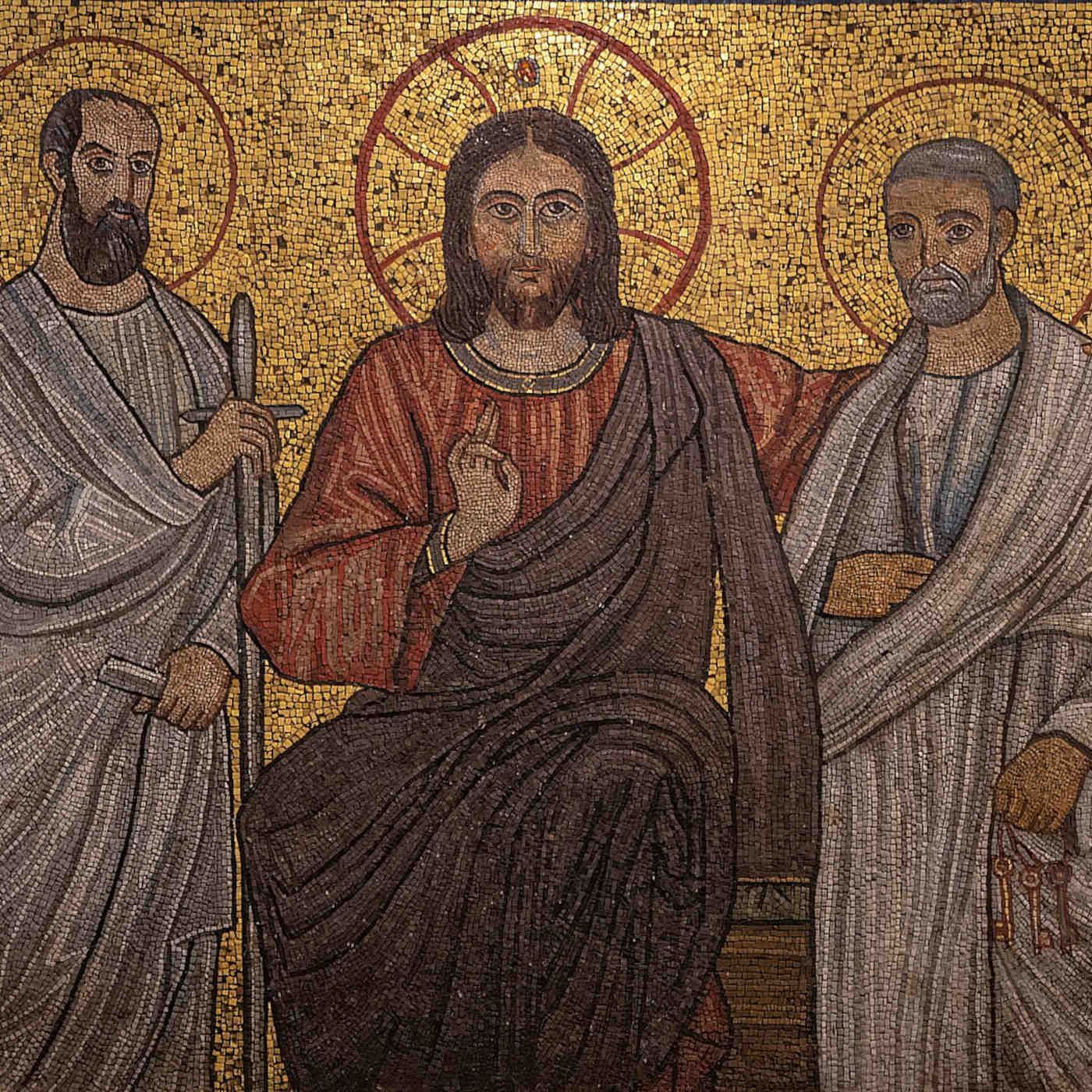
Image: Wilfredor, CC0, via Wikimedia Commons
Source: Free RSS feed from catholic-daily-reflections.com — Copyright © 2026 My Catholic Life! Inc. All rights reserved. This content is provided solely for personal, non-commercial use. Redistribution, republication, or commercial use — including use within apps with advertising — is strictly prohibited without written permission.
A Stark Contrast
“Get behind me, Satan! You are an obstacle to me. You are thinking not as God does, but as human beings do.” Matthew 16:23
This scene likely unfolds in or near Caesarea Philippi, a Gentile region steeped in pagan worship. There, at the mouth of a cave long associated with the entrance to the netherworld—believed by some pagans to be the very gate of Hades—Jesus had just questioned His disciples: “Who do people say that the Son of Man is?” and then more directly, “But who do you say that I am?” (cf. Matthew 16:13–15). Peter, speaking with conviction on behalf of the Twelve, boldly proclaimed, “You are the Messiah, the Son of the living God” (Matthew 16:16). Jesus responded by declaring him “Peter,” the rock upon which He would build His Church, promising that “the gates of hell shall not prevail against it.”
Just moments later, Jesus issues one of the strongest rebukes recorded in the Gospels: “Get behind me, Satan!” The same Peter who had just spoken divine truth now speaks human fear and shortsightedness. In trying to dissuade Jesus from His suffering and death, Peter unknowingly opposes the very mission of the Messiah. Jesus calls this mindset not merely a mistake, but a diabolical temptation—echoing the same temptation He faced in the desert, when satan sought to lure Him away from the Cross with promises of worldly glory.
What a stark contrast. Peter goes from being the rock of faith to an obstacle in the Lord’s path. But why was Jesus so severe in His response?
Because the stakes were eternal. The Cross is not optional. It is the means of salvation—not just for Jesus, but for all who would follow Him. To think otherwise, even with good intention, is to prefer human comfort over divine wisdom. Peter’s protest reflects a natural aversion to suffering, but Jesus exposes it for what it truly is: a stumbling block to the will of the Father.
This dramatic Gospel scene is recorded for a reason. By calling Peter “Satan,” Jesus wanted to warn him, and us, of the real and ever-present danger of rejecting the way of the Cross. Like Peter, we can easily fall into the trap of wishful thinking and misguided compassion by saying about ourselves or those close to us, “God forbid, Lord! No such thing shall ever happen…” We are saying, in essence: “Lord, please make sure that neither I nor anyone I love ever has to suffer!” But such a prayer, though well-meaning, is clearly mistaken, and Jesus wants that point to be clearly understood.
Peter was troubled because “Jesus began to show his disciples that he must go to Jerusalem and suffer greatly from the elders, the chief priests, and the scribes, and be killed and on the third day be raised.” But all that Jesus revealed about His suffering was good—very good. Though His suffering was inflicted by the sins of others, His free and loving embrace of that suffering was the greatest act of love the world has ever known. Peter was blinded to this truth. He could not yet see beyond the horror of suffering to the divine good that would come through Jesus’ sacrificial embrace of it.
Reflect today on Peter’s and Jesus’ words: “God forbid, Lord!” and “Get behind me, Satan!” In this exchange, Jesus is also speaking to each of us, saying, “Never run from the Cross!” We must never flee from a selfless and sacrificial embrace of suffering, even when that suffering is unjust. God can and will transform all freely embraced suffering into a means of His eternal glory and our sanctification. With our Lord, reject the evil one’s false empathy. Reject the lie that suffering is meaningless. Choose instead to lay down your life in love with Christ, and in doing so, you will rise with Him, victorious over every sin and diabolical lie, overcoming even the sufferings of this life through your free and faithful embrace.
My compassionate Lord, Your firm rebuke of Peter was direct, powerful, and loving. Rather than offering false comfort or misleading empathy, You spoke a hard truth to awaken Peter—and all of us—to the spiritual necessity of the Cross. Grant me the grace, dear Lord, to say “Yes” to the suffering I must face. May I embrace it not with fear or resistance, but with a heart filled with Your love and unwavering courage. Jesus, I trust in You.
Image: Wilfredor, CC0, via Wikimedia Commons
Source: Free RSS feed from catholic-daily-reflections.com — Copyright © 2026 My Catholic Life! Inc. All rights reserved. This content is provided solely for personal, non-commercial use. Redistribution, republication, or commercial use — including use within apps with advertising — is strictly prohibited without written permission.
Get every episode summarized
Each time Catholic Daily Reflections publishes, we email you a written briefing from the transcript — the topics, who appeared, and any specific claims, with the ad reads skipped.
Email me new episodesFree for 3 shows. No card needed.
Hosts & guests
No transcript yet
This episode has not been transcribed. Request it and it moves to the front of the queue.
More episodes
More from Catholic Daily Reflections

September 8, Feast of the Nativity of the Blessed Virgin Mary - The Dawn of Salv...
Catholic Daily Reflections
Sep 7, 20268:05completed

Monday of the Twenty-third Week in Ordinary Time - Seeing is Believing?
Catholic Daily Reflections
Sep 6, 20267:33completed

Twenty-third Sunday in Ordinary Time (Year A) - The Joy of Reconciliation
Catholic Daily Reflections
Sep 5, 20267:42completed

Saturday of the Twenty-second Week in Ordinary Time - Confronting Opposition
Catholic Daily Reflections
Sep 4, 20267:29completed