Loading...
newsdailysociety
Ukraine knocks out 40% of Moscow's oil export capacity in single attack & first ever successful strike on Russian military ship in Baltic Sea
About this Episode
Day 1,491.
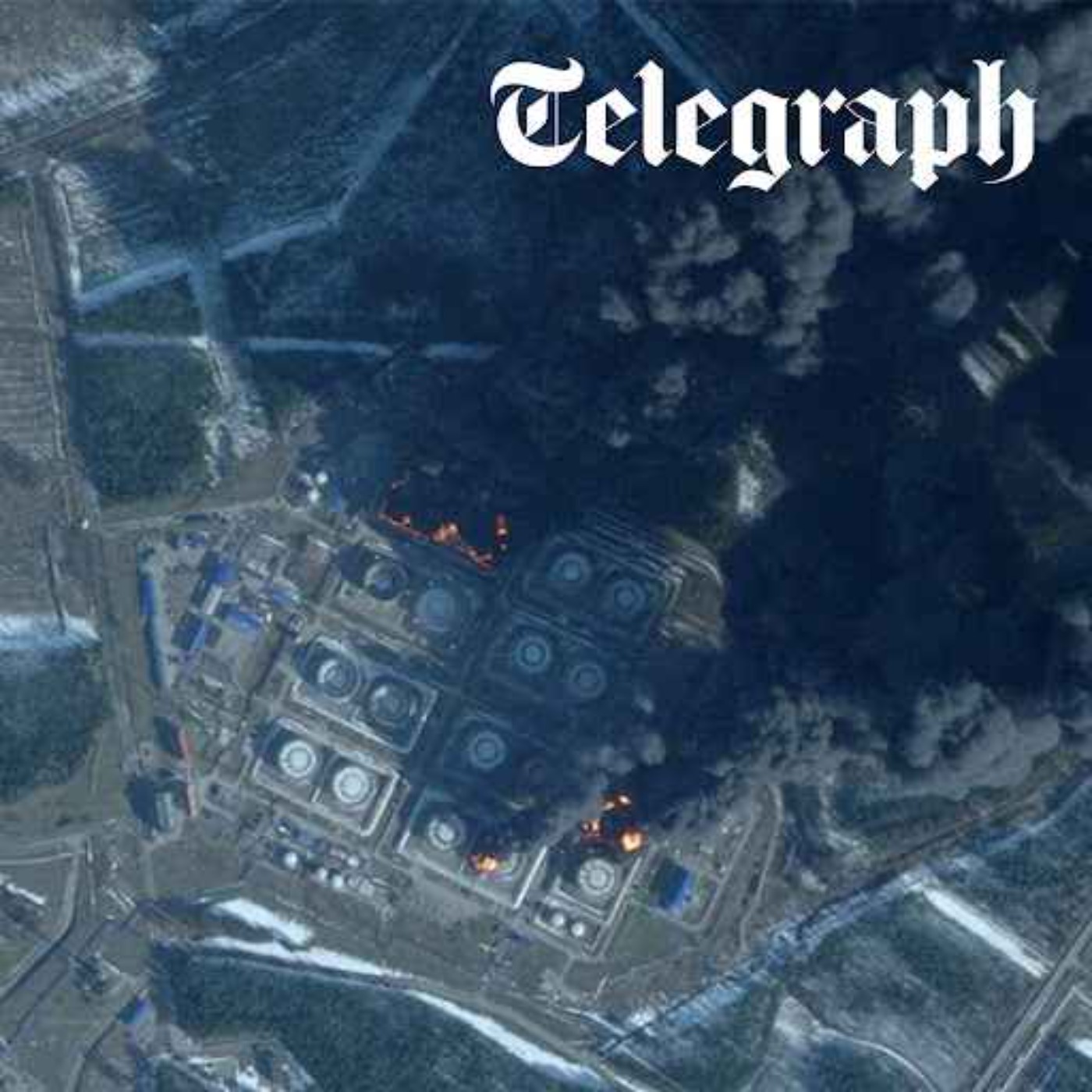
Today, as extraordinary Ukrainian strikes in the Baltic region reportedly knock out around 40 per cent of Russia’s crude oil export capacity in a single attack – and achieve the first known successful strike on a Russian military ship in the Baltic Sea, hundreds of kilometres from Ukraine – we assess the strategic impact on Russia’s war economy. We also take the temperature from high-level meetings in Germany and Finland, and examine reports that Moscow is supplying Iran with vital assistance in its confrontation with the United States and Israel. What vulnerabilities has this widening conflict exposed for Washington?
Contributors:
Francis Dearnley (Host on Ukraine: The Latest). @FrancisDearnley on X.
Dominic Nicholls (Host on Ukraine: The Latest). @DomNicholls on X.
With thanks to Dr Robert Person, nonresident senior fellow at the Foreign Policy Research Institute.
NOW IN FULL VIDEO WITH MAPS & BATTLEFIELD FOOTAGE:
Every episode is now available on our YouTube channel shortly after the release of the audio version. You will find it here: https://www.youtube.com/@UkraineTheLatest
CONTENT REFERENCED:
Ukraine drone attacks wipe out power for 500,000 Russians (The Telegraph):
https://www.telegraph.co.uk/world-news/2026/03/25/ukraine-russia-drone-attacks-power-cut-500k-kyiv/
Trump denies it – but two wars are becoming one (The Telegraph):
Exclusive: At least 40% of Russia's oil export capacity halted (Reuters):
Russia sending drones to Iran, western intelligence says (The Financial Times):
https://www.ft.com/content/d5d7291b-8a53-42cd-b10a-4e02fbcf9047?syn-25a6b1a6=1
Russian government ordered Moscow internet blackout, The Bell reports (Kyiv Independent):
Pentagon considers diverting Ukraine military aid to the Middle East (The Washington Post):
https://www.washingtonpost.com/national-security/2026/03/26/us-iran-war-ukraine-missile-defense/
Over 5000 munitions shot in the first 96 hours of Iran war (Foreign Policy Institute):
https://www.fpri.org/article/2026/03/over-5000-munitions-shot-in-the-first-96-hours-of-the-iran-war/
Drone Warfare Has Come to the United States (National Interest):
https://nationalinterest.org/feature/drone-warfare-has-come-to-the-united-states
EMAIL US:
Contact the team on [email protected] . We continue to read every message, and seek to respond to as many on air and in our newsletter as possible.
Hosted on Acast. See acast.com/privacy for more information.
Hosts & Guests
Transcript
The Telegraph
Type of your card insurance rate going up even with a clean driving record, you're not
alone.
That's why there's Jerry, your proactive insurance assistant.
Jerry compares rates side by side from over 50 top insurers and helps you switch with
ease.
Jerry even tracks market rates and alerts you when it's best to shop.
No spam calls, no hidden fees.
However soon save with Jerry could save over $1,300 a year.
Switch with confidence.
Download the Jerry app or visit jerry.ai slash a cast today.
When you manage procurement for multiple facilities, every order matters.
But when it's for a hospital system, they matter even more.
Granger gets it.
And knows there's no time for managing multiple suppliers and no room for shipping delays.
That's why Granger offers millions of products and fast, dependable delivery.
So you can keep your facilities stocked, safe, and running smoothly.
Call 1-800-Ranger, click ranger.com or just stop by.
Granger, for the ones who get it done.
Running a business means juggling a lot of moving parts.
And when your communication tools can't keep up, things start to slip.
Mist calls, slow replies, scattered conversations, they're not just frustrating, they're lost
opportunities and revenue left on the table.
That's where Quo comes in, spelled Q-U-O.
Quo is the number one rated business phone system on G2, trusted by over 90,000 businesses.
One shared business number for calls and texts.
So every conversation stays visible, organized, and accountable.
It works from an app or computer.
You can keep your existing number, add teammates, and sync your CRM, letting you scale without
adding complexity.
Just with built-in AI, Quo logs calls, summarizes conversations, and flags next steps even after
hours.
Stop missing customers.
Stop leaving revenue on the table.
Try Quo free and get 20% off your first six months at Quo.com slash tech.
That's Q-U-O.com slash tech.
Quo, no missed calls, no missed customers.
I'm Francis Dernley, and this is Ukraine, the latest.
Today, as extraordinary Ukrainian strikes in the Baltic region reportedly knock out
around 40% of Russia's crude oil export capacity in a single attack and achieve the first
known successful strike on a Russian military ship in the Baltic Sea, we assess the strategic
impact on Russia's war economy.
Then, we take the temperature from high-level meetings in Germany and Finland and examine
reports that Moscow is supplying Iran with vital assistance in its confrontation with
the United States and Israel.
What vulnerabilities has this widening conflict exposed for Washington?
Russia does not want peace.
First of all, we share with our help for Ukraine our freedom and our European values.
If I'm president, I will have that war settled in one day, 24 hours.
We are with you, not just today or tomorrow, but for a hundred years.
Nobody is going to break us. We are strong. Where are Ukrainians?
It's Thursday, the 26th of March, four years and 30 days since the full-scale invasion
began.
Today, I'm joined by my co-hosts and associate editor of Defence here at the Telegraph,
Dominic Nichols, and down the line from the United States, non-resident senior fellow
at the Foreign Policy Research Institute, Dr. Robert Person.
But Dom, let's go to you first as ever. What's the latest in the military realm?
Well, thanks, Francis. I Robert, so the big news is the continued strikes on Russian
oil terminals near St. Petersburg. It's now confirmed that Ukrainian forces have struck
the Ustluga oil terminal in Leningrad, Oblast. Again, footage today shows it ablaze.
It's more severely than originally thought, or you know, it carries on from the strike
a couple of days ago.
That's the fourth similar strike this week, so to recap, because it can get a little confusing,
on Monday night, Ukraine hit the Primorsk port. That's one of Russia's largest Baltic oil
export hubs with capacity for around 75 million tons per year. Then on Tuesday night,
the Ustluga port was hit. The handle was over 100 million tons of cargo annually, including
oil and LNG, liquefied natural gas. Also on Tuesday night, a little to the north across
the Gulf of Finland in the port of Viborg. An ice patrol ship, the Perger, partially
sank in the shipyard there after an attack. There's very dramatic images of it having
tipped over in the dock. That's the first known successful strike on a Russian military ship
in the Baltic Sea that we know of, about 1,000 kilometers from Ukrainian territory. Then
the fourth strike last night, so Wednesday night, Kineph. That's not what the Russian said
when the drones were landing. That's the name of the refinery. It's apparently short for
the Kharishi, something or other. Anyway, the Kharishi refinery, one of Russia's largest
with a processing capacity of around 20 million tons a year. That strike on the Kineph
refinery has been confirmed by the Leningrad Oblast governor. According to Reuters' calculations,
about 40 percent of Russia's crude oil export capabilities. That equates to around 2 million
barrels per day were shut as of Wednesday after the most recent attack. It's the most severe
oil supply disruption in the modern history of Russia. It hits Moscow just as oil prices
exceed $100 a barrel because of the Iran war. Now, possibly, bracket is probably connected,
also last night, or the early hours of this morning to be precise. A Sierra Leone flagged
crude oil tanker was reportedly struck by projectiles. Approximately 12 nautical miles north
of the Bostra strait in Turkey. Now, there were reports that the Altura had been struck
at approximately 22-30 local last night. The vessel was on route from Novoresisk, the
new home of the Black Sea fleet, Novoresisk in Russia, to Istanbul in Turkey. The tanker
was laid in with oil bound for India at the time of the attack we're told. Ombre intelligence,
the Global Maritime Risk Management firm say that as a result of the incident, the vessel
sustained significant damage to the engine room and bridge with search and rescue operations
for the 24 crew members ongoing, following a distress call to Turkish authorities. Now,
there are Turkey flagged law enforcement and search and rescue vessels in the area. We
are told they were observed throughout today, early hours of today in the vicinity of the
tanker. The Altura was sanctioned by the UK just in February, just a couple of months ago.
Just last month, in fact. Yeah. It's hard to keep time, keep the track at the moment.
Sanction last month thought to be part of Russia's shadow fleet. Now, an update to that, the
Turkish Ministry of Transport and Infrastructure said the incident was carried out by an unmanned
surface vessel, i.e. a maritime drone, a sea drone. There are no fatalities or injuries
reported. The crew members on board are all rescued by Turkish responders. We are told
the engine room was taking on water as a result of the drone strike. And at the time of
writing, this is Ombre's report. They said the vessel is listed as not under command.
So that's on the automatic identification systems of vessels is not under command, making
it clear to other maritime vessels in the area that this thing is just drifting, an
enormous great oil tanker drifting. Now, other strikes. Ukraine hit elsewhere too, cutting
the power of almost half a million people in Russia. Kiev reportedly launched almost
400 drones, according to Russian authorities. So take that with as much salt as you want
to. Our Belgorod we are told, or they say, was worst hit. The governor there said it
had caused serious damage to energy infrastructure. Now, yesterday, I heard you and Adley, you were
speculating why there are relatively few casualties from the huge Russian air raid on, well,
Monday night, wouldn't it? Monday and Tuesday, nearly a thousand air vehicles in total.
As you say, the largest series of strikes with the entire war. What was suggesting it was
because of the government warnings? Well, another factor could be that Ukrainian air defenses
are getting better, depending on what the incoming munitions are. So they say they shot
down 97% of the drones. That's higher than their average. So they say, over the 556 drones
used on Monday night, 541 were shot down or suppressed by electronic warfare. Now, again,
you posted maybe it's because it's daytime. Obviously, it's easier to see in daytime. So
if you've just got the old fashioned heavy machine gun, you can more easily see where the
things are, bring them down. So I think all these factors combined mean that that success
rate was higher than their recent average. Because when you were in Odessa, you went out
and visited one of the sites where they shoot down the drones before they can get to the
city. And they were using, is it night vision equipment in order to be able to clock the
drones in the sky? Well, yeah, they had night vision. They had radar. They had a radar
feed from somewhere. They wouldn't tell me where it was. They wouldn't let us film it.
I wonder why. But they could see, obviously not ballistic missiles. They're moving so
fast that they kind of come out of nowhere, really. But certainly the drones, she had drone
especially, they can see them coming. So that's why they're able to very accurately put
out these, or not the air defenders, but the system is able to put out the air alerts
and let people know if they need to go to the shelters and what have you. But yeah, you
can actually, you can just look at the radar, see where it's coming, get in position.
That's for drones, but that's not for all munitions. I mean, some do get through as we report.
And in the last 24 hours, 130 of 153 drones were brought down, EW or shot down or just
or or failed or destroyed in the air. At least 16 drones got through hitting 11 locations
with two people killed the 13 inches. Now, on the ground, speculating about the spring
offensive, we think it's still going on. The Barovra and Leman areas seem to be the
sector of main activity now up in the Donbas. Russian forces there said to be attacking
at least six areas simultaneously with over 20 armored vehicles and nearly 100 motorcycles,
autorrain vehicles and buggies. Now, the commander of the Ukrainian drone battalion operating
in the vicinity of Leman said that Russian forces undertook standard textbook preparations
for these kind of these assaults, hitting Ukrainian logistics in depth with drones and
glide bombs, hitting crossings across rivers and dams on the Suresky-Dinets river to prevent
either Ukrainian reinforcements or areas of withdrawal. So he said all this sort of shows
where they're where they're intending to push. He said these mechanized assaults, which
he described as massive, but I think that shows just how the metric has changed. I mean,
20 armed vehicles is quite big, but you know, if you start including buggies and motorcycles,
that doesn't scream hugely capable to me, but you know, it's bigger than what they've
normally been doing, so hence he used the word massive. He said they are being considered
once again as these small group infiltration efforts of two or three men running forward
and trying to survive on the drone fire. They've been unsuccessful around Leman, so that
hence they're using more vehicles up there, apparently. Also, a spokesperson for Ukrainian
brigade operating near Slavicansk said that Russian forces have been probing defenses
there for future, well, almost certainly future offensive operations, east of Slavicansk,
in particular, this individual was citing the better weather that means that drones can
fly more easily, and the ground is a bit harder for vehicles if they want to use them.
All at all, not a lot of movement, no great shifter in the line at all, certainly not worth
the 1,210 Russian casualties that Ukraine's general staff say cost them yesterday. However,
it is worth noticing that the distances from the lines to some of the cities in the
fortress belt are very short, as we know. Afened for Bruce and DePray, who now writes
for the financial times, but he's well worth a follow on Twitter. He says that while all
this is true, i.e. that the lines aren't shifting very much, while all this is true,
it is also the case that Kramatorsk and Slavicansk are still lively cities that more than
100,000 people call home, and Russia only needs to advance a couple more kilometers to
make them unlivable, bringing them into artillery range, I think it means there. He said,
there's a point where a city stops being a city and becomes a battlefield for Pekrosk.
That was around October 2024. Kramatorsk and Slavicansk aren't there yet, for Bricez, but
it seems almost inevitable now. I might challenge is almost inevitable, but the point is that
you don't need to have the Russian line through your city for it to become unlivable. If
you're in drone and artillery and mortar range, then it's unviable, basically. That's
that's up to date on the military front.
Well, thanks. Before we go into the diplomatic realm, because there's a lot going on there,
I have to ask about your trip to Düsseldorf. That's where you've been the last couple
of days. I assume not scouting out venues for October Fest is a bit early for that, but
interesting in where you were and what you've gone up to.
I did manage to find a beer hall. I was just looking for something to eat and one
of those. As soon as you arrived, you just fell into one.
Heaven and Hell. Himalayan art.
That's very good. Heaven and Hell. Anyway, that's a very nice
shfarts beer in there, but that's by the by.
Yeah, so I was there for exponential Europe, which is the world's biggest autonomous systems
trade fair, not just AI and not mill tech, but specifically autonomous systems. So
big old trade fair, loads of teching, gizzards and all that kind of stuff. You know, you walk
around, the stuff just baffles me and you go all these quadrupeds, these dogs basically
that are hopping around and sitting up and begging and rolling over. And yeah, I look
at all this and people are just lapping up and I think we've got dogs to do that.
You don't need a build of robot. So a lot of it is sort of glitz and glamour. And I just
think, well, I came up, what's the military effect you're going to have? What's the capability
that you're designing other than just producing a metal dog? But anyway, I was there to moderate
if you panels at the event and then wander around the trade fair. I met some very interesting
people. So there was interesting. One American delegate said to me, we were talking about Ukraine
and the war and he said the archive of battlefield data, the repository, if you like, that they built
up over the last few years has immense value for training other systems and exporting.
So he says it's not only there hasn't been this body of data throughout history. So they
are sitting on a on a gold mine. They can use that obviously for them for their own capability
development, but they could sell it. They could use that as a training platform for others
should they should they wish. I then went and met the brave one folk. Now, brave one,
if you remember, is the Ukrainian government arms length body that brings together the government
with tech and the military and industry to bring forward capability development and short
circuit that what would otherwise be a quite long and turgid or could easily be a long and
turgid procurement cycle. It's back to the good old skunk works, move fast, break things, fail,
fail fast, fail better, just see what works and what have you. And these guys are interesting.
I was speaking to them about drones in particular. And they say that they are moving from the current
model of one to one. So one pilot to one drone, drone takes off either fiber optic or other
can draw by pilot. Now, we've talked at length about the technology, whether technology is with
the actual air vehicle and the command control systems and all this, this kind of thing. But
ultimately, you're still a one to one ratio. You've got one pilot for one drone. They are
moving beyond that. They are trying to move. Well, they think they're on the cusp of one to many.
So you'd have drones that could launch themselves. I know, let's say 10 and they can all look
half themselves. So maneuver through an area. If you know that there's some Russian air defense
over there or some Russians over there, they could maneuver to get around that and then only be
taken back under command by the pilot at the business end of things, if you like. So that model
of one to many is where they think they are just on the edge of where they want to get is zero
to many. So complete autonomy. They want to have autonomous drones that just have a mission.
And then they could they can launch themselves or under request from a from a forward unit,
for example, and then go and do their do their thing. So what that model might look like is so at
the moment, you've got these forward observation posts or you've got troops out in the field who
can see stuff coming towards them with a range of different radar. So you've got radars that can say
there's something coming towards the country. You've got other radars that can say it's definitely
coming towards our sector. Then you've got other radars that can say, yeah, it's definitely coming
to our sector. And I can see it in space down to sort of one, one meter. So I can, I can hit it.
And at that point, when it's down to an individual saying that drone, I've got, I've got such good
fidelity on where that drone is and where it's going that it's targetable. At that point,
the drone, the insect will be launched, go and attack it. Now, at the moment, it's a little bit
done on voice as in launch the drone now. And they've taken under control later. They're just on the
cusp of it being not automatic, but the because of Delta, the battlefield management system that we've
spoken of before, the drone base will be getting the same feed as the people at the front. So they will
then decide right now is the time to launch, launch the interceptor because our battle space
management is so good. It's so accurate. We know that we can launch now rather than waste the
kit. So we know it's now is the time to launch it where they're trying to get to is beyond that.
So the drones will then launch themselves when they know that it's the it's the optimum time
to launch. And then they will know what they're going for. Now, the pilot might take control,
as at the moment, pilot takes control in the last few hundred meters. So drone flies off
and then the pilot takes control and steers it into the oncoming munition.
But they are looking to get beyond that and have full autonomy where the drone decides what to
hit. That, of course, is hugely contentious because allowing a machine to decide what to go and kill
is arguably the stuff of Hollywood. And so they're saying, well, that's where you have to be
really careful. If you're just a sign, you could just assign a kill box. You could say, we,
friendly forces, we know that none of our people are in that sort of two by two kilometer box
over there. So off you go droney. If you get the indication that something's coming that way,
just head over there and go and kill anything. Anything that looks like another drone because we know
none of ours are in there, anything that looks like a human because we know none of our humans
are in there or vehicle, et cetera, et cetera. It can be pre-programmed. That obviously is quite a
big step, but that's kind of where they're trying to get to. So a lot of interesting conversation
with brave one about all this kind of stuff. I was hanging on to their ankles after about
sentence three. As you can imagine, I was trying to use the looking for the salt and pepper pots to
say, right, this is me and that's you. And anyway, I think I've got there just about. They said
some other stuff as well. Interesting that they said that there's in their experience a lot of
Western companies don't take part in trials with them for fear that their kit won't perform quite
as good as the brochure says. That would obviously impact sales, investment and all sort of share
price. Now they were very discreet. They didn't name and shame any companies, but they said they had
containers full of Western donated drones that were out of date by the time they got there. They're
just so far behind the curve. They are moving on, they say, to more mature relationships,
built around having to sign non-disclosure agreements and what have you, but they are getting some
firm, some Western firms that are now partnering. We've heard about these joint venture
arrangements. Partnering with them to go and use it, make it, break it, all the rest of it,
work out what's going wrong. Tell us why it's not working. We'll fix it and then make it better.
And if it is part of a joint venture, then there's hopefully some sort of funding mechanism
behind it to be able to lay a big contract. The upshot of that was that these relationships
are maturing, but I would just say, beware. If you go to these trade fairs, beware of all these
lovely glossy brochures where this drone says it's been battle tested. Yeah, it might have been
battle tested. It might have been found to be rubbish. One final one for me. So Brave One,
again, they said they'd sent a team, quite a few people, to the Gulf to help out with the
air defense there to teach counter drone operations. And they said that it was all going, all going
well. But as soon as they took their people out, the whole capability just fell over. Because as
we've said many, many times before, to have a military capability, it is more than just the kit.
The kit is just one part of it. You need to develop the whole system. The whole
defense lines of development, as I as I seem to remember from the Army days, but you need this
integrated ecosystem, correctly trained people and correctly, people who know how to manage this.
And you need a system, a system of alerts to tell you that something's coming. You need a system
to classify, to say is it a drone, is it a cruise missile, is it one of ours, is it one of theirs.
You then need a system to most accurately provide the information quickly for somebody to decide
what to do and then direct a force component to do something about it. Now all that is
happening via Delta, but you still need to be trained on it. So layered on top of that, of course,
is the trading for all the individuals by flying the things and also commanding this whole thing.
And then the distributed and delegated decision making in order to prioritize scare sassets.
You know, it's one of, as we saw in the early, early hours of the Iran war, you know, firing
patron missiles all over the place means you run out them pretty quickly. You need to integrate
all your radars, integrate your command and control. There's so much more to it than just saying
there's an interceptor drone. You're right. Lads off you go with them saying, yeah, fine,
we've got it from here. Thanks a lot. And then it just, it just falls over. So still quite a long
way to go. What that says is that the offer that you can make to the world as Zelensky is pushing,
we've seen time and time again, is immense. You know, it is much more than just selling kit.
You can buy as many of these interceptor drones as you like. And you might be able to fly them
very successfully, but unless you know where to fly them and what to do. And if you haven't got
many and you just prioritize which ones to use when, then you've not got an effective military
capability. So the offer that Ukraine can make and sell and get something back for their own
defense, these relationships that can be built, the potential there is huge. But no, very interesting
that the Brave One, well, I don't even know if you know to call it a company or a Quango,
well, I don't know what we'd call it, but the enterprise, the Brave One enterprise, it was very,
very interesting. And then my head hurt, and I went ahead a bit. Well, my head hurts a little bit,
but it's fascinating. And actually one thing that strikes me from what you've just said is,
when I was at the land euro conference in Veecebudden last year, they were talking about the next
steps for drone development and particularly AI and autonomy in the way that you've just
described. And they're now developing it. So we're seeing huge step forwards made in no time at all.
That was about six or seven months ago that I was there. So that just speaks to the accelerated
process that you've just been talking about. But we'll get into some more of this with our guest,
I imagine, very shortly. But let me just talk through some of the big developments in the
diplomatic realm in the last 24 hours or so. Two big stories published on the political implications
of Iran. The first from the Washington Post is that the Pentagon is considering whether to
divert weapons intended for Ukraine, rather per initiative, which don't spoken about many times,
to the Middle East instead, as the war in Iran depletes some of the US military's most
critical munitions. Although a final decision to redirect the equipment hasn't yet been made,
it's thought they could include air defense interceptor missiles, as we've spoken about.
That makes sense, vulnerabilities in America's military capability have been exposed by this
conflict and stockpiles have been reduced very significantly. In the first days of the conflict
to loan, more Patriot missiles were fired than were given to Ukraine over the past four years.
And I still think that is the most revealing statistic in many ways when comparing these to conflicts.
But as I say, it makes sense, but alarming potentially for Ukraine and its European allies,
and we'll continue to keep our ears to the ground on any implications for this fall of
a pearl initiative. The other important story is an exclusive from our friends at the financial
times, who report that Russia is close to completing a phased shipment of drones, medicine,
and food to Iran, according to Western intelligence reports. They claim that senior Iranian and
Russian officials began secretly discussing delivering drones days after the Israeli and U.S.
strikes. The processing of deliveries began in early March and was expected to be completed
by the end of this month. Now, again, no shocks here, but again, no sign that this is having any
consequences in the White House's attitude towards Russia. Incredibly, Russian lawmakers will
meet members of the U.S. Congress and a U.S. federal government delegation during a two-day trip
to Washington. That came yesterday from the State Department, speaking to the keep independent.
The initiative, apparently, was organized by Republican Representative Anna Paulina Luna,
who's known for her opposition to U.S. aid to Ukraine. The visit comes despite sanctions imposed
by Washington on Russian legislators following Moscow's invasion, so I don't quite know how they're
going to square that circle. The discussions with the Trump administration officials are expected
to take place tomorrow, and I had to read this twice. That will take place at the United States
Institute of Peace. You couldn't make it up. Now, a junior State Department official will also
attend each meeting as a notetaker. And because Cleo, the Muse of History, has a dark sense of humor,
as we've said many times, the Russian delegation is headed by Vashislav Nikanov, Deputy Chair of the
Foreign Affairs Committee, and grandson of Soviet Foreign Minister Molotov, remembered most famously
for signing the pact with Nazi Germany in 1939, which paved the way for the Second World War,
and most importantly for our purposes, the division of Eastern Europe. Now, as one would expect,
Kremlin spokesman Peskov has welcomed this planned contact, framing it as a step forward,
saying that restoring dialogue between the Moscow and Washington is always welcome.
Now, I just can't believe that story, and extraordinary. Anyway, meanwhile, and I think you'll like
this, Tom. Jeff is back in the headlines. Yeah, who's Jeff? Is what you often get us? Who is Jeff?
Well, this is, of course, the joint expeditionary force, the military alliance headed by the UK.
It's taking place the meeting today in Finland, with representatives from all other countries there.
So Denmark, Finland, Iceland, Norway, Sweden, Estonia, Latvia, Lithuania, and the Netherlands, as well,
as the UK. Lots of their big wigs, including the British Prime Minister Keir Starmer,
who reiterated that the UK and fellow Jeff members are deeply committed to the NATO alliance,
coming just 15 minutes, those words, after President Trump posted that it had done absolutely nothing
to help with the war in Iran. He also talked, Starmer, about Ukraine a lot, saying whatever Putin may
tell himself, after four years, the truth is that Russia is not winning. They won't win, and they
must stop blocking the path to adjust and lasting peace. He also made the announcement, the British
forces are to be given permission to board sanctioned ships sailing through UK waters. We've seen
more instances of European governments intervening in stopping the shadow fleets, but I've
been interested to hear your thoughts on that, Tom, and the status of Jeff at the moment more
broadly. Is it fair to say that Jeff never quite realised its potential being an organisation
that was separate from NATO, separate from the coalition of the willing, which, as we've
talked about many times, have members who are more hesitant to act. Jeff has countries that are,
I would say, more hawkish, but it's never quite done enough. Has it? Or is that fair?
I wouldn't say we're unfair, but Jeff has never actually been asked to do anything. Now,
the joint expeditionary force, as you say, ten nations, the Scandis, the Bolts, Denmark,
Netherlands, us and Iceland. As Ben Wallace said, it's the North European beer drinkers,
who actually turn up on day one. Now, that sounds great, but what is day one, who can
call upon it? All members of NATO. So, is this NATO spearhead element? Is it the first part of
NATO that can be thrown at a problem? Jeff has wrecky teams on immediate notice to move.
It's got a two-star headquarters, so general, major general, heading up Jeff, that's on 24
hours notice to move. So it can be thrown at a problem very quickly, and that might be military,
might be humanitarian. I mean, humanitarian, can be military. But it can be thrown at a problem
very, very quickly. Now, it hasn't got all the enablers that the US brings to NATO. So it's
sort of a stepping stone down, if you like, from NATO, but it does its speed of response mean
that it's more usable. It's never actually done anything bar exercising, so we don't actually
know, until it's actually asked to go and do something. But because it's seen as almost a gateway
drug to NATO, it almost can't just go and do its own thing, because then there'd be such a
weight of expectation on it. It's like, okay, so you're doing this first, and then NATO is going
to come and back fill you, or is this a NATO deployment? So it is in a slightly difficult
position. It would be brilliant for, let's say, humanitarian response, disaster relief, and
all the rest of it. It's never actually been asked to do anything militarily yet. So it's a
bit unfair to say that it hasn't lived up to its expectations, because it sort of hasn't been
asked to do anything. It is a good idea on paper. It came out, it used to be the joint rapid
reaction force of NATO, which sort of that fell by the wayside through the campaigning years
in Iraq and Afghanistan. So Jeff was aware of sort of restarting that within the constructs
of NATO, this European problem fixer, you could bung very quickly. So that was the genesis of it.
It is well well resourced, albeit on a small scale. But yeah, it's never actually done anything
to judge whether it works or not yet. I wonder, because I remember those conversations that
were had by pretty senior figures that were saying, I think it was really before the coalition
of the willing was formed. They were looking, I say, NATO is impeded. Is there another organisation
that we can find? In the end, they created the coalition of the willing, but that hasn't done
very much either. So I suppose it's whether Jeff could one day do more in extremist, but it doesn't,
as you say, perhaps we're not judging it by the right frame of reference, as it were for that.
Well, yeah, I mean, I think it is time to do something or get off the pot as our American colleagues
might say. I mean, Jeff's been talked about for ages. There's enough problems in the world right
now that surely you can find one that fits. You could throw Jeff at it and say, well gone then,
let's see, let's see if it works. I mean, I've asked repeated British defence secretaries and
other European military and political figures, is there room for Ukraine in Jeff? Because it's not,
there's no mutual defence clause. There's not like Article 5 of NATO that an attack on one
is deemed an attack on all. That's not in Jeff's charter. So is there room for Ukraine? If it's a club
of like-minded, spirited go-getters, we shall see. But you know, if that is the case, then why is
there not room for Ukraine? But so what? If it's just another club that you join that doesn't
actually do anything. So I don't know, but I think there are enough problems around about that Jeff
could be tested. We could see how we run up the flight policy, who shoots at it is another
military expression. Well, we shall see. We're going to get to our guest, but there's a couple
of quick stories before then. We discussed yesterday the Russian daytime drone attack, which hit a
UNESCO World Heritage Site in Central Lviv. A row has now broken out about this, not from the
officials appalled around the world that the barbarity of Russia's seemingly indiscriminate
attacks on civilian and historic sites, but rather because of their inability to name the culprit.
So in a statement, UNESCO said UNESCO is deeply alarmed by the March 24th strikes that hit a
building in the era of the Bernadine monastery within the World Heritage Property of Lviv,
the ensemble of its historic center. UNESCO recalls that cultural property is protected under
the 1954 Hague Convention and the 1972 World Heritage Convention. All parties must safeguard
heritage and refrain from any acts harming cultural property. UNESCO stands ready to support
the authorities with assessments, protection measures and emergency assistance. Now that phrasing
and the lack of any reference to Russia bear mind a permanent member of the UN Security Council
has understandably upset a lot of people today, though I don't think it's actually surprised
anyone. Said all parties mean what more do you want? I mean all it's pretty clear. All parties.
Do they need to name Russia? Be helpful if they did, I suppose, but all parties. That stinging
criticism will have the Kremlin quaking. Yeah, that's one word for it. Another mauling by the
United Nations might be mauled by a dead sheep. Quite an image. Any one final story from me,
the plot thickens with regard to what's really caused those internet blackouts in Moscow over the
past three weeks. Independent Russian media outlet The Bell, citing sources in the local IT sector,
claims the directive to impose that blackout originated actually from the Russian government.
So according to the Bell sources, the Scientific and Technical Service Department of the FSB
received orders from above to shut down the internet in response to unspecified security threats.
So we imagine that's different from the drones. The source informed the Bell at the FSB
gave internet providers a map marking the areas in Moscow, where the internet should be turned off,
but also hinted in every possible way that it wasn't their decision.
So I think we should treat that assessment with caution, but it is interesting, if true,
amid all the speculation at the time about security threats as we reported.
Hi, this is Sophie Semagrad. I produce Amicus, Slates podcast about the courts and the law
and the Supreme Court. On April 1st, the Supreme Court will hear arguments in Trump V. Barbara,
the ACLU's case challenging President Trump's attempt to end birthright citizenship.
The ACLU and partners will argue that the President's executive order violates the
Constitution over a century of Supreme Court precedent and a long-standing federal statute.
The 14th Amendment speaks for itself. The Constitution, not the President, defines who is a citizen.
The ACLU is proud to defend the integrity of our Constitution and protect birthright citizenship
for every generation to come. Learn more at ACLU.org slash Barbara.
You know what's wild? Most people are still overpaying for car insurance, just because it's a
pain to switch. That's why there's Jerry. Jerry's the only app that compares rates from over 50
insurance in minutes and helps you switch fast, with no spam calls or hidden fees.
Drivers who save with Jerry could save over $1,300 a year. Before you renew your car insurance
policy, do yourself a favor. Download the Jerry app or head to jerry.ai slash a cast.
Plenty of time left on the clock, so your team always gets the win. Call 1-800-GRANJURE,
visit Granger.com or just out by Granger, for the ones who get it done.
But let's go now to our guest today, hearing again from longtime listen to the podcast,
now a pretty regular contributor, I think it's fair to say, Dr. Robert Person, non-resident
senior fellow at the Foreign Policy Research Institute. Robert, welcome back. Always a pleasure
to speak to you. Usually when we do, it's about the state of negotiations. We're going to start
there, because that is a core area of your expertise. We're also going to talk a little bit later on
about the implications of Iran for US capability and what that also might mean for the US's ability
to arm Ukraine via Pearl. But first of all, as I say, negotiations. Where are we at the moment?
Well, let me just first say thanks both to you, Francis and Dom, for having me back. It's always
wonderful to be with you, even though we are often talking about, you know, somewhat difficult
and at times depressing issues. And so I suppose that's an appropriate way to answer your question,
which is to say that the state of negotiations between Russia and Ukraine and the United States
to bring an end to the war basically have stalled. You know, there's been lots of different ways
to describe it in the last few weeks, you know, operational pause on hold. But the fact of the
matter is, since the start of the war in Iran, there hasn't been any significant activity,
certainly at the trilateral level between all three parties, but even the bilateral talks between
Ukraine and the United States. There's been a little bit of talking going on, but nothing
of real significance that chips away at some of the persistent core barriers to peace that you and I
have talked about, you know, numerous times now on the pod. So really, nothing has changed as a
consequence of all, despite all of the rhetoric, you know, that we're 90 percent of the way there,
99 percent of the way there. We've heard these phrases banded around. You don't see any reason to
think that say Iran, the instances of instability in Russia that have been reported have led to any
profound strategic shift that would have implications on the negotiations taking place.
Yeah. So, you know, recent weeks, the conflict in Iran really has been sucking up so much of the
oxygen. There's very little attention, I think, being paid to the negotiations that we're on
going on previously. That's not to say that the war in Iran hasn't affected the prospects of diplomacy,
but the actual act of diplomacy really has been put on hold. Now, to be honest, if I had come on
on the pod, you know, the week before the war in Iran started, as you know from our previous
conversations, I would have been skeptical that they were anywhere near resolution at that point,
either. And, you know, this whole idea of 90 percent of the way there, 99 percent, you know,
pick whatever number you want. I've always been skeptical of those pronouncements, because as
I see it, the underlying core issues that first motivated Russia to launch its war, and that Putin
has continued to pursue those haven't been resolved. And I've seen no evidence that Putin is
willing to back off of his maximalist demands. You know, one of the things that we've often talked
about, I've always argued that this war was fundamentally not about territory. Putin's original
objectives in launching the war really was targeted on Ukrainian sovereignty and Ukrainian
statehood, and the existence of Ukraine as an independent democratic country that can make its
own foreign and domestic policy decisions. That was always what Putin was going after, whether he
was trying to decapitate the government in the first three days of his little special military
operation. And ever since then, I think that's been what has been driving him. And so with that in
mind, I actually see the territorial question not as the really hard nut to crack, but it's actually
the security guarantees. Because any security guarantees that the United States, that Europe,
that NATO extend to Ukraine means that Putin will not have that uncontested control over Ukraine.
He will not be the puppet master. And that's fundamentally unacceptable to him. And so,
yes, there can be talks about what the United States and Ukraine can agree to on security guarantees.
There can be talks about how NATO and Europe fit into that. But at the end of the day, I don't see
Putin accepting any of that or anything less than his maximalist demands. So that is, you know,
sort of my eternal pessimistic assessment of how close we are to peace negotiations.
But as I said, I think there are some significant implications for the war in Iran that do still
affect at least the more medium and long-term prospects of bringing the Ukraine war to a diplomatic
end. So just to throw out a few of the forces or variables that have been on my mind,
ultimately, any sides willingness to continue fighting, sort of generally speaking,
is going to be shaped by their expectations about what future fighting will look like.
That sort of rationalist calculation, you know, do I expect to have the upper hand in the long run?
Do I expect to win? And so there's a lot of things that have been happening lately affected by Iran
that I think affect Russia's calculation on that question. So obviously, the spike in energy
prices, as a result of the war in Iran, is huge. We know, you know from your excellent reporting
that, you know, the Russian economy was really starting to show some significant strain in the
last several months, maybe not on the point of collapse, but to the point where, for perhaps
the first time in four years, Putin was really going to have to start making some hard choices
and trade-offs. The Russian budget, I think the 2006 budget balances at $59 per barrel of oil.
And before February, before the Iran war started, oil was trading well below that level. I checked
this morning before coming on the pod, and I think Urels is trading today at $93 a barrel.
And so obviously, that will provide a significant budgetary boost to Russia and its war machine
for as long as energy supplies are restricted in the Middle East. So that's going to be a significant
factor that I think in Putin's head, he'll see that and think that I can continue to outlast.
I can keep fighting this because I think he probably understands the reality, which is that
energy prices are going to remain high. Even if the fighting in the Middle East ended tomorrow,
it will still take significant time to bring supplies back online and bring those prices down.
So that's a real boon for Putin that makes him more willing to continue fighting less likely
to seek any kind of compromise. The other big piece that I know you guys have been tracking
again is the issue of Patriot missile and other air defenses that are going to Ukraine. Again,
we know that Ukraine has struggled to get the Patriot interceptors that it needs.
And the first few weeks of the war in Iran really have highlighted just how serious an issue
that is. So in this respect, I'll recommend a really excellent piece that was recently
published by some of my colleagues at FPRI just looking at the munitions fired in the first 96
hours of the war. So by their calculations, the United States fired 325 Patriot missiles.
That represents 13% of our stock of those munitions. Our Middle Eastern allies fired 618
Patriot missiles, which is about 15 and a half percent of their stocks. So that totaled up to
943 rounds in just about 96 hours. To put that into perspective and the statistic that really
just blows me away. That, what we fired and our allies fired in Patriot interceptors in the
first 96 hours of the war in Iran, that represents 18 months of Patriot missile production
from the single production line that's run by Lockheed and Boeing. 18 months worth of production
that was fired in four days. Now right now, the capacity of that production line runs at about
50 interceptors per month. Now obviously, the intensity of that fighting has not continued at
that same pace, but it really does give one pause to think about what this means, not just for
the actions in the Middle East, where we're firing Patriot missiles that cost millions and millions
of dollars against drones that are as cheap as a thousand bucks. But it obviously has significant
implications for Ukraine because now we're reading that story that you cited from the Washington
Post that they're actively considering diverting Patriot output from the Pearl Initiative that
supports Ukraine to the Middle East. And then of course, there are significant implications for
you know, for all of us, you know, for defending the American homeland, for defending Europe,
all the countries around the world are allies in Asia that also are in line to buy Patriot
interceptors. And so that obviously has incredible strategic ramifications. But again, that's also
a statistic that surely Putin is aware of as he launches, as he did just what a couple nights ago,
the largest barrage of drones and missiles of the entire war.
Well, thank you very much Robert for that very enlightening and fascinating insight.
I've got to go ask when Dom, you've been saying for a very, very long time that the West is not
prepared for a larger scale conflict. What's your reaction to what Robert's just said in terms
of some of the statistics out of Iran? We've spoken about the staggering number and what it says about
the where your priorities are. And also, I mean, if they should have learned from the openings
days of the full scale invasion that just getting over excited and firing the stuff all over the
place, unless each of those Patriot missiles were for a specific target. I mean, that's not how you
manage your inventory. If they were doubling up or troubling up, I've seen some reports that three
Patriots fired for a single contact coming out of them. I mean, okay, there's, you want to make
sure, but there's this kind of cost and the delivery timescales. Robert says, I mean, that's not
a clever way of doing it. People seem to get too, so over excited. And yet, you would have thought
that they'd have got over this hump and seen the effect that if you are not careful with your
inventory, you can very, very quickly wear it down. It's pretty depressing, really. Yeah.
Robert, I have to ask the broader strategic implications of this for the United States,
when you're very plugged into Washington think tanks and the reaction to what's going on in a run.
I don't mean in a political sense. I mean, just purely in an assessment on a military level.
China will be watching this and thinking about the implications for if ever they were in a war
breaking out in the Pacific over Taiwan. I mean, what kind of lessons will Washington take from this
and will Beijing take from this? Right. Well, obviously, the whole world is watching
and perhaps none more intently than the Chinese. And so, I don't have good connections in Beijing.
I don't claim to be a China expert, but just as someone with a brain, it's not hard to imagine
that they're watching this very intently, and they too are aware of the munitions limitations,
the logistical limitations, and the challenges, certainly that any country might face in the case
of major conflict. And so, if they're watching, they are both observing our vulnerabilities,
but also, it remains to be seen, do they have the strategic awareness to then think about
their own vulnerabilities, what that means for them? As you noted, I probably do have a better
handle on some of the strategic implications for the United States. And again, here, we can only hope
that policymakers, military leaders are actively studying and learning the right lessons.
I think a very significant one here is the lesson that Ukraine actually can be a very significant
contributor to Western security. It's been this fascinating evolution. If you think back,
you know, across the course of the conflict, you know, early on, even before the full-scale invasion,
you know, Zigninsky Ukraine would often say, hey, listen, we are experts in Russian hybrid warfare
because we've been the subject of that for years and years. We have this expertise and we can
contribute that to Western security, to NATO. There was often sort of this patronizing reaction
to Ukrainian offers of assistance expertise. You know, bless your little hearts. You know,
you go off and play and let Daddy worry about, you know, about the grown-up things.
Even in the early days and the first couple of years of the full-scale invasion, you know,
again, the Ukrainians have been very open and vocal about sharing their experiences on the battlefield,
as really being that, you know, the one country in the world with the most experience in high
intensity conflict against a great power of offering that expertise. And I will say that
NATO allied countries and the United States, both sort of in the policy world and in military
circles, you know, have actively sought to learn lessons from Ukraine, both by observing what's
going on there, but also interacting and partnering with, you know, our Ukrainian partners to
derive some of those lessons. And so that's been a significant step forward. I think the moment
we're at could potentially really be a turning point because when Ukraine offered its expertise
and its assistance and actual counter drone technology to Middle Eastern countries and to the
United States, and when those offers of assistance were accepted, it's not just about sort of
learning from Ukrainian experience. It's not just sort of sitting with your notebook and jotting
down lessons learned. This is a moment when Ukraine really proved and demonstrated that it could be
a very real and concrete and meaningful security contributor. It has the experience, the expertise,
the innovation, the technology, and the output to provide for collective defense.
And so that could be a huge strategic turning point for Ukraine if it's reciprocated.
If Ukraine, you know, is recognized as such by allies and if they are willing to then
support Ukraine's industry and its defenses. So will it be enough? Will that kind of assistance
come soon enough? And is it enough to turn probably the head of the individual who matters most
here? And that's Donald Trump. You know, will he see that yes, Ukraine actually can be a very
valuable asset and is worth supporting? You know, obviously his attitudes towards Ukraine and
Zydeninsky are well known, but certainly as one who does support the Ukrainian cause. I do hope
that all of the allies of the West will recognize the potential that Ukraine really can bring to
our collective defense in an era that just feels like it's starting to shake apart at the seams
and come off the rails. We will need every bit of assistance, every bit of expertise,
and every bit of allied support, I think, that we can get in the coming decades.
Hi, Robert. It's Tom here. Thanks so much for joining us today. I think your comments about
Ukraine feeling a little patronized. I think there'll be many people in the Republic of
Moldova right now who would echo those comments about political subversion and electoral interference
when we speak to folk out there. They've got a lot they can offer about how Russia has been
trying to undermine their political and electoral process and they're not massively listened to,
and by the by. On negotiations, if we think that there's a lot of going through the motions here
in order to appease Trump from both sides to show that they're really meaningfully engaging here.
But from the Ukrainian side, if that is correct, if Ukraine is turning up and saying the right
things and not overly, not committing too much, but just trying to keep Donald Trump on side,
how much longer do you think they need to keep up their pretence? If it's very clear that
that Donald Trump doesn't actually care, do you think there's going to come a point where
Ukraine just don't bother with negotiations? Or is that just too big a step?
That's a great question. My crystal ball is a little bit hazy these days. I'm not close with
the president. We don't chat about these things. I obviously can't predict what's going on in
his head at any given moment. But I think you probably hit it on the nail with your last comment,
which is to say that Ukraine recognizes that they need to stay in President Trump's good graces
for diplomatic support, political support. And if only for America's blessing to allow
European countries to buy weapons through the Pearl Initiative, they can't totally ignore that.
So in the meantime, on the diplomatic front, I think Zaninsky's game, which he's pretty good
at playing, is to continue to emphasize Ukraine's willingness to negotiate in good faith and
the willingness to engage, even if he perhaps doesn't see it going anywhere at the same time.
And in the meantime, it's not a surprise that they continue to develop their own capabilities
and push the envelope with the type of operations and weaponry that they're able to do.
At the end of the day, I think one of the most powerful things that Ukraine has to defend against
in the information sphere is this narrative that Russian victory is inevitable.
And I get very nervous now that the new cycle is turning to the spring offensive.
We've been here so many times before. We know that the intensity of Russian activities
is going to increase. And we know that there's this tendency to sort of seed the narrative
with these Kremlin talking points of major gains, Ukrainian losses, and this inevitability
that Ukraine can't hang on forever. Now, your guys is excellent reporting from the last year.
I think has underscored the point that that narrative was very much present and very powerful
in a lot of media discourse here in the United States and in the West, but it actually doesn't
really match reality. And the actual territorial gains that Russia made at staggering losses
was really not that significant. So in the narrative game, which we know is very important
to President Trump, he sort of sometimes latches on to particular frameings of issues.
If Ukraine in the spring and in the coming year is really able to demonstrate
very vividly in its own defenses and its own counteroffensive operations and its long strikes
that the Russians are not making significant progress, I think that could
garner a little bit more attention and respect from the Trump administration as they relate to
the negotiations. Robert, thank you so much for your time today. Always fascinating to talk to you.
And I'm sure we will hear from you again as things continue to evolve with relating
to negotiations or the war and around and its implications for the United States and beyond.
So thank you for your time. That's all we've got time for today, everybody. Thank you
wherever you're tuning in from around the world. We'll be back at the same time,
same place tomorrow. Goodbye for now.
Ukraine The Latest is an original podcast from The Telegraph created by David Knowles.
Every episode featuring us in the studio, maps, and battlefield footage is now available
to watch on our YouTube channel. Subscribe at www.youtube.com slash at Ukraine The Latest.
There's a link in the description. If you appreciate our work, please consider following Ukraine
The Latest on your preferred podcast app and leave us a review as it helps others find the show.
Please also share it with those who may not be aware we exist.
You can also get in touch directly to ask questions or give comments by emailing Ukraine Pod
at telegraph.co.uk. We continue to read every message. You can also contact us directly on X.
You'll find our handles in the description. As ever, we're especially interested to hear
where you're listening from around the world. And finally, to support our work and stay on top
of all of our Ukraine news, analysis, and dispatches from the ground, please subscribe to The Telegraph.
You can get one month for three, then two months for just one pound at www.Telegraph.co.uk slash
Ukraine The Latest. Ukraine The Latest was today produced by Phil Atkins, executive producers
at Francis Dernley, Louisa Wells, and David Knowles. My name is David Knowles. Thank you all for listening.
Goodbye.
Hi, this is Sophie Semograd. I produce Amicus, Slates podcast about the courts and the law and the
Supreme Court. On April 1st, the Supreme Court will hear arguments in Trump v. Barbara, the ACLU's
case challenging President Trump's attempt to end birthright citizenship. The ACLU and partners
will argue that the president's executive order violates the Constitution over a century of
Supreme Court precedent and a long-standing federal statute. The 14th Amendment speaks for
itself. The Constitution, not the president, defines who is a citizen. The ACLU is proud to defend
the integrity of our Constitution and protect birthright citizenship for every generation to come.
Learn more at ACLU.org slash Barbara.
If you work in university maintenance, Granger considers you an MVP,
because your playbook ensures your arena is always ready for tip-off. And Granger is your
trusted partner, offering the products you need, all in one place, from HVAC and plumbing supplies
to lighting and more, and all delivered with plenty of time left on the clock. So your team
always gets the win. Call 1-800-GRanger-visitgranger.com or just out by Granger, for the ones who get it done.
Hey, this is Adam Grant, host of Ted's podcast to rethinking with Adam Grant.
Let me share with you why smart finance leaders turn to Bill. They know that clarity isn't just
helpful. It's strategic. As the intelligent finance platform, Bill uses AI to automate the busy
work for nearly half a million businesses so they can focus on intentional growth. Eliminate the
friction and start scaling with the proven choice. Visit bill.com slash proven to talk with an
expert about automating your business finances and get a $250 gift card as a thank you.
That's bill.com slash proven. Terms and conditions apply to offer page for details.
More from Ukraine: The Latest
View all episodes →
'If you come, I'll kill you' - Ukrainian soldier hacks Zoom call with Russian re...
Ukraine: The Latest
Apr 27, 2026·35:26·failed

'Hiroshima without radiation': refinery inferno spews black rain & Ukraine kills...
Ukraine: The Latest
Apr 24, 2026·47:06·failed

