Loading...

About this Episode
At a meeting in New York, the UN Security Council has backed a resolution calling for Iran to stop its strikes on Arab Gulf states and Jordan, but making no mention of the US-Israeli bombardment of Iran. It also condemns the blockade of the crucial Strait of Hormuz. Iran's allies China and Russia abstained from the vote. We also hear why US Democrats are calling for a public hearing into the strikes on Iran - one of which is suspected to have hit a girls' school, causing major loss of life. Also, aid agencies are warning of worsening drought in East Africa, scientists discover that bumblebee queens can breathe underwater and, as the Oscars approach, BBC news correspondents talk about their picks for this year's awards.
The Global News Podcast brings you the breaking news you need to hear, as it happens. Listen for the latest headlines and current affairs from around the world. Politics, economics, climate, business, technology, health – we cover it all with expert analysis and insight. Get the news that matters, delivered twice a day on weekdays and daily at weekends, plus special bonus episodes reacting to urgent breaking stories. Follow or subscribe now and never miss a moment. Get in touch: [email protected]
Hosts & Guests

Transcript
This BBC podcast is supported by ads outside the UK.
This is not the future we were promised.
Like, hell that out for a tagline for the show.
From the BBC, this is the interface,
the show that explores how tech is rewiring your week and your world.
This isn't about quarterly earnings or about tech reviews.
It's about what technology is actually doing to your work and your politics,
your everyday life and all the bizarre ways people are using the internet.
Listen on BBC.com or wherever you get your podcasts.
This is the Global News podcast from the BBC World Service.
I'm Celia Hatton and in the early hours of Thursday,
the 12th of March, we bring you the latest on the conflict in the Middle East.
The UN Security Council has backed a resolution condemning Iran for its retaliatory strikes in the
Gulf without mentioning the US-Israeli bombing of the country.
Democrats in the United States are calling for public hearings on US strikes in Iran,
and Tehran says the men's national football team are not in a position to participate
in this year's World Cup.
Also in this podcast,
Chile's politics pivot to the right, the far right, as the country's new president takes office.
And after years of experiencing the impact of watching a horror movie,
it doesn't even have to be late at night, it can be during the day.
I will go to bed and I will wake up screaming.
What to watch or possibly avoid from this year's Oscar picks.
At a meeting in New York, the UN Security Council has passed a resolution
demanding that Iran halt its attacks on Gulf nations,
but without mentioning the airstrikes by the US and Israel that triggered the war.
The resolution was put forward by the six Gulf countries and Jordan.
They said over the last 12 days, they'd collectively faced nearly a thousand
Iranian missile strikes and 2,500 drone attacks.
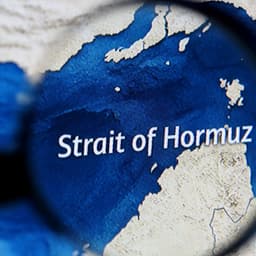
The resolution also condemned Iran's blockade of the crucial
strait of Hormuz.
Bahrain's ambassador to the UN, Jamal Fahrez al-Ruayah,
said support for the resolution sent a clear message of unity.
For the last 12 days, Iranian drones and missiles have been striking innocent civilians
and civilian target in GCC countries and Jordan and elsewhere.
This and provoked aggression is a heinous crime.
But not all Security Council members support the resolution,
Russia and China both allies of Iran abstained.
Iran's ambassador to the UN, Amir Sayyad Irravani, said the resolution was biased and politically
motivated and reversed the role of a aggressor and victim.
This resolution is a manifest injustice against my country.
The main victim of a clear act of aggression, it distorts the realities on the ground
and deliberately ignore the root causes of the current crisis.
It rewars the regimes of the United States and Israel,
which have violated the UN Charter and committed act of aggression.
Our UN correspondent Netta Tofiq in New York
has been telling me what the Gulf States and Jordan wanted to achieve with that vote.
They said that this Security Council resolution was important to send a message
that if you attack your neighbors, that there will be consequences.
And that's why we saw this resolution actually get a record number of co-sponsors,
135 countries, backed it.
Now, in terms of what impact this will have, well, of course,
passing a Security Council resolution and enforcing it are two very different things.
And of course, the Iranian government security forces are really already in a battle for their
survival. So I think for many, this was very much a needed resolution for the Council to speak,
but for those looking to understand how this might change things on the ground,
I don't think anyone's under any illusions that it will change Iran's behavior.
It is interesting, though, to bring up the fate of another resolution that failed to pass today,
one put forward by Russia. Can you talk us through what happened there and what Russia was trying
to achieve? On the Gulf countries' resolution, both Russia and China abstained,
and they both gave the same reason. They said that while they understood the concerns of the
Gulf countries, that the resolution didn't fully reflect the root cause and overall picture of
the conflict in a balanced manner, because the text didn't mention the U.S. and Israeli
airstrikes on Iran, which, remember, the UN Secretary General has also deemed a violation of
the UN charter. And then we also had Russia suggesting that the Gulf countries had allowed their
territories to be used to strike Iran, but Bahrain really hit back against that saying he was
sad to hear the Russian ambassador make that claim that their territories were never used to
launch attacks. But what we saw from Russia was then an effort to put forward a competing draft
resolution, and it essentially just urged all parties to stop fighting and to return to
negotiations. Russia called it a non-confrontational resolution, but that didn't get enough votes
in the council, so that failed. When you see these kind of goings on at the UN Security Council,
does it give you any indication of the strength of the UN right now, the power of diplomacy to try
to make any changes in this conflict? You have to remember that this is a place where the convening
power of the UN still has some value. You have diplomats getting across the same table, debating
these issues, figuring out how to respond, and there's no other place where we can see that happen
in real time and get a sense of the dynamics going on. But nevertheless, we have seen just the
Security Council lose so much power even before President Donald Trump, who has shown a willingness
to completely work outside of the council, you know, for example, before he decided to strike
Iran along with Israel, he didn't even try to make a case in front of the council. He didn't feel
that was at all necessary. So in that sense, we are seeing a weakening of the kind of international
system, but people here, especially you in officials argue, it still has value. Net atofik in New York.
Well, Democrats in the United States are calling for public hearings on military action in Iran,
and specifically on the attack on a girls school in Minab in southern Iran, which happened right
at the start of the war. Iranian officials say that assault killed 168 people, most of them girls
between the ages of 7 and 12. President Trump has blamed Iran for the school attack,
but hasn't revealed any evidence to back up that claim. General David Petraeus, former director of
the Central Intelligence Agency, the CIA and commander of U.S. Central Command, told the BBC that U.S.
military personnel were probably responsible for that school attack. I do think sadly,
tragically, that we probably were the ones where the only ones that have Tom Huck missiles in this
particular war, and it appears that there may have been some old data when this particular building
was part of a larger Iranian naval compound from which it was fenced off some years ago, but tragedy
it does happen in war. Almost every Democrat in the Senate signed the letter asking if the U.S.
military carried out that attack. They also want to know if the correct protocols were in place
to ensure civilians wouldn't be killed. I spoke with our State Department correspondent Tom Bateman,
and he started by telling me about the Pentagon's investigation into that school strike in Minab.
My sense is it will be being carried out by officials both from its U.S. Central Command in the region
alongside some, but probably not many officials within the Pentagon itself. But beyond that, we just
don't have the detail, because every time U.S. officials have been pushed on this,
they are saying nothing officially about it other than it is being investigated.
And I pushed both Secretary of State Rubio last week about what the administration knows,
the Defense Secretary Pete Hegg-Seth as well. I asked what the administration knows, and the
only answers coming back basically were we're investigating it, and we don't target civilians.
It was after that then that President Trump said that he believed that the Iranians carried out
the strike on the school, although he cited no evidence for that. He said he believed that they
may have had Tomahawk missiles. He's not thought the Iranians have any Tomahawks, and it seems
military investigators believe it likely the U.S. carried out this strike, albeit they have not
yet come to a conclusion. The U.S. Secretary of Defense Pete Hegg-Seth has been asked about
whether the U.S. is engaging with the rules of war, whether they're carrying out appropriate
checks before engaging in attacks. What's he been saying when asked those questions?
Yeah, and this is one of the questions in the letter from these 46 Democrats in the Senate.
Mr Hegg-Seth talked about the need for lethality. He has appeared to sound quite disparaging
about the idea of legality. He's talked in the past about kind of woke policies in the pentagon
that constrained war fighters as he puts it, and he said in one of the news briefings,
there wouldn't be stupid rules of engagement. So that rhetoric has become a focus now for the
Democrats who've written this letter, basically demanding an answer to the question,
what provisions were in place to ensure that rules were abided by that are there to prevent the
commission of war crimes. Focusing very much on regard for international law that they are
implying here has been sort of set aside when it has come to the way that the war has been
carried out and these bombing raids on Iranian targets. We haven't had an answer from Mr Hegg-Seth
about that. So how serious is this for the Trump administration? It's a really good question
because there is a sense among Americans of detachment, I think, often to wars in the Middle
East because they don't feel the sense of insecurity on their own shores at home, but when it becomes
an economic issue, then Americans feel it. So the rise in gas prices, as we're seeing at the moment,
is something I think the administration is just desperately trying to mitigate, and that is why
we're hearing them say repeatedly, you know, this is a short war. We're going to dictate the terms
of the way it ends and not the Iranians, and Mr Trump repeatedly saying, well, all prices will
come down and fuel prices will be lower in the longer term and there won't be the threat of a
new clear armed Iran, and that is what he says is the objective here. But at the moment, it's about
the potential economic inflationary pressures that they see as being the big issue when it comes
to the American public at large. Tom Bateman in Washington. President Trump has expressed
frustration with the war repeatedly. He even at one point suggested ships were being cowardly
by not sailing through the straight of four moves. Now, the New York Times newspaper has reported,
based on numerous sources, that the U.S. administration has been taken aback by Iran's response
to the attacks on its country. Evan Davis spoke to Mark Mazzetti, the New York Times' investigations
correspondent, and asked him what he discovered. Well, I think there's been many miscalculations,
but one of the significant ones has been assessing what Iran's response to an American and Israeli
joint attack would be, and under appreciating how much Iran saw this attack as potentially an
existential threat to the government in Iran, the regime in Iran. And I think that there were
planners, at least in the White House, who thought that, you know, what happened last June,
which was the Israelis began strikes, and then the U.S. came in for one night of strikes,
and then it all ended, was the model for what would happen again. And clearly, we haven't seen
that this time, where Iran has, after the initial attack on the Supreme Leader, and the senior
leadership, has responded by attacking American bases around the Middle East, by attacking cities
in the Middle East, by sort of waging economic warfare, including by shutting down the straits of
Hormuz. So this is a miscalculation by those who thought Iran might just sort of try to end the war
and de-escalate like they did the last time. I wonder whether President Trump, or those around him,
have been overly influenced by, I'll use this word carefully, but how easily everything happened
in Venezuela, it all went very smoothly from an American point of view. It was almost like a dream,
they got rid of Maduro, putting someone quite friendly, control Venezuela, and release Venezuela,
and they might, were they thinking maybe we'd have that kind of outcome this time?
So we've reported that the Venezuela operation was in President Trump's mind throughout a lot
of the planning for this, and that coupled with Prime Minister Netanyahu of Israel,
who was also pushing for a joint strike, and together thinking that this might be, you know,
to capitate the leadership, Iranian people rise up, and this could be a relatively quick
and easy operation. Mark Mazzetti, a correspondent from the New York Times.
Now Iran's men's team has qualified for four consecutive football world cups,
including this year's tournament, but with the U.S. and Israel at war with Tehran,
the country's Minister of Sports said on Wednesday that it's doubtful that Iran will be able to play
in the U.S. in June. Afshin Gopi is Tehran-born, but currently lives in the Netherlands.
He's coached both the U.S. and the Iranian national football teams. He told my colleague,
Tim Franks, that Iranians will be devastated if they miss out on the 2026 men's football world cup.
It deeply sends me, and it's a very personal matter for me because football has been my life,
and for 90 plus million Iranians, football is probably as close to religion as it can get.
It's their passion that they're born with, they live with, and the Iranian national team
historically has been, basically, one of the greatest joys of Iranian people.
And having the World Cup come to United States and Mexico and Canada, and with so many Iranians
that live in America, especially in Los Angeles, it would have been a great opportunity for the Iranian
players and Iran as a country to celebrate the World Cup in front of so many people that have
been so far from their country. I can't think of a World Cup which has been staged where one of
the host countries is at war with one of the other countries which has qualified for the World Cup.
So it would be difficult to see the Iranian team play in the States, wouldn't it?
Well, maybe there's another way to look at it. Imagine if FIFA finds a very creative way
to allow a selection of Iranian players which many play abroad and have a neutral organization
manage it and allow those players who earn their right to be in the World Cup.
Basically, their life dreamed to be in the World Cup, and how many World Cup does any player ever get
a chance to play in in their lifetime? So maybe it's a great moment for FIFA to highlight what
they stand for that sports are always above politics, and I hope that FIFA explores that.
You're in a unique position in that you have coached at the highest levels
both the US national team and the Iranian national team. Can you just give me a sense of
what it was like for you to cut across such different sporting cultures and national cultures as well?
Well, I've been very fortunate in my life to commit myself to my passion and to be able to take
it literally to the highest level and I've worked across eight countries and wherever I've been,
I've faced enormous amount of, for lack of better words, racism, prejudice, such as I'm playing
a derby in Japan, and then a what a fan puts a massive banner saying, go be stopped making bombs.
When you see that across the world, you try to use your position with love and with understanding
and patience to teach people that we're all the same and it doesn't matter where we come from,
we deserve respect and dignity and we should be allowed to have hope and purpose in our lives.
And I've tried to live by that. Most Iranians in the last 47 years that have lived abroad
or even Iranians within Iran trying to achieve their dreams and go for their goals have
massive speed bumps and mountains of obstacles in front of them. And I'm proud to say many
Iranians around the world have been very successful because of just their grits and they're never
given up spirit. So that makes me proud. At the same time, it makes me sad. And with this
World Cup, I thought it was a great opportunity for all the Iranians around the world to come
as one and celebrate the sport of football at the greatest event in the world.
Aftian Godphe
Still to come in this podcast, solving an insect mystery.
They look very dead when we remove them from the water but then it took a few days for them
to fully recover and regain activity. Scientists in Canada say they've discovered
queen bumblebees have the ability to breathe underwater.
This is not the future we were promised. Like, hold that up for a tagline for the show.
From the BBC, this is the interface, the show that explores how tech is rewiring your week
and your world. This isn't about quarterly earnings or about tech reviews.
It's about what technology is actually doing to your work and your politics, your everyday life,
and all the bizarre ways people are using the internet.
Listen on BBC.com or wherever you get your podcasts.
This is the Global News Podcast. To Africa's eastern coast now, where aid agencies are
warning of worsening drought in several countries, including Somalia, Ethiopia, Northern Tanzania,
and Kenya. The Kenyan government says more than 3 million people are facing acute hunger.
Because of the drought, that's stretched on in some areas for several years.
Children and elderly people are suffering and thousands of livestock are dying from starvation.
The BBC's Sami Awami reports from Northern Kenya.
I visited a family to learn about their experience, and I found three women sitting on a tree
pounding these wild fruits. The fruits are brown in color and have a rough, lumpy exterior,
and each one is about the size of a small feast or a large avocado peat.
I was told that these fruits are usually eaten as snacks by grazes when they are out in the wild,
tending their animals. But because of hunger, the women told me the fruits have now become
their main food, and not just for these family, but for many others in the village.
We eat these fruits because of hunger.
That is Virginia, a Wotolokopu, one of the women I found pounding the fruits.
She tells me they have no any other food.
There is no food from either the county government or aid organizations.
That's why we have decided to just eat these fruits.
We are walking to a house where we have been told there is a woman who hasn't eaten for more than
three days. Hunger has made her so frail that she can neither seat nor speak.
Grandma is asleep because she hasn't eaten for three days, and today is the fourth day.
The food itself was just little.
For this past-risk community, livestock isn't just wealth.
It is essentially life, but many have lost tens of their animals, goats, sheep and camels.
Now in search of pasture, many abode men have left home for neighbouring countries,
such as Uganda and Ethiopia.
I have come to a food storage managed by Kenya Red Cross, and here there are officers
loading up bags of food onto a track, and soon they will take it to communities who are desperately
in need of it. So far, we have around 200,000 people who are in need of food in the entire five
post-port sub-counties.
Rukia Abu Bakari is the two-kana counter-coordinator of Kenya Red Cross. She says Red Cross has been
distributing food to the most vulnerable families, but needs are growing faster than the food arriving.
We have small wits if we cannot reach the whole population, so that's why we are saying
if we can get more partners, more fundraising, we shall to come and support.
Other actors such as World Vision Kenya in World Food Programme have also been providing food
assistance to vulnerable families. The government is also said to start distributing food
for people and animals and counties which have been affected the most.
While rains have finally started in the most parts of the country,
including areas that have endured prolonged drought,
officials warned that relief will not come immediately. Families who still need food assistance
in pastures need time to grow. Jakob Letosiro is an assistant director for National Drought
Management Authority.
I believe what we are receiving now could be offices on rains, and they not have instant
impact. It's a livestock or water availability, so it's not something that was celebrating at this point.
Back in the village, both people and animals continue to rely on these wild fruits.
One can say it's a sign of resilience, but it's also a sign of desperation for these communities.
Until the land recovers, the fruits will likely remain the main meal that many here will depend on.
Sami Awami in Kenya.
Let's go to Chile now, a country that moved from dictatorship to democracy in the 1990s.
On Wednesday, Chile marked its biggest shift to the right since that time.
Jose Antonio Cast has just been sworn in as president,
and in his first speech to the nation, he promised sweeping changes in many areas.
To confront these emergencies in security, health, education, employment, and so many others,
Chile needs an emergency government. It's not a slogan.
The new president defeated his leftist opponent in a resounding victory last December by
promising to take a tough approach to crime and illegal immigration. So, who is Jose Antonio Cast?
And what can we expect from him? Niara Bosch is Chile correspondent for the Associated Press.
Chile nowadays is very different from four years ago when Cast also run for president,
and was defeated by outgoing president Gabriel Baudit. Cast got almost 60% of voters
in a country that has been hit by a rising organized crime and also disappointed by the great
expectation of Baud's administration. So during the campaign, Cast has priced the crime
fighting tactics of the president of El Salvador, Najib Bukheli, and also some policies adopted
by the Trump administration. Among his promises, he has vowed to criminalize illegal immigration,
intensify mass deportations and install fences or walls along Chile's border. He is socially
conservative, and his discourse and his opposition against the same-sex marriage or the legal abortion,
and also some sort of sympathy towards the dictatorship that took place in Chile between 1973 and
1990. I would say Chile's society is more worried about the current problems such as the security
crisis and illegal immigration that has largely shaped the country in the last four or five years,
rather than the social agenda or discussions about the past. I've talked to some experts who had
points out that the first 100 days are going to be key to determine if his main projects can come
through or not. Nayar Banch, Chile correspondent for the Associated Press. In Europe, North America
and parts of Asia, this is the time of year when the first bumblebees appear. I'm responding
the cold months hunkering down in shallow burrows, hibernating. But many experts have wondered how
these insects can survive a wet winter, especially one that involves flooding. Well, scientists in
Canada have accidentally discovered that bumblebee queens can breathe underwater. Here's Michael
Davenry. Any APRist will tell you that the humble bumblebee is far from a household pest. We now
know that they don't just pollinate our plants and crops, but can solve puzzles and teach each other
complex tasks. This study, published in the Royal Society's main research journal, tells us that
they are also incredibly resilient. It found bumblebee queens can survive a winter day use caused
by heavy rain or melting snow through diapause, which is a form of hibernation that drastically
reduces their bodily functions, and by breathing traces of air trapped in their bodies. Dr. Sabrina
Rondo from the University of Ottawa said the discovery was an accident, coming after she discovered
condensation in a fridge where her hibernating specimens were kept. Their test tubes were full of
water, and she thought they drowned. They look very dead when we remove them from the water, but then
it took a few days for them to fully recover and regain activity. That led to a more controlled
study, which led the team to discover the bumblebee queens were quite literally breathing underwater.
They consumed oxygen, and in its place produced carbon dioxide.
If the ground suddenly fills with water, we know that they are able to survive and they do this
while breathing, so while exchanging gas on their water for up to at least seven days.
We still don't know what effect breathing underwater has on the bee's lifespan, and whether they
can reproduce afterwards, for example, but it nonetheless sheds light on something of an ecological
mystery. Michael Daventry. And last, don't forget that this Sunday, it's the Oscars.
The great and the good from the world of entertainment will be sushaying down the red carpet
in Los Angeles. And beyond Hollywood, the Academy Awards have become a global guessing game,
with movie fans trying to predict who will win each category. Talking movie's Tom Brook has
been asking some of the BBC's top news correspondence about their Oscar favorites.
BBC colleagues often want to talk to me about the films they like. Sometimes I'm startled by their
preferences. Some breaking news in the last few minutes. Take Nomea Ikbar, a steady measured
presence on the air, currently a presenter on the news channel, who knew she was a huge fan of horror.
It sounds really weird when you say to people you're really into horror movies, because they think
there's something strange about you. Like when I'm watching a horror movie, I can't think of anything else.
It's like it's almost relieves all the stress that's going on in my actual life.
So no surprises then that Nomea Ikbar likes sinners, the Oscars frontrunners. In that it has a
crude, a record number of nominations. It's a horror film that's a hybrid. It's also an historical
drama with supernatural elements. I love cities. I love the way that horror is being used to talk
almost about social issues and I just loved it. I don't have seen it more than once now.
Let me bring in Tom Brough. A continent away in Los Angeles, Peter Boes will be presenting the BBC's
news coverage during the Oscar ceremony as he has for several years. Unlike Nomea Ikbar, he can't
stomach horror. After years of experiencing the impact of watching a scary movie, a horror movie,
it doesn't even have to be late at night. It can be during the day. I will go to bed and I will wake
up screaming. So he'll be rooting for the Oscar-nominated Marty Supreme, which Timothy Shalamet plays
at Ribbon Table tennis player in 1950s, New York. I'm telling you this game, it feels stadiums overseas.
And it's only a matter of time before I'm staring at you from the cover of a weedy spot. It is
pure escapism. It took me into a world that is championship table tennis that I knew very little
about and it is a film full of suspense. A political thriller shot in secret in Tehran,
it was just an accident, is also in the running for an Oscar. Put together by dissident Iranian
filmmaker Jaffa Panahee, his cinema has many admirers. Among them, the BBC's chief international
correspondent, Lee Stoucet. That's not subtle, it's very blunt. Something about that film,
I still think about it to this day. I've come to believe that good things can come out of
bad and Iranian cinema is a testament to that. An extraordinarily distinctive and achingly beautiful
tradition of cinema, which comes out of the harshest of rules that they've had to dance around.
Ice vehicles and New York-based BBC North America correspondent,
Netta Trophy, routinely reports on the front lines on news developments that provoke intense
debate. When she and her husband watched the Oscar nominated one battle after another,
an action thriller laden with social and political satire, a mirror of sorts to contemporary
America, it really engaged her. It just touched on so many flashpoints. Steve Lockjaw used to attack
my home. People deciding to kind of fight back against what they see as this militarized force,
hurting people that they believe are neighbors. Maybe you should have studied the rebellion text
a little harder. You see a lot of those themes in one battle after another. And one battle after
another appears to be resonating with Oscar voters too. It's being widely predicted that it will
take home some top Academy Awards, including Best Director and quite possibly Best Picture.
The Global Story, which goes in-depth and beyond the headlines on one big story.
This is not the future we were promised. Like hell that that for a tagline for the show.
From the BBC, this is the interface, the show that explores how tech is rewiring your week
and your world. This isn't about quarterly earnings or about tech reviews. It's about what
technology is actually doing to your work and your politics, your everyday life. And all the
bizarre ways people are using the internet. Listen on BBC.com or wherever you get your podcasts.