Uncovering China's Secret War for Athlete Brainwaves (PTFO Vault)
About this episode
Superstars like Jannik Sinner wear a headset to get in the zone. But a six-month investigation revealed the technology's funding by entities linked to the Chinese government. Hunterbrook Media's Sam Koppelman examines the potential impact on AI, mind control, state surveillance, cognitive warfare... and one very surprised Super Bowl champion.
(This episode originally aired September 16, 2025.)
• Read the full Hunterbrook Media investigation
• Subscribe to Huntebrook's newsletter for more investigations
(Pablo Torre Finds Out is independently produced by Meadowlark Media and distributed by The Athletic. The views, research and reporting expressed in this episode are solely those of Pablo Torre Finds Out and Hunterbrook Media and do not reflect the work or editorial input of The Athletic or its journalists.)
Hosted on Acast. See acast.com/privacy for more information.
Get every episode summarized
Each time Pablo Torre Finds Out publishes, we email you a written briefing from the transcript — the topics, who appeared, and any specific claims, with the ad reads skipped.
Email me new episodesFree for 3 shows. No card needed.
Hosts & guests
Transcript ready
942 searchable segments. Every word is indexed and playable.
Full transcript
Pablo Torre Finds Out — Uncovering China's Secret War for Athlete Brainwaves (PTFO Vault). Machine-transcribed; use the interactive transcript above to jump the player to any line.
Welcome to Pablo Tore finds out I am Pablo Tore and today we're gonna find out what this sound is. I believe in training the brain, but you gotta be careful you do it with. Right after this ad. I'm trying to figure it out if I can, if you can make the thing light up on your head. There's some button that can make it light up though. I have a hard tip. Oh wait. The lighting will play. Oh f***. There it is. Yeah, yeah, yeah. Boom. And now we're talking. I do want to begin by acknowledging what people on YouTube are seeing, but listeners may not discern, which is that I am wearing a very weird electronic headband. Also, I'm sitting across from returning PTFO correspondents, Amcoupleman, the publisher of Hunter Brook Media, who is lasting in helping us investigate billionaire Phoenix son's owner and mortgage king, Matt Ischbier. We tried to warn the Phoenix son's fans. I feel like we did a pretty good job warning everybody of the dystopian future that was
also to come for the Phoenix sons in the NBA. 100%. If it was like, if you like how Matt Ischbier is running his mortgage company, you're going to love how he's going to run your favorite basketball team. I wish we could just spend another hour talking about mortgages and the Phoenix sons, but there is another dystopian future I need to acknowledge. It's the one that was promised us by comic books, by sci-fi movies that we both, that all of us sort of inhaled growing up because now Sam, we got robots. We have humans just actively falling in love with artificial intelligence. And we also have a sporting event that happened just last month in August that was effectively ignored by my very serious colleagues in sports media here in America, despite the fact that it looked like this. This is not your average sports tournament. What is built is the first ever world humanoid robot games. The athletes come in all shapes, sizes and structure to compete in events ranging from
running to kickboxing to soccer. For three days, human handlers from 16 countries are putting machines through the motions to show the potential of embodied AI as well as its limitations. It isn't about winning or losing, but it's a way to trial the robots in agility, endurance and battery life. I mean, those robots were like thrown punches and like slowly kicking soccer balls like toddlers. 100%. I mean, to be clear, the humanoid robot games looked kind of ridiculous. But what's important to understand is that what you saw broadcast in that tournament was just the early days, the Model T equivalent of these robots. I mean, I hope so because for the record, the first ever world humanoid robot games, which was allegedly not about winning or losing as that kind culture warrior of a broadcast apparently. Participation trophies for all of the humanoid robots. Robot or inslices for all the robots. That whole event was dominated actually by one company, by this Chinese robotics company,
named Unitry because all those robots that didn't look like they know ball got apparently blown out by the Michael Phelps of robots. They won 11 medals. They set multiple records, which apparently are a thing we're tracking now as well. And this gets to the part of the story that we spent six months investigating at Hunterbrook, which is that China is working on pairing this humanoid robotics technology with something called brain computer interfaces. Yes. BCI. And so the Cold War had the nuclear arms race. The 60s had the race to the moon. Today, China and the US are locked in a battle over who can master the human brain itself. And I think that big headline does need a little more explanation. Because I get that like it's robots and AI everywhere, but the brain, how do they want to master and win the brain? You've probably seen Elon Musk with the neural link where it can help paraplegics walk. There's all sorts of good positive use cases for this technology.
Inspirational. Like, I think of that story earlier this year where they enabled a quadriplegic from Arizona to control a computer using his brain waves and he could play chess, he could browse the internet, he could play video games, he could tweet. I think it just became intuitive for me to start imagining the cursor moving. Basically, it was like using the force on the cursor. The thing is China is prioritizing what it calls cognitive warfare, which is that this technology as it develops is going to be able to do things like read your brain, see if you're responding positively or negatively to something you see in the world, catch you if you're lying or disloyal. They're going to hack the human brain is what you're saying. They're going to hack the human brain. That's the idea. So this whole technology, which China has made a priority, the end game here in so far as you can see it, just top line would be what?
The end game would be to be able to understand people's thoughts when they think them without having to wait for those people to share those thoughts in public, which feels useful to a government like China's or ours, frankly. Absolutely. Then there's one other thing that the government seems excited about using brain control interface, technology for. It's pairing this technology with the humanoid robots. The ones we just saw. Correct. To create what the Chinese Communist Party has called super soldiers. The super soldier to me, I grew up, Sam, knowing that Captain America was the original super soldier, right? But when I think of the American side of the space race, I do think of Neuralink. I do think of Elon. In America, Neuralink's the name you've heard of, but they're not the only major player. Just like China, the US government is investing heavily in brain computer interface technology. It's a technological and a military imperative. There's companies like Synchron that's partnered with Apple.
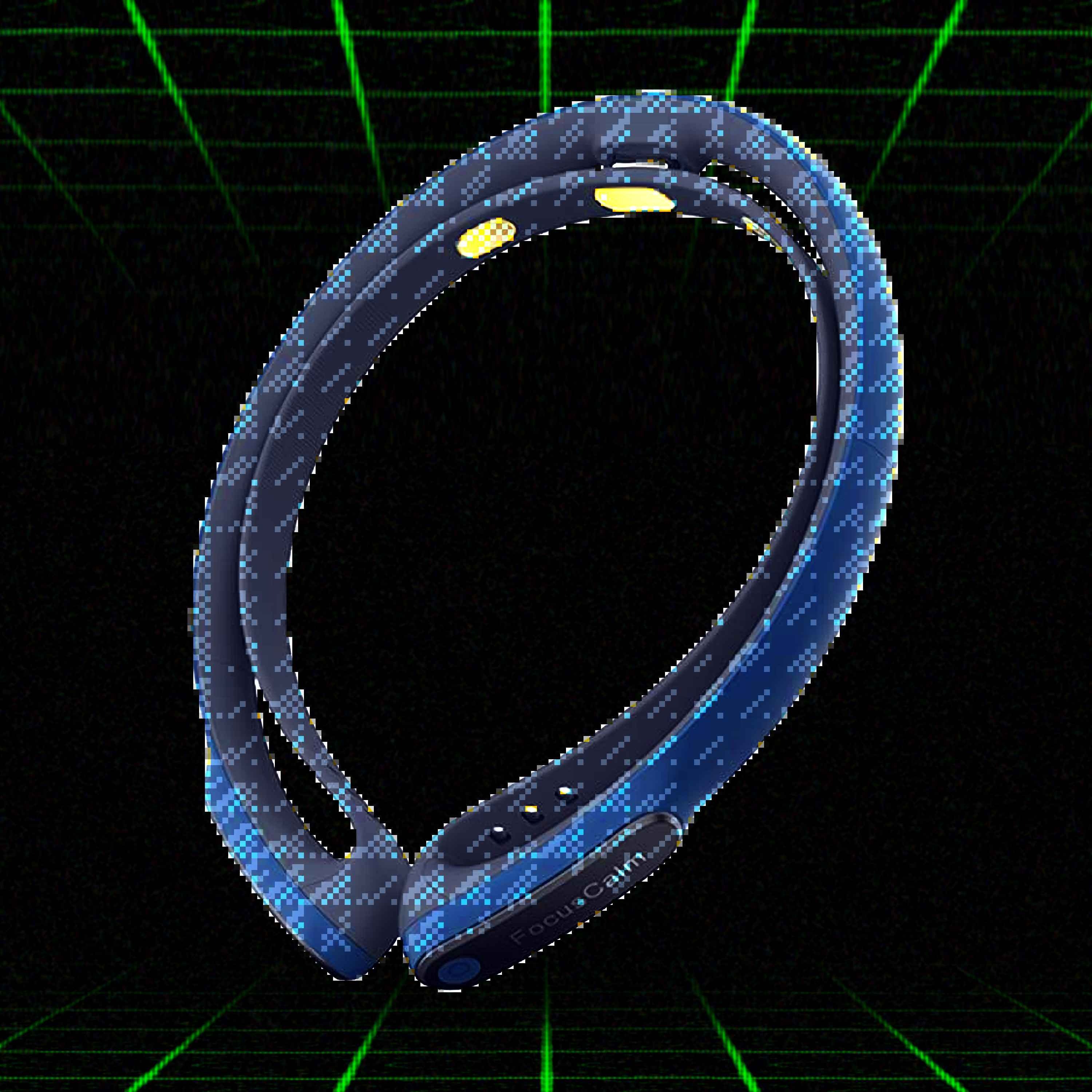
Then just last month in August, there was this Bloomberg story. But there's a big American BCI company that was founded at Harvard in 2015 and is now quote, aiming to compete with Elon Musk's Neuralink. And so this company, this American company, I want to say that the name of it, it just feels optimized in the same way that Netflix has that show, but NFL quarterbacks that they just called quarterback. Correct. Yes. Neuralink's American born rival startup is named Brainco. Which is perfect. According to Bloomberg, Brainco is in talks to secure roughly $100 million in pre-election IPO financing at a valuation of more than $1.3 billion. In part, because of the weird electronic headband that you're wearing right now. This headband, which is called the Focuscom and is in fact available for the low low price of $279.99 online, is studied as you were alluded to with these electrodes that have been
reading my brainwaves while podcasting your through my skin as a commercial hopefully explains. It's time to change your mind. Now there's a wearable that can help train your brain for better focus and a calm or mind, introducing Focuscom. Focuscom uses EEG technology to detect and analyze the activity in your brain while proprietary algorithms translate the signals into your focus call score. In the app, you'll practice raising your focuscom score and keeping it high while staying alert and focused. You'll see your progress week by week as your brain gets stronger, more consistently relaxed at work. I just feel very consistently relaxed right now with you in studio. Okay, well, I'm sorry because the next thing is probably going to ruin that moment of Zen. The reason I reached out to you to collaborate on this investigation is that there's something that Brainco doesn't want anyone in America to know. Because yes, the story of Brainco is that it was founded out of Harvard by a Harvard PhD
slash professor who taught a course on brain computer interface technology and it even had the dean of Harvard's graduate school of education as an advisor. But according to documents that Hunter Brook Media has obtained, Brainco itself has been funded for almost a decade by entities linked directly to the Chinese Communist Party. Yes. In recent years, Brainco has largely shut down its US operation, moved to China where it's now going public at that $1.3 billion valuation. And it has quietly become one of the most important companies in the world to the Chinese government and the Chinese Communist Party. Which would seem to have an important bit of context given everything that we just said at the top of the show. Correct. An American company with years of research from Harvard and MIT scientists is now on China's team in the next space race. And as much as people listening might be thinking, what are these two assholes going on about? Why are they the only people who care about this thing?
On some level, I should point out here that in April of 2025, three prominent US senators happened to publish a letter with the goal of warning America about what they called the rapid development and commercialization of brain computer interface technologies. The senators wrote, quote, the risks posed by the exploitation of sensitive neural data are not hypothetical. The Department of Commerce has determined that Chinese companies are using biotechnology to support military end uses, including quote, purported brain control weaponry, and quote, brain control weaponry. Chill casual stuff. Normal sports podcast material. And yes, according to the Chinese government's own website, quote, the country seeks to achieve key technological breakthroughs in the industry by 2027, which also brings us back around to yes, those now increasingly terrifying humanoid athlete robots that were running around and punching stuff.
But also a question that I think is worth asking, which is what is the source of the neural data that everybody is warning about that the government of China is apparently quite interested in? Well, this might be the most insane part of the story. What we are reporting today, a portion of that neural data has been secretly harvested from the unwitting brains of some of the greatest athletes in the world. Which is why clearly I decided to join you in investigating this story and also why I think it's probably time for me to take this headband off. Probably a good idea. Just a little bit safer if it's just on the table over there.
So Sam, I want to establish that this headband that I was just wearing called the Focus Calm is not just like a random thing. It is actually incredibly popular in the world of sports because it enables athletes to track their brain waves for performance reasons, right? You can see when you're calm, when you're stressed, you can get in the zone is what the whole advertising around this is. The thing about the power users of this quietly Chinese government-backed device that I think people need to know here is that these aren't just like any athletes. We're talking about Italy's famously focused Yonic Center who trains with the Focus Calm. We're talking about the former number one women's tennis player in the world, Ega Sviatek, who is using it every day. The number one Alpine skier of all time, American gold medalist, Michaela Schifrin, who uses it as also a bunch of English Premier League soccer players do. The Focus Calm website also says it's currently used by, quote, over 20 NCAA teams, including
the University of Kentucky in addition to, quote, professional and Olympic organizations across every major sport. U.S. weightlifting is a partner. U.S. a Bob sled. Skeleton is a partner. Yes, you can actually see some of these logos, but U.S. weightlifting logos on the box of the headband that I took off. If anybody is wondering why, at this point, all these athletes believe in this connection between brain computer interface technology and actual athletic results, I do think it's worth hearing from somebody who's zoom background happens to provide an answer to that question. You see, I got an Ombardi trophy. Not the real one, but looks just like it. I guess that's me right there in a box uniform. Someone sent me that. I thought that was cool action figure. And I got some of the helmets from the teams I played for, the Giants, the Patriots, San Francisco 49ers, my last team, and all the tags are from Super Bulls I played in for
my locker. So Sam, this is longtime NFL defensive back, Logan Ryan. I got you played 11 seasons in the NFL, one, two Super Bulls, as you see, though as the NFL conservatives indicate with the Patriots. But what's funny to me is that after Logan Ryan left the Pats, he wound up on the Tennessee Titans, and he is the answer to the question of who's the guy who intercepted the last pass that Tom Brady would ever throw at a Patriot's uniform. I mean, it's, we'll never see this run again, Jim. Raise passage intercepted into turn for a touchdown by Logan Ryan, the former Patriots. And after that, by the way, Logan Ryan became the Tampa Bay Book, and yet another piece of memorabilia happened to enter his possession. I picked off Aaron Rodgers when I was on the Bucks, and that completed my run of picking off Peyton Manning, Tom Brady and Aaron Rodgers. So I finished my quest of picking off all the goats of my error, so that's what the Bucks season was for.
He has like a wall in his home with like the heads of the greatest quarterback, Sal. Yes, everybody he has slain. And I was just thinking that you interviewed Logan Ryan because it was another way to rub something in to build a check. Yes. I'm surrounding the Belicec Empire in all sorts of journalistic ways. But speaking of this question of like, okay, the invasiveness around these characters, I should point out that Logan Ryan says he did all this stuff because of this device that read his brain. And he trusted it so much actually that he signed up to personally endorse the focus com and even appeared in a commercial for it in 2022. Well, how I got introduced to it to start is I would use yoga as part of my recovery. And one of the yoga instructors that I was working with was also talking about breath work. So I started doing breath work with her. Then she introduced me to device to put on your head and to app you play on your phone.
You would play a race car game. And the more that you were in the right breathing and the right mental space, the faster your car will go. And the harder you tried, the slower it would go. And it made me realize that we can't just will everything to happen. So when I perform on the field, I could better off getting a flow state because any athlete, you know the story when they're in the zone or it's the ninth inning, Michael Jordan and LeBron, they're pulses like this and everyone else is going crazy. They keep themselves in a com flow state. So when the two minute happened or the last drive against Tom Brady is happening, I'm not freaking out like some players like most are it was the name of the company that you partnered with. Oh, I think they changed, I think they changed names. I got a, I don't want to misquote it. Let me, let me, let me get back to you on it. Please. The bigger company's name is. Brain Co. Okay, so this is probably where we should properly introduce Brain Co. And it's founder, Hanby Chang.
Yes, because I was long gone at Harvard when Brain Co was being founded by that guy in 2015, but you were actually on campus, I believe. I was, I was. I think we might have been in slightly different crowds, but I was there when he was there, he was studying neuroscience. And he founded Brain Co, a year before Elon Musk even started Neuralink. Right. And by 2017, Hanby Chang was being honored by MIT Technology Review as one of their top innovators under 35. And the headline for MIT Technology Review, red quote, an inventor that brings Brain Machine Interface out of science fiction into reality and quote. Okay, so Elon and Neuralink were focused on brain implants where we've got to drill a hole into someone's head into your stomach at work. Hanby Chang set up an office in sunny Somerville, Massachusetts. Where I used to get drunk in college. 100%. And he built a gentler, more consumer friendly device that you just wear on top of your head. And he also created a robot prosthetic hand operated with that same Hanban technology that
would go on to be named one of Time Magazine's 100 Best Innovations of 2019. And as the host of one of Time Magazine's 100 Best Podcasts of All Time, I can tell you that I too trust the gentle touch of this robot account. Absolutely. And you are not alone. Plenty of academics got on board with Brain Co as well. As I mentioned, Brain Co's advisor was the dean of Harvard's Graduate School of Education who went on to become the president of the University of Virginia. According to an interview with B. Chang in Chinese media, he said quote, most of our core teams are from Harvard University and the MIT Brain Science Center, very legit places. And a Harvard grad named Max Nulin is who became the president of Brain Co USA. He was working as a research scientist at the company when Brain Co reportedly announced its seed funding round of $5 million in 2016. Which is a very American success story. 100%. Except that 100 Brecada reporter in Taiwan dig into the corporate records on who actually
invested millions of dollars into Brain Co. And what we found was that Brain Co has been repeatedly financed by Chinese state-owned enterprises, including an entity inside China Electronics Corporation, which is a conglomerate that the US Defense Department has sanctioned. And so how was the Chinese government hiding their investment then? Well, actually by 2024, we found that the Chinese government was just straight up investing tens of millions of dollars directly into Brain Co. And I think this would help explain why the biggest initial market, the biggest user base, was not hyper competitive pro athletes. But something I think that is arguably even more competitive. That's right. It was the Chinese education system. Is this 2019 report from the Wall Street Journal explains? For this fifth grade class, the day begins with putting on a Brain Wave Sensing gadget. The device is made in China and has three electrodes, two behind the ears and one on the forehead. These sensors pick up electrical signals sent by neurons in the brain.
The neural data is then sent in real time to the teacher's computer. So while students are solving math problems, a teacher can quickly find out who's paying attention and who's not. I just got to say that that video, classrooms of kids wearing the headband, that Logan Ryan and I apparently both share in common. It's fucking crazy looking. It's absolutely insane. There was a ton of backlash even in China. Parents were like, I do not want the Chinese Communist Party collecting data on how well my kids are paying attention in class. Yes. It actually got some coverage here in the United States too. And then between like 2020 and 2023, there was this weird era in Brain Co's history where they kind of like stopped sending out press releases. They weren't doing as many interviews. They began to lurk in the shadows a little bit. The block got hot even in China. Even in China people were like, what the hell is this? Yeah, which raises questions about how the American wing of the business was handling
this. Badly. I spoke to a former high level Brain Co exec who told me that almost the entire team in Somerville was laid off by like 2024 in the first couple months. Almost nobody was coming into the office. We actually had a reporter go visit Brain Co's offices three different times. We never saw more than two people. That guy Max Nulin who was the president of Brain Co in the United States, he resigned and he was the same guy who was always hyping Brain Co up. Okay, so the president of the company in America is gone. And meanwhile, the question that I think is really important to ask at this point of the story is what access does the Chinese government have to what was harvested from the brains of all of these Chinese school children and all of these classrooms? Such an important question. And here is where we've got to make clear that in China, it's not like optional to share information and data with the government. We actually have a national intelligence law that requires Chinese companies to cooperate
with intelligence services when requested. This you may remember is why TikTok was almost banned in the United States. Yes. But the thing is like, where is TikTok? Knows your preferences for which dances and cooking recipes and memes you want to watch. Brain Co has data on your actual brainwaves. Which sounds extraordinarily valuable. Two said government to the point where, yeah, how do they handle the fact that it's a flop? Right. So during this period of time when brain co was laying low in the US, waiting for the school controversy to pass, the Chinese government's interest in brain co's data doesn't seem ever to have wavered. In fact, brain co is now being listed as one of the six little dragons. The six dragons is what people now call a cluster of elite startups here. China's rising stars in gaming, robotics, AI and NeuroTech. All working around the clock to beat Silicon Valley at its own game. These are the six tech firms in the city of Hanzhou that receive special government support,
favorable loans, and integration into China's broader technology ecosystem. The most prominent being deep seek that little known startup that upended the AI world in January with its low cost chat box. And there are more unitary robotics is seen here as having the potential to do for China's robotics sector what deep seek did in AI. They make humanoid and quadripeh robots like G1 edu that can dance to its own beat and pack a decent punch if that's what you want your humanoid to do. This is the same gold metal winning technology from the world humanoid robot games that we started with. Yes, that is robot Michael Phelps. In that company, Unitry, you're probably not surprised to learn at this point is actually officially partnered with Branko, which we know in part because on Unitry's own website, the company outlines how its robots can be equipped with Branko's dextrous hand, the
one from Time Magazine, which is now being showcased at robotics conventions where they're not being used to help quadriplegic walk or tweet. They're being mounted onto full humanoid robots capable of neural control, which is to just spell it out the ability for people to control with their brains, a robot army of the future. Correct. And of course, the other reason we know about Branko's partnership with Unitry is that Hunter Brook Media looked under the hood of Unitry's source code and we found that they actually have an integration with Branko's prosthetics right in their code base. And by the way, while you were sniffing around the code base of this robotics company, what the US government was doing with the US House of Representatives in particular was doing in May of this year was send a letter of their own warning about Unitry and their quote well-documented ties to the Chinese military and the CCP. Which is probably a good time to mention that Branko's offices in Hanzhou, not to be confused with the Somerville offices, they're right next to Unitries.
And that office has hosted visits from the Chinese premiere, the CCP's number two guy after President Xi, as well as their Minister of Science and Technology. We've also seen photos and videos of Branko CEO Han Bichang being visited by the chief executive of the Hong Kong Special Administrative Region, which is a Beijing installed figure known for crushing democratic protest. And what we're seeing here just in this video is another bit of tape. It's a guy who lost both hands using two of those Branko robotic arms to draw calligraphy, shake hands, another guy is playing the piano, say I'm to speak to the dexterousness of the robot arm. This is from a pure like science perspective objectively incredible. It's f***ing sick, it's an unbelievable invention and it makes complete sense why China and the United States care so much about this technology.
So if you're wondering here as Sam and I were, how this entire company just got swiped out from under the noses of Branko's US leadership team, we try tracking down James Ryan, the former Harvard Dean and subsequently the president of the University of Virginia to ask him this very question. And in an interview with Hunter Brook Media, James Ryan confirmed that he had been an advisor to Branko and he joined Branko because he knew Max Nulan, the since resigned Branko president, from the Harvard Graduate School of Education. But in 2023, Ryan said, this is after the Chinese school children scandal we mentioned and around that time when Branko went dark and stopped sending out press releases, he officially stepped down from his advisory role at Branko, citing his sparse experience helping out the company. Now, when asked directly about Branko's links to the Chinese government, James Ryan told us that he didn't know anything about that. And when told that Branko had plans to IPO, Ryan said that he would divest from the company
entirely, quote, I am disturbed and saddened to hear this and very disappointed, obviously, and quote, in fact, as a US college administrator, Ryan told us that he had been briefed on attempts by the Chinese government to steal intellectual property from American universities. He said he even spoke to Max Nulan about that and what Nulan told him plainly, quote, Ryan, quote, we are not connected to the Chinese government, end quote. Now what Ryan tells us is this quote, I truly hope Max didn't know. Max Nulan did not respond to repeated requests for comment. And that raised an even bigger unsolved question for us and the American government about how exactly Branko pivoted and why its business is currently booming in China.
Well, a big part of it is, of course, the data that they're collecting, which brings us back to Branko's roster of some of the world's greatest athletes. Yes, one of whom I believe we left in the middle of our Zoom call. And yeah, I should probably tell American Branko spokesman and two times he were bowl-winning defensive back, Logan Ryan, some things that I have learned after the break. In order to understand how Branko pivoted from classrooms full of tiny Chinese school children with focus-com headsets, we had to call somebody who was not Chinese and not American. And I believe may well be the most Italian person that I have ever met.
If you want to make a good carbonara, you need to have on the table all the ingredient. If you don't have all the ingredient, okay, the carbonara will not be perfect. So an aftertidop aftertid is like the ingredient on the table before to be cooked. Totally. I just love him. I love this man, despite everything that we're about to get into with him, honestly. He's amazing, especially because carbonara only has like five ingredients. And so it's clear he takes each of them very seriously. Yes, the spice level is important. You need kick in your carbonara and don't let the egg get scrambled. Pro tip. My name is Ricardo Cicarelli. I am a medical doctor, specializing in sports medicine. I live in Italy in this moment. I am in my facility for Malaysian facility, which is in Tuscany, in Virgil, a little town on the beach, very nice place for some more time.
So I would recommend to join me as soon as you can because here now the way that is perfect. I'm basically ready to move. I know. I feel like I can expand his house. You know, 100%. He can expand the trip to Tuscany to a beach town. I didn't know what even possible in the Italian countryside. But that is, of course, Dr. Ricardo Cicarelli, who, beyond being a volunteer ambassador for the Board of Tourism in Tuscany, is the CEO and founder of a company called Formula Medicine. And Formula Medicine has been supporting F1 drivers in mental and physical training for more than 15 years. Yes, they're logo. It's on the boxes of these devices that are on the table. You may recall, Sam, how Logan Ryan earlier was talking about how he was playing that Focuscom game on his phone where you calm down and the virtual race car goes faster. Dr. Cicarelli turns out, has been basically using the Brainco Focuscom to study the exact same thing for years.
Except with actual human race car drivers. Who happened to be the best in the world? And so our innovation was to link Brainco and a heart rate recorder directly implemented inside our test. So it's not for meditation for relaxing, but it's just like the heart rate recorder on the treadmill to see how much you activate your brain, your frontal lobe, which is the frontal lobe is the decision maker. But it's the problem of the tennis player before and during a match. The problem is how to control. But how to control not when you are relaxed in a closed room with a silent and they do meditation. The problem is how can I control when I am on the match point on the table. So that's the point. So we train people in the out of the comfort zone. And the tennis thing is also in his comfort zone personally because Dr. Cicarelli, when I talked to him in July, had actually just gotten back from training the brain of one of
his non-F1 clients. Who was at Wimbledon? No! We're not unblastigated. Winning the tournament because, yeah, you might recall how Janik Sinner won one of the most impressive matches in the recent history of tennis. Janik, he had to learn how to cook. This is what we did at the beginning when he was 19, 20, 21, because he's a very clever guy. He's a good person. And now he's able to do a good carbonara. I'm going back to it. Yes, it's him. Ticks his face. It's him. Winning the history. Six more worlds. A wonderful match. Notably, Janik Sinner, closest thing to a robotic tennis player we've seen. The greatest living advertisement for focus and calm. He's like a human, humanoid.
Yes. But the thing is that, obviously, Dr. Czecharelli came to Brainco when Janik Sinner was just 19 years old. He's been partnered with this company for a very long time. His name is literally on the box. Yes. He is also on the website when you go, as we did, to order this thing for $279.99. You see the testimony from this guy. He's testifying to the greatness of the focus, specifically. And he is not shy about how long and how intimate his partnership is. I have to say many thanks to Brainco because when we met them, we selected a different kind of device. And then we saw that this was for us the best and more reliable. And so we called him. Okay, so we knew that he was a Brainco partner. What we didn't know was which athletes have actually been using the focus calm and giving Brainco data. And it sounds like the doctor essentially told you everything?
Yeah, it was sort of like just hearing him name a bunch of people in his phone that he had also studied the brains of. We had here in this gym many, many famous athletes, Michel Aschiffry, Federica Brignone that won the last awards championship on the ski. Paltrynieri, which has been one of the best streamer in Italy, but also winning gold medal, fencer, winning gold medal in the Olympic Games. We are already working with two football player Manchester City. But there is like this other missing part of this, which is okay. Here's this rolodex of athletes that you've been studying, working with who've entrusted their careers, their minds to you. They are very thankful because it seems to have in their view really worked. But in terms of like where the data goes, right? This is a technology story as well. How that data is secured, whether it's encrypted, it's stored on a hard drive, is it stored
on a cloud somewhere? It all made me think of how the CCP had announced as previously mentioned that there were going to be some key technological breakthroughs in the industry by 2027. I want to know how do you assure privacy and how do you work on stuff like making sure that it stays protected, all the brainwave data? That is a very important question. I think that was one of our, I don't say problem, but when you start the research like we did many years ago, it was a different age. But more this system is getting out of our limited number of persons. We discovered that it was important to have a very important privacy protection. So we did obviously when a brain code gave us as decay, these kind of things, everything
has to be protected and private. But now we have a legal team that is working together with our technicians to develop a system that they are encrypted, that they are protected 20. That's insane. Okay, so a couple things on that. So that's that. So one, sounds like the privacy protections, he says are very important to implement. They don't exist yet, even though he's been working with BrainCos since 2019. Yeah. And probably we bought BrainCode devices and we looked at their privacy policy and it's not great Bob. So I just got a jump in here to point out that we of course reached out for official comment from BrainCode. But not before finding out that BrainCode and the Focus Com's data privacy policy is kind of like untangling a nest of Christmas lights seemingly by design.
For instance, if you go to the BrainCode website, its privacy policy is littered with references to data collection. It reads in part, quote, we collect data from any given person using our devices and applications, including people under the age of 18 and quote and included in the breakdown of data types collected, EEG raw data is listed as provided and managed. But when reached at long last for official comment, what BrainCode told PTOFO and Hunter Brook Media on September 4th, 2025 is this quote, we don't share user data with anyone. EEG data received from the BrainCode headband is transmitted to the Focus Com application. All EEG data remains in the Focus Com application within the user smart device and is purged from the application at the conclusion of each use. All accusations about data collection and sharing are false. End quote. And in fact, when you now visit the privacy policy page for Focus Com specifically, it mirrors
this exact language that we got. It says that quote, neither EEG nor IMU raw data is transmitted to BrainCode servers. End quote. It is also worth noting here that the privacy policy page says it was updated to version 2.0 on September 7th, 2025, which is three days after they issued their response to us. And also that according to the Internet Archive, which saves earlier cashed versions of webpages, that specific language did not exist in version 1.0 of the policy, earlier this year. But maybe even more revealing is the fact that Sam and the reporting team at Hunterbrook Media looked under the hood of the BrainCode open source code on GitHub. And what they found is that BrainCode was letting third party developers access brain data of users wearing the Focus headbands. This is quote user brainwave data, attention data, etc.
And they let those third party developers access it quote, every half second. Which is a far cry from its claimed local only storage policy. All of which brings us back to sports and athletes' brains. So this is where I do think it's just worth us grounding this in reality. Because as much as this is very, I mean truly just like a parody on some level of itself, this is what the big data era of sports is like. We are the children of Moneyball Sam. And so BrainCode is not a story about the future. This is the story of right now. This is the story of who gets access to your increasingly personal biometric data, which a guy like Logan Ryan incidentally is otherwise already pretty aware of. Because athletes, we wear a lot of wearables.
We wear a whoop and we wear a thing to show how fast we've run. And there was a lot of times where you know the team will say it's optional, but everyone has to kind of wear it. And I will say, well, if I'm 33 and you realize I'm not running as fast every practice, how are you using that data, right? Is that going to lead to my release? There is one last thing that sort of unites all of this. And this is where I'm like, I just wonder if you were ever told or learned anything about this before this interview. Because the last bit of information, which we found really interesting and kind of crazy, is that if you get into some of the open source code apparently, and this is the GitHub open source code of BrainCode, what they're doing is that they're collecting the brain data of users every half a second. And in China, companies are obligated to send the data they collect to the government. And the last thing to just close the circle is that BrainCode has Chinese investment from
the CCP. They're funded by Chinese entities sanctioned by the US government with direct ties to the military. And I'm like, did Logan know any of this when he decided to like, I'm going to try and use this to improve my football career? Yeah. Absolutely not. I had no idea about that. I mean, I used them a lot in like 2020. And I can't say robots and AI wasn't coming. But you know. And I just feel obliged, Sam, to point out that I do believe Logan Ryan. I truly believe that he did not know anything about this when he signed up to be a spokesperson. No, BrainCode does not make this obvious. Right. Right. And so when Logan, and by the way, I appreciate to tell him about so much of what we just talked about in this episode, you know, about BrainCode founder Han Bicheng, about robot humanoid super soldiers, the letter from the US senators, private neural data, all that, on and on. It just built towards this question that I now have to admit is pretty predictable. Is that something you wish you would know?
Yeah, absolutely. You know, and the way it was presented to me, obviously, is not that way. So you try to accept to get better in your field. And you're willing to do what it takes legally, obviously, to get better at your craft. And I believe in training the brain. But you got to be careful what you do it with. You got to make sure you do your research and you're vetted. And like I said, nobody on my team could even have thought this is a possibility, but this is the world we live in nowadays with all this type of AI and technology that who knows what the information that we're putting in, what that could be used for. And obviously, we need a right to protect ourselves from that. So I don't know how personalized it is to me. They're able to track my thoughts or something with that. But that's all I'm pretty alarming to me. And definitely a look into that. He is calm still in all of his assessments of this. And that's the sh** worked. I mean, well, but except for after the Zoom interview, because, and I want to be just
fair to everybody involved, I think it's worth me pointing this out on their behalf. Logan Ryan and his understandably panicked PR person who was not on the Zoom call, but heard about the Zoom call from her client. They reached out to us here at Pablo Torrey finds out to reiterate how just unbelievably freaked out Logan was once he sort of realized what this all implied. Yeah, totally understandable. Yeah, and I wanted to help him look into that. I wanted to help figure out, okay, how real are these concerns? Because as for the TikTok example, we all are giving our data to some foreign government in the cloud on some level it feels like. But is this data actually going to the Chinese government? And are they going to act upon that? Is a question that I had for our old friend in Tuscany? The best athletes that you've trained, whether it's Yannick Center, Charlotte Claire, Michaela Schiffer and Manchester City, incredible roster. Do you think it's possible that China would use those brainwaves to train their athletes,
that they might get better athletes because of their association with Branco? Yes, absolutely, yes, absolutely, yes. We are still in contact with them now because they did also a device which is more wearable and that's we can use in different experiments with aviation, with the military, because obviously the device has to be wearable and comfortable. So it's a synergy, it's a project that is running since many years. And obviously, Branco was really, really supporting us. Sam, I don't think... It's going to make Logan Ryan feel consistently relaxed. I do not think it will because it sounds like the doctor just confirmed not only that the Chinese government might be using these brainwaves, but that they might be using them for military purposes. And so this is where I should note that military purposes can mean a lot of things.
There is a difference between focus com EEG data, for instance, training human soldiers to perform better in combat scenarios and using brainwave data to control the robotic limbs of super soldiers. But at the same time, honestly, in the hands of a foreign adversary, both not great. Meanwhile, in their response to our detailed questions, Branco said, quote, we have no collaboration of any kind with any military in any country. To the best of our knowledge, our technology is not being used for any military purposes. We have implemented stringent compliance measures that explicitly require our customers not to use our transfer or technology for prohibited end uses or two prohibited end users, including military applications. And quote, Branco also added somewhat amazingly, quote, to emphasize, we develop and provide dextrous hands for humanoid robots with no affiliation whatsoever to the military. Our technology is exclusively applied in the fields of embodied intelligence
and dextrous manipulation and quote. And yet, that's not even the most bizarre exchange that Sam and I experienced while we were trying to get an actual interview with Branco's founder, Han Bichang, for this story. Because that exchange, that bizarre exchange, occurred over text message. This one was from a burner number, according to the open source intelligence analyst on our team. And Pablo, if you would indulge me, I would just like to read these texts out loud. Would you be the gray text and I'll be the green probably best that way? Okay. A50 PM. Hello. This Branco, very smart company. Hello. Three exclamation points. My response 1021 AM. Tried calling you. Always happy to talk Branco. But seems you called me from a burner. Try me whenever. 129 PM. I Branco.
I respond immediately, totally. Who are you? Got impatient five minutes later. Is this Dr. Han? 439 PM. Yes, Dr. Han. And then like I'm on an episode of Catfish, how can I confirm that you're really Dr. Han? You ask me if I am Dr. Han. I say yes. Thumbs up emoji. Gangnam style. Peace sign emoji. Ha ha ha. Can we video chat? We should talk. 6.56 PM. Yes, it is 7 AM in China. Chinese flag emoji. I free at my lunch. Deal. 1 AM my time. 1 PM yours. What email should I send a Zoom invite to? 9.08 PM. Unsubscribe. I have to admit I kind of hurt my feelings. I mean, that's a great burn. Just at the end of a long text message. Exchange is being like unsubscribe.
Horrifying. This is by the way, like, where are you something a different way? Because the whole question underlying that text exchange is a simple one. Are you being scammed? And now the question I think we should ask as we get close to the end of this episode is, is this headband really what this very smart company says it is? Is this thing also a scam? Look, at this point in my life, Sam, I've done enough investigative journalism and just buying of stuff that I tend to see promises from unicorn tech founders through the lens of, is this a scam? And we have an episode in which we've established that this technology is backed by the Chinese
Communist Party, which is competing in a brain race with America and all this other stuff. And so it's fair to wonder whether all of this is also on some level, just propaganda. Good question. So the first thing to note on this front is that I hired a Harvard Crimson reporter to the fact check Dr. Han Bichang's Brandko origin, which is a brilliant move to just outsource it to a younger, hungry, or person. A hundred percent. And what we found out is that first, Dr. Han Bichang is a doctor in the sense that Julius Irving is a doctor, which is to say not actually a doctor according to the Harvard registrar, he never finished his PhD, which is where he's some. Second, Brainko was indeed founded out of the Harvard Innovation Lab. But when we spoke to the I lab, they told us that they tell every company not to use the I lab's branding on any of their websites, memorabilia, Brainko has it basically everywhere. And third, Han Bichang likes to claim that he taught at Harvard, specifically a course
on brain computer interface technology. He actually once told an interviewer that he recruited students to the class by telling them it could teach couples to read each other's minds. But the reality, according to an email we were sent by the courses actual professor is that Dr. Han was a teaching assistant for like one semester. And he swears that the course was never branded as a way to help you read your boyfriend's mind. Right. And so this question though, this now through line of is this false advertising? It takes us to a question that I don't think he's ever been asked before in human history. But was Logan Ryan long time NFL defensive back and president Xi Jinping, the leader of the Chinese Communist Party, both misled by Brainko founder Han Bichang. So look, there are smart people who disagree on this. We spoke to one former technical leader at Brainko and a few experts on neuroscience. And some of them think that headbands like the ones brain co-cells don't do much.
They collect a lot of information, but it's hard to parse. They compare it to standing outside of a stadium and trying to hear individual conversations. You can hear cheers, but it's not like you could understand what everyone's saying. Right. And this is sort of like the trade off. Neuralink, Elon, they're drilling holes into skulls and the implanting stuff. Brainko is sitting at the top of my brow on my skin and is therefore ostensibly less precise. That's correct. But we also took our findings to Nita Farahani, a professor at Duke of law and philosophy. An actual professor who literally wrote the book on BCI. Professor Farahani was appointed by President Obama to the presidential commission for the study of bioethical issues. She is a particular expertise in cognitive warfare. And she warned me that China technologically has come a very long way when it comes to combining the brain through headbands like the focus com. It's probably useful to look at the broader context of a lot of information that's come out about China's investments and brain computer interface more recently.
Which then makes you think, okay, well, why is China investing so significantly into brain computer interface devices? Clearly it has some military component to it, some tool use component to it. So I asked her, where does brainko come into all this? And what she said is that maybe brainko is a way for China to quote, collect citizen and athlete data by greenwashing a company claiming it's a Harvard and MIT institution to intentionally hide from the consumer. What data has been collected, where it's going, and who's behind it. And maybe brainko is part of the pathway either to distribute it internationally and be able to collect biometrics from individuals in other places and or to be able to develop brain interface technology that is using these devices to be able to share commands. For example, within the military, you're just able to communicate with the device in an incredibly secure and very difficult to intercept manner.
And this reminds me of the conversation with Logan Ryan, where he had to like jog his memory to remember what company he was the spokesman for actually, because brainko, if we go back to the box on the table, is not on the focus, con box anywhere. It's not even on the focus, com website. And by the way, like Dr. Checker-Relli's name, also I just realized this happens to be misspelled, missing a couple of letters there and checker-Relli, but at this point I basically digress. An article in Nature Communications recently came out of a bunch of Chinese-based researchers who were at one of the state universities that has significant investment from China and it as well. And it proposes an incredibly secure mechanism of trying to safeguard what goes from brain signals to a device. And they were doing it based on a wearable device. And the level of security that they were developing is far beyond what you would need for financial
transactions, even for beyond what's applied, for example, to classified documents. Yeah, I mean, the whole thing with brainko is always a question of whether this is actually this incredible company that is instrumental to the Chinese Communist Party or whether they're a bunch of incompetent students who weren't even really doctors, who can't even spell the doctor's name right on their box. And so I as Professor Farahont, is all of this technology BS? Are those neuroscientists right who say that it's kind of like trying to listen to individual conversations standing outside of a stadium? And what she told me is that initially the data might have seemed kind of worthless. It was always going to be way noisier than the kind of data you get from a device like Neuralink that goes directly inside of your head. But she says that because of the rise of AI, some of the data that brainko collects may increasingly become discernible. All of the noise can become signal.
And that's because of AI from companies like Deepseek, which we should remember is another one of China's little dragons located right next to that neighborhood. In that neighborhood. In that neighborhood. In that neighborhood. In that neighborhood. And then Professor Farahont is mined. Brainko probably isn't doping China. Because no matter how well it works, she says it's going to still be a useful tool for an authoritarian regime. So let's take that world where it collects nothing. It's already incredibly impressive, right? Then you go to the other extreme of like let's assume a science fiction scenario where like literally everything you're thinking could be decoded. And to be clear, it cannot be from a wearable heads that like this. And it's hard to imagine that it ever would be. But there's enough that could be collected where you can do things to prime people and settings like that with information that you can then extract from their brain signals. Show them communist imaging. See how they respond to it. Figure out if their reaction is starting to be likelihood of demonstrating by rising up
because their anger levels are starting to increase. So as a tool of oppression against already oppressed minorities, it doesn't surprise me. This seems like the most powerful kind of oppression that you could do and not have to physically harm somebody. And by the way, it is worth noting. Remember those images of Brainko being used in Chinese schools and how they got all that backlash and kind of walked away from it? Well Brainko didn't actually stop doing that. The reporter found a Chinese government contract from 2023. And it showed that the CCP had tapped Brainko to supply its headbands not just to any school, but to a special education school in a region called Ningshahui. Ningshah for listeners who haven't heard of this place has surveillance cameras above mosque doors. Religious lessons for children are banned. Warships have to swipe government-issued cards to enter their places of prayer.
Their movements are logged. Their identities are confirmed by facial recognition. And Brainko, it seems, is part of that surveillance toolkit. Which is to say that, you know, this isn't actually like the whoop wearable device that lots of people have now. Or the aura ring or anything else. It's something more disturbing. For an athlete, I think it's easy to think, especially an elite athlete. You hear a lot in any privacy context, somebody saying, well, I don't really care about my privacy because I personally am insulated from the harms of it. And first of all, that's not true for the individual. But second, we also have to start to think about the group of facts. Like what does it do to sports? What does it do to competitive sports? And you know, more societally focused implications. What if your data is taken and used to discriminate against somebody else? Which is how it happens? And so this idea of like, well, it's not going to harm me. And even if my data is used to harm other people, not my problem, I think I'd say it is your problem.
It's all of our problem if we become complicit in a system that means that we give up data willingly, knowing that it could be used to harm other people. The use cases and the misuse cases will just become more problematic. But to be very clear about the use case that we started with, which is, you know, athletes and robots, it does seem like the professor here does not dismiss that out of hand. For the skeptics out there, I think it is very likely that the CCP is using brain data to try to better understand how our athletes perform, to better train for future soldiers, to become part of an overall program that they've been developing around cognitive warfare. Which means that brain coke might actually be training, you know, like Chinese artificial intelligence with Yannick Center's brain waves. Yep.
And if you're wondering here, whether Yannick Center until very recently, the number one tennis player in the world, responded to our request for comment. The answer to that is no. It implies to his fellow former number one, Yigas Vyantech, as well as all time number one, Alpine Skier, Michaela Schifrin, who also trains with Dr. Chekarelli. But I did get to ask one more question. Of the NFL player who picked off Peyton Manning and Aaron Rodgers and Tom Brady. What's it going to be like when the Chinese military has an army of Logan Ryan's? If they have a Logan Ryan robot come out, they're going to be making some quick decisions, some smart decisions out there. I'll tell you that. So they'll be tough to beat, man. I was pretty sound in my mind back there in a football perspective. So they'll be safe and sound in the middle of the field and figure out how to, we just don't put no Tom Brady's out. He, Logan Ryan got the best one one time.
And I just want to put a pin in that taunt from Logan Ryan for just one more second here. Because it does bring us to the end of an episode that connects to a number of topics that we've been recently investigating on this show. From Harvard to sports washing to insane athlete endorsement deals to billion dollar startups. But this particular story is about something so big. Because this story is about how our most personal and sensitive and valuable data is being compromised so often. And we don't even know it. Because the norms have already been set and sold by a foreign adversary with our cooperation to enable it. But the thing I found out today at the end after all of this, after all the super soldiers and neural surveillance in China using American technology against America in a global brain race
is I think just a recipe for trash talk of the future. Yeah, you know, the robot that stole my brain waves is going to kick the ass of the robot that stole your brain waves. It's a weird time, Pablo. Just a bit of futuristic spice at the end of a very media episode. Ending with a real kick. Just just like a good carbonara. A wise man might say. This has been Pablo Torre finds out a metal-arc media production. And I'll talk to you next time.
More episodes
More from Pablo Torre Finds Out

The Sporting Class: Private Equity, Salary Caps and Whether Players Should Want...
Pablo Torre Finds Out
Inside the Billionaire Shadow League Funding American Tennis
Pablo Torre Finds Out

Washing Up the Clippers' Punishment, with Henry Abbott
Pablo Torre Finds Out

We Investigated Magic Johnson, Mark Walter... and Your Nest Egg
Pablo Torre Finds Out