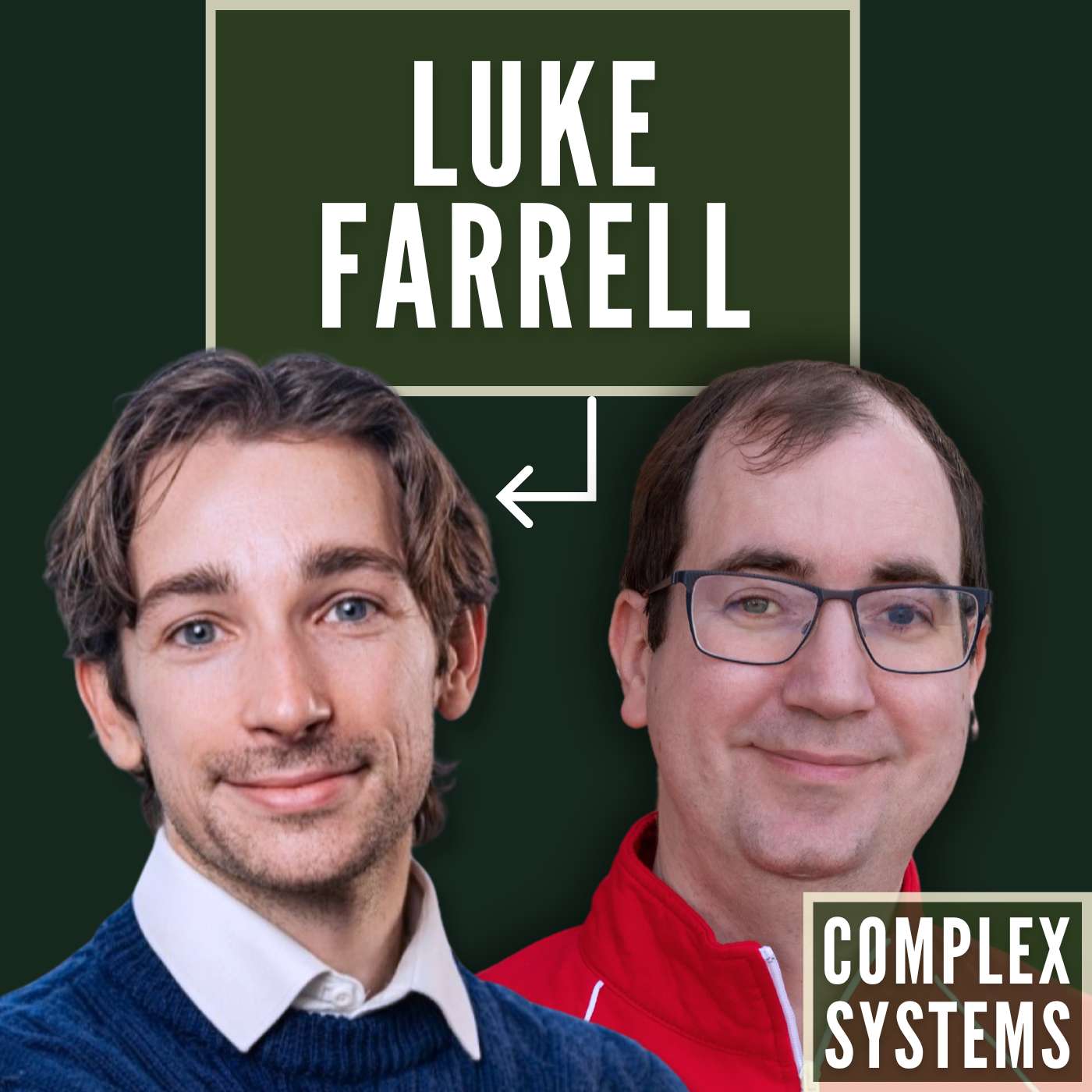
Understanding government procurement, with Luke Farrell
About this episode
Patrick McKenzie (patio11) and Luke Farrell examine the structural "technical imagination" gap that prevents the US government from delivering high-fidelity digital services. They discuss why states routinely pay full price 29 times for the same buggy codebase, why failure is the default outcome, and why rooms full of government administrators cannot muster the expertise to say a two line code change should be trivial. They also discuss Luke’s work on the "means testing industrial complex,” why the government redundantly pays a private vendor to do a SQL query for information the IRS already knows, and what vendors would say about their own discontents.
–
Full transcript available here: http://www.complexsystemspodcast.com/understanding-government-procurement-with-luke-farrell/
–
Presenting Sponsors: Mercury & Framer
If you have more interesting hobbies than managing your money, Mercury Personal is built for you. It allows you to automate movement between accounts—allocating paychecks and tax prep the moment they hit—with a sensible permissions model for partners or accountants. It works the way tech people expect banking to work. Go to mercury.com/personal to experience banking built by the same folks Patrick trusts for his business.
Mercury is a fintech company, not an FDIC-insured bank. Banking services provided through Choice Financial Group and Column N.A., Members FDIC.
Building and maintaining marketing websites shouldn’t slow down your engineers. Framer gives design and marketing teams an all-in-one platform to ship landing pages, microsites, or full site redesigns instantly—without engineering bottlenecks. Get 30% off Framer Pro at framer.com/complexsystems.
–
Links:
- Luke Farrell's Substack: https://donmoynihan.substack.com/
- Luke Farrell, The Means-Testing Industrial Complex: https://donmoynihan.substack.com/p/the-means-testing-industrial-complex
–
Timestamps:
(00:00) Intro
(01:52) Transitioning from Google to the US Digital Service (USDS)
(05:18) How rule buildup and administrative burdens create "Kafkaesque" mazes
(08:21) Using diagrams and funnels to visualize benefit denials
(11:49) Software logic errors that improperly kicked children off Medicaid
(18:25) Why government payroll IT costs hundreds of millions of dollars
(20:02) Sponsors: Mercury and Framer
(22:02) How recursive legal requirements and DOD standards inflate IT scope
(26:57) Market consolidation and the lack of competition in procurement
(33:47) Aligning program administrator incentives with successful service delivery
(36:03) Using in-house technologists to push back on vendor change orders
(39:27) Shifting from "Big Bang" contracts to iterative, agile development
(53:10) The moral incoherence of asset limits
(01:11:36) Insourcing electronic income verification databases
(01:16:56) Building public sector competence to manage modern technical risk
(01:20:08) Wrap
Get every episode summarized
Each time Complex Systems with Patrick McKenzie (patio11) publishes, we email you a written briefing from the transcript — the topics, who appeared, and any specific claims, with the ad reads skipped.
Email me new episodesFree for 3 shows. No card needed.
Hosts & guests
No transcript yet
This episode has not been transcribed. Request it and it moves to the front of the queue.
More episodes
More from Complex Systems with Patrick McKenzie (patio11)

Everyone wants to be your wallet
Complex Systems with Patrick McKenzie (patio11)

How AI detection actually works, with Pangram’s Max Spero
Complex Systems with Patrick McKenzie (patio11)

Two banks can't agree on fourth-grade math | Alex Elliott
Complex Systems with Patrick McKenzie (patio11)

LLMs and the economics of Evil, Inc., with Manish Goregaokar
Complex Systems with Patrick McKenzie (patio11)