Loading...
About this Episode
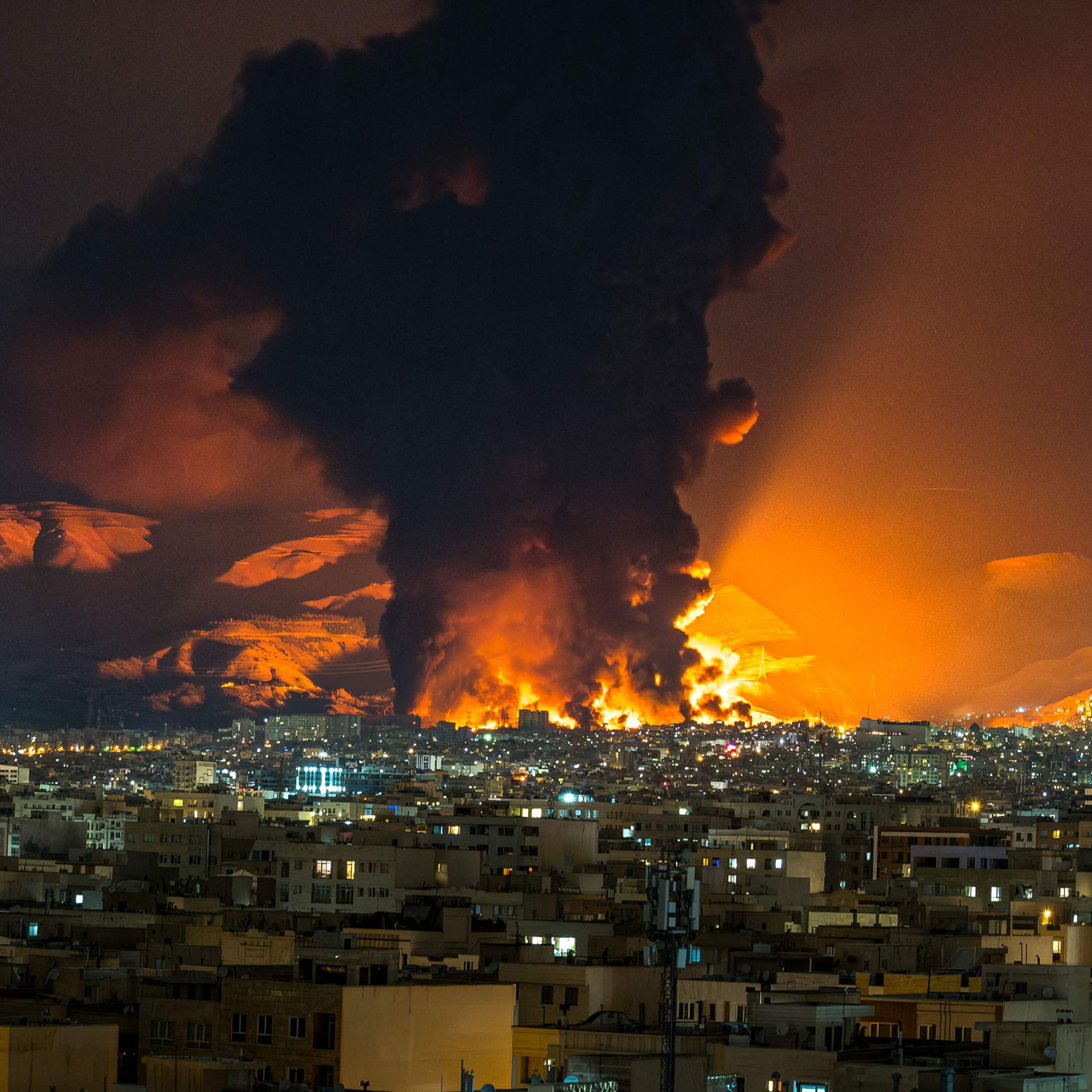
Waging war is not cheap. Experts estimate that the U.S. has already spent more than $10 billion launching missiles at Iran in the past few weeks.
Meanwhile, thanks to fighting in the Strait of Hormuz disrupting the global energy supply trade, the price of oil is rising sharply worldwide. With no clear end in sight, how will Congress wrangle the high price tag of the war – economically and politically?
We try and make sense of the cost of war, especially as more and more Americans feel the squeeze in their budgets at home.
Find more of our programs online. Listen to 1A sponsor-free by signing up for 1A+ at plus.npr.org/the1a.
To manage podcast ad preferences, review the links below:
See pcm.adswizz.com for information about our collection and use of personal data for sponsorship and to manage your podcast sponsorship preferences.
NPR Privacy Policy
Meanwhile, thanks to fighting in the Strait of Hormuz disrupting the global energy supply trade, the price of oil is rising sharply worldwide. With no clear end in sight, how will Congress wrangle the high price tag of the war – economically and politically?
We try and make sense of the cost of war, especially as more and more Americans feel the squeeze in their budgets at home.
Find more of our programs online. Listen to 1A sponsor-free by signing up for 1A+ at plus.npr.org/the1a.
To manage podcast ad preferences, review the links below:
See pcm.adswizz.com for information about our collection and use of personal data for sponsorship and to manage your podcast sponsorship preferences.
NPR Privacy Policy
Hosts & Guests

Transcript
This message comes from Total Line and More.
College Basketball's biggest tournament is here
and watch parties are underway.
Shop Total Line and More in-store or online
to get ready today.
Spirits not sold in Virginia and North Carolina.
Drink responsibly, be 21.
Hi, it's Jen.
Just a quick heads up before we start the show.
The news moves fast and things may have changed
by the time you hear this episode.
So stay up to date with all the latest
by listening to your local NPR station
and visiting NPR.org.
It's been 13 days since the U.S. initiated Operation Epic Fury
without congressional approval.
The first 100 hours of the U.S. led strikes
on Iran cost around $3.7 billion,
that's according to estimates from the Center
for Strategic and International Studies.
When asked about how long the war may last,
President Trump has sent mixed signals.
We're winning very decisively.
We're way ahead of schedule.
We've already won in many ways, but we haven't won enough.
We could call it a tremendous success right now
as we leave here.
I could call it, or we could go further.
And we're going to go further.
But without a congressional declaration of war
and a spending package to back it up,
how is the Pentagon paying for its military campaign
in Iran?
The Pentagon hasn't yet shared an estimate
of how much the operation will cost.
But some GOP lawmakers estimate the Pentagon
is spending as much as $2 billion a day on the war,
that's according to reporting from Politico.
And the cost goes beyond drones, missiles, and fighter jets.
People are also facing higher energy bills
and gas prices at home as the fighting in the Middle East
drives up the price of oil.
The war and its impact on the U.S. economy
could spell trouble for the GOP come midterms.
I'm Jen White.
You're listening to The One-A podcast.
Today, we explore the costs of the war, militarily,
economically, and politically.
Stay with us.
This message comes from Comcast.
Nothing brings people together quite like team USA
at the Olympic Winter Games.
From NBC Universal's iconic storytelling
to the innovative technology across Xfinity and Peacock,
Comcast brings the Olympic Games home to America,
sharing every moment with millions.
When Team USA steps on to the world stage,
people are not just watching, they're cheering together.
This winter, everyone's on the same team.
Comcast, proud partner of Team USA.
Let's get back to our conversation
about the cost of the U.S. and Israel's war against Iran.
Joining us from Massachusetts is Heidi Peltier.
She's a senior researcher at the Thomas J. Watson Jr. School
of International and Public Affairs at Brown University.
She's also the director of programs
at Brown's Costs of War Project.
Heidi, welcome to the program.
Thanks so much for having me.
And also with us is Matthew Zitland.
He's a correspondent at Heat Map News.
Matthew, it's always great to have you.
Thanks so much.
So Heidi, the estimates for how much the Pentagon
is spending on the war in Iran range pretty widely
from about $870 million a day to more than $2 billion.
When we talk about military spending, what does that include?
Well, the estimates we heard from the Pentagon
in the first few days of war, at first,
were close to $6 billion.
And that was just for the cost of some precision munitions.
So Tomahawk missiles and some other missiles that were used.
Then yesterday, the Pentagon came out
with an updated estimate that they said,
oh, we undercounted.
It's actually closer to $12 billion.
And that doesn't include some of the build up costs
for before the first few days of war.
And what we know is that their estimates will not include
all of the costs that come after the war is over.
So whether this last 12 days, 12 weeks, 12 months, 12 years,
whatever estimate we hear from the Pentagon
will not include all the costs that will continue
to accrue to the American taxpayer, which
will be the ongoing costs for veteran benefits and care,
and the ongoing costs for interest on the debt,
because we will pay for this war through debt.
So whether it's the $12 billion we've already spent
or potentially $50 billion that might get appropriated
for emergency spending, if that happens,
or whatever the cost for the direct operations of the war,
those costs will go on well into the future
to pay interest on the debt that we take out to pay for the war.
As Iran launches retaliatory strikes targeting sites
in Gulf countries, including oil infrastructure,
many are worried about the economic cost of the war.
Iran and its neighboring countries along the Persian Gulf
are some of the largest oil and natural gas producers
in the world.
Matthew walk us through the critical role
around plays in the shipment of oil and natural gas,
especially as it relates to the Strait of Hormuz.
Yeah, so the Strait of Hormuz is a body of water
connecting the Persian Gulf with the Indian Ocean.
It's where the vast majority of oil produced
in the Gulf region transits through,
so that's Saudi Arabia, Iran, Iraq, Kuwait.
It's something like 20 million barrels a day.
It's about a fifth of a global oil production,
and about a third of the shipped oil,
oil sea-borne shipped oil production.
And right now, that Strait is effectively closed.
So, I mean, there's some Iranian tankers
actually going through there,
largely going to China,
but so that means there's millions of barrels of day
not getting through to global markets,
and this has caused oil prices to surge since the war started.
Well, and we should note that on Wednesday,
at least three cargo ships were attacked
in and around the Strait of Hormuz.
That's according to the United Kingdom
maritime trade operations in Iran
has claimed responsibility for one of those attacks.
Earlier today, border and countries,
Iraq and Oman closed their oil terminals
after two tankers were attacked off the coast of Iraq.
Iran has also claimed responsibility
for one of those attacks.
Heidi, help us better understand
how this instability is contributing
to higher oil and gas prices we're seeing right now.
Well, one of the things that happens is that financial markets
have no idea what to expect.
And so many of the costs of all of the goods
in our economy have shipping as part of their costs.
So whether, so it's not just the gas prices
that we're already seeing change at the pump,
which all of us who are driving on a daily basis
feel the pinch already from the surge in the gas prices,
but all of the products that we use
that get shipped from overseas
will see an increase in costs from the shipping
that goes into those products coming from overseas.
And then if you look at American manufacturing,
we use a lot of imported inputs
into the American manufactured goods.
So that's going to raise the cost
of even domestically produced goods.
And financial markets, they are fickle.
And so investors are not sure
what this is going to mean for business.
So they don't want to invest in something
when they're not sure what the long-term ramifications
of these wars are going to be
in terms of energy costs, shipping costs, manufacturing,
economic growth, slowdowns that might happen
because of these energy prices.
And so this can have a downward spiraling effect
in terms of loss in growth,
a loss in investment, and so on.
Well, Matthew, I want to talk a bit
about the global energy ecosystem
because last week, Qatar announced it
would stop the production and export
of liquefied natural gas after an Iranian military attack
on its operating facilities.
And Qatar is the world's second largest
exporter of liquefied natural gas,
second only to the U.S.
And when you think about a country like India,
which relies on LNG, just help us better
understand how this is destabilizing
the global energy market.
Yeah, so the vast majority of those LNG exports
from Qatar were going to Asia.
And that gas is often used in the electricity sector.
But I think the thing that's really pinching right now
because of the time of year it is,
is that fertilizer production is being disrupted.
There's a lot of fertilizer plants in the Gulf region
as well as in South Asia.
And as I think anyone would remember
from high school chemistry, natural gas
is a key feed stock to creating ammonia.
And then from ammonia, you create what's known as urea,
which is the way of getting nitrogen into the soil
and fixed onto plants.
And so this means that food costs will go up.
These are input costs to farmers.
So maybe in the rich world, that means
that farmers would be paying more to fertilize their crops,
especially as growing season starts.
But then also in the developing world,
what you might see is just some farmers,
as you know, these are subsistence farmers,
poorer farmers in Africa and South Asia
might just go without fertilizer for a growing season,
for a planting season, and just would see a hit
to their agricultural productivity.
Well, on Wednesday, the International Energy Agency,
that's an intergovernmental organization.
Now, that works to ensure global energy security
and promote clean energy.
They announced that their 32 member countries
are releasing 400 million barrels of oil reserves.
Now, that's the agency's largest ever release.
And it's in a bid to control spiking energy prices
related to this war, but that move didn't stop
the US stock market from tumbling today
after the IEA more than halved its forecast
for oil supply growth this year.
The agency is calling it, and I'll quote them here,
the largest supply disruption in the history
of the global oil market.
So Heidi, about a third of global emergency stockpiles
will be depleted once the IEA releases the reserves.
What does this move indicate about how long
the agency expects the war might last,
and its longer-term impact on the global energy market?
Well, you know, the reality is,
none of us have any idea how long the war will last.
You know, what we might speculate about what the IEA
is speculating is that they don't think the war
will end immediately, that they already
recognize the disruption in oil supply.
As Matthew mentioned earlier, the Strait of Hormuz
carries about 20% of the war is responsible for about 20%
of the flow of the world's oil through that shipping channel.
So there already has been a severe disruption,
and the IEA is trying to combat that disruption
through this release of the reserve.
Now, if they thought this was going to be a really long
and protracted war, they might not release as much
of the reserves as they have been,
because they might want to be more conservative
in keeping some of those reserves.
So this might imply that they are thinking of this
as more of a medium-term war.
But the reality is that none of us
can really know how long this is going to last.
Before we go to a short break, Tommy Mills,
I have heard figures of $50 billion in borrowing
per week by the US government for this war.
Our current debt is more than $38 trillion.
Now we have a war costing a billion a day,
and we have no one in government screaming
and pounding desks to stop it.
Most in this country can't afford health care,
but we can find a billion dollars a week
to kill school children, tens of billions to give
to foreign countries and now tariffs
that must be refunded.
Who are we?
We'll be right back.
This message comes from an PR sponsor, Total Wine and More.
With so many great bottles to choose from,
it's easy to find your favorite cabernet
or a new single barrel bourbon to try
with some help from one of their friendly guides.
And with every bottle comes the confidence
of knowing you just found something amazing.
Find what you love and love what you find
only at Total Wine and More.
Curbside pickup and delivery available in most areas
visit TotalWine.com to learn more.
Spirits not sold in Virginia and North Carolina
drink responsibly, be 21.
Welcome back.
We're discussing the economic costs
of the US and Israel's war in Iran.
Before we get back to our panels, some emails we got,
Justin wrote,
prices for my family are going up,
mainly fuel and daily necessities like food and energy.
We have to choose between taking the kids out
for an ice cream day or whether to eat dinner.
People like us living paycheck to paycheck
and a place where there is no public transportation
are finding it a lot more expensive
to keep up our vehicle maintenance,
including replacement parts,
which are mostly made overseas.
And could emails how much longer can this war,
low taxes for the ultra wealthy
and eventually reimbursing importers for tariffs
last before there are major repercussions
from the ballooning debt.
The cost of maintaining the debt will grow too big
at some point as government bonds
will need to pay higher interest
and the US government can't be trusted.
Heidi, I'd love to hear your response
to kids email specifically about the cost
of the debt to the US taxpayer.
That's right, both three questions.
So the cost of the debt is not just
because of the cost of war,
but the cost of war certainly is a great contributor
to our debt.
And historically, up through World War II,
the US government would pay for war
through raising taxes, through selling war bonds
and would pay for war by raising revenues.
And that has not happened
basically since World War II
that's starting with the Korean and Vietnam wars.
We started raising supplemental emergency funding
appropriating funds differently.
And in the post 9-11 era,
it's entirely been debt-funded.
And we've incurred over a trillion dollars
of just interest costs in the Iraq and Afghanistan wars.
And all of what we're spending in Iran
is being paid for through debt.
And those interest costs will,
whether we stop our engagement in Iran today
or well into the future,
the interest cost will keep accruing.
And every dollar we're spending on interest
is a dollar that we're not spending
on your first listeners' question.
As a dollar, we're not spending on helping
with tax relief or helping to invest
in public transportation
or helping with other parts of the federal budget.
So right now, the federal budget,
the interest cost is increasingly
crowding out other parts of the federal budget.
We're paying 14% of the federal budget
just in interest costs.
So that is an enormous sum of money
that we could be spending
for those people who would want more defense spending.
We could be spending that on defense.
We could be spending that on non-defense.
We could be spending that on education
or health care or public transportation
or all kinds of other things.
But we're spending 14% of the federal budget
on in this cost alone.
Oh, we have some news here.
Iran's new Supreme Leader Ayatollah
much about how many issued his first statement.
He called for national unity
and said the straight-of-war moves
would continue to be closed
to pressure Iran's enemies.
He also warned that all US bases
should be immediately closed
in the region or face continued attacks.
Now, Matthew, President Trump told CBS News this week
that he was considering taking over control
of the straight-of-war moves from Iran.
Is that something the President can do?
So we're in this very funny situation
where you see the President and some of his allies
saying to these tanker captains
that are on either side of the street,
just go through, you know,
just like turn off the transponder,
wafer it to be dark
and just like make a run for it.
But right now, as far as best I can tell,
as I've heard, the US Navy itself
is not super active in the Persian Gulf right now.
You know, it's not really navigating through it.
It's not launching naval attacks on Iran.
The strikes are all coming from the air.
So if the Navy right now does not feel like
it's safe for them to operate,
you know, the idea that we're gonna see
the straight-of-war moves and open it up
on any kind of quick time frame seems a little unlikely.
I think Secretary Chris Wright, the Secretary of Energy,
said maybe there could be Navy escorts
by the end of the month,
but that's, you know, that's two weeks from now.
And so yeah, right now the United States
has just not seem to be prioritizing
the amount of kind of military hardware
and risk to American sailors, airmen, Marines,
that would probably be necessary
to take the straight and clear it out for commerce.
Oh, we got this question from Timothy,
who says, I don't understand how oil
that hasn't even been processed
can affect the price of gas that is already at the station.
Matthew, what can you tell us?
Yeah, I mean, so some of, I mean, he's right
in the sense that, you know,
some of these price increases will take some time
to feed through the system.
I mean, what you can say is that these markets
are kind of forward looking.
So, you know, oil, oil that's gonna be delivered
in a month has already gotten more expensive
and, you know, the people that operate gas stations know that
and they know that their input costs are going up
and so they can adjust to that.
You know, it's not, it's not a secret
that oil is getting more expensive.
Heidi, you talked about debt
and the potential long-term impacts of a protracted,
well, even a short-term, the short-term war
with Iran, but what are some of the broader economic
consequences of war spending that are often overlooked?
Well, so one thing that we should think about
when thinking about war spending is every dollar
we're spending on war is a dollar
we're not spending on something else.
So whether, you know, we're spending a dollar on war
that is funded through debt,
then that is, you know, a dollar that we are gonna have
to pay interest on starting today and well into the future.
It's also a dollar that's not available to be spent
on whatever else is important to Americans,
whether that's infrastructure or clean energy
or education or healthcare or whatnot.
So there are these trade-offs that we have to think about,
you know, if we're spending on defense,
we're not spending on non-defense.
Alternatively, you know, if we're raising revenues
to pay for war, such as, you know, Trump's idea
that we could raise tariffs in order to increase
the defense budget, well, that money has to come from somebody.
So if we're raising tariffs, then we are, you know,
that's essentially like raising taxes
and that is coming out of the pockets of the consumers
who are paying for those tariffs.
Or the businesses who are paying for those tariffs.
And so that's, you know, spending money
or investment money, that's not available
to be spent somewhere else.
So I think it's important for us to think about these trade-offs
that the cost of war is not just, you know,
the very important cost of human life,
but also that we are, you know,
facing these opportunity costs of what else we could have been
doing as a country in terms of the technologies
that we could have been investing in,
the types of productivity, the types of, you know,
the technologies, the programs, the kinds of investments
and the kind of path we would rather be on
rather than the path of militarism.
Well, we got this from Michael in North Carolina who emails,
I would like to know who is profiting from this war.
I imagine weapons manufacturers have warehouses full
of weapons that need to get used up
and replace in order to keep people on the job.
Am I naive?
So I want to talk about this through two lenses briefly.
First Matthew, as oil prices continue to rise,
who stands to profit economically?
This is a good question.
I mean, so the US is a large producer of oil
and, you know, that oil, a lot of it is exported.
We've been exporting oil now for about 10 years.
It used to not be allowed.
And so those barrels are, you know,
fetching these high prices on the global market.
And one reason why that might turn more into just pure profit
is because often when there's a kind of disruption
in the oil market, the so-called swing producers
may start producing more to kind of bring prices back
into a more normal range.
The issue is that those swing producers,
they're Saudi Arabia, they're Iraq,
they're the countries that can't get their oil out right now
through the straight of hormones.
So there's actually not that much prospect
for increasing production,
which just means that, you know,
the barrels that are going through the system right now
are fetching these high prices.
So, yeah, it means US oil and gas producers and exporters
that are looking, are looking to profit from,
from these, from these price increases.
Well, we also know the US rolled back
some of the measures and sanctions it had against Russia.
Does Russia stand to gain here?
Absolutely.
Russia, I think it's probably one of the biggest
short run beneficiaries of this war,
which is somewhat ironic because, you know,
Russia and Iran have a close relationship.
Yeah, I mean, so one of the first kind of oil price measures
that went through was lifting some sanctions
on Russian barrels that India was going to buy.
India's a major customer of Russian and Middle Eastern oil.
And so, yeah, Russia's definitely a beneficiary of that
because, yeah, the, you know,
there are these sanctioned barrels out there.
And so kind of a quote-unquote easy way to increase supply
is to make that oil more accessible on the global market.
Although, of course, this then runs into kind of pretty
obvious tensions with, say, US policy in Ukraine
where we're currently no supporting funding,
arming Ukraine's, you know, resistance to the Russian
invasion, which has been ongoing since 2022.
Well, Heidi, I want to get your thoughts
about that other question, but Matthew, thanks for your time.
Matthew Zitlin is a correspondent at HeatMap News.
It's always great to talk to you, Matthew, thanks.
Thank you.
And Heidi Peltier is sticking with us.
She's the director of programs at Brown University's
Costs of War Project.
Heidi, to Michael's question about other people or groups
to profit from this war or other wars,
what do we know?
We know that, you know, about half of the Department
of Defense budget in the US goes to contractors
who stands to gain a lot from going to war.
We know that the Tomahawk missiles,
which are used in Iran are made by Raytheon.
So they are certainly one of the beneficiaries
of going to war and having extra demand for their product.
And there are a lot of American manufacturers
who are, you know, producing and selling goods
to the US government, you know, selling weapons systems,
munitions and all kinds of goods and services
that benefit when we are at war.
Yeah.
Well, let's move now to Capitol Hill
where Democratic lawmakers are speaking openly
against the military strikes in Iran
and the multi-billion dollar price tag of waging war
on the country.
And let's bring in a new voice.
Kadea Goba is a politics reporter covering Congress
for the Washington Post.
Kadea, welcome to the program.
Thank you for having me.
Let's hear from one of those Democratic lawmakers
speaking out against the US's war in Iran.
Donald Trump has entered into this war of choice,
by spending billions of dollars in the Middle East,
have zero interest these extremists
and actually trying to lower the high cost of living
for the people of this country.
In terms of this war of choice,
Donald Trump has no clear plan of action.
There's no discernible objectives.
They shift every day.
And there's no exit strategy to get us out of a conflict
when Donald Trump promised as a candidate,
not to get us into this type of potentially endless war
in the Middle East.
Oh, that's the tap House Democrat Representative Huckine,
Jeffrey speaking to MSNOW on Tuesday.
Kadea, what are Republican lawmakers on the Hill
saying about how much this war is costing?
You know, it's interesting because obviously
it's never a good idea to see,
it's never great to see high gas prices
or utility prices for the party in charge
when you're going into the midterms.
But this is sort of particularly detrimental for Republicans
who've sort of made a point to promote energy dominance
and promising voters of cheap gas.
I'd say in addition to that, House Republicans
who've sort of hitched their political wagon
to this concept of affordability
are in a very tight spot right now
as they try to justify their president's foreign policy
posturing with this idea that they are promising
or they are the party of affordability.
So openly, they are talking about,
they're kind of leaning on the president's promise
to have this, make this a very quote unquote short war
and sort of justifying his actions in that way
and saying that, well, you know,
voters have really short term memories
and they probably won't see this as we get closer to them.
They're hoping that they won't see this
as they get closer to the midterms.
Heidi, you know, what qualifies as a short term war,
long term war is relative.
We know the Pentagon hasn't yet asked Congress
for additional money to fund this war in Iran,
but how clear picture does Congress have
about how much this war is costing the US?
We've heard a lot of numbers over the past 13 days.
Yeah, that's a good question.
And, you know, I can't answer for Congress.
I don't know how clear a picture they have
of how much this is costing, you know,
even the White House itself, you know,
has revised its estimate recently.
So, you know, up until two days ago,
they were saying it was $6 billion
in the first week of war.
And then yesterday we found out it was more like $11 billion
in the first week of war and that estimate
didn't count the buildup before the first week of war.
Of course, doesn't include all of the future costs
for veterans, for interest costs and so on.
And so, you know, one thing that we can be sure of
is Congress tends to undercount the cost of war.
In fact, the project where I work at Brown,
the cost of war project was founded
because we tends to get an underestimate
from the government about the true cost of war,
the number we get from the Pentagon
about what it costs to go to war
is one small representation of what it costs.
Really, we have to add to that the cost of interest
on the debt, we have to add to that the cost
of our obligations to veterans,
which goes well into the future, decades into the future.
And that's just the budgetary cost
and we also have, you know, environmental costs
and humanitarian cost and public health costs
and other kinds of ripple effects
that go well beyond the financial costs.
We have to go to a quick break,
but before we go, Alita in Illinois emails
calculating the monetary costs of war.
It's far easier than grappling with the overwhelming
moral costs of war, the toll of suffering
and deaths, the environmental devastation,
the losses of irreplaceable cultural inheritance.
In fact, the monetary financial costs of wars,
pale in comparison to these other losses.
We'll be right back.
This message comes from an PR sponsor, Total Wine and More.
With so many great bottles to choose from,
it's easy to find your favorite Cabernet
or a new single barrel bourbon to try
with some help from one of their friendly guides.
And with every bottle comes the confidence
of knowing you just found something amazing.
Find what you love and love what you find
only at Total Wine and More.
Curbside pickup and delivery available in most areas
visit TotalLine.com to learn more.
Spirits not sold in Virginia and North Carolina,
drink responsibly, be 21.
Let's get back to the economic and political costs
of the U.S. and Israel's war in Iran.
There are reports of the Pentagon plans
to request an additional $50 billion in funding
to support this war.
That would be money added to an already massive
Pentagon discretionary budget, $839 billion as of 2025.
And that's to support a war without an end inside.
Kadea, what are House Geopie lawmakers signaling
about how they'd confront a request for more money?
Yeah, it's interesting.
And I want you to keep in mind that their midterms
are approaching and everyone wants a sort of a nod
from the president or an endorsement.
So people have been very careful about how they posture.
In particular, I thought it was very interesting
that Andy Harris from the House Freedom Caucus,
who is traditionally a very big hardliner on,
or I would say a fiscal hawk,
and conservative about spending,
he sort of, again, defended the president's actions
and said that they probably expected a supplemental,
but they didn't anticipate it being something
that was going to be an ongoing issue
because of the promises that the president has made
to make this a short war.
Again, privately, other members have told me
that they are concerned and I will say about the cost of war.
And I will actually say, you pointed to this earlier,
the moral cost of a war.
I was talking to Richard Hudson who is in charge
of the NRCC, the campaign arm for the House Republicans.
And his point was that he wasn't really that
concerned about the financial portion,
but if voters see boots on the ground,
that that could be problematic for Republicans
going into the midterms,
where there is such a very tight margin in the House
and the possibility that House Republicans
at the very least will lose power or their majority.
Well, and help us understand what in the GOP's calculation
changes if there are boots on the ground.
Is it the optics, is it the increase in costs,
the possibility for U.S. casualties, what's the concern?
It's all of the above, but again, Hudson suggested
that he was less worried about the cost
and how that would impact voters,
but more worried about boots on the ground
and the casualties, especially after a hit not in his words,
but especially after the president has repeatedly said
that there would be, he would be the president of no wars
or he'd make sure there were no more wars.
And we actually hear this coming from the far right flank
of the party, not necessarily members in Congress right now,
but some of those, I mean, Marjorie Taylor Greene
was certainly a big advocate against ongoing wars
or wars in general.
And she consistently said that it spoke against
the America first agenda where she thought
the administration should be focused on lowering prices
for consumers and issues at home as opposed
to the president's new posture on foreign policy.
Now, she is no longer a member of Congress at this point,
but that is privately some of the sentiments
that some members have expressed to me,
although they're just not comfortable with saying it right now
because of the midterms.
Well, gas prices in the U.S. reach to $3.48
a gallon on Monday, that's up nearly 17%
since the war began on February 28th.
And this question of affordability
as we move into the midterms is top of mind
for most voters, Kadia.
What concerns are GOP leaders sharing about
how these price hikes could sway voters ahead of the midterms,
especially if this turns into a protracted conflict?
Yeah, many of them are privately concerned
that they, you know, when people are going to the polls,
going to the primaries at the very start,
they're thinking about like gas prices
driving to the election polls,
they pass by gas prices.
I was in Durral the other day at the President's Resort
and, you know, one of the reporters tweeted out
the local gas prices right next to his resort.
This is something, you know,
and Democrats went through this in 2022.
You can talk about other issues
or you can talk about affordability,
but if the voters aren't actually feeling relief
at the gas pump or on their bills or eggs or prices,
grocery prices, that is, it makes voters feel
like the administration or Congress
is just simply out of touch.
And it's detrimental if you are that party in power,
talking about affordability,
but people aren't feeling that in their, in their,
in their party.
Now, when we saw that spike in gas prices in 2022, Kadia,
that was related to Russia's full-scale invasion
of Ukraine.
What we're talking about now is related
to the U.S. Israel's decision,
and Israel's decision to initiate
these strikes against Iran.
Is there concern from lawmakers you speak to
about voters being upset that this is self-inflicted
pain, if you will?
Yeah, that again, privately, they are worried
that people are making that connection
that this was something that the president
did not have to move on or did not have to engage with,
and yet, especially when there is already a problem
with increased pricing domestically.
But yes, that is the concern that people are saying
that this is self-inflicted or voters will feel like
this is something that the U.S.
or the administration brought on themselves.
Again, very against, and when we talk about
specifically anti or Republican voters,
it is quite the opposite of what the president initially said
or ran on, and it does not fit that America first agenda.
That's why you have this far right flank who has told voters,
don't go to the booth, don't go to vote,
or if you're gonna vote for Democrats.
That has not convinced many, I would say lawmakers
to come out against the president's foreign policy,
but it's definitely something that voters are in fact feeling.
We got this question from Sylvia and Vermont.
We hear a lot about the fact that the war against Iran
will increase our national debt.
Now we will need to pay a huge amount of interest on that debt.
My question is, who holds that debt to whom
will we be paying the interest?
Heidi, I'll come to you on that.
Well, roughly two thirds of the debt roughly is held
by various people and corporations in the U.S.
And roughly a third to 40% is held by other countries.
Right now, the country that holds the most U.S. debt
is Japan, historically it was China,
but Japan, UK, China, Canada are usually the top countries
that hold U.S. debt other than the U.S.
And so U.S. debt is held by people in companies
who have investments in U.S. bonds.
So often it's mutual funds that
have savings bonds or government bonds
as wrapped up in the mutual funds
or its investment products that people may or may not even
realize that they own some government debt
and investors who specifically are looking for government debt
as a kind of safe security to invest in.
Some government securities are owned by other parts
of the government and traded among government departments themselves.
So the majority of the government debt is held by Americans
and wealthier Americans have more investments.
So the short answer is most of the debt
is held by wealthy Americans.
Some of the debt is held by other countries.
Joe and North Carolina emails,
war is a boon for munitions manufacturers.
Trump's sons, Don Jr. and Eric just got involved in drone manufacturing.
So we have the obvious conflict of interest
that the longer Trump keeps the war going,
the more wealth will accrue to his family.
And Barb and Maryland emails we should add
to the financial burden of the war, its ethical costs.
As an undeclared war, it violates the constitution,
weakening our democracy and tarnishing our reputation.
The deaths of thousands of civilians
and the deliberate destruction of civilian infrastructure are immoral.
They may hit our pocketbooks,
but they also hurt us in less tangible ways.
Kadea, I just want to paint a picture of what's happening right now on Capitol Hill.
We know that since mid-February lawmakers have failed to reach a bipartisan agreement
to fund the Department of Homeland Security,
that shutdown is now in its fourth week.
President Trump has told Congress he will not sign any bill
that comes to his desk unless they pass the Save Act.
This is related to voting.
Any emergency funding bill for the war in Iran
would need 60 votes to pass in the Senate,
which would require some bipartisan support.
But what's the likelihood at this point
that Congress would come together to pass an appropriations bill
to allocate additional funds for the war in Iran
if the Pentagon and the President were to request it?
Oh, I think it's definitely going to be brought to the table.
And my speaker, my Johnson, or brought to the floor, I should say.
I think it's supplemental.
Bill will be brought to the floor every member,
at least every leadership member,
expects that there will be an ask from the administration.
And I think Speaker Johnson is going to have a very tough time
whipping his conference ahead of a midterm
to support that kind of supplemental.
Now, again, many of the Republican lawmakers
are posturing in a way that, well, we expect,
they're saying, well, we expect the President
is not going to draw this war out,
so it shouldn't hurt the pockets of voters.
But that rings very differently when Democrats
are able to say, well, this Republican voted
to send billions of dollars when you are paying
five dollars at the gas pump.
That's going to give a lot of ammunition
for some of those vulnerable Republicans,
and it's going to be very difficult for Speaker Johnson
to whip some of those vulnerable seats
where Democrats are maybe favorite to win now.
It's going to be very difficult for him,
but there's no question that there's
going to be a supplemental.
Well, here's what Democratic Senator Richard Blumenthal
told reporters Tuesday.
This was after he attended a classified briefing
for the Senate Armed Services Committee.
I guess I am most concerned about the threat
to American lives of potentially deploying
our sons and daughters on the ground in Iraq.
We seem to be on a path toward deploying American troops
on the ground in Iran to accomplish
any of the potential objectives.
Now, a Reuters Ipsos poll released in early March
shows that only about one in four Americans surveyed
approves of the US and Israel's strikes on Iran.
Half of those surveyed, and this includes a quarter
of Republicans believe President Trump
is too willing to use military force.
But the president is spending a different narrative.
The world respects us right now more
than they have ever respected us before.
Can you do it?
Could he, what's the disconnect between what the president
is saying and what some voters are actually feeling
and expressing?
I mean, I feel like this is typical politics,
and it's not the first time where you hear president
or members of a party talk about one thing that seems
a little bit out of touch with how voters are feeling.
It has, there's been consistent polling
that Americans do not support going to war with Iran.
And, you know, it's up to the president,
I guess, to sort of spin his constituents
or put himself in the best light.
But that is problematic in that anger's voters, right?
The people, it gets very interesting for members in Congress
who have to actually interact with those 750,000 voters
when they go back to their districts.
So, again, I think they're put in a very tight spot
defending the president's war policies.
Heidi, very briefly, as this war continues,
what are you watching most closely related to the costs
of this conflict?
You know, the costs will continue to mount.
I just, I hope that the actions,
the U.S. engagement ends as soon as possible
because what we have seen in the last 25 years
is that the, you know, the costs will go on well
after the war ends.
So the sooner the war can end, the lower the costs can be,
but the cost will not end, the little war ends.
That's Heidi, Peltier, she's the director of programs
at Brown University's Costs of War Project,
and Kadia Goba, a politics reporter covering Congress
for the Washington Post.
Thanks to you both.
Today's producer was Lauren Hamilton.
This program comes to you from WAMU,
part of American University in Washington,
distributed by NPR.
I'm Jen White, Todd Swilikis with you tomorrow
for the Friday News Roundup.
Thanks for listening, and we'll talk more soon.
This is 1A.
The End
This message comes from Capital One Commercial Bank.
Your business requires commercial banking solutions
that prioritize your long-term success.
With Capital One, get a full suite
of financial products and services tailored
to meet your needs today and goals for tomorrow.
Learn more at capitalone.com slash commercial member FDIC.
Support for NPR in the following message
come from Warby Parker, the one-stop shop
for all your vision needs.
They offer expertly crafted prescription eyewear,
plus contacts, eye exams, and more.
For everything you need to see,
visit your nearest Warby Parker store
or head to WarbyParker.com.
This message comes from Mint Mobile.
If you're tired of spending hundreds
on big wireless bills, bogus fees, and free perks,
Mint Mobile is for you.
Shop plans at MintMobile.com slash switch.
Taxes and fees extra.
See Mint Mobile for details.


