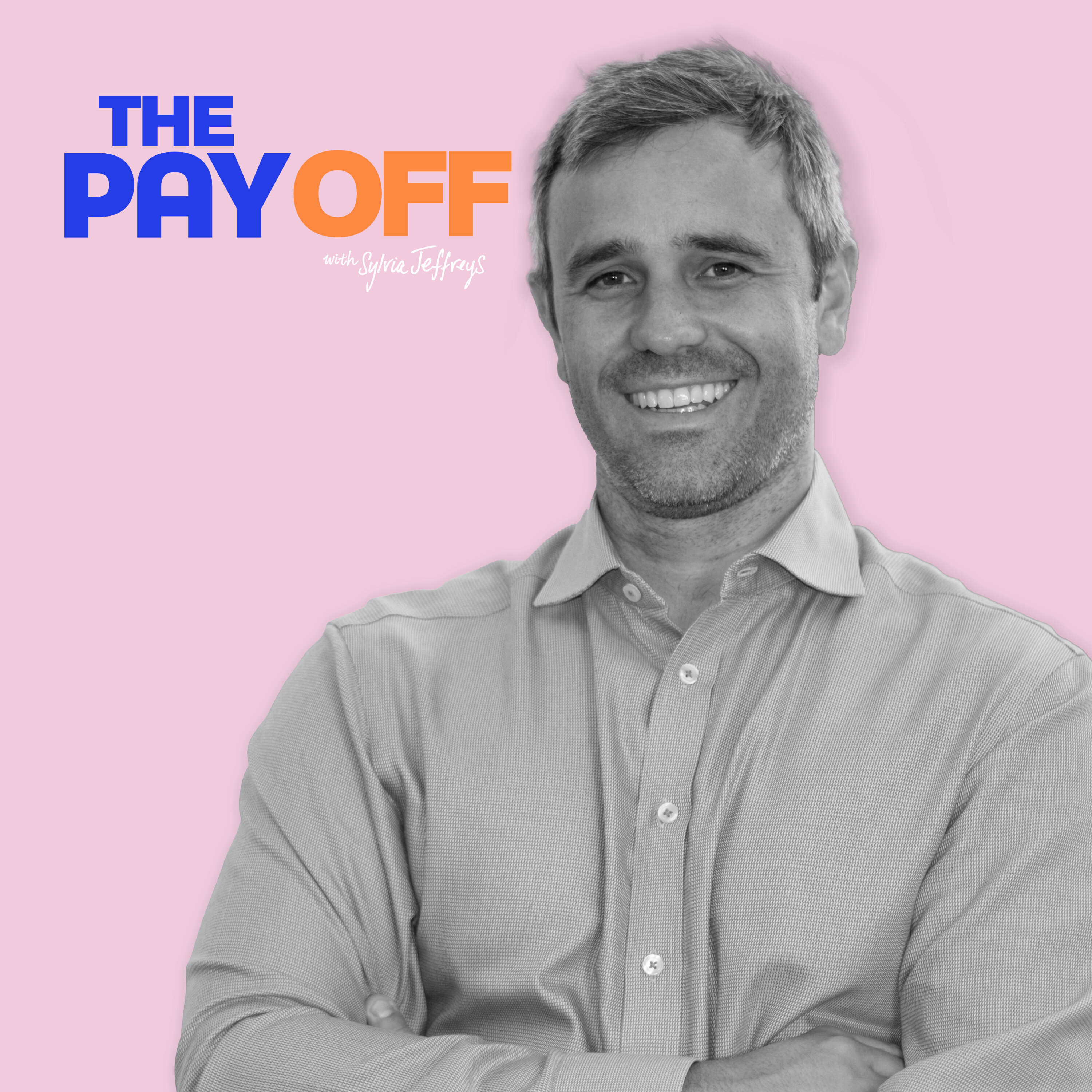
URGENT: ASX down, THIS is what to DO (with Chris Brycki)
About this episode
With actions in the Middle East wiping billions from the market and from super, what are the crucial things we should (or shouldn't) be doing right now?
Chris Brycki, founder and CEO of Stockspot breaks it all down, including what is causing the volatility, how long it's likely to last, the biggest mistakes to make sure you avoid, as well as the potential opportunities that exist at this moment.
See omnystudio.com/listener for privacy information.
Get every episode summarized
Each time The Pay Off with Sylvia Jeffreys publishes, we email you a written briefing from the transcript — the topics, who appeared, and any specific claims, with the ad reads skipped.
Email me new episodesFree for 3 shows. No card needed.
Hosts & guests
Transcript ready
158 searchable segments. Every word is indexed and playable.
Full transcript
The Pay Off with Sylvia Jeffreys — URGENT: ASX down, THIS is what to DO (with Chris Brycki). Machine-transcribed; use the interactive transcript above to jump the player to any line.
It took the 4.30 a.m. starts, a run, ice bath agony, clean mind clarity, projections that added up, then didn't. The deal on the table, news of regulation changes, the deal slipping away. Urgent school pickup, urgent new projections, the forecast turning, arrival bid landing, and near perfect pitch. The waiting, the legal papers arriving, and a signed deal for this corporate leader to finally relax. It's not for everyone. The Australian financial review, the daily habit of successful people. Welcome to this special episode of The Pay Off. I'm Sylvia Jeffries, and thanks to your company, I'm calling it an emergency podcast this week, because there's been so much going on in the world in terms of the war between Israel, the US, and Iran, the human cost that comes with that. But of course, also the economic cost. And here at The Pay Off, we're very much focused, of course, on the economic cost, and what it means to you, as an investor, as someone who holds
a through-for-annuation account, and perhaps what you can be doing in volatile times like this. The main headlines this week have, of course, focused on the ASX, with a dramatic drop on the Australian share market, yet today. So Monday morning, opening 2.9 percent down. It sounds like a pretty significant plunge, of course, and it was the worst session since Trump's terrorist plans, really through chaos into the mix in April, last year. As a result, more than $100 billion was wiped from super-annuation savings, and that is certainly going to cause some level of anxiety, particularly among older Australians who might be already in retirement or on the verge of retirement. The ASX has rebounded today, being Tuesday, to some extent. But what I wanted to do was unpack what has been a very dramatic 48 hours on the share market with someone who understands what driving it, what comes next, and what we can all do, or not do at a time like this. So I've brought in Chris Breiki from Stocksbot to unpack it all.
Chris, thanks so much for joining us. Sure, my pleasure. Firstly, how would you explain the volatility as the last couple of days? Well, it's really, it's one year on now, Sylvia, from the original tariff tantrums that made markets fall in a similar way, and now I think markets have really turned their concern to the oil price. So when the conflict started with Iran, markets weren't too perturbed for the first few days, but just over the last few days oil has been continuing to go up, and it went up from about $60 US a barrel to $90 last week. And then this week, when the market opened on Monday, it opened up close to $115 a barrel, and that's what really scared markets, because oil is such a big input into everything we use. What is it exactly about oil that triggers such panic? Well, so oil is one of the bigger drivers of inflation in the economy, because it's needed to transport goods and services. It's used as an input into food as well, and so everything we consume really needs oil somewhere along the supply chain. And therefore, when oil goes up by double,
which it almost has in a week or two, then the second order consequence of that is that inflation has to spike. And then when inflation goes up, interest rates have to go up, and nobody wants higher interest rates, and that's what really scares the share market. So who was the biggest losers on Monday when the share market opened? Who was taking the biggest hit? Look, whenever there's some sort of energy shock like this, the most vulnerable sectors really of the share market and the economy are, first of all, airlines, obviously, less people flying through Dubai at the moment, and quantists and virgin share prices were hit. Transport and logistics, obviously oil is a big input into moving things around, so it's a cost that they have to wear and always able to pass it on. So companies like Lindsay was another one that fell pretty heavily, and then consumer discretionary, the other one that often gets hit pretty hard, really on the basis that people will have less discretionary money to spend once they pay for their fuel bills. So how did you react when you heard that the ASX was down 3% yesterday? Well, yeah, as we've discussed before, so we have our
strategies very much a long-term investing strategy for our investing and super product. We don't ever jump at market headlines, and there's been a lot of them over the last 12 or so years that stockspots have been around. We have Brexit, we had the Trump tariffs, we had COVID. Every time I think there is a temptation to sell and hope to wait it out and see when markets rise, but it's very difficult to get the timing right, and so we prefer to just hang in there and hold a bunch of different assets that tend to perform well and badly in different periods, and so what we saw actually was that although the share market fell in Australia, it fell by less than other share markets, like for instance Japan or Korea, but also assets like gold and bonds did much better, and that's what held the portfolios up this week. You can understand people's panic when they see thousands of dollars work from their portfolio in one day. After speaking to you, I know not to look at a time like this. If you zoom out on the Australian stock market's performance over the
last 12 months, how significant is a drop like that on Monday? I think it's, I mean, it's always interesting that the media reports on the billion dollar lost days, you see the big headlines, a hundred billion dollars lost, I saw that. You rarely see the headline that Australians gained $400 billion last year in their super because those headlines aren't as exciting and enticing. So yes, although markets are down about 6% now, so we're talking on Tuesday and they've had a bit of a bounce, but they're still down 6% from their recent highs a few weeks ago, even including that, they're up 13% over the last 12 months, including dividend. So people are still up and they've still made several hundred billion dollars in their super, and that's what's a lot more important is that over the long run you can earn, you know, 10 or 11% a year in the share market, and that's including all of these bumps along the way. A lot of everyday investors might be panicking. I would say there'd probably be people close to retirement who'd be worried about their superannuation balances if they're about to start drawing down on it, for example.
What would you say to those people who are on the edge of retirement about the big picture here? So first of all, if you're close to retirement, hopefully your investing strategy reflects that, and you're not taking on too much risk. Most people close to a retirement aren't 100% in shares, and so they're not going to see the full impact of the market falls. Hopefully they have some cash and government bonds and gold and other safe assets as well. But really, it's really not that important what happens over the short term as well, because even if you're close to retirement, you're going to be drawing that money out gradually over time. And so even if you take out, let's say 5% of your super this year, which a lot of pensioners will be doing, there's next year that markets may recover, and you can take out another 5%, etc, etc. So it's not something people really need to worry about too much. We really encourage our clients not to jump at the headlines and react, and we've seen it happen particularly during COVID when there was the big 30 or 35% market
fall. We had a few of our clients really jump to the sidelines and pull their money out. Some of them got it right actually on the way out and they sold before the lows, but the really difficult thing with selling is you have to get two decisions right. You have to work out when to sell and when to buy back again. And a lot of those people that sold out as COVID was really happening, didn't get back into the market early enough and ended up buying higher than when they sold. And I think that's something we see over and over again, and why we encourage people not to react to the market headlines. It takes a certain type of person to succeed, the type that puts in the work when no one's watching, that no staying informed isn't optional. It's their edge. It's not for everyone. The Australian financial review, the daily habit of successful people. Earlier today, Donald Trump signaled that the war with Iran might be closer to an end than we thought. Who knows what tomorrow will bring on that front and the narrative that come from the White House. It seems to change day by day. It's, you know, this is war time. Things change
very quickly and dramatically. I know you're a student of history. So if you're looking back over history, is there a time in terms of the economy that reflects what we're experiencing right now and perhaps what we can learn from that? So first of all, yes, I think it's very much a headline driven market at the moment. And I think Trump woke up on Monday morning in the US and saw the oil price at $115 and realized he needed to do something to calm the market down. And so he came out with those comments, you know, whether we see the war continue or not over the next few days is yet to be seen. And potentially that was just some posturing to really calm market nerves. And we may see things continue to be volatile for a period. You know, the period in time that I think this feels most similar to and I wasn't around admittedly at the time, but I've read a lot on the period is in the 1970s. And that was a period where we did see a lot of energy volatility. We saw a few big oil price spikes. And then that really, you know, transpired into the rest of the economy and
caused inflation. It forced central banks to raise interest rates quite quickly, which harmed the economy. And generally, we see a lot of market volatility over that period. So I think if we see something can like that over the next five or 10 years, it's even more important that retirees and even people with accumulation super accounts, just stay invested and allow markets to do what they do. And really, the opportunity is to be investing more when there's market tips rather than being frightened. Well, that's it. Is there opportunities right now to buy? I think for anyone with cash on the sidelines, absolutely. I mean, our strategy that we're always recommending to clients is dollar cost averaging, which is gradually moving money into the market if you are looking to start investing. Sometimes we see clients who are dollar cost averaging like to invest a little more when there's a market dip. So last week's dip, which got to about eight or nine percent would have been a good opportunity to start to invest. You know, that's one strategy, but really just drip feeding money into the market gradually over time is the best strategy in my view because you'll
get some opportunities to buy lower, some to buy higher. But most importantly, you won't need to worry about things and you can sleep easy at night knowing that you'll get that great long-term return without having to worry about the short-term movements. Well, what is the biggest mistake that someone could make at a time like this? I mean, from what I've seen, it's definitely panic selling and it can feel right at the time. And I think there's a lot in us as humans that just makes us want to jump away from danger when we see danger. And that's something that's been studied even in behavioral finance that shows that people feel the pain of losses a lot more than they feel the enjoyment of gains. And so I see often when there's market falls, even if they're at five or 10 percent, and there falls that we see, you know, two or three times a year often, people panic selling. And it's just absolutely the wrong thing to do because you're assuming that you have more knowledge than everyone else in the market. We're in reality, usually the market price already reflects the fear that everyone's feeling and that you're feeling. So you're not doing anything that's going to
give you a better return. And most likely, you're selling at the peak period of fear when everyone else is already feeling the same thing. So what's your advice here? Should we buckle up Chris for a bumpy ride? Well, yeah, if you have a long-term super account, there's really nothing to worry about. You're going to have some Australian shares and global shares and different assets in there, and they're going to help counterbalance. And if you log on to your account this week, you might see it down to a three or four percent, but it really doesn't matter, as we discussed, over the last year, it's still up. And using our portfolios as an example, 10 to 20 percent was the return over the last year. So people have done well. And that's similar over the last three or four years. If you have the ability to invest a bit more, often a market dip of five or 10 percent gives you a great opportunity to enter at a slightly lower level. Think of it like a sale. And I think a lot of your listeners would be jumping at the Black Friday sales that happen every year. And so it seems funny that when we're thinking about the share market, people run in the opposite direction when there's a sale. But if you think about
it like a sale, actually, it makes it a lot more easy to actually participate rather than run away. Chris, as always, we really appreciate your insights. And I know that you had to clear your diary to shuffle in for this emergency recording. So thanks so much for giving us some time today. Anytime. Thanks Chris. Appreciate it. Thanks so much for joining us on this special episode of The Pay Off. I hope you got something really useful out of that conversation with Chris Brikey. He really knows his stuff. Chris, he's a very, very clever man and very tapped in as well. Just a reminder too, if you want to stay up to date with everything we're doing at The Pay Off, including some of these very up-to-date episodes where we respond to what's happening in the news and make sure you follow us on whatever podcast app you are using. Hit the follow button to make sure that our episodes drop into your feed as soon as they land. Make it easy for yourself. Don't go searching for them. We'll send them straight to you. Keep it easy. Thanks so much for listening. Thanks always for your time. And I will see you again soon.
It takes a certain type of person to succeed. The type that puts in the work when no one's watching that knows staying informed isn't optional. It's their edge. It's not for everyone. The Australian Financial Review, the daily habit of successful people.
More episodes
More from The Pay Off with Sylvia Jeffreys

Lessons, Leadership, Resilience, with Kelly Bayer Rosmarin (Optus, Australian Un...
The Pay Off with Sylvia Jeffreys

Buying the Right Home Sooner, with Evan Thornley (LongView, GoodStart, LookSmart...
The Pay Off with Sylvia Jeffreys

No. 1 Property Expert Shares her 2026 Playbook, with Alice Stolz
The Pay Off with Sylvia Jeffreys

How Passion Built an Empire, with Matt Moran
The Pay Off with Sylvia Jeffreys