0:00
I'm your weekend host, Sharon Reichgarson in New Jersey.
0:04
It's Sunday, March 22nd, today.
0:07
Trump threatens to obliterate Iran's power plants if the straight of Hormuz isn't reopened
0:15
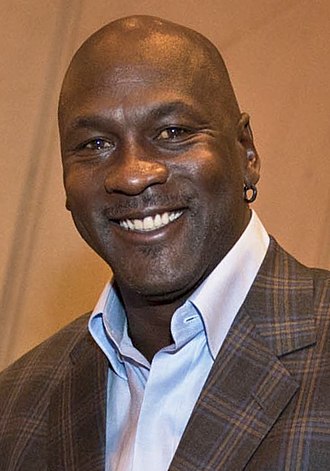
Kevin Durant passes Michael Jordan on the NBA's all-time scoring list.
0:21
And hair filters take on pollution in Mexico City.
0:26
This is Reuters World News, bringing you everything you need to know from the front lines
0:31
in 10 minutes, seven days a week.
0:38
America leads the world in medicine development.
0:42
We get new medicines first, nearly three years faster.
0:45
Five million Americans go to work because we make medicines here at home, and not relying
0:50
on other countries keeps us safe.
0:52
But China is racing to overtake us.
0:56
Or will we choose to stay ahead?
0:58
When America leads, America cures.
1:01
Let's tell Washington to keep us in the lead.
1:04
Learn how at AmericaCures.com, paid for by Pharma.
1:13
The war between the US, Israel, and Iran is moving into a new and more dangerous phase.
1:20
Now the United States and Iran are openly threatening to hit each other's energy and power
1:27
President Trump is dialing up the pressure, warning in a social media post that Iran has
1:32
48 hours to fully reopen the Strait of Hormuz, or face what he calls obliteration of its power
1:40
It's a sharp reversal from the day before, when he was talking about, quote, winding down
1:45
the war, which is now in its fourth week.
1:49
Iran isn't backing off.
1:52
Because they're saying if the US strikes, they'll target American energy, IT, and desalination
1:58
sites across the Gulf.
2:00
This is all happening as Iran's attacks have effectively shut the Strait of Hormuz, choking
2:06
off the route for a fifth of the world's oil and gas.
2:10
Iran's threats to hit desalination plants are especially acute and water-scarred states
2:15
along the Gulf, where entire populations and economies depend on water from the facilities.
2:22
Analysts call this next 48 hours a ticking time bomb for global markets.
2:28
Oils are ready at a four-year high, and energy and commodities enter Dmitry Zhdanikov says
2:33
fears of a black Monday are spreading.
2:37
Based on previous Mondays, when there were a lot of bullish headlines, we've seen oil
2:45
jumping between 5 and 10 percent instantly.
2:48
It's probably the most significant crisis since the Arab oil embargo in the 70s.
2:57
And every day it continues, it's actually looking, beginning to look even more dramatic.
3:04
So unless this kind of stops somehow, miraculously in the next few days, we're going to see a very
3:11
big jump in prices in every single material around the world, from energy to food, because
3:18
actually farmers depend on fertilizers, and there's a lot of fertilizers that are being produced
3:24
There's a lot of scarcity, which is coming our way if it doesn't stop fairly quickly.
3:30
I think we all should be watching for a few more headlines with people descalating this,
3:35
because in the current environment, when everyone is sending these bullish headlines,
3:40
it's not looking good.
3:41
I mean, someone needs to somehow, as a lot of market people say, someone needs to be a grown-up
3:46
intervene and de-escalate these things, because it's looking too dangerous at the moment.
3:54
The Iran war is also disrupting the flow of life-saving medicines into the Gulf.
3:59
Major air routes are down because of the conflict, and with big international hubs like
4:04
Johan and Abu Dhabi still shut, drug makers are scrambling to find workarounds to reroute cargo.
4:11
Reuters' farm industry correspondent Maggie Fick tells us what this could mean for patients.
4:17
The medicines that are most at risk here, in particular, are the high-value, cold-chain products,
4:22
especially cancer treatments, where even short delays have serious consequences for patients.
4:28
Delays in oncology medicines can mean treatment is postponed or interrupted,
4:33
and in some cases, patients may have to restart a course of therapy.
4:37
And the reason that these medicines are vulnerable is because they often need to be kept within a very
4:42
tightly narrow refrigeration range throughout transit, so if a shipment is delayed or misses a connection
4:50
or loses proper cold-chain handling, the product may no longer be safe or effective.
4:55
While there aren't currently signs of major shortages, that could soon change if the conflict
5:01
continues. The industry message for now is no major shortages yet, but the window is now measured
5:08
in weeks, not months. Prashant Yadavav, the counsel on foreign relations, said that stocks of short
5:14
shelf-life temperature-sensitive medicines are typically around three months, but he also said that
5:20
some customers were already warning they could run low within four to six weeks if conditions
5:26
do not improve. So if the conflict continues and these routes remain disruptive, hospitals could
5:32
start to come under real pressure within a month or so.
5:56
Still more clear at one year with monthly dosing?
6:26
You should not receive a live vaccine when treated with Ebglus. Before starting Ebglus,
6:30
tell your doctor if you have a parasitic infection.
6:44
Robert Mueller, the former FBI director who led the investigation into Russia's interference
6:50
in the 2016 election, has died. He was 81. His law firm confirmed the news with no cause of death
6:58
mentioned. First, our investigation found that the Russian government interfered in our election.
7:03
Mueller's best known for a sweeping probe that indicted three dozen people and exposed how Russia
7:10
worked to boost Donald Trump's campaign. The U.S. president has responded to the news with a
7:16
blistering social media post saying, good, I'm glad he's dead.
7:28
Voters in France head to the polls today in mayoral runoff elections that will decide who runs
7:33
Paris, Marseille, and more than 1,500 other cities and towns. These local races won't predict next
7:41
year's presidential election, but they do reveal how political alliances are shifting,
7:47
and how a divided left is trying and sometimes struggling to come together between rounds.
7:54
This week's on assignment podcast looks at what these races tell us about France after Macron,
8:01
and whether the far right is gaining real momentum ahead of next year's presidential vote.
8:07
Your attention has really shifted towards the next political cycle and who will succeed Macron.
8:13
It's also one of the things that people will scrutinize in the local elections,
8:18
because they don't always translate neatly into national politics, but it can give us a sense of
8:26
momentum. We'll drop a link to the episode in the show notes.
8:31
Kevin Durant has passed Michael Jordan and moved into fifth on the NBA's all-time scoring list.
8:40
He dropped 27 points in the rocket's 123-122 win over the Miami Heat, and the shot that pushed
8:48
him past Jordan, a three-pointer, giving Durant 32,294 career points. That's two more than Jordan.
8:58
And we end our show today in Mexico City's ancient Sochimilco canals,
9:05
where conservationists are turning an unlikely material into a pollution-fighting tool.
9:12
Human hair. At the Axelotel Sanctuary director Michel Balam lived a long mesh tube packed with hair,
9:21
a boom, from the water.
9:28
He says untreated wastewater from about 75,000 households flows straight into these canals,
9:36
so they're experimenting with hair to trap oils, fats, and heavy metals.
9:42
Once the booms come out, the polluted hair is treated with bacteria,
9:46
then reused as compost. In nearby Chinampa farms, Augustine Galicia says the processed hair mulch
9:56
helps his pepper crops hold moisture and reduces how much water he needs. For him,
10:01
it's a fertilizer and a water saver. Across town, the hair gets collected and pressed into thick
10:10
filtering knots. Locals salon supply the clippings that keep the program running.
10:16
At Lola's house salon, owner Dara's Martinez sweeps up the fresh-cut hair.
10:22
She says clients love knowing their haircut is helping clean the city's water.
10:32
And for today's recommended listen, check out a special episode of our sister podcast on
10:38
assignment. It's called In Search of Banksy. It follows two Reuters reporters on a global hot for
10:44
the artist's identity. We'll drop a link in the pod description. For more on any of the stories
10:51
from today, check out Reuters.com or the Reuters app. Don't forget to follow us on your favorite podcast
10:58
player. And if you're listening on a smart speaker, just ask for the latest news for Reuters
11:03
seven days a week. We'll be back tomorrow with our daily headline show.