Loading...

About this Episode
President Trump has again insisted that Tehran is ready to hand over its enriched uranium as part of a deal to end the war, despite Iran saying no such agreement is in place, and that its nuclear material is "going nowhere". Iran says the Strait of Hormuz is open - but shipping companies have been warned to steer clear. Tehran threatens to shut the key shipping lane once more if the United States continues its blockade of Iranian ports, hours after the waterway was announced as reopened following the 10-day ceasefire deal in Lebanon.
Also: the head of AI firm Anthropic visits the White House for a "productive and constructive" meeting, following months of tension between the Pentagon and the tech company. The rising value of Pokémon cards sparks a crime spree across North America and the UK. The BBC reports from a marathon patrol mission in one of the harshest environments on Earth - Canada's vast Arctic - as global tensions grow. Dubai police arrest an Irish fugitive, Daniel Kinahan, who is accused of heading one of Europe's most violent criminal gangs. There is outrage among football fans over train ticket prices for travel between New York City and the New Jersey stadium hosting the football World Cup final, prompting accusations of price gouging. And the Bafta Games Awards in London hands the top prize to the French video game, 'Clair Obscur: Expedition 33'.
The Global News Podcast brings you the breaking news you need to hear, as it happens. Listen for the latest headlines and current affairs from around the world. Politics, economics, climate, business, technology, health – we cover it all with expert analysis and insight. Get the news that matters, delivered twice a day on weekdays and daily at weekends, plus special bonus episodes reacting to urgent breaking stories. Follow or subscribe now and never miss a moment. Get in touch: [email protected]
Hosts & Guests

Transcript
This is the Global News Podcast from the BBC World Service.
I'm Chris Barrow, and in the early hours of Saturday 18th of April, these are our main stories.
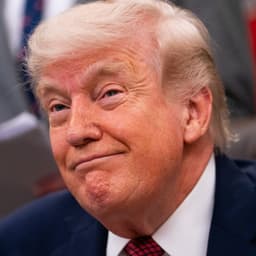
Donald Trump says Iran will give up its enriched uranium.
Tehran says they've agreed to no such thing.
There's also confusion as to whether the Strait of Hormuz is open or not.
And the 2026 gaming BAFTA winners have been announced with the French dark fantasy game
Clarebscure Expedition 33 taking the grand prize.
Also in this podcast, Pokemon cards are now so valuable
that they've become the target of crime sprees around the world.
People think these are like, you know, children's trade things.
They're not there to be taken seriously.
But from the people who are committing the crimes,
it's kind of like an easy target.
And football fans hear it out at World Cup travel costs in the United States.
On paper, Iran and the United States are trying to navigate their way towards peace talks
and a potential deal.
Both sides have taken to media and social platforms putting out statements,
but some of them are painting a confusing picture.
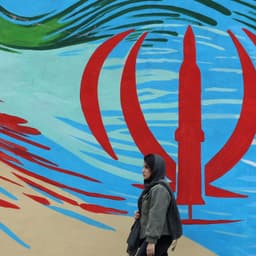
Iran says the Strait of Hormuz is open, but shipping companies have been warned to steer clear.
Donald Trump says Iran will give up its enriched uranium.
Tehran says they've agreed to no such thing.
The US President has claimed there are no sticking points left and that a deal is very close.
Going so far as saying Tehran has agreed to everything.
On Friday evening, he gave a speech to his supporters in Arizona.
We're getting along well, but who knows?
Who knows with anyone, but who knows with Iran in particular?
This process should go very quickly.
And that most of the points are already negotiated and agreed to.
You'll be very happy.
Donald Trump then doubled down on his claim that Iran had agreed to hand over its enriched uranium,
even saying that the US and Iran together would excavate the sites destroyed by American B2 bombers.
But earlier Iran's foreign ministry denied the Islamic Republic had agreed to any such thing in negotiations.
This was spokesman Esmeral Baghaye appearing on state television.
Namoridir Masoeli ke Matash with a hand up.
Regarding the issues that were brought up, both in their media and mentioned by some American officials,
none of it can be confirmed.
For example, I will tell you, enriched uranium from Iran is not going to be transferred anywhere.
As much as the soil of Iran is important and sacred to us, this issue is important too.
So with all of these conflicting statements, where are we at in particular on the question of uranium?
I asked Barman Kalbasi, the BBC Persian Services correspondent, who's in the United States.
We seem to be where we were before these talks started,
except or notwithstanding the declarations that President Trump has made throughout today.
And that was where Iran basically refused to send out the enriched uranium but had offered,
as it did before the war, to dilute it to a level that would never be able to use in any weaponization program.
So that seems to still be the offer from Iran.
There has been no indication whatsoever from them that they're prepared to send that material out.
Now, obviously in the last 12 hours, we've heard from the President multiple times that they have agreed to all of this,
including sending out the material to a foreign country, to the United States.
He even talked about jointly going in with the Iranians and extracting it and bringing it to the United States.
All of this has been declared completely fictional.
As far as the Iranians are concerned, we just had a few tweets from the speaker of the House,
the man who's been the head of the delegation of the conversations and the negotiations with JD Vance and Islamabad,
who in that tweet said the President of the United States has made seven claims, all seven are false.
So it's unclear where the President is getting all of this.
There's a lot of speculation about what the Pakistanis are telling the President and how much is what the Iranians have been telling the Pakistanis.
But whatever the source stands for Iran has unequivocally stayed as it was before,
that they're prepared to deal with the issue, that is the worrisome issue of the 60% in rich uranium by diluting it
and no indication that they're prepared to send it out.
So why is Donald Trump painting this picture that Tehran is agreeing to all of his demands?
Is it just in pure hope that that might force their hands?
It is very hard to be in the man's mind at this point, but we've seen these trends before,
almost like he is trying to tweet his will into reality.
But Iran, especially after this 40-day bombardment, it hasn't really changed.
It stands when it comes to its principle issues, but it's being nuclear or its missile system and its drones and its support for proxies.
None of that, we have not seen a fundamental shift in any of those positions.
So maybe the President is hoping that, as you said, putting Iran into position where it doesn't want to risk saying something that President hasn't said,
but he just gave a speech and said the exact same things that he's been posting,
except with one sentence, you never know with the Iranians.
So maybe providing himself some leeway to say they changed their mind again,
or they have had agreed to something that they're reneging on.
That's a remains to be seen.
Bahman Kamasi.
Well, another major point of contention is the key shipping route, the Strait of Hormuz.
The Iranian Foreign Minister Abbas Aragchi said Iran was reopening the Strait to all commercial shipping,
while the ceasefire in Lebanon remains in place.
Shortly after that, the US President Donald Trump welcomed the news,
writing in all caps, thank you, but he also vowed that the US Navy would still maintain its blockade of Iranian ports.
We'll remain in full force and effect as it pertains to Iran until such time as our transaction with Iran is 100% complete and fully signed.
Reacting on social media, the Speaker of the Iranian Parliament threatened to close the waterway again,
unless the blockade was lifted.
Despite markets celebrating the Straits reopening with remarkable gains on Friday and oil prices dropping sharply,
has anything actually changed in the key shipping lane?
A question for our security correspondent, Frank Gardner.
Absolutely nothing has changed.
The Strait of Hormuz is no more open right now than it was 24 hours ago.
This is entirely performative.
It has fooled some people, but it's not fooling the shipping industry one bit.
They're wise to this.
I've spoken to the International Maritime Organization and to others.
The practicality to this is that Iran is saying,
yeah, the Strait of Hormuz is open.
If you follow our rules and those rules are,
you've got to instead of following the well-established, what's called the TSS, the traffic separation scheme,
which has been in happy existence since the 1960s,
you've got to follow a northern route and be checked over by the Islamic Revolutionary Guards Corps Navy.
It's unacceptable to the global shipping industry and the United States,
whose instantly their own blockade of Iran's ports remains in place.
So the shipping industry isn't moving at all on this.
No one's going anywhere on it.
Frank Gardner.
Now in the previous edition, we reported on the rising concerns over anthropics new AI tool.
That's called the attention of the US government.
The White House has spent nearly two months fighting with the company after it refused to budge on red lines
surrounding the use of its technology.
But Mythos appears to be melting the ice.
The Trump administration has said it's hosted a productive meeting with the head of anthropic.
Our technology correspondent Lily Jamali told us more.
It's called the Claude Mythos Preview and it is, you know,
yet the latest AI model that anthropic has developed.
As you know, these models keep getting more and more powerful with each iteration
and what anthropic is saying is that this one is so powerful that it actually can't release it to the public.
Only a couple dozen companies are going to have access to it.
What makes it so powerful is its ability to pretty much autonomously find bugs in software.
And it can also go to the next step and develop exploits as they're known in cybersecurity land
to basically hack systems to develop hacks that can break into systems and do a lot of damage.
So why is the White House interested in this product?
Because that is quite an awkward conversation that would have been happening earlier on.
Yeah, you can see why the White House might not want that model to get in the wrong hands.
And the government certainly has potential uses for this because there are all kinds of actors out there
including some countries that are well known to try and exploit cyber-sensitive issues in systems around the world.
So the White House telling the BBC that they had this productive and constructive meeting with anthropic.
It's worth noting that when anthropic released this news about Mythos last week,
we heard Dario Amode, who is the CEO of anthropic, make clear that they had actually already spoken to officials
across the U.S. government and offered to collaborate with them on Mythos.
Even as this massive fight was in the background between his company and the Pentagon,
you might remember Amode saying he didn't want Claude being used in certain contexts,
such as mass domestic surveillance and autonomous targeting decisions.
And that basically landed them on a black list until now.
And this meeting is a really distinct shift in that relationship.
I was wondering what's in it for anthropic.
Is it just the potential license from the White House that the money that they could make?
Is that why Dario would even go to the meeting?
I think it's partly potentially the money or the promise of future government contracts,
which they are pretty much shut out of.
So you have to imagine it's on their wish list.
But I think the other thing that anthropic gets out of this is an opportunity to mend relations
with the federal government in the country where they operate.
And it's also, frankly, great marketing for anthropic to have developed a technology that is so powerful
that even the government of the United States may have to change course in quite dramatic fashion
because this stuff is too critical for even the US government to do without.
Lily Jamali in Silicon Valley.
Now, if AI is the future, then here's something that you may remember from the past.
Pokemon cards are now a valuable collector's item.
So much so that they've become the target of crime sprees in the US, Canada, and the UK.
Right after he is a trading card expert who's personally broken Pokemon sales worth over $2 million.
I'm 39 now. So when I was 12, that's when Pokemon started.
So I was there right at the start.
And I think the reason why it grabs people is you have new generations of Pokemon every four to five years.
It has an element of nostalgia, which makes people feel safe when they collect or when they, you know,
go through on a purchase.
There was kind of the boom of influencers and YouTubers, you know,
proclaiming their love for Pokemon.
There was a stint where Justin Bieber was on an MTV show called Crips.
And he like, nonchalantly walks past his original childhood Pokemon set that was framed and put on the wall.
And since then it just went up and up and up.
And then you have like big influencers like Logan Paul, buying and selling cards.
And yeah, I still think people think these are like, you know, children's play things that they're not there to be taking seriously.
But from, you know, the people would commit in the crimes.
It's quite easy for them to sell cards that are not graded, not professionally graded.
Because they're nylon untracell.
So for them, it's kind of like an easy target.
And what you find as well with some of these stores, you know,
store owners will put all the vintage cards in one area of the shop.
And, you know, they got the press tags on them.
So it's very easy, just the pinpoint, the shop pinpoint where it is and getting it out within four or five minutes.
Roy Raftry there.
And still to come in this podcast?
Well connected with Dutch, Moroccan gangs, North African smuggling groups, Colombian cartels, Italian organized crime.
He was reported to be this broker of like a super cartel.
The notorious suspected Irish crime boss Daniel Kinnehan is arrested in Dubai.
Each winter, Canada's armed forces patrol its northernmost regions.
This year's mission was the largest yet with a contingent from Greenland joining the Rangers for part of the journey.
In the wake of increased geopolitical tension across the Arctic,
there's more pressure than ever on the Rangers,
as the BBC's Nadine Yusif found out when she accompanied the team on snowmobiles
as they travelled across Canada's northern coast.
Like three hours.
They'll be fit out here.
I'm with Canadian Army Reservists and Combat Members.
This is the last leg of a marathon two-month ground patrol of one of the harshest environments on Earth.
Canada's vast Arctic.
So far, they have driven their snowmobiles for 5,000 kilometers through rugged icy terrain.
This mammoth patrol is being undertaken by Canadian Rangers.
The team is a combination of combat soldiers and northern Canada's indigenous population.
Together, they marry their traditional knowledge with modern technology to keep an eye on Canada's Arctic,
which makes up 40% of the country's landmass.
There's not many people in this world who can go 5,000 kilometers across northwest passage
on the coldest winter in a living memory.
This is Travis Haynes, the Lieutenant Colonel on the mission.
That is a message, I think, to Canadians that should be proud of.
The Rangers survey the North every year, but this year's patrol was the largest yet.
Their mission is made more relevant by the geopolitical scramble for the Arctic's resources as the climate warms.
It also comes just a few months after US President Donald Trump threatened to annex Greenland.
We need Greenland for national security and even international security,
and we're working with everybody involved to try and get it one way or the other we're going to get it.
Trump has also referred to Canada repeatedly in the past as the 51st state,
galvanizing an uncharacteristic show of nationalism from Canadians.
For Barney Agarq, an indigenous Inuit member of the Canadian Rangers,
the patrol is not just about national security.
It is also about protecting his ancestral land.
It means everything to us because we have to let the rest of the world know we are here,
and this is our part, and we're going to protect it with everything we have,
whether it's the land itself, the sea, the people.
Agarq is from a hamlet called Chesterfield Inlet in Canada's Nunavut territory.
He tells me that Nunavut means our land in Inukta Tuk, his native language.
That was the reason why our territory chose that name in our language,
and we've been here for centuries.
We were the first ones here, and we're not going anywhere.
Canadian governments have been criticized over the years for financially neglecting Canada's north,
and for falling short of their NATO commitments to defence spending.
That has recently changed under Prime Minister Mark Karney,
who last month announced a multi-billion dollar plan to upgrade military infrastructure in the Arctic.
With this plan, we are taking control of our future.
We will no longer rely on others to defend our Arctic security or to fuel our economy.
The opposition conservatives have called on Karney to go further
and build permanent military bases in the Canadian Arctic.
There are currently none.
Meanwhile, Russia has built dozens in its Arctic region.
Still, the new funding has been welcomed by both locals and the military.
The Rangers have already started talking about the next mission,
where they plan to go to the northernmost point of Canada.
But for now, the return was welcomed by hugs from their family and friends.
Nadeen Yusif reporting.
As organised crime bosses go, they don't get much bigger allegedly than Daniel Kinnehan.
His apparent rise from low-level dealer in his home city of Dublin
to head of a global family cartel involved in drugs, firearms and money laundering
has inspired dozens of fictional dramas and documentaries
like the 2025 BBC programme Kinnehan, The True Story of Ireland's Mafia.
A family like few others, the Kinnehan's, were street dealers who became binionaires.
Dublin's deadliest.
They were being considered as gangland royalty.
And one of the world's most wanted.
You're in the league of Pablo Escobar.
A Celtic cartel with global ambition.
This emerging new generation of narcos.
Cats all over the world want to be the guy to get that head up on their wall.
Well, now it seems the authorities have finally caught up with Daniel Kinnehan.
The 48-year-old was detained on Friday in the United Arab Emirates
after an arrest warrant issued by the Irish courts.
He also had a $5 million US bounty on his head.
Danny Gold presents the Underworld podcast,
which is focused on this particular case.
Daniel Kinnehan is much more than just your run-of-the-mill gang leader,
though he did fight a particularly brutal war in Dublin
because he was the first to punch crime family where there were quite a few shootings
and murders and things like that.
But in reality, he is allegedly the biggest drug trafficker into Europe.
He's well connected with Dutch, Moroccan gangs, North African smuggling groups,
Colombian cartels, Italian organized crime.
He was reported to be this broker of like a super cartel that helped distribute cocaine all over Europe.
We're talking hundreds of millions of dollars, if not billions.
Said to be the biggest cartel in Europe, he also has a lot of connections to Iranian networks,
has Berlin networks, which might have been one of the reasons why he was just arrested
because he didn't do buy for quite a long time.
But this man was at the top of the top of international organized crime.
It's interesting.
A video came out about a month ago from a reporting organization called Bellingcat.
They had spotted Kinnehan at belief and his father about a year ago at a UFC match.
But they only really realized it, I think, in the last month.
So the heat was on and he was sitting next to someone who had been linked to oil smuggling from Iran.
So there's a lot of international intrigue there.
I mean, in 2020, that's how safe Dubai fell for these guys.
There were still a lot of warrants out for him, a lot of alleged crimes being committed.
And he was giving press conferences, doing big deal fights with Tyson Fury, I believe,
with Anthony Joshua in Dubai.
Things got a little hot and he sort of calmed down and got out of the public guy.
Probably not smart to launch this second career in 2020.
But I think that's how invincible and powerful he felt.
Well, Stephen Green is crime editor with the Irish son and co-author of Kinnehan assassins and the cartel.
He says this latest arrest represents a significant breakthrough in the operation to bring the Kinnehan cartel to justice.
The Irish police have always said that they would be relentless in this process only a number of months ago.
The senior Kinnehan figure, Sean McGovern, he was brought back to Ireland from Dubai.
He was the first individual connected to that group to be brought back to Ireland.
But this is the first time where you have someone of Daniel Kinnehan status within that group.
Someone who has been named as the overall leader being brought back to Ireland on the basis of a treaty that was signed between the Irish authorities and the Dubai authorities.
So it's quite important that it's not just Daniel Kinnehan that's about the authorities targeting all members of the Kinnehan organized crime group.
So he was arrested during the week. He's not being held in custody.
It's a matter of time to wait and see if he will fight the extradition going back to Ireland.
Next, football fans going to the World Cup in the United States this summer have been dealt another blow.
It's been confirmed that train tickets from New York City to the stadium hosting the final in New Jersey will cost $150, prompting accusations of price gouging from many, including these locals.
Absolute insanity. It's ridiculous. Want to go and see a great game for the World Cup and then, you know, it was much less a price and then you're getting price gouged.
That's an embarrassment and shame and it's taken advantage of the fans is abusing authority to add an outrageous price like that.
FIFA has slammed the move. Nidda Talfiq reports from New York.
NJ Transit the operator of the train has come under attack from football fans who say they couldn't feel less welcome.
They can either pay the $150 train ticket, which is normally $12.90, take a shuttle bus for $80, spend over $200 on parking or chance it with a ride share with no price cap.
The chief executive of NJ Transit says they aren't profiting but attempting to recover the costs of labor and security so that it doesn't get passed on to regular commuters.
New Jersey's governor Mickey Cheryl says FIFA is set to make more than $10 billion from the tournament and therefore should cover the $48 million it will cost to move $40,000 fans to the stadium from New York.
Train prices vary by host city with some such as Philadelphia keeping the fairs the same and others such as Boston also increasing fairs.
FIFA says it has already recognized the financial strain on host cities and travel could and should be offered at cost.
Travel at the World Cup in Russia and Qatar was free. Along with complaints from fans, even locals are questioning whether proper planning went into hosting the World Cup.
Here in London, the red carpet was rolled out for the BAFTA Games Awards, the ceremony wrapped up a few hours ago.
Our reporter, Andrew Rogers, spoke to us from the venue.
Claire of skewer expedition 33 was the winner tonight and it was a bit expected they were up for the most categories nominated in the most.
However, it is a huge win for a studio that's not existed for very long based in France and they brought this dark fantasy story to the market,
which is combined a lot of things that people have liked reviewers praised it for its gameplay.
It's also got some really strong acting performances and it won in the best performance category tonight.
And it also has a story that's connected with a lot of people dealing with them quite complicated issues like grief and loss and all things that have really brought it together to be something that the judges wanted to praise tonight.
It didn't sweep the board though like everybody expected. It didn't take home quite as many awards.
Why was that? Was there just a really good lineup in the other categories?
Yeah, it definitely wasn't a clean sweep three awards in total and Superhero comedy game at dispatch won three as well.
So it definitely wasn't dominating the awards like we might have expected this year.
It was quite strong in terms of lots of different types of games being nominated.
And of course, you could say that perhaps there were fewer new big games out this year because a lot of them work keeping the year free for the new Grand Theft also six game.
That massive game that was just come out that has been delayed and that won't come out until later this year at the earliest.
Do you think there's any kind of overall theme with some of the releases that did win this year?
Because I noticed that another game called Atom Fall has quite a sort of post-apocalyptic vibe that one.
You mentioned dispatch kind of superhero dark sense of humor quite dark game in many ways.
And then the one that took the grand prize Clare Obscure they all have this sort of slightly darker sense to them.
I mean, I know there's the family game categories, but overall do you think there's a shift towards that kind of post-apocalyptic vibe?
Yeah, there does seem to be a bit of a bit of a theme there.
In fact, if anything, I would say the theme is perhaps less the post-apocalyptic vibe, but it's more games that are telling something deeper with their stories.
People's lives, people's feelings and wanting to say something with a game rather than necessarily the ones that are your jumping to platforms or shooting.
And those are obviously the ones that sell extremely well, but not always the ones that win here at the Masters.
I think escapism is a big deal at the moment potentially with some of the other news stories that are going on.
Just tell us for those who don't game that much, how big of an industry is this really?
Because it compares to film, doesn't it?
Well, and by many measures, it's as big as if not bigger than the film and the TV industry combined globally.
So, you know, it is massive and even if you don't play games, it is influencing culture more and more.
One of the interesting things is the increasing blurring between film TV and games.
For example, the new Indiana Jones game was up for awards tonight.
And tonight was also the debut of the new theme for the Bondy game that's coming out soon.
And it's going to have one of those epic songs attached to it in the same way that Bond movies do.
So, absolutely, it's a big industry and it's only getting bigger.
Andrew Rogers there.
And that's all from us for now.
If you'd like to get in touch though, you can email us globalpodcast at bbc.co.uk.
You can also find us on X at BBC World Service.
Just use the hashtag globalnewspod.
And don't forget our sister podcast, the global story, which goes in depth and beyond the headlines on one big story.
This edition of the global news podcast was mixed by Russell Newlove, the producer with Shavorn Lehi.
The editor is Karen Martin and I'm Chris Barrow.
Until next time, thanks for listening. Goodbye.