Loading...
newsdaily
Vaping can lead to cancer + Albo to deliver address to the nation
About this Episode
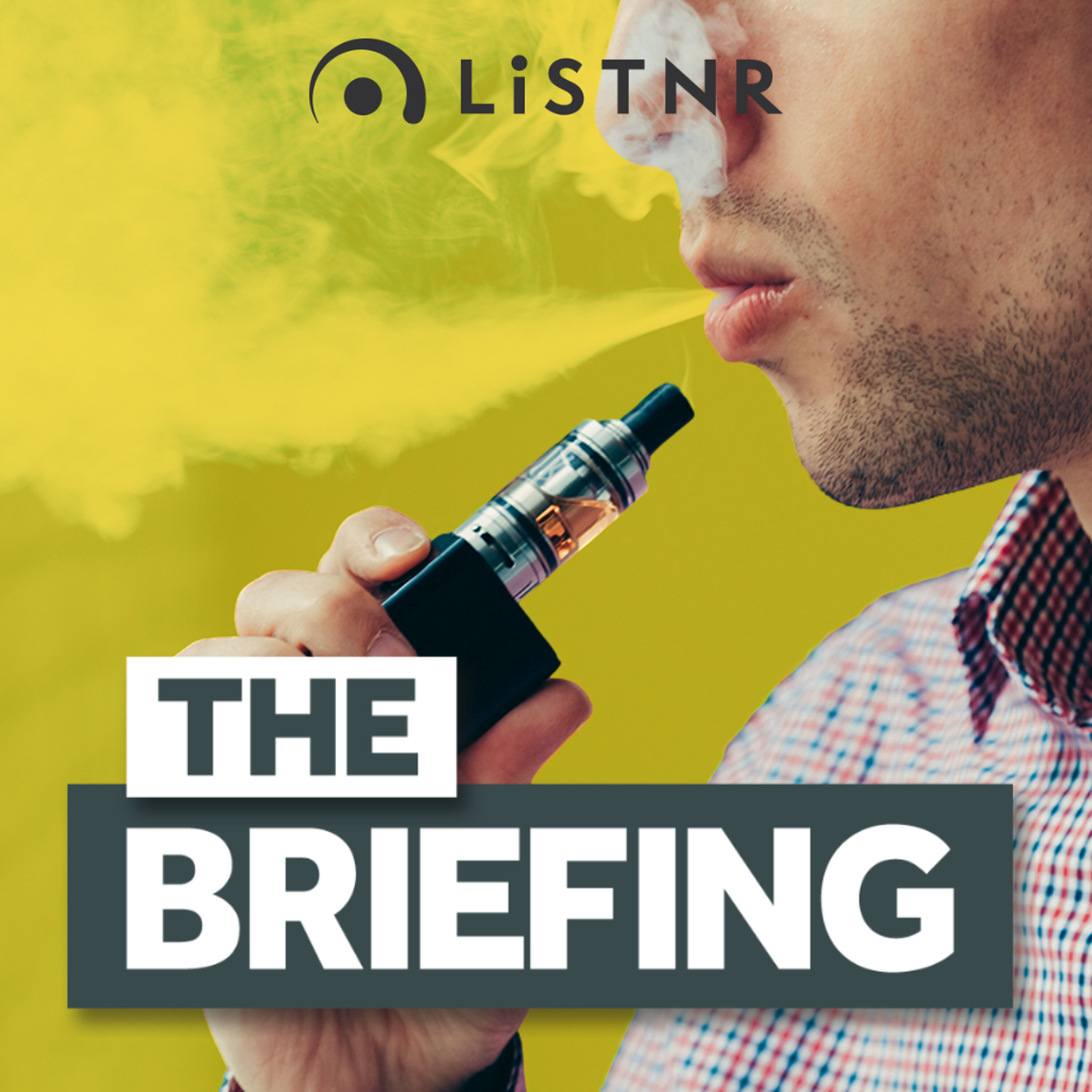
A comprehensive review led by cancer researchers at UNSW has found that vaping is likely to cause lung and oral cancer, even before long-term studies can confirm the exact risk.
The study analyses a wide body of global research to assess the ability of vapes to cause cancer on their own, rather than as a gateway to smoking.
The analysis draws together clinical studies, animal experiments and laboratory research examining the chemicals produced by e-cigarettes.
In this episode of the Briefing, the study’s lead author Bernard Stewart, an Adjunct Professor in the Discipline of Paediatrics and Child Health at UNSW Sydney, joins Natarsha Belling to discuss "by far the strongest evidence" that vapes are likely to cause lung and oral cancer.
Headlines:
- PM to address the nation on war in the Middle East
- ATO hands small business tax relief in wake of Iran war
- Double demerits in NSW/ACT kick in tonight for the Easter long weekend.
- Tiger Woods stepping away from golf to focus on his health
Follow The Briefing:
TikTok: @thebriefingpod
Instagram: @thebriefingpodcast
YouTube: @TheBriefingPodcast
See omnystudio.com/listener for privacy information.
Hosts & Guests
Transcript
A listener, production.
Hi, Natasha Belling with you and welcome to the afternoon edition of The Briefing.
Coming up in our deep dive, the landmark Australian study that's found vaping can increase
your risk of a range of cancers, including lung and mouth cancer.
Baping, almost assuredly, will cause oral and lung cancer, although we don't know how much.
The important chat is coming up in the second half of this episode.
But first, let's check the afternoon headlines this Wednesday, the 1st of April.
Prime Minister Anthony Albanese has announced he will address the nation tonight.
We're told the speech will outline the government's response to the war in the Middle East
and the ongoing fuel crisis.
The address is for 7pm Australian Eastern daylight time tonight,
and will be broadcast on both radio and television.
The last address to the nation was delivered by then Prime Minister Scott Morrison
during the COVID-19 pandemic.
Meanwhile, Donald Trump will provide an update on a run in an address to the US
at midday tomorrow, our time.
President Trump said earlier today the US would wind up the war
in two, maybe three weeks in the Middle East,
adding up to the other countries to secure the state of Hormuz.
When negotiating with them right now, they've been, again, we have had regime change.
Now, regime change was not one of the things I had as a goal.
I had one goal.
They will have no nuclear weapon.
And that goal has been attained.
They will not have nuclear weapons.
Senior Federal Government Minister Mark Butler says the only countries
that can stop this war in the Middle East are the countries already involved in the war.
But the strait needs to be open through a de-escalation of this war
between the US, Israel and Iran.
And that lays in their hands.
Those three countries are the ones waging the war, not Australia, not any other country.
Elsewhere, Iranian state media has quoted the nation's president,
Masoud Pashesh Kyan, saying his country is ready to stop fighting,
provided it knows it won't be attacked again.
In times more businesses heavily impacted by the war in the Middle East
are set to be given a helping hand.
Treasurer Jim Charmers says the ATO will provide temporary tax relief
for those who were struggling with fuel and diesel supply.
And that's not all.
They'll also limit compliance actions across the worst affected industries
and some debt collection actions may be paused, where that's appropriate.
It comes as the cut to the fuel excise kicks in officially from today,
saving motorists around 26 cents a liter ahead of the Easter Long Weekend.
A number of motorists are starting to see prices fall in some parts of the country
at service stations.
And double-demarit points kicking tonight for the Easter Long Weekend
in New South Wales and the ACT.
They'll be in place until midnight on Tuesday.
Brendan Griffiths from Karin Shora,
Roland says drivers need to keep their eyes on the road,
and that means never picking up your phone.
Holiday periods mean more time on the road,
often driving between destinations or on longer trips.
So our message is simple, no matter the reason the call or text can wait.
And Tiger Woods has announced he is stepping away from golf to focus on his health.
It comes amid revelations.
He had two opioid pills on him after that car crash in Florida over the weekend.
It was the fourth time Woods has been involved in a car accident.
He was hoping to play in this month's US Masters,
but will now step away from the game.
He posted a message on social media earlier today saying,
quote, I'm committed to taking the time needed to return
in a healthier, stronger and more focused place,
both personally and professionally.
Now it's time to get into our deep dive on the new study
that has raised serious concerns about the safety of vaping and its links to cancer.
Vaping was once hailed, including by some health experts,
as a safer alternative to conventional cigarettes,
and also a safer and better way to try and quit nicotine.
But now the evidence is showing quite the opposite,
with lead researchers from Australia saying vaping has dangerous health consequences
and tighter regulations are needed, especially for teenagers.
Joining us to unpack this groundbreaking research is lead author of the study,
Professor Bernard Stewart from the University of New South Wales.
Professor, tell us about your work.
I understand this is a comprehensive review of all the information
that we have available now on the dangers of vaping.
Yes, but it's certainly about the dangers of vaping.
It's certainly comprehensive and it's very precisely circumscribed.
It addresses vaping as a cause of cancer in its own right.
That is setting aside the notion that people who vapen smoke
are going to get cancer, if not more cancer than people who smoke alone,
or people who vape and then take up smoking at risk of cancer, that's a separate issue.
This appraisal involved the immediate question of whether vaping in its own right by itself
presents a castogenic risk and that's what we're addressing.
And so you actually found people who vape are at a greater risk of developing
a number of cancers. Is that correct?
Not in the, no, if I may qualify the words you use, what we've found
is that data concerning not cancer, but other changes in tissue
and bodily fluids in people who vape taken together
with evidence of castogenicity of vaping aerosols
and experimental evidence animals and taken together again
with case reports on people who have vaped concerning oral cancer
and taken together with mechanistic evidence of how aerosol vape
mediates cellular and molecular changes consistent with cancer causation,
then we concluded that vaping almost assuredly will cause oral and lung cancer
although we don't know how much.
You're an expert in this field professor. Can you explain that scenario for me simply?
So basically you've been able to conclude that by vaping there are certain causations
that then increase your risk of developing a number of cancers. Would that be correct to say?
Yes, I'll just know our paraphrases slightly different and say this.
Sometimes when we examine whether an agent causes cancer in humans,
we do not have the critical information of more cancer in humans exposed to that agent
that in the normal population. We've got that, for example,
the respect of tobacco and alcohol and spestus and these are proven, of course, cancer in humans.
The situation with vaping is that because it only started in 2008,
we can't point to a population of people who have only vaped, never touched tobacco
and have more cancer than the community normal, what expect. So we're obliged
to rely on extrapolations we can make from the types of studies that I tried to summarize,
and I'm sorry I was so long-winded, but it was different avenues of investigation.
No particular type of investigation proved the case. It's taken together. All these avenues
of investigation were consistent with the overall perspective that vaping is likely to cause
oral and lung cancer, even though we can't define in number terms what that burden of cancer will be.
So Professor, how significant was this work or is this work that you have done in lines
to the risks or dangers associated with vaping? Again, that's an insensitive and critical
question. The dangers associated with vaping are either proven or in some cases likely.
The proven dangers involve such things as burns and chronic respiratory disease.
The possible or likely in the case of cancer likely causes include cancer and possibly other
diseases that I'm not expert in, but the information that we have produced is not information
that taken on its own settles any particular public health hazard case about vaping.
Rather, it adds to the full spectrum of information, take it together, which give public health
officials and regulators the best possible picture of the risk that is inherent in vaping and
has to be addressed through regulation. So to that point, Professor, great point in the concept that
there is enough evidence or concerns right now to actually look at how we regulate vaping,
especially to young people and teenagers. Exactly right. That's the, and you have identified
the people who most use vapes and who are at risk. Vapes, as you may recall, were first introduced
as a means of smoking cessation. These could be better than we were told nicotine replacement
therapy by patches and other means, and that was credible. It's not proven, however, that vapes
are the best means of smoking cessation. And then it was suggested that even if you didn't give up
the vapes having started them, if you stop smoking, vapes were somehow safe for alternative.
And we found, in respect of the studies we examined, whereas in 2017, scientists generally
said there was not enough evidence to say that vaping was safer than smoking in respect of cancer.
But by 2024, this consensus in the American scientific literature was that they could no longer
say with any degree of certainty that vaping was safer than smoking in respect of the burden of
cancer. Now that's where we're at at the moment. We can't say that vaping is safer than smoking.
We can say that there is adequate evidence to presume a likely burden of cancer from vaping.
And we have to say that the idea of evaluating the safety of vaping by comparing it with
smoking is like assessing the safety of knives by comparing them with submachine guns.
You don't do that. You look at the safety of knives in their own right. And we are looking at cancer
causation by vapes in their own right. So professor, in regards to your work, number one,
it would definitely push for furthermore extensive research into the dangers of vaping.
But also, as you mentioned earlier, that we need to reframe what vapes are used for,
especially the fact that they are not good at helping you quit nicotine.
Yes, all of that's correct. Indeed, when we approach the public health
controls on vaping and their importation, their availability, and the patterns of use.
As you've been correctly implied, that pattern of use overwhelmingly concerns young people.
Now, young people are not interested in the hazards they might face when they're 50.
And I don't, people have asked me, what is your message to people who vape or young people who
vape in light of this research? The short answer is, I don't seek to address young people at all.
I'm sure I don't speak their language, and I'm sure that a 13-year-old, if told they're at
greater risk of lung cancer when they're 50, is not going to suddenly throw their vapes in the bin.
I'm not trying to communicate with those young people who vape, although they're at the
front of my mind, I'm trying to communicate with regulators who have the opportunity and the obligation
to limit the availability of these products to these critically important young people.
It's almost like a prevention is better than a cure.
Oh, certainly. I mean, it's so divisive. When men talk of lung cancer, I'm happy to say
lung cancer cure is improving all the time, but it's still a very small percentage of people
who are available, sorry, who are alive five years after diagnosis. And like I think I'm like,
for example, breast cancer, where that figure is up around 90%. So, yeah, prevention of cancer
is always better than treating the disease. And can I finally ask you, Professor, what was
interesting about vapes when they first appeared? And obviously, there were lots of hidden agendas
because some of the vapes were being pushed by a big tobacco as helping you quit conventional
nicotine or conventional cigarettes. Do you think there was really dangerous messaging when vapes
first appeared on the market? Yes, there was dangerous messaging, and although often
I'd put all falls at the feet of tobacco million factors, there was dangerous messaging
because of a presumption of relatively low risk. And in good faith, public health officials
said this may be better than smoking. And indeed, in the UK, they embraced vaping
with enthusiasm because of their very high smoking-related death rate. But in fact,
that was an error and was seen to be an error. And vaping despite the
perceptions that were held when they were first introduced has failed to deliver a better means
of smoking cessation and has in fact developed a vehicle for nicotine addiction. And that nicotine
addiction itself can either lead to smoking for those who didn't smoke initially, or perhaps just
in itself can lead to a burden of cancer. We really appreciate your time and congratulations on
this really important research. Thank you, Professor. That's most kind of you and I'm very pleased to
have the opportunity to talk to you. Thank you. That was one of the lead authors of the study,
Professor Bernard Stewart from the University of New South Wales. And that's it for this episode of
the afternoon edition of The Briefing. We'll be back in your feed tomorrow morning with a deep dive
on the Artemis mission to the moon launching tomorrow morning. We'd love you to subscribe or follow us
on Instagram at The Briefing podcast on a touch of billing. Thanks for your coming.


