About this episode
Get every episode summarized
Each time History Dispatches publishes, we email you a written briefing from the transcript — the topics, who appeared, and any specific claims, with the ad reads skipped.
Email me new episodesFree for 3 shows. No card needed.
Hosts & guests
Transcript ready
376 searchable segments. Every word is indexed and playable.
Full transcript
History Dispatches — War of the Worlds Broadcast. Machine-transcribed; use the interactive transcript above to jump the player to any line.
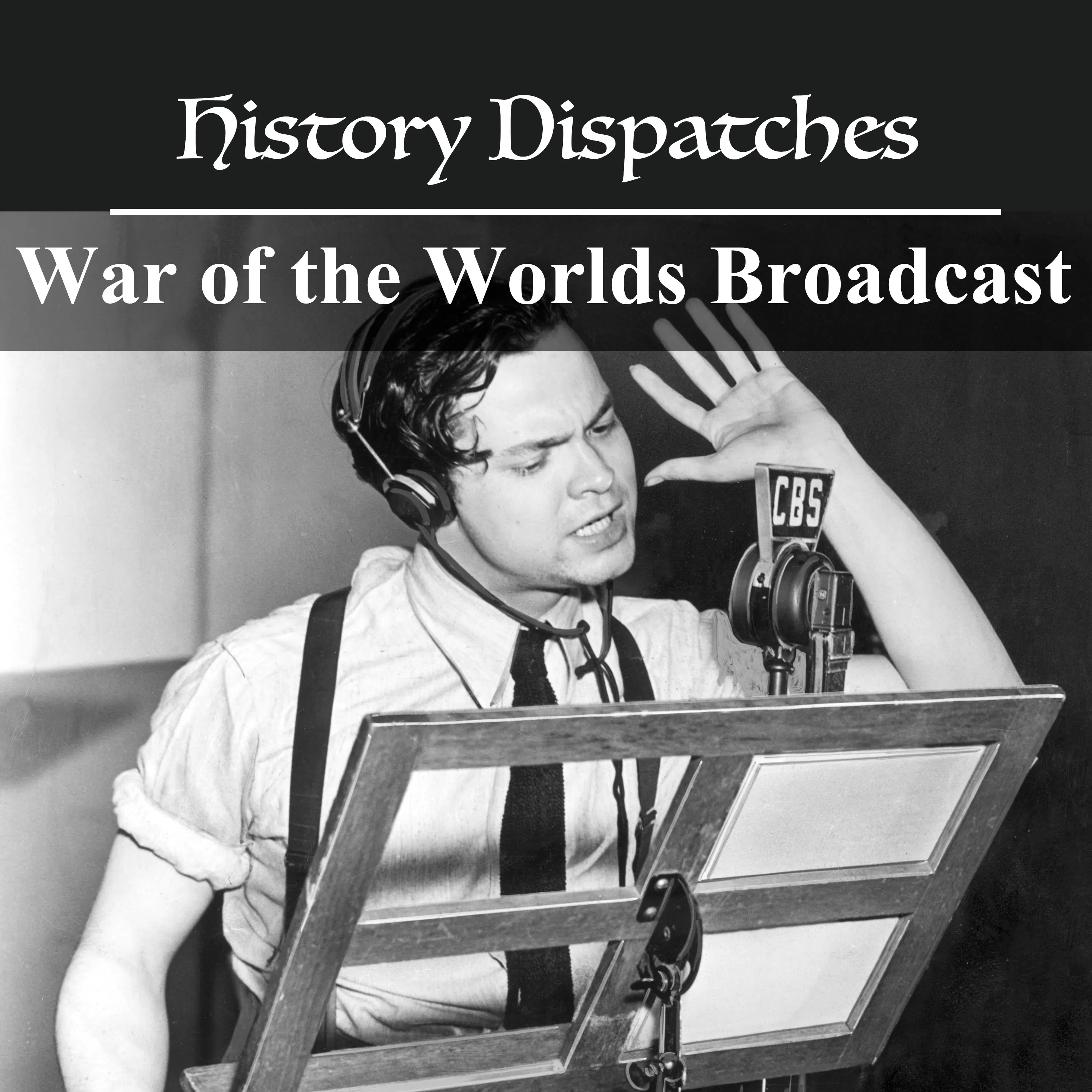
What if you could use your home to build more home? It's possible with a SoFi home equity loan. A home equity loan allows you to leverage your home's equity at a typically lower rate than a personal loan, with low fixed monthly payments, and all without increasing your mortgage rate. Whether it's a new bathroom, updated kitchen, deck, or more, your home could help grow itself. You, your rate at SoFi.com, slash home upgrade today. Mortgage is originated by SoFi bank and a member FDIC, NMLS 696891, Terms and Conditions Apply Equal Housing Lender. For the Halloween special of Orson Wells Mercury Theater on the Air in 1938, they performed a radio adaptation of HG Wells landmark science fiction novel War of the Worlds. The only problem is that it was so well done and so realistic that it caused panic amongst the listeners who thought a Martian invasion was imminent. At least, allegedly. This is the story of the War of the Worlds broadcast and the panic it created.
Hello, and welcome to History Dispatches. My name is Matt. I am here with my son, McKinley, as well as my grandson, Reese. He's sitting over on his dad's lap right now. Hi everyone. Mr. Reese is a little sleepy right now, so he might be a little quiet, but if you hear some cooling and some babbling, just know he's having a grand old time with us. Or the babbling part might just be me. Well, you know, anyways, here on History Dispatches, we bring you a bit of history every weekday. And today we're doing one of the great, crazy episodes of modern broadcasting and HG Wells 1938 broadcast of World of Worlds, which as you alluded to in the opening allegedly caused some panic as people thought a Martian invasion was imminent. Nick, this is your story, so I'm going to let you talk about it. Thank you. I had heard of this one before, but this comes courtesy of a listener Andrew from Vancouver. Thank you for sending it our way. Perfect suggestion. We love these weird moments that we still talk about almost a hundred years later.
I love them too, in the sense that if you wrote this story of this happening, people go, that's unrealistic. No one would ever think we're being invaded by aliens listening to a radio program, yet it happened. Well, we'll talk about it, did anyone actually think so? Okay. The first started listening to this and even Andrew's suggestion was that, oh, people thought that there was a Martian invasion imminent after hearing the broadcast, but that is actually kind of an urban legend. Oh, we'll get into it later. Okay. Let's get started. I want to start by talking about the narrator of the show as was the producer, Orson Wells, probably the quintessential early tour filmmaker responsible for some of the most landmark productions ever, such as 1941 Citizen Kane, also a hilarious wine commercial from the 1980s. If you ever get a chance, look up Orson Wells, wine commercial, it's so cringy, it's amazing. He's drunk. And some of those commercials is considered sad. He was always trying to fund his next project, so he did whatever he could, just to get funding,
so he did some bad stuff. But some of his good stuff is some of the best that Hollywood has ever produced. But this is a little bit before that, before he was well known at all. Wells was born in 1915 to a wealthy family in Kenosha, Wisconsin, shout out Kenosha, but his parents separated when he was pretty young. Wells was an absolute prodigy in music, art, theater, writing, acting did not matter, whatever he touched creatively, it was bound to be good. And he was 16, he went on a painting and walking tour of Ireland, painting landscapes, and then in Dublin, walked into a theater, claimed he was a Broadway star, and they didn't really believe him, but he had such gusto and such acting shops that they said, all right, welcome aboard. He could talk the talk and he could walk the walk. He was excellent. By age 20, he was in New York City and already directing Broadway or off Broadway productions. Wells would star in them, other times he was just the director, a producer, but either
way, he was well known in all of his productions, even if they weren't commercial hits necessarily, they were making enough money that he kept his job. Wells was so successful at this, and starting to make a name for himself in the theater world, that in 1937, Orson Wells and his colleague John Houchman created their own independent theater company, which they called the Mercury Theater. And like everything else Wells touched, it was fantastic. One of their first productions, and probably the most famous, is an adaptation of Shakespeare's Julius Caesar, which evoked fascist Italy and Germany imagery, and it was a huge success. But they did a lot more than that, and were total critical darlings. Then in 1938, CBS, the broadcast company, offered him an opportunity. Once a week, an hour-long time slot to adapt classic tales like Dracula and Treasure Island, these were called Mercury Theater on the Air. These were live radio productions, so they didn't have time to record or anything.
Everything you heard was conducted in real time, and these were classic radio dramas of the age, most of them adaptations of classic books or movies. It was a popular program, I don't want to say it was this giant success or anything, you know it wasn't a giant success because they didn't have a sponsor, though eventually they would get picked up by Campbell's soup of all companies. But either way, I couldn't track down how many people were regular listeners to Mercury Theater on the Air, and I don't think anyone knows, and that's important because there's a lot of debate of how many people would actually hear. The broadcasts were going to talk about it. We don't know, but it was at least popular enough. Their first episode was Dracula. It was legendary because they spent weeks in preparation, and this is the kind of person Orson Wells was. He was never happy with the sound effect of Dracula being staked through the heart. They did everything they could, but eventually they settled on it, and live on air, Orson Wells took a hammer to a watermelon, allegedly it put shivers down the spine of even the live audience.
I mean obviously no one believed it, like we'll see shortly. Mercury Theater on the Air was well known as the super high quality production, revolutionary for writing as well as sound design. Wells wrote quite a few of these along with his coworker houseman, though the drama we're going to talk about with HG Wells is where the world was written by Howard Koch. I just want to shout them out because they did a great job with it. Dracula premiered in the summer of 1938, so they had about three months of productions and getting better and better the whole time. Well on Sunday, October 30th for the Halloween episode, Orson Wells and the Mercury Theater on the Air, sorry, the Mercury Theater on the Air put on an adaptation of HG Wells War of the Worlds. This is an adaptation of the famous book. If you don't know the plot, essentially the Earth is invaded and conquered by Martians. It's a landmark in science fiction as well as invasion literature. But Orson Wells was not one for just read the book or something like that.
They adapted it for the medium. When you take something for one medium and then adapt it specifically for a different one, whether that's Broadway Theater, animation, books, movies, whatever. When you play to the strengths of the medium, that's when you get some of the coolest things in the world. For War of the Worlds, it was their standard introductory Mercury Theater on the Air presents War of the Worlds by HG Wells, kind of thing, as well as a secondary introduction by Wells stating dramatically. He wasn't trying to fool anyone. He said in the year of 1939 and it was 1938, so he's setting it up as this is fictional in the near future. Yep, in the near future, this is happening. They weren't trying to pass it off as fact. But the next 40 minutes after Wells's introduction are a masterclass in using the medium to your advantage. Instead of just being a regular adaptation, they treated the first half or so about 40 minutes as a generic sounding radio program.
And so it opens with, from the Meridian Room in the Park Plaza, a New York City. We bring you the music of Raymond Rakello and his orchestra. They play some music, and then 30 seconds later it cuts out, and it says, we're interrupted you by saying some news that we're seeing some strange explosions near Mars. We'll keep you updated. Now back to Raymond Rakello. And it feels like a regular radio broadcast that is periodically being interrupted. It goes from explosions near Mars to weird stuff in the atmosphere to metallic meteorites crashing down in New Jersey. They then start cutting to astronomers and various experts. And eventually, you know, the Martians pop out and it gets very bloody for Earth, eventually devolving into ground zero updates from a reporter live on the scene. This is the general we're talking to of the New Jersey National Guard. This news broadcast style continued until about the halfway point. There was a brief interlude. And then the back half was far more of a traditional radio drama.
It didn't have the faux newscast vibe to it. However, that first half was so well done, and Wells' performance was so compelling that many listeners started to believe that they were listening to the news and there was an actual invasion of Martians and panic started sweeping the streets of America. At least that is what the popular legend holds and that's what I've believed about this story. But the question is, what actually happened? McKinley, it's time to talk about Factor. I love Factor. And why is that? Well it gives you fast, convenient, delicious meals when I need them, which is important considering I'm a busy parent. The two things I love about Factor is that it's fast and tasty. Normally you can't get both from this type of meal. It's one or the other, but not with Factor, you get both. I love their huge selection with 100 rotating weekly meals.
I recently got the queso poblano chicken and the smoky barbecue chicken and they were both fantastic. That is so awesome. Factor brings quality food to you. It's always fresh and always tasty. So check out Factor. I use it. My family uses it. I know you'll love it. And you know what Dad? We got a great offer for our listeners. That's right. Factor Meals dot com slash dispatches pod 50 off and use code dispatches pod 50 off to get 50% off and free breakfast for a year. Eat like a pro this month with Factor. New subscribers only varies by plan. One free breakfast item per box for one year while subscription is active. So we have this broadcast. It's now over today. Most people think myself included that there was hysteria. What actually happened? Let's look at the facts. The day after and the weeks after there were a lot of newspaper headlines all over the country and then the world saying that there was mass hysteria and panic in the streets.
That's a fact. There's thousands of newspaper articles from the time saying that. Also either during the show or shortly before Orson Wells created an ending monologue saying boo sorry we scared you don't worry CBS is still here. Another fact is that CBS was a little worried that the FCC was going to be upset. And there were some executives at CBS a little concerned. And there were some complaints filed against the show as well as mail to the show about this in the realisticness of it. Then the next day CBS and Orson Wells held a press conference to address the panic that they had created. So it sounds like there was mass hysteria. However many people who have been looking in this for years question whether there was mass hysteria. What do I mean by this? Well first how many people actually listens to this broadcast? Because in order to have mass hysteria you have to have a lot of people listening to it.
Everyone heard about the show the next day because there were newspapers all over the place. But the amount of households tuned into this seems to have been relatively small. A lot of CBS's own stations didn't even air it preferring local programming. There's a figure that was created in about the 1960s of 6 million people heard the show. But most scholarship since the 80s and onwards today estimate that it was far far lower than 6 million people. I did say CBS got a fair amount of mail about it. But it was not in any higher quantities than normal for any mildly controversial show that they put on. So it wasn't as though a normal show gets 500 letters and the world's got 5,000. No different than Dracula a few months earlier. Correct. People writing and saying that frighten my children. How dare you put something that realistic out on the air? Kind of thing. Yeah. I want to try and discredit Mercury in there.
It was a popular program, but it was still a relatively artsy small program and it was far from the biggest thing on the radio at the time. So was there any panic and this one is trickier to address because like I said, the newspaper certainly said there was. But most research today and even people at the time at CBS and stuff seemed to think that the quote unquote panic was actually a lot more mild and a lot more tempered than we think. When I hear America and panic, Americans stare over alien invasion, I'm thinking people are running around scared, you know what I mean? However, confusion seems to have been the bigger emotion. Police departments and newspapers, especially in New Jersey, where the Martians land in the program, they got a huge volume of calls the next day or two. But most of them were just calls from people asking, what's going on? They either heard it in the show and they missed the intro so they didn't know his fake
and they were like, wait, is the National Guard really mobilizing or they heard it from other people or they read it in the papers and were like, what really happened? Exactly. They're more or less asking questions and that's exactly what we would do today. If I heard something outlandish, the first thing I would do is go online and look up. We really find little green men on Mars and the way to do that back in 1938 was call your newspaper. Today we just see that as Google search trends for Mars skyrocket. Or they call the police and then the police then answer a reporter's question and that gets in the paper and so suddenly it's hysteria. Precisely. Another part of the claim is that people were convinced of a Martian invasion coming. And that's understandable. It's about Martians. In listening to the broadcast and I did go and listen to it. It's fabulous. The Martians aren't mentioned all that much and when you're in it, it's just, oh, there's an invasion of some sorts happening. We don't really know what's going on. They're not explicitly saying it's Martians at least in the first half.
See this is 1938. War panic is at an all time high right now, even in the US. Poland is about to be invaded in less than a year and the United States entering World War II is just a couple of years away. It's on everyone's mind. People are always talking about it. Everyone knows war is in the air. And so a lot more people were thinking it was some sort of Nazi invasion than a Martian one. Did the Nazis launch some weird dirigables or something like that and people are confused? Okay. Rather the reason we think there was such a panic was because the papers told us there was the news and this has been true from the 1600s and it will be in the 2600s. Is always hungry for headlines and sensationalism. What research has concluded today is that they heard about a few people who freaked out because don't get me wrong. There were no doubt some people who got scared. Whether they were freaking out that there were Martians coming or just call the police,
Martia, what's going on? People did get scared. The news hears people getting scared and then it becomes a game of telephone and it explodes in the scale of what actually happened. And this is how we get a few people are weirded out by this broadcast to millions panic over a Martian invasion. This has been happening with news forever and we'll continue forever. It's just kind of the nature of the news, sensationalism, headlines and telephone. You hear something and you tend to go to the most extreme element of it. And so in the end did Orson Well's War the World broadcasts convince some people of some sort of an invasion thanks to its broadcast new style? Undoubtedly yes. I don't want to say there was no panic or no hysteria. Did it instigate mass hysteria and panic in the streets of America? No. Is it a really cool piece of radio history? Absolutely. Yes, definitely. And the person who benefited most, by the way, from this by far was Orson Well's himself.
He was well known in theater and radio in New York, but this got him noticed by Hollywood and put his name on the national map. Soon he got a deal that eventually turned into Citizen Kane, which was made in 1941. Many consider it one of the finest films ever made. So I think he was successful with it. You know, I always love this story because underneath I always think Orson Well's planned the whole hysteria part that they were like, you know what? Let's plant the story that this hysteria. They were the ones calling the newspapers and the police department and saying, hey, was this really happening and not unlike they would do today? They would hire a PR firm to gin the excitement up and get noticed. There was an interview I read of a friend of his at the time who was asked, did he know what was going on? And he basically said, well, as I'll tell you, he didn't know what was going to happen. He knew exactly what he was doing. And I also want to say I could see Well's not necessarily planning it, but taking advantage of the moment and fueling the fire just because he's like, hey, because as you said, he's
always working for his next gig. Yep. Even back then, he was a really good showman and a really good self promoter. But yeah, there you go. There's your history of the 1938 War of the World's Broadcast. That's fun. And I love it because this goes back to when I was in college and we did this in mask communications. Yes. And I listened to this then. That's awesome. You were saying you first time you ever listen to it. And I was like, hey, I did it like 40 years ago. The other day, then I listened to the Dracula broadcast. But I've never heard. I was like, this is really fun. So I listened to that while I was at work. There's a good trip down memory lane and a great bit of not necessarily Hollywood history, but broadcast media history as well as news history. I mean, people are worried about fake news. And obviously it's really heightened today, but we can see news sensationalism has been around forever. Yeah. Alrighty. Well, McKinley, thank you for telling the story of the War of the World's Broadcast. Yes, sir. So I'm going to leave you with our tidbit of the day, actually two bits of tidbit.
The first is the longest running radio program that we know of in this world is the shipping forecast, a BBC based weather service forecast that has been broadcasting with spoken words since July 4th, 1925. So over 100 years, although it's been going earlier that because the year before it had started using more code. But even more, it had a telegraph service all the way back to 1867, so pretty sweet. Yeah. The second part of my thing is the longest running entertainment based programming is the Grand Ole Opry, which still exists if I'm correct. Yep. Has been going for over a hundred years. It debuted on November 20th, 1925 out of Nashville, Tennessee. That's pretty amazing for both those programs. Isn't that right, Reese? Yes. Otherwise, we hope you had a good time hanging out with the three of us. Again, McKinley, thank you for telling the story of the War of the Worlds. Absolutely. Folks, what we want to say, thanks for hanging out with us.
If you want to help us out, please go to wherever you get your podcasts like Spotify. Leave us a nice review. We'd love that because it does help the show. Otherwise, thanks for being with us and thank you to Andrew from Vancouver who sent in this suggestion. We appreciate it. We'll see you next time. Take care. Peace. Ah! Thanks for choosing me, baby. Tires matter. They're the only part of your vehicle that touches the road. Tread confidently with new tires from Tire Rack. Whether you're looking for expert recommendations or know exactly what you want, Tire Rack makes it easy. Fast, free shipping, free road hazard protection and convenient installation options. Go to Tire Rack.com to see Tire Test results, Tire ratings and consumer reviews and be sure to check out all the special offers, Tire Rack.com, the way Tire Buying should be.
More episodes


