Loading...
newsdaily
Warnings of industrial action as concers that fuel prices could rise by 30%
About this Episode
The Minister for Enterprise Peter Burke has warned that the price of energy could increase by almost a third if the blockade of the Strait of Hormuz continues. For the latest our Work & Technology Correspondent, Brian O'Donovan.
Hosts & Guests
Transcript
The Minister for Enterprise Peter Burke has warned that the price of energy could increase
by almost a third if the blockade of the Strait of Hormuz continues.
The Minister was speaking as unions and employers met at the Labour Employer Economic Forum
at Government Buildings this morning.
The future is very uncertain right now because we know the current crisis does not look
like stopping anytime soon.
The Strait has still blocked.
The price of energy is going to increase.
We know a lot of the foreign contracts that our energy suppliers have come midward
through the year.
You could see price increases of 30% upwards if this blockade continues.
That's going to have pretty significant consequences for the economy.
We also know if the Strait continues to be blocked what the price of oil could go
per barrel, which could be pretty significant in the weeks ahead.
So we are in a very uncertain juncture, all of which is due to geopolitical circumstances.
Minister Burke also insisted that the government's latest fuel support package would benefit
workers.
However, the General Secretary of the Irish Congress of Trade Union's own Reedy warned
that industrial action could be inevitable if paid amounts from unions aren't met.
I mean, what we want to see is a process where government engage with us over the coming
weeks on fundamental issues that will protect workers in this cost of living crisis, some
permanent, some temporary, and they need to be reviewed.
Because we think it's going to get worse before it gets better.
But if the government aren't prepared to do that, well, our unions are going to have
to look and say, how do we protect workers, incomes, family household incomes over the
next period if we're on our own?
The only way to do that is at the workplace, both public, private and commercial semi-state.
And inflation, we estimate, is going to be about 4% now.
So we cannot negotiate paying increases that are less than inflation.
Owen Reedy, there of the ICTU, our work and technology correspondent Brian O'Donovan
is following today's talks.
Brian, that was a fairly stark warning from Minister Peter Burke about further energy
price increases.
Absolutely, Rachel, and I can tell you just literally in the last few minutes these
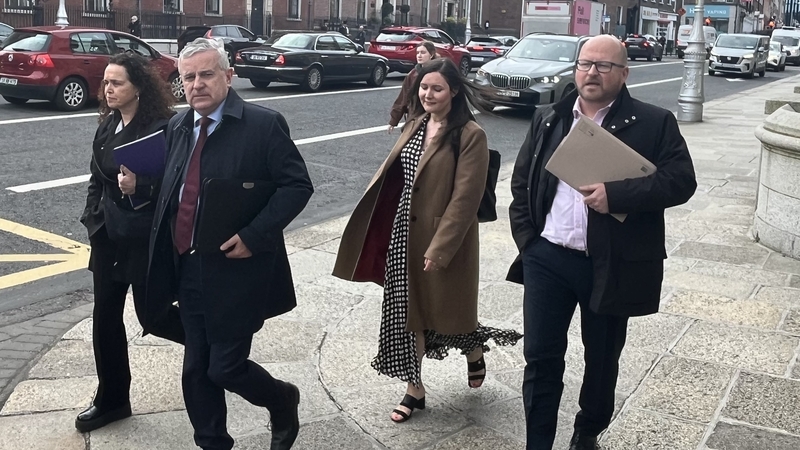
talks have concluded the Trade Union leaders have just left the talks and they're just
speaking to the media here alongside me and just caught the very, very top of what Owen
Reedy, the ICTU general secretary, was telling the assembled media in the last few seconds.
He said that at today's talks, it was the employers and the unions that did most of the
talking.
And he said the government were very much in listening mode.
But yes, coming back to your question, Peter Burke was doing a lot of the talking as
he arrived at today's talks earlier this morning, stopping and taking some time to speak
with the media and taking some time to outline those stark threats using big figures, like
saying a 30% increase in energy prices towards the end of the year if we continue to see
blockages in the straight of Hormuz speaking about jet fuel, speaking about how jet fuel
is interlinked with kerosene, which is of course what people use for home heating oil
in this country.
So really laying out in stark terms, the challenges and the uncertainty that is there,
and I guess that was his opening position, his negotiating position, as he went into
the talks with the unions today.
What was the mood at the talks, Brian, because over the past few days we've heard union
representatives saying, PAYE workers are asking, where's their package?
Absolutely, and that was most certainly the mood from the union leaders as they went
in, a sense of what about us, a sense of here we have a case where it's whoever shouts
the loudest gets the most money.
And they're pointing out that, you know, we've been the good boys and girls, we've
abided by the industrial relations rules, we've done our pay deals, which means we're not
allowed to take strike action and we follow those rules.
But our members are under pressure, we're really feeling the pinch in this cost of living
crunch particularly when you look at the fuel pumps and now they're saying, well, we've
entered a new phase, because clearly it's a case of whoever can make the most noise
and create the most blockages will end up getting the deal.
But of course the government has pushed back very, very hard on this Rachel saying, look,
the 500 million euro package announced in the last few days was not just for contractors
and agricultural workers and hauliers, it was for everybody, it was for all workers
and they're keen to stress that when you look at whether it's the exercise duty cuts
at the pumps or whether it's the efforts that are made to reduce the cost of food production
there by reducing the cost of groceries on our shelves, this package was for everyone
and the benefits should be felt by everyone.
But certainly from the union perspective, they're saying that's not what our members
are feeling.
All of this as well, Rachel, it's worth noting coming at a crucial time.
We still have a public sector pay deal in this country, but it is due to expire in just
a couple of weeks.
It's going to expire at the end of June, so talks on a successor agreement due to get
place, take place in the coming weeks.
So certainly a timely intervention, I think, and a timely meeting today between the unions
and the government.
Brian, at Government Buildings, thank you.
More from News at One
View all episodes →
The Office of Public Works to offer free admission to almost all heritage sites...
News at One
May 1, 2026·3:42·failed

45-year-old man has appeared in court charged with stabbing two Jewish men in Lo...
News at One
May 1, 2026·3:54·pending

Report from the Special Criminal Court as sentencing hearing for Sean McGovern c...
News at One