WCPT 820 Interview: Author Joseph Margulies
About this episode
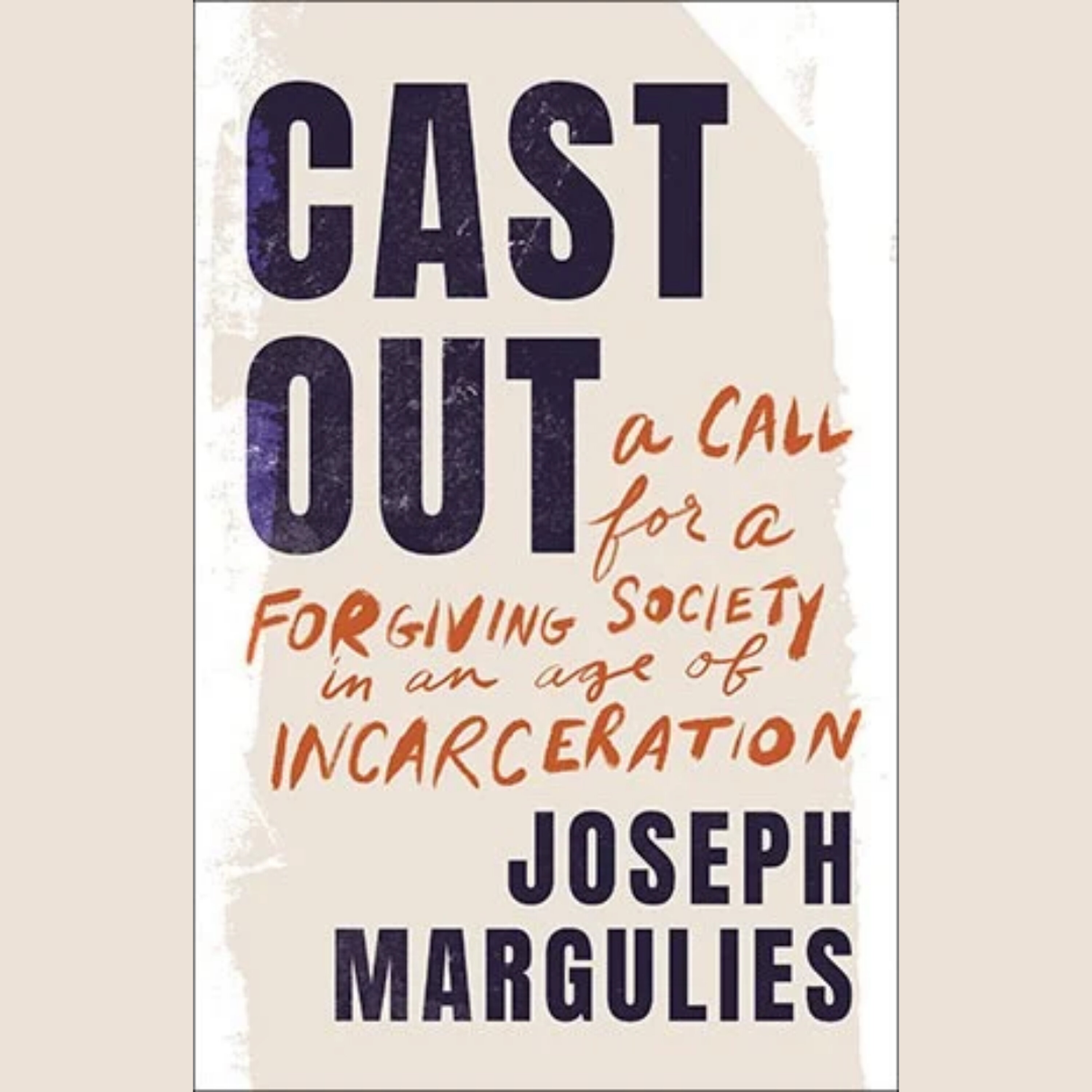
Richard Chew is joined by Joseph Margulies, civil rights lawyer, professor of the Practice of Government at Cornell University, and author of the 2026 book "Cast Out: A Call for a Forgiving Society in an Age of Incarceration."
Margulies discusses the necessity of moving from judgment to understanding in an age of incarceration by examining the psychological roots of crime. He argues that understanding what happened rather than just what was done allows society to recognize shared humanity. The conversation also examines how environmental stressors and inadequate social systems contribute to criminal behavior and mental health crises.
- Mental Health and Physiology: The discussion notes that prolonged exposure to violence keeps individuals in a permanent state of fight-or-flight, which can physically change brain function and impair reasoning abilities during crises.
- Economic Disparity: The conversation touches on disproportionate resource allocation in certain neighborhoods, which prevents necessary mental health interventions, creating a cycle of trauma that necessitates a more forgiving society.
Catch "Chew's Views with Richard Chew” weekdays from 6:00 to 8:00 a.m. Central on WCPT (heartlandsignal.com/programs/chews-views).
Follow us:
Website: https://heartlandsignal.com
WCPT Facebook: https://www.facebook.com/WCPT820
Heartland Signal Facebook: https://www.facebook.com/HeartlandSignal
Tiktok: https://www.tiktok.com/@heartlandsignal
Heartland Signal X: https://x.com/HeartlandSignal
WCPT 820 X: https://x.com/WCPT820
Instagram: https://www.instagram.com/heartlandsignal
Threads: threads.com/@heartlandsignal
YouTube: https://www.youtube.com/@heartlandsignal
See omnystudio.com/listener for privacy information.
Get every episode summarized
Each time Chew's Views with Richard Chew (Featured Interviews) publishes, we email you a written briefing from the transcript — the topics, who appeared, and any specific claims, with the ad reads skipped.
Email me new episodesFree for 3 shows. No card needed.
Hosts & guests
Transcript ready
448 searchable segments. Every word is indexed and playable.
Full transcript
Chew's Views with Richard Chew (Featured Interviews) — WCPT 820 Interview: Author Joseph Margulies. Machine-transcribed; use the interactive transcript above to jump the player to any line.
Richard Chiu, weekday mornings at 6 on WCPT 820. Joe S. Margulese's got a new book out called Castout and I'll read directly from the cover in terms of its title. A call for a forgiving society in an age of incarceration. Joe S. of Good Morning, man, welcome to the show. How are you this morning? Thank you. Thank you. I'm well. Thanks. Thanks for having me on. Absolutely. Absolutely. New book. And again, the title is Castout. A call for a forgiving society in an age of incarceration. Man, I tell you, I went through your book. I was looking at different parts of it and every time I would pause and go, I know because of the way in which you write this in terms of stories of people and incidents that took place in their lives and how then they navigated. But a lot of it reads like in some ways, almost a mini series because of the stories, each individual story is so compelling
to the event that took place, that the thing that the person did and then the things that took place afterward, give us some background on what sort of drove you to write this particular book at this particular time. Wow. Well, thank you for that. And thank you for your thoughts about the, I'm delighted to hear you say that the stories reached you. So the book is a collection of stories about six different people who did, who all did horrible things, say what it is. And an unforgiving society, this society that we live in and that we want to try to change, when it learns that someone has, has is in prison, for instance, it asks one question and one question only is, what did they do, right? And it assumes that the answer to that question
tells us all we need to know, to judge that person, to condemn that person, to cast them out based on that information alone and what did they do. But a forgiving society, the one I think we want to try to create asks instead, what happened? What brought this human being to this place, to the worst day of the life? And if you really struggle to learn that answer and to tell that story, a uniquely human transformation takes place. You begin to see us in them and them in us. You recognize this person who did this extraordinarily horrific thing as one of us. And so you come ultimately to the conclusion that there is no them. And that's the, there is no them, there is only us.
That's the motivation of the book. You know, just so that everybody that's listening and watching and following this segment, let me speak for myself and Joseph and saying this, his book and my observation of it in this interview is not checking a box to say what the person did, this horrible thing is okay. So let me make it perfectly clear to everybody, we're not saying and advocating it was okay. What we're saying is, and pardon, I don't want to put, works in Joseph's mouth, is there is a part of every occurrence in someone's life where there's a why. And people that know me, and I've studied on the show, numbers of times, Joseph, I like to get to the why because there is a why. There is something, it's, you know, the fork in the road, whatever you want to call it, that's something directed a person down a path. Whether, and it could be in a lot of different venues of our lives that they then, you know, did this horrible thing,
whatever that horrible thing might be. I want to know why is it? Because if I believe in my heart that we're all born, we all come to this place. However we get here, sort of unscathed, and then we get scripted that what was the environment like that they were in that caused this person to go down a particular path. And so, no, I'll just say this, but I just wanted to say that our understanding of us as human beings is that for the most part, we probably come here fairly unscathed, unscripted, and then things happen to us. And you cite some specific examples that I read about, one woman, at least, I think it's Lisa Montgomery, I think that's the name. That did a horrible thing in terms of strangling a woman who was eight months pregnant. But then when we peel back the layers and we look at some of the things that she saw
as a young woman, as a child, frankly, and then there's a young woman. You can not empathize because you weren't there, but you can certainly see that the person was in an environment where there was nothing left for them, but destruction. Talk a little bit about that, and then a couple of the others that you highlight. Sure. Sure. So, I mean, maybe the best way I can talk about the cases, I, the folks that I wrote about, Lisa Montgomery was, tried and convicted and sentenced to die and executed in the early days of the first, or the last days of the first Trump administration. But maybe the best way to put people to understand this, difference between, as you say, the why, and the simply what did they do, is to talk about a current case that's going on that people may have some familiarity with, is the Lindsay Clancy case, right? If we ask simply what did she do?
Well, the answer is she strangled her three children to death and then cut her wrist and slash her neck and jumped out of the second story window of her home in a parent-attemptive killer cell. That's what she did. We know what she did. But if we ask what happened? What brought, by all accounts, what is, another way, loving and joyful, wife and mother and professional nurse, to this place, to a very, very different story. It's a story that begins in joy and ends in grief, right? That's just an entirely different story. And you're right, to answer that question, to learn that answer, the why, is not to excuse. There is a difference between an excuse and an explanation, right? One absolves, an excuse absolves, the other accounts. That's what it is an accounting. It tells us who they are. And in answering that question, we recognize the wisdom in the ancient maxim,
there before the grace of God go on. However it is you view that, it could be any of us. It could be any of us. And that's the story really with someone, for instance, like the people I write about, well, take, for instance, Lisa. I mean, what, Lisa, the six people that I write about, all took a different path to the worst day of their life. And so I chose the cases very deliberately. And Lisa's story is really about the destructive effect of mental illness. And Lisa endured a childhood that no one should, no child should, but unfortunately it happens all too often. Beginning at the age, I mean, she was raised in horrible horrific poverty and violence. But the worst of it began when she was 11, when her stepfather at the time began to come to her room at night.
And it started with fondling and progressed to penetration and escalated to rapes of all sorts that continued a couple of times a week for years, for years. And this was something that people knew was happening and didn't do anything about. And one point I noticed when Lisa was like 15, her mother actually walked into her bedroom, while her stepfather was having sex with her, while her stepfather 40 years her senior was raping her. And the mother's reaction was to kick the stepfather out and to hold a gun to Lisa's head because she blamed Lisa for seducing her 40 years older stepfather. And as frequently happens when a child
endures this kind of life-threatening violence, they begin to dissociate. So this is what accounts for the experience of a child will sometimes report of seeing themselves enduring this. They can't freeze, they can't flee, they can't fight. So there's a kind of mental break that occurs and the mind goes elsewhere from their body. And Lisa began to dissociate and it became her persistent response mechanism. She just goes somewhere else. And she eventually, through a long, long process that I recount sort of the story of how she became who she became, developed the persistent delusion in order to be part of this loving community. She began the persistent delusion that she was pregnant as a young woman through her 20s and she was not. But we believe that she was
and that being pregnant and having a child would rescue her from the world that she had... The horror that she had seen and that was... She endured, not to see it, but that she had endured, right? That she had endured. Jochim, let's take a little bit of a break. When we come back, I want to talk about something that you've mentioned a couple times in terms of wording and that's mental and health because I want to weave in this for a little bit of the time that we have on the back end. The number is 7737639278. I'm Richard Chu, keep it locked in. We'll be right back with more of Choose Views. This week at Vons and Albertsons, USDA Choice Tri-Tip Rose untrimmed our 599 per pound. Limit four roasts with membership were applicable and medium-ripe Hassovicados are 99 cents each with membership were applicable. Plus Kellogg Serials 8.8 to 16.1 ounces, selected varieties or Pepperidge Farm Goldfish 5.98 ounces are 199 each when you buy three.
Limit three offers with membership were applicable. Visit vonsoralbertsons.com for more deals and ways to save. All right guys, welcome back to Choose Views. Thanks for being with us this morning. Tough subject, tough topic, but that's what we do. We try to bring you some... We're trying to bring some realism to issues that we deal with in our society. And I look at this work cast out that Joseph has done a call for a forgiving society in an age of incarceration. It's also sort of a flashing red light into two other areas that we don't spend enough time as a society talking about until there's a situation that forces us to. And that is mental health, mental illness and then how we deal with that. And where it comes from, how it manifests and then each of the cases in the book, that is at the core. Obviously there's an interruption as a wedge
into someone's life that continues to be a wedge through their formative years. And then that, you know, manifests into some pretty awful mental places that people end up going. Much of it is a protection mechanism because of the horror that they experienced. And I'm not a doctor, I'm not a psychologist, psychiatrist or sociologist, but I have enough common sense to know that any of us can be susceptible to that and it can send us down a dark path. I think our mental health system has... We have such opportunity here, Joseph, to establish a narrative that mental health has so many, has impact on virtually everything we do in our lives. Yeah, what are your thoughts there? Oh, boy, do I agree with you? Oh, absolutely. You know, one of the first chapters in the book is about a guy who's become a good friend of mine named Eric Matthews. And Eric spent 30 years in the Louisiana State Prison
at Angola, what everybody just called it Angola. One of the most legendary prisons in the country. And he grew up in what was almost literally the bloodiest neighborhood in the country. He grew up in the St. Thomas Homes, which is a public housing project in New Orleans that has since been torn down. And it was just legendary for its violence. Sister Helen Prajine, who wrote Dead Man Walking, the earliest, the first page of her book. She lived in the St. Thomas Homes when she was doing her work at Death Row that culminated in Dead Man Walking. And she described St. Thomas Homes as not quite Death Row, but Death was everywhere, right? And she lived there when Eric was growing up. And when children live in that environment, Eric described it in the most extraordinary way.
Children at that, they always know, when they grew up in that neighborhood, that as Eric said to me, you always knew that something was about to pop off. That's how he described it. Something was about to pop off. And you could always tell. You never know what, but you could tell the tension in the air. You could tell that there would be little signs that kids, five, six, seven years old, become hyper attuned to as a survival mechanism, right? That not of older guys that are playing cards and drinking wine at the corner, there's suddenly, for reasons that only they understand, fold up their cards and fold up their chairs and go inside, right? And suddenly there's a car creeping down the street that's moving a little bit slow with some guys in the car that folks don't know. There is a hyper awareness. They always know, okay, where are you?
Where do you need to go to be safe? Where's the nearest store that you can run into or car that you can dart behind? And of course, even that doesn't in fact protect them because violence just erupts. His grandmother's house was just the bullets cat came in through the window, right? His, he was standing outside of a bodega where next to a friend, when the 14 year old friend next to him was gunned down. And if this happened in any other neighborhood that happened in the suburbs, oh, there'd be therapists there and there'd be mental health counselors and there'd be days off from school. No, the next day, he gets up in the morning, he goes to school and nobody talks about it, nobody does anything about it. The toll that takes on your mental health, right? What it does, we know what it does, we know what it does, that's a cycle off the level. No, it does it at a mental level. It creates this, you're always in the fight or flight mode, right?
A friend of mine said to me once, Joseph, it actually, if it becomes a repeat incident, it changes your physiology. Absolutely. It is not much different than the impact that Oxy over time can have on your brains function, but your physiology. You actually, you feel the world differently as how she put it. And I thought about that and I thought, damn, that's right, you do, if that's your environment and you're the state that you are mentally in, physiologically, you're in it as well. And so you just sense things in a whole different way. And you can't turn it off. That's the problem. It's like the switch is turned on and you're in the state of hypervigilance and you can't stop. That's a recipe for disaster. That's a ticking time. And it continues because then you are, if it stays in your physiology, which it probably does and certainly can, then it changes your ability to have discernment
when it comes to making decisions in a critical moment. That's been proven by the psychologist, the psychiatrist and the sociologist, which I'm not. But it's been proven that it changes your ability, your adaptability and your ability to reason in critical moments and all the rest, which is one of the reasons why our soldiers are tested so strongly to make sure that they can endure some of the tragedies that they're going to see as being part of the military, particularly if they go to war. Absolutely. And so that's where I say our mental health systems and it is a system. We have such opportunity and then we look at our economics and I'm going to bring this home and then let you have the last couple of thoughts. This is where our greater society, we have to pay attention to how our resources are allocated to different parts because you just said it the best way. If that would have happened in a different community,
then the resources that are applied to deal with the tragedy and the trauma and the ongoing are disproportionately allocated differently. And I think that the opportunity for our society at large and to go in back to your whole thought process around a forgiving society is let's do some things that are proactive that help us prevent these things from happening like funding schools, like funding communities, let's not take resources from communities that need them the most. And maybe we would have less of a need to be a quote forgiving society because we'd have less trauma taking place in parts of our community. With what we say as we wrap up. Yeah, thank you for this. Absolutely, just to come back to Ferns' Eric's story, but you could do this with all the different stories I talk about. Like another guy I write about in Richard Rivera who raised himself on the streets of New York, you know, starting from about the age of six, right?
But if you ask the question, what happened? What brought Eric Matthews to that place where he did a horrific thing that he lives with every day that he's just immersed in the guilt? The guilt just consumes him. You, that's the answer to that question is a complex answer, a nuanced answer about an entire environment that he was in, right? And if you want to end two things, one, if I had grown up there, I would have done the same thing. I don't know how many, I don't know. This is, he is me, I am him, he is me. I am, he could be the one writing this book and I'd be the one who served 30 years in Angola, right? But second, if you care what happened, and that's what it means to have a forgiving society, then you will attend to those things that produce the Eric Matthews of the world, the Richard Rivera of the world, right?
They are not foreign to us. They are us, that is the answer, that is the lesson of the book. The such a salient point, if we tend to those things, if we're proactive about making sure that communities are cared for and in these cases, we're talking about a man and a woman. So we're not making it gender specific or cultural specific necessarily. I mean, we know that that's there, but on the top, I guess the 10,000 foot look is, let's do a better job of taking care of things in a proactive way so that we have less of these situations that we are dealing with. We're still a forgiving society, but maybe we'll have less of a need for the critical energy that comes with that. So Joseph, great conversation, man. I know this is a heavy one for folks on the Tuesday morning, but it's a reality of where we are as a society. And we have an opportunity. I think we have an opportunity here to connect and make sure that we are talking about these things as we build some better systems. Thank you for hanging out with me this morning. I know my audience appreciates it.
The book is called Cast Out, a call for a forgiving society in an age of incarceration. Go get your copy of it, y'all. Joe, thanks for being with us this morning. We'll talk to you soon. Thank you for having me on. Thank you very much. I enjoyed it. This week, at Vons and Albertans, USDA Choice Tri-Tip Rose untrimmed our 599 per pound limit four roasts with membership where applicable. And medium-ripe Hassovacados are 99 cents each with membership where applicable. Plus Kellogg Syrials 8.8 to 16.1 ounces, selected varieties, or peppered farm goldfish, 5.9 to 8 ounces are 190.9 each when you buy three. Limit three offers with membership where applicable. Visit vons or Albertans.com for more deals and ways to save.
More episodes
More from Chew's Views with Richard Chew (Featured Interviews)

WCPT 820 Interview: David Pakman
Chew's Views with Richard Chew (Featured Interviews)

WCPT 820 Interview: Skye Perryman of Democracy Forward
Chew's Views with Richard Chew (Featured Interviews)

WCPT 820 Interview: Anne Kim of The Washington Monthly
Chew's Views with Richard Chew (Featured Interviews)

WCPT 820 Interview: Kandice Harris of Run For Something
Chew's Views with Richard Chew (Featured Interviews)