Loading...
societyculturerelationships
What is Marital Coercion? – Karen’s Story
About this Episode
What is marital coercion? It can take many forms, but maybe the most common is when a husband uses pornography and hides it from his wife. Karen, a victim of betrayal trauma (and a therapist), joins Anne on the to explain why this is sexual coercion.
To find out if he’s using any one of the 19 different types of emotional coercion in your marriage, take our free emotional abuse test.
If you are experiencing marital coercion, we’re here for you. Learn about Betrayal Trauma Recovery Group Sessions.
Transcript: What Is Marital Coercion?
Anne: I have Karen on today’s episode, she is a member of our community. She’s also a therapist. She’s going to use a pseudonym today to separate her professional work from her personal story. Welcome Karen. Why don’t you just start wherever you feel comfortable.
Karen: Sure, basically, my husband was unfaithful. And what happened to me was what happens to so many partners. It was a very slow, leaky discovery. Whereas I initially thought there was one affair. And just as I was ready to move on from that discovery and had actually handled that well, I began to discover, of course, the rest of it.
There was addiction involved, including multiple affair partners and acting out. As well as exchanging photographs and so forth. That was the beginning for me to discover what was actually going on for probably eight years before my discovery of it.
Anne: You mentioned you handled it “quite well.” I want to point out that I’ve had so many victims at the beginning who feel they have to deal with it in an “appropriate way.” Like somebody told them, they can’t react with anger, sadness, or depression. And so if you could talk about your experience dealing with it “quite well.”
And then also maybe why women are pressured to deal with it. In a way that a therapist, their church or society would be acceptable. Rather than allowing a victim to respond in any way that would be helpful to her.
The Extent of Coercion in Marriage
Karen: I think what is involved, at least for me. Is that I didn’t know the extent or depth of what was happening. And in fact, did not have the awareness of the emotional abuse and the depth of that either. Even though I knew something was wrong, I was in the dark.
But it made sense to me that my husband at that time and stage in his life had taken a wrong turn and made a bad choice. That people make mistakes and we are all flawed, and that now he was back on track. And he was very motivated to heal the marriage.
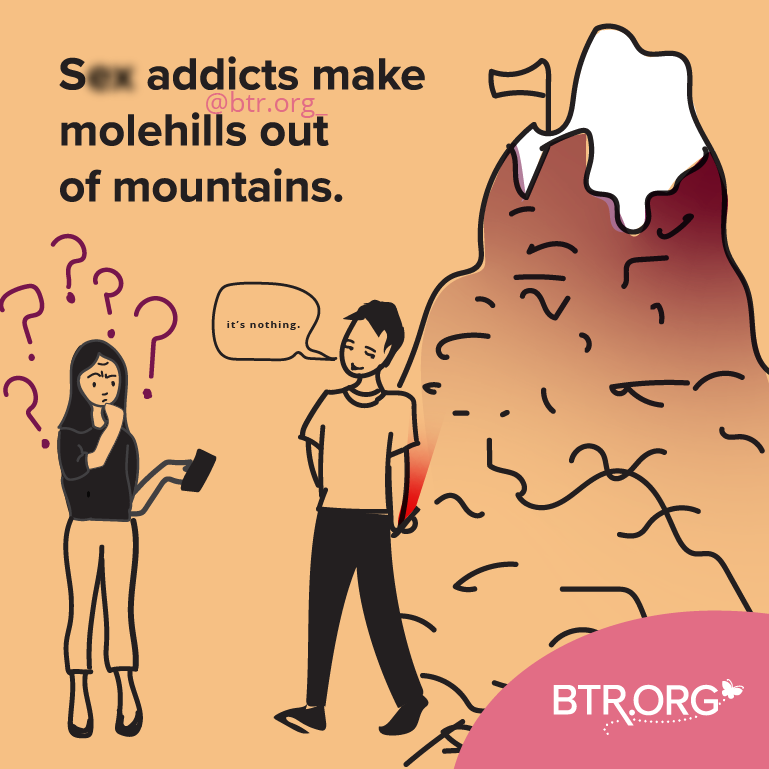
That was the information I first responded to. Even though that was extremely painful, I was able to walk through that with a bit of dignity and grace. So I was able to move through that rapidly, and to a place of acceptance and possibly moving forward. When I began to find out more information. Not realizing that it is coercion. So once I learned more information, I was in shock, just absolute shock. There are so many levels to this question.
I think we want to appear like we can handle it? Why do we want to look good while we’re hemorrhaging to death? It’s because there’s some shame in being a victim. And I think that’s societal, and that’s about where we blame the victim, we distance the victim from ourselves. So we can look at the victim and say, “Well, I’m not like her, or I’m not like them. And that will never happen to me.” It’s a really difficult thing to identify yourself as a victim.
Marital Coercion Supported By Soceital Pressure
Anne: That makes so much sense, especially when it comes to a husband’s use. I went through that exact same thing too. And I thought I was dealing with his addiction recovery with grace. I wanted to be like the most supportive, helpful wife. So many victims go through that, you are not alone in dealing with betrayal.
So you have a unique perspective, because you’ve been a therapist your whole life. And of course therapists are supposed to know about abuse. Likely before you found out you were abused, you thought I can recognize abuse. Can you talk about that?
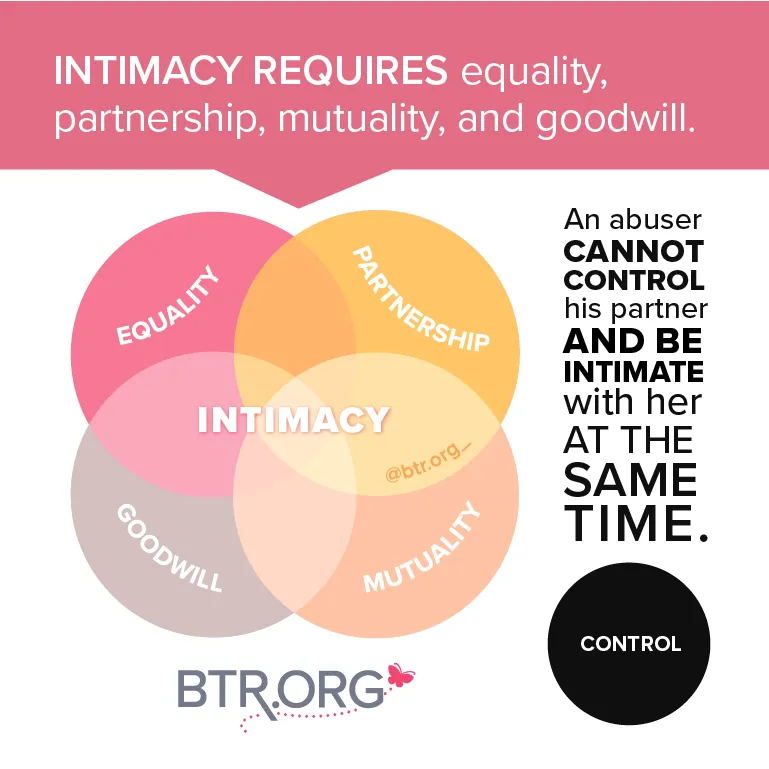
Karen: Yes, you can be in a situation where you’re being emotionally and psychologically abused, and you don’t identify it. It’s a slow awakening. I had been in freeze for many years, and freeze is paralysis. But I wasn’t aware that I was in freeze. So it’s like a slow thawing out of recognizing what’s been happening. And I think part of that is because It’s so insidious when it’s not real overt. I minimized it because there wasn’t physical abuse going on.
About six years into our marriage, I confronted him about it. He would have an explosion verbally, he became critical, and so forth. And I basically told him at that point that I would not engage. So that actually was part of his rationalization and justification for acting out. In his twisted distorted thinking, that’s what he uses to justify himself. He will twist and distort reality into whatever shape he needs it to be, to explain and rationalize what he’s doing and why he has a right to do that.
The Myth Of Sexual Needs
Anne: That’s so common. All abusers blame their infidelity and abuse on something the victim did, because he’s not getting his “needs met.” And so he was justified in having an affair.
Karen: Yeah, I was not rejecting him. This was to keep myself safe. In my attempt to keep myself safe, he wasn’t getting his way. He continues escalating further to the point where he is caught. And all this comes out. I have heard these kinds of comments on Facebook and social media. And it’ll often be women who are having affairs with married men and saying, “Well, his wife doesn’t give him it.”
All of that is insane. And what’s going on is that it is not a need like food. There’s a myth that it is something that we have to have and cannot live without. I am totally for it. I understand at this stage of my development and evolution that it is not something that I have to have, like, for example, food. We do have to eat, or perish. We do not have to have it or perish, but we have a myth in society that that is the case.
Anne: And that it’s like a legitimate “need.”
Karen: Yes, and that it must be met. And so this feeds into the entitlement that men have.
Pornography Is Marital Coercion
Karen: Because if you think about toxic masculinity, what men have is toxic. We don’t want it. Feminism is not about imitating what men do, but about being able to completely fulfill who we are as women. To me, what that looks like is acknowledging that we have desires and can honor those. It does not mean we imitate toxic masculinity.
Anne: Or use something extremely toxic, like pornography, to pattern our healthy intimate life after. If you’re viewing it and thinking that’s what a healthy intimate life is, that’s not. It’s like the farthest thing from it.
Karen: Right, if you want to talk about healthy intimacy, it is a byproduct of intimacy and relationship. If we want to separate it out and use it as we use alcohol, drugs, and other experiences in a way that separates us from intimacy and relationship, that’s abusive and toxic.
Anne: Just like you and I were coerced for years, many people who participate don’t think they’re coerced. But they might actually be, and they’re abused in the process.
Karen: Yes, and I believe many people who do it and believe in it are in coercive situations. The sex positive movement can be a form of bypass. free love, rock and roll, and drugs and all that stuff. People actually believe it’s a spiritual thing to be that way. It’s just bypass in general.
Anne: Yeah, which I think is just abusive and ridiculous. Here at Betrayal Trauma Recovery, I have the luxury of saying this is my podcast, and what I think is it’s a bunch of bull crap.
Pornography Is Exploitive
Karen: But see, then that makes us uptight. So then that means I’m sex negative.
Anne: I don’t even play games with that. I say, no, it is wrong. It’s always wrong, it’s always going to be wrong. It’s always abusive. I don’t make apologies for that, which makes it nice here at Betrayal Trauma Recovery. All the women who listen to our podcast have been victimized by marital coercion. And so any semblance of saying it’s healthy is so triggering and harmful to victims.
Karen: It’s exploitive. I don’t understand how that can be anything except part of enabling toxic masculinity and the abuse of women and children. It’s abusive. I don’t see it as consensual. Abusiveness is one major component of not only addiction, but all addiction. And in addiction, it is especially harmful.
People who use substances abuse the substance, rather than other people. And so they’re harming themselves in that sense, but in the addiction taking control and driving their behavior. They end up being abusive to the people around them, because they lie, deceive, and manipulate, and that’s abusive.
With the addict, it goes even further. And so to me, I see in the treatment industry, it’s like the elephant in the room. So they are not addressing the abuse component of addiction.
Anne: Yeah.
Betrayal Trauma Recovery’s Mission & Workshops
Anne: That’s why I started podcasting. I didn’t want one other woman in the entire world to go through this and not understand that she was experiencing marital coercion. And so that’s why, rather than recommending treatment. We developed the Betrayal Trauma Recovery Living Free Workshop.
Before it was a workshop, I used these strategies to deliver myself and my children from this type of coercive abuse. We know these strategies work. They’re incredible. Teaching victims about strategies and how to get to safety is so much more effective in terms of emotional and psychological abuse which is marital coercion in the form of secrets and affairs.
Karen: Yes, it’s absolutely beautiful work and I appreciate it. And thank you so much, because you are on the leading vanguard.
Anne: The lone voice of reason on the internet.
Karen: The treatment industry doesn’t want to address this and is not addressing it.
Anne: No, from what I’ve seen, men’s treatment programs, whether for abusers or addictions, are all about protecting him. And the victim is further abused in the process.
Karen: Yes, it is. It absolutely is. In the addiction industry, you are basically enabling the addict to continue to abuse. But you feel satisfied that you’ve done some form of harm reduction. That’s where it fails. It doesn’t go far enough to understand the abuse component.
Why, why are we sacrificing children and most often women to protect the addicts? To save face. How can you have these clients come in and say, not only are you an addict, but you’re an abuser?
Is It Marital Coercion? Critique Of Men’s Treatment Programs
Anne: Like that’s just too much for these poor guys, apparently. We don’t want to push them over the edge. And I’m like, what about the victim? He already pushed her over the edge. He’s like abandoning her out there. And so are the therapists. To me, it’s a subtle, actually not so subtle, a very obvious and insidious issue of misogyny.
Karen: That is the true crux of it all. We’re in a patriarchal system. It seems obvious to me at this point, but it was not obvious to me before. This has been going on forever, but we are only now beginning to face it. It’s such a horrific tragedy. My husband went to an intensive treatment program. And when I went for the week, the way I was treated for one week in this intensive treatment program was at the expense of me on behalf of the abuser.
Anne: Yeah, again, that’s why we never recommend men’s programs for addiction or abuse, because they don’t stop the abuse. But the abuser tends to become more abusive. I know that because I used to recommend a few, and then the victims would come back, and I would hear horror stories.
I mean, he is an abuser. He’s going to weaponize anything at his disposal, including a treatment program against his victim.
Karen: Yes. And I believe that.
Marital Coercion In Relationships
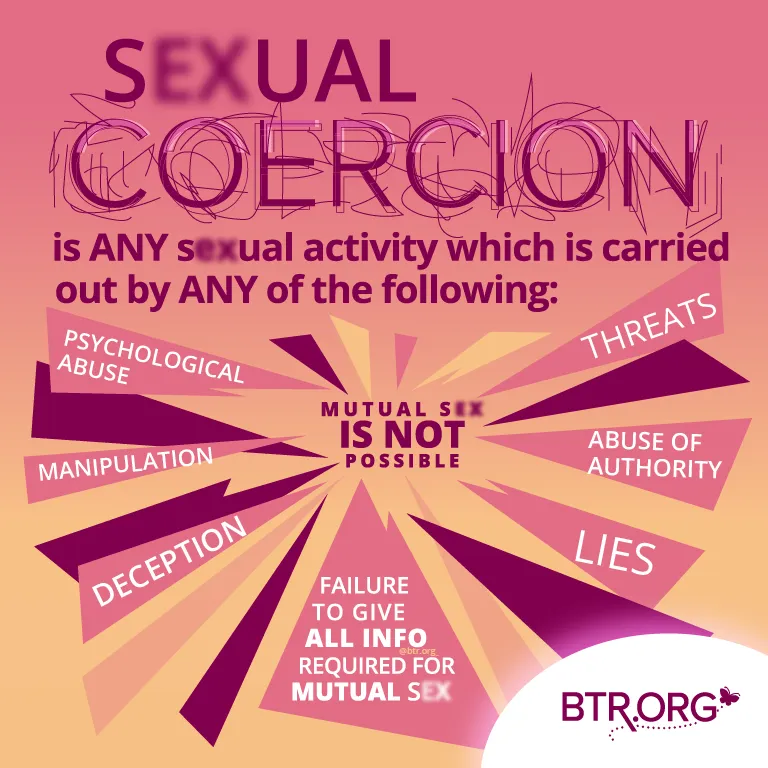
Anne: Let’s talk about the marital coercion in the form of men secretly use and lie to their wife about it, knowing that that is outside her boundaries.
Karen: I personally am clear about it. In fact, I told my husband early on that I am not okay with it, that I’m not comfortable with it, that I don’t want it in my life or in our environment whatsoever. And asked him if he would respect that, and he said yes.
Anne: Exactly, so then at that point, if he is using it secretly, lying to you and soliciting prostitutes. If he’s lying about any of that, it’s marital coercion to keep you in the relationship.
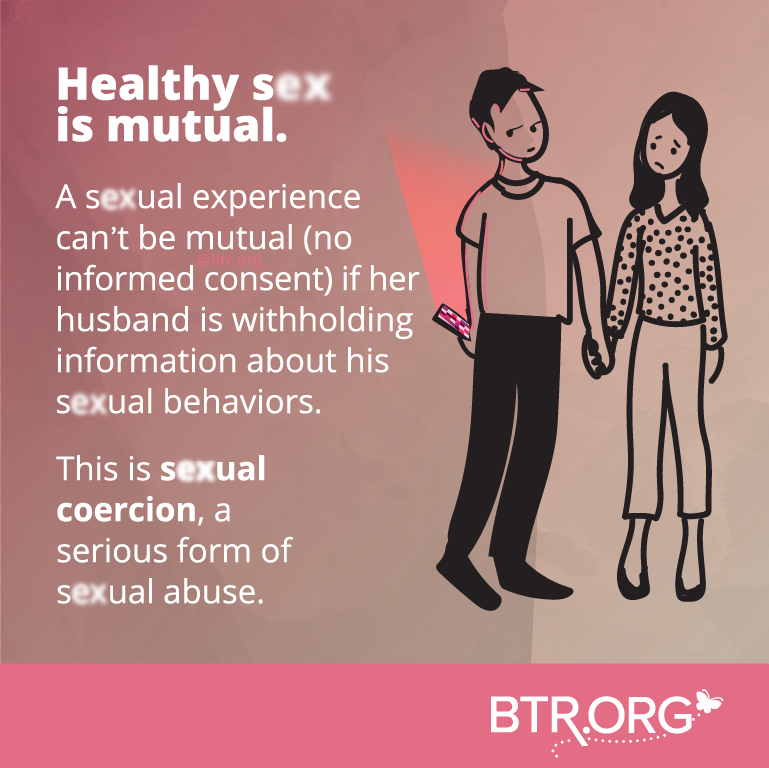
Karen: Yes, by going ahead and engaging in that without telling me, he’s altering my reality. He’s actually robbing me of agency. It’s not about “Hey, I like it and I’m going to use this for me over here.”
It’s like women have the right to say, “No, I’m not comfortable with that. I don’t want that in our relationship. And I don’t want you to do that.” That doesn’t mean they’re not open minded.
The Impact Of Deception
Anne: If he was honest and said, “I hide who I really am. So people will continue to think that I’m a good person. I, for sure, don’t want to tell anyone that I view it and masturbate all the time. Sometimes I have hookups with people I barely know. I solicit prostitutes. Sometimes I’ve had affairs with married women.”
“If I ever get caught, me like blatantly saying that will make me look like a bad person. So I’d rather pretend like I’m a little bit sorry and I might want to change. Even though I have no intention of doing that. I just know it’s not socially acceptable to admit this. So I act like I’m ashamed and embarrassed. But I’m not really. I highly doubt I will ever stop.”
That’s not marital coercion. Because then you can say, “Oh, okay. Thanks for letting me know, have a nice life.” Marital coercion is when he lies about it. So, if you tell him, “I am not comfortable having it with a man who uses it.”
Then he lies to you and says he doesn’t use it.
Karen: Yeah, it’s deception.
When Women Suspect Marital Coercion
Karen: Women are perfectly allowed to have our own preferences and boundaries. There’s nothing that we should do outside of what is comfortable for us and what we ourselves desire and want to be part of. I had my boundaries before any of this happened. My boundaries were monogamy, no exploitative material, that we would both be faithful.
They were very, very clear. And I did not equivocate about those whatsoever. My husband agreed to all of them. And that’s my understanding of our relationship. Until I find out one day that none of those parameters are honored and all that is violated.
Anne: Oh, it is so heart-wrenching. Then when you tell people about it, they act like, “Oh, well, sometimes relationships don’t work out.”.
Karen: Women in this society are abused, like it’s just part of life.
Anne: Yeah, abuse should definitely not be dismissed in that way. You think about a rape victim, who’s raped by a stranger. Everyone knows. They should never say, “Oh, some people just get raped. It didn’t work for you to walk down that street. Hopefully, you can just move on and stop being so bitter about it.”
They would never say that. But marital coercion is rape. And they literally say that to rape victims. Betrayal Trauma victims have been coerced. And so it’s just as harmful to say something as flippant to a woman raped by a stranger. As it is to a woman who has been coerced continuously by her husband for years, years and years. This is years of abuse.
Systemic Issues & Patriarchy
Karen: And I think all of it comes down to toxic masculinity. And a patriarchal system in which men are privileged and entitled, and everything in our culture encourages that. The victim is blamed on every level and corner of society. So this is not a matter of an individual man.
It’s not a matter of your husband or mine. This is an entire systemic issue that is at the heart and at the core of all this. And if you want to look at a betrayal trauma victim and say, “Well, move on and find another relationship”, then you are absolutely not acknowledging or seeing that what is beneath this has to do with our entire society and every one of us.
Anne: Absolutely, it’s definitely a systemic problem.
Betrayal Trauma Recovery’s Reach & Impact
Anne: We know that because this podcast has had millions of downloads. And that’s hard for people to wrap their heads around. As I talk to people, and tell them how many followers Betrayal Trauma Recovery has. And all the clients that we see every day in a Betrayal Trauma Recovery Group Session. Or the women desperate for a strategy to know how to get to safety.
And so they’re enrolling in the Betrayal Trauma Recovery Living Free Workshop. For every husband who uses exploitative material, there’s a woman who is coerced.
Karen: Yes. For example, one woman came back to me and said, “You really pissed me off, but I knew in my heart that you were right.” I tried to get through that she is actually being coerced.
Victims’ Resistance to Marital Coercion
Karen: The problem is many women believe what they’re doing makes sense. They are somehow more liberated than other women, or they are special. Because we are taught that we can be the special one, and we can be the one that understands men. We’re not like the poor victim woman.
Anne: And that in itself is a form of resistance. Because they’re just trying to stop the chaos. And they don’t know how. And so that is the most effective thing they can think of at the time. I mean, back before I married, I remember. Thinking as long as you had it, your husband wouldn’t cheat on you. But then I’m giving my husband as much as he ever asked for. And he was still using it and masturbating.
Karen: Right. It has nothing to do with the volume or amount.
Anne: No. Or even the type. So many women in an act of resisting abuse have engaged in it, which makes them uncomfortable. Thinking that type of transaction will keep them safe. And they find out later it didn’t keep them safe, that they are exploited.
Karen: So many women began offering more, being more available, or dressing in a certain way. Actually, they will have their husband telling them they would do this and he would be satisfied. This is all completely, absolutely wrong. It has nothing to do with how you look or anything whatsoever to do with you. It has only to do with the betrayer, who is doing everything under his power to satisfy his addiction.
Objectification Of Women
Anne: Right. And for the victim, that’s not her motivation. She just wants love. She wants to sacrifice herself for the coupleship.
Karen: Well, yeah, and you’re groomed as a child to be pleasing as a female. And you are taught as a woman in this society that these are the things that women should be. Based in the patriarchy, women are basically asked to be objects to survive in this patriarchal system.
So the better object we can be. The better we perform as an object, the more we are secure, and we’re all about security.because that is the heart of who we are as women. We provide security, we build nests, and we want to make a good, comfortable, safe place to be. And so in exchange for that security, we are asked to be objects. We are nothing more than that. And so the better object we can be, the better we will be taken care of.
But as a woman, you have to come to the point at some point first, to understand that you are an object, and then you have to understand that you never were, and that that is not who you truly are, and that you have been used and exploited as an object in an entire system from the get go.
Resistance To Objectification
Anne: Every woman resists objectification on some level. When I was a teenager, I did not want to do my hair or wear lipstick. But those of us who reject that objectification also get the consequences of rejecting it. Which in my case is that I wasn’t as liked by boys. I was accused of being too outspoken or too opinionated. So then I got all these other labels, because I’m not acting like the object they want.
Karen: I rejected that, but simultaneously, I didn’t know how to be true to myself. And be authentic and not be rejected. I didn’t even know that existed, because you instinctively knew that that wasn’t true. You instinctively knew that lipstick and all those things, that doesn’t fit. But when you go out in the world and you’re among people.
Anne: I put it on.
Karen: Yeah. That’s what’s reflected to you is this is the game girl.
Anne: Yeah, so I put it on because it’s appropriate and I’m not stupid. So I wear it.
Karen. Thank you so much for coming on today and sharing your story. Listeners, I’d love to know what you think about marital coercion, and about all the things we talked about today. So go to our website, btr.org search for this episode using the search bar. Once you find the article, scroll down to the bottom and comment. I want to know what you think.
Hosts & Guests

No transcript available for this episode.