About this episode
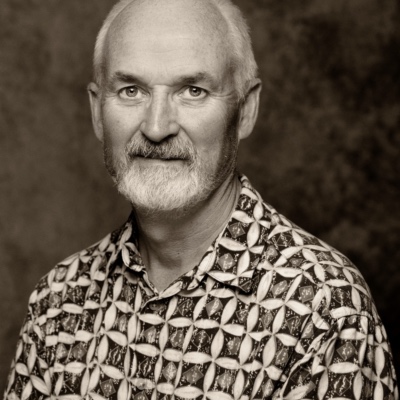
Here Ratnaghosha explores various ways of contemplating the qualities and virtues of a Buddha. This fifth talk in the series on the Five Stages of Spiritual Life goes into the theme of spiritual rebirth and what that means for us. Given at Cambridge Buddhist Centre, 2016.
***
Help us keep FBA Podcasts free for everyone! Donate now: https://freebuddhistaudio.com/donate
Subscribe to our Dharmabytes podcast: Bite-sized clips - Buddhist inspiration three times a week.
Apple Podcasts: https://podcasts.apple.com/us/podcast/dharmabytes-from-free-buddhist-audio/id416832097
Spotify: https://open.spotify.com/show/4UHPDj01UH6ptj8FObwBfB
Get every episode summarized
Each time Dharmabytes from free buddhist audio publishes, we email you a written briefing from the transcript — the topics, who appeared, and any specific claims, with the ad reads skipped.
Email me new episodesFree for 3 shows. No card needed.
Hosts & guests
Transcript ready
66 searchable segments. Every word is indexed and playable.
Full transcript
Dharmabytes from free buddhist audio — What Kind of Buddha Will You Become?. Machine-transcribed; use the interactive transcript above to jump the player to any line.
Dharma Bites is brought to you by Free Buddhist Audio, the Dharma for your life. Our work is funded entirely by donations from our generous listeners. If you would like to help us keep this free, make a contribution at freebudastodio.com forward slash donate. Thank you and happy listening. Awareness and our imagination to discern and experience what kind of Buddha we can be. We need to develop our imaginal faculty, our imaginal power to get a sense, to get a sense of who the Buddha really was and what being a Buddha really means. So there are some traditional practices that are meant to enable us to awaken our awareness and our imagination of the Buddha. There's Vasa Bandu, one of the Indian teachers, said, taught four practices and two of those
four practices are the recollection of the Buddhas and the contemplation of the virtues or the qualities of what it says the Tatargetas but it's against the Buddhas. And Bonte writes about these in his book, The Meaning of Conversion Buddhas, he says, In recollecting the Buddhas, one brings to mind the historical Buddha Shakyamuni, who lived in India two and a half thousand years ago and the lineage of his great predecessors of which the Buddhist tradition speaks. In particular one reflects that these Buddhas started their spiritual careers as human beings, with their weaknesses and limitations just as we do. Just as they managed to transcend all limitations to become enlightened, so can we, if we make the effort. So that's what Bonte is saying about recollecting the Buddha. There's a lot more that could be said about recollecting the Buddha and in fact I'm giving a talk on Dhamma Day where I'm going to be saying more about recollecting the Buddha.
Then there's Bonte goes on to say there are several ways of approaching the practice of the contemplation of the virtues of the Tatargeta. One can dwell on the life of the enlightened one, the spiritual biography of the Buddha, or Millerapa for example. One can perform poojas in front of a shrine or perhaps just sit and look at a Buddha image, really trying to get a feeling of what the image represents. Then again one can do a visualization practice in which, to be very brief indeed, one conjures up a vivid mental picture of a particular Buddha or Bodhisattva. So that's what Bonte says about those two particular practices. Our three-four poojas are also a kind of recollection of the Buddha. When we say the Buddha was born as we are born, what the Buddha overcame, we too can overcome, what the Buddha attained, we too can attain. That is a kind of, you could say it's a reflection or a contemplation of the Buddha. It's, you know, when you say it, it isn't, but you can contemplate it, you can't go
into it. Or those of you who know the Tiratana Vandana, traditionally the first verse of the Srita, Tiratana Vandana, is a recollection of the Buddha, that's what it is, it's a recollection of the Buddha. And of course, reading a life of the Buddha, such as the book by Vishupani Gautama, is a good way to get a feeling for the Buddha as a person with a spiritual practice. And are going on pilgrimage, I know some of you have been on pilgrimage, we're going on pilgrimage to the Buddhist holy places in India, is another way. And the contemplation of the qualities of enlightenment or of the Buddha is reflected in our, in our study, in our twos, our shrines, our images, in the sadhana practices of order, members and so on. All these many diverse images of Buddhism, bodhisattvas, these archetypal images, such as Amitabha, Avalokateshvara, Green Taro, whatever, all these images are produced from
the depths of meditation and they speak to us, speak to our depths, they speak to us in a way that words and ideas may never do. These images emerged from the meditations of unique people, unique minds, unique experiences and we, in our uniqueness as a war, may respond to some and not to others. There are so many figures, so many colors, so many gestures, qualities, associations and so on. There are many, many different archetypes of enlightenment, symbolizing and emphasizing different qualities. And they are like the plants and the trees and so on, of the parable of the rain cloud, the different unique individuals we can grow into. Of course, we may even become a Buddha, a kind Buddha as yet, on imagined.
We hope you enjoyed today's Dharma Bite. Please help us keep this free. Take a contribution at freebudastodio.com forward slash Doni and thank you.
More episodes
More from Dharmabytes from free buddhist audio

Work on Whatever Estranges You
Dharmabytes from free buddhist audio

An Uninterrupted Flow of Skilful Mental States
Dharmabytes from free buddhist audio

Metta is Consciousness
Dharmabytes from free buddhist audio

The Light of the Mind
Dharmabytes from free buddhist audio