Loading...
newspoliticscommentary
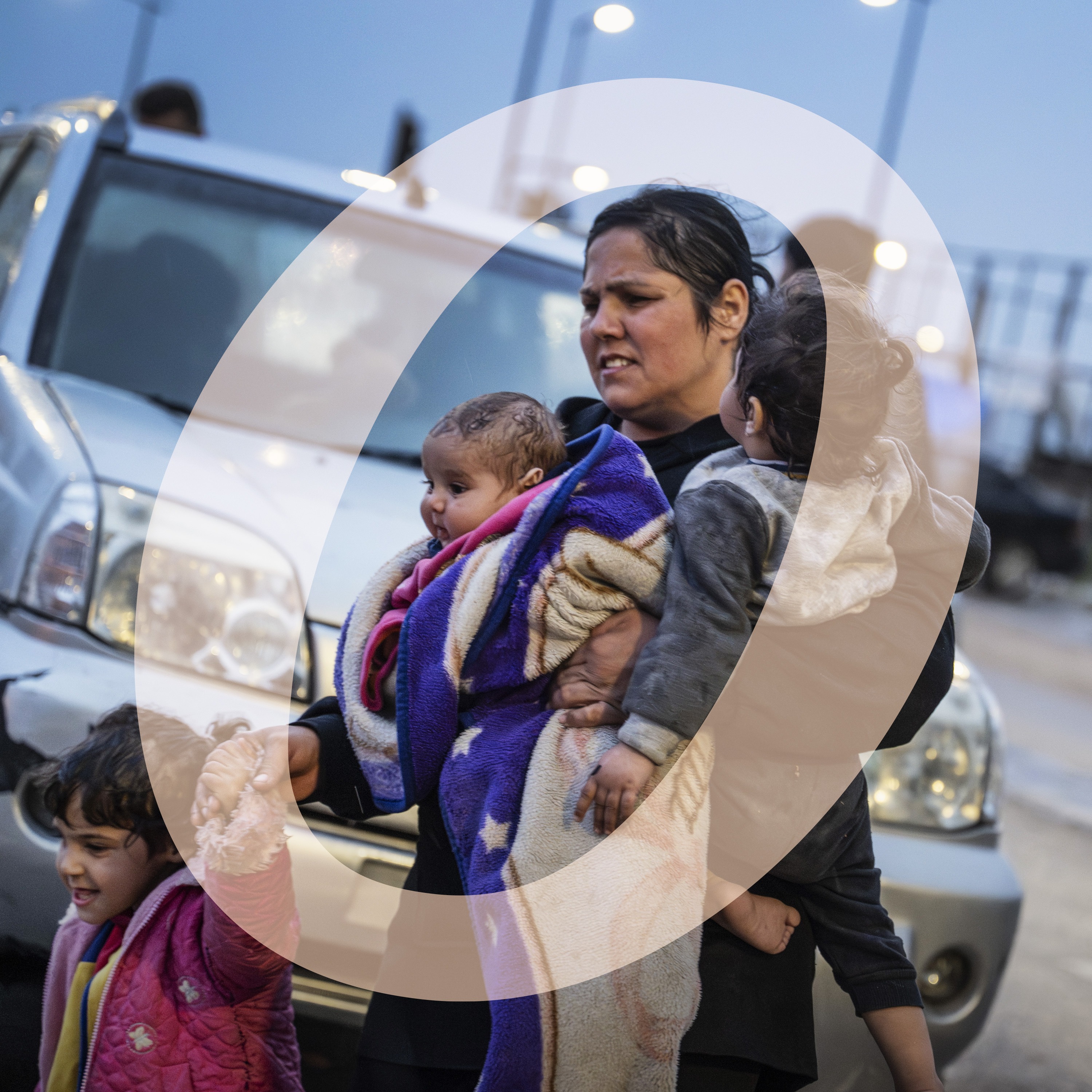
What’s behind the mass displacement of people in Lebanon?
About this Episode
Why is President Donald Trump asking NATO for help in the Iran war? What’s going to happen with the hundreds of thousands who are displaced in Lebanon? And what is the Labour government going to do about the nearly one million young people who are out of work?
To battle out who can pitch the story that should lead the news, Jasper Corbett is joined by The Observer reporters Stephen Armstrong, Hannah Schuller and Bex Sander.
**We want to hear what you think! Email us at: [email protected]
Follow us on Social Media:
- @ObserverUK on X
- @theobserveruk on Instagram and TikTok
- @theobserveruk.bsky.social on bluesky
Host: Jasper Corbett
Producer: Amalie Sortland
Executive Producer: Casey Magloire
To find out more about The Observer:
Subscribe to TheObserver+ on Apple Podcasts for early access and ad-free content
Head to our website observer.co.uk
Download the Observer app – for a listening experience curated by our journalists
Hosted on Acast. See acast.com/privacy for more information.
Hosts & Guests

Transcript
Hello, I'm Jasper Corbett. It's Monday the 16th of March from the Observer. Welcome to the news meeting.
Ending the war is the quickest way to reduce the cost of living. For 40 years we're protecting you and you don't want to get involved in something that is very minor.
A university student and a six-form pupil died following an outbreak of meningitis.
I really want all the women in the room to stand up because I feel like I don't get here without you guys.
So what should lead the news today? Joining me to help decide are three of my observer colleagues. Welcome to reporter's Bexander. Hello. Hello.
And Stephen Armstrong. Hello, Stephen. Hello. And Hannah Schiller. Hello.
Let's get into your pitches and we'll start with long stories short in a few words or a sentence. What's your headline, Stephen?
Donnie's Diastrates. Bex. Kneets but untidy. Kneet but untidy. Thank you. That's good, Hannah.
Seventh times a charm. Seventh times a charm. Interesting. All right, well thank you all for those. Let's get right into it.
Stephen, you're up first. What's your story and what's your pitch for it to lead the news?
My story is that after a very long time spent trashing NATO and generally walking away from the whole business.
On Sunday, Trump was telephoned. This is a whole separate story in itself. He was telephoned by a reporter for the Financial Times and said he wanted NATO's help in keeping the streets of hormones open.
There's a brief sideline is Donald Trump's mobile phone number is becoming hot currency amongst journalists and a lot of people have started to trade it.
And they're now journalists calling him all the time. He answers the phone and defeats in the mood. He will give a 10, 15 minute interview.
There's a great piece in the Atlantic going into details about it. So that was the reason this story broke through.
President Donald Trump said he wanted to get together an alliance to keep the straight of hormones open.
He said that it needed a number of nations listed the nations, including China, including the UK and France.
And he also warned that if they did not step up, then it would be very bad indeed for NATO.
So he's mixing this request, this desire for help with a kind of threat to NATO as to what would happen if NATO didn't step forward.
I mean, this I think is part of the constant complicated relationship that the current American administration has with NATO.
NATO, of course, is a defensive alliance. It doesn't have anything in its articles, which allows it to take offensive action.
It has two articles, four on article five, article four allows member states to defend each other, and article five allows member states to call a conference about defense.
There's nothing that says, let's fall, keep the straight of hormones open.
So it's hard to see how NATO would deal with this as a body or as an organization.
Individual countries in there may provide help, and indeed there's signs that Keir Starmer is offering help, considering help, the French are sending 10 ships.
The UK are looking at intercept drones.
The idea that the Chinese would take part in this seems extremely unlikely, but he has asked for help from China to keep the straight open.
And I think that the significance of this is that Trump asking for help from NATO.
He's a sharp reversal from where he's been for pretty much since day one of 2016, where he's been saying NATO has not been helping us.
We've been putting the money in. It doesn't help us. It's pointless. I don't want to be part of the organization.
There's been this long back and forth where he seemed to threaten to leave, cut his spending.
Then America and his officers said, well, it was just to get the other NATO countries to increase their spending.
But there has been this perception that he doesn't see its purpose.
And now, when things are going wrong for America in Iran, when the war is taking longer than they thought, when Iran has more missiles than they thought.
And in particular, when Iran is attacking the oil flow through the straight of hormones, Trump reaches out for help.
So what do we know about what it means to keep the straight of hormones open?
Straight of hormones is one of the key oil shipping lanes in the area.
And it's where how the Middle East oil basically gets to India, to China, to anyone who is in the South.
And the Iranians have it closed. There's been no transport there.
They use missiles, short range drones, speedboats.
And so no one will ensure a ship to go down that particular passage of water.
Consequently, as we will all be finding out, the price of oil, all sorts of associated costs will be increasing.
And presumably, interest rates as well.
So is your pitch about oil on the straights of hormones?
I think it's about America's in trouble.
And it doesn't quite see a way out of this, and can see the kind of global economic consequences.
Yes, I think it's Trump. It's about Trump's not seeing how he can deal with the situation.
And the question then is, what do allies do?
It's a difficult story to pinpoint how you'd go into this, because it's changing on a minute by minute basis.
So today, we've had two or three Labour Party figures, including the Prime Minister,
Starmer talking about what they would or wouldn't do, and often contradicting each other.
So what does Starmer said?
He has said that he was speaking to Trump over the phone on Sunday, and he's willing to help,
but he would not be a NATO operation.
So then Fatten, who is working pension secretary, was saying that we wouldn't get involved.
So there is some disagreement in the UK government.
Why should your story lead the news?
It's an important story.
There hits all of us, all our pockets, all our lives, but it also hits our understanding of geopolitical power.
Trump, the man who refuses to turn to NATO for help, for the first presidency,
the second he walks in in the same kind of attitude, is now saying, NATO, I need you.
Okay, Stephen, thank you for that. Hannah, what do you think of Stephen's pitch?
I think there's two things that I pull away from your pitch that I would be interested in seeing as a proper headline.
And one is this narrative of Trump has no idea really what he's doing, and he keeps asking different people for help
and offering different timelines on when he thinks that things like the Strait of Hormuz are going to open.
And I think that that could be a whole investigation of its own.
And that links to the phone, his phone going off and giving reporters different interviews constantly.
And then I think the other thing that I think is very interesting is this angle of who is Iran working with,
and therefore who is the US going to have to work against.
So particularly China I think has an interesting role to play,
because I know that Trump said in kind of an attempt to leverage their involvement,
oh well, we won't host diplomatic talks that we were going to have next week,
if the situation continues that Iran and China are working together to get the oil flowing.
So I think I like your pitch, but I like your pitch because it's everything that's happening in the money.
Yeah, I think what's actually a headline is slightly more specific
and I would go down either of those two routes.
Bex, what do you think of this story?
Yeah, I think the Washington side is the part that really interests me the most
and the kind of questions that I would want answered are when Trump says it would be bad for NATO,
what actually can he do?
What is the potential retaliation?
And also in this situation, like you said, which is very unusual for Trump,
where he is asking for help.
Obviously there's a implied leverage there,
and what can NATO get out of this situation as well?
That's something that I'm really interested in,
is this an opportunity for some level of talks with Trump?
And how does that go?
Okay, thank you very much for that Bex, and Stephen, thank you for that pitch.
We're going to take a short break,
and then we will hear what Hannah and Bex think should lead the news.
Right, welcome back, Hannah. What's your story?
What are you pitching to lead the news today?
My story seventh times a charm.
Well, I think that the Strait of Hormuz and the movement of oil
specifically has kind of been what's taken the headlines a lot over the weekend,
but what I think deserves to be a headline that's been somewhat underreported on
is the fact that on Saturday the 14th of March,
Israel issued a displacement order for a wide area of southern Lebanon,
which is a reflection of the escalating conflict between Israel
and Hezbollah, that so far has claimed the lives of 820 Lebanese people.
This begun on the 2nd of March, which was when Iranian-backed Hezbollah attacked
a missile defense site south of Haifa in Israel.
And since then, obviously Israel used this as an opportunity to attack Hezbollah.
If Israel do begin to actually engage in this conflict actively within
Lebanon's domestic borders, it would mean that it would be the 7th invasion
of Lebanon since 1978.
And it could become the largest Israeli ground invasion to the country since 2006.
So it's worth saying that Hezbollah and Israel have been implacable enemies,
partly because, as you say, Hezbollah has been backed by Iran for many years.
It's in a sort of massively weakened state because Israel has been actually fighting a war with Hezbollah.
There was a truce between the two of them in 2024 and November 24.
Before that, they were at war with one another.
But Hezbollah did have enough weapons to attack Israel on the 2nd of March.
On the 2nd of March, and actually kind of continuously since then,
on Wednesday last week was Hezbollah's largest kind of attack so far.
They joined with Iran and sent 200 missiles into Israel in a coordinated attack.
So it's really not showing any kind of slowing down.
And the Israeli response has been incredibly targeted.
I mean, there were reports on the ground of not only specific apartment blocks being targeted,
where they believed there were Hezbollah leaders that they wanted to basically eliminate,
but to the exact flat and the exact window of the bedroom where they believed the leader was staying.
And so my story concerns the fact that there's this conflict between Israel and Hezbollah,
which is dragging Lebanon into the war in the Middle East.
But I think really what I'm interested in is kind of the numbers.
I mean, 1 million people have been displaced, and that's 14% of the country's population.
And the death toll, I mean, 820 people when there's so much conflict going on,
might seem difficult to understand, but for comparison relative to the population,
this death toll from Lebanon is equivalent to approximately 10,000 people in the UK being killed in two weeks.
So it's pretty astonishing to sort of be confronted with.
So what's happening to people on the ground? What are aid groups saying?
Well, since the 2nd of March, up until this morning actually,
there have been reports of missiles basically being passed pretty much constantly between Lebanon and Israel,
specifically attacking Beirut and the south of the country.
There are in Thai cities such as Nabate in southern Lebanon,
which have turned into ghost towns.
There's been some really, really good reporting by Reuters and by the Guardian,
where they describe how towns like this see, you know, once 90,000 people's strong populations deserting the city
since Israel on Saturday told citizens to move from the south into areas where they were not planning on striking.
Hezbollah targets.
There have been reports of very serious congestion on all the main highways,
which implies that people are taking kind of this warning quite seriously.
And something else I think is notable is that in previous iterations of this conflict,
what we've seen is warnings by the Israelis before they attacked targets,
whereas now a lot of people on the ground have been describing bombs going off seemingly at random,
at kind of residential complexes and apartment blocks.
So yeah, it's kind of a departure from I think what we've seen in conflicts past,
where now it seems to be kind of extending into the domestic sphere for people in Lebanon,
which is I think what makes this story quite so timely, serious and emotional, to be honest.
And it's also interfering, obviously, with the sort of delicate kind of balance of politics in Lebanon,
isn't it, because I think quite a few certainly MPs who don't support Hezbollah
are increasingly angry with Hezbollah for having started firing missiles
and then obviously Israel's now attacked.
Yeah, absolutely.
Some chance that Israel may put ground troops into Lebanon,
and so you can see that kind of whole very delicate equilibrium being upset.
Yeah, I think what's really important to kind of come back to is the fact that the elected Lebanese government is not Hezbollah
and Hezbollah is not the Lebanese government.
There's quite a long historical conflicted relationship between the two and with Israel,
which obviously means that when there's an event like this of Hezbollah attacking Israeli forces,
the government response can sound quite confusing.
Like you said, there were lots of MPs who speak out about this.
One is Gassan Habani, who's a Christian MP for the Lebanese forces party,
who said, I'm not defending what Israel has done,
but Hezbollah started this by attacking Israel to protest the death of the Ayatollah,
which drags Lebanon into a regional conflict it has nothing to do with,
which is pretty astonishing.
Something else that I think would be really important for this story if I were to picture
as to lead the news is the fact that even though the Trump administration has asked Israel not to bomb
Beirut's International Airport or other Lebanese state infrastructure,
a US official has been recorded saying that the Israelis have to do what they have to do
to stop Hezbollah's shelling.
And Israeli officials have said the while they'll consult with Washington on a case-by-case basis,
they feel that they have the full US backing for this operation.
So essentially what I think we're looking at is a case where Netanyahu is kind of getting exactly what he's wanted for years.
This is this reshaping of the Middle East.
It's quite an evident continuation of the conflict that we saw in 2023 and 2024,
and really I mean the six times preceding that since 1978.
But this time you kind of really get the feeling that there's not just US backing,
but there's US troops in the region and they've got the world's attention there
and sort of sympathies in some way to their being conflict.
Okay thanks Hannah Bex, what do you think of this pitch and this story?
It's really important isn't it?
And it has the potential I guess to have a really long tail as a story.
I mean this will have consequences ramifications for years to come potentially.
100% and I think the kind of the idea of this under-reported story happening
is always very attractive to journalists particularly as well.
And I think the kind of idea of the numbers side of it and contextualizing it.
Me and Hannah are both on the data team at the observer and I think it shows.
So that's obviously got my attention.
There's a kinship to the stars.
Something that kind of links both of these stories is this idea of Israel is now a global superpower in its own right,
more so potentially than the US.
And I think that's a really interesting shift.
Stephen?
Yes I think this is an interesting story in the long term.
I think that the intriguing thing about this to me is the power.
What power BB Netanyahu has over Donald Trump?
Because it's been clear since the horrific Hamas attacks in October 2023
that Israel's plan has been to completely demolish Iran leadership and influence in the area.
And somehow the Americans have been brought on board to provide the cover and attack the leadership.
So I think that in a way to understand what's happening in the Middle East,
you really need to see what Netanyahu's ambitions are.
Netanyahu's ambitions also include winning the election in June and not being put on trial for fraud and corruption.
Something which Trump has been giving interviews about last week saying Netanyahu should be pardoned
so he can concentrate on the war.
I think there is a very interesting feature about the BB Netanyahu
and I mean he's the one person who Donald Trump appears to pay attention to whatever he says.
But I think it's more of a feature than the most important story of the day.
Hannah, before we leave your pitch and hear from Bex,
why do you think your story is more pressing than Stephen's about the straightforwardness?
I think because this is a conflict whose death toll is rising faster than any previous war in Lebanon
is pretty good justification as to why it should be in the news in general.
And I think why it should be the headline for the news is that it's slightly more grounded in active present reality than yours is,
which I believe is a bit more of a question mark at the moment.
I'm sorry, I said it.
Hannah, thank you very much for that. Bex, let's hear what you think should lead the news.
Okay, so we're kind of mirroring what's happening in Westminster today, which is quite interesting.
So today, Kierstarm has started the day talking about the Middle East, talking about the straightforward news.
He was doing a press conference and this afternoon work and pension secretary, Packing a Fanon,
is going to talk about what I'm going to talk about today, which is youth unemployment and needs.
So, needs stands for people not in education, employment or training.
And it's a huge problem in the UK.
It's a rising problem. There was a big start that came out recently that there's almost one million young people age 16 to 24 who are considered needs.
It affects men slightly more than women, but it's the difference of like about percentage points.
So there is a gender gap, but it's not very extreme.
The more clear differentiation is regional.
So the North and Midlands have much higher rates of needs.
For example, in the Northeast, it's 17.3% of all 18 to 24-year-olds who are not in education, employment or training.
There are several solutions that are going to be announced today.
One of them being a reform to apprenticeships and another one being the announcement of a potential 3000-pound payment to businesses that hire an 18 to 24-year-old who's been unemployed for six months or longer.
This is a huge problem in the UK.
14% of 18 to 24-year-olds are unemployed and that metric only includes people who are actively seeking employment or claiming unemployment benefits.
So this excludes anyone who is kind of being supported by their parents or like doesn't need to work.
These are people who are looking for work and can't find it.
So these are people who may be reporting to a job centre effectively and so they then get registered.
Do we think there's a sort of much bigger hidden number than is that what you're saying?
Well, part of the problem with this data is that it comes from the labour force survey which has well reported issues.
The largest one being the response rate is the lowest it's ever been.
So the labour force survey is a survey it's based on calling up households and checking people.
The response rate is currently around 25% of 31,000 households.
So we have this data that says that this problem is growing.
But we did some great reporting in the observer actually about the problems at the ONS and the labour force survey
and how these can't really be relied on in the way that we want to to show the picture.
Okay, so maybe these numbers sort of don't quite tell us to give us the full picture.
Yeah.
I mean, if we accept that the number of needs is growing, maybe, do we know why?
So the percentage unemployment is the highest it's been since COVID.
So it has kind of decreased since then but started to go back up again.
And there are issues to do with long-term illness as well.
Even at the 18 to 24 level, 44% of young needs report a work limiting health condition.
And that is something that has almost doubled in the last decade as well.
So that is a huge problem that these reforms aren't going to tackle which is another part of it.
In fact, with this, the government's got this £1 billion plan.
This isn't a new problem.
And why is the government particularly concerned about it now?
Yeah, see, this is the thing.
I mean, it's this huge problem that no one can seem to find a solution that they agree on for.
And I think the sickness is a huge part of it.
That's the kind of new thing that people are really struggling with.
And I think I've made my pitch harder by going into the fact that this data is somewhat unreliable.
And a little bit kind of difficult to pass.
But I think it is still a really important issue because of the human cost.
So, needs have been linked to a loss of £20 billion in GDP.
People who are unemployed earlier in life are more likely to have lower wages,
even 20 years after the fact.
So there's a really long tail to this kind of crisis that's happening.
Interesting. Thank you for that.
Stephen, what do you think about Bex's pitch?
Government's efforts to try and take on youth unemployment and offer some solutions?
I think it is an interesting story.
I think the problem of youth unemployment is fiendishly complicated
and has been for an enormously long period of time
and a variety of different things have been tried.
And so it's a bit of a, let's see what this thing does.
You will get business saying, well, the best way that you can sort us out
is to cut the national insurance rise we've recently had.
So there is a bit of a two-in-fron.
You can imagine business, a little grumpy here.
You know, sort of say, well, it's all very well.
You'll pay £3,000 to take on a need.
But you've also, you know, we're paying tons more in national insurance.
Yeah, it's interesting to look at the way this Labour Party is thinking about it.
But I don't know.
It feels like it's a chin-stroke.
So it's a very interesting chin-stroke, but I don't know if it's the top story.
OK, Hannah, your data hat on.
With my data hat on, I actually think with my data hat on,
I'm less interested in the angle of this story
that concerns the number of people that are unemployed and are job seeking,
mainly because of exactly what you said.
There's problems with the data collection.
And I think that the most interesting reporting I've seen on that subject
has come from a Bloomberg article that was basically breaking down
the government's plans.
But what I think is most interesting from a reporting angle,
and it's not a data story, is actually the reforms that they're doing to apprenticeships
as part of this, like, overhaul.
And specifically, I think what's super interesting is the seven new programs
that they're introducing, a couple of which concern AI,
and the fact that to promote these or to fund these apprenticeships,
they're also defunding other standards that don't meet the country's skill priorities.
One of them I looked up earlier is lead practitioner and adult care.
And so I think what the story really offers is kind of more this change in sentiment
or acknowledgement of sentiment in UK government.
The emphasises these digital skills and apprenticeships that move towards an economy
that's going to be based on those kind of jobs and that sort of employment,
rather than schemes trying to get young people into jobs when we don't actually know the full figure
that we don't know the full story, not least the national distribution of this problem.
And quite how you future proof any of these jobs given the speed
of which various things are changing in the workplace.
But I think apprenticeships are a really important part of this
and one of the things that is going to come out in this announcement today
is that currently half of all apprenticeships are going to people over the age of 25,
and that's something that they want to tackle and pull back down
so that apprenticeships have kind of shifted in the way that they function
as a kind of in company training rather than getting people into work in the first place.
And I think that is really interesting and whether they'll be able to like shift that back is really important.
Bex, thank you very much for that pitch.
I want to hear what you all think should lead the news though now
and there's only one rule you can't choose your own.
So Steven, which of the two pitches you've heard do you want to pick?
Well, I think they are both interesting.
I feel that if I pick the streets of hormones, I'm actually going to be undermining my own story
because there's probably only one Iran story that's going to run today.
So purely selfishly because like I want my story to win.
I can't, I can't.
I'm going for needs because young people, I believe that children are future
as Whitney Houston said, yes.
Nothing to do with the competition.
What do I think should lead the news?
I do believe that the apprenticeship story is very interesting.
However, I'm going to go with the streets of hormones because unlike you,
I support a fellow story in line.
No, what I think, I think what would be, I'm a team player.
I think that if I were to pick your story though,
I would encourage it being slightly more focused on Trump's kind of chaotic response
and the way that he's reaching out to so many different players in an effort
to clear the straight of hormones.
I think that's what's really interesting and should lead the news today.
Becks.
I'm going to agree with Hannah.
Yeah, I think Steve's story but focused on the response from NATO
or the potential response from NATO if they haven't actually said anything as of yet.
So what you're both saying, you know, I picked the right story,
but I just, I'm not a very good journalist.
I'm saying to you the very way.
Go back, go back.
You need a little bit of focus and we're trying to help you get there.
Understood.
And take it on board.
If you can get Trump's number in the process, that would also be great.
I will do it again.
Okay.
I will share my decision after this short break.
Welcome back.
Here's what I think.
So I think on balance, I'd like to lead with Stephen Sherry,
however, all of the candidates over the line, you must deliver a Donald Trump exclusive.
You must find his phone number, you must call him and you must interview him.
However, it is clearly a really important story.
I mean, this whole war, there's been a huge human cost to it, obviously.
But in terms of the sort of global knock-on consequences,
this kind of small bit of water, the straightforward moves,
is shaping up to be sort of pivotal.
And then Hannah, I am really interested in Israel and Hasbola and what's going on in Lebanon.
I guess it's just about choosing the right moment when you want to jump in
and make that story lead the news.
It doesn't feel it's quite there as a lead story, but you'd sort of certainly put it in the mix.
And certainly if there's a suggestion that Israel is going to, you know,
any kind of ground invasion and so on.
I mean, I think there's some suggestion that there are some Israeli troops,
sort of just into Lebanese territory now.
If it's a wider invasion, it makes his way onto the top of the news.
And back, it's a good story, but it's quite a, as Stephen said,
it's a bit of a chin stroke, probably.
Interesting, but quite sort of...
That's fine.
That's quite a heavy bit of policy.
There's a war in Lebanon, so I think...
For Gina, there's a war in Lebanon.
Hannah, Stephen and Bex, thank you so much for joining me today.
Don't forget, if you have any thoughts on anything in today's episode,
send us an email to newsmeetinghatobserver.co.uk
and we'll be doing our monthly live recording of the podcast on Thursday March 26th.
We often sell out, so go to observer.co.uk forward slash our hyphen events to grab a ticket.
Charles Whitet will be back on Thursday until then, have a lovely week.
The Observer.


