Get every episode summarized
Each time 1A publishes, we email you a written briefing from the transcript — the topics, who appeared, and any specific claims, with the ad reads skipped.
Email me new episodesFree for 3 shows. No card needed.
About this episode
“Greenlight, trusted by millions of families, helps you protect what's yours with family shields account monitoring, alerts, and 911 dispatched crash detection. Learn more at greenlight.com slash protect.”From the transcript
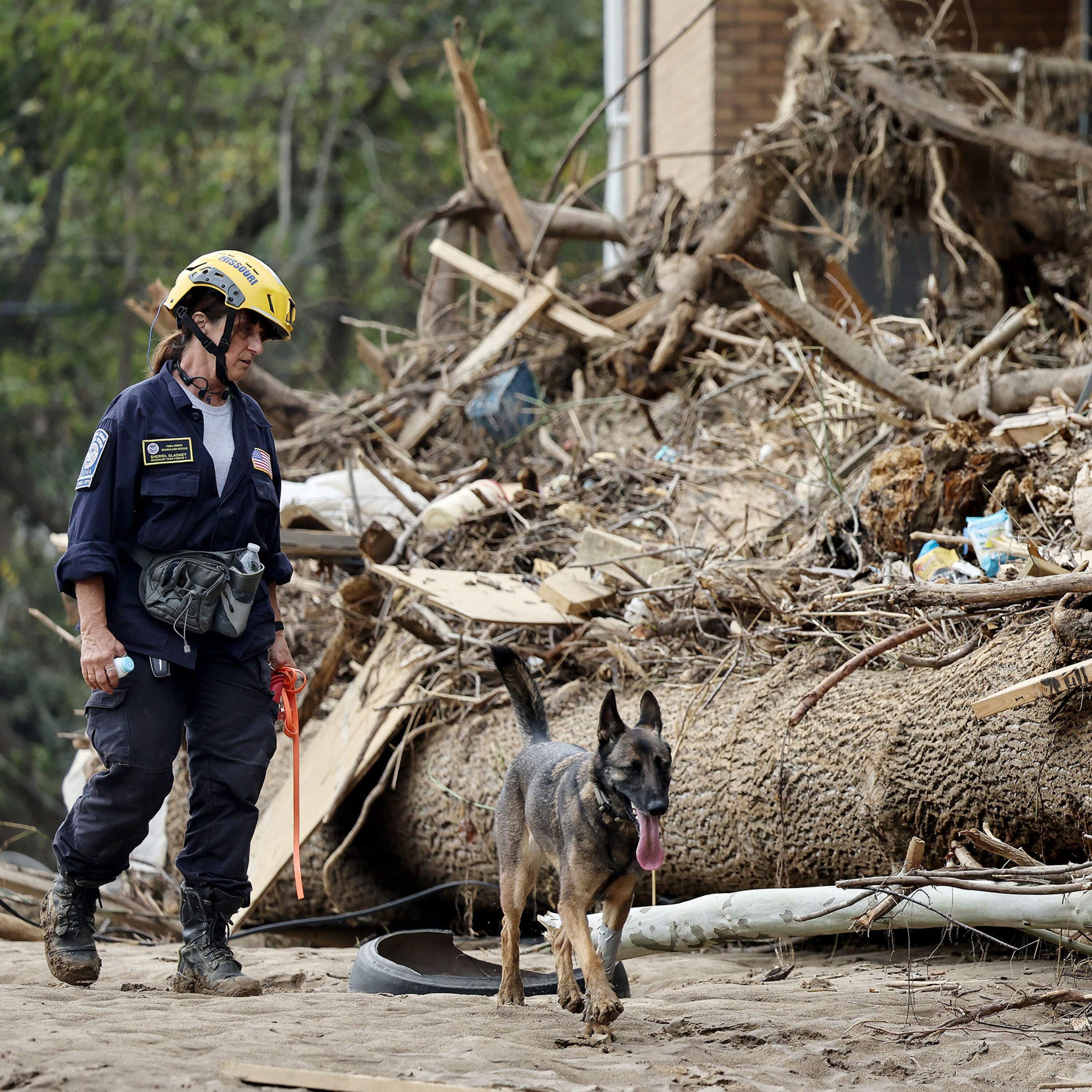
With Kristi Noem out at the Department of Homeland Security, all eyes are on FEMA to roll out millions of dollars in stalled federal funding for disaster responses. That’s especially true in North Carolina, where the western part of the state is still grappling with the effects of Hurricane Helene.
We sit down with a panel of experts to find out what the future holds for FEMA in the Tar Heel state.
Find more of our programs online. Listen to 1A sponsor-free by signing up for 1A+ at plus.npr.org/the1a.
See pcm.adswizz.com for information about our collection and use of personal data for sponsorship and to manage your podcast sponsorship preferences.
NPR Privacy Policy
Get every episode summarized
Each time 1A publishes, we email you a written briefing from the transcript — the topics, who appeared, and any specific claims, with the ad reads skipped.
Email me new episodesFree for 3 shows. No card needed.
Hosts & guests

Transcript ready
1,019 searchable segments. Every word is indexed and playable.
Full transcript
1A — What The Future Holds For FEMA In North Carolina. Machine-transcribed; use the interactive transcript above to jump the player to any line.
This message comes from Greenlight. Don't wait to protect your legacy. Greenlight, trusted by millions of families, helps you protect what's yours with family shields account monitoring, alerts, and 911 dispatched crash detection. Learn more at greenlight.com slash protect. Hi, it's Jen. Before we get into today's show on FEMA, a quick update on the US Israel War in Iran. On Wednesday, Israel says it killed Iran's intelligence minister Ismail Katibe. Iran's president confirmed Katibe's assassination, saying it was, quote, cowardly. The killing follows the death of Ali Larjani, Iran's top security official. He died in an Israeli attack on Tuesday. Meanwhile, Israel is ramping up attacks in Beirut against the Tehran-backed militia group Hezbollah. We'll have more for you during the Friday news roundup, and stay tuned to your local NPR station and NPR.org for the latest. This morning, a monster storm unleashed its fury overnight
on Florida's Gold Coast. Hurricane Halina, catastrophic category for showing no mercy, destroying property, flooding hotel lobbies, businesses, and homes. To the west now, with a Gifford fire burning through the rugged backcountry of California's Central Coast is now the state's largest wildfire of the year. It reached so-called mega-fire status. In fact, it's one of 38 large fires burning right now across nine states. Heavy snow, pummeling parts of the Midwest. In Minnesota, this powerful storm system leading to icy roads and reduced visibility. The state slammed with more than two feet. Across Oklahoma's Panhandle, an urgent rush to escape the flames, as five fires have burned more than 150,000 acres across the region. Wildfires, flooding, and hurricanes, just a few of the weather disasters we grapple with every year throughout the U.S. As extreme weather events grow more frequent and costly, the role of the Federal Emergency Management Agency is more important than ever.
Kristi Nome is out at the Department of Homeland Security, which oversees FEMA. That means the agency will soon have a new leader managing disaster response and recovery in the U.S. And that's big news for states like North Carolina where people are still recovering from Hurricane Helene. Federal funds have been slow to roll out. So what does the future of FEMA hold as the agency sorts through a backlog of billions of dollars in federal disaster relief funding? And what does it all mean for states like North Carolina that have had to bear the burden of disaster related costs as their communities try to recover? I'm Jen White. You're listening to the 1A podcast. We'll be back to tackle those questions and more after this short break. Stay with us. This message comes from NPR sponsor Total Wine and More. With so many great bottles to choose from, it's easy to find your favorite Cabernet or a new single barrel bourbon to try with some help from one of their friendly guides. And with every bottle comes the confidence of knowing you just found something amazing.
Find what you love and love what you find only at Total Wine and More. Curbside pickup and delivery available in most areas visit TotalWine.com to learn more. Spirits not sold in Virginia and North Carolina. Drink responsibly, be 21. Welcome back. And let's get right into our conversation about FEMA and how disaster response and recovery in the US will be managed in the future. Joining us from Los Angeles is Brianna Sachs. She's a disaster correspondent at the Washington Post. Brianna, welcome back to the program. Thanks so much for having me back. Joining us from WAMU in Washington is Barry Scanlon. He's a former senior advisor of the Federal Emergency Management Agency. He's also the president and co-founder of DCMC Partners. That's a crisis management and public safety consulting firm that helps with recovery from crises and disasters. Barry, it's always great to have you. Thank you, Jim. And joining us from Asheville is Gerard Albert. He's the Western North Carolina rural communities reporter for Blue Ridge Public Radio. Gerard, thanks for joining us.
Happy to be here. So in 2024 Hurricane Helene hit North Carolina hard. Especially counties along the western part of the state. Gerard, where do we cover effort stand a year and a half after that storm? Well, big picture wise, the storm caused $60 billion in damage. And so far, only $7 billion give or take, billion dollars have been allocated from the federal government. On a more on the ground level, there are still hundreds of people living in RVs and trailers and temporary housing waiting on home repairs. There are still many local governments who are waiting on dozens of millions of dollars in FEMA reimbursements after clearing debris in the immediacy after the storm. So as you say, North Carolina requested federal funds to cover around half of the estimated $60 billion
in damage the storm caused. State officials say, look, we've received about 10% of that money. Federal officials say they've given North Carolina at least $1 billion for recovery efforts. Brianna, what's the disconnect between what state leaders are saying and what the government is saying? Yeah, we, that's a great question. The DHS has been holding up hundreds of millions of pre-approved funds for North Carolina for months now. I think we did a deep dive into this last August. And we also looked at data that showed that they had given more money to Tennessee and Florida for hurricanes, Hurricane Helena and Hurricane Milton than North Carolina. And so that is the overwhelming question. DHS says it's pushing out money faster than any other administration. But again, we keep seeing states like North Carolina and communities on the ground just not getting that money
quickly. And it's just been a lot of frustrating back and forth from state officials, such as Governor Josh in having to send all these letters to Nome and the contract, the $100,000 contract process has held up a lot of money over the last, I guess, like nine, 10 months now since it was instituted last summer. And what you're talking about there is now former head of DHS, Kristi Nome's decision to have anything, $100,000 or more approved by her office, correct? Yes, the ramifications of that decision are still being seen, we probably don't know. But I have just been talking to FEMA employees across the agency for a long time. And even DHS officials who have been saying that this just caused massive chaos and backlog and prevented states such as North Carolina from getting money that, again, FEMA moves slowly
and is already bureaucratic. This procedure, as well as others instituted by the former DHS secretary, really just caused a pretty serious hold-up and slow down of disaster fund, release funds. Well, Barry, give us some context, historically, what role has FEMA played in providing funding before, during and after disasters like Hurricane Helene? Well, there's always been money for planning, training, exercises and for mitigation works, making bridges stronger, protecting schools from the next storm, but the large amount of money, the vast majority of money is always in disaster recovery. And FEMA's process is Byzantine and it is long and it needs to be improved and fixed and there's a bill in the house that's passed the Transportation Infrastructure Committee to do that and hopefully that will move forward and simplify some of these processes. But as has been mentioned, normally, you would go to a school, document the damages and then work with FEMA to come up with a number
and then it gets to Washington and it takes about a week or 10 days to get through what we call the million dollar queue. And that queue has now taken six months, nine months, 12 months, given the past secretary. And all that does is delay children from getting back into school, hospitals from fixing an emergency room, a whole host of things that you can think of in public infrastructure, that impact real people's lives every day. Now, Gerard, we spoke briefly about the difficulty North Carolina has faced in securing the funds they need for relief from Hurricane Helene. Now, the federal government granted $116 million in disaster relief funding to the state for recovery and to prevent future disaster damage across the state. But that money came a month after North Carolina in more than 20 other states won their lawsuit against the Trump administration's attempt to shut down infrastructure and disaster mitigation projects around the country. Walk us through that lawsuit. Yeah, that lawsuit was filed by Attorney General Jeff Jackson
along with dozens of other states. And that was, this is funds that were coming before Hurricane Helene event to shore up infrastructure, water plants, sewage plants, a lot of them which did get damaged in Helene and now that work needs to be done as well. But that money is still being held up just last week, Attorney General Jackson again, pushed FEMA after a court ruling to actually distribute the money. Now, North Carolina isn't the only state experiencing delays in getting their disaster funds. In February, the Trump administration said it was releasing more than $5 billion and delayed disaster aids to some states, except for a handful run by Democratic governors. Those states include California, Illinois, Minnesota, and Colorado. Brianna, what did the administration say about the decision to exclude those states? Well, the administration has been saying
it's not political for a while. And we had been seeing that there's been a lot of ties to the immigration policies and requests that states such as California have been pushing back on. And I've also heard internally from FEMA employees they don't think it's a Democratic versus Republican situation. And so I think there is some nuance there. I do agree that it stands out that states where I live, such as California and I live in Los Angeles. My dad lost his home in the LA fires and we are still waiting on a lot of money that has taken more than a year to get here. It does raise some eyebrows, but it does seem to be a little muddled as to whether it is strictly a blue versus a red situation. Because last year I did cover the fact that red states were also not getting money and the administration has been very slow to release any really public assistance or hazard mitigation grants,
which are money that help states and communities build back stronger from disasters. And those kind of money hasn't really been going to any state whether it is red or blue. Coming up, the Department of Homeland Security's partial shutdown stretches into its second month. What challenges does that pose for disaster response and relief? Stay with us. This message comes from Mint Mobile. If you're tired of spending hundreds on big wireless bills, bogus fees and free perks, Mint Mobile might be right for you with plans starting from $15 a month. Shop plans today at mintmobile.com slash switch. Up front payment of $45 for three month five gigabyte plan required. New customer offer for first three months only. Then full price plan options available. Taxes and fees extra. Mint Mobile for details. Let's get back into our conversation. Now, the Department of Homeland Security, which oversees FEMA, is undergoing big leadership changes.
We'll get to that shortly. But first, Barry, there are laws that govern how FEMA typically disperses relief funding. Explain how that's supposed to work. Well, when a disaster hit and the president declares at a federal disaster area, they work to document the damages, put an estimate on them, and then provide it's normally a 75-25 cost share where the federal government picks up 75% of the bill and state and locals pay the other 25%. They are not really held to any timeline. The interesting and unfortunate thing for states and localities and others schools that go through this process is, if FEMA sends you a question, they give you a 30-day deadline to reply to their question. And they may take six or nine months to then get back to you. So the system needs to be changed. States need to be given the proper warning and when these legislations are passed because you can't just change the rules one day. Right now, no one knows what's going to happen with the next disaster.
They don't know where the funding's going to come from if it's going to come through. And it's terribly difficult, once you've managed the event to try and launch recovery when you don't know what the rules of the game are. I think for a lot of people, they think about whether disasters that have hit the US, their minds go to Hurricane Katrina. Barry, what changed after that disaster, that changed the rules a bit about how this department was supposed to function? Well, it put limits and minimums on the leadership and the experience of leadership that needed to be at that agency, whether it was at the regional administrator level or most importantly, the Post-Katrina Act required that an expert emergency manager be the head of FEMA, which we have not had during this current administration. Senator, as you mentioned, Senator Mullin today is going to be having his confirmation hearing in the Senate. So a big question moving forward is not just his leadership if he gets confirmed,
but rather putting a real emergency manager in charge of FEMA so that they can work with the states and do the important work that happens when unfortunately a disaster's hit. Well, as you mentioned, President Trump has nominated Republican Senator Mark Wayne Mullin of Oklahoma to replace Christy Nome. He faces Senate confirmation, that confirmation process is underway. Meanwhile, DHS has also been partially shut down for more than a month, and that's has congressional Democrats negotiate with the White House over changes to federal immigration enforcement policy. A DHS has restricted FEMA's disaster work during this shutdown, even though the agency's disaster relief fund is a separate pool of money that's not affected by this shutdown. But Breonna, how is this partial shutdown of DHS hampering disaster response work and holding up relief even more? Yeah, so we were seeing this across the country, and I think what I want people to remember is when you have a disaster that the recovery is a 10-year-plus process,
and FEMA is involved in that process every year. And so we have disaster recovery projects, tens of thousands of them still ongoing from Texas, Florida, Puerto Rico, the US Virgin Islands, California. These just take a long time. So the partial shutdown for some reason, they stymied and stopped, slowed down, a lot of these ongoing disaster projects, and these disaster workers, again, are funded by a separate pool of money. And when this happened as what usually happens with DHS when it makes a decision, it was extremely sudden there wasn't really any process to it. Disaster workers were caught mid-travel. They couldn't fly home for funerals, for their daughters giving birth, for doctor appointments, because they weren't allowed to travel
and then that changed the day after. So it just caused a lot of unnecessary per FEMA employees, chaos and confusion, and still to this, these ongoing disaster recovery projects in states that cannot pick up the slack, and just dip into resources to be like, no worries, if we can't get help from FEMA, we'll keep going. And I think that's just really the big problem we're seeing here is if you just drastically halt or stop FEMA assistance, and do not slowly roll that out, many states and communities don't have the resources, the rainy day funds, the emergency management, infrastructure to just pick up and keep going. Well, we got this email from Pat who says, in Vermont, we are still waiting on over 200 buyouts to be approved by FEMA. People have been waiting over two years now to know whether FEMA will approve their buyout, but with a DHS shutdown, nothing is happening. The loss of the building resilient infrastructure and communities program means we cannot be
as resilient against flooding. We've had major floods for three years in a row on the same day, July 10th. The president failed to approve the disaster declaration for the 2025 storms, which impact it mostly very small towns. Flat repairs in these towns often double, if not triple the size of these towns, annual budget. Thanks for that message. Gerard, what's a stick for communities in Western North Carolina? The longer these critical disaster funds remain in limbo. Well, again, there's kind of two levels to it. The local government level, which are waiting on public assistance grants, which are these reimbursements that FEMA allocates to local governments who spend money in the aftermath of the storm, either clearing debris or staffing 24, 7 emergency management. And those grants just have been sporadic to come. I've talked to a few people who kind of study how FEMA disperses their money. And they've called it a magic wand process,
even Senator Ted Bud. When I asked him about this process, he said that this disbursement largely relied on him calling Kristi Nome who he had a relationship with and asking her and urging her to push out the money. And then for people, like the gentleman who just emailed, here in North Carolina, we have about 800 people who have applied for these buyouts through the Hazard Mitigation Grant Program. And it has to go through state approval first and then federal approval. The state has approved about 600 of the 800 applicants. And they've just been waiting on the federal government to approve any of them. I think we've seen a slow trickle, maybe enough for about 12 properties throughout Western North Carolina. But these are people who are out of their homes, can't live in them because they've been flooded out and are still paying mortgage on those homes and renting or staying in temporary housing
while they are still paying a mortgage on a house they can't live in. Now you mentioned North Carolina's Republican Senator, Ted Bud, he announced that federal government will send the state 11 million dollars for that Hazard Mitigation Grant Program. But that's a fraction of the 81 million dollars and delayed federal aid that's now on its way to the state for Hurricane Helene Recovery. Gerard, tell us a bit more about their program and what that new money specifically will go to. Well, the Hazard Mitigation Buyouts are complex, just like almost every other thing that FEMA does. But people who get flooded out of their homes and don't want to live in them anymore because it would cost too much to repair or because they're now in a flood zone and it's dangerous to live there, will apply for a buyout or can apply for a buyout. And the state has to approve it. What North Carolina has done is batch a lot of approvals together and they send those batches to the feds to approve. Once the federal government approves some of the money to come out,
it's not directly sent to the state. It basically gives the state permission to spend up to that amount of money. So like you just mentioned recently, $11 million has come out for it. That means the state can start the buying out process of these homes up to $11 million. And that just looks like a real estate transaction, which could take, you know, like we've heard years. I would have happened to your experience here, Barry, because the process Gerard just described, I think you used the word Byzantine to describe the bureaucracy around FEMA. When you think about your years working with the agency, what could help streamline some of that bureaucracy so that disaster recovery process could happen more quickly for states and communities? Well, they were terrible disasters like the North Rejected Quake, the Midwest floods and other things that happened in the 90s when I was at FEMA.
And in their defense, you know, all of the storms in 2017 and 2018 overwhelmed FEMA. And then of course, every state became a disaster area with COVID. And but we need to move with the times, you know, some of the things in the federal legislation include block grants, moving the money quicker down to the state level. A lot of the complaints about what's happened in the past are a bit of red herrings. States do run the disasters and localities do run the disasters now with financial help from the federal government, except for the most catastrophic disasters. Normally, states are running things now. So there could be block grants. There could be ways to get the money quicker. You could do more on the audit, on the back end, and have the responsibility be more on the states from a fiduciary reason. But things need to move quicker. I mean, the money that came out a few weeks ago, the several billion dollars, we've been told and it's been reported that there's 14 to 16 billion dollars sitting at DHS.
That's already been approved by FEMA staff and leadership. It's gone through this whole Byzantine process and it's ready to go. We've had rural electrics in North Carolina whose projects were approved six months ago who finally got their money two weeks ago. 700 million went to Puerto Rico and some of the energy projects we work on there. Schools in North Carolina that we worked with, all of it was approved last year and it's been sitting there waiting to be dispersed. So hopefully the other five to 10 billion that has been sitting at DHS can get out into the states and the communities so progress can happen and rebuilding can move forward. Well, here's how former DHS Secretary Christy Knome described FEMA's role in disaster relief. Emergencies and disasters are always locally executed. The state manages them and then the federal government comes in and supports that. What we are doing here, sir, is empowering the state and the local officials to make the best decisions for their people
because they know their people, they know their community. And when they ask, then we come in and support them. So first, Barry, does that align with your experience of FEMA? Yes, that is typically and historically how FEMA has always worked. They didn't create anything new in the last 12 months other than trying to destroy it by removing staff from all the regions, one of the reasons that the mitigation projects that you've talked about have not been moving is they've decimated the staff both at headquarters and throughout all the regions that work on these projects and would review those homes being bought out in North Carolina. And we'll talk more about those layoffs in just a few moments. Brianna, meanwhile, several states as you mentioned have had to dip into their rainy day funds to pay for disaster-related costs that FEMA agreed to pay but has not yet delivered. But these rainy day funds are designed to support states when they face an unexpected revenue shortfall, not necessarily pay for these costly recovery efforts. So what challenges does that present for states,
not just in the short term, but in the long term as well? Sure, so most states, you know, they're required by their own state law, constitution to balance their budget. And what we were hearing from communities in North Carolina last year is they were afraid that their budgets were going to be totally wrecked by not getting reimbursed from these public assistance and hazard mitigation grants. And so when a disaster hits states, especially those that are rural, and the state is required to fully take on the burden of those costs, these are have to raise revenue, which is really hard to do, or divert funds from other sources, which is also really hard to do. So likely those projects just won't happen, those schools won't get fixed, those hospitals won't go back online. And you have part of the community that for a long time for generations might just not recover. And Michigan, we were seeing this with the ice storms
last year, the president approved a disaster for public assistance, but didn't include category F, I believe, which are public utilities. So that led to electrical companies having to raise their rates on customers. And so everything just has this ripple, trickle down effect when states do not get, and we're talking like millions of billions of dollars that they don't have in a rainy day fund. So if they have to take money from something else, like again, it's just kind of an impossible feat for them to overcome when we keep seeing these disasters getting bigger and bigger. Well, in Gerard, what are those economic impacts here in North Carolina that lawmakers are most concerned about? Yeah, North Carolina is also the only state in the country without a approved budget yet. So we are kind of in a double whammy here when it comes to Helene recovery and what that looks like in terms of costing the state.
So far, the General Assembly has kicked in about $4.4 billion in recovery aid. The governor in the next couple of weeks plans to ask for just under a billion more dollars. But the state, what Brianna was talking about with states having to dip into their rainy day funds, local counties have had to do that as well. And for a lot of local governments that are rural, the storm costs them more than their annual budget. There are a few counties out here who spent more than their annual budget cleaning up after the storm and are waiting on FEMA reimbursements. The state for their part has kicked in and offered loans that aren't forgivable to these local governments, about $150 million. But that's just the tip of the iceberg for what these counties and local towns need. So Gerard, just briefly in a couple of sentences, what are you watching for? Is the Senate go through their confirmation hearing
for Senator Mark Wayne Mullin to lead DHS as the North Carolina continues to wait for the disaster funds it needs? Well, like the governor and every elected official here has said that FEMA just needs to move faster, get the money out faster to local governments and to folks waiting for these buyouts. That's Gerard Albert. He's the Western North Carolina rural communities reporter for Blue Bridge Public Radio. Gerard, thank you. Thank you. Brianna sacks with the Washington Post to sting with us as is Barry Scanlon. He's a former senior advisor of FEMA and co-founder of the crisis management and public safety consulting firm DCMC Partners. Still to come, President Trump promised to shut down FEMA. What would it mean for states to bear the brunt of disaster response and recovery in the long term? That's just a hat. This message comes from Mint Mobile. If you're tired of spending hundreds on big wireless bills, bogus fees and free perks, Mint Mobile might be right for you with plans starting from $15 a month.
Shop plans today at MintMobile.com slash switch. Upfront payment of $45 for three month, five gigabyte plan required. New customer offer for first three months only. Then full price plan options available. Taxes and fees extra. See Mint Mobile for details. Let's get back to the future of FEMA. Susan e-mails our small town in New England was hit by flooding twice in recent years. Our fire station was near the river and was declared a loss by the state due to erosion of the river bank. FEMA agreed to cover costs of demolition, construction and assistance building a new station away from the river. But in the course of the process, the original FEMA staffers were transferred and the new staffers denied all funding. It has taken years of volunteer work to resubmit to FEMA and get the promised funding back. If it wasn't for a few key volunteers, we would have lost the funding for good. We are grateful for the FEMA help, but it has been a massive headache. A last year President Trump said he intended to phase out FEMA after hurricane season.
I'll also be signing the executive order to begin the process of fundamentally reforming an overhauling FEMA or maybe getting rid of FEMA. I think frankly FEMA is not good. That I think we're gonna recommend that FEMA go away. Trump says states and local governments would assume financial responsibility for disaster management once the agency is shuttered. A full elimination of FEMA requires congressional approval, but the agency could be significantly restructured by the administration without involving Congress. Barry, help us understand how and why the Trump administration is trying to shift more responsibility for disaster recovery and response to states. How and why and I'll know I could speak for them. A year ago when he did the executive order creating the FEMA review council, former governors, former emergency managers, some current both Texas and Florida provided their state directors of emergency management as experts and they had meetings around the country with different people who have been affected
and different governments affected by disasters. And they had a report that they provided the outgoing secretary that she apparently chopped up and was going to announce in December and the White House canceled the meeting at the last minute. So everyone who works in this both in the government and in the private sector who works on these issues were waiting to see what that council and that report is going to come out from the White House. There's a lot of different things that you could do. You could like the disaster that was mentioned in Vermont. Unfortunately, because of all the regulations and rules that FEMA has created or Congress has created, often the cost of a disaster is 35% federal administration, which is obviously way too high. That's just money that is not needed to fix and help some of these disaster damages. You could change the cost share instead of the 75, 25. It could be 60, 40 and the states have to pay more. There's a lot of things that you could do to put more responsibility down on the state
and local governments. You can't just flip a switch and do it overnight because those rainy day funds that we've discussed have to be built up. There's a lot of issues. There needs to be an offering if you're going to change fundamentally how this works. You mentioned changing the cost share between the federal government and states. We got this email from Brett who says, President Trump wants to make disaster response more state-driven. I would think that making states more physically responsible for disaster response would have a bigger negative impact on red states than blue states has this been studied. And Brianna, I'd love to hear your thoughts about that first, but also more broadly about how well all states are positioned to respond to whether disasters, especially if they're facing compounding whether disasters, so perhaps there is a hurricane and then there is a flood because we've seen these weather disasters happening more intensely but also more closely together.
Definitely. And it is a complicated issue because I think many people in the emergency management world agree that states, there should be less process and recovery should happen faster and block grants seem like a solid solution and you also need oversight of those. So I think it's a long runway here. And again, the report was supposed to lay out some nitty gritty of the future of FEMA. And we're all still waiting for that. But the truth is, even the best states such as Texas, Florida, California, and even Louisiana who are experts at disasters still need federal help. So you think of all the other states that don't have the A, the lived experience and flooding is now becoming the most common disaster and they just don't have that emergency management infrastructure. And if FEMA dwindles and shrinks back quickly
and not over a rolled out period of time, I think we're just going to see a lot of prolonged devastation across the country and specifically in red states because there is all this research that those are the states that are getting hit harder and they are seeing compounding disasters with heat and then flood and ice storms. And Barry, what does this uncertainty around the reliability of federal disaster assistance mean for states as they try to plan and budget for the future states are facing having to absorb higher Medicaid costs, higher SNAP costs. And so it's not just disaster relief and recovery, they may have to absorb other costs as well that their budgets just aren't prepared to take. Well, what happens is it just grinds recovery to a halt because if states don't know what they can count on, it's impossible for them to allocate the right amount of funds. But right now what's happening because of this slowdown
of the last year, over a year, if you're a contractor, you're not going to wait around for a locality to hire you to help them rebuild the school if you're never going to get your bills paid. So what we've seen across many, throughout the Southeast, we see it in Puerto Rico is the people who would work on doing reconstruction have moved on to other things, right? So the whole system sort of grounds to a halt because if you don't know that your partner FEMA is going to be there to do their role, it really just stops the process. We're hearing from so many of you, many of you here in North Carolina. After Hurricane Helene flooded our Asheville apartment, this comes from Jenny. The fire department ordered us to evacuate. What began as a temporary displacement stretched into months and eventually a permanent relocation. The trauma of losing our home was only intensified by the stress of dealing with FEMA. We were met with a slow, outdated system
that felt out of touch with the reality on the ground. At one point, we were even asked to fax documents despite having no power, no internet, and no way to access 21st century technology. In the end, the aid we received didn't come close to meeting our family's needs. Well, I put this in the context of what's also happening right now, the federal government, as a part of an effort to cut federal spending, a George-slashed FEMA's workforce in a series of layoffs last year. The agency has lost more than 2,000 permanent employees since the start of Trump's second term. And some of those firings are facing legal challenges, but Brianna, how are layoffs also complicating the agency's work? Yeah, and I ask actually ask some FEMA employees what they want people to know in their own words. So I'm just gonna read some responses from veteran FEMA employees. Here's what I want people to know. If you think that FEMA was slow before, it's slower now because we have lost so many people in our stretch center than the agency has been in the last 25 years.
And then here's another. The administration has also pushed out people who have so much institutional knowledge that now the people left to lead have little experience. And this was another, the lack of, the loss of institutional knowledge is what many of FEMA employees brought up and that they're afraid that mistakes might be made or there's just gonna be this vacuum in leadership and that has, again, a harmful effect on communities where they process as we've covered is already bureaucratic and Byzantine and slow and needs to be reformed. So I think most people agree that FEMA could move faster. It could be more nimble, it could be better. But coming in with a wrecking ball and firing in mass and we have reporting on this, that it did not seem as if the DHS was going through and saying, okay, this person's not needed.
We have duplicates of this person because we got documents from officials saying they sent in justifications as to why this group of people should stay and this group of people should stay and all those people were fired and they were just fired really quickly. So it did seem as if the administration was just taking kind of a wrecking ball to staffing and not really understanding the ramifications of that and now the agency, you know, part of these employees is left really picking up the pieces in a much thinner and more precarious place than it has been over since, you know, last 25 years. Well, Barry, this leads us back to this question of leadership of DHS, which oversees FEMA. As we said, Senator Mark Wayne-Mullen of Oklahoma, he is President Trump's nominee to head DHS. What do we know about how much experience he has around disaster recovery and relief? I haven't seen that he has that much. Oklahoma, clearly, for years, for 20 years, actually had the most disaster declarations
because of so many tornadoes and ice storms and other things that happened over the years. So I don't know that he has any, but it's not just having that experience at the DHS level. You know, one issue you talk about changes to FEMA, there were many of us that when DHS was created, we tried to keep FEMA out of it and keep it independent and entering directly to the President and that unfortunately didn't happen. And that's part of this new act as well that people, and I believe it, believe that FEMA would function better reporting directly to the President and not getting lost in the bureaucracy of DHS. But most important, you know, as Breonna just said, it's really the experience throughout the whole ranks. All of the state emergency management directors gathered in Washington for their annual meeting last week and I participated in it. And one of the biggest things that all of them said to a person is thank goodness 2025 was not a busy disaster year because there's no one on the other end of the phone line
to call all of the people that used to run that the hardest hit areas of the United States and everyone gets hit now. But the people were the most experienced at headquarters and throughout the FEMA regions, most of them are gone. And the numbers that Breonna and you have mentioned about FEMA losing and having cut 20% of its staff over the last year, well, it was understaffed before all those cuts happened. So this is something that is now decade long of them trying to catch up from just the overwhelming disasters that have happened over the last decade. We're still hearing from you, Chris E. Mills. I lived through Hurricane Helene and Milton because I live in the flood zone evacuation was mandatory. I had no car. I was living on a social security check and a high rise apartment for people aged 55 and older. I maxed out my credit cards paying for motels, replacing ruined food, a flooded rug, spoiled cat food, and on lift rides with zero help from FEMA. It took me two years to pay off the credit card debt.
I had to put off a surgery for my cat in 2024 because of the credit card debt from the hurricanes. There was absolutely zero help for victims of these natural disasters. And Logan and Ohio e-mails this, I understand the need for disaster recovery. However, I'm unclear as to why folks expect FEMA to financially provide for their personal losses, such as homes. Doesn't homeowners insurance take care of these scenarios? FEMA should focus on public areas of needs, such as roadways and utilities. And I'd love to hear your perspective on that, Barry, and just quickly note that when we're talking about these weather disasters, not everyone who loses their home is a home owner. There are lots of renters who also have to navigate recovery. But what's your response to this thought that maybe this isn't FEMA's role at all? Well, it's been a misconception the whole time I've ever worked in this that I'll tell you, once you visit disasters and work on disasters, you don't have to be too many to find out that disaster victims don't really get that much.
The programs aren't designed that way. They're designed to try and help people get, be safe, sound, and secure is the phrase. So there's not piles of cash going out to individuals. And part of what these reforms are talking about is also just make it simpler for disaster survivors. They're not having to call HUD, NSBA, and FEMA. Try and have it be a one-stop shop. So people don't deal with bureaucracy on a personal level. So it's really not that much that helps disaster victims. They're really much left to their own devices, frankly. And is there a place, do you think for state and local governments, to take on more responsibility in managing disasters? As perhaps an incentive to try to keep recovery costs low or to maybe focus more on mitigation efforts? Well, they could pay for some of the individual assistance, and they already do. Again, there is a cost share. So this misconception, this red hearing,
that somehow this is a whole new idea that states are going to manage disasters. Governor Stein and North Carolina have to manage the disaster. FEMA is just, in many respects, except for the most catastrophic disasters, is a reimbursement agency. It's a bank. So there is some guidance, and there is some oversight, but disasters are run by the states. So it's really something that they need to be the steady partner that they have always been. And if they need to be improved, that should happen. But it's really a bit of a misconception that somehow states have to take on more responsibility. They've been doing it already. Well, Brianna, we're heading into spring, deeper into the tornado and wildfire seasons. What are you watching for, especially as we wait to see if the Senate will confirm Mark Wayne Mullen to head up DHS?
I think I'm watching for what the future of FEMA in terms of leadership is going to look like. Are they going to put in an administrator who has emergency and management experience as they are required to? By law, are they going to continue to let Karen Evans lead? Are they going to rescind this $100,000 memo? Fire seasons already here, the planes, and Nebraska, and they're having massive blazes already. So I think it's going to be a really active fire season and just hoping that the agency can pull out of this just in time for that. Well, that's Brianna Sacks. She's a disaster correspondent at the Washington Post. Also with us today, Barry Scanlon. He's a former senior advisor of the Federal Emergency Management Agency and co-founder of the Crisis Management and Public Safety Consulting firm, DCMC Partners. Thanks to you both. Today's producer was Lauren Hamilton with help from Haley Blassingame. We're broadcasting today's program from WFDD in Winston, Salem, North Carolina
as part of the station's 80th anniversary and special thanks to the WFDD staff who've helped make this happen including George Newman, Lauren McCroskey, and Tom Dullin-Mayer. This program comes to you from WAMU, part of American University in Washington, distributed by NPR. I'm Jen White, thanks for listening and we'll talk more soon. This is OneA. This message comes from Mint Mobile. If you're tired of spending hundreds on big wireless bills, bogus fees, and free perks, Mint Mobile might be right for you with plans starting from $15 a month. Shop plans today at MintMobile.com slash switch. Upfront payment of $45 for three month five gigabyte plan required. New customer offer for first three months only. Then full price plan options available.
Taxes and fees extra see Mint Mobile for details. This message comes from IXL. Spring is here and school testing is just around the corner. IXL can help make an impact on your child's learning. Receive 20% off an IXL membership if you sign up today at IXL.com slash NPR. This message comes from Easy Cater, the workplace food platform. Easy Cater helps organizations order food from favorite restaurants, meet dietary needs, and stay on budget with employee meal programs, flexible payment options, and 24 seven customer support, all on one platform. Learn more at easycater.com.
More episodes


