Get every episode summarized
Each time Short Wave publishes, we email you a written briefing from the transcript — the topics, who appeared, and any specific claims, with the ad reads skipped.
Email me new episodesFree for 3 shows. No card needed.
About this episode
“This message comes from Charles Schwab with their original podcast, Choisology. Choisology is a show about the psychology and economics behind people's decisions.”From the transcript
Listen to the three-part battery series.
Have questions about the future of energy? Contact us at [email protected].
Support public media with NPR+ and enjoy perks for over 25 podcasts like this one. This show’s perks include sponsor-free listening. Learn more at plus.npr.org.
See pcm.adswizz.com for information about our collection and use of personal data for sponsorship and to manage your podcast sponsorship preferences.
NPR Privacy Policy
Get every episode summarized
Each time Short Wave publishes, we email you a written briefing from the transcript — the topics, who appeared, and any specific claims, with the ad reads skipped.
Email me new episodesFree for 3 shows. No card needed.
Hosts & guests

Transcript ready
277 searchable segments. Every word is indexed and playable.
Full transcript
Short Wave — When batteries get a facelift, so does renewable energy. Machine-transcribed; use the interactive transcript above to jump the player to any line.
This message comes from Charles Schwab with their original podcast, Choisology. Choisology is a show about the psychology and economics behind people's decisions. Download the latest episode and subscribe at Schwab.com slash podcast. You're listening to Shortwave from NPR. Hey Shortwaveers, Emily Cwang here with Cooper Katzmikim, a producer at The Indicator from Planet Money. As he is, wait, what are you doing Cooper? Oh, Emily, hi. That's just me turning on and off the lights at a facility in California where there is battery power energizing the grid, like literally holding energy and then releasing it onto the grid that powers all our homes. Interesting, but in California, I'd expect energy to be coming from places like natural gas or hydro. You're telling me batteries are in the mix? Grid scale battery storage is surprisingly oftentimes the second largest source of energy on a given day in California. I didn't know that battery storage could be used at that level.
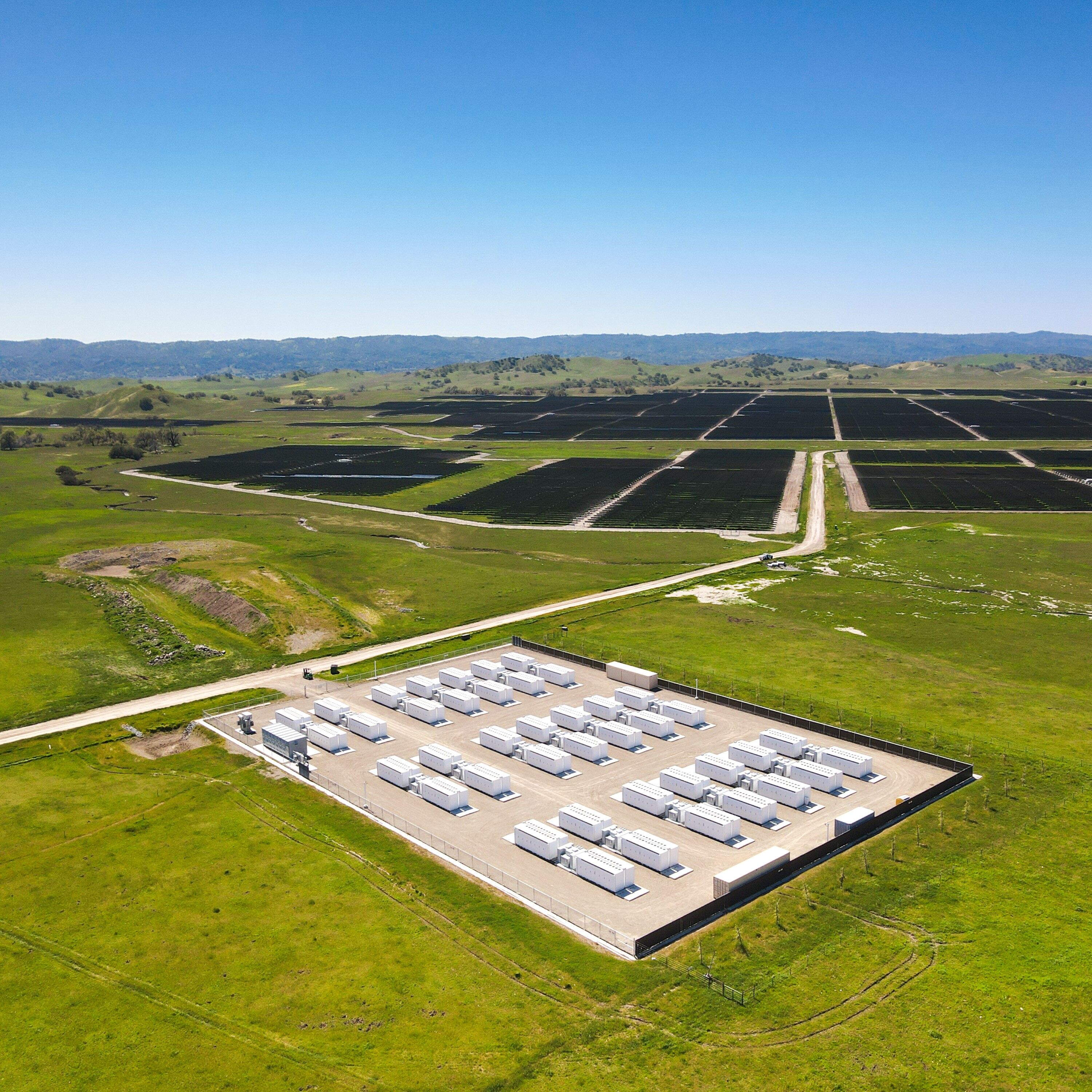
I mean, just a few years ago, it was unimaginable. Grid scale storage like this, it was basically a dream technology for renewable companies, what if scenario? Right. And those companies historically have been using technologies at the whim of the weather, if the sun doesn't shine solar energies and so great. It's the wind doesn't blow exactly. And battery storage, it changes that equation. Right because you can store energy inside a battery somehow. And then tap into it whenever it's needed. Well, that dream tech is now very much mainstream. Around 2020 to 2021, battery storage capacity jumped 230% across the US. More and more was added in 22, 23, and it really took off, particularly in California. To see it for myself, I showed up to a site called CalFlatz in Central California. It's this 2,900 acre plot of land just covered in solar panels. There's like goats running around, there's little fox habitats. The extra energy generated from all that solar flows straight into batteries, right on site.
These containers you see with, you know, what is it, six or seven doors. And each one of these containers has a bunch of modules that would look like big suitcases that have the battery cells, the DC batteries. That's Justin Johnson, the COO of a RIVAN company that owns CalFlatz. When we talk about battery storage, this is what people are referring to. Rows and rows of stacked battery suitcases, basically, in a container that's like eight feet high, basically a cabinet. Oh, that's kind of small. How much power is this site creating? So the site has enough storage capacity to provide electricity to around 60,000 homes for a few hours. Oh, that's a lot. Yeah, it's a lot. RIVAN sells that energy to Apple and PG&E, the state's largest utility. Justin Johnson says there is no shortage of customers, though. If you have a solar plant or a battery plant or a combination, you know, a solar and battery plant anywhere in the US, that's right, if they built these days, you can find an off-taker.
Right. I mean, so much more electricity is needed these days with so many electric vehicles on the road and new data centers for artificial intelligence. Exactly. So Emily, today on the show, we tackle the technological reasons behind batteries taking off so fast, and what's next for them? Let's go on a battery powered magic carpet ride. You're listening to shortwave from NPR. This message comes from Edward Jones, where they believe rich is more than caring about the latest and greatest. It's also about taking care of what gives your life meaning. That's why your dedicated financial advisor meets you where you are with personalized financial strategies that help protect what matters so you can preserve your progress while creating a path forward. The key to being rich is knowing what counts. Let's find your rich together.
Edward Jones, member SIPC. This message comes from 11 Labs, whose AI-powered voice and chat agents can hold full conversations in over 70 languages to engage with customers and resolve issues. If you run a business or handle customer operations across support, sales or marketing, see how 11 agents can fit into your workflows and help build experiences that your customers will love. Get a demo at 11labs.io-slave-e-l-e-v-e-n-labs.io-slave So grid scale battery storage has taken off the past few years, but Cooper a lot of different technologies have their moment. So why is this rise to the mainstream for battery tech different in some way? Yeah, I mean, it's not like one day some company said we're going to make batteries powerful enough to support the grid. That would have been awesome, but it kind of has to go back a ways.
The batteries I saw on CalFlats, it arguably goes back to the 90s when Sony introduced their camcorder with a low rechargeable battery inside of it. Dan Walter studies the rapid growth of electro tech like batteries. And the first sector, you roll out batteries that are just good enough for that sector and they just meet the demands of the Sony camcorder. These batteries I feel like I've seen a descendant of them in my digital camera, they're the kind of boxy cube batteries that you can recharge. Right, it's kind of satisfying to click in at that one. We've all definitely used those batteries at some point. It's basically at the root of what Dan calls the battery domino effect. Because that is a growing market and that market expands, you can create more and more factories that make batteries. And as you build more factories, it becomes cheaper and the batteries become of higher quality. Over time, people wanted longer lasting and cheaper batteries. So companies had an incentive to develop them.
You get a technology development that's very rapid driven by a group of consumers that has a very high willingness to pay. We're battery hungry in the 90s and the odds. Yeah, and the whole story starts over as another sector finds use for that same battery. Camcorders, laptops, e-bikes, three-wheelers cars. Each sector is full of people who want better batteries and will pay for it. It really has been a story of consumerism but also clever policy of countries that have realized that there's a competitive advantage in winning batteries. This is astonishing about this story as I was alive during this battery revolution and I witnessed it from childhood to now. And I kind of just took it for granted that battery tech was like racing to keep up with our voracious need. Then I think about electric vehicles coming along. I mean, those must have bumped this development even more. Evis are everywhere. That's a perfect transition to Dan's second point because the growth of EVs is a big part of this story. Long before others were investing in battery storage like back in the OTS, leadership in
China saw an opportunity with the technology and became a hub for manufacturing batteries. It wasn't a big market yet but they saw an opportunity. Wow. And as EV has got more popular, it drove the volume of larger, lighter, denser batteries way up that made batteries way cheaper. How cheap are we talking? Since 2010, the average cost of batteries has fallen more than 90%, which is one of the fastest cost drops of any energy technology ever. Whoa. It's grown into new markets, new countries. And by 2021, battery storage finally reached that tipping point in the US, where they were literally contributing electricity to the entire grid. Right. And you mentioned that earlier, that 2021 was the year there was this big jump that battery storage capacity increased 230%. Right. No, exactly. And that brings us to the situation today where batteries are all over the economy in cars and mopeds and buses and trucks to drive them around. I have chills. I mean, this was a great time.
And it's kind of cool to hear that the legacy of my iPod served a greater purpose. Never let it go. Yep. Exactly. Now, you remember the battery I mentioned earlier? Oh, yeah. The cube battery that debuted in the 90s with the Sony camcorder. That's the one. Yeah. Yeah. That was a game changer for battery storage because it used lithium ion technology, which was way more energy dense than what we had. Nickel-cadmium or lead acid batteries. I energy dense meaning. Meaning lithium ion batteries can hold the charge for longer. They're lighter. It can be recharged a lot more time. It's more energy efficient. I've always wondered this. Is there anything specific to lithium that makes this possible? Like, why is this so special? Yeah, it's a good question. I mean, for one, they're incredibly light compared to nickel or lead. It also gives up its electron really easily, which is important given that a battery works when electrons flow from the negative electrode to the positive one. I have made enough lemon batteries to know this. Yes. The negative electrode is the anode. It releases electrons and the positive electrode is the cathode.
And that absorbs the electrons and when they are recharged, the electrons move back. It's like a cycle. We should just use lemons to power our grid. What are we doing? Right. Yeah. So you're saying lithium ion batteries are easily allowing this like electron transfer to happen. Exactly. And as these batteries became more advanced, new types of lithium ion batteries came about. So there's lithium iron phosphate battery, for example, which is cheaper and less flammable than its precursors. It's also less energy dense, but it's low cost made that worthwhile. Batteries at CalFlats, for example, are LFPs, this lithium iron phosphate, and they can hold like four hours of energy. Okay. So that's where we're at today. These cabinets of lithium iron phosphate batteries, LFPs have become the standard for grid scale battery storage. And it sounds like that technology is growing quickly. Yeah.
And the domino effect and an affordable, powerful chemistry for batteries have allowed this technology to grow exponentially. Is there any reason for this momentum behind battery sales to ever stop? Like can we forever expect batteries to keep growing at this exponential rate? Well, forever, I don't know. But analysts like Dan Walter definitely see the dominoes continuing to fall for the foreseeable future. He sees batteries storage advancing from cars and the grid to maybe even like free chips, even planes. Five years ago, everyone would have called us crazy for saying electric aviation can be possible. Today, I think we're seeing some really interesting first signs that, you know, 20 seats are electric planes that can fly most of the flights within the US, within Europe, but within China. That is wild. This plane, it's on an upward trajectory, and so is battery storage. It's really in that position to be disrupted further and likely through new chemistries. For example, sodium ion batteries are still a young technology, but they're projected to
follow in the footsteps of LFP batteries. Oh, why is that? Sodium ion batteries are even cheaper than LFP's in part because they rely less on critical minerals, but also sodium is just kind of everywhere. It's literally a thousand times more abundant than lithium. And these batteries don't perform as well as LFP's, but the market could say will take lower performance at that cost. Right. Okay. The other benefit of sodium ion batteries, they're less taxing on the environment. So sodium is so abundant, there's less pressure to dig deeper and deeper or in a far-flung places of the world. They also don't rely on minerals like cobalt or nickel, which are both known for being super water intensive and have including mining processes. That's an exciting prospect that these sodium ion batteries might be a thing. Okay. You mentioned earlier that most batteries used for grid scale storage have but a four-hour capacity. What about batteries that can last longer? So there are some versions that can go for days and one of those is the Redox Flow
Battery, which is currently used on a much smaller scale, but it could change the story from just four hours to daily or even multi-day capacity. That's just amazing to imagine a battery that could last for days. How would that work? How does this Redox Flow Battery work? It really would redefine how batteries are made. Inside each battery, there are two electrodes that we talked about the cathode and the anode. And in between them, there's liquid. Whenever electrons move from one side to the other, there's an automatic discharge. And with the Redox Flow Battery, those two sides are completely separate. So it can maintain a charge way better. Yeah, I can see that. So how batteries are made, they're changing chemistries. These are all reasons batteries have followed this upward trajectory. Cooper, I am located in DC. Are you telling me that if I turned on the lights someday, is there a chance that power could come from a battery? It's grown fast. By 2030, some forecasts have capacity increasing by like 400 percent and it's already high.
So all this, it's very exciting to denwalter. So we all hear about like new AI breakthroughs every day, every sort of extra billion parameters on a new AI model, everyone gets super excited about. But when we talk about batteries, there are huge breakthroughs happening. But are changing our energy landscape and therefore our entire economy. And no one really seems to be paying attention to it. Well, we are definitely paying attention to it. Shortwave and the indicator. Thanks to you. Thanks Emily. The shortwave is the full battery series Cooper led for the indicator is out now. We will link to the series in our show notes. In addition to a previous episode, we did on long term battery storage and batteries of the future. Now. This episode was produced by Richard Carlson and edited by our show owner Rebecca Amirez. Tyler Jones checked the facts. Quacy Lee was the audio engineer. Beth Donovan is our senior director and Colin Campbell is our senior vice president of podcasting strategy. I'm Emily Quang.
Thank you for listening to Shortwave, the science podcast from NPR. Support for NPR and the following message come from Henry Ford Health. In the game of life, science is undefeated. It doesn't stand still or accept limits. It learns, adapts and evolves. That's why Henry Ford Health is working together to keep pushing medicine forward. Not just following science, but advancing it every single day. Make their doctors performing Michigan's first beating heart transplant, leading to faster recovery and better patient outcomes or developing remote ultrasound diagnostics used by astronauts so medical expertise can travel beyond the hospital. Because the future of healthcare belongs to those who move science forward, who never stop searching and challenging what's possible. If science is where progress begins, Henry Ford is where science leads.
Science for the win. Henry Ford Health. We are Henry. And more at Henry4.com slash science for the win.
More episodes
More from Short Wave

The latest on AI panic — and whether it's justified
Short Wave

Why you'll probably be misdiagnosed in your lifetime
Short Wave

Should race affect BMI guidelines? Doctors are split
Short Wave

How scientists discovered that animals are doctors, too
Short Wave