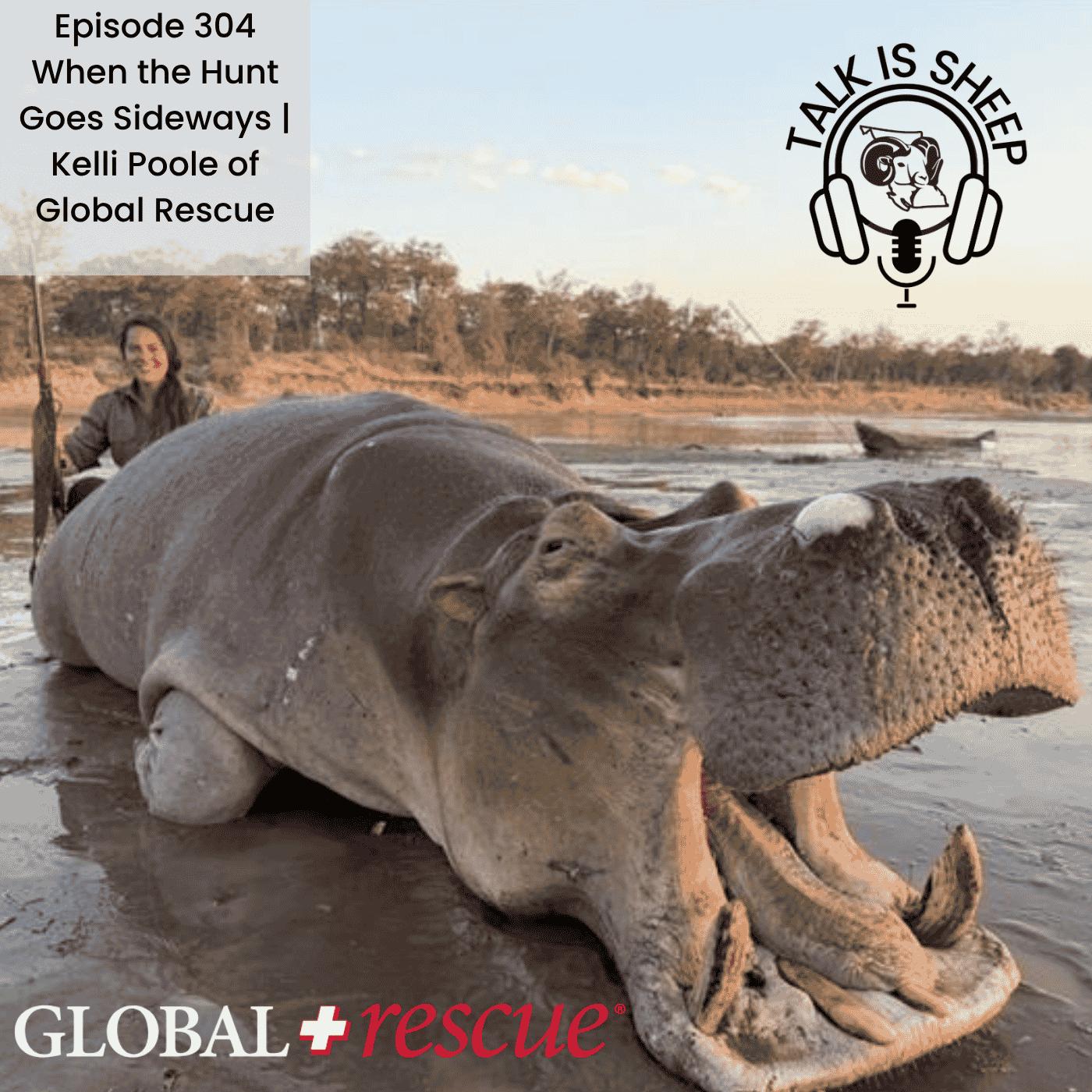
About this episode
Talk Is Sheep is made possible by:
On this episode of Talk Is Sheep, Kyle sits down with Kelli Poole of Global Rescue for a wide-ranging conversation about hunting, wildlife conservation, international adventure—and what happens when the trip you spent months preparing for suddenly goes sideways.
Kelli’s path into the hunting industry is anything but ordinary. With a background in wildlife biology and management, she has worked with wild sheep, contributed to wildlife management projects in Montana and Colorado, and spent time in Central Asia working around Marco Polo sheep, ibex and community-based conservation. Today, she leads the hunting vertical for Global Rescue.
Fresh off a safari in Zambia, Kelli shares stories from Africa, her passion for predator hunting, the incredible biodiversity found on the continent and how different wildlife management models around the world can contribute to healthy wildlife populations.
Then the conversation turns to something every mountain hunter and international traveller should be thinking about: what is your plan when something goes wrong?
A broken leg deep in the backcountry. A serious medical emergency overseas. An accident hundreds of kilometres from appropriate medical care. We spend countless hours preparing our equipment, rifles, bows, fitness and logistics—but emergency planning can easily become an afterthought.
That is why the Wild Sheep Society of BC is proud to be a Global Rescue Safe Travel Partner.
Global Rescue provides medical, security, travel risk and crisis response services around the world, including 24/7/365 medical advisory, field rescue from the point of illness or injury, and medical evacuation to a member’s hospital of choice when required. Their medical memberships do not place limitations on activities—an important consideration for hunters and adventurers heading into remote country.
Without the right protection, an emergency evacuation can cost well over $100,000. More than one million members trust Global Rescue when the unexpected happens.
Global Rescue also offers access to IMG Signature Travel Insurance℠ as an add-on to a Global Rescue membership, helping protect the financial investment you have made in your trip against a variety of unforeseen circumstances.
If you hunt, travel internationally or spend time in remote country, this is a conversation worth hearing before your next adventure.
Learn more about the WSSBC / Global Rescue partnership and explore membership options here:
https://partner.globalrescue.com/wildsheepsociety/index.html
Travel prepared. Hunt hard. And make sure you have a plan for getting home.
Presented by: @sitkagear
This episode is sponsored by our Conservation Partner: @stoneglacier
Get every episode summarized
Each time Talk Is Sheep publishes, we email you a written briefing from the transcript — the topics, who appeared, and any specific claims, with the ad reads skipped.
Email me new episodesFree for 3 shows. No card needed.
Hosts & guests
Transcript ready
411 searchable segments. Every word is indexed and playable.
Full transcript
Talk Is Sheep — When the Hunt Goes Sideways | Kelli Poole of Global Rescue. Machine-transcribed; use the interactive transcript above to jump the player to any line.
This is Talk Is Sheep, the official podcast of the Wild Sheep Society BC, brought to you by Sikki Geer. Come along as we bring conversations that matter to you into the high L-Pie. This episode is sponsored by our Conservation Partner, Stone Glacier. Thank you Sikki Geer and Stone Glacier for investing in healthy wildlife and sustainable ecosystems. Welcome back to Talk Is Sheep, the official podcast of the Wild Sheep Society of British Columbia, which is brought to you by Sikki Geer. Today we're going to travel a little further from the high L-Pie and head all the way over to Africa. Today we're absolutely honored and privileged to have Kelly Poole in the studio from Global Rescue. Kelly has built a great life around wildlife hunting conservation adventure and obviously has a strong background in wildlife management, which we're going to dive into today. And of course, hunted around the world, which will lead us to the great work that she's doing through Global Rescue.
And she's got a front row seat of what happens when things just don't go the way they were supposed to. Kelly's just got back from Safari and we're going to dive into that today, so I'm super stoked about that. And then I think the important part that I want to dive into today with you, Kelly, is what every mountain hunter or anyone advancing around the world needs to think about is what happens when things go wrong. We always spend so much time planning for our hunt, doing all this work with getting our gear, our bows, our rifle, training and everything else. But how many people are thinking about what happens when things go wrong and they do often go wrong. So love the work that Global Rescue's doing, so I look forward to diving into that. So many things to talk about. Kelly, welcome to Talk Is Sheep. And literally, since I think Delas Safari clubs show in January to put this together, we made an effort there. But we're like, no, no, let's just do it remotely because it's just too crazy. The show was busy, busy, busy.
And then of course, we did a great recording that didn't pan out for technical reasons. So here we are. Welcome. Finally again. Yeah, thanks, Kelly. Yeah, I'm glad we could get it all together and yeah, show season is so crazy. And so we did, we gave it a lot of effort and I'm happy we can sit down and chat today. Well, I'm really grateful for you and your patients and you know, you're an incredibly busy person and got a million things on the go. So to take time on your busy schedule. So I'm really excited to dive into a whole bunch of things. And I know Kelly, this is officially your first time on the show, even though we've recorded a few of these already, but your first time on the show. I'd like to just dive into sort of your background and you've got a very, very interesting journey to global rescue. And you know, again, you're my people. I just anyone in the conservation space and you come from a place of like hunter conservationist and conservationist first you've done so much work in the realm of wildlife and then you know, you've expanded your circles and gone on to do other cool stuff.
So let's just sort of scratch a surface on who Kelly pool is and your journey that brought you here today. Yeah, perfect. Yeah, so I have quite a interesting resume. I guess you could call it probably not the norm. But that keeps it fun. I mean, sometimes you're on a path and there's a side road and you're like, oh, let's go see what's down there. That's sort of been how I've lived my life and ended up where I'm at. But like you mentioned, I have a background in wildlife management and biology. I really got interested in conservation and wildlife management and biology because of hunting specifically. I thought, you know, how can I really be impactful with wildlife and wildlife management. I have, you know, background and some photography. But I really wanted to know how I could actually encourage change, help with management plans really with hunting be it being at the top of that mountain being the precipice of my interest.
So I did a lot of work specifically with wild sheep. And so have worked closely with wild sheep foundation for a lot of years of my biology worked on a couple different herd management plans in Montana specifically did some working Colorado. And so I've always had an interest in sheep specifically, but also, you know, mountain ungulates and just wildlife management and conservation. That led me to work on a project in Central Asia in Tajikistan specifically working with women guides and camps there and wild sheep is also very, very much part of that those projects and those projects that continue to go on. Which led me to look at, you know, what else I could do in the hunting industry. I had originally thought that some of that work in Tajikistan would have landed me there more permanently looking at some, you know, higher level research projects, you know, on Mercopolo or I bucks.
But then COVID obviously COVID shut a lot of people's international plans down just a lot of plans really in general. So I looked at some more opportunities in the hunting space. I've been in the industry now for at least 15 years. I've never actually sat down and kind of looked at it, but I've worked for some amazing companies in the hunting industry, which has led me to my position here at Global Rescue where I run the hunting vertical of global. As you said, I've spent a lot of time overseas, be it hunting myself or with conservation initiatives, you know, looking at wild sheep populations among other animals specifically to the kind of the big game hunting arena. Very cool. So you made a statement right at the start there, Kelly, about how hunting brought you to the conservation space, not the other way around. Talk a little bit about sort of your journey and hunting, like sort of when you got involved and sort of that that journey that you took to get into, I guess the conservation aspect of it.
Just paid a picture for us on that. Yeah, so I grew up in the Midwest, a lot of white tail, you know, upland game. I like to say I really dug into it when I moved out west Colorado. You know, that's just a whole different game of, you know, using a rifle rather than shotguns and really understanding the pursuit of game, understanding life history of animals, understanding, you know, what, what and when the rut is. And then just the variety of species. So really got into big game western hunting and understanding hunting, I would say. In to what event 2009 is when I moved out west. And so just thinking about, I mean, I think it's a huge misconception outside of the hunting world that hunters hate wildlife. I mean, I had just had this driven passion to observe wildlife and track wildlife and understand wildlife has a hunter.
And so that was really what drove my career path towards biology. I just loved anatomy and physiology. You know, you get an animal on the ground and you got them and you quarter them. You know, in the west, you have to obviously take your game out on your back. I'd say what 99% of the time. So you're learning anatomy. I even was a butcher in college just to learn more about what you're animals. You know, and so I did a lot of the big game processing and a local book, what your shop and bozeman Montana. I was going to school. And so yeah, it's maybe a non traditional approach. Maybe people have a love for wildlife and then understand how hunting is a part of it. But for me, I came in as a hunter saying, I love this game so much. I love wildlife so much. How can I be impactful defending and preserving a resource? You know, as I continue to grow up and I, you know, the next generation of hunters, the local hunters, the people who want to come and experience this, I think.
I wanted to be proactive and sort of protecting what amazing resource we have. Right on. So obviously went to MSU one town of state university. Yeah, right on. I like to, you know, it's interesting. You talked about people think hunters hate animals. And I'm sure I want interested to learn a little bit about your experience going through school. You know, we talked about like, if we've Google 50 years back, people were quite comfortable with hunting and trapping and you know, this, this sustainable use way of life. It was sort of very, you know, not a big, there was obviously anti hunters back then too, but not to the level like today. It seems like, you know, just this grounds, while you mentioned Colorado, we know what's happening there, all that stuff. So there's been this kind of this erosion of science based wildlife management. I'm curious to know that, you know, when you flash back to 15 years ago, when you were going to MSU, what was it like then? Was it like, were you sort of the anomaly where you were like a hunter taking biology and going to science based wildlife management or wildlife management.
Or was it like a lot of like-minded people, a lot of people like you, because I hear it's interesting. René Thornton, I've heard her talk about it through her women hunt program. How about, you know, they're really involved with the wildlife society and making sure that science based wildlife management and hunting plays that role in there and that we're not forgotten because there's this evolution from the science side to the emotional side. And, you know, a lot of the bios that are coming through now are maybe not pro hunting at all. So talk about your experience in, you know, when you were going through MSU, what was like and what your cohorts or your fellow students were like. Yeah, that's a really interesting question that actually tell the story quite often. I think I was working for the state agencies and attending school great at that divergence of non-hunter versus the state agency. I remember in my lab, there was about 12 to 14 of us and our professor asked us how many were hunters and two of us raised our hands.
And I remember thinking in my head, this is going to be a huge problem. I had done, even as a wildlife biologist, I had done right along with Game Wardens. You know, it helped the fisheries biologist. I kind of helped wherever I could experience as much as I could. In the amount of staff you would see Colorado specifically of non-hunting employees was alarming. I had gone to commission meetings, you know, gone to public public meetings. And I knew I knew at that moment that we were going to run into an issue with with wildlife management. I know in some states they will hire Game Wardens that don't hunt. And I just can't imagine, like you said, it remaining a science-based discipline with an emotional backing.
Because it's reality is, I mean, we live in a world where wildlife has to be managed. I know that people love this idea of leave it alone and it nature regulates itself. And all of these, you know, nice ideas, which, you know, has some truth to it. However, we are developing more. We have more people. We are concentrating wildlife. We're changing life histories, you know, prairie animals, elk sheep. You still live on the prairies are now pushed into the mountains, the deep timber. You know, I've worked on some some Gamebird relocation projects. What they were finding is we're capturing relocating these birds to the best of the worst habitat they can live in. Because it's all that's left. So, you know, it's, it is concerning. And I think we're seeing some of that, you know, in the US with some of these reintroduction programs with some predators. Again, it's, it would be a beautiful story if in theory these things can work. The reality is, the world is different. It's, you know, you talk to a lot of, a lot of hunters, a lot of biologists, oh, and in the good old days. Well, it's just, it's just not that. You know, I had a professor that said wildlife management is harder than rocket science. And it's true.
Once you think you have everything figured out, it's a hard winner. There's a die off. There's a new development. There's a new road. There's wind turbines going in. It's a very, very hard discipline and you're gambling with, with living things. So, take big risk. It could be a great reward or it could be catastrophic. And it's a while, you know, in the US, it's in Canada, I believe, as well as public resource. So, you're gambling with yours and mine and your neighbors and your brothers resources. So, yeah, I did see or started to see that sort of shift at the collegiate level of, you know, I'm in biology because I love animals. I'm in biology because I hear actually about animals on the fundamental level of management. And, and, and, and regarded as a public resource. So, yeah, I hope I'll be interested to see sort of, you know, what happens. I think we're seeing some pushback in the US and in Colorado thank goodness.
But, yeah, wildlife can't survive on emotions. Yeah. Yeah. Well, and it's interesting like not to belabor the issue, but with the commission in Colorado right now with this shift and the appointments that have happened there, it's, it's pretty crazy in the old, the old schools like sounding alarms. And it's like, it's not not great. So, it's going to be an interesting evolution to see. And in some ways, you kind of like not that we want Colorado to suffer from it, but hey, you know, you want your pet project to go through, see how that's going to work out for you. Let's see how the resource looks 10 years from now. Like obviously, I don't want that to happen because it'd be like you said catastrophic. But, man, if they start, you know, managing it based on emotion and ignoring the professionals. And then, and then that begs the questions, why do you even have a wildlife department if you're not going to listen to the professionals that are running it right. That's just makes you wonder. So, but yeah, it's, it's an interesting dichotomy where we're at right now, fork in the roads, if you will. And it'll be, I'll be curious to see which direction goes.
It's good to see that there's so many states that are and provinces to that are invested still in in the old school way of actually using science for wildlife who would have thought of that, but it'll be an interesting. But anyway, that's, I hadn't intended to dive down this rabbit hole, but it was front of mind when we started talking about it. So, interesting. So, if we can move on, Kelly, let's talk a little bit about obviously grew up with, you know, water fall and all kinds of stuff like that, white tail hunting and stuff like that. And then you came out West. So, and then obviously you've had this recent trip to Africa. And it's not your first, you kind of become a season professional there as well. Just talk a little bit about your, I guess your expansion, your hunting interests, your career and what that, you know, that expansion, what that's looked like in that evolution for you move as you've moved along in your, in your hunting space, I guess. Yeah. So, I like to say there's four seasons of hunting every hunter goes through. There's the any many big and rare.
So, you first get into hunting and you're going to hunt anything, right? You're like, man, let's, let's try deer hunting, elk hunting, bear hunting. And then once you sort of tasted it, then you're like, let's get as many as we can get as we can get right. You're not necessarily passing on bugs, you're not passing on animals because you want to get as much experience and kind of, you know, really dive into it. And then you go for big. So now you're sort of in a season of, you know, we're going to pass on the smaller bug, you're going to pass on the younger, you're going to search for those really old mature sort of trophies, if you will. And then you move to rare. So now you're just looking for, you know, maybe that really weird sheep with the horn going through the head or the broken horn or something that, you know, that only you could get at that moment. That's really rare out there. So, yeah, I mean, I have gone through, you know, sort of that process with, you know, I'm in different spots, a different species.
But I have really sort of landed on the predator side of hunting. That's my favorite bear. I still hunt deer and elk, you know, we get general tags here in Wyoming. So, you know, great way to fill the freezer and, you know, get out in the mountains, but I just love predator hunting. I started bear hunting in 2020 and have just, you know, really attached to that. It's just a whole different kind of hunting. It's been a lot of fun. And then, you know, sort of expanding my horizons on international. So I really only got into international hunting. Gosh, about three, four years ago, just I loved to travel. And so hunting, you know, is a perfect way to, you know, fill up your PTO, see a new culture, get remote. You want a true cultural experience. You go into these remote villages, these remote areas of the world. You see incredible wildlife and mountains.
And you get to sort of do it all in one place. I'm always exhausted after my vacation. But I just, I don't think I've taken a non hunting vacation in a long time. That's awesome. Let's touch a little bit on what, just curious, like what is it that predators that you love? Like what is it? Is it the adrenaline like the danger aspect or is it, obviously, you're doing something very good for the environment, like your many cases, helping to manage, you know, the dynamics there. What's the drive for you on the predator side? Yeah, it's good question. I think because you have to just hunt them so differently. You don't get to like hike up the mountain and find a pack of bears, you know. You're looking for that one old boy. And he's smart, right? He's not going to come out and just walk around during the day.
You have to outsmart an animal that is, is very intelligent is also, you know, looking to feed themselves. So I almost feel like it's sort of a level level up, like we're kind of trying to outsmart each other. They have great senses of smell. And, and they're just, yeah, we're on the same level as far as, as trying to feed ourselves and, and, and hunt game. And so I think I like that challenge. It's always in the back of your mind that they're also they also kind of harm you, which, you know, kind of raises the stakes a little bit. You have to be on like you can't be, you can't be, you know, kind of half, you know, half-assing it and just sort of, you know, trying to find a brown bear or a black bear or, you know, lion, that sort of thing. You have to really be switched on. So I think, yeah, it's like, it's really engaging, I think, is, is what I love about it.
Do you have a sort of favorite, like is it deal bears, wolves or, and I think more so, like, is there an animal that you haven't taken that's like on your bucket list that you absolutely want to hunt? Yeah, it was funny. I was just talking to someone about this the other day, love bears. But I think my favorite predator I've taken so far is the spotted hyena. Just because they're, they're ancient, they're massive. Most people think, you know, coyote wolf size. I shot one last year in South Africa was 160 pounds. So I mean, they are just big animals and that the strength and their jaw and yeah, that's probably my favorite predator I've hunted so far. And then, well, sorry, what was the other question? So is there like an aspirational animal that you want to hunt? Like, is there some predator that's on the bucket list that you absolutely need to do? So I do have a hunt booked for next year. That would be, well, there's a couple. This is one of them leopard is, wow, because that is actually very dangerous.
They call them the chainsaw tea, you know, 100, but I say 100 stitches a second. So that one, that one's going to be really fun. Every pH of talk to said, you know, they've been in the blind with, you know, hundreds of on leopard hunts and they said, there's nothing that will get that heartbeat doubt said, I've seen hundreds, but it's still your, your heart is pumping so hard. So I'm really excited about that. And then brown bear, you know, I've been applying for that in Alaska, that sort of the big bear polar bear would be amazing. Obviously can't import them. So I have a hard time with that, not that that affects the management, you know, it's, you know, everything is legal there. I just would have our time not taking it home. So you could send it to my house. I take care of it for you. So, I mean, maybe one day polar bear, I would love to see us be able to import them. But yeah, brown bear, obviously, we can, we can have.
And then some of those flying would be amazing as well. Some of these big, just iconic predators would be, would be very, very cool. Awesome. Now on the spotted hyena is that, is that over a bait, you said on a bait is it with that or how do you guys hunt them? So we actually called, called it in. Okay. It was one of those stories. And I'm sure you've experienced this many hunters do where it's just your animal. I mean, you just, at all the stars align. I hadn't even been in camp for a whole day. We arrived that afternoon. We said, okay, we're going to go for hyena tonight. Shot the rifles went out first set, five minutes in. Set up a Warthug squeal and in walks the hyena. Perfect shot. Guys, right there. And it was an old, old female. And the females are actually larger than the males. And so it got just an amazing trophy with it and out of it in camp for a day.
All the pHs were like, it took the last guy 14 days. So, I mean, it just just meant to be, you know, for me. And they do traditionally hunt with fate as well. But, you know, hunting a lot of coyote and that it was cool to call them in. You know, we did a little bit of predator hunting jackal and called in some other animals as well, which is really cool. That's awesome. Now with that hyena, are you getting you rugged and do the skull or what do you guys do with that? Full body mouth. That's awesome. That's very cool. That's the way it should be done. Right? If you've got, got the resources to do it, that's awesome. Yeah. Very cool. Yeah. Usually when I plan a hunt, it's about double because I know I'm going to full body man about as much as I can. That's awesome. Very cool. Okay. Let's dive into your, so Africa. So, you, well, first of all, before we do that, you mentioned like these, you know, these rare hunts and the like, and I think like one that I've always thought is a pretty cool one.
Like sheep's gotten ridiculous, right? Like you go on a sheep hunt North America unless you get a draw somewhere, you know, that you're lucky if you get one under 60 or 70,000. And then of course, they're upwards of 100 plus. So, so that's a challenge. But some, like there's some really affordable European hunts, international hunts. You know, Ibex and Muflawn and a whole bunch of other stuff like that. Have you done any of that stuff at all Kelly? Have you done any of those? And like I look at high backs and like seems very affordable. Just like super cool species amazing. So just chat a little bit about if you've done that and if you have any aspirations as well. Yeah. It is, like, fastly becoming one of my favorite hunts is to go to Europe. It is much different hunting. However, you can make it as harder as easy as you like. So I have been to the UK and have done road here, which those are amazing animals.
Those cool little endemic deer to the UK. And I've also done chamois chamois in Spain. So that was a different area than the Ibex are in, but those are real mountains. And again, you can sort of make them as difficult or as easy as you'd like. And I know it depends on which species you're hunting. What could be easier or harder. But the nice thing about the UK and hunting Europe is that you can go on the hunt, go home, take a shower, have a glass of wine and go out the next day. You can also spend the night on the mountain in the tent to be like, but typically you're kind of day hunting as you go. So yeah, I think it's 100% worth looking into. I think there's so many cool species you can hunt, the cool deer in the UK, all the Ibex in Spain, the Muflaun. And then you know bears, speaking bears, you can go to Romania, Croatia, you know, and and kind of pair those UK travels with these really, really fun hunts.
That's awesome. You know, did you say you worked on Ibex in like that was part of your work through your when you were in the wildlife management side of things or no. We did a little bit into jica stand, obviously in the premier mountains into jica, that's the central Asia, Ibex along with the Michael, so did do a little bit, although it's quite different species of Ibex, but yeah, got to look over quite a few, which is really cool. So did that peak in your interest? Do you have an aspirations of going to an Ibex hunter, Markle Polar, something down the road or? Yeah, I think so for sure. Ibex for sure, but speaking of predators, I would love to go over there and do more on the wolf jackal side. They also have incredible marmot hunting. So yeah, I'll absolutely go and hunt there myself. And yeah, talking about kind of comparing prices and opportunities with the US and Canada and Mexico, she, man, the prices and opportunities and just game densities in central Asia.
It's really unmatched. So for less than $10,000 to go shoot in Ibex or even comparing Markle Polar prices to just even a stone sheet. I mean, I think you can get at least two Markle Polar for a stone sheet now. It's crazy. I remember Markle Polar was always like, oh, it's, it's not affordable. So and now it's like, no, it's pretty affordable actually. And it's certainly compared to any other sheep in North America. It's cheap. So no kidding. I know it is getting insane. Yeah, yeah, it's cool. But there's also that, you know, it's interesting. So many people are sort of reluctant or afraid of, you know, my wife said recently, oh, I'm on goal. Yeah, that's like that's, that's too unsafe. I'm like, Glenn Landruses over there hunting right now. It's like, it's not, it's very, very like, of course, like he, I'm not saying, don't be naive, but which is going to lead this global risk. This is a great segue. At some point, but it's, it's not really that it's not unsafe, right? It's there's great hunting opportunities. And you know, there's just perception that it's unsafe, but it really isn't at all.
Yeah, exactly. I think like you just said, keep your wits about you, you know, be smart. But I use, I mean, both times I went to jica stand. I went solo. Right. And so I did a lot of travel on my own as a, as a female. And anyone who's, who's hunted into jica or gone to Central Asia, I mean, it's at least two days of travel, you're flight of the airport, you know, and then you drive 12 plus hours and you get to a very remote camp. But I, I thought they were some of the nicest people I've ever met. They always said, when I left, come home to your family. They took me in like one of their own. I just, I couldn't say enough good things about those people and about, you know, the guides and the people you encounter. Now, I didn't spend a lot of time in, in fish, cack or a douche, on bay. Where, you know, just like we have in the bigger cities, bigger towns, there's just more crime. I feel the same about after after you get out of Cape Town and Joe bird.
And some of the capitals and you go more remote, the more safe you feel now, you're further away from from hospitalization. That's true. However, I feel like, you know, in the presence of those people who live out there. I've never felt threatened like anything was going to happen to me at all, even traveling so well as a woman. Yeah, that's cool. Okay, let's dive into you mentioned Africa. I know you just got back. You've done. We, the first one we recorded it was before your trip and we're all amp and I'm up for that. But so let's, let's dive into Africa. So first of all, let's start off with what led you there? Like how did you, what gave you the Africa bug and it, you know, it seems to be a pandemic is like once you get the taste, you're like, no, no, I got to go back. I got a buddy of mine that was there last year. He went again this year. It hasn't even been eight months or something. And, and I'm like, dude, you live in BC. Like you can go stone jumping, she punting every year. You can do all the stuff. And he's like, no, no, I'm going to Africa. Man, it's just, and I get it now having been. It's just phenomenal. So what, what got you there the first time and then talk about that hook that gets you, gets set once you've done it.
Yeah, that's, so it's an interesting story. So I have been in love with Africa since I was a child. My dad was in the Navy and stationed in Nairobi, Kenya. So my dad would send postcards. He would bring the little African statues home. And so I just grew up with this fascination and love for Africa. They would buy me, you know, national geographic books and I'd look at all the, all the animals. So I actually went for my very first time a non hunting trip in 2014 and spent a couple months just touring. I started in South Africa. I went to Zambia, Zimbabwe, Malawi, Mozambique. Sort of out of photo tour. Again, just love for wildlife. I wanted to really experience Africa. So it was a non hunting trip. But I, I, that's what kind of grew my love for Africa after that first trip. And so my first hunt in Africa was actually last year, November.
So it took me quite a few more years to go over there and actually hunt. And so I had gone over to speak and attend Faza, professional hunters association of South Africa. They're a big partner of ours at Global Rescue. And then used some of my remaining PTO to hunt with a partner of ours over there and, you know, had my kind of odd, you know, want list. You know, I didn't do the traditional planes game. And again, it's not because I don't love that wildlife. It's just I have always had this either predator or sort of odd. You know, animal list is attracted to sort of the odd critters. So hunted behind me and civet and giraffe, porcupine, sort of some odd animals. And it did a ladies trip. So a really good friend of mine actually my taxidermist wife Sophie came with me. She had on it in Africa multiple times. And we hunted with a good friend of ours.
And so I mean, like you just said, once you go and even on the hunting side or the non hunting side, I cannot think of anything that is is, you know, matched as far as diversity of game. I mean, it's crazy when you drive around in those vehicles or you're stalking. And you just see wildlife everywhere. And it's not just, oh, there's a white tail. There's a white tail. There's a white tail. It's there's a way. There's a wildebeest. There's a kudu. There's an Impala. You know, there's a war talk. It's just the diversity is incredible. And so if you like wildlife at all, I mean, you just the excitement to see all of this wildlife is amazing. And so that was sort of my first, my first hunting trip was last year in South Africa. They say that South Africa is kind of a good entry level country to go to. You know, there's a, there's a lot of different concessions there. And then they work off, you know, their own private game reserve. So you want to hunt wildebeest, you can you want to hunt an Impala, you want to hunt any critter almost and you can you can pay for pay that trophy fee.
But the trip I was just on was in Zambia where the permits are issued by the government. So kind of similar to Canada where, you know, you get X amount of tags per commit or for concession. So you might go to a camp and it's based on that area and they have, you know, 10 elephant tags, they have 15 hit tags, they have three leopard tags and they cannot hunt any animal outside of those issued tags. So very different than South Africa. And then just very remote and and really wild really wild. So yeah. So when you did your first trip over there, you said you had a bit of a bizarre list or a weird list, I talk about what you hunted first and like just the experience of hunting over there, what that was like and, you know, for me, it was completely different. Just such a different experience is, you know, kind of reminding me how, you know, the the the elite would hunter, whether it's a gentleman's hunt, I guess, if you will, for a guy, but talk a little bit about what that experience was like and what you found like was so compelling about it.
Yeah, so yeah, I came to camp and obviously spoke to my pH before I came and I said, okay, these are these are the animals that I am looking for. And so hyena was the first, which was amazing and he knew that was sort of my number one. But the animals that I'm often pursuing have a lot of prep that need to be done. So baiting. I wasn't doing any dangerous game on this hunt, but even for the civic, you know, we're looking for jackal black back jackal, they did do a lot of baiting. So he did say, okay, we're going to need some guts essentially. And so, you know, kind of debating on maybe some planes game, I would want to hunt for then draft came up. So I thought that would be really cool. And it's just, I mean, there's just no other animal like it and they're so beautiful. And so I do remember we did I did shoot a wildebeest.
And so we did get some some guts from that, but then thinking I think we can get a lot of guts from a giraffe. So that seems to be a good one to go after. So they did have one very old bowl on the concession. They said, if we don't find that bowl, we won't shoot one. He's very old and perfect, you know, trophy to hunt. So we did end up finding that bowl. And yeah, that was, that was an incredible experience. I would say, if you're hunting Africa the first time, you can go on YouTube and watch, you know, videos, but do not expect it's going to go exactly as a YouTube dose. I was thinking, you know, I'd seen the videos of, you know, the hunter on the sticks and there, you know, 20 yards away and they do a headshot and it drops. No, my shot was 150 yards and there were there were giraffe everywhere. Now the bulls are very easy to kind of pick out. They, especially when they're old, you know, that the top of their horn is completely rubbed off. They've got a big Roman nose.
And then the size discrepancies quite large. But yeah, I would say. It's I was just talking to a friend about this. I think hunting African animals and you can maybe speak to this as well as is a lot more challenging than what you expect. We'll have this expectation of hunting in the West. You shoot an antelope or a white tail, you know, make a good heart long shot. They draw African animals are built differently. They are tough. But I was thinking about this and I'm like the predator to pray ratio is 50%. You know, maybe that high. There's so many predators in Africa. They're always trying to live no matter what. So they do seem to soak up some lead. They serve even with even with perfect shots. You can expect follow up shots. And then you start getting into these very large animals large hearts. Their hearts keep pumping. So the draft did drop. But we had to just put a couple extra and just, you know, because they're so big. I mean, that heart keeps pumping even with a heart shot. But we're talking about a heart.
That's enormous. So I mean, yeah, that was that was very cool. And I did learn a lot from, you know, just watching these animals want to survive. I've just I've never seen an antelope. You know, if you make a good shot of an animal, they, they, I mean, you can almost wink at an antelope and they'll drop. So could you experience the same thing? Yeah, for sure. Absolutely. It was. It was an interesting perspective. And then, you know, it's just so different for sure. And then. Yeah. And the one thing like for me, the Africa just the intense biodiversity and like just animals everywhere. Like you just don't like out west here. Like if you're going to sheep hunt, you see, you know, a band of sheep. You're like, wow, there's a band of sheep. Like it's amazing. And, you know, maybe you get one chance. Right. That's like, that's the crazy thing about Africa is you have to be selective because there's animals everywhere. Right. Like if you just wanted to go out and knock an animal over well, you'd have it done.
I get it. Like some species are not that abundant. But as a general rule, there's just so much abundance on the landscape. And that's for me, that was the fun part. You're just driving around like, oh, there's a herd of elephants. Or like, well, actually where we were, I didn't see any elephants a herd of drafts or whatever the case may be. So there was just so much biodiversity. And it was interesting. The guy was with he was a bow hunter and like, there was a lot of sable around and literally like we were within like so close to sable all the time. And then he's like, and they're gorgeous. But he wasn't either one of us lists. So, and then he's like, man, like I could have killed every single one of those with a bow. He's like, yeah, I'm going to start shooting like hunting with the bow. Then it was like, no, like the nearest ones are like 500 yards away. It was like, of course, we never got close after that. But it was crazy. How much so the biodiversity was crazy. And you know, to your point, like I was thinking about that, you know, you talked about trophy hunting, like selecting an old male and stuff. That's the beauty of Africa. You can be very selective. Like you're like, OK, I'm going to like this is exactly what I want. And you just be patient because that's the hunting because if it was just about taking animal, that's, that's pretty simple.
Agreed. Yep. Agreed. I would say the difference on sort of the other other countries like Zambia and those am some of these more wild countries. We. So I went on that hunt with my boyfriend and he wanted a Cape Buffalo and a hippo and a crock and we walked for five days and walked 32 miles to kill his Cape Buffalo. So, you know, even and that was defined, you know, the old bowl separate from the herd. Like you just said, and selective. And so there are some even some of those countries where you don't even have a shot opportunity unless you're willing to put in some some real hunting as well. Yeah, he also likes very hard hunts. That's kind of his thing. So he did tell the pH. If we see one from the truck, I'm not. I'm not going to shoot it. So he wanted to really pursue, which is great. You get a real appreciation for walking through the bush and tracking these enormous animals that seem to just disappear in the blink of an eye.
Yeah, it's crazy. Like I just like all of a sudden they're just and you know, for me, the experience like being with the pH, they're so and it's no different than if you go with an outfit or here or guide in North America or you're hunting in your home like for you spotting, you know, white tail and you know in the Midwest, it's easy, easy, right? But like when your first year untrained eye, you're just like these like, yeah, there's seven kudu there. I'm like, I can't see anything. There's nothing there. He's like, no, there's seven kudu there. He's like there that like you say glass then for 10 minutes. Like, oh, yeah, okay, maybe I see one right. It's just crazy. The what that's like. So yeah, that is the fun part of it. And it's it was just such a cool experience to see that. Kelly, can you talk a little bit about so we're so we're used to the North American wildlife management model and it's different over there. And and they sort of like they talk about that right like our pH. He was like very, but it's a very successful model that was worked very well for them. And of course Europe's different and like these different models. But and I know South Africa's probably a little different. You mentioned it about the allocation system or the tag system in some of these other more.
quote wild countries, but maybe just talk a little bit about it from your perspective as a wildlife manager having grown up in the North American model and and having the work you've done in Montana and Colorado versus what it's like over in Africa. I think it's great. I think it's I think it's good that we recognize there's different systems that work well for them, but also what works really well for us to. Yeah, it is quite different. Like you've been said, even looking at how Europe manages versus the US or North America, all these countries sort of have. You know, all these different management plans in place. I think where Africa is very successful is that they manage more of well, they have they manage more as like an ecosystem. So they're going to look at their predator to prey ratio. They're going to look at how many, you know, animals are competing for the same resource. And that helps them manage their number as well. So, you know, look at a place like Zambia, they've got X amount of tags allocated per, you know, on Gillette her, you know, planes game per predator.
I think sometimes, you know, in the US, we look at things in singles. So we think, okay, we're going to, you know, try to save the elk. But what is the elk, where is elk living? What is the elk actually touching? So now we're thinking about the deer that are around there. We're thinking about where they. Winner where they summer the game bird species, the predators. I just think in some other places they do a really good job, Africa, specifically thinking of it as a whole, or sometimes we seem to fix it on just the single species. And that goes both ways. So even if you're building elk habitat, you're also improving habitat for meal deer, you're improving habitat for, you know, wool, for a lion or bear. And so I think I think we can learn, we can look at places like Africa and learn how to manage more as a whole, more as an ecosystem. What gets hard though, and that's what separates us as well, is that we've got these, you know, man-made borders. I don't hear in the United States. There's Montana, Fish Wildlife and Parks. There's also Colorado, you know, fishing game. There's Utah, fishing game.
So you've got wildlife populations that are crossing back and forth, and you're supposed to manage state by state based on management plans, you know, buck to doe ratios across borders of states with competing management plans. So I think due to our scale in North America can be very challenging. But I think it would do us well to think more as a ecosystem, sage, sage country, you know, sage brush habitat. Thinking about wetlands as a full collective area rather than simply picking one animal to sort of save or protect or improve. Because we all know that that's just not how it works in the real world. And it catches so much more than just that one species. Yeah, well said. Yeah, I certainly noticed that when I was over there, there's just this ecosystem mentality and the habitat in Africa. Oh my goodness, like I just could not believe like these abundant areas and they're pretty proactive on it too.
Like they do a lot of management and you're like perfect grasslands and then there's the water and just like wow, just amazing like it's it's pretty crazy the amount of thought and effort that's gone into it. And one of the benefits like be pretty hard to do that like in large scale in Wyoming or or BC, obviously like big country, right, but they do a phenomenal job of an Africa in my certainly the concessions that I were on it was phenomenal. It's just awesome to see. Yeah, I agree. Yeah, the habitat work they do. I being a biologist that's a lot of the things I was asking sort of the law donor and the pH is to guys do control burns, you know, kind of trying to understand how they manage for a wide variety again of species. And they do they've got their finger on the pulse of, you know, what this big amount of diversity actually needs, which is really really cool to see. Yeah, awesome. Okay, I'd love to talk about Africa all day because it's so cool and such a great experience. I'm sure you would too because you just got back and maybe we'll sneak back on that. But one thing I wanted to touch on is a little bit about, you know, international travel, even domestic travel and sort of hunters and managing risk.
Obviously with global rescue, you've got a front row seat in that and you, you know, there's some super cool videos that you shared with me about people whose whose lives have been saved effectively absolutely without question saved by having global rescue. So let's dive into that a little bit. And I think maybe let's start off with a little bit about what global rescues. I know people talk with, oh, I've got, I've got travel insurance and this and that and global rescue is is so much more than that. So I'd love to scratch the surface on it and sort of have people understand like what really happens when things go south in the back country because lots of people I think have this sort of naive perspective where well, if something happens, I fall and break my legs, somebody's just going to show up on a helicopter and save me. And we all know that that is not the case. So love to sort of dive into the case for global rescue. Obviously the society through our partnership with you guys were really grateful for your support to to offer that to our membership. But I love to sort of scratch the surface on why it's so critically important. Obviously for these international trips that like Africa, but just when you're in the back country at home, why why we need to have it.
Yeah, so we are a membership that you can purchase for a short term trip. So maybe you're going to Africa for seven days, 14 days, or if you're doing multiple trips, you're doing back country trips, you can purchase an annual membership. What's included in that membership is everything from advisory. So hey, I, I fell, I think I might have broken my leg or I have this cut. Do I need an op? Do I need to be rescued or you're traveling? You get to Johannesburg. I've lost my passport. What do I do? So we have advisory both medical and security. And then what you get with that membership is if you do need an op, you need to have field rescue. We're going to meet you at that point of injury or illness. We operate everywhere in the world, except the two polar regions and Greenland and that's that's a government order that we can't operate there on their end. So anywhere in the world, except those three places.
And if you fall ill, you have an injury that's life threatening you call one number and then we coordinate a field rescue. We're not an insurance. So that means if you have global rescue and you're more than a hundred miles from home, you've up to $500,000 in field rescue and then also medical repatriation, meaning you're in in, you know, in a tall, you're in the free state, you're hunting Cape Ruff, well, you get charged, you need an op, we come get you from there, we bring you to the closest, most appropriate facility. The chances are it's probably going to be job work. That's going to be based on your injury or illness. So can imagine if you have a stroke versus you get gourd by Cape Buffalo. That might be a different facility. We've got a bed in clinics all over the world. So we'll bring that facility once you're stabilized and you need that further in advanced care. We're going to take you from that hospital and fly you to your home hospital choice. So that's all included in your membership.
And you know, global rescue is one of those things like you were saying we don't necessarily think about a lot. What's, you know, what is going to be my, my plan of action if something goes wrong. Not only do we not think about it a lot, we don't really want to think about it a lot. And so I think it sort of gets pushed to the back burner. Like you said, this expectation. Oh, well, if something happens, I'll just hit a button on my sat phone or I'll just hit a button on my in reach and things will be coordinated for me. The reality is, you know, there are a lot of travel insurance companies that will take you home if you get injured or ill. However, they have no field rescue. So now on one of the worst days of your life, you know, you call the insurance company and say, well, you got to get yourself to Joeburg. And then if you need to come home, we'll find home from there. So there's very intricate parts to these rescues that I think people don't want to think about or don't realize. You know, to be realistic about how operations go down, there are countries in Africa that do not fly at night.
So if you're in some of these very remote countries, Uganda, even even more we flew into Zambia, it was on a kind of dirt path with no lights, which means they're not flying at night either. So, you know, if if you are in need of an op, you're very remote, you call us. We're going to help you with our advisory, how to stabilize, you know, how to get prepared and then get that evacuation to you as quickly as possible and legally. Obviously, we can't go above the law. They say there's no flying at night. We can't make that happen. So, yeah, it's a great thing to have. We talk about it being, you know, sort of on your packing list. As you're getting ready to go on a hunt, you know, global rescue membership should be something that is considered, especially in those remote areas, especially international travel. Because, you know, unfortunately when people do call us, it is one of the worst things of their life and their panic and their stressed and to know that you have that support back home, we're all in house. We don't use call centers. We're partnered with incredible hospitals here, state side.
That offer, you know, medical advice as you're as you're getting prepared for evacuation. It's life saving. We've saved over 20,000. We've saved a lot of lives over the world. 20,000. Well, that's a big number. Yeah. Yeah, that's crazy. So, can you talk about limitations? So, you know, people will like if I'm going down to the US and I got a trip and whatever I'm going down for a wild sheep foundation board meeting. And like you buy travel insurance, right? For example, is that stuff covered like if it's like you're not in the backcountry, you end up in like whatever my appendix person, I go to a hospital. Is that sort of stuff covered? How does that, how does that fit into the picture and scenarios like that? Yeah. So if there is local asset like 911 ambulance in your state side, we're going to call local emergency services for you. When you're more than 100 miles from home, when you're within 100 miles, it's 15,000 in field rescue.
Where it's really beneficial is when you're traveling international and you need repatriation. So you call for advisory, say, you know, we did have a scenario where we had a member have a stroke. He wasn't remote at all. He was traveling in Versailles. But because he had a global rescue membership, he needed to get home to have an operation. His seven day, $139 membership covered $180,000 air ambulance ride. So, you know, those sort of things, you know, that's where that membership can really, really add to, you know, that what's what's going on when it's not remote. So I guess there's scenarios where people have a yearly rate and like that you they buy yearly package and you're just covered like you just don't have to worry about you. You know, you go leave Wyoming, go over to wherever like I just go across the border. It's something happens. I'm covered like sort of soup to nuts. So I'm always like I've got that protection.
And I just don't have to ever think about it. Yeah, you call that number. It's the same number. If you need an app, you need advisory or you just need to run into your membership. And we sort of walk you through or again, lose your passport or maybe you don't need an app at all, but you have an upset stomach. Where's the nearest pharmacy? Where's the nearest doctor? You need help on just advisory. So it really is extra piece of mind to know that you've got this backing of professionals to help you. And then if you're in the backcountry, you're on in reach, you're out of like cell service. I guess it's a little weird now because you almost always have cell service or you have satellite service through your iPhone for new iPhone user, whatever, but you're in the backcountry something goes sideways. You just have the in reach number and you just send a message and then help is on the way. So we do need two way communication. So like you said, now with the satellite devices or the satellite capabilities, I should say on the on the iPhones, we actually had it not where we did use that. So it works just fine.
But yeah, we require that two way communication. And then you can text us a lot of the people at the in reach just program our number. But on things like the the Bibi stick or Zolio, we are that SOS button. So you could actually hit that button as well to speak with global rescue intel. Awesome. What's can you share a story with us that stands out is like wow that like this like the values like just where like me somebody say somebody's life for something that you give me your best story that you can think of it comes to mind that stands out. Yeah, I'll give you started to example. So a very famous story. If you come visit our booths at some of the shows plays on continuous loop. But we did have an off. Again, this is usually happening when you don't expect it and it can be the silliest things. It doesn't need to be, you know, gourd by the cape or fell off the cliff because you were on a knife edge.
We had a member of ours who was fishing in the Amazon very remote. But in the scheme of what hunters like to do, I would say, you know, not super dangerous in a boat going down the river. And the boat sort of washed up on one of the banks. So the the guy just put his ore into the into the side of the bank there and just sort of rocking back and forth just trying to rock the boat free was hands were wet. And the ore handle the ore slipped out of his hands and hit our member in the eye. So it wasn't it's just total freak accident, you know, that's something you don't even think about that I'm going to get hit in the eye on the fishing trip. But we were able to complete an off get him out and save his eye. He didn't have any damage. But just it sounds like a silly thing like why would you think about getting hit in the eye on your fishing trip. You wouldn't right. And so, you know, snare is like that. I have been telling the story quite a bit because while I was in Zambia, you know, I think as a hunter, especially sort of adventure hunter, maybe that country hunter.
We just assess gris differently. We just we just do whatever needs to get done right like there's like thought after sometimes so I was hunting hippo in in law, I'm a little river. And you know, we're looking there's just an incredible amount of hippos there. So we're looking over some hippos and the pH kind of looks over a shoulder and he says, says, well, we might have to get to a sandbank and I said, yeah, I'll do whatever we have to do. I'm hunting. You know, we'll get the job done. Well, what I didn't realize he meant is we were going to be crossing the river many times the night before we had baited for crock. We said 30 crocodiles. And I mean, the water is raising pretty, pretty quickly on the anus like Chesdi at some points. I'm holding the rifle above my head. And I just I literally just thought in my mind, man, I'm so happy.
So happy. Glow rescue doesn't have any activity restrictions because I am literally wandering in a river with crocodiles. There was one point, but a hundred yards away we watched a 12 foot crop kind of slide out the bank. And I was like, okay, I mean, but that's hunting. We literally will hike up a mountain and get to the top and kill an animal and look down and say, how do we get down? It's like an afterthought somehow and rounded. But yeah, we have no activity restrictions and, you know, knowing as a hunter that were supported with global rescue is huge because we do seem to find ourselves in some pretty precarious situations by choice. Well, risk is so much different for hunters for sure. And then in Africa, like it's same thing. We're the last I think the last two days we were there. We pretty much ticked our bucket list. And my buddy, Chris was like, he wanted to kill a war hug with his boat. So we're literally we walked I think that day we walked 12 or 13 K or something, a summer daikless number just under 10 miles.
And we're literally walking. It's kind of a planes area, but like the literally the grass is eye height and we're walking along and just like traipsing through the pH is in front of us. And short shorts and I'm like, never really understood that. So he's and then we're like, I got long pants on in the whole works and we're walking through and then we seen two cobras to and I'm like, and he's just like, yeah, it's like nothing. And I'm like, like, I'm like, no, no, it's not nothing in the first cobra we've seen. He didn't see it. He walked by it. And then my buddy's like, cobra or snake. He yelled snake. He didn't say cobra. And the pH jumped back and I'm like, what are we doing here? Like, why are we doing this? This is retarded. Like, this is not cool. And no, just like, and I like I asked him several times. I'm like, aren't you worried he's like, no, he goes. All the time people get bit by cobras is when they're like in a confined area. That's where people get bit. I'm like, that's not true. Like we literally almost stepped on this. If you snapped on that cobra, you're going to get bit for sure. And he's like, yeah, yeah, it's fine. Now, like, what are we doing here? Like risk is just like, I don't know, it's different over there. I have to say, but it's different for hunters to right. Like most people look and say, we're not doing that. That's not safe. But if you did that hunting, you'd never go hunting, especially mountain hunting. Right.
You just you'd never kill anything because if you don't go to those hard to get areas, you're not going to be successful. So, yeah, it's crazy, crazy. The risk part of it. So you said there's no limitations on it. What do you do with the people that think they need to get airlifted out, but don't really need to get airlifted out? Do you ever have scenarios like that where you do a risk assessment? Like, well, no, just like if you got a broken wrist, walk off the mountain. Like, how do you guys manage that? Yeah, that's a really good question. So we do. Obviously, we can't go and fly and pick everybody up because they have a stomach ache or, you know, it's a non threatening injury. So we have what we call triggers. So, you know, the basis of it, though, is that you're going to sustain life threatening, you know, things that are going to affect your life, whether you're dead or alive. And so, yeah, you call, you talk to our medical team. They're going to kind of go through some questions with you. And we can determine if it's a threatening injury or if there's going to be other options that we can help you with if you can self evacuate.
So there is certainly things that we ask things that we talk to with the member to make sure that it is life threatening situation. Okay. So if anyone's interested in a package, sort of what they need to do. Are there, do you guys have limitations on it? Like, is there stuff for you not going to get in cover? I guess it's a membership. So you guys don't really restrict it. How does that work, Kelly? Yeah. Yep. So if people have questions, we have a great partnership paid with you guys. I'm sure you can link that sort of in the notes here. But they can go on there. They can sort of price out a membership. If you're doing more than two trips a year, it's it's much better to get an annual membership than you're covered. Those go between 45, 90, 180 or 365, just consecutive days of travel. So as long as your trips are an exceeding 45 consecutive days, you can get an annual membership. It's going to cover you all year.
As soon as you come home from a trip, it's going to restart again once you leave. And so they can kind of go through that, go through the pricing widget. They can call us. And you know, they're going to ask how they heard about us. So they're going to say, you know, the Wild Sheep Society and they can talk to our in-house staff. So we don't use call centers. You're going to talk to our train member services just to kind of walk them through how to get a membership. The only sort of restriction outside of purchasing a membership is if you're older than the age of 75, then we have what we call an extended plan. We require just a one page document on your medical history. That way if there is an op, you know what medications you're on, you know what your life history, medical records have been. And then it's also going to help us when if there is an op to be talking with doctors as you're at a facility saying, this is what we know about sort of your medical history. So, you know, we have again, annual or short term, we've got family memberships, we've got student memberships.
We do a lot of business with expat or, you know, travel abroad programs of students. So we have a very vast public of and sort of collection of members. You know, we're number one supporters of Everest. So we've got, you know, doctor that lives at base camp during the high to climbing season. So hunting is is a really big vertical for us, but even for hunters who are maybe doing a trip to Africa, but then taking their family to Mexico. It's a great option just to make sure that you and your loved ones are also prepared. Awesome. And you know, surprisingly affordable like I, you know, I think it's really reasonable on the rates and of course you've got the annual thing or the short term thing. And so I think at the price of doing businesses, it's very, very reasonable considering what you get. Just curious how many members do you guys have worldwide? It's crazy. The numbers like you guys are huge. Yeah, over a million. Yeah, that's crazy. Like that's that's a big deal. Right. So very cool. Yeah, I will link the R link to our partnership with you guys in the show notes and, yeah, encourage anyone that's doing
anything a little bit risky to get it because it's obviously it's a pretty cheap investment. And like you said, it's not insurance. It's a membership. So it's a really unique product and super critical. And to me, it makes sense. Like an annual, you know, it's not it's not free for sure, but it's like man, like when you need it, you need it and to have that support is huge. So yeah, that's awesome. Kelly, what do we need to, what else what do we miss? What else do we need to talk about? I've taken a bunch of time here today. And this is like our third attempt. So hopefully we get this. It looks like we're uploading. I'm really excited. This is actually might work this time. But what what what else do we, what do you, what's your hand? Hunt plans for the fall. What are you doing? Yeah, so gosh, I cannot believe we're in August already. It's insane. That's insane. Thank you about the fall. Oh my gosh. It's crazy. So possibly some some Europe stuff. You know, there's going to be some routes coming up for those cool deer. Then I've got general tags here in Wyoming for deer and elk. I already filled my bear tag. I filled in the spring. So I can't hunt the fall. Just a bother.
And then I go back to Africa in November to attend a FAZ again. And so if if I have any PTO left, which I don't think I do at this point, I might be able to get out a little bit again in Africa. Nice. What shows do you do like like you personally like I think global rescues at all the major like you're here's an SCI your sheep here at DSC. Are you guys doing them all this year? Are you going to be at all those? Yep, I will be at all of them. So we will be at DSC Atlanta sheep, SCI. I also attend. We don't have a booth, but I do attend Western Hun XBO in Utah. And then we'll be at the Faza convention and actually just got back from the DSC summer show, just great event as well. So how is the gala? Oh, it was so good. Is that right? Yeah. Yeah. It's been a really, really great show for them just to be back in Texas as well. It's been really awesome. So. Yeah. So I think they got the one year left in Atlanta and then they're down. I think they go to Houston after that. And then.
Yeah. I think Houston. Yeah. Making their way back to Dallas eventually. So yeah, it's awesome. Very cool. We actually mean a couple of friends actually bid on a squirrel hunt. So that's awesome. So I think I have to confirm that I think they're going to be filming an episode for a show. And we're going to be squirrel hunting and recording a podcast, which is going to be a riot. So actually Brian Fienhoel is going to be with me on that. I was going to I was going to mention Brian. He's such a yeah, he's awesome. So what podcast is it through DSC's podcast or is it through something else? I wish I knew I'll have to give back with you and no, but we were like, okay, that it comes with a guide as well. A guided score. So that falls in my weird, you know, my weird critter bliss. Like let's go squirrel hunting in Oklahoma. I think didn't Rinalda do a big thing on it. Like he always he always used to talk about on his podcast or show like squirrel hunting.
And that's the thing that Steve was big into squirrel stuff. I don't really I didn't really follow it too closely, but yeah, it's a thing. Yeah, definitely. There's like a couple different species as well. So I'd be able to get a slam. School slam. Oh my goodness. That's what we're calling this podcast squirrel slam. Oh, that is so funny. Yeah. Right on. Well, that sounds like fun. I'm going to go with honestly, I'm so jealous because I would love to go on a hunt with Brian. He's such a great human being. I just love that guy. So such a cool guy. So, yeah, that's going to be very cool. Yeah, I can't wait to see that. Whenever whenever that comes out. I will definitely be posted. Yeah, Netflix special squirrel slam with Kelly pool. I got a bowl squirrel. Sorry, anyway, cool. Well, Kelly, thank you so much for your time today. I appreciate it. Thank you for the support of global rescue and for all that you guys do to keep us safe in the back country and beyond.
So appreciate it. And we'll have to do this again. It's too much fun. Absolutely. Thank you. Thank you. Thank you.
More episodes
More from Talk Is Sheep

Mapping the Edge | Trent Woloschuk
Talk Is Sheep

Fuel the Hunt: Backcountry Nutrition That Works | Kyle Kamp
Talk Is Sheep

Lead From the Front: The Fight for Hunting’s Future | Charles Whitwam | HOWL
Talk Is Sheep
Beyond the Hunt with Justin Kallusky
Talk Is Sheep