Loading...
newsdaily
Who will be Iran’s next leader?; How Ukraine might help defend the Gulf
About this Episode
A panel of clerics in Iran are meeting to decide on the next leader of the fundamentalist regime after Ayatollah Ali Khamenei was killed in recent airstrikes. After nearly 40 years of his rule, the choice could either cement hardline continuity under his son or usher in a fundamentally transformed regime. We hear about likely candidates.
And as Iranians are attacking American bases in the Middle East with drones, the government of Ukraine is offering its expertise. They say more than 57 thousand of the same type of drones have been used against them in the last four years.
To manage podcast ad preferences, review the links below:
See pcm.adswizz.com for information about our collection and use of personal data for sponsorship and to manage your podcast sponsorship preferences.
NPR Privacy Policy
And as Iranians are attacking American bases in the Middle East with drones, the government of Ukraine is offering its expertise. They say more than 57 thousand of the same type of drones have been used against them in the last four years.
To manage podcast ad preferences, review the links below:
See pcm.adswizz.com for information about our collection and use of personal data for sponsorship and to manage your podcast sponsorship preferences.
NPR Privacy Policy
Hosts & Guests

Transcript
This message comes from Total Wine and More, with the largest selection,
finding a favorite cabernet or discovering a new single barrel bourbon is simple.
Shop Total Wine and More, in store or online.
Spirits not sold in Virginia and North Carolina.
Drink responsibly must be 21.
Today on State of the World, who will be Iran's next leader?
And how Ukraine might help defend the Gulf?
You're listening to State of the World from NPR.
We bring you the day's most vital international stories up close where they're happening.
It's Thursday, March 5th. I'm Greg Dixon.
In a few minutes, we'll hear what the US and Gulf countries can learn from Ukraine
about defending themselves from drone attacks.
First, in Iran, a panel of clerics will decide who will be the next leader of the fundamentalist regime.
That's after Ayatollah Ali Hamanei was killed in recent air strikes.
His son is considered the front rudder, but his NPR is Jackie.
Northam tells us, whoever is named, there's likely to be big changes
after nearly 40 years of rule by the same person.
In the last few years before his death, Ayatollah Hamanei would periodically suggest names
of potential successors to the Council of Experts.
A group of 88 clerics charged with deciding Iran's next supreme leader.
They're now having to meet virtually because of the war.
Earlier this week, the names included the grandson of the Islamic Republic's founding father Ayatollah Hamanei,
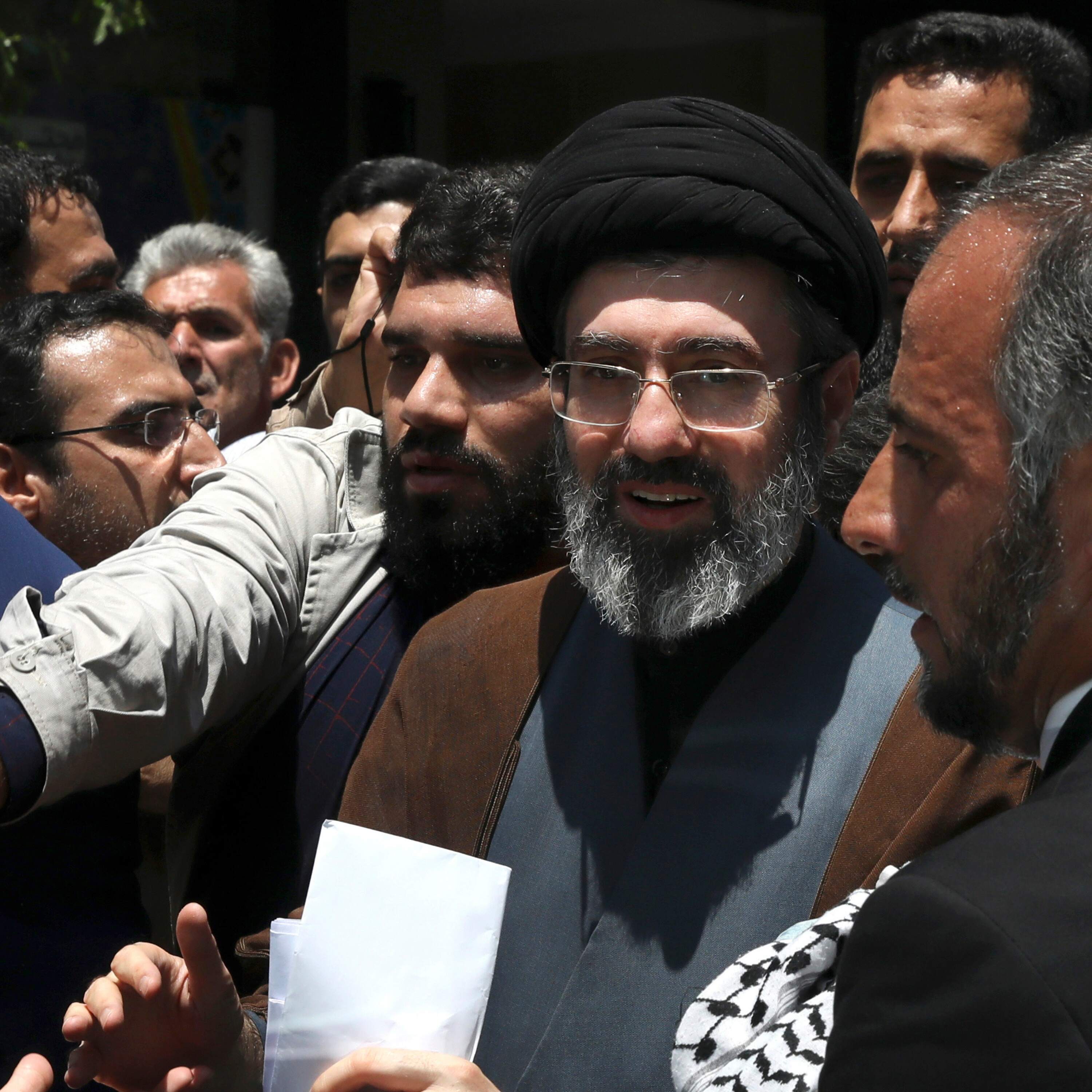
some hardliners, moderates, and Hamaneis, 56-year-old son, Mojtaba.
He's kind of an unknown quantity.
He's sort of a guy who you see in pictures, in meetings, that sort of thing,
kind of in the background.
Afshan Ostevars, an around specialist in the author of Wars of Ambition,
the United States, Iran, and the struggle for the Middle East.
He says Mojtaba is considered a hardliner,
who's closely associated with a violent crackdown on protesters in 2009.
But Ostevars says Mojtaba has important connections,
including to the powerful Islamic Revolutionary Guard Corps, or IRGC.
Of all the candidates that were put out there, he was the one of those closest to the IRGC.
He was also very well connected in his father's own office.
And to me, those are the two most important parts of the regime.
And so if they support you, then you're likely to be the next leader.
Ostevars says if Mojtaba Hamanei is named as Iran's new supreme leader,
it will send a signal that the regime wants continuity.
But I think if Mojtaba was elected, what it says is that the regime wants to preserve as much
of the status quo as possible, right? So he's a status quo candidate.
And I think just about anybody that's going to be picked,
if it's not him, it's going to be a status quo candidate.
But Ali Vyas, director of the Iran Project at the International Crisis Group,
says the current system can't be sustained.
Iran is weakened from war, widespread protests, and a better economy.
The second republic headed by IRGC since 1989 is gone.
And whatever comes next would be a transformed regime.
No one would be able to restore the system's legitimacy
without undergoing fundamental structural changes.
It's unlikely that a new supreme leader in Iran will wield as much power as Ayatollah Hamanei,
says Jonathan Panakoff, director of the Atlantic Council,
Skokroff Middle East Security Initiative, and a former intelligence officer.
The reality is the balance of power within the Iranian system has shifted over the years,
as Hamanei leveraged the guards more and more.
They've gained power. They're in every part of the economy,
they're in every part of obviously the military establishment.
Panakoff says a new supreme leader will be deferential to the revolutionary guards.
Where we end up in a situation in which it's senior officials from the guards
fundamentally running the country, and we end up in what's closer to a military dictatorship
with a fig leaf to a religious supreme leader.
Then we do with a supreme leader like Ayatollah Hamanei,
who's actually calling the shots and has the final word.
Yet when the late Ayatollah Hamanei was chosen as supreme leader,
he was considered weak and pliable, but he proved to be cunning and ruthless
and went on to become one of the most powerful leaders in the Middle East.
Jackie Northam in PR News.
Ukraine has a lot of experience intercepting Iranian-made drones.
They say Russia has launched more than 57,000 of them at Ukrainian cities
in the last four years of war.
Now Iran is using those same Shahed drones to attack American bases in the Middle East.
And as NPR's Joanna Kikissis and Keev tells us, Ukraine says it can help.
This is what a Shahed drone sounds like flying over Kiev, a buzzing that's become part of the
soundtrack of Russia's war on Ukraine. Shahed drones are relatively cheap and look like small
airplanes. They often carry explosives. Iran has sold them to Russia in the past,
but now Iranian forces have used Shahed drones on U.S. sites in the Persian Gulf.
Ukraine's military learned on the job how to shoot down Shahed's.
Colonel Yury Chervashenko, Deputy Commander of Ukraine's Air Defense Cover Forces,
explains,
First, he says we created mobile air defense groups on land, armed with heavy machine guns.
And now he adds, we are using interceptor drones.
Ukraine developed these drones to detect, chase, and destroy Shahed's long before they
reach their targets. Chervashenko says interceptor drones could work well in Gulf nations
for the most part.
The terrain there is predominantly flat with little vegetation leaving mostly unobstructed
views, he says, but the temperatures are harsh. The sensors of the interceptor drones might
not work properly in extreme heat. Chervashenko has been a soldier for more than a decade,
and never imagined drones would dominate warfare.
Unfortunately, he says human nature is such that we cannot live in peace
forever, and that's regrettable. So the means of waging war evolve.
Ukrainian President Vladimir Zelensky says air defense experts are ready to deploy to
Gulf nations.
Speaking to reporters in Kiev, he also said he would consider handing over Ukrainian interceptor
drones, but in exchange for PAC-3 missiles. These are used in Patriot anti-aircraft systems
to intercept Russia's high-speed ballistic missiles before they hit Ukrainian cities.
Supplies are running low, Zelensky says, and may become more scarce if the war in the Middle East
widens.
That's NPR's Joanna Kekisis in Kiev.
And that's the State of the World from NPR. Thanks for listening.
Support for NPR and the following message come from ID Tech. ID Tech is a summer camp for ages 7 to
17 with over 50 courses like Battlebots, AI, coding, game design, and more. Visit ID Tech.com
and use code ID Tech to save $150. This message comes from Mint Mobile. If you're
tired of spending hundreds on big wireless bills, bogus fees, and free perks, Mint Mobile is for you.
Shop plans at MintMobile.com slash switch, taxes and fees extra. See Mint Mobile for details.
This message comes from Bayer. Science is a rigorous process that requires questions,
testing, transparency, and results that can be proven again and again. It's the approach that
mapped the human genome, advancing therapies for chronic diseases. It transformed farming to
help feed billions of people. It produces countless innovations that improve lives worldwide.
This approach is integral to every breakthrough Bayer brings forward, innovations that save lives
and feed the world because the future depends on it. More at sciencedelivers.com.


