Why CPI Will Move Equities & Yields, Fed Readies for Interest Rate Meeting
About this episode
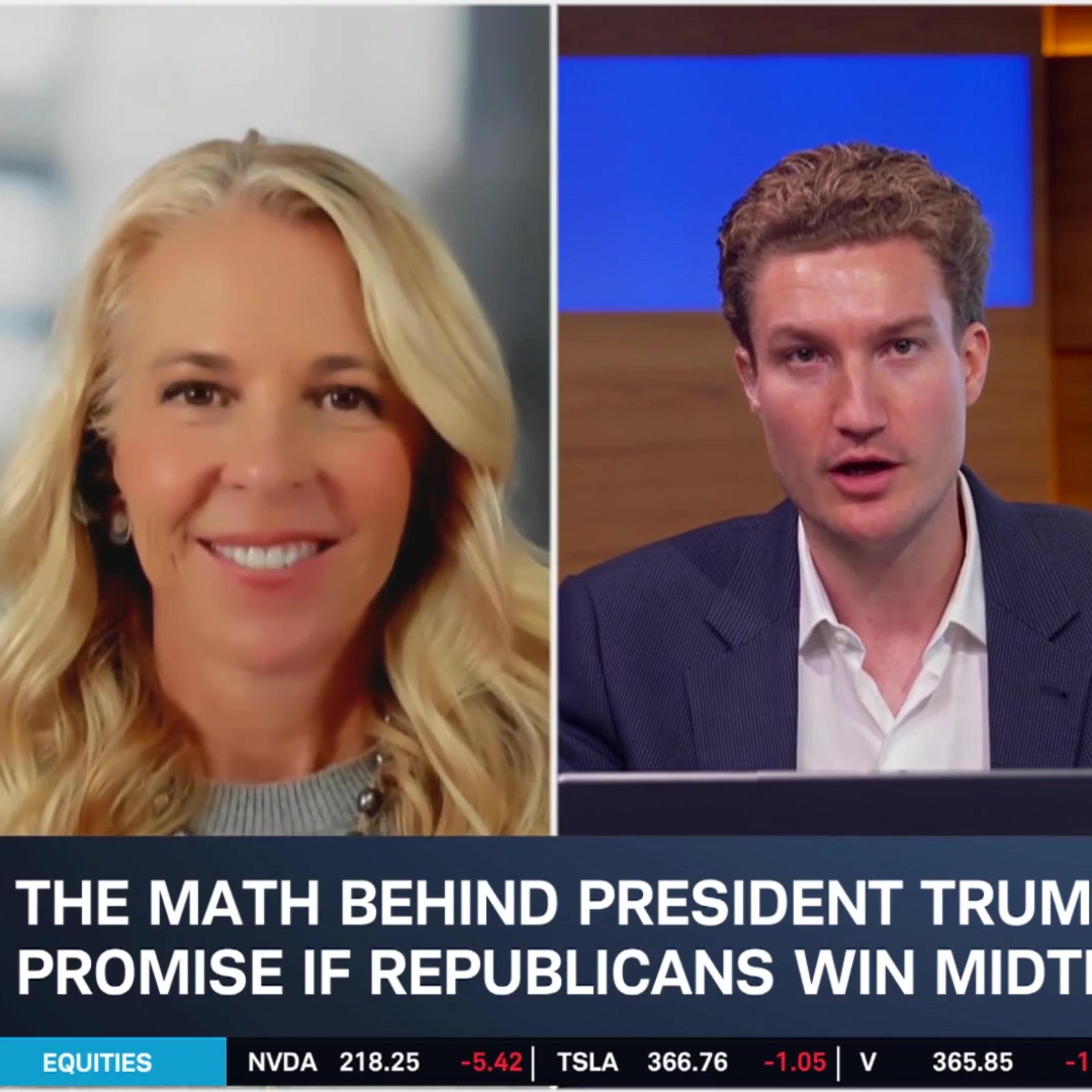
Liz Ann Sonders of Charles Schwab says her data is suggesting a likely interest rate hike. She gauges what investors should expect if September's tentative hike is the first of several. Liz Ann adds that the CPI can be a bigger market mover than expected due to the amount of churn in the stock market and the rise in Treasury yields. Mike Townsend sets his expectations for Fed Chair Kevin Warsh's communication in next week's interest rate announcement. He also does the math on President Trump's promise of delivering $5,000 to every American if the GOP wins the midterms.
======== Schwab Network ========
Empowering every investor and trader, every market day.
Subscribe to the Market Minute newsletter - https://schwabnetwork.com/subscribe
Download the iOS app - https://apps.apple.com/us/app/schwab-network/id1460719185
Download the Amazon Fire Tv App - https://www.amazon.com/TD-Ameritrade-Network/dp/B07KRD76C7
Watch on Sling - https://watch.sling.com/1/asset/191928615bd8d47686f94682aefaa007/watch
Watch on Vizio - https://www.vizio.com/en/watchfreeplus-explore
Watch on DistroTV - https://www.distro.tv/live/schwab-network/
Follow us on X – https://twitter.com/schwabnetwork
Follow us on Facebook – https://www.facebook.com/schwabnetwork
Follow us on LinkedIn - https://www.linkedin.com/company/schwab-network/
About Schwab Network - https://schwabnetwork.com/about
Get every episode summarized
Each time Schwab Network publishes, we email you a written briefing from the transcript — the topics, who appeared, and any specific claims, with the ad reads skipped.
Email me new episodesFree for 3 shows. No card needed.
Transcript ready
83 searchable segments. Every word is indexed and playable.
Full transcript
Schwab Network — Why CPI Will Move Equities & Yields, Fed Readies for Interest Rate Meeting. Machine-transcribed; use the interactive transcript above to jump the player to any line.
But, sorry for the big picture. Welcome back to Morning Trade Lives. We welcome in the team from Charles Schwab. We got Liz Ann Saunders, Chief Investment Strategist for the Schwab Center for Financial Research. And we're happy to be joined as well by Mike Townsend, Managing Director of Legislative and Regulatory Affairs for Charles Schwab. Liz Ann, good morning to you. Happy Thursday. Good evening. The conversation is going to be all fed, at least for the next week or so. CPI am guessing is going to be sort of that deciding factor for what things may be. But as you assess things at the moment, where are we at? So our base case is barring a much milder than expected CPI that the Fed is leaning toward a hike at this next meeting. Maybe more interesting will be the commentary associated with that, especially during the press conferences or reminder. There's no Q&A after Jackson Hall. So when more spoke then, there was an ability to do follow-up questions. That's obviously not the case this time. And we'll get an update to the summary of
economic projections and the dots plot, which those come out every other Fed meeting. But it's our biases toward a hike. Ultimately, what matters for how the equity market performs, at least based on history, is how fast the Fed is moving. Fast-tiking cycles where they're hiking at consecutive meetings, they're doing it fairly quickly. That tends to be met with weaker performance over the subsequent six to 12 months, slower cycles where they're essentially taking the escalator up, not the elevator up, much better performance. So we'll maybe get a sense of the forward-looking speed aspect. Mike, as you look at, you got your ear to the ground there, in DC, and you probably hear some sort of whispers of what may be is expected. We know that Warshen team want to make some sweeping changes. We're not quite there yet as the task force sort of work on some of those things. Last time we heard from Chairman Warshen, you know, opened up talking about hikes, but really was truly just talking about taking a hike.
What are you expecting we may hear from the Chairman? And is it maybe easier to say what we might not hear from the Chairman? Yeah, Alex, I think there's been a lot of speculation about these big changes that are potentially in the offing on the way that the Fed communicates on the way it operates. As you mentioned, he's got these five task forces looking at everything from what measures of inflation they look at to how they manage the balance sheet, to how they communicate. I don't think we're going to get a lot of information. There's been a sort of a lot of buzz in Washington around the idea that Warshen has floated to his colleagues, reducing the number of monetary policy meetings a year from eight to six. But I don't think we're there yet. I think that's in the initial stages of discussion internally. I bet he's going to get asked questions about that and not surprisingly, he'll probably deflect those. So I think he's looking at the end of the year when those task forces come back to him with recommendations before he starts to implement some of those big changes. Lizanne mentioned the dot plot. We know he doesn't really
like the dot plot. So we'll see where those go. But I think we're probably three or four months out from getting those changes really implemented potentially for 2027. Lizanne, you mentioned sort of the real distinction between the pace of which hikes are happening. I think it's safe to say we're in sort of the slower, less sustained period. So if anything, that may be as a positive for markets. But I got to ask you what you're kind of expecting from sort of a market in performance wise, maybe into the meeting and then into the rest of the year, as we've sort of been a little bit more sideways and range bound going back to late May. Yeah, we have been sideways and range bound. There's been a tremendous amount of churn under the surface rapid fire rotations and sector divergences. And you know, all I'll say, well, I think that backdrop is likely to be maintained. I think the inflation side of the dual mandate is much more in focus. So a print like CPI, I think
could be more market moving, certainly than what we saw with PPI and maybe even with PCE, which is the Fed's preferred measure and the importance of today with PPI and tomorrow with CPI is once you have those reports in, you can map the components of each of those measures into PCE and get better sense of what that Fed preferred measure is going to look like. What's also important, Alex, is not just expectations around the Fed funds rate, but what's happening with the 10-year yield, because that's actually the yield or the rate that matters most to the equity market. We've moved back into a pretty deep inverse correlation between bond yields and stock prices, how to proving the idea that yields are moving more based on the inflation side of the equation, than on the growth side of the equation. And I think that's where we want to focus as an equity watcher and an equity strategist is also the speed factor. It's not so much level that matters
with the 10-year, but speed really comes into play too. So far, it's been fairly orderly, but keep an eye on that yield. Yeah, and is it looking at things like the move index? Is it just sort of some general tape reading to kind of determine that, Liz Ann? Is it kind of quick follow-up? How do we gauge that interest rate volatility? Well, you, you, personal, level is important in terms of the psychology, and I think 5% is the next key level from a 10-year perspective, but I would say you want to keep an eye on those correlation statistics on a rolling one year look back, a rolling one month look back, we're in deep negative territory. So watch that action of the stock market on any day or series of days where you see an outsized move in the 10-year to get a sense of whether we have firmed up that inverse relationship. Mike, I got to ask now, hey, we're, what, less than two months from midterm elections. I know it isn't quite dominating headline, yet maybe it's about to start as the president and, you know, many different potential candidates
are hitting the campaign trails here, but there was some news from the president last night I got to get your thoughts on it. Yeah, this was not on my bingo card, Alex, but the president last night proposed sending every American adult $5,000 if the Republicans win the midterms. Lots of things to kind of wrap your brain around here, but first of all, let's just start with the math. I mean, 250, 270 million adult Americans, you're talking about $1.2, $1.3 trillion going out. I'm not sure where the $1.2 or $1.3 trillion is sitting around in Washington as everybody knows. Our debt problems are pretty huge. We hit the $40 trillion mark on our national debt last month. And, you know, Congress is going to have to be involved with that. At the end of the day, I think this is kind of a headline-grabbing thing that doesn't have a lot of detail behind it, but certainly was an interesting one. And, you know, we're heading towards a really difficult midterm, I think, for the
Republicans. And so, I think the president is trying to make a splash to motivate voters, and we'll see what happens. But I wouldn't wait with baited breath for my check to come in the mail. Yeah, we got two months or just under two months until we see what happens, and we'll see where things, trend of sure things will really ramp up in the next couple weeks. But my towns and Lizzie and Sauners appreciate both of you. And thanks so much for joining me here on this Thursday morning.
More episodes
More from Schwab Network

Stock Market Today: ORCL & ADBE Earnings, AEO Plunges Near 52-Week Low
Schwab Network

Thursday's Final Takeaways: Crude Taps $103 & PPI Hotter than Expected
Schwab Network

Balancing High-Conviction AI With High-Dividend Diversification
Schwab Network

EARNINGS PANEL: ORCL, ADBE
Schwab Network