Loading...
educationself improvementbusiness
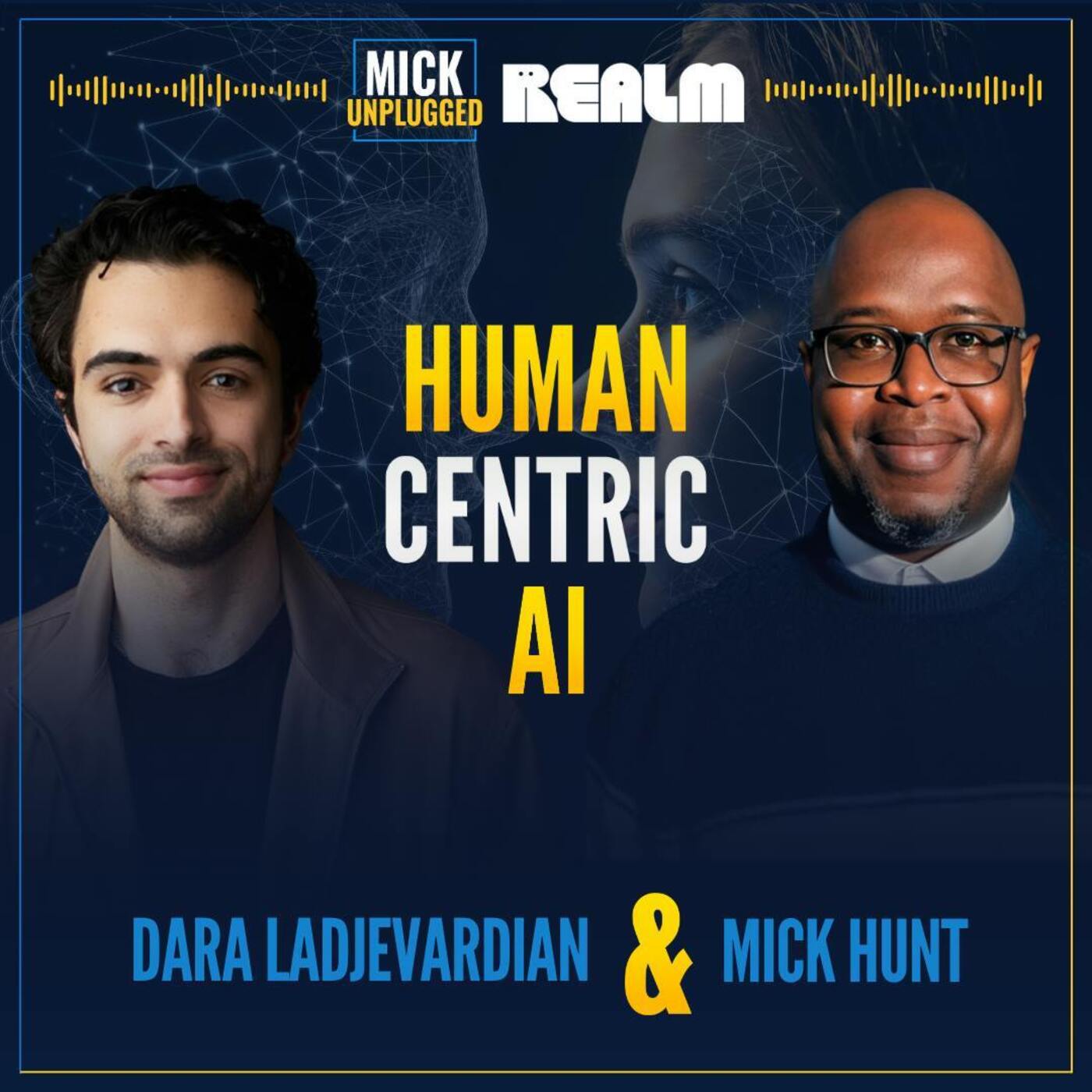
Why Humans Matter in the Age of AI with Dara Ladjevardian
About this Episode
Dara Ladjevardian is the innovative founder behind Delphi, the human-centric AI platform that's transforming how mentorship and knowledge are shared in the digital age. Growing up as the child of Iranian immigrants in Houston, Dara was deeply influenced by the resilience and work ethic of his family, particularly his grandfather—a prominent business leader who rebuilt his life from scratch in the US. After creating and selling his first AI startup in eight months, Dara was inspired by the desire to preserve and access his grandfather’s wisdom, ultimately leading him to build Delphi. Today, Dara is on a mission to empower individuals and businesses to scale their influence and legacy through personalized, ethical AI that puts people first.
Takeaways
- Human-first AI Matters: Delphi is purpose-built to empower people, not replace them. Dara’s journey is rooted in making mentorship and wisdom scalable, while allowing users to own their data and curate their digital minds.
- Legacy and Connection: Dara’s motivation began with wanting to preserve the lived experience of his grandfather. Delphi enables business leaders and entrepreneurs to capture, share, and pass down knowledge for generations.
- Embracing Vulnerability: Dara encourages leaders to put themselves out there and leverage digital tools to grow their influence with authenticity—because real connection comes from sharing who you are and what you value.
Sound Bytes
“We’re not automating humans; we’re putting AI and power in the hands of humans.”
“As AI continues to improve, that authenticity, that realness of a human is going to be that much more attractive.”
“You should not be afraid to put yourself out there... it’s okay to start putting yourself out there.”
Connect & Discover Dara:
Website: delphi.ai/dara
LinkedIn: @dara-ladjevardian
Instagram: @daraladje
X: @daraladje
🔥 Ready to Unleash Your Inner Game-Changer? 🔥
Mick Hunt’s BEST SELLING book, How to Be a Good Leader When You’ve Never Had One: The Blueprint for Modern Leadership, is here to light a fire under your ambition and arm you with the real-talk strategies that only Mick delivers.
👉 Grab your copy now and level up your life → Amazon, Barnes & Noble, Books A Million
FOLLOW MICK ON:
Spotify: MickUnplugged
Instagram: @mickunplugged
Facebook: @mickunplugged
YouTube: @MickUnpluggedPodcast
LinkedIn: @mickhunt
Website: MickHuntOfficial.com
Apple: MickUnplugged
Learn more about your ad choices. Visit megaphone.fm/adchoices
See Privacy Policy at https://art19.com/privacy and California Privacy Notice at https://art19.com/privacy#do-not-sell-my-info.
Hosts & Guests
Transcript
You're listening to Mick Unplugged hosted by the one and only Mick Hunt.
This is where Purpose meets power and stories spark transformation.
Mick takes you beyond the motivation and intramenie helping you discover your
because and becoming unstoppable.
I'm Rudy Rush and trust me, you're in the right place.
Let's get Unplugged.
Ladies and gentlemen, welcome to another exciting episode of Mick Unplugged.
And today I have one of my friends, someone whose product I've been using for
close to a year that has changed my life.
And we're going to talk about how it can change yours.
So from building his first AI startup and selling it in just eight months to creating
Delphi, a platform that captures your mind and scales your wisdom.
Finding mentorship,
including mine for the digital age.
Get ready to meet the visionary.
The profound one of the brightest minds that I know, Mr.
Darra, Elijah Vardian.
It's great to be here.
Dude, I am honored to have you on.
We met about a year ago when I had this, this problem, right?
I was like, Darra, man, like AI and digital mind and cloning is all great.
I don't know how to get it out there.
I don't know what to do and you were like, well, Mick, guess what I created?
And he showed me this platform.
And I've been hooked ever since.
But I want to talk about obviously the platform.
But before we get there, dude, I want to talk about your purpose.
That thing that's deeper than your why.
I call it your because, right?
That reason that gets you out of bed that keeps you motivated.
It holds you accountable.
So if I were to say, Darra, man, in 2025, what's your because?
Well, I think to explain my because I have to explain how I got here.
Because it's a history of many things that has led me to where I am today.
Growing up, my parents immigrated from Iran.
My dad had me working out of his office at 11 years old.
He believed you had to work early, you know, build a work ethic.
I remember my grandfather who was this larger than life guy.
Before the Iranian Revolution, he had 30,000 employees.
He was one of the largest business owners in the country.
But then he was put on the hit list.
And he had to start in the US from scratch.
And I remember being an 11 year old coming to this office.
And there's this 86 year old guy who's at the office before me.
And leaves the office after me.
And he has like more energy than me as like a kid.
And I think that just really imprinted an impression on me on how work didn't have to be something that you're stressed about all the time.
But rather something that you can be excited about and excited about the opportunities you give for others.
And, you know, fast forward in 2021 when I'm starting my first company.
And I have no mentors.
I picked up a book about my grandfather's life in Iran.
And I was reading it and I was like, wow, like I wish I could ask him questions.
But by that time he had had a stroke.
So I couldn't ask him directly myself.
And I ended up creating a digital version of him that I could talk to.
And as someone who didn't have mentors at the time to be able to get that like real time information that's personalized to me from someone that I respected and trusted.
That meant a lot.
And you know, that sort of got acquired.
And now I'm trying to make that experience available for everyone.
Amazing, man.
Like I didn't know that story.
You didn't know.
It's my why.
It's my because.
Yeah, I love that.
And you know, we've had so many conversations and obviously selfishly.
I didn't want to ask you because I knew I'd ask you on the podcast.
But I didn't know the depth of that, man.
And so what you're doing with Delphi is beyond compare.
And I told you when I met you, right?
Like I looked at a few services and platforms.
But Delphi felt like home.
And you're continuously improving and staying ahead of the curve.
Why is that mission continuously important for you?
Yeah, I think with my grandfather's experience,
it got me thinking about the ways in which we learn from other people.
You know, we can read books, watch YouTube videos,
look at a website.
But none of these things adapt to us.
We change all the time.
Knowledge stays static.
And so.
I thought, could we create a new form of media?
You know, these are all forms of media that allow you to scale yourself.
That allows people to scale their time in a way that's interactive.
And many studies have shown that the best way to actually learn something
or engage with an idea is through conversation.
Most people don't have that.
It's through conversation.
But most people don't have access to people,
either because they're too expensive or because there's just no time.
You can only be in one place at one time.
So we started Delphi before chat GPT.
And at the time, the big Y was,
I would be a user of this product.
Like there's so many people that I want to learn from.
But then what also became Y as chat GPT and Claude proliferated.
I just began to see,
there's all this generic information on a lot of these AI tools.
And I think we trust humans.
Like we read books over reading Wikipedia pages.
We follow people on Twitter versus, you know, reading the spark notes.
And I think as chat GPT is teaching people to consume information through conversation.
We'll go back to our roots of wanting to consume information through conversation with actual people.
So if you Delphi as a very, you know, we're not automating humans.
We're putting AI and power in the hands of humans.
That's awesome, dude.
That's awesome.
For everybody that's listening, that's watching this entire episode right now.
It's sponsored by Delphi.
I just say, you know, so we're going to have clickable links everywhere.
We're going to have things rolling like definitely it is the product that not just me,
but my team, my companies use more than anything.
I mean, the fact that you can build closed source information to only your data set
or your information lake is we like to call it to have conversations to
build your company best practices and ask it questions because Darry,
here's what I know.
Most companies are struggling to recruit, retrain, retain modern employees.
Right?
Who, and that doesn't mean age.
That just means we all as humans have modernized, right?
Like if I have a question and forget if I'm at work, if I have a question,
going online, I'm going to chat GPT.
I'm going to Delphi.
I'm going somewhere to find the answer.
And I want the answer, right?
Like I don't want to have to research it.
I don't want to have to click through 15 file folders to figure out where this document is
and then interpret the document.
So if that's how I doing outside of work inside of work, I should be able to do the same thing.
And Delphi has allowed us to do that, right?
Again, we can take what used to be Google folders or those that are on Microsoft
or SharePoint and all that.
We just build it in Delphi now, right?
We've built our own digital mind, our digital SOP.
We can ask questions.
If we need a specific document, we can ask the right trigger and get that specific document brought back.
So my question for you, Dara, is this?
Did you know that you were going to change not just how individuals were,
but did you have this idea that you were also going to change how businesses could evolve as well?
It came as I grew as a CEO and I realized how much I myself needed to scale.
You know, so many customers wanting my time, team member is wanting my way of thinking about things.
And that's when I started to become a user of the product from the other side.
We're actually, my digital mind is now making customers happy, talking to new customers,
people who want to work for my company will talk to my Delphi and it'll let me know if they're good for company culture.
We just created a new culture deck and I added it to my Delphi, specifically the version that my team has access to.
So that, you know, culture is what people do when you're not in the room.
And so when I'm not in the room, now my Delphi can help also make people make better decisions.
So that's been, that's been great as a user of the product myself.
Yeah.
So with the rise of AI and AI generated content, talk to the viewers and listeners about how Delphi has differentiated itself from other platforms.
Yeah, I think from the beginning, again, we started before a chat GPT.
We never started this company to be some AI opportunistic startup.
We started it to solve a problem, a very human problem.
And that has kind of grounded the entire journey.
You know, we only let you create a digital version of yourself.
You own all your data.
We're not training models on your data.
And then also, how can we actually make this useful versus it just being like a shiny object?
So I think, you know, utility and being human first have really been the things that have driven our product road map up until now.
Yeah.
And, you know, again, when you and I talk as much as we do and we talk a lot of mine, it's very clear that you care about the human interaction, the ethical ways that your product is used.
Talk to us about why the human viewpoint be human centric is at the core of who Delphi is.
Yeah, I mean, I think technology changes so fast, but humans don't change as fast.
There are certain things about humanity that say the same, whether it's our ambition, our trust and other human beings.
You know, you have AI that is better than the best chess player in the world.
We still watch human chess players.
Why is that?
Because, you know, they have, they have lived experience.
And also, at the same time, I think AI is freaking people out.
You know, a lot of people's life work is now just getting consumed by some of these models.
So, at Delphi, we think you should be able to own your IP.
You should be able to own what makes you unique, which is your mind.
And you should control who has access to that.
You should control the rules.
It's your model, it's your mind, it's your rules.
So, I just want to be on the right side of history.
And I think a lot is going to change.
Humans still matter in a post-AGI world.
That's kind of the bet we're making as a company.
That if that statement is wrong or humans don't matter, then Delphi is not going to succeed.
I love it.
So, let's add on to that.
You say things are going to change or AI tech society is going to change.
What are some of the changes that you think are going to be happening soon?
Yeah. So, I try not to think about what changes are happening today.
But, like, where is the puck inevitably going?
Like, on the other side of all this acceleration, what it's going to be,
you're going to have an AI model that is pretty much smarter than the collective of every human being on the Piant Planet.
It is in your pocket.
It's really, really fast.
It's pretty much free.
It can take actions for you on your behalf.
And I work backwards from there.
I was like, what matters in that world?
And, you know, a lot of people will say, like, oh, you know, all jobs will be automated.
But again, I think one of those core things about human nature is that we,
the reason you like reading a book is because there is a human with a lived experience on the other side.
It is something inherently psychological to place trust in something that comes from a human.
And when information is abundant, when you have pretty much infinite information at your fingertips,
what you want is curation and trust.
And, you know, when I, like, when I talked to my grandfather's Delphi,
it wasn't like I was hearing any new information.
It was the fact that I was hearing from someone that I trusted that made it impactful.
Well, I love that dude.
I love that so much.
So, let's talk about you a little bit.
You were born and raised in Houston, right?
Yeah.
Yeah.
Houston.
Growing up, when did you know that you had this?
When did you know that the curiosity, the problem solving, the creating solutions?
When did you know that that was a part of who you were?
To be honest, I don't think I ever knew.
I don't even think I know now.
I think it's a constantly evolving process.
I think the first time hindsight is 2020, I think, like, looking back.
And this is actually something that I've spoken about on a podcast.
I grew up in a very, I was like one of the few Middle Eastern people in like a very, very white school in Houston, Texas.
And when I was like 13, I got like severely bullied.
You know, you're going to celebrate 9-11.
You're going to go like bomb a building.
And that like really struck me as a kid.
And I think the, there's a bright side to everything.
I think the thing that that actually pushed me to thinking about is how I'm never going to be like in the in group.
And it really encouraged me to just like feel free to think differently.
And I bring up this story because, you know, when we started Delphi, everyone thought it was like a dumb idea.
And then everyone thought it was stupid.
And even for a while, we were like, this is not going to work.
But I almost feel like I had built the muscle to be okay, not being in the end group.
Like to be okay, thinking things are being different.
So I think that actually had a big impact on me feeling comfortable going after crazy ideas.
Okay, I like it.
And so now Dara the entrepreneur, Dara the leader.
What are some of your core values when you talk about, you know, bringing on team members.
When you talk about, you know, leading companies.
What are the core values that you personally have?
Yeah.
I mean, our first employee was the 17 year old Belgium kid who had reached out to me on Twitter.
And he was like, I got to work for you.
And I was like, who is this kid?
We're not, we're not going to hire a 17 year old kid who's still in high school.
But he was very persistent and we flew him out to the office and we ended up hiring him.
And it was one of the best hiring decisions we've made.
And we have a couple other stories like that.
And I think it is much better to invest in people who have high slope, who have a lot of energy,
than people who are like extremely experienced and potentially entitled.
So I think I try to pay attention to like what motivates you?
Where do you want to be five years from now?
Are you ambitious?
And why do you do what you do?
A controversial question that I ask in our interview process that some people have not liked?
Is I ask, what is the greatest hardship you've ever experienced in your life?
And how did you deal with it?
Because I think building a company is hard.
And you want to bring people who aren't going to run away at this first sign of uncertainty.
But rather are aware that, yeah, this is normal.
This is part of the path.
If you're going to be doing something special, you're going to have hardship.
Okay.
I like it.
So 17 year old is still on the team?
Yeah, it's 20 now.
There you go.
There you go.
There you go.
So going back to Delphi now, what are some of the roadmap items like, you know, looking at where the hockey puck is going?
Where is Delphi going?
Yeah.
I mean, what are the things we're about to ship?
Not everyone has a podcast like yourself.
How do you allow people to create a digital version of their mind if they don't have an online presence?
So we have this interviewer that asks you questions about yourself.
That you could use and be like, hey, like, I want to get all my opinions about XYZ into my Delphi.
And I'll ask you questions about those things so that I can get smarter.
We're also personalization is a big thing.
As someone speaks to your digital mind, it becomes more personalized to them.
So set a question.
They may ask maybe different than a question.
I may ask.
And then eventually you can imagine there being an ability to discover people based on their knowledge and what they know and how they think.
Right now we can only discover people based on what they look like on Instagram or where they've worked like on LinkedIn.
But there's no way to actually find people based on their values, how they think about the world, what they know.
And those are often the best connections and relationships and opportunities to learn from people.
So that's something that we're thinking about.
I love it for the entrepreneurs and leaders that are that are listening.
And everyone's trying to do this now, right?
Like you're trying to scale your influence because as we move forward in a digital and social age influence is kind of the thing.
And that's what that's what matters.
And that's not a bad thing, by the way, like growing your influence is a good thing.
What steps do you think that entrepreneurs and leaders can take to start to scale their influence now?
Yeah, I mean, I think there's a reason that Mark Zuckerberg has spent so much time on his personal brand over the last couple of years.
Like he's a lot front and center, you see him kickboxing.
And it's because he knows that humans connect with humans, not faceless entities.
And I think as AI continues to improve that authenticity, that realness of a human is going to be that much more attractive.
You see companies even hiring like chief influencing officers and where they're like the face of the brand.
So I think don't be afraid to put yourself out there.
I think vulnerability is key, especially, you know, customers are getting pitch consumers are getting pitched left and right from all these really fake.
AI Slop ads and people are just desperate for something genuine and authentic.
So I think you should not be afraid to put yourself out there.
You should document what you know so that you can leverage that information from your mind to scale it when you need to scale it, whether it be with customers been new hires.
But yeah, I think it's just it's okay to start putting yourself out there.
I have this one my phone background is a text where it says I'm afraid of putting myself out there.
And the response is cringes in you got to like be uncomfortable for a little bit and then it will start to feel more normal.
No, you're totally right and you're your own point.
I tell some of my clients that same thing they're looking to grow their brand and to grow their scale.
And I have to remind them that as the CEO, you actually are the brand now.
Because it used to be in the 70s, 80s, 90s, even the early 2000s with the exception of the extremely popular CEOs and probably like the fortune 100 companies.
You didn't know who the CEOs of companies were like you might know the name, but you never knew the face, right.
Yeah. And you might know the picture, but you don't know who they are.
You don't know what their values are. And so I tell everyone to start with this state your core values and just talk about your core values.
Because to me, that's how human connections are. So when I know what Dara stands for, either I connect or I don't.
And if I do connect, now I'm probably going to follow.
And now if I know how Dara thinks and I can use Delphi AI to interact with Dara, now I feel like I really know Dara.
And so now when Dara goes and does a social post, I get it. I know where he's coming from and I'm anticipating the next one.
And if I say Dara speaking at this event, I want to go because now this person that I followed, I can actually meet in person.
And to me, that's the true evolution of human connection. And I think again, your product does that amazing.
Thank you. Yeah. And I think you could see a tweet and a lot of people will project their own world. Do you want I think static content like blogs you can read and you can make all your own assumptions about.
I think the great thing about having a digital mind is it almost allows people to immediately empathize.
Because as soon as you can have a conversation, then you really start to understand, oh, this is not what they actually meant.
So yeah, it's been actually really cool to see a lot of our customers talk to my Delphi.
And then when I meet them in person, they already know the basic questions that I've answered over and over again.
So we can have a more in-depth conversation. Right. Right.
What advice would you give to someone that's hesitant about embracing good AI? And I'm going to put emphasis on good AI. What advice would you have?
I mean, one Pandora's box is open. It's never going to be closed. So I think that's that's very important to think about.
Two is start with the end in mind. There's a lot of shiny objects left and right.
You shouldn't plan around what's possible today. You should think about what's possible a year from now and work backwards from there.
That's going to set you up for the most success. And then three, use AI to automate things that you don't like doing.
But don't forget what makes you human as those are the things that allow you to connect with people and to own your data.
Make sure you're using platforms that aren't using your data to train models. So those are my four tips.
Good stuff. Good stuff. All right. I know how busy you are. I know you have a lot going on. I'm going to get you out of here. Oh, my quick five, my rapid five. So let's do it. Ready. Yeah.
Growing up in Houston. Now you live in the Bay Area. Who has better food?
Houston. Houston. Okay. Yeah. All right. What's your favorite meal? Houston based.
Man, I mean, my parents home cooked meal. But in Houston, Houston has the best tax max Vietnamese, but I can't nothing competes with homemade Persian food.
Okay. Good stuff. Good stuff. What is your go to productivity app?
Notion. My entire life is on notion. Hughes fan of notion. Also one of our advertisers on the show. So shout out to notion AI.
Like love them dearly changes everything that we're doing right now. What's the hobby or activity that you use or go to to unwind after a busy week?
To be honest, I just hang out with friends and family. I don't really do hobbies. I read books. But whenever I have free time, I use that time to spend it with the people that are important to me.
I love it. I love it. When the story of Dara is being written and we're at the last chapter, last paragraph, last sentence.
What's one word you want to define your legacy? This is a really good question. One word resilience.
I love it because my man keeps going. That's what I love about you, bro. Even when I talk and sometimes I know I challenge you with, hey, can we get this feature editor?
Can we do this? Like you're always resilient, right? Like you always keep going. Whenever there's obstacles, you always fight to overcome. And I think that's what I probably appreciate about you the most is because I have that same, that same fire instinct.
I know you have it. So I appreciate you, brother.
Appreciate that, Mick. Yes, sorry. So where can people find and follow both the real Dara and then also the digital mind of Dara?
Yes. So on X, I'm D-A-R-A-L-A-D-J-E. And then to chat with my Delphi, you can go to Delphi.ai slash D-A-R-A.
Great stuff. I'm going to have links to all of that in the show notes and description. I'm not saying do me a favor. I'm saying do yourself a favor.
Go on Delphi.ai right now. Look at the product. Not only am I an advocate. I'm a proud user and subscriber. Dara, I have what like four businesses that we all have different business accounts that are on the platform. That's how much I care about it and what we do.
If you care about legacy, add a minimum. You should have a product with Delphi.ai. If you want to pass down generational information, you should have a product on Delphi.ai.
If you're a business owner, business leader, your business should definitely look at utilizing Delphi.ai.
Dara, rather I appreciate you more than you know, always honored when I can bend your ear and chat with you a little bit.
So thank you for being on the show today, man.
Thank you so much, Mike.
And for all the viewers and listeners, remember, your because is your superpower. Go unleash it.
That's another powerful conversation on Mick Unplugged. If this episode moved you, and I'm sure it did, follow the show wherever you listen.
Share it with someone who needs that spark and leave a review so more people can find there because I'm really rush and until next time stay driven, stay focused and stay Unplugged.


