Loading...
newspoliticsgovernment
Why Peter Milobar wants to be the next leader of the BC Conservatives
About this Episode
Peter Milobar, shadow minister of finance and MLA for Kamloops Centre, argues why he should be the next leader of the Conservative Party of British Columbia. He critiques Premier David Eby's fiscal management and policy failures, arguing for tax reform, private sector growth, and improved public services. Milobar, the only elected BC Conservative in the race, addresses his province's housing crisis, public safety concerns, and concerns around the Declaration on the Rights of Indigenous Peoples Act, which he pledges to repeal.
In the next few weeks, The Hub will interview the lead contenders vying to become leader of the BC Conservatives, and the next leader of the Official Opposition.The Hub is Canada's fastest growing independent digital news outlet.
Subscribe to The Hub's podcast feed to get all our best content:
https://tinyurl.com/3a7zpd7e (Apple)
https://tinyurl.com/y8akmfn7 (Spotify)
Watch a video version on YouTube: https://www.youtube.com/@TheHubCanada
Follow The Hub on X: https://x.com/thehubcanada?lang=en
CREDITS:
Amal Attar-Guzman - Producer
Elia Gross - Editor
Harrison Lowman - Host
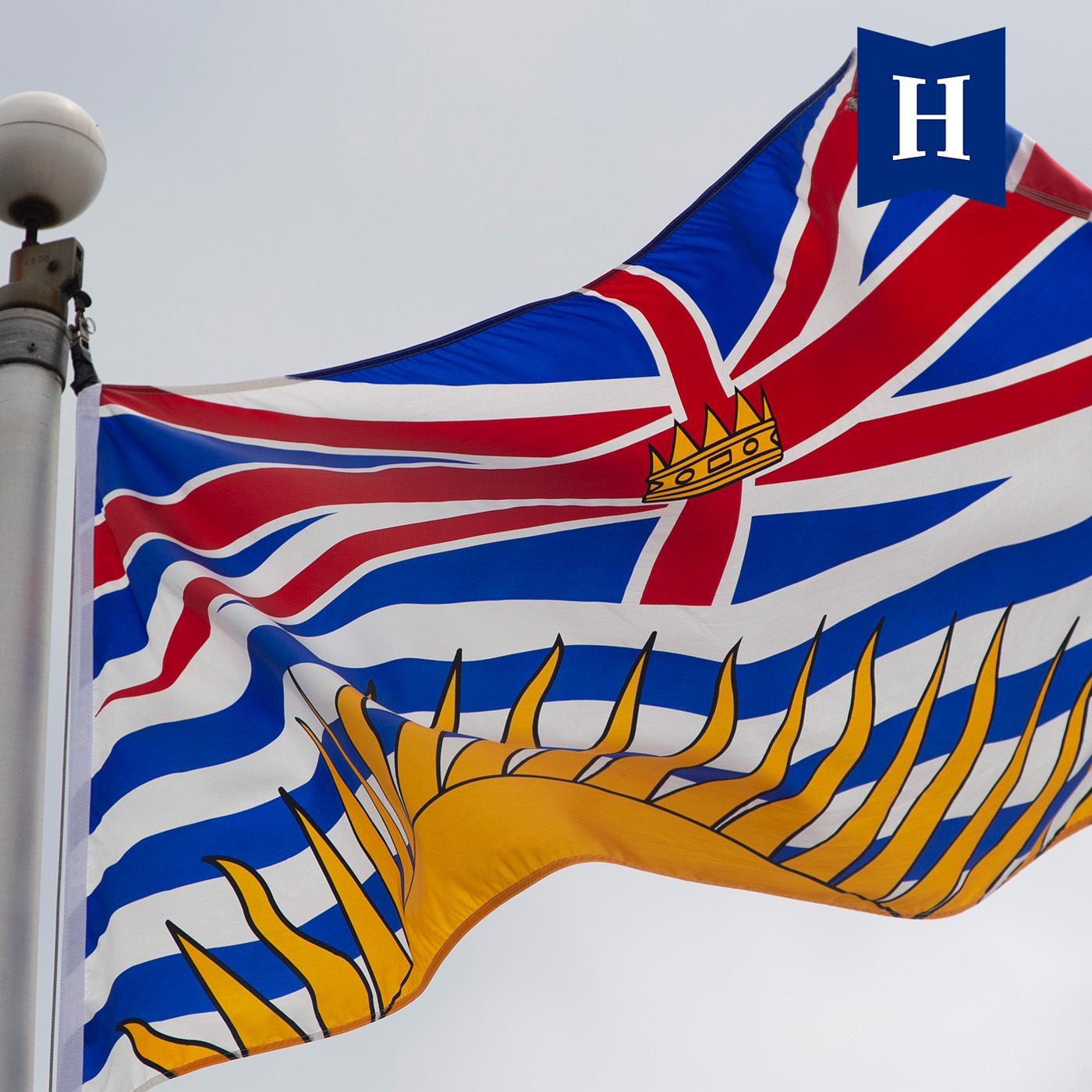
Adrian Wyld/The Canadian Press - Photo CreditHosted on Acast. See acast.com/privacy for more information.
Transcript
Welcome to HubHits. I'm Harrison Loman, managing editor of the Hub. Well, the BC conservative
leadership race is heating up with some 10 contestants vying to become leader of the
official opposition in that province. I am joined today by one of them, BC MLA for
Cam Loop Center and Shadow Minister of Finance, Peter Millibar. Thanks so much for joining
us on the Hub today. How you doing? I'm doing really well. Thanks for having me on.
You're very welcome. Okay, for those that don't know you. Who are you?
Well, I'm pretty straight forward. I was a small group working in a small business. I wound
up buying the family out with my wife and raised her three kids in Camelops. I was a city
counselor for six years and then the mayor in Camelops for nine before running provincially
in 2017. So that afforded me the opportunity to still run my business and do the normal
everyday life, nonpolitical things that coaching kids and hockey and the cross and helping
out with crossing North America and with my daughters and their swimming. So I've been
pretty fortunate in that regard. Dad and politician, you crossed the floor from BC United
to the conservatives before the 2024 election. What went into that thinking? And for those
that don't really understand, I guess here in Ontario, out in BC, the BC liberals that
then became BC United more typically sort of lean right than what, you know, you'd see
in the name BC liberal. Give us a sense of what made you do that and why you're happy
to raise the BC conservative flag these days. Yeah, I mean, BC levels, it's no secret in
British Columbia. Probably 85% of the membership was federal conservatives. And so that was
the one rate of center before that. It was a social credit party in British Columbia.
So we always have one rate of center party or we just don't form government. It's really
that basic. You know, BC United essentially stopped to exist for all intents and purposes
the leader told every candidate they would not be allowed to run under the party banner
and they would not be running any candidates. So at that point, it was really a decision
of do I want to continue to do the work for my constituents in in camloops and advocate
for their health care issues, car insurance, those types of issues that we face as MLA's
every day to help people. Or do I want to move on and do something different? I had some
talks with the leader John Rostat at the time around what their platform, what they'd
be running on was. I was in a unique situation in that I had already seen a draft copy of
what the BC United platform was going to be. So I knew those were going to be very similar.
Again, we were going to be quite literally arguing over the same things, trying to get
the same voters. So I realized that, you know, on the bigger principles, on the bigger
issues, I was aligned with what the BC Conservatives were going to be running on. And I wanted
to continue to do that work for my local constituents as well. So it made the decision fairly
easy. It was that it was quite literally don't run at all or run with the BC Conservatives.
How would you say that the current premier David Evie is running your province right
now?
I'd say quite poorly. We had a budget response from the business community that gave his
latest budget a D rating now for those in Ontario. My understanding is your budget deficit
is 13.8 billion somewhere in that range. ours is 13.3 and you're what five times our
population. So I'll let that just think in for a little bit. You know, the premier got
a D for that budget at 10 and his response was he's okay with getting a D compared to
the rest of Canada. My response to that was, well, I frankly don't care what the Ontario
budget is. I'm a provincial politician worrying about the residents of BC and a failing
grade on a budget for BC residents within BC is not a good grade for a budget. And the
premier I think demonstrates that he's a fan of mediocrity and not not actually delivering
to services or the budgetary constraints that people were looking for.
What would you do to tackle that deficit? Would you impose major cuts like from your
purchase as a shadow minister of finance? What do you see as being what needs to be done
immediately? Yeah, you know, the NDP are very good at fear mongering frankly and trying
to make it sound like we would shut down hospitals and schools and nothing could be farther
from the truth. We have said along I've certainly said, especially in this leadership
race, that it has to be a two-pronged approach. Certainly we have to get fiscal discipline
black back into the equation. If anyone out there thinks governments running at 100%
efficiency right now, I've got news for you if they're not. So even finding it 2% efficiencies
within our operations would save $2 billion a year. You know, we need to do some tax reform
that will change some of the revenue structure absolutely, but it will also increase our
investment into our economy. It will increase employment. It will increase people's pay
packets. So right now in British Columbia, we have an ever-growing number of hardworking
families that are quite literally having to stop at the food bank instead of a grocery
store on the way home, yet they're fully employed. And so those types of measures we need
to do to meaningfully grow the private sector economy while making sure that our spending
is under control as a province. You know, we see right now over the last eight years,
we have hired four public sector employees to every one private sector employee. That
number needs to be reversed for a healthy economy. And that's what I'll be laser focused
on making sure we're actually growing that private sector economy to to claw away out
of the fiscal mess that we've been created. It is for people listening. Our deficit is
primarily operating deficit, not capital spending. And so that is that is a major problem
in and of itself. What are you going to do about the housing crisis?
Someone argue Peter that it's the worst in BC. What can you do to break through what has
been years and years of people struggling to find a home, often young people who then leave
your province to come here or go south? Yeah, there's a lot we can do and the home builders have
been very clear. There's a lot of non-monetary things we need to do to make productivity in the
construction sector better, which will help bring down the costs. And BC, again, this government
has been warned for years that the least productivity of any sector in our economy that we have
right now is in construction. So that's a big problem. And so what we need to do is look at
the few different things that I've proposed. One is we have a step code in British Columbia around
energy efficiencies. Make sure that that's frozen at step three to not keep adding costs while still
maintaining whatever the emission profile we're shooting for. Yes, we need to have a true one
operating process to actually truly streamline. And we can do that. We can make the building
permit process much faster and we're streamlined. We can have in-stream application protection.
Right now we have municipalities will keep moving the goalposts financially on a development
as it moves forward, which totally changes the economic viability of a project. And four,
we need to just have one BC building code. Right now we have a BC building code where provinces
or cities are able to do overrides and have extra layers added on. And when you have cities
right next to each other, it gets very confusing and onerous for design crews, for architects,
for engineers, for framers, for drywallers, for any trade to make sure they're building to the
right building code literally one day after the next as they cross the street to the other city.
How safe would you say your province is right now, specifically in major urban centers?
Yeah, I would say, you know, if you don't feel safe, you're not safe. And the government will
always try to tell, of course, any of their records around numbers in terms of what we're seeing,
in terms of numbers of reported crimes, number reported incidents, but we do know that many
store owners, many people have just stopped phoning in. And so what we're seeing is a lot of
chaos on our streets. We do need a consequence brought back into the system around crime and safety.
We need to have more crime prosecutors and more judges and actually look at the ability of
giving the police the ability to lay charges in British Columbia, like they do in other jurisdictions
in Canada. We need that consequence. We can't keep having a rampant shoplifting, rampant windows
being broken. And then we get into the even more violent crimes that we're seeing. And certainly
the extortion file in British Columbia, particularly in Surrey and Avisford is very concerning what
we're seeing happening on that level as well. Speak about, you know, you've referred to this
before as sort of growing pains. The movement of the right on BC in BC and the struggles that they
face over the last few years, we talked about BC Liberals becoming BC United. Your colleague,
John Resta had sort of constructing or keeping a party afloat as he's trying to win an election.
He's now departed. You want to fill that role. You've had issues with MLA sort of speaking out
on controversial topics. What would you do? Why are you the guy to come in and bring everyone
together? And what would be your mantra so that those with various different opinions would all be
sort of nodding their head in unison at you as leader? Yeah, I think it's what respecting people
in their opinions and certainly even in a NBC liberal caucus, we have a very wide range of views
always shared. I think that's important. I think people need to bring forward their personal
perspectives, what they're hearing in their communities and other groups that they talk with
or are a part of. That's actually how you should shape better public policy and get a sense of
where the mood of the public is. And so I'm not looking to stifle that in any way, shape or form.
But as a political party, you do need to have a cohesive voice. You need to have a cohesive
direction that you're headed in. I've been working very hard to this campaign to stick to those
major fundamental issues. Drip and British Columbia is a massive problem. It does need to be repealed.
We've seen court cases where the government hasn't defended private property rights. And we need
to actually do that in existing as well as any upcoming court actions. We need to actually get
our economy going so people are gainfully employed. We need better K to 12 outcomes in our school
systems in terms of writing and the basics and mathematics and science. And we need to have
safer streets and consequences in the crime and safety. And certainly our health care system
is a complete mess. And so I'm saying, if people share those as core values, core principles that
they want to see a provincial government focus on, they're more than welcome to join our party and
feel safe and feel included under my leadership. And we will have those wider, rangered topics as well.
And we will move forward cohesively in an way that keeps going back to those core areas.
When I got in this race, I had lots of people that wanted to work on it. Tell me I should run on
the far right to win the leadership and then campaign in the middle to form government. None of
those people are working on my campaign. We'll start if not all are working on other campaigns.
I firmly believe that if I keep talking about these issues, making that why people want to buy
membership, why they want to support me as the grassroots of the party that I can then stand in
front of caucus and say this is what the grassroots has said they want us and given us a mandate to
focus on moving forward. And I truly believe I'm the only person in this race that's in that
caucus room. I'm the only person that actually has an elected seat. I'm the only person that ran
as and got elected as a BC conservative that's currently running for leadership. And so I do know
that dynamics in that caucus room. And I know there are a lot of good strong people in that room
that want to be taken seriously and delivered for British Columbians. And I'm very, very confident
that they will rally behind what I'm talking about as well after leadership races over and get
on to the business of defeating the NDP and improving British Columbia for all British Columbians.
In that caucus meeting, Peter, what are you valuing more in terms of priorities? Like, is it GDP
or is it social policies? Because you listed a whole bunch of social policies there. I know a lot
of BCers very much concerned about that. In terms of what you're putting in front of the other,
what does that look like? Yeah, again, you know, there's lots of things that do
interconnect with each other and we have to be mindful of that. You know, there is there is
definitely a need to address our crime and safety. There's definitely a need to address the
chaos that's happening with the overdose crisis on our streets and the drugs that are happening
on our street. And so there's many actions we have to take on both of those fronts
because until too hard isolated from each other. In schools, there's no doubt that parents are
ever increasingly getting worried that there seems to be more focus on teaching around some of
those social issues versus actually sticking to the fundamentals. And when you see our numerous
levels dropping when you see our literacy levels dropping like they are in British Columbia,
I think parents, as a parent myself, I think parents are rightly concerned about what is the
priority of being taught in our school. Absolutely, everyone wants kids safe and protected in school
and they want them to be raised to be good citizens and have global awareness and all of those
types of issues. But they also want them to be able to read and write and actually process
science concepts in a level that is age appropriate and fitting for making sure we have an educated
workforce moving forward. So I think we can, you know, as the same goals walk and chew gum at the same
time. But with the mess British Columbia is, frankly, if you don't have a premier in a caucus,
focusing in predominantly with their time on those issues I talked about, those bigger, broader
issues, we are in more trouble as a province and ever before, regardless of the political strike.
You know, office. You mentioned drip of the declaration on the Rights of Indigenous People Act,
which BC brought in provincially uniquely. You say you'd repeal it. That's creating a lot of
uncertainty. But let's talk, I guess, about a decision somewhat adjacent to it. BC Supreme Court
issued a landmark decision a few months ago. I think it was the first time Peter, a Canadian
court granted indigenous title over urban land. This was around Richmond, BC. A lot of people in
the area are scared. They'd lose their homes. Others point out that the indigenous group,
the Cowachan First Nation said, we do not want personal property here. It's not what we're about.
It's not what we're trying to take. How are you concerned about this? What has it allowed for?
And how would you approach, you know, I guess the uncertainty, the concern that it's sort of
unleashed across the province over the last few months? Yeah, well, a lot of the uncertainty
it's unleashed is frankly at the feet of the premier. You know, we have a court ruling here that's
based predominantly on section 35 of the Constitution. That's to be clear, it's not based on drip up.
Yeah. But the two are being somewhat intertwined now. You know, the reality is the province of BC
did not push back and fight with legal arguments defending the concept of private property rights.
And so, you know, that's a big problem. We're in court. They were refusing to do that.
The federal government didn't do that either. The only government in that action that did was
the city of Richmond. And so as we head into the appeal process, now the premier says they will fight
for private property rights, but he was the attorney general at the time when the instructions
came to back off on that. And so, you know, you can see why people have their doubts.
The premier will characterize any of us in the conservative side of the fence, the political
fence that, you know, we're racist for wanting to remove drip, but yet he is admitting it needs
to be at a minimum change. He's admitting that people with private property should be concerned.
He says on the one hand that people don't have anything to worry about with their mortgages.
On the other hand, he says that the government will start looking at backstopping mortgages
in the college and ruling area. So he's kind of all over the map. And for a lawyer himself,
he would think he'd be a little more definitive and clear. What he's talking about the steps
and the actions that the government does or it doesn't have to take in this case.
So that I think is why you're hearing the legitimate concerns across this province from people.
That is why I'm saying, you know, drip in and of itself is not working as attended.
It's creating major issues. It doesn't mean that there is not constitutional duties to
consult by the province. And I understand that and I recognize that. So you can't just remove it
and slap your hands together and say, there, we're done. We never have to talk to an indigenous
nation ever again. That is not how this works. However, it is a flawed piece of legislation that
is not working as the province told everyone it would work. The province has acknowledged that
it's not working by virtue of the changes they're trying to make which are half measures.
And so it's time to just acknowledge that once again the NDP brought in a piece of legislation
that's not working and has to be changed. I've lost count to how many pieces of legislation over
the last eight and a half years the NDP has brought in that haven't worked and they've had to change.
Decriminalization is another example of things the NDP thought would work and the list goes on and
on and on our last legislative session. Almost every piece of legislation that was brought forward
was corrections and changes to previous NDP legislation they brought in while they were in government.
So I view drip in the same light and that it's not working. It needs to go and then we will
get back to doing the business of making sure they're the projects and discussions with Indigenous
and Indigenous peoples move forward in a good faith way and we can actually get our economy rolling
again and take out a lot of the uncertainty of the equation. Just lastly Peter let's talk about
what is working. What are you optimistic about when it comes to your province over the next few
years? What gives you hope? I think we do need hope and truthfully I don't have a lot of hope
if the NDP continue in on this government and that's a main driving factor big piece of why I'm
doing what I'm doing right now and offering out my services or my skillset and my experience
to be the leader and then ultimately the premier we do need to remove this government and I say
that because every year as as a shadow of finance minister I get asked well what's good in the
budget and ensure I wouldn't answer that because I said every other year I've tried to find
something good and say something good this government has messed it up. We had IVF treatment that
came into a budget and I said that was great that women and families would have the support to try
to start their own families and the government has messed that up where it was a year and a half
delayed it's been under funded people from rural areas don't have the same access supports as
women from urban centers so even something fundamentally that like that that we can all agree is a
good thing they've messed up and so that's where I say we need them remove now where the hope comes in
I do that have hope that not all is lost I do think that there's a pent up demand if we get the
right tax structures in place if we get the right to dripper repeal in place and move forward in a
way that brings that certainty into the equation that we can see our private sector economy
really take off after years of uncertainty under this government and why that's important is we
need to have that hope for younger generations that are looking to move to Alberta and other
points east because once they leave when they're between 18 and 34 it's very hard to get them
back as they start to families in their careers and so I do have a lot of actually optimism and hope
my three kids are in that age range of 27 to 32 and four little granddaughters under the age of four
you know I want to see our education system improve I have hope that we can actually do that and
and get it back to where we're celebrating kids for excelling and we're actually lifting up and
bringing up the kids that are struggling a bit and need a bit of help that we're actually creating
those job opportunities that we're creating entrepreneurial opportunities for people
there is a lot of optimism that I have of what can happen because of how much it's
lagged in BC over the last few years with the NDP I truly believe that with the right tone and
drive that people will see that BC is truly that the province once used to be and it can be again
that is Peter Millibar he is running to be the leader of the BC conservative party and we
thank him so much for joining us Peter pleasure great thank you thank you for tolerating my
ever-shifting phones up here in my hotel we like ever-shifting well we're fine with ever-shifting
cameras it's the ever-shifting views from politicians we don't like so that's why he's honestly
that's why I've stayed how I am because I have a long track record of how I've always conducted
myself and anything else would just come across as completely fake anyways and I've never
conducted myself that way and fundamentally I think conservatives value honesty and integrity
up of all and that's what I've been trying to demonstrate my whole political career and I'll
continue as I'm going through this leadership race and moving forward okay all the best Peter


