About this episode
Get every episode summarized
Each time Full Story publishes, we email you a written briefing from the transcript — the topics, who appeared, and any specific claims, with the ad reads skipped.
Email me new episodesFree for 3 shows. No card needed.
Hosts & guests

Transcript ready
483 searchable segments. Every word is indexed and playable.
Full transcript
Full Story — Why the Christchurch attack still awaits a full reckoning. Machine-transcribed; use the interactive transcript above to jump the player to any line.
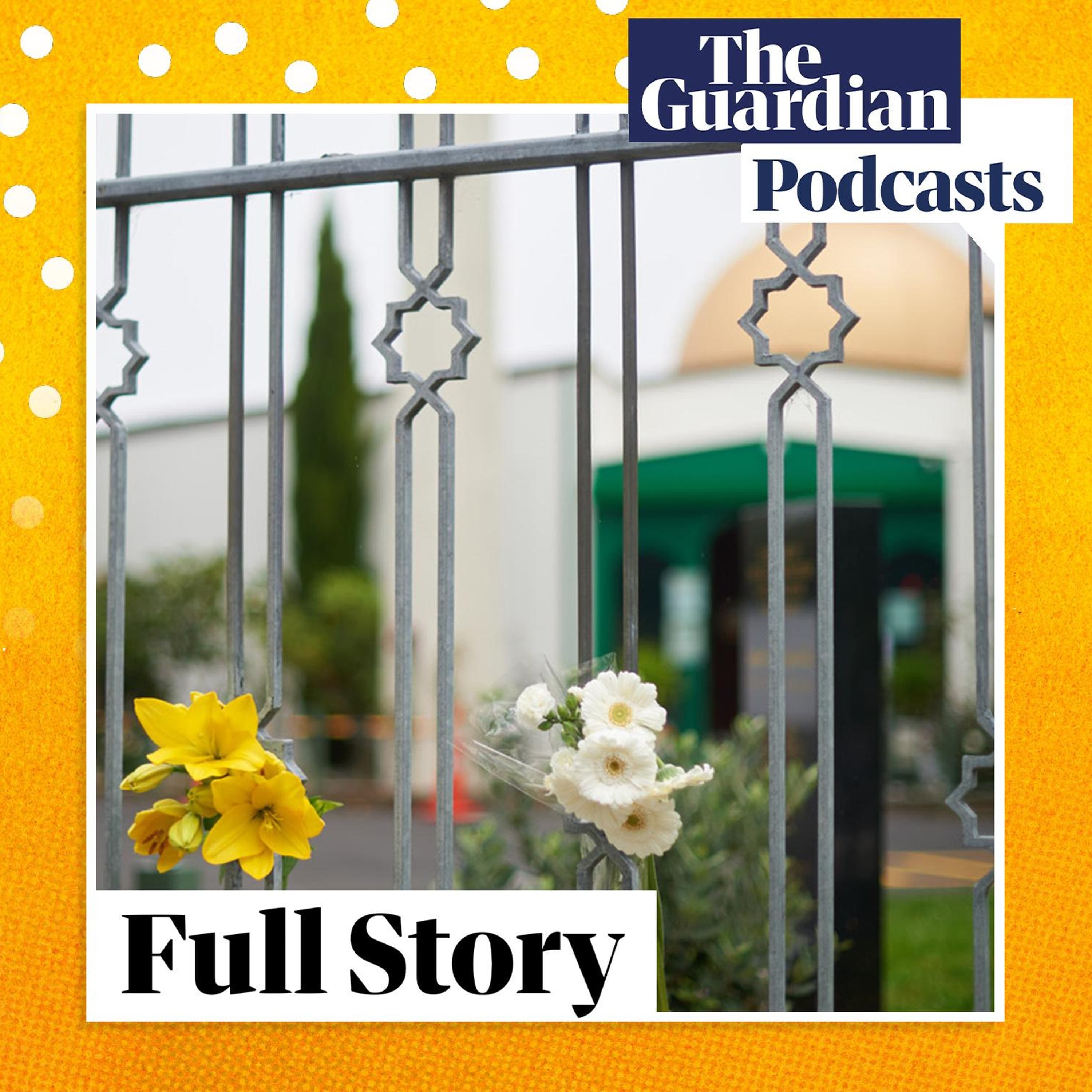
This is the Guardian. Regidarmate here on Gadigal Land with the full story. As the seventh anniversary of the Christchurch terror attack passes, so too does another year of commemoration in New Zealand. It was the country's worst mass shooting, when a white supremacist murdered 51 worshippers at two mosques. But here, some say we're yet to reckon with the massacre, which was perpetrated by a man raised and radicalised in Australia. Today, Imam Al-Azookum and Investigations reporter Eriel Bogle on why Australia struggles to confront its connection to the Christchurch massacre.
It's Monday the 23rd of March. Hey, this is Adam Grant, host of Ted's podcast, rethinking with Adam Grant. If you heard of Bill, it's the intelligent finance platform that uses AI to help you avoid costly errors and optimize cashflow. In fact, Bill reports that over 90 of the top 100 US accounting firms trust them to manage, move, and maximise money, proven by over a trillion dollars in secure transactions. Eliminate the friction and start scaling with the proven choice. Visit bill.com slash proven to talk with an expert about automating your business finances and get a $250 gift card as the thank you. That's bill.com slash proven. Terms and conditions apply to offer page for details. Reggie, I just sold my car online. Let's go, Grandpa. Wait, you did? Yep, on Carvana. Just put in the license plate, answered a few questions, got an offer in minutes.
Easier than setting up that new digital picture frame. You don't say. Yeah, they're even picking it up tomorrow. Talk about fast. Wow. Way to go. So, about that picture frame. Ah, forget about it. Until Carvana makes one, I'm not interested. Car selling made easy. On Carvana. Pick up these may apply. Imam Allah, welcome to full story. Thank you, and it's a great pleasure to be with you. Can you just tell us about what it is that you do? Sure. My name is Imam Allah. I'm the Imam of the Harabayik mosque. And I'm also a counsellor at the Australian International Academy. And I'm so passionate about uniting and connecting our Muslim and Muslim brothers and sisters in the community. You're based in Melbourne, and you were just in New Zealand for the commemorations. But what was it like for you seven years ago when you heard about the attacking Christ church? On that day, I was actually delivering the Friday speech at the Harabayik mosque.
And suddenly, we found the police force surrounding the mosque. And a lot of police members came. And they told us that there is an attack on the mosque. They're in New Zealand. And the whole congregation was horrified by the situation. Everyone started getting their phones out to know the news and what's happening. It was really shocking and horrified to know the massacre of 51. We call them martyrs, shuhada, because they were in one of the best places to worship God. And after going there, after seven years of the incident and witnessing and seeing the mosque itself. And how the perpetrator even went to inside the mosque and prayed sometimes to study the place well and to know where to attack. While I was taken to the mosque to deliver the Friday sermon that I was giving at my mosque in Harabayik. And on a similar day, after seven years, I gave the Friday sermon at that mosque to deliver the Friday sermon. Imagining, I'm putting myself in that position.
People going peacefully to the mosque to connect with God, to find the shooter who is going to kill 51 people from all ages, young, old men, women. That was really terrifying for me. For a second, I was really, my heart was was shaking. I was scared. And I couldn't imagine if this would happen with me. My feeling, they, I had a mixture of feelings. The first one, when I met with the community, the resilience of that community and insisting on spreading peace and talking about the story and sharing it with the lovely non-Muslim brothers and sisters in New Zealand. They are so wonderful together, Muslims are non-Muslim brothers and sisters. And despite that person who tried to spread division and hate within the community between Muslims and they're non-Muslim brothers and sisters, it went opposite. The Muslim and non-Muslim brothers and sisters in New Zealand and Christchurch are all united. They walk together, they stand together, they commemorate together, which is giving some sort of healing to the hearts of the people there.
And I still see the trauma on the faces of some families who are, you know, still living that negative experience. And it's so hard, so hard really for them. When you went back this year, you spoke to victims families and widows. What sense do you get about how New Zealand has tried to reckon and piece together the impact of what happened that day? Yeah, they are resilient. I was actually invited by what is called the Sakina Community Trust. It's a group of seven widows whose husbands got killed at the mosque. And they did not stop there. They did not let the trauma trap them in sitting at home and just getting with the sadness that's in the heart. And would be in their heart forever. Dr. Hamima and six other great women. I call them the great women. We had so many events like the main one we concluded our event.
I went there to give the Friday sermon. On Friday, Saturday, we had some iftar dinners and meeting with the survivors and the families of the victims. And on Sunday, we had a walk and talk march, which is a walk of unity. And even on the news, the New Zealand news, put it they're not just talking about the 51 unity. We helped hear this cars of the Christchurch mosque attack. We had a big walk together. We're reminding each other of unity, standing together again as violence, condemning racism towards any community. And especially when Islamophobia is on the rise now. So there is a great support. And the Muslim community there that got attacked is not just healing, but they're also spreading the message of peace and love with the community. I heard that word many times by those women and the survivors and their families. That incident would never divide us. It will keep us united. It will get us together to stand against hatred and violence as one community. Back in Australia, I can certainly hear how affected you continue to be.
Continue to be by this terror attack. Generally, when you speak to Muslim communities, people in your community, what do they say about how they continue to be affected by it? Be so scared, rigid, because you know, Islamophobia is still happening. Some mosques in Australia received threats, including mine. We had some writing on our mosque. And La Kemba mosque received three threats. And some Muslim women with a hijab were attacked. And an imam and his wife got attacked. Islamophobia is still there. And some people ask it that may God forbid. We pray for the safety of Australia and every other place in the world. We don't like to have a similar incident in a place of worship. Whether it is for Muslim or a Christian or a Jew, whatever the faith is. We would like everyone to connect with God peacefully. So the people are still scared. People go to the mosque, especially in the month of Ramadan. It's a heavy month of worship.
And we have a special night prayer. We had to bring five security guards, men and women, to protect women and children. We are in a very peaceful and safe place. Australia is a safe place. It's a most multi-faith and multicultural place in the world. We should not be scared. Not any other community should be scared to go to connect with God in their place of worship. So when the commemoration of Christ's Church is happening, they feel very sad for the losses and they also worried about their future here. The terrorists that perpetrated the attack was an Australian. He was radicalized in Australia. Do you think there has been any kind of reckoning in Australia around that? From the post that I see and the statements, unfortunately, there is a severe lack of mentioning that. Pauline Hansen is still mocking the Muslim community and the Muslim practices and rituals.
And this is very sad to see. And not mentioning anything about the Australian guy and his extreme ideologies and that he got radicalized in Australia, is not giving some sort of comfort to the communities that we are working hard. And I even remember the national anti-racism framework. 64 or 63 recommendations. I'm not sure where that has gone. It's not an effect yet. And so many of the recommendations have not been applied yet. So we need to work on that. We need to stand against any racism and any extreme ideology that is threatening the stability of our community and the safety of every single person Australia. So on that, what kind of concrete action do you want to see happen? What do you want governments to do? That's a good question because when we look at other communities, for example, like the Bondai incident, we sit together against that.
We refuse that and we condemn strongly that worshipers and they or some people in the Jewish community and their religious events celebrating their religious rituals to get attacked and to have losses and victims. We would like to have a very strict law for anti-racism and violence and discrimination. And we would like to have a law for Islamophobia. The Muslim women are in the front line of dealing with Islamophobia. When Czech Allah is taking off the religious clothing, I don't get identified as Muslim. But a Muslim sister wearing the hijab all the time going to the public places and the shopping centers and going with her children to the school and going to the mosque, she can easily be identified as Muslims. And look at the comments on the Facebook page of the Islamic Council of Victoria. We started a campaign with them as well, educating the community. Look at the comments. Look how the racism and Islamophobia comments are still there. Imagine what's happening in reality. And we would like to see a very strict law protecting specially women.
Women cannot be attacked, especially in front of the children, an imbalarat last Sunday that was an iftar. There were innocent children witnessing a person going there to attack the iftar. So I think we really need a strong law. Again, it's any hate, especially Islamophobia. Just briefly, there are new hate laws in Australia. Do you not think that they're enough? Hate laws would be more sufficient if Islamophobia law is included. That is protecting and making it a big crime to attack especially women. I cannot emphasize enough rigid on women. Women are strong and resilient. They are contributing a lot to the community. It is really heartbreaking to hear about a Muslim woman that got attacked. And because of that trauma sometimes, it takes them months to get out back to the community and to continue their great work. Have you spoken to any MPs or government ministers about that? We always talk. What do they say?
They say we are working on that. The government many times has said, we are working on that. But since November 2024, there is no concrete action that was taken. With the Islamophobia law, there are many statements by the ministers and the MPs, especially when the Christchurch commemoration is also going hand in hand with the international day to combat Islamophobia. So this is a good thing to see emphasizing by words, but we are really desperate to see now is actions. We need the law for Islamophobia. Imam Allah, thank you so much for talking to us today. I appreciate it. Thank you so much and thank you for hosting me. Next, investigations report a aerial bogey on the lasting impact. Thank you.
Hey, this is Adam Grant, host of TED's podcast, rethinking with Adam Grant. Let me share with you why smart finance leaders turned a bill. They know that clarity isn't just helpful, it's strategic. As the intelligent finance platform, Bill uses AI to automate the busy work for nearly half a million businesses so they can focus on intentional growth. Eliminate the friction and start scaling with the proven choice. Visit bill.com slash proven to talk with an expert about automating your business finances and get a $250 gift card as a thank you. That's bill.com slash proven. Terms and conditions apply see offer page for details. Hi Ariel, welcome back to the podcast. Good to be here. There are a lot of questions about whether we've had the same sort of reckoning as New Zealand when it comes to the Christchurch massacre. But if we take you back to that day, you were working as a journalist and you saw the story unfold. That's right. So at the time I was working at the ABC and I have this really strong memory of being in the newsroom on that day
as the news started to trickle in from New Zealand, the scale of the horror, the families that were trying to find out what had happened to their loved ones and these two centers in New Zealand. And then realizing that their man who had committed the act was Australian. And reporters all over the country started to dig into that online footprint he'd left behind and found those connections to Australian far right groups online that had, I guess, just been coming to public consciousness in a way. It was really striking too, I think, my recollection of how the propaganda he had created around his act started to spread. He had a Facebook live stream of the act itself. He had his manifesto. And it just spread before our very eyes. It was really disconcerting and I think really left a lasting impact on me and my reporting. A lasting impact on you. How did you see that realization also impact just the conversation in Australia?
Well, I think on that day as we started to reckon with his Australian origins, there was a lot of investigation of who he was, where he'd come from, this rural city town in New South Wales. He'd also traveled a lot internationally. He'd made donations to overseas far right groups. There was a large footprint, I guess, there to investigate. And we started to see that come out through, as well, of course, through the Royal Commission that New Zealand held. But I suppose a lot of people in the national security community, of course, in the Muslim community here in Australia and among journalists, we sort of expected perhaps to see on the Australian government side, perhaps more of a public reckoning about who this man was, whether he'd ever been identified by intelligence services here, whether there was anything from Australia's end that could have been done to intercept him, to stop this attack from going ahead. But we've just had very little public reckoning, I suppose, of exactly what happened and that man's Australian links.
And that does compare to what New Zealand has done. Yes, of course, in the wake of the attack in 2019, New Zealand quickly held a Royal Commission. There has been an ongoing coronal inquiry. So there's still a public reckoning, I suppose, of exactly what happened and what could have been done to prevent it. Two in New Zealand, that concerns, of course, intelligence services, gun licensing rules, et cetera. But, yes, I suppose, to his Australian origins and links to far-right groups here, to brought him, brought that home for me and made me wonder to exactly what kind of breeding ground had happened here for the terrorist as he was growing up. And since then, it's been seven years. The propaganda that the attacker filmed you've seen come up in separate, completely unrelated cases. That's right. So as part of my reporting here at the Guardian,
I do track certain cases associated with extremism or terrorism offences. And, you know, here in Australia, the government has regularly raised the alarm about the number of young people showing up in these cases. So there was a case in South Australia when a boy was 14, he had downloaded more than a dozen videos of the terrorist attack that happened in Christchurch. He was sentenced last year for possessing documents with information for terrorist acts and extremist material. And he also had the shooters manifesto. A few years earlier than that, I was reading about the case of a 16-year-old in South Australia who had sentenced for several terrorism offences and the judge commented in that case on his activities on Discord, which is kind of a chaplac form. That included sharing material from the Islamic State and modern-day Nazi groups in the judges' words, as well as images from the Christchurch killings that left 51 people dead have read about our sort of animated recreations of the attack. And it's always extremely troubling, of course, to see these cases and this material show up
in matters concerning young people, especially. There were efforts to try and remove that material online. That's right. So in the wake of the attack, there are a number of laws passed, including a law that penalized platforms for failing to rapidly remove content that involved terrorism, murder, or torture. It was sort of the Parent Violent Material Act. And it did try to impose fines on those platforms. So that was passed and that was in a reaction to the spread of the Christchurch terrorist propaganda. But you know, it's a cat and mouse game. We see this continued issue with online platforms and the way that this material can simply be shared and obfuscated. One person you did speak to Hank Taran, Chief Executive of Open Measures, he seemed to suggest that there was a lot more Australia could be doing to stop people from becoming radicalized. That's right. So Hank Taran, he's the Chief Executive of a group called Open Measures. They're an open source threat intelligence platform.
And they track the spread of a range of far-right material on different platforms. And he suggested to me that the terrorist propaganda continued to be spread because it was framed very intentionally under the guise of this great replacement conspiracy theory. The claim that there is a plot to overtake white Christian European countries with immigrants or generally a group that can be counted as the other. So he said in the Christchurch context that other was Muslims, the powerways, synagogue shooting in California a few weeks after the Christchurch shooting. It was Jews, the El Paso shooting in Texas. It was people of Latin background. And he argued as someone that tracks this material regularly online, the public response can't just be content moderation or de-platforming just the cat and mouse game of trying to get this content offline or even age restriction, which of course Australia has. That's the road we've gone down in recent years. He said it was more about disrupting that pipeline from passive exposure to active planning for young people especially.
And that requires more proactive education amongst parents and the community to understand what kind of spaces their families might be spending time in online. And the groups they might, in fact, be meeting up with in person too. There were commemorations in New Zealand. Is there also a sense that we lack ongoing grieving over this as well in Australia, like a public effort to continue to grieve? That was certainly the view of some people I spoke with. I spoke with Rita Jabri Markwell. She's the legal advisor to the Australian Muslim Advocacy Network. And she suggested to me that Australia's leaders have kind of failed on Christchurch to help us remember that terrorist attack, that tragedy together, to grieve what happened together, she says. And she says, too, there's been this lack of accountability in her view for the role that what she called official language played in the terrorist radicalization. If you think about this man growing up in Australia, in the 90s, 2000s, this was a time of extremely heated rhetoric
about Muslim people. This is the era of the war on terror, led by the United States. There was a lot of very pointed targeting of certain immigrant groups in Australia at the highest level of politics. And this was the kind of cultural and political milieu that he grew up in. And she wishes there could have been some accountability, some examination of that. And many years later, we have seen a shift again in political rhetoric here in Australia. That's right, I think with Australia's attitudes and language around immigration in politics and the media, you know, what's old is new again, and we see these cycles where immigration becomes one of the sort of hot button issues, I suppose, for some parts of politics. We're seeing, again, the leakage of language that starts on the far right into our mainstream political discourse, I think, can think of terms like re-immigration. This is this far right idea that non-white population
should be deported from so-called European countries back to the countries of origin. This is the kind of language we see leaking, you know, the borders are ever more fuzzy. And so it is a dangerous time. It starts on the edge and then it becomes mainstream, basically, unacceptable. Ultimately, what sense do you get about why Australia hasn't had a reckoning? It's a good question. I'm sure a lot of different people would have different answers. I mean, I think personally, because it didn't happen on our soil, it happened in New Zealand, that has allowed us in an official way to kind of allied that Australian connection, despite the fact that it was committed by an Australian who grew up here. That's one reason. I think, too, there's just an unwillingness to grapple with the difficult questions that the Christchurch terrorist attack continues to raise it for us. Have the people you've spoken to, what have they said most about what concrete measures they might want to see now?
So in the years since the attack back in 2019, I have spoken to members of the Muslim community and advocates who have called for there to be a more formal, more public memorial, I suppose, of the event each year, when March 15 comes around, more recognition, even on the floor of Parliament, of what happened and what it meant to the Muslim community here. Ariel, thank you so much for talking to us today. Thanks, Richard. That was Investigation's reporter, Ariel Bogle. And before that, you heard from Imam, the owner of Elisucle of Elzadik, Heidelberg Mosque. In Melbourne, this episode was produced by Danyal Simo and Karish Maluthria, sound design and mixing by Joe Koning. The executive producer of Full Story is Hannah Parks. Don't forget to subscribe or follow Full Story
wherever you listen to podcasts, including On Spotify. I'm Richard armored, see you soon. Hey, this is Adam Grant, host of Ted's podcast, rethinking with Adam Grant. Let me share with you why smart finance leaders turn to bill. They know that clarity isn't just helpful, it's strategic. As the intelligent finance platform, Bill uses AI to automate the busy work for nearly half a million businesses so they can focus on intentional growth. Eliminate the friction and start scaling with the proven choice. Visit bill.com slash proven to talk with an expert about automating your business finances and get a $250 gift card as a thank you. That's bill.com slash proven.
Business and conditions apply to offer page for details.
More episodes
More from Full Story

Greg Jericho on One Nation’s superannuation ‘sugar hit’
Full Story

Decoding America: How Trump is powering the global right
Full Story

Why the tobacco tax is lighting up Australian politics
Full Story

How much control should we have over the algorithm?
Full Story