About this episode
As the war with Iran becomes more entrenched, President Donald Trump now says he thinks he’ll “have the honor of taking Cuba.” What does that mean and what’s at stake?
*** Thank you for listening. Help power On Point by making a donation here: wbur.org/giveonpoint
Get every episode summarized
Each time On Point with Meghna Chakrabarti publishes, we email you a written briefing from the transcript — the topics, who appeared, and any specific claims, with the ad reads skipped.
Email me new episodesFree for 3 shows. No card needed.
Hosts & guests

Transcript ready
427 searchable segments. Every word is indexed and playable.
Full transcript
On Point with Meghna Chakrabarti — Why Trump wants to ‘take’ Cuba. Machine-transcribed; use the interactive transcript above to jump the player to any line.
Support for on point comes from the VCU School of Business. Harness the power of data and AI in 20 months with VCU's Master of Decision Analytics Weekend Program. Join a high-impact cohort and advance your career without pressing pause. Explore at business.vcu.edu slash MDA Weekend. Ryan Reynolds here from intmobile. I don't know if you knew this, but anyone can get the same premium wireless for $15 a month plan that I've been enjoying. It's not just for celebrities, so do like I did, and have one of your assistance assistants switch you to Mint Mobile today. I'm told it's super easy to do at mintmobile.com slash switch. Up front payment of $45 for three-month plan, equivalent to $15 per month required. Intro rate first three months only, then full price plan options available, taxes and fees extra, feeful terms at mintmobile.com. Hi everyone, before we get to today's show, I want to share a message that we got from a listener a little while back.
I am willing to donate. You just tell me where to send the money and I will become a monthly subscriber to it. We as Americans know that if we like something, if we value it, we have to pay for it. Well, let it be said. That if there's one thing that's true about this show, it's that whenever we hear a good idea, we do not let it go. And that's why we're announcing the On Point Club. It's a new way to connect with and support the show. On Point Club members will be the first to get the jackpot each week, other exclusive content, and you'll be the first to know about any live events that we do. You'll get all of that and more for just $7 a month. I think you'd have a lot of people like me that would be pridefully sending that money in every month and wanting to be a contribution to this amazing thing that you guys have created. Once again, that's the listener Patrick. Now, if you feel the way that Patrick
does, we hope you'll sign up for the On Point Club. And you can do that at wbur.org slash give on point. Again, that's wbur.org slash give on point and give on points all one word. We are so grateful for you for this community we have of supportive listeners and we are extremely grateful again to you for considering supporting us in this new way so that we can continue to bring you the highest quality programming and the unique take on all of the things that are happening in our lives that On Point brings to you every day. Now on to today's show. WBUR Podcasts Boston This is On Point. I'm Megna Chakrabardi. President Donald Trump's hegemonic thirst continues
unabated the list so far Greenland at the end of 2025 and the beginning of this year Trump said he would take Greenland quote one way or the other and that it would happen quote whether they like it or not. He dismissed Danish control of Greenland, but the Danes did not dismiss Trump's invasion threat. In fact, just today Danish public media dr reports that in mid-January Danish military forces were deployed to Greenland, including with blood transfusion supplies and explosives. A military source tells dr quote there was no possible ambiguity end quote to both the Danish deployment and the reason why dr reports that the troops were sent to protect Greenland immediately after Trump's January 3rd military operation in Venezuela that captured former president Nicholas Maduro. Quote when Trump says all the time that he wants Greenland and then we see what happens in
Venezuela we had to take all possible scenarios seriously end quote then of course there's Venezuela as mentioned Trump ordered a unilateral attack on Caracas that led to the successful capture of former president Nicholas Maduro in early January Maduro currently awaits trial in New York. Venezuela's current leader Delsey Rodriguez was Maduro's vice president. Her politics aren't all that different from Maduro's Rodriguez however is willing to cooperate with Trump and then of course Iran. The US Israel war with Iran is spiraling out of Trump's control. Just yesterday Israel bombed the southpars gas field a significant escalation in the war. Iran immediately retaliated attacking Qatar's Ross Lafayn industrial city. Trump claimed that the US knew nothing about Israel's bombing plan but military sources tell a variety of US news outlets that Trump did know and approved of the bombing. Along truth social the president flailed.
Last night in one post he acknowledged the danger of attacking one of the world's largest natural gas fields then he also lashed out at Israel writing in all caps quote no more attacks will be made by Israel end quote then in that same post he lashed out at Iran saying that if it continued its retaliatory attacks on Qatar the US would quote massively blow up the entirety of the south gas field at an amount of strength and power that Iran has never seen or witnessed before end quote. Now I'm going through all of this because it's the backdrop for today's show because none of the above has quenched the president's thirst for domination. Just this week on Monday he said I do believe I'll be the honor of having the honor of taking Cuba to be good on that's a big honor taking Cuba taking Cuba in some form yeah taking Cuba I mean whether I free it take it
I could do anything I want with it you want another to them a very weak intonation and here he is just a day later Tuesday well Cuba right now is very bad shape they're talking to Marco and we'll be doing something with Cuba very soon the president's referring to of course Secretary of State Marco Rubio who also weighed in on Tuesday the bottom line is their economy doesn't work it's a non-functional economy it's an economy that has survived it's in the for 40 that revolution it's not even a revolution that thing they have has survived on subsidies from the Soviet Union and now from Venezuela they don't get subsidies anymore so there are a lot of trouble and the people in charge they don't know how to fix it so they have to get new people in charge in fact Cuba and the United States have actually been in talks for at least the past couple of weeks and that's because approximately three months ago the U.S. effectively imposed an oil blockade on Cuba amongst other things now after those most recent comments from the Trump administration
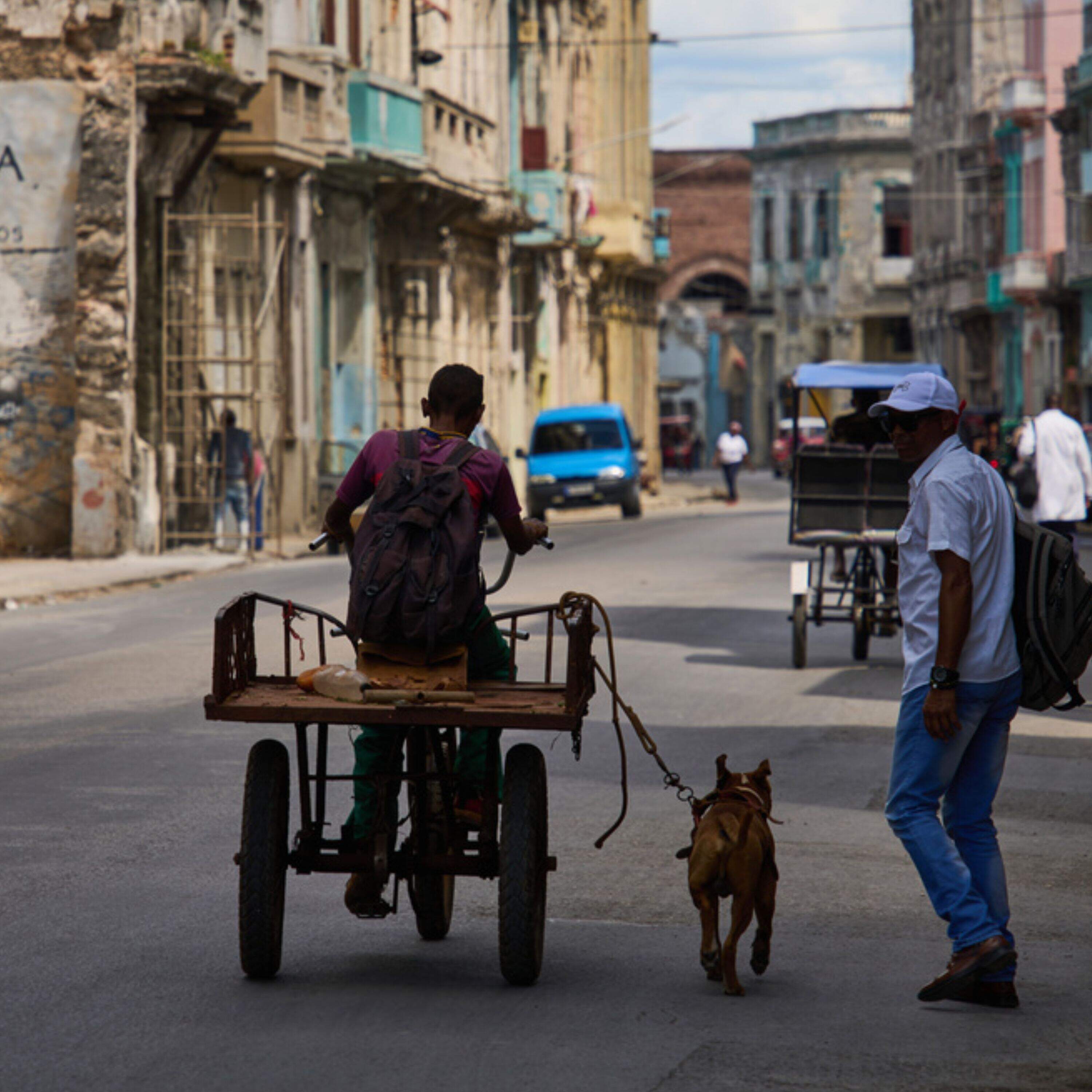
the current president of Cuba Miguel Diaz Canal fired back he wrote on ex quote the U.S. publicly threatens Cuba almost daily with the forceful overthrow of its constitutional order Cuba has one guarantee any external aggressor will encounter an unbreakable resistance and quote so let's get a deeper understanding of the White House's aims with Cuba and we're going to start today in Havana Patrick Oppen joins us he's CNN's Havana bureau chief Patrick welcome thank you so much can you just first of all tell us what daily conditions are like in Cuba just a few days ago in fact the entire island lost it's a electric electricity supply yes absolutely and you know power at my house was off this morning we have power at the office where I am our Havana bureau but you know kind of our day-to-day life is juggling the daily outages which could become much longer outages and we've seen over the last few weeks have gone from being hours to some times lasting days okay and the is the power outage then directly related to
the U.S. oil blockade on Cuba yes because while the power system here has been shaky for years and blackouts are just a normal part of life in Cuba we've never seen them like this before Cuba's grid runs off oil the oil needs to come from countries like Venezuela Mexico Russia and now with the oil blockade we haven't received any oil according to human officials for three months and so right now you know to fill up my car if I can find gasoline I'd have to buy it from someone who has it they're charging about three hundred dollars a tank at the moment which is more than a Cuba makes an entire year you know on a state salary and you don't see cars on the road power outages are lasting longer and longer it's kind of a good day if you get anywhere from four to six hours and this is impacting every aspect of life here so energy is the fundamental thing we need for delivery of food for pumps for water etc are those things also now under threat in Cuba
yes and and a lot of ways you know not having water is worse than not having power the system for delivering water here again is is also broken down and antiquated but if there's no power then the year left without water so people are stockpiling water they're stockpiling everything and of course when you don't have powerful longer than a day your food begins to spoil and that's really the hardest thing for for Cubans because food is so expensive compared to what they earn and when the food begins to spoil that's when we've seen people go out on the street and start protesting against their government just on a frustration okay so I want to talk to you about that in just a second Patrick but first we have a little bit of tape of Cubans themselves this is Havana resident Yamisio Sanchez Pena who told the German public broadcaster DW that she's trying to live her life in the dark she says we can't do anything I eat in the dark I sleep in the dark I have breakfast in the dark I shower in the dark always everything in the dark all night what else can I say
and here's another one this is a Cuban woman who is interviewed by Reuters she didn't give her name to Reuters but she also said she's losing patience with the difficulties her country is facing we're collapsed we can't stand this situation anymore I think that if this conversation between Cuba and the United States is defined a better solution and to have a better prepared Cuba with more chances to move forward in this country because we can't stand it anymore Patrick one more question about life on the ground are things like healthcare being disrupted education you know other aspects of Cuban life absolutely you go to any hospital now and there are something like a hundred thousand people on a list awaiting list for surgeries most schools you know of course don't have generators either and if you have a generator you need fuel to operate it so you know people when they get power it's almost into the middle of the night and they rush around to kind of do their cooking their laundry charge their devices because they don't know how long the power
will be on it really has a psychological impact you see an exhaustion and people's faces you see an incredible worry it feels people talk about it you know being t-imposed they get us and get times of war without a war and an oil blockade is essentially a wartime maneuver and so the Trump administration you know they know time is on their side the longer this goes on the worst it will get for regular Cubans no the United States of course has basically had an economic blockade on Cuba for what 40 plus years so this is just adding to that already fragile economic state that the island has experienced you had said a little bit earlier that we're starting to see protests on the streets of Cuba against the Cuban government elaborate so people get frustrated and what has happened is a time and time again is if you go out and protest well then they take away power from a different neighborhood and give you power to get people to go back inside protesting is not allowed here really in any form or manner you know it's still a single party communist state
and in times past when people have gone out and protested against the government the government has come in and cracked down very very hard this is also part of the US policy towards Cuba you know the whole point of having an embargo in many ways is not to change just the behavior of the Cuban government because that has not changed it's to make people unhappy enough that they try to tear down this government so what we have seen is people frustrated at the poor way the government is managing this crisis going out beating pots and pans and essentially calling for the power to be turned back on for the people who have felt discontent really over their whole lives the government looks weaker than it ever has before Patrick Oppen is the Havana bureau chief for CNN Patrick thank you so much for your reporting my pleasure support for on point comes from the vcu school of business two hours south richman feels
close but not crowded graduate students come to the vcu school of business for a variety of reasons to study accounting hone their skills in decision analytics and marketing or make a career change into finance or supply chain classes are scheduled for working professionals with flexible evening options including online and on campus the vcu school of business is open for business open for opportunity learn more at business dot vcu dot edu slash g-r-a-d during lows pro savings days save more on what goes into the job add power to your lineup with a free to walk 20 volt max five amp hour battery when you buy a select to walk 20 volt max tool plus get up to 35 percent off select major appliances for world pooled maytag and more get the job done right keep more in your pocket that's pro savings days our best lineup is here it lows valid for three twenty seven selection various allocation supplies last there is something
powerful about the sound of the human voice beautifully produced audio has the unique power to connect and inspire tell your organization's story with a custom podcast from city space productions the creative studio from wbu wars business partnerships team become a thought leader recruit new talent reach new audiences whatever your goal we can help discover how the magic is made at wbu r dot org slash creative studio well i'd like to introduce michael bustamante into the conversation now he's in Miami is an associate professor of history and chair of cuban studies at the university of Miami professor bustamante welcome to on point thanks for having me and i'd also like to introduce ricardo zuniga he's the founding partner of dinamica america's a strategic strategic advisory firm located focused on latin america north america and the Caribbean he also served for 30 years in the us senior foreign
service and in the obama administration he was on the team that held secret negotiations with the cuban government that resulted in diplomatic and economic openings back then ricardo zuniga welcome to on point thank you okay so let me ask you both uh first and foremost what do you think what can we discern about what trump's end goal is with cuba right now professor bustamante let me start with you it's been really hard to tell the rhetoric honestly has been a little bit all over the place um particularly against the backdrop of reporting that suggests that some talks are going on between both governments in fact i think that much has been confirmed and the trump administration has also acknowledged that um so how one squares the kind of off the cuff comment that the president is interested in taking cuba with reporting of ongoing talks with elements of the cuban government for some kind of negotiated exit that would presumably leave part of the cuban government in power
if the trump administration gets its way um that's been uh you know a very difficult thing to try to figure out um ricardo zuniga your thoughts no i i agree look the the president trump is going to define winning as whatever he decides winning looks like uh and that could be very very different from historical us aims in cuba which were to promote a democratic change and an open economy and in the authoritarian uh government there uh but again as we saw in venezuela uh this is an administration that is uh quite comfortable breaking with longstanding norms even when it means leaving uh an authoritarian uh regime in place uh as it did in in venezuela it's possible you could see that same in state in cuba which would be uh very surprising to people who voted for the president and south florida well but uh ricardo let me just press this point a little bit because it does feel as if right now i take both of your points about how the president speaking off the cuff
is one thing it's hard to discern what his true goals are but at the same time we have as i said a little earlier of course the venezuela example of he eventually he did take action there and depose the sitting government uh or the sitting president uh and then also we have um not just president trump but in the form of the secretary of state secretary rubio we have you know the a a family member of cuban exiles who's long been a very very strong voice against um the communist government in cuba and i just wonder if these things coming together makes you wonder if the u.s. would actually move so far as to take military action ricardo i very much doubt that they would take military action in the case of cuba i mean for one thing the uh the u.s. is fully occupied with a ron uh and this is not like the operation in venezuela cuban venezuela are very very different cases and there would you there's no single person no single cuban that they could
remove from power that would make the rest of the government more malleable that's a much more cohesive government than was a case in venezuela so the reality is that cuba has fewer resources than venezuela uh it is in a much more dire state and i think the the other reason why military action isn't likely is because it's obvious to everyone except maybe the very top tier of the cuban leadership that this model is done uh and they need to like change is necessary and there's enormous public pressure for change from the island you know notwithstanding the u.s. position on this so there's no real need for military action either to exert leverage professor bustamonte just your your thoughts on whether venezuela is the right or wrong model to be considering here well i think it's interesting that administration officials themselves have been citing the venezuela model is something that they want to follow in some way part of what they're doing is trying to marry this extraordinary external pressure with a search for a quote-unquote cuban uh delcio Rodriguez but i agree with with Ricardo it's not clear who that person would be
and the cuban system is a much more in a way kind of cohesive ideological system in the venezuela system ever was so i think you know the recipe doesn't quite make uh exact sense here which i think is partly why the administration may be leaning towards some kind of negotiated exit and trying to get as much as they can out of that using the leverage that they have okay so but let me ask both of you this like practically speaking there really nothing that the u.s. gets out of even trying to change the government in cuba but it's never really been about practicality right it's been about politics exclusively so i mean is that not seen as a potential major gain if secretary rubio or president trump could say you know we are we finally freed the cuban people i mean professor what do you think i agree and you raised a good point so even though sort of the logic would not favor something like military action um you know i think the cuba thing for this administration is as much about symbolism as as as anything else to be able to say and plant the flag that you know
we're the administration that did this thing that no other administration had done before that's certainly something that would appeal to the president's i think own sense of self importance um i can imagine the secretary of state selling this to him on those terms but again how you get from point a to point b is a very different story and i think that's where the rubber meets the road particularly given everything else that's going on yeah you know everything that both of you are saying makes perfect sense in a normal political world but what we see right now is a president of the united states who's entirely unburdened by the the need to define what success looks like because he changes the definition on a daily basis so let's just imagine for a moment that this actually is a pivotal time for the united states to affect some kind of political change in cuba what i'm hearing from both of you though is that we don't know if that would be successful at all could it potentially could the united states involvement right now potentially leave the cuban people specifically Ricardo in a worse place oh absolutely well look that's the case today
you know i think it is true that many cubans want change any change uh but they don't want uh the invasion of cuba they just want normal lives and they want uh the same things that people in the united states want and and their daily lives and they're than they haven't seen for years and conditions that have gotten worse and worse and worse uh so yes absolutely a US military action coupled with what's already happening in the economy and the shut off of energy sources is potentially a you know a recipe for a humanitarian disaster on the island well let's listen to cuban president Miguel Diaz canel on friday of last week acknowledging that the u.s and cuba are in fact in talks but he says they are in the early stages he's saying quote these are processes that are done with much discretion they are long processes that have to first be initiated by establishing contacts that there are opportunities for dialogue and a willingness to engage in dialogue and all of this takes time and based on that agenda
are being developed negotiations will begin talks begin and agreements are reached things we're still far from since we're in the early stages of that process and quote uh professor bustamante do you do you want to try to sort of glean any intel from uh what the cuban president is saying there sure i'll do my best i mean i think that this was kind of the worst kept secret and the fact that it kind of um you know made news that the president of cuba was acknowledging something that everyone else seemed to know was i think uh a testament to how slow change happens in cuba the other thing i would note is that you know to me that the Diaz canel's rhetoric did not seem to quite reflect the urgency of the moment yeah either for his government or the people at another point he said the talks are just getting started and we're at the stage of defining you know what the issues are that need resolution as if we don't know from 60 plus years of what the issues aren't cuba cuba's given a relationship so i think cuban people might have liked to hear uh more urgency from their leader as to how seriously they're taking this
Ricardo Zuniga i'd love to sort of mine your experience as being a us negotiator on the team of us negotiators with cuba uh in the Obama administration what was it like negotiating with cubans then um uh you know who did you talk to how did that go this a little bit of your historical experience so the history of us cuba talks is mostly a history of talking past each other uh we did unlike the current administration we did keep our talks secret throughout because that was the only way that either side could have the political space to negotiate hard things and and they were hard difficult conversations we simply have a very different worldview a different vision of history uh and what the United States seeks uh really gets at the at the heart of the authoritarian government in place in cuba today and if we seek greater freedoms at least that traditionally has been what the United States has been pushing for that goes directly contrary to the cuban
government's view of itself and and its interest in remaining and power indefinitely at the same time we could make progress on sort of pragmatic issues which is the terrain that the cuban government favors if it if it doesn't imply you know regime change then then they are willing to talk about uh quite an array of issues we're neighbors uh and so there are many many issues that come up uh with cuba they're fairly mundane have to do with the safety and security of our of our citizens but on the fundamental issues uh human rights uh the geopolitical alignment and so forth those are those are uh areas where we historically have just not been able to make much progress um and uh but you know I think in in in our case in president obama's case he wanted to put to bed this this you know this longstanding relic of the Cold War Ricardo if I may I have to say I love how diplomats talk sometimes because they insert um sort of clauses in the middle of their sentences that
that are that are quite consequential but you might not notice them and one of them that you did just now was that historically the United States has you know has wanted to introduce some you know more freedoms in uh in cuba and you you said at least traditionally that has been the case meaning you don't you don't feel that that's necessarily the case now with the Trump administration I think that's not the case so I think here's one thing that I'm sure that they all want they the reason that you're hearing about the removal of the president of cuba who is honestly not a particularly consequential figure in in in cuban history he's one of a consortium of leaders uh but symbolically removing him then gives the a Trump administration a plausible position that they have changed the government of cuba and then whoever comes next if they do what they didn't Venezuela and draw from the current leadership ranks it is going to have to be somebody with a strong background in the communist party or the armed forces of cuba and I think that for at least for the president the
president is not interested in democracy he certainly has made no no illusions to that in in Venezuela or in or in other conflicts whereas secretary rubio is going to probably have a very different set of interests coming from south lorda where where the removal of the entire communist apparatus is really the goal America leads the world in medicine development it matters we get new medicines first nearly three years faster five million americans go to work because we make medicines here at home and not relying on other countries keeps us safe but china is racing to overtake us will we let them or will we choose to stay ahead when america leads america cures let's tell washington to keep us in the lead learn how at america cures dot com pay for by pharma um are you stuck staring at your w two our tax refund worries holding you back you probably have
foam the fear of messing up the fix using turbo tax on into a credit karma they find every credit and deduction to help you get every refund dollar you deserve or your money back it's time to overcome your fear of messing up and get your taxes done right start filing today in the credit karma act on march 9th at a news conference in der al florida a reporter asked president from what the u.s. would get out of a deal with cuba and here's trumps answer it may be a friendly takeover it may not be a friendly takeover it wouldn't matter because they're really in they're down to as they say fumes they have no energy they have no money they're deep trouble on a humanitarian basis and we don't want to see that but they were very very bad to a lot of people is you know and a lot of people living are the cuban american vote which i got at record levels
very important those people are very important to me i know i know what they went through they went through hell some of them have gone on to be some of the most successful people in the country cuban american business people some of them are like the most successful in the country and a lot of them a friends of mine because i've been fighting this battle with them for a long time uh... recorder can i just see a quick question do you know what the president is talking about when he says he's been fighting this battle with them for a long time i can't we i can't quite sus that out well i yeah i know i i can't either uh you know cuba has not been especially important to him yeah Venezuela by comparison has been much more important okay um gentlemen i'd actually just like to take a quick step back here because we have to talk about the role that history plays with any u.s. interaction with cuba i mean it's been what more than six decades that cuba occupies this unique place i would say in the american political psychology as the next door neighbor that still stands as an eternal reminder of the former Soviet union
and the you know existential threat of the cold war i mean Ricardo since you have been a u.s. diplomat in in this world how does that history play into this moment well i mean the for on the cuban side i assure you this feels like a part of the continued arc of its relationship with the united states the people who are in charge of cuba now some of them were founding members of the revolution so for them this has been their entire existence for the united states cuba became sort of less and less relevant as a security matter and became more and more of a symbolic uh instance of a country that stood in opposition to the united states and allied with u.s. adversaries all the way through till now but if you're a u.s. diplomat cuba was always the adversary on the other side of almost every issue that mattered in latin america uh professor boost amounted did you want to add to that yes sure i you know the relationship between cuba and united states has had to exercise importance and i think the imaginary of both countries since long before
the cuban revolution in fact i think the cuban revolution comes out of this long and torturous relationship these ties of singular intimacy as president mechanically called them and i think the shadow of that longer history is upon us i mean when the president sort of talks off the cuff about a takeover of cuba then cuban audiences hear that and might rightly think about 1898 when the united states intervened in cuba's war for independence and occupied the island for four years and helped birth the cuban republic but under a tremendous u.s. shadow and so the histories are long and deep i remember very well when president obama traveled to cuba for a historic visit in the spring of 2016 and gave a nationally televised address and part of the the thread of that speech was about the need to sort of put history to bed and look forward and that generated such a strong counter reaction from from the cuban state um the irony though is that if this history still continues to matter so much for cuban officials and an official narrative for cuban citizens particularly the two generations that have come up since the fall of the soviet union who know nothing but one
degree or another of crisis they often don't have as deep an understanding of this history and they are really looking to just move forward and put it behind them which i think has left them open to a kind of dramatic action from the united states potentially in ways that they might never have been before okay but ricardo zuniga you know i'm thinking back to the the negotiations that you were part of in the obama administration and they did bring the some successes regarding diplomatic relations and economic openings between the united states in cuba but i don't imagine that political change was ever on the table if indeed to this day as you're saying that history that we were talking about still ways so heavily in the minds of cuban leadership it seems to entirely unrealistic that the cubans would be open to introducing substantial political change right absolutely true and so during our negotiations with the cubans which were a lot less coercive than the ones that were seen now between the trump administration and cuba that was a different time
cuba still had more resources than it does now and it was a better and conditioned overall now they have very very few choices much more limited public support because the population as michael said has lived through these cycles of rising expectations only to have their hopes dashed so i think that frankly the cuban state simply cannot provide what it could before and the subsidies are done the external subsidies are over so the model the model's dead and it has been for some time that's their harsh reality that they may not want to see any kind of change or envision a future for cuba without them in charge but those circumstances are kind of starting to come out of their hands at this point then why isn't the u.s stepping back and just letting that slow crumbling happen it i mean is it frankly because we have the son of cuban exiles as secretary of state right now and i just don't really understand what advantage the u.s thinks it has at this moment well i think michael put it well we we our countries live very large in each other's minds
yeah and so i think it's impossible to imagine the united states not doing not doing anything who regardless of who is in the white house at at a moment like this but you're you're exactly right like so the question here is how do you stimulate change positive change in cuba with a government that it feels like it's very existence is that a physical existence as people is on the table yeah that's that's the situation for them i'm going to come back to that in a second but professor booster monday let me ask you this because we've been talking exclusively at us and the united states and cuba but um you know i'm wondering the russians have said i think there's been some reporting that russians have said they're going to continue to to support cuba i mean their subsidies and maybe plus some i don't know if china's playing a role here how do you read all that yeah um russian china have absolutely been key allies trade the trade partners of cuba in
recent memory um the reporting this morning is that there's a couple of ships from russia with oil on their way to cuba that will represent you know one of the first challenges to the ostensible oil blockade um and perhaps you're seeing an opening given everything that the united states is focused on in in the middle east um but i think it's also important to note that while the rhetoric from the russian chinese government is one of solidarity one of opposition to what the united states government is doing to cuba neither of these countries is willing to bail out the cuban economic model they themselves have said to the cubans you know you know on friendly terms or somewhat less friendly terms you guys need to change the russians even uh proposed a kind of a massive plan for restructuring the cuban economy a couple years ago that went nowhere so everyone's frustrated so the last you know decade has been the cycle of missed opportunities for reform you know there's no one to bail them out and i think for that reason you know going back to your prior question about what the united states is actually after here given what they did in venezuela they sense that they
have leverage and they do in theory the question here is time and political well on the cuban side can the the trump administration use that oil leverage to prod the cuban government to concede on things they've never conceded on before while the cuban people are suffering in the middle or will the cuban government try to you know run out the clock and so i that's what worries me the most the sort of differential timelines on which the diplomatic process may play out versus just how quickly the humanitarian situation is deteriorating on the ground uh and that is not a good rep recipe for you know rebuilding a society in in in any form well michael buster montet is the associate professor of history and chair of cuban studies at the university of myami professor buster montet thank you so much for joining us thank you recorder zuniga i hope you forgive me for just making this very kind of rudimentary observation but you know we've been talking about the cuban people here through the whole hour and i just want to underscore that they are suffering even more right now that the trump administration has made the decision with its you know essentially it's effective
oil blockade to increase the suffering of the cuban people with the hopes of creating some kind of political leverage that's a choice made by washington on the innocent people of cuba uh yes that absolutely is and the whole premise of president obama's approach to the issue was that the conflict was going to continue between the two governments but we should do what we can to alleviate the suffering of the cuban people and let them solve some of their own problems encourage agency on their behalf let them make their lives as good as they can while the governments continue their their dispute this is the opposite this is essentially using the pressure cooker of the destruction of cuban society to try to generate a revolution from below that's the the objective but of course it becomes a much more unmanageable situation
quite apart from the humanitarian concerns having a violent overthrow of a of a government always has unforeseen consequences let me ask you from your experience your long experience uh with with cuba specifically that pressure cooker to create a revolution from below do you think that there's any possibility that that could happen given the current circumstances look michael had it right that under the the current circumstances uh we have not seen before and so it's you can't predict based on what's happened in the past you certainly have had large demonstrations that the cuban state remains very capable in terms of its repressive capacity no question there so it would be difficult to see this kind of change go forward unless parts of the state itself defected in favor of change members of the armed forces or the security forces or members other members of the state and we don't see that right now what we see right now is
that uh as as unhappy as angry as the population is as much as they desire change nobody wants to be the last victim of this government right so to an extent it's still easier to try to leave cuba rather than try to force change and that's been part of the logic of repression in cuba give people an out a safety valve that's been migration in the past but this is a very different circumstance so yes it's plausible to imagine some kind of uprising in cuba and again people are quite desperate they just want normality they want power but they want to see some kind of trajectory of hope and that's that's not existent right now now secretary rubio has said that cuba does not have to change from one day to the next he says everyone is mature and realistic that's a quote from him ideally what change if any would you hope to see in the coming you know weeks months years in cuba well i think in the short
term you we would want to see improved social and economic conditions so that would mean removing pressure on the private sector and allowing much more freedom of people to again solve their own problems so that would be crucial you would want the release of all political prisoners and commitment by the state to kind of begin easing the pressure that they've put on the political side of the equation as well and a gradual but very evident move towards opening up cuban society that's what we need to see and how you get there again again is a matter of debate but it's necessary for us to see a successful neighbor in cuba well ricardo zuniga he was in the obama administration serving on a team that held secret negotiations with cuba on economic and diplomatic openings he's now founding partner of denamika americas ricardo thank you so much thank you very much magna i'm magna chakrabardi this is on point rhythm it's the thing that makes you want to dance it can change the way you feel about a song
or a moment and it's actually even more than that rhythm to me is like a universal language at least on this planet it's not just a musical expression but it's essential to to life and nature i'm magna chakrabardi why we need rhythm in music in language and in life that's on the next on point
More episodes
More from On Point with Meghna Chakrabarti
How 9/11 shaped America
On Point with Meghna Chakrabarti
Did the Treasury just make it easier to launder money?
On Point with Meghna Chakrabarti

Who's to blame when AI goes rogue?
On Point with Meghna Chakrabarti
How should e-bikes be regulated?
On Point with Meghna Chakrabarti