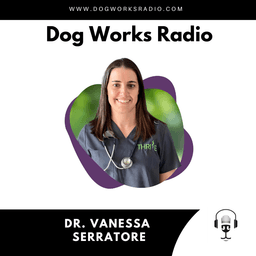
Last week on Dog Works Radio, we explored the strange topic of "zombie dogs" and how real diseases can influence canine behavior. This week, we tackle another uncomfortable but honest question: would your dog eat you if you died at home?
In this episode, we break down what forensic science reveals about post-mortem scavenging in dogs, how survival instincts override emotional bonds, and why this conversation matters especially for dog owners in Alaska. From remote cabins to winter road closures, delayed response times can change the equation.
You'll learn:
What documented forensic cases show
How and why scavenging behavior begins
The role of canine survival instincts
Practical emergency planning steps for dog owners
How training and independence affect resilience
If you live alone, off-grid, or in rural Alaska, this is a conversation worth having. Preparation is not fear—it is responsible dog ownership.
For help with obedience, separation anxiety, board-and-train programs, or service dog development, visit AlaskaDogWorks.com or call (206) 752-3647.
Mist calls, slow replies, and scattered conversations aren't just annoying, they're money left on the table.
Make this the year you prioritize your business communications.
With QUO, spelled Q-U-O, QUO gives your entire team one shared business number for calls and texts.
So nothing gets lost and everyone sees the full conversation.
You can keep your existing number, easily add teammates, sync your CRM, and scale as you grow.
Plus, QUO's built-in AI automatically logs calls, summarizes conversations, and highlights next steps.
So nothing slips through the cracks, even after hours.
That's why QUO is the number one rated business phone system on G2, trusted by over 90,000 businesses.
Make this the year where no opportunity slips away.
Try QUO for free, and get 20% off your first six months.
At QUO.com, slash try QUO, that's q-u-o, dot com slash try QUO.
QUO, no Mist calls, no Mist customers.
Who here loves when their nails are done perfectly?
Me, I'm Sarah Gibson Tuttle, and I started Olive and June because let's be real.
We all deserve to have gorgeous nails, but who wants to spend a fortune or half their day at the nail salon?
That's why I created the gel-manny system, so you can have that salon quality gel manicure right at home.
And guess what, the best part, each man only costs $2.
Yep, you heard me $2.
No more $60, $70, $80 salon trips that eat up your day.
Now you can paint your nails whenever you want, wherever you want, and trust me.
You're going to be obsessed with your nails, and everyone is going to ask you where you got them done.
And here's a little something extra.
Head over to OliveandJune.com and get 20% off your first gel-manny system with code gel-manny20.
That's code gel-manny20 for 20% off your first-manny system at OliveandJune.com slash gel-manny20.
Dog Works Radio, sponsored by Alaska Dog Works.
Check out their website at AlaskaDogworks.com.
You can support this podcast on patreon.com, forward slash first palm media.
Last week on the podcast, we explored the strange and uncomfortable topic of zombie dogs.
Looking at how real-world diseases can alter behavior in ways that feel almost cinematic.
That episode sparked a surprising number of messages and follow-up questions, and one stood out above the rest.
Several listeners asked, in complete seriousness, would my dog eat me if I died?
It's not a question people usually ask out loud.
But if you live alone, spend time off grid, or call rule Alaska home, it's a very real concern.
Today, we're going to talk about what the science actually says, what forensic evidence shows,
and why this conversation matters more here than in most places.
From first palm media, sponsored by Alaska Dog Works Professional Canine Training Center in Anchorage, Alaska.
This is Dog Works Radio, committed to families and their dogs to build lifelong and fulfilling relationships.
Visit our website at dogworksradio.com.
Now here are your hosts, Robert and Michelle Forto.
Hello and welcome back to Dog Works Radio. I'm your host, Michelle Forto.
Lately, we've been diving into some of the questions that tend to linger in the background.
The ones people think about, but don't always say out loud.
Last week, we explored the topic of so-called zombie dogs and how real medical conditions can influence behavior.
This week, we're taking on another uncomfortable but honest question that many dog owners quietly wonder about.
If something happened to you and you were alone at home, would your dog eventually eat you?
Here's the reality of post-mortem scavenging. Dogs are deeply bonded companions, but they are also opportunistic omnivores with powerful survival instincts.
Those two truths can coexist even if that makes us uncomfortable.
Forensic research over the past few decades has documented what happens when an owner dies at home and is not discovered for several days.
A 2015 review of more than 60 cases, along with ongoing observations from medical examiners and forensic anthropologists,
shows that pet scavenging is not uncommon when dogs are confined indoors without access to food.
What often surprises people is how the behavior begins.
In many cases, it starts with licking or nuzzling behaviors that may look like attempts to wake or revive the owner.
When there is no response and decomposition begins, the dog's behavior can shift.
As hunger increases, biting may occur, typically starting with exposed soft tissues such as the face, neck, or extremities.
In prolonged situations, lasting several days or even weeks, dogs may consume larger portions of the body, including the abdominal cavity.
This is not an act of aggression, anger, or betrayal.
The emotional bond does not simply disappear, but once a person is no longer responsive and the body begins to change, survival instincts can override attachment.
Even when food is present in a bowl, it may initially be ignored, yet hunger eventually becomes the driving force.
There are documented cases of dogs guarding a deceased owner and never scavenging.
However, in forensic records, those cases appear less frequently than people assume.
The reality is more nuanced than loyalty versus disloyalty. It is about biology.
Here's why this conversation matters in Alaska. In Alaska, geography changes the equation.
If you live in a remote cabin on a rural homestead or even just outside town during winter, conditions, response times can be significantly delayed.
Storms, clothes, roads, cell service, fails. Friends or family may not check in for days.
Many of our clients are mousers, outdoors people, solo residents, or people who simply value privacy and space.
In that context, emergency planning becomes part of responsible dog ownership.
This is not about fear, it's about preparedness. Just as we plan for avalanche risk, mechanical breakdowns or medical emergencies in the backcountry, we should also think through what would happen to our dogs if something unexpected happened at home.
Here are some practical steps to protect both you and your dog.
At Alaska dog works, we encourage proactive planning that protects both the owner and the dog.
One of the simplest steps is arranging regular welfare checks. Whether it is a trusted neighbor, family member, or professional service, having someone check in daily or every few days can make a significant difference.
In remote areas, this can truly be life saving. Technology can also play a role.
Medical alert systems, smart home cameras, and simple check-in apps can notify context if you miss a routine communication, while no system is perfect, layered, safeguards reduce risk.
Keeping extra dog food, water, and even automatic feeders available can extend the window before hunger becomes an issue.
While this may not eliminate the possibility of scavenging in extreme scenarios, it can delay survival driven behavior.
Training matters as well. Dogs that are confident, well adjusted, and not excessively dependent, tend to cope better under stress.
Through our board and train programs and obedient sessions, we work to build stability and resilience rather than reinforcing extreme, velcro attachment.
Independence, when developed properly, is a form of emotional strength.
Finally, a state and pet planning should be part of your long-term strategy, including your dog in your will, or advanced medical directives,
and identifying temporary or permanent caregivers ensures that your companion is cared for if something happens to you.
To listen to this show without ads, please consider joining our membership program, The Pack, and we will be right back.
We're living in uncertain times. If there is one thing we can be thankful for, that is the recent pet adoption boom.
Shelters are being cleared out, and that means you may not know much about your new best friend.
Alaska Dog Works virtual and on-site classes are the best way for you to build a lasting bond and learn about your pop, new or old.
From setting up a proper routine to learning the commands and much more, Alaska Dog Works provides you with the resources to develop your dog into one of the best.
Right now, Alaska Dog Works has an exclusive offer just for our listeners.
Go to AlaskaDogworks.com now and use promo code Dog Works and save 20% off your training program at the time of your booking.
Visit AlaskaDogworks.com and use promo code Dog Works to save 20% today.
That's AlaskaDogworks.com and use promo code Dog Works at the time of booking.
So what's the bigger picture? Your dog is not waiting for an opportunity to turn on you. The bond you share is real and powerful.
At the same time, dogs are living beings shaped by instinct and survival, acknowledging that does not weaken the relationship.
In many ways, it strengthens it because preparation is an act of responsibility and respect.
Most dogs will never face such circumstances. They live long, happy lives at our sides.
But in a place like Alaska, where independence is part of the culture, thinking ahead is simply part of good stewardship.
If you have concerns about separation anxiety, preparedness planning, or your dog's overall stability, we are here to help.
You can contact Alaska Dog Works at 206-752-3647 or visit AlaskaDogworks.com to learn more about our programs from foundational obedience to advanced behavior support and service dog preparation.
Alaska Dog Works is based in Willow, Alaska, serving Anchorage, the Masu Valley, and clients statewide and beyond.
Led by Dr. Robert Forto and our experience team, we specialize in obedience training, board and train programs, puppy classes, behavior modification, and service dog development.
With decades of experience working with hundreds of dogs, our focus is on building strong, reliable bonds through positive, effective training tailored to Alaska's unique lifestyle, whether that means urban living or remote adventure.
Next week, we'll continue exploring the intersection of science, behavior and real-world dog ownership.
Until then, stay prepared and give your dog the leadership they deserve.
From First Paw Media, this is Dog Works Radio. We hope you enjoyed this podcast and we invite you to subscribe and Apple Podcasts, Spotify, or wherever you get your podcasts.
You'll find a link on the episode notes. You can tap or swipe on the episode cover art and you'll see some offers from our sponsors.
You can support our show by supporting them. If you like what you have heard, we would love it if you could give us a five-star rating and tell your friends how to subscribe to.
Your hosts are Robert and Michelle Forto, our producer is Robert Forto and created for First Paw Media.