Loading...

educationself improvementhealth
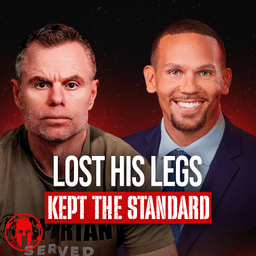
Zachary Garner on Survival, Service, and High-Stakes Endurance After Near Death
About this Episode
A stiff knee looked like a minor problem. Two days later, it was swelling toward the size of a basketball.
Then doctors opened it and found an infection eating him from the inside out. Zachary Garner is a Green Beret, firefighter, and ultra-endurance athlete, and this episode is built around visible stakes: brutal deployments, a catastrophic Ironman crash, traumatic brain injury, seizures, and a fight with flesh-eating bacteria that spread from hip to ankle, into his bloodstream, bones, pelvis, and heart.
He was told it could end fast. He was moved to Mass General, spent time in the ICU, had two strokes, and coded twice. Zachary breaks down what kept him moving forward: discomfort as training, purpose as a stabilizer, loyalty as a standard, and service as the operating system. You'll leave with disciplined rules you can apply when you're stuck, overwhelmed, or looking for excuses.
Things You Will Learn:
- How to use purpose as a coping mechanism when quitting starts to feel logical.
- How to normalize discomfort so you don't fold under pressure.
- How loyalty and service create structure when civilian life feels flat after high-intensity environments.
Tools & Frameworks Covered:
- Do-It-For-Them Anchor: keeps endurance and resilience steady when motivation drops.
- Discomfort Reps: builds mental toughness through repeated, controlled exposure to discomfort.
- Service-First Operating System: aligns discipline, responsibility, and daily actions to a clear purpose.
Let's make it something similar to this: If this episode moved you, don't just listen. Do something about it. Sign up. Show up. Do the work. Spartan.com. No more excuses.
Zachary Garner is a retired U.S. Army Green Beret who's survived traumatic brain injury, epilepsy, a near-fatal car accident, and necrotizing fasciitis that nearly took his life. Instead of giving up, he's turned pain into purpose, riding across the country, carrying weight for miles, and competing in extreme endurance events to raise awareness for veteran mental health.
Connect to Zachary:


We gave you the tools, now use them during your next SPARTAN RACE! Use codeword PODCAST on checkout for 10% your next race.
👉 Find Your Next Spartan Race: https://www.spartan.com/en/race/find-race
👉 For everything Spartan: https://www.spartan.com/
Rise and Thrive with Essentia. Don't just sleep, recover, perform, and wake up ready for anything. Essentia's certified organic Beyond Latex™ mattresses provide deep, restorative sleep without toxic chemicals, allergens, or compromises. Use code SPARTAN25 at myessentia.com.
🎧 Listen & Subscribe:
📲 Short, Impactful Content
👉 Instagram: @spartanuppodcast
👉 From me directly: @realjoedesena
The Hard Way Podcast With Joe De Sena, Hosted by Joe De Sena, founder and CEO of Spartan, this podcast delves into the principles of resilience, discipline, and the Spartan mindset. De Sena's journey from building a multimillion-dollar pool cleaning business in his teens to establishing a successful Wall Street trading firm showcases his entrepreneurial spirit. In 2001, he transitioned from finance to operate an organic farm in Pittsfield, Vermont, where his passion for endurance events like ultramarathons and adventure races flourished. This led to the creation of Spartan, aiming to inspire individuals to embrace challenges and push their limits.
Transcript
Life is full of uncomfortable situations and when you find yourself in those situations, it's easy to just
talk yourself out of them. But the growth comes from just embracing being in that moment.
There were many failures that took place to give me to be who I am now and there will be more failures,
I'm sure. But what keeps
getting me through those failures and through those low points is service.
I love being of service to people. Spartans, listen up. We need to sleep better,
was a haddie sleep better. Never thought about it before. And so I met Jack, I met Asensha,
I had attention to the mattress to sleep on because it's loaded with chemicals. Recovery,
cooling and pressure relief, all in one mattress, up to 60% more deep and REM sleep, less inflammation,
faster bounce back, no toxins, no EMFs, no BS. My buddy, Jack, over to Asensha, he's kind enough to
give us a code for the Spartan community. That's Dekka, that's Tough Mudder, all of us. You
Spartan 25, get a discount, prioritize your sleep so you can sleep faster, you can do more
perpies, you can train more, you get out there, when you sleep well, you live well.
Joe, just had a CEO and founder, Spartan, Hoster Hardway podcast, got my buddy,
Zachary Gardner, Green Beret, badass, firefighter,
ultra endurance athlete and overall survivor. I mean, you're like the terminator,
bionic man or something, you just, they just can't kill you. Yeah, that's what I like to think,
that's on my wife, all the time, like you're stuck with me, I can't, I can't die.
Anything really unique about your childhood that, that made you a little harder to kill?
Grew up in a military household. My father was career military, did three tours in Vietnam,
kind of grew up around that mindset and, you know, I was, I was a scrawny guy growing up and so
I was picked on a lot too. And so I think as an adult, I, I felt like I had something to prove,
not necessarily to other people, maybe in part, but also to myself.
So that, that's probably played a pretty pivotal role in things.
So you're 18 years old and you decide to go in, kind of hit my parents with it out of the blue.
I think, you know, six months prior to me turning 18, if you asked me what I wanted to do,
or what I was going to do, that was the last thing I would have said, or anyone would have
expected me to say, I, I wanted to be a rock star. I, I played guitar since I was 12 years old.
I played through band, and bands all through high school. And that was my only point coming
out of high school. Like college wasn't really on the radar at all. I knew myself. I knew I wasn't
mature enough to go into college and be successful at that time. And so one day it just hit me. I
wanted out of Indiana, you know, I was working multiple part-time jobs, blockbuster video,
packs, and in the mall, working at a restaurant, bus and tables, living at home with my mom,
and playing music, touring when I could, and then coming home, spending nights in the recording
studio, and then working three jobs, and, and just got burnt out. And I was like, I got to figure
something out. And one day it just clicked. I was like, I, I want to see the world. And
let's do it. You know, we were, we were about three years in through the, the post-911
conflicts in the Middle East. And I was just like, you know, that seems like it might help me grow
up a little bit and give me a different perspective on the world. So let's try it out and let's see,
let's see where it takes me. And, you know, fast forward there, I was for about the next 15 years.
Any moments where you said, gee, I made a mistake? Not really, to be honest. I enjoyed
basic training. I enjoyed the, the, the struggle with being home safe, the physical
struggle, you know, I, I played sports in high school, but that was a different level of like
everyday having to perform in, you know, I'm not one of those people that's okay with just being
as good as the people around me. I want to try to exceed what everyone around me is doing. And
that's a mindset that sometimes might hurt me, but it also serves me more than it
hurts me. So, so I'll take it. So you're in. You're not really regretting it. You made it through
basic training. You're now pushing yourself. You're a green beret. Where did it take you? Man, so
in the regular RV, my first duty station was in Germany. So finished basic training and on my
advanced training and then shipped out to Germany. I was there for about two months probably.
And then to my first appointment, do I rack? And that was about a 12 month appointment,
came back to Germany, spent about a year there and then got moved to Fort Drum, New York,
way upstate New York, almost Canada. And the day that I signed in, they said, hey, get ready to
go to Iraq, your units are already there. You're going to meet them over there. So about six weeks
later, I shipped out for my second appointment to Iraq. Was it rough one? I would say of all my
appointments that was probably the worst. It was, this was 2006, 2007. So things were pretty
hot and heavy. We lost and just my battalion, we lost 27 guys during that appointment. So it was
physically and mentally a very tough appointment. Not pretty, pretty heavy opt-empo. So not a lot of
sleep was happening over those 15 months. And then a big mental strutting as well. You know, when
you meet new people, you become friends with those people and then one day those people aren't there
anymore. Any kind of tips and tricks that the viewer or listener could get from you on how
a lot of people don't recover from that kind of stuff. Like how do you, how do you put a past
you? Everything I have done since then when it comes to doing hard things, what drives me through
just thinking about how they can. And I think that's a coping mechanism for me because I do it for
them in a sense. When I want to quit, when when things get hard, when I get overwhelmed. And that's
not just physical things, but just life in general. I think about those friends and those people
that I cross paths with that never add these opportunities. And I do it for them. How many years did
18, 18 years? How many years? So I did 10 to half years in the in the army. And then I transitioned
out to the private sector, but still working for a government organization and did about another
five years with them. When you came out, you know, I hear it a lot, tough to assimilate at that
point, trying to, you know, trying to find the same kind of real and action and purpose that you
had before. Yeah, it's, you know, you're used to kind of being pegged all the time. We could
run in red line. And then all of a sudden, you just stop. And now you're just like, I felt like
I woke up every day and was just kind of like going through the motions and waiting for that
that peg again. And it just wasn't coming. And so I went and sorted out again.
There's a generation out there that that looks for excuses. And I feel like it's becoming more and
more socially acceptable to have an excuse to not go find what you want. But I can't because of this.
I can't because of this. I refuse to accept that. And nobody's going to tell me what I can
and cannot do. Nothing's going to tell me no, you know, diagnosis from a doctor. Nothing's going
to say like, you can't do this. The only thing that's going to tell me I can't do it is doing it
and dying trying. You're assimilating. You're figuring out mechanisms to get back in, you know,
mentally in the game, a civilian life. And so you start taking on some hard challenges,
you start doing some crazy bike rides and tell us about that. Yeah. So cycling and had kind of
in the last like three years or so, three, four years of my career, I had found cycling to be like
therapy for me. You know, at this point, I had been in Greenberg for a while. I'd gone through
the special forces qualification course. So my joints were starting to have some wear and tear on
them. But I also still need to be able to perform. So I still need to work out to a certain level.
I started cycling rather than running so much because I could get the cardio and without the wear
and tear on my joints. And I would still run. But this was like, you know, just something different
to still get the same benefit. And I found it to be really therapeutic because I love being
outside. I love being in nature. You can cover more ground riding for two hours than you can running
for two hours. So I get to see a more scenery. So I got really deep into cycling when I separated
from the army. I was like, I'm going to take a couple months and I'm going to bike from
Washington state to Florida with the idea of going through every active duty special forces
base across the country in a raising awareness for non pharmaceutical therapies, non pharmaceutical
treatments for TBI's because that's why I was originally discharged from the army was for TBI's.
I had too many brain injuries. I developed epilepsy and was having seizures.
The VA's answer to that was prescription meds and then their side effects to those prescription
meds one that I was on specifically a known side effect is to cause psychosis. Psychosis and a
four-time war veteran is probably not a good combination. So I started seeking out alternatives
therapies and actually was able to get off of all my seizure meds and not have another seizure.
So I wanted to kind of let's start talking about this, like start bringing that conversation
to the table. And so I did that by riding to bike across the country, stopping at bases.
And I found some nonprofits that were really interested in this that worked with the veteran
community. And I raised money for those guys so that they could continue their mission.
50-50 like I'm doing this for their mission, but it's also like therapy for me and healing for
me. And it also gave me time to figure out what I wanted to do after the military.
Did that ride? It was about 5,500 miles, took about three months. If we had stops for fundraising
events and stuff, we could have probably get it down to about two months, but you know, you also
want to enjoy it. Like this was a, what I thought was going to be a once-in-a-lifetime opportunity,
or like I'm never going to do anything like this again. So I'm going to have some time to enjoy it.
Came back from that and got a job coaching endurance athletes. And primarily it was triathletes.
It's in a lot of these athletes that I had were Iron Man athletes. So I was like, I need to do
this so that I can put myself in their shoes and and understand where they're at. So I started
getting into triathlons and baby stuff my way up. And yeah, August of 2016, I was doing an Iron Man
in Minnesota and was in the bike portion. And it had been raining all day. It was really not
great conditions. And coming down a hill, this, I was coming down a hill and there was an intersection
and we were told that the intersections were all going to be controlled by the right way for us.
So wasn't really hitting the brakes, but I see this car pulling up at the intersection. And it
didn't seem like they were slowing down. And the speed that I was coming with, I'm kind of doing
quick calculations. And I'm like, we're probably going to become friends here in a minute. And so I
question for a second, should I hit my brakes? And I was afraid that if I hit the brakes and tried
to turn around them with the wet roads, there was a good chance that I was going to slide underneath
that car and have a much better outcome. So kind of brace for impact. And me and that car did become
good friends real quick. I ran into the side of the car, went over the handlebars, the windshield
launched me straight up into the sky. And to be honest, like I fully remember all that. And I was like,
okay, that wasn't as bad as I thought it was going to be. If the bikes are right. And I was in
I was in third place at the time. So I was like, if the bike's okay, I can pick up the bike and
lean and get back on the road. And it wasn't until I saw the sky for like the eighth time. And
then I realized like, oh, I'm somersaulting through the air right now. This next part's probably
going to suck. And that's when I meet the ground. And sure enough, I had told myself I was like,
don't try to catch yourself. Just go go limp. Yeah, I hit the ground head first and my back kind
of scorpion over. And yeah, it was lights out right then. So, which is probably blessing because
I really don't remember it. I woke up in the ambulance on the way to the hospital. I don't know,
and minutes later. So how bad were the injuries? Pretty bad. So initially the concern, the biggest
concerns were the head injury, because my helmet was shattered. And so they knew there's
likely a brain injury going on here. And then the next thing, the biggest concern was my back,
because of the position that I landed in. And I had a lot of pain in my lower back. And I got in,
they did brain scans. They skimmed my back. I had a fractured L5. I broke my whole orbital socket.
And I had a pretty bad brain bleed. Those were their main concerns. But as they're doing all their
evaluations and everything. And they had, you know, once I got to the trauma center, they took me to
a trauma one hospital. They had given me fat and all to help with the pain. There were no bones
broken. But then like three, four hours later, they did a second scan. And I had all this fluid
built up in my glue and in my right leg, upper way. And they realized like, hey, you're developing
compartments. And you know, it's so much trauma to that area that you're bleeding in fluid
is swelling so much that it's cutting off circulation to the entire way. They took me in for
emergency surgery, um, did about a one inch incision from the top of my, my glue all the way across my
lower back and then all the way down my right, about halfway down my right thigh. And then they
just leave that open with a wound back in sucking that fluid out for the next like 10 days. And every
couple of days they'll pull it out, clean it, pack it back up. And eventually they were able to
close that. And I didn't have any, the concern was that I would have permanent nerve damage in that
way. But luckily, I didn't. I think part of that is because I don't sit still well. So even while I was
in the hospital with these wound racks in, I was getting up and walking around the hospital,
soon as I get out of the hospital, I was going on walks with a walker. Um, and then as soon as I
could get back on a bike, I was out paddling, you know, I wasn't like going on training rides, but
just cruising around the neighborhood, just getting that like moving and working and was able to
to rehab it back to, you know, I still, I still feel it from time to time. Strength isn't
fully equal in the right side for soul outside, but it doesn't really hold me back anymore.
No complaining. It is what it is. Just move forward, right?
We've discussed the hard way. We understand the scientific benefits. We understand the mental
benefits. We understand the unexplainable benefits to doing the hard things. I want you to use the
code word podcast and sign up for something hard with us. Because when you get a date on the
calendar, your entire being is forced to go to bed early to wake up early to put the device down
to not do the drinking, use the code word podcast. Get signed up for something hard. We care
about changing lives here. We don't care about your money. Code word podcast. Get signed up. Let's go.
For the audience, it doesn't know. You get through that. You get through those deployments.
And then 2020, you get some bad news after that accident. I stopped coaching endurance athletes.
I kind of took a break from it. I did what a lot of special operations guys do and that's overseas
contract work. Got along with a really great company and in a job that that I wanted to do very
similar to what I was doing before deployed about six more times with them. And then 2020 happened
and filled it hit. Emissions kind of slowed down. I had been in country for about two months and
they were like, we're going to we're going to limit things. There's anybody want to volunteer to
go home to don't get paid when we're not home. So some guys want to stay and make money.
I was like, I'm good with it. As soon as I got home, but I lived in Florida at the time before
being shut down. I'd gotten some tattoo work done. And then Florida shut down for a couple
of weeks. And I got bored. I was out on the water doing doing Florida things, battle boarding,
swimming, hanging out. And that tattoo you hadn't healed all the way.
And some dirty water got in there and some bacteria got in there. But the time we didn't really
think about that. So I woke up one morning and my knee was a little bit stiff and uncomfortable.
And it was a little bit swollen like on top of my kneecap. And and hop to the touch. And I know
like these aren't good signs. I had honestly thought because the tattoo was mostly healed by this
point. So I had honestly thought like maybe like a spider bit me, like a brown recluse or something.
Let me go to the urgent care and just get checked out. So go to urgent care. I was working out a lot
at the time. They said, I think you have some versitis in that knee. So they gave me a steroid
injection to help with the inflammation. It set me on my way. Sounded like a reasonable thing. So I
I went home about two days later. They I woke up and my knee was swollen like to the almost
the size of a basketball. And like to the point like I couldn't even get pants over it. So from hip
to ankle, disinfection, head spread. So at that point, they started doing wash out and debris
every four days and then just packing wound vacks and and suction in in between. Wouldn't even
close the wounds up. Just cover them and then put me in the hospital keeping me heavily medicated so
that I'm okay just lying in bed. This went on for probably four to six weeks. And then
it eventually spread into my bloodstream and got into my bones and then it started eating my pelvis
and then shortly after that, we found out that it spread to my heart. And at that point,
they're like, this is a death sentence. Like you need to start coming to terms with like you
might be alive today. And in four hours, you might not be alive because it's going to shut down
your heart eventually. So a nonprofit that I had never I had actually never even heard of them.
But a friend of mine turned me on to them. He sent them kind of a synopsis of what was going on.
And they reached out and said, Hey, we have access to the best doctors in the country of a
mass general in Boston. If we can get you up to Boston, they said, that's your best chance of
beating this. So that's a good private jet up to Boston. They started over. They were like,
we don't care what the other doctors have said. We're going to treat you as a brand new patient.
And we're going to we're going to do it our way. These these doctors were phenomenal. And they
were able to get it under control. We had a few hiccups I spent about a month and I see you up
there because I had two strokes while I was there. And I coded twice. So hardstop died. And they
were able to get me back. But then, you know, the right concoction of surgery and the right
medications, we were able to eventually kill all of the infection. And then you get out of the
hospital and decide to become a firefighter first. Prior to becoming a firefighter as I was rehabbing.
And, you know, I was lucky. I got to do physical therapy with the captain of the Boston
Bruins. He was like on the exercise bike next to me. We have the same physical therapist. And so
and I didn't realize who he was for like the first month of working out with him. And then one day
I was just like, oh my gosh, this is nuts. And it just I was like, okay, the doctor told me I
wasn't going to walk out of the hospital. I'm walking out of the hospital. So what's next? And,
you know, I didn't know where I was in it physically. So I was like, let's test the linux.
And I had always had this bucket list item of wanting to bike from Banff, Canada to Mexico,
along the continental divide the whole way, mountain bike, and do it completely self-supporting. So
no support crew. They're in all my food, water, camping gear, extra clothes, everything is packed
on the bike with me. So I reached out to an organization task force dagger who that's who I
raised money for in 2015 when I did the original cross conference. We know we know them very well.
Yeah, great people. And I said, hey, let's run it again. That kept me busy for a while, but I'm also
not even 40 yet. So I'm like, I need a job again after this race is over. And I'd always thought
about being a firefighter since I was a kid. And, you know, you read the books. You see the movies
and you're like, there's a level of camaraderie in the fire service that's similar to a military.
And I think I needed that. I mean, I still mean that in my life. And so not a lot of other jobs
out there that experience that on that level, at least, you know. What would you recommend?
I know we touched on a lot of these, but what would you recommend to those listening
that aren't in the military, that aren't in the fire department that did not experience,
but they're just stuck. What are three things from this entire journey that you would say,
everybody, like, just simple things that might make their life better?
The first thing that comes to mind is that is comfortable being uncomfortable.
Life is full of uncomfortable situations. And when you find yourself in those situations, it's easy
to just talk yourself that out of them, but the growth comes from just embracing being in that
movement. And it's not an easy thing at first, but the more normal you make being uncomfortable,
the more you pick up from it. There were many failures that took place to get me into, to be
who I am now. And there will be more failures. I'm sure. But what keeps
getting me through those failures and through those low points is maintaining a solid focus on
what my purpose is. And you know, I think if I had to put one word to what is my purpose in life,
service. I love being of service to people. And then number three, let's see.
Those are my two biggest ones, but I would say loyalty. Yeah. Find something that you're loyal to
and and stick to that because whether it's a community, whether it's your family, whether it's
they're going to be by your side through their thick and thin.
I love it. Get comfortable being uncomfortable. Find your purpose and remain loyal.
You are the man. Thanks for coming on the podcast. Thanks for having me on. This was great.
I appreciate the conversation.
More from The Hard Way With Joe De Sena
View all episodes →
Jim Baird on Arctic Survival, Alone, and Owning Bad Decisions
The Hard Way With Joe De Sena
Apr 22, 2026·21:16·failed
Discipline After Amputation: Green Beret Nick Lavery on Ownership and Performanc...
The Hard Way With Joe De Sena
Apr 15, 2026·23:48·failed