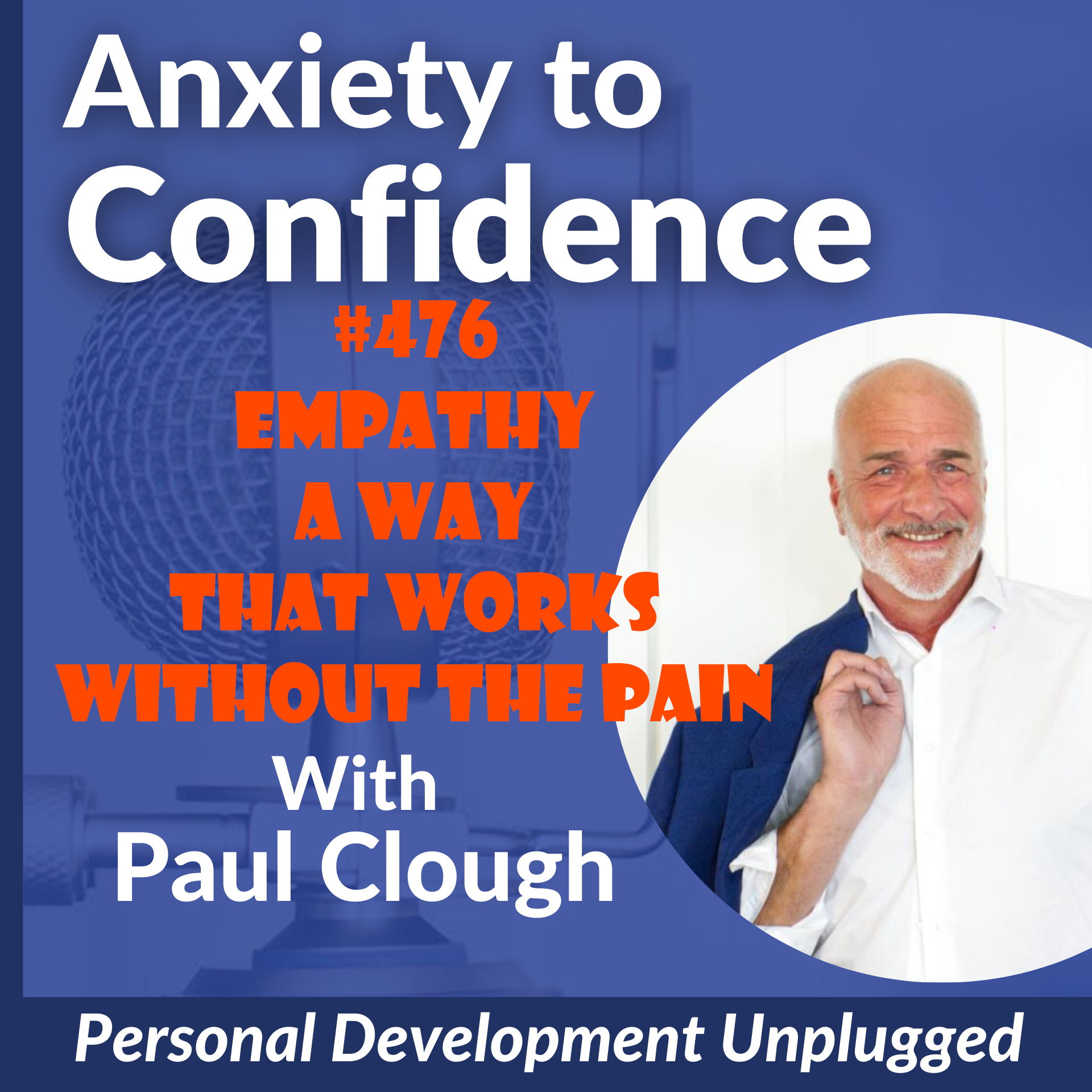
#476 Empathy - A Way That Works Without The Pain
About this episode
Empathy - A Way That Works Without The Pain
In the FMQ527 I said something that probably made you blink.
Empathy sucks.
And I meant it.
Not because caring is wrong.
Not because helping people is wrong.
Not because being sensitive is wrong.
But because absorbing other people's pain is not helping them — and it's definitely not helping you.
In this deeper dive, I show you:
-
Why emotional dumping drains you
-
Why empathy often becomes a hiding strategy
-
The crucial difference between empathy and compassion
-
How to stay grounded when people offload on you
-
And how to become truly empathetic… with yourself
Because here's the truth:
If you feel everyone else's pain, you'll drown.
If you stay grounded and compassionate, you can actually help.
And the real work?
It starts with self-empathy.
What We Explore
1️⃣ Why Empathy Can Be Harmful
-
Emotional dumping and energy drain
-
Why taking on others' pain doesn't serve them
-
How empathy can become a badge of honour
-
How it can also become unconscious avoidance of your own emotions
2️⃣ The Shift: Empathy ➜ Compassion
Empathy = I feel your pain.
Compassion = I recognise your pain — and I can support you without absorbing it.
Compassion allows you to:
-
Stay grounded
-
Sustain your energy
-
Think clearly
-
Offer real support
-
Stay emotionally stable
It's the difference between drowning with someone…
or throwing them a rope.
3️⃣ Process One – Sitting With Your Emotion
Instead of pushing emotions away:
-
Sit with the feeling
-
Acknowledge it
-
Ask:
-
What are you trying to do for me?
-
What are you protecting me from?
-
What are you trying to teach me?
-
Every emotion has a positive intention.
When you learn the lesson — the emotion doesn't need to shout anymore.
4️⃣ Process Two – Compassion Without Merging (Visualisation)
I guide you through:
-
Grounding yourself
-
Breathing deliberately
-
Creating a subtle protective boundary
-
Supporting someone without absorbing their pain
You remain:
-
Present
-
Steady
-
Caring
-
Strong
And when you walk away?
You're still yourself.
5️⃣ Process Three – Deep Self-Empathy Installation
This is the powerful one.
You:
-
Place the emotion in front of you
-
Speak to it with curiosity
-
Thank it
-
Discover its intention
-
Ask what it needs
-
Create a better strategy for that intention
-
Future pace the change
You keep the intention.
You release the pain.
That's self-empathy.
The Core Takeaway
Before you help anyone else…
Check in with yourself.
Am I grounded?
Am I breathing?
Am I compassionate?
Or am I merging and hiding?
One emotion.
One learning.
Then it can let go.
That's how you help yourself.
That's how you genuinely help others.
And that's how empathy finally works.
Key Quotes From This Episode
"Empathy absorbs. Compassion supports."
"Every emotion has a positive intention."
"Learn the lesson — and the emotion doesn't need to stay."
"Help yourself first. Then you're truly available to others."
If This Resonated…
Subscribe so you don't miss the next FMQ seed and deeper dive.
Share this with someone who:
-
Is emotionally drained
-
Always takes on other people's pain
-
Or thinks empathy is the only way to care
https://personaldevelopmentunplugged.com/476-empathy-a-way-that-works-without-the-pain
and don't forget the video https://youtu.be/8iAcW58QreE
Let's move from drowning together…
to lifting each other properly.
Shine Brightly 🌟
Paul
Hey there! I'd love to hear from you—questions, feedback, requests—all welcome. Drop me a line or leave a comment. If you've enjoyed this episode or any other, please share and subscribe! You can reach me at [email protected].
Subscribe to the Podcast
Ready to subscribe? Click here to explore your options. Or, if you're on Apple Music or iTunes, you can go straight to subscribe or leave a review here.
Special Programs for You
For tools on developing Supreme Inner Confidence, finding Freedom from Anxiety, or specialized Hypnosis Tracks, visit PaulCloughOnline.com.
Free Hypnosis Tracks
Want access to my FREE hypnosis tracks? Head over to paulcloughonline.com/podcast.
Connect with Me
Follow me on Twitter: @pcloughie
Remember: I'm a therapist, but I'm not your therapist. This podcast and any of my online resources are for educational purposes only. Never use the hypnosis tracks or exercises if you're operating machinery, driving, or if you have epilepsy or psychiatric conditions. Always consult a healthcare provider if you're unsure.
Find Us on Other Platforms
Catch the podcast on Spotify, Castbox, iHeart Radio, YouTube, or on our Libsyn page.
Stay tuned, and keep shining brightly. ✨
Music Credits
Music by Wataboi from Pixabay,
Music by DreamHeaven from Pixabay,
Music by ccjmusic from Pixabay,
Music by freegroove from Pixabay,
Music by prazkhanal from Pixabay.
Music by prazkhanal from Pixabay.
Music by will |Marshall from will marshall.
And the transcript WARNING if you're a lover of the written word this may make you frustrated, or angry - you have been warned - is it an 'ism
#476 empathy - a way that works without the pain
So, you're back for the longer, deeper dive. And following on from the previous FMQ, it's all about empathy. Empathy and to be empathetic without feeling the pain.
Because if you remember from that FMQ, I said empathy sucks. I did. You did listen, didn't you? You did listen.
Empathy sucks. And it does. Everyone pushes empathy as being the biggest thing since sliced bread and empathy.
Because, you know, it what it is. There's such a better way to help people. And more importantly, help yourself.
Being empathetic with yourself. That's where it should start. Number one.
With number one. You see, let me just re-explain something. Oh, by the way, just jumping in before I do that.
If you didn't know, I do this also on video at YouTube. They're a bit bonky, I know. Got two cameras.
There we go. And a bit of light in the background. And apart from that, that's as professional as we get.
But if you wanted to see me doing this, you can. But anyway, let's get back to the real stuff. When I said empathy sucks.
Think about this. I talked about emotional dumping. That's what people do when they think, oh, I want to be so vulnerable.
I'm going to dump on somebody. They just dump everything out they've got. And it's embarrassing.
And because you want to be empathetic, you let them dump on you. You take on their pain. And they walk away going, oh, I feel so much lighter, so much lighter.
And you're going, oh, I got to think about things. I worry about people do this. And you see, that's totally inappropriate.
Totally inappropriate. It's just too much. You got to get out of that.
You really do. You see, I know a couple examples of when people just absorb pain. My mother was one.
People used to come round, offload everything. And she would worry, have sleepless nights, thinking about them, what she could do. And she couldn't do anything about it.
But it affected her. There's a great, she's dead now, unfortunately. She's left this planet.
But Victoria, is it? Virginia Satir was a great family therapist. And she had in her mind a belief that if I can't feel the pain, the pain of the people I'm working with, and really feel it as deeply as them, then I can't help. And she felt that pain so much, whether it was linked to the illnesses she got before she died, because she did, she suffered.
And she was doing it for a wonderful reason. So was mum. But I think there's a better way.
And you see, I think some ways, people who just do that dump on you, and you become the empath. Well, it's easier for them to do that than listening to themselves. It's like a shield, isn't it? A protective shield.
I'm going to just put it all out there. Because in some ways, I can walk away and leave it where I put it with somebody else. That's not right, is it? Not right.
And I think we have these things where we have to repress, suppress. That's no good either, by the way. And I think having empathy is in some ways, unconscious hiding.
What do you mean, Cloughie? What do you mean? I'll tell you what I mean. There's a song there somewhere. I'll tell you what I want.
Anyway, but it's like, if I can throw all my stuff to somebody else, means I don't have to deal with it myself. So we're hiding, we're giving ourselves safety by hiding away from the emotions that we feel. The emotions that are present.
And it's up to us. We have responsibility to ourselves to deal with that ourselves. Because we're the only bugger who can.
Everyone can talk. Yes, you can go to a therapist, you know, one to one, you know, one to one, go to a great hypnotist, an NLP practitioner, timeline practitioner, they will really help. But at the end of the day, you have to do it.
You have to come up, have the will to do whatever it takes and do the work. They're working with you. They're not working on you.
That's what a lot of people think. I do hypnosis on that person. I want NLP done on me.
No, they work with you. You have to put the effort in. They're just a guide.
They don't have great processes. And you see, being that empathetic, it hurts, doesn't it? It hurts taking on other people's pain. We've got enough of it our own sometimes.
We don't need it. So what are we going to do? What are we going to do? Well, I want to shift it. Shift it in a way that taking away the belief about how good being an empathetic or empathy person is, and take away that belief.
I'm empathetic and that's who I am. Because we think that's a little badge of honour sometimes. Two, I'm responsible for my state first.
And I'll show you how to do that in a couple of processes, two or three processes I want to go through. But I'm responsible for my emotional state first. Does that make sense? A little bit like the metaphor everyone uses from an aeroplane, put your own air supply on first before you help other people.
You have to be okay yourself. You see, if you're an empathetic, you're getting drained. It's bringing you down.
And that's so negative. It creates a heaviness in your mental ability, your emotional ability and affects your physical abilities. And that's not dealing with things about yourself first, is it now? And if you try to suppress that, what happens? Fights back, doesn't it? The ripples get stronger.
And we really do have to, I think sometimes it's like this thing where it deflects. Well, if I'm listening to everyone else, I don't need to listen to myself. And you see, your own emotions are not your enemies.
They're not. They're there to help you. They're just signals.
Signals to say, I've got something for you to learn. Let's change. And if you avoid that through kindness to other people, you're still avoiding, still avoiding us.
Avoiding us, that's a word, isn't it? But you're still avoiding yourself, dealing with yourself. And that's what I'm putting this all down to. There's a better way than being or having empathy for people, I believe.
But also it's more about, I'm here for you. No other bugger, just you. Let's help ourselves, deal with ourselves.
And then we can be compassionate and help other people. And that's where I want to go, to compassion. Let's compare the two.
Let's compare empathy to compassion. Empathy, I feel your pain. I feel your pain.
Do you really want to feel other people's pain to help them? Or do you want to recognise their pain? And that's where compassion comes in. I recognise you are in pain. You're hurting.
I mean, when I'm working with a clinically depressed person, do I have to feel clinically depressed to help? Because if I do, I won't be able to help them. I've got to be able to recognise the pain they're in, and then come up with a process to help them and guide them out of that. Empathy absorbs their pain.
You absorb it into your own body. You can't help but try on. What's the point of that? I mean, is that supporting them? Just knowing their pain? Feeling their pain? No, but compassion is supporting them.
Supporting them in a way to help get rid of it. Change. What else does empathy do? Well, it drains you of energy, drains you completely.
Whereas if you're compassionate, your energy is sustained. You're able to use all your energy to help people and yourself. Empathy is reactive.
Oh, there we are. I'll do that. But when you're compassionate, you are grounded, grounded, and therefore you're able to use all the skills you've got to see things, to reframe things, to help people, support people.
As we said, hopefully that makes a difference to you. Because my answer is, what would you rather do? Would you rather feel pain, absorb the pain, get drained of energy, be reactive? Or would you rather be able to recognise people's pain and therefore support them? And when you're supporting them, come from a sustained energy level that you have. And by that way, you remain grounded.
Which would you rather have? I think it's a no-bloody brainer, which is why empathy sucks. I'm never going to go away from that, by the way, with one exception. I'll tell you that now, where empathy doesn't suck.
If you're in and around somebody who is having the most wonderful time, feels joy, love, everything, they're really enjoying themselves. That's when you can be empathetic. Feel the joy.
Because you can learn from that. You can learn from the good feelings. I love this feeling.
How can I generate it in myself? It doesn't drain. But that doesn't normally happen. People don't come and jump around because they're too busy enjoying themselves.
So try to find that, match them. If you see that, that's what I do. So what's the first process I want to talk about? Because I think there is three.
But the first process is, and it is so simple. And it's all about dealing with yourself. Forget other people at the moment.
Because as I said before, I think empathy is deflecting. It's masking. It's a shield.
But those emotions inside you, the negative emotions inside you, are there for a reason. They have a positive intention. So what do you do? We've done it a few times before.
We just want to sit with that feeling. Sit with it and acknowledge it. That's it.
Just sit in the feeling. You're not going to do anything. You're not going to try to push it away.
You're not going to try to change it. There are processes where we change the modalities and some modalities of the pain that you're in, or the emotional pain, or the emotion itself. Move it around in your body, change its colour, change its weight, shape.
But we're not doing that. This is just sitting and asking questions. So once you are sitting in the middle of that emotion, sometimes if you sit there just for a minute or two, it will disappear.
Because it's been recognised. Because sometimes emotions just want to be recognised, acknowledged. Because in some way you'll get the learnings from it unconsciously.
But you can ask, what are you, this emotion in me, trying to do for me? What are you trying to protect me from? It's when you get that intuitive, you go, ah, I get it. But you also realise there's this clash, there's a direct conflict, because what your emotion is trying to protect you from is creating the same feeling. You know, sometimes there's an emotion trying to stop you from feeling fear by giving you fear.
That's the whole thing. But if you were calm and collected, you'd be okay. So what are you trying to teach me? That's another one.
What are you trying to teach me? And just sit. And the thing is, you have to sit with that, acknowledge it and just listen with all your senses. Because sometimes things don't always come out in words, they're always audible.
They can come through as maybe a visualisation, an aha moment. Maybe there's a word on the tip of your tongue, or a memory that suddenly comes back. I've had a couple of these and suddenly, oh, that was years ago, man.
I say to myself, that was years ago. That's gone. It existed back then, but no longer now.
So I don't need that. You've just been, you know, you've been here, still trying to do the same thing. And it's no longer necessary.
Take a chill pill, take a rest. And sometimes that's enough, that acknowledgement. It's okay.
You could say, well, you know, if I listened to this with all my senses, instead of pushing it away, what would happen? What would happen just sitting here acknowledging it? Sometimes just thanking the part is enough. So sit in that feeling. Thank you.
Thank you for doing what you do, because it's doing it relentlessly. It is using loads of energy, by the way, trying to make you aware. And if you let go of that negative energy, you've got a void to fill with positive energy.
Wonderful things. So listen and thank it. Thank you for being so persistent.
Give me the learnings and then we'll just let it go. And when you say that, thank you. What's the learnings? Just notice what shifts.
Sometimes it's a feeling of lightness. Sometimes it's just, I don't know what, I feel different. And sometimes you don't even notice a difference.
But, there is a but, when you look back over the week that's just gone after doing the work, just sitting there, you go, oh, I'm no longer doing that thing that I used to do. No, you're no longer feeling anxious about that thing. I'm feeling more confident now because I'm doing things differently.
You've got a new norm. And that's what it's all about. Because you've got to remember, every negative emotion, in fact, every emotion, not negative, has a positive intention.
And when we learn that positive intention, we can find better ways if they're negative. This isn't working. How can we find a better way and keep the intention? Most people try to put, when you push and suppress, you're pushing away an intention, which is to protect you and save you, not save you, but yeah, maybe save you, protect you in different ways.
And when you work with it, you begin to access different things, different ways. Yeah. Does that make sense? That make sense? So, that's one, just sitting.
Here's what I'd like to do a little visualisation. I can say visualisation, but not just that. I want to do a little visualisation with you.
And visualisations can be open eyes. We all daydream with our eyes open. Or sometimes it's better to close your eyes because you just avoid all the distractions out there.
And visualisation, by the way, doesn't have to be in 20-20 vision, seeing everything in perfect contrast. No, it could be just an awareness that things are out there. And anything in between, from awareness to perfect 20-20 vision, is just right for you.
Some days it's clearer than others. Some people say, oh, but I can't visualise. And yes, you bloody do.
Sometimes you find it difficult when you're asked to visualise, but then you're wandering around and you've got all these pictures in your mind. That's visualisation. You know, when you think about memories, it's a visualisation because it's not happening.
It's gone. But now you're recalling it in visual, auditory, all those terms. I just want you to imagine this.
So if you want to close your eyes for a moment, just make sure that no one needs your attention. You've got a safe space just to sit, maybe lay down if you're at home, but just stand anywhere you like. But just notice for a moment, visualise this.
Imagine you're with somebody and they're offloading on you. They're being supersonically vulnerable. But instead of being that old empathetic, I want you to visualise it in a different way.
So there they are, they're offloading. And just imagine this. Imagine grounding yourself in the moment.
Just be in your body, grounded to the floor. Maybe you could imagine there's like roots growing into the little old planet Earth. But you're grounded.
You're in the moment. And you know it. And as they're offloading, just notice your breathing.
Make it gentle. Maybe just make the out-breath a little bit longer than the in-breath. Just notice the breath because that's when we become calm.
We need to realise and notice now when you're in this this way, being grounded, noticing your breathing, present, being in the moment, how you can be caring and you can be offering compassion without merging. Staying true to yourself. In fact, having in some ways like a little shield around.
You've created a little shield around yourself where you can offer the compassion, offer the support. You're grounded. Can you see now? Notice the difference and how it feels to support somebody without drowning.
It's a weird thing, isn't it? You know, there's no transference, is there? Because this is now compassion in action. And you, by offering this compassion in this grounded way, this present way, being present, is so much supportive. You'll be able to see how you can support them so much better.
It'll be like having a meta view, looking down and going, ah, have you tried this, this and this? You'll support them by offering them alternatives, giving them sort of advice, not directions, but maybe consider, have you considered this? If it was me in my past, this is what I did. That's a great way to give advice because you're coming from personal experience and that really works. So just imagine now, you're with that person, notice how they change when you're grounded, you're breathing, you're caring without taking, you're offering in this grounded way.
Notice how different you are when you part and you're back in your own world, doing your thing. Notice how different the world seems now. It does, doesn't it? And that is just a simple visualisation just to show you how you can be different now, be compassionate, love compassion.
Makes so much difference to me.
Now, here's a longer one, slightly longer, takes a bit more time. That's because it's longer. That was easy, wasn't it? A little visualisation, just bring it to mind.
But this is why I want you to take some time out for yourself, maybe like five odd minutes. So I do want you to find a place where you'll be undisturbed. You don't have to close your eyes on this one, but you can, but certainly be undisturbed, because I just want you to really get in touch at the moment with any emotions that are going through you.
Because this is about being empathetic to yourself. And this is the only bit of empathy that, well, other than finding people's joy in joining in, the real empathy comes from within to yourself, because we're not ignoring ourselves now. Because the thing about feeling your own pain is because you can feel that pain, you can feel that hurt, you can feel that negative emotion anyway.
So you're not taking it on because it's existing in you. And it's there for a reason. And it's there for a reason.
Here's a wonderful process to gently understand. So we're going from that first process of acknowledgement and asking questions to really asking more deeper questions. And being with that emotion in a real comfortable way.
So find that safe place where you'll be undisturbed. Take a moment to breathe. Breathe in for maybe the count of four, hold it for a moment, and then let it out for the count of six or eight.
Just allow your mind to know that you're safe, because that type of breathing creates safety, calmness. And then I want you to notice an emotion, bring to mind an emotion that you've noticed. This is not a big one, not a 10 out of 10.
I just want a five, four out of 10 in intensity, just to give you this process. And I want you to, as you bring that emotion to mind, I want you to imagine a place just in front of you. Could be a couple of meters, six foot.
Just give yourself a little bit of space between. And in that space, just imagine that emotion is there. Oh, that's different, isn't it? That emotion is there.
And you, again, are grounded. You're breathing, and you notice you're breathing, and you're caring for yourself. You're going to offer compassion to this emotion of yours.
And there it is. Just notice it for a moment. If you see it, just notice what you see.
Sometimes we see it as a person, maybe. Maybe we see it as ourself. Sometimes we see it as a thing.
There's a color in front of us. You know, maybe a big circle, maybe whatever, whatever, whatever, because it's yours, not mine. And it's just there.
And I want you to then ask those same questions, but speaking to yourself as you would to a best friend. Thank you. Thank your best friend for being so persistent.
And then in your own words, just say, thank you. Thank you for being here, for doing what you're doing for me. And that doesn't feel good, or it didn't feel good.
But thank you for being here, because I know you're trying to do something positive, because every emotion has a positive intention. And I want you to become curious. Imagine being and feeling really curious in yourself, and begin to ask, what is your intention? And just notice what you get.
That's all you're doing. You're asking questions from curiosity, in a caring manner. Just want to know what you're trying to do for me.
Thank you for doing it. But I just need to understand and notice what you get. Maybe you could just ask, what are you trying to teach me through this intention, for being here? What do you want me to learn from this? Just listen with all your senses.
And the thing is, when you ask these type of questions, you may notice that that representation in front of you, that emotion changes. Maybe it gets smaller. Maybe it gets a little bit more, well, not quite so clear, because it's beginning to disappear.
Maybe you could ask, and here's the weird question. What can I do for you? Yeah, ask that emotion, the part of you that's running this emotion, what can I do for you? What do you need from me? Because sometimes, sometimes that part of you, or the negative emotion, just needs to be recognized, acknowledged. It's weird.
And sometimes it just says, I just want you to recognize me for who and what I am, or what I've been trying to do. And you say, awesome. I can acknowledge you now, with love.
I can give you permission to stand down, to be at ease, because you don't need to be here all the time. I love the fact that you're trying to keep me safe. But in fact, there's that direct conflict, that the way you're trying to keep me safe, feels unsafe in me.
And sometimes the part doesn't realize that, or the emotion doesn't realize that it is creating that conflict. And when it does, we ask, is there a better way to get that intention, using all the resources inside us, everything we've learned, all our experiences, all our wisdom, what would be a better way to keep me safe? Notice what you get. And notice now, maybe that old emotion in front of you, that part of you that runs that emotion, is now getting even more distant, moving away.
And as you do this, holding this space, and you maybe think out into the future, imagine your future now, going out into the future, and imagine having your life changed by what you're learning. By this emotion disappearing, and you finding better ways to protect yourself. Being grounded, breathing, pausing, finding positive beliefs that support you.
And all the wonderful emotions, positive emotions and behaviors, that support that too. How safe you could be, what would it be like in the future, just to feel safe and comfortable, without the all negative feeling. But to have that intention, keeping the intention.
And just be there. Just think that part. Thank you for doing all you've been doing.
That's all it is. We're learning. Because you see, when you learn from an emotion, the emotion no longer needs to be present.
Because it's done its job. It's done its job. You have the learning, so the emotion no longer needs to be present in your life.
And because you've been compassionate, and you've also been empathetic with yourself, you will be, if you want to help others, as well as yourself, you know how to do it now. Being compassionate, supportive, and grounded, and present. Just as you have been with yourself.
In fact, you could, you can open your eyes by the way now, because we're just talking. Notice how that feels though. Notice how you notice.
There's no transference now. It's compassion in action. Self-empathy.
That's what we've done. We've installed self-empathy. And that's all you need to do.
So just sort of think what we've done. We've acknowledged, sat down quietly, acknowledged emotions, ask a few questions, understand, and it disappears. Then we notice what it would be like, how we can install in ourselves a better way of being.
If people are offloading on us, we can become grounded. We breathe in a special way. We offer support, caring without taking.
And notice how compassion really feels without merging, taking on, how better it is, and how we can help people even more. And then that being with and asking questions really directly to that emotion, learning from it, noticing it disappearing, and then noticing what it'd be like in the future to be more supported in yourself. Empathy in ourselves.
So I want to close and conclude with this. What have we done? Well, the main part of this is before you help anybody else, check in with yourself first. And that's not even thinking about, well, yes, I want to deal with my own emotions, but if someone is vulnerable and they need your help, you need to check in with yourself first.
Let me be compassionate. Let me get this metaphorical shield of safety where I can be grounded and breathing and be there for them and support them. So ask, am I grounded or am I hiding? That's weird, isn't it? And then remember, one emotion, one learning.
And that's what you do. And when you learn from that emotion, you keep the intention because every emotion has a positive intention. You keep the intention and that allows you to be different in a better way.
So remember, I've got your back. All this will help you just to be you, because it's just taking away sometimes our natural inclination to be so empathetic and not thinking we're helping people. And we're actually not.
We're just putting it on ourselves. We're doing in some ways damage to ourselves. And I don't want that for you.
When we know there's such a better way to support others and support ourselves, because even if you didn't help anybody else, you've helped yourself every time you have a negative emotion. Help yourself first, then you're available to other people if they need it. If not, bugger off and enjoy yourself.
Have fun. And in doing that, just remember, please, I don't know, well, stop hiding from emotions. That's one of the things.
I want you to know that you can learn from every emotion. Help yourself first, because when you help that, you help the whole planet Earth and you have the most wonderful runway of your life. And guess what? If there's anything that I didn't explain properly, or if there's anything you go, yeah, it makes a lot of sense.
But what about this emotion? Email me feedback at personal development unplugged.com. And let's come up with something for you. But all these ways, and all the free hypnosis I give Paulcluffonline.com forward slash podcast, so many resources you've got here to help you. And part of these is like, there are things there which will help you in a similar style to these processes.
Acknowledging, sitting, being in different positions with with either different people or different emotions. They're all there for you. If you want a little bit of guidance, say, got this issue, Cloughie, can you show me which one would help me the best? And I'll do that for you.
So I hope you enjoyed that. There's a big cycle. Big deep breath.
That's what we want. Get grounded again. I'm going to see you on the next FMQ where we're going to sell another seed and then dive deeper into something just as interesting and just as significant, which make might be just the difference that makes a difference where you can just sit down for a change.
Maybe take some time out for a spell. Oh, and more fun than you can stand. Remember, please subscribe that you get all these in there.
Have a look at the video if you want. Not many people do, but you can see I am at true do my best, but really take these in because they do work. I know I'm a therapist and not your therapist, but all these are positives, not delving into stuff.
We're just learning from it. Have fun and go fly. Warning, you are now leaving the unplugged mind of Paul Clough.
It's time to fly. Be brave, my friend. Personal development unplugged.
Transcribed by TurboScribe.ai. Go Unlimited
Personal development [self improvement] [self development] [NLP] [Hypnosis]
Get every episode summarized
Each time Anxiety to Confidence - The Personal Development Unplugged Podcast publishes, we email you a written briefing from the transcript — the topics, who appeared, and any specific claims, with the ad reads skipped.
Email me new episodesFree for 3 shows. No card needed.
Hosts & guests

Transcript ready
920 searchable segments. Every word is indexed and playable.
Full transcript
Anxiety to Confidence - The Personal Development Unplugged Podcast — #476 Empathy - A Way That Works Without The Pain. Machine-transcribed; use the interactive transcript above to jump the player to any line.
From unsolved mysteries to unexplained phenomena, from comedy goal to relationship fails, Amazon Music's got the most ad-free top podcasts, included with Prime, because the only thing that should interrupt your listening is... Well, nothing. Download the Amazon Music app today. You are entering into the unplugged mind of Paul Klaaf. Too late. Personal development unplugged. So, you're back for the longer, deeper dive. And following on from the previous FMQ, it's all about empathy. Empathy and...
To be empathetic without feeling the pain. Because if you remember from the FMQ, I said... Empathy sucks. I did. You did listen, didn't you? You did listen. Empathy sucks. And it does. Everyone pushes empathy as being the biggest thing since sliced bread and empathy. Because, you know... It what it is. There's such a better way to... To help people. And more importantly, help yourself. Being empathetic with yourself. That's where it should start. Number one. With number one. You see, let me just re-explain something. Oh, by the way. Just jump again before I do that. If you didn't know, I'd do this also on video at YouTube. It's a bit bonky, I know.
Got two cameras. There we go. And a bit of light in the background. And apart from that, that's as professional as we can. But if you wanted to see me doing this, you can. But hey, let's get back to the real stuff. When I said empathy sucks. Think about this. I talked about emotional dumping. That's what people do when they think, Oh, I want to be so vulnerable. I'm going to dump on somebody. They just dump everything out they've got. And it's embarrassing. And because you want to be empathetic, you let them dump on you. You take on their pain. And they walk away going, Oh, I feel so much lighter. So much lighter. And you're going, Oh, I got to think about things. I worry about people. I do this. And you see, that's totally inappropriate. Totally inappropriate. It's just too much. You got to get out of that. You really do.
You see, and a couple examples of when people just absorb pain, my mother was one. People used to come round. Offload everything. And she would worry how sleepless nights thinking about them, what she could do. And she couldn't do anything about it. But it affected her. There's a great sum. Oh, she's dead now, unfortunately. She's left this planet. But Victoria is it. Virginia Satir was a great family therapist. And she had in her mind a belief that if I can't feel the pain, the pain of the people I'm working with, and really feel it as deeply as them, then I can't help. And she felt that pain so much, whether it was linked to the illnesses she got before she died, because she did. She suffered. And she was doing it for a wonderful reason.
So I was mum. But I think there's a better way. And you see, I think some ways, people who just do that dump on you, and you become the empath, well, it's easier for them to do that, the listening to themselves. It's like a shield, isn't it? Protective shield. I'm going to just put it all out there. Because in some ways, I can walk away. I leave it where? I'll put it with somebody else. That's not right, is it? Not right. And I think we have these things where we have to repress, suppress. That's not good either, by the way. And I think having empathy is in some ways unconscious hiding. What do you mean, fluffy? What do you mean?
I tell you what I mean. There's a song there somewhere. I tell you what I want. Anyway, but it's like if I can throw all my stuff to somebody else, means I don't have to deal with it myself. So we're hiding, we're giving ourselves safety by hiding away from the emotions that we feel, the emotions are present. And it's up to us. We have responsibility to ourselves to deal with ourselves. Because we're the only bugger we can. Everyone can talk. Yes, you can go to a therapist. You know, one to one. You know what I say? One to one. Go to a great hypnotist. An NLP practitioner, a timeline practitioner. They will really help. But at the end of the day, you have to do it. You have to come up. Have the will to do whatever it takes and do the work. They're working with you. They're not working on you. That's what's a lot of people think. I do hypnosis on that person.
I want NLP done on me. Now they work with you. You have to put the effort in. They're just a guide. They know great processes. And you see, being that empathetic, it hurts, doesn't it? It hurts taking on another people's pain. Got enough of it around sometimes. We don't need it. So, what we're going to do, what we're going to do. Well, I want to shift it. In a way that taking away the belief about how good being an empathetic or empathy person is and take away that belief. I'm empathetic. And that's who I am. Because we think this. A little badge of honor sometimes. Two, I'm responsible
for my state first. And I'll show you how to do that in a couple of, two or three processes I want to go through. But I'm responsible for my emotional state first. Does that make sense? A little bit like the metaphor everyone uses from an airplane. Put your own air supplied on first before you help other people. You have to be okay yourself. You see, if you're an empathetic, you're getting drained. It's bringing you down. And that's so negative. It creates a heaviness in your mental ability, your emotional ability, and it affects your physical abilities. And that's not dealing with things
about yourself first, is it now? And if you try to suppress that, what happens? Fight's back, doesn't it? The ripples get stronger. And we really do have to, I think sometimes, it's like this thing where it deflects. Well, if I'm listening to everyone else, I don't need to listen to myself. And you see, your own emotions are not your enemies. They're not. They're there to help you. They're just signals. Signals to say, I've got something for you to learn. Let's change. And if you avoid that through kindness, to other people, you're still avoiding. Still avoidness. Avoidness? That's a word, isn't it? But you're still avoiding yourself, dealing with yourself. And that's what I'm putting this all down to.
There's a better way than being or having empathy for people, I believe. But also, it's more about, I'm here for you. No other bugger. Just you. Let's help ourselves. Deal with ourselves. And then, we can be compassionate and help other people. And that's where I want to go. To compassion. And let's compare the two. Let's compare empathy to compassion. Empathy. I feel your pain. I feel your pain. Whoa. Do you really want to feel other people's pain to help them? Or do you want to recognize their pain? And that's where compassion comes in. I recognize you are in pain. You're hurting. I mean, when I'm working with a clinically depressed person, do I have to feel clinically depressed to help? Because if I do, I won't be able to help them.
I've got to be able to recognize the pain they're in and then come up with a process to help them and guide them out of that. Empathy absorbs their pain. You absorb it into your own body. You can't help but try on. I'll support you with that. And is that supporting them? Just knowing their pain? Feeling their pain? No, but compassion is supporting them. Supporting them in a way to help get rid of it. Change. What else does empathy do? What it drains you of energy? Drain you completely. Whereas if you're compassionate, your energy is sustained. You're able to use all your energy to help people and yourself. Empathy is reactive. There we are. I'll do that. But when you're compassionate, you are grounded. Grounded. And therefore, you're able to use all the skills you've got.
To see things, to reframe things, to help people, support people, as we said. Hopefully that makes a difference to you. Because Mark, ask me, what would you rather do? Would you rather feel pain? Absorb the pain? Get drained of energy? Be reactive? Or would you rather be able to recognize people, pain, and therefore support them? And when you're supporting them, come from a sustained energy level that you have. And by that way, you remain grounded. Which would you rather have? I think it's a no bloody brainer, which is why empathy sucks. I'm never going to go away from that, by the way, with one exception. I'll tell you that now, where empathy doesn't suck. If you're in, and around somebody, who is having the most wonderful time, feels joy, love, everything. They really enjoy themselves. That's where you can be empathetic.
Feel the joy, because you can learn from that. You can learn from the good feelings. I love this feeling. How can I generate it in myself? It doesn't drain. But that doesn't normally happen. People don't come and jump around, because they're too busy enjoying themselves. So try to find that, match them. If you see that. That's what I do. So what's the first process I want to talk about? Because I think there is three. But the first process is. And it is so simple. And there's all about dealing with yourself. Forget other people at the moment. Because, as I said before, I think empathy is deflecting. It's masking. You know, it's a shield. But those emotions inside you, the negative emotions inside you, are there for a reason. They have a positive intention. So what do you do? We've done it a few times before.
We just want to sit with that. Feeling. Sit with it. And acknowledge it. That's it. Just sit in the feeling. You're not going to do anything. You're not going to push it away. You're not going to try to change it. You know, there are processes where we change the modalities and some modalities of the pain that you're in or the emotional pain or the emotion itself. You know, move it around in your body, change it's color, change it's weight show. But we're not doing that. This is just sitting. I'm asking questions. So once you are sitting in the middle of that emotion, sometimes if you sit there just for a minute or two, it will disappear. Because it's been recognised. Because sometimes emotions just want to be recognised, acknowledged. Because in some way you'll get the learnings from it unconsciously.
But you can ask. What are you, this emotion in me? Trying to do for me. What are you trying to protect me from? It's when you get that intuitive. You go, ah, I get it. But you also realise there's this clash. There's a direct conflict because what your emotions trying to protect you from is creating the same feeling. You know, sometimes as an emotion trying to stop you from feeling fear by giving you fear. That's the whole thing. But if you were calm and collected, it'd be okay. So what are you trying to teach me? That's another one. What are you trying to teach me? And just sit. And the thing is you have to sit with that, acknowledge it and just listen with all your senses. Because sometimes things don't always come out of it in words. They're not always audible. They can come through as maybe a visualisation
and a harm moment. Maybe there's a word on the tip of your tub or a tongue or a memory that suddenly comes back. I've had a couple of these and suddenly, oh. That was years ago, man. I said to myself, I think that was years ago. That's gone. It exists back then, but no longer now. So I don't need, you just been, you know, you've been hit. Still trying to do the same thing. And it's no longer necessary. Take a, take a chill pool, take a rest. And sometimes that's enough. That acknowledgement is okay. But you could say, well, you know, if I listen to this with all my senses, instead of pushing it away, what would happen? What would happen just sitting here and acknowledging it? Sometimes just thanking the part is enough. So sitting that feeling, thank you. Thank you for doing what you do because it's doing it relentlessly. It is using loads of energy, by the way. Trying to make you aware.
And if you let go of that negative energy, you've got a void to fill with positive energy. Wonderful things. So listen and thank you. Thank you for being so persistent. Give me the learnings and then we'll just let it go. And when you say that, thank you. What's the learnings? Just notice what shifts. Sometimes it's the feeling of lightness. Sometimes it's just, I don't know what I feel different. And sometimes you don't even notice a difference. But there is a bout. When you look back over the week that's just gone after doing the work. Just sitting there. You go, oh, I'm no longer doing that thing that I used to do. You're longer feeling anxious about that thing. I'm feeling more confident now because I'm doing things differently. You've got a new norm. And that's what it's all about. Because you all remember, every negative emotion, in fact every emotion, not negative, has a positive intention.
And when we learn that positive intention, we can find better ways if they're negative. This isn't working. How can we find a better way and keep the intention? Most people try to put, when you push and suppress, you're pushing away an intention, which is to protect you and save you. Not save you, but yeah, maybe save you. Protect you in different ways. And when you work with it, you begin to access different things. Different ways. Yeah? Does that make sense? Does that make sense? So that's one. Just sitting. Here's what I'd like to do a little visualisation. I can say visualisation, but not just said. I want a little visualisation with you. And visualisation can be open eyes. We're all daydream with our eyes open. Or sometimes it's better to close your eyes
because you just avoid all the distractions out there. And visualisation, by the way, doesn't have to be in 2020 vision, seeing everything in perfect contrast. No. It could be just an awareness that things are out there. And anything in between from awareness to perfect 2020 vision is just right for you. Some days, it's clearer than others. Some people say, oh, but I can't visualise. And yes, you bloody do. Sometimes you find it difficult when you're asked to visualise, but then you're wondering around you've got all these pictures in your mind. That's visualisation. You know, when you think about memories, it's a visualisation because it's not happening. It's gone, but now you're recalling it in visual, auditory, all those terms. I just want you to imagine this. So if you want to close your eyes for a moment, just make sure that no one needs your attention.
You've got to say space just to sit. Maybe lay down if you're at home, but just stand. Anyway, you like. But just notice for a moment, visualise this. Imagine you're with somebody and they're offloading on you. They're being supersonic and vulnerable. But instead of being the old empathetic, I want you to visualise it in a different way. There they are. They're offloading. And just imagine this. Imagine grounding yourself in the moment. Just being your body grounded to the floor. Maybe you can imagine there's like roots growing into the little old planet earth. But you're grounded. You're in the moment and you know it.
And as they're offloading, just notice your breathing. Make it gentle. Maybe you just make the out breath a little bit longer than the end breath. Just notice the breath at the bottom of the tummy because that's when we come calm. We become to realise we're in the moment. And notice now when you're in this way, being grounded, noticing your breathing, present being in the moment, how you can be caring without taking compassionate. And you can be offering compassion without merging, staying true to yourself. In fact, having in some ways like a little shield around you
have created a little shield around yourself where you can offer the compassion, offer the support. You're grounded. Can you see now? Notice the difference and how it feels to support somebody without drowning. It's a weird thing, isn't it? There's no transference, is there? Because this is now compassion in action. And you, by offering this compassion in this grounded way, this present way, being present, is so much support. If you'll be able to see how you can support them so much better, be like having a met of you looking down and going, have you tried this, this, and this? You'll support if they're by offering them alternatives, giving them sort of advice, not directions, but maybe consider, have you considered this?
If it was me, in my past, this is what I did. That's a great way to give advice, because you're coming from personal experience. And that really works. I just imagine now you're with that person, notice how they change when you're grounded, you're breathing. You're caring without taking, you're offering compassion in this grounded way. Notice how different you are when you part and you're back in your own world. Do your thing. Notice how different the world seems now. It does, doesn't it? And that is just a simple visualization, just to show you how you can be different now. Be compassionate. Love compassion. Makes so much difference to me. Now, here's the longer one. Slightly longer. Takes a bit more time.
That's because it's longer. That was easy. It was a little visualization. You just bring it to mind to that. But this way, I want you to take some time out for yourself. Maybe it might be five, five odd minutes. So I do want you to find a place where you'll be undisturbed. You don't have to close your eyes on this one, but you can. But certainly be undisturbed, because I just want you to really get in touch at the moment with any emotions that are going through you. Because this is about being empathetic to yourself. And this is the only bit of empathy that, well, other than finding people's joy and joining in, the real empathy comes from within to yourself, because we're not ignoring ourselves now. Because the thing about feeling your own pain is because you can feel that pain. You can feel that hurt. You can feel that negative emotion anyway. So you're not taking it on because it's existing in you. And it's there for a reason. And it's there for a reason. Here's a wonderful process to gently understand.
So we're going from that first process of acknowledgement and asking questions to really asking more deeper questions. And being with that emotion in a real comfortable way. So find that safe place where you'll be undisturbed. Take a moment to breathe. Breathe in for maybe the count of four. Hold it for a moment. And then let it out for the count of six or eight. Just to allow your mind to know that you're safe, because that type of breathing creates safety, calmness. And then I want you to notice an emotion. Bring to mind an emotion that you've noticed. This is not a big one. Not a 10 out of 10. I just want to five, four out of 10 in intensity. This to give you this process. And I want you to, as you bring that emotion to mind,
I want you to imagine a place just in front of you. It could be a couple of meters, six foot. Just give yourself a little bit of space between. And in that space, just imagine that emotion is there. Oh, that's different, isn't it? That emotion is there. I knew again, I grounded. You're breathing, and you notice you're breathing. And you're caring for yourself. And you're going to offer compassion to this emotion of yours. And there it is. Just notice it for a moment. If you see it, just notice what you see. Sometimes we see it as a person, maybe. Maybe we see it as ourself. Sometimes we see it as a thing.
And there's a color in front of us. You know, maybe a big circle, maybe. Whatever, whatever, whatever. Because it's yours, not mine. And it's just there. And I want you to then ask those same questions. But speaking to yourself as you would to a best friend. Thank you. Thank you best friend for being so persistent. And in your own words, just say thank you. Thank you for being here, for doing what you're doing for me. And it doesn't feel good. But I didn't feel good. But thank you for being here because I know you're trying to do something positive because every emotion has a positive intention. And I want you to become curious.
Imagine being and feeling really curious in yourself. And begin to ask, what is your intention? And just notice what you get. So all you're doing, you're asking questions from curiosity in a caring manner. Just want to know what you're trying to do for me. Thank you for doing it. But I just need to understand. And notice what you get. Maybe you could just ask, what are you trying to teach me through this intention? We're being here. What do you want me to learn from this? And just listen with all your senses.
And the thing is when you ask these type of questions, you may notice that that representation in front of you, that emotion changes. Maybe it gets smaller. Maybe it gets a little bit more, but I'm not quite as clear because it's beginning to disappear. Maybe you can ask, and here's the weird question. What can I do for you? Yeah, ask that emotion. The part of you that's running this emotion, what can I do for you? What do you need from me? Because sometimes. That part of you or the negative emotion just needs to be recognized, acknowledged. It's weird. Sometimes it's just says, I just want you to recognize me for who,
and what I am, or what I've been trying to do. And you said, awesome. I can acknowledge you now, with love. I can give you permission to stand down, to be at ease because you don't need to be here all the time. I love the fact that you're trying to keep me safe, but in fact there is that direct conflict that the way you're trying to keep me safe feels unsafe in me. And sometimes the part doesn't realize that, emotion doesn't realize that it is creating that conflict. And when it does, we ask, is there a better way to get that intention using all the resources inside us? Everything we've learned, all our experiences, all our wisdom. What would be a better way to keep me safe?
Notice what you get. And notice now, maybe that old emotion in front of you, but part of you that runs that emotion is now getting, getting even more distant, moving away. And as you do this, holding this space, when you maybe think out into the future, imagine your future going out into the future. And imagine having your life changed by what you're learning. By this emotion disappearing and you finding better ways to protect yourself. Being grounded, breathing, pausing, finding positive beliefs that support you. And all the wonderful emotions, positive emotions and behaviors that support that too,
how safe you could be, what would it be like in the future just to feel safe and comfortable without the old negative feeling, but to have that intention, keeping the intention. I'd just be there. Just think that part. Thank you for doing all you've been doing. That's all it is. We're learning. Because you see, when you learn from an emotion, the emotion no longer needs to be present because it's done its job. It's done its job. You have the learning, so the emotion no longer needs to be present in your life. And because you've been compassionate and you've also been empathetic with yourself, you will be,
if you want to help others, as well as yourself, you know how to do it now, being compassionate, supportive and grounded and present. Just as you have been with yourself, in fact, you could, you can open your eyes by the way, because we're just talking. Notice how that feels though. Notice how you notice. There's no transference now. It's compassion in action. Self-empathy. That's what we've done. We've installed self-empathy. And that's all you need to do. So just to think what we've done, we've acknowledged sat down quietly, we've acknowledged emotions. That's it. Ask a few questions. Understand. And it disappears. Then we notice what it would be like. How we can install in ourselves
a better way of being if people are or floating on us. We can become grounded. We breathe in a special way. We offer support, caring without taking. And notice how compassion really feels without merging, taking on. How better it is and how we can help people even more. And then that, being with and asking questions really directly to that emotion. Learning from it. And noticing it disappearing. And then noticing what it would be like in the future to be more supported in yourself. Empathy. In ourselves. So, I want to close and conclude with this. What we've done. Well, the main part of this is before you help anybody else.
Check in with yourself first. And that's not even thinking about, well, yes, I want to deal with my own emotions. But if someone is vulnerable and they need your help, you need to check in with yourself first. Let me be compassionate. Let me get this, this like metaphorical shield of safety, where I can be grounded in breathing and be there for them and support them. So ask, am I grounded? Or am I hiding? That's weird, isn't it? And then, remember, one emotion, one learning. And that's what you do. And when you learn from that emotion, you keep the intention, because every emotion has a positive intention. You keep the intention and that allows you to be different in a better way. So remember,
I've got you back. All this will will help you just to be you, because it's just taking away sometimes our natural inclination to be so empathetic and not thinking we're helping people and we're actually not. We're just putting it on ourselves. We're doing it in some ways, damaged ourselves. And I don't want that for you. When we know there's a such a better way to support others and support ourselves, because even if you didn't do it, well, help anybody else. You've helped yourself. Every time you have a negative emotion. Help yourself first. Then you're available to other people if they need it. If not, bugger off and enjoy yourself. Have fun. And in doing that, just remember. Please, I don't know. Well, stop hiding from emotions. That's one of the things. I want you to know that you can learn from every emotion.
Help yourself first. Because when you help that you help that low planet Earth and you have most wonderful runway of your life. And guess what? If there's anything that I didn't explain properly or if there's anything you go, yeah, it makes a lot of sense. But what about this emotion? E-Bail Me. Feedback Hat Personal Development. Unpluged.com. And let's come up with something for you. But all these ways. And all the free hypnosis that I give. PaulCluffOnline.com, ForcessePodcast. So many resources you've got here to help you. And part of these is like, there are things there which will help you in a similar style to these processes. Acknowledging, sitting. Being in different positions with other different people or different emotions. We're all there for you. If you want a little bit of guidance, say, got this issue,
can you show me which one would help me the best? And I'll do that for you. So I hope you enjoyed that. As an example. Breathe deep breath. That's what we want. Get grounded again. I'm going to see you on the next FMQ where we're going to sell another seed and then dive deeper into something. Just as interesting. And just as significant. Which might be just the difference that makes a difference. Where you can just sit down for a change. Maybe take some time out. Respond. All there. I've more fun than you can stand. Remember. Please subscribe. So you get all these in there. Have a look at the video if you want. Not many people do, but you can see I am a tritist. Do my best. But really take these in. Because they do work.
And now I'm a therapist and not your therapist. But all these are positives. Not delving into stuff. We're just learning from it. Have fun. And go fly. Working. You are now leaving. The unpluged mind of Paul Kloff. It's time to fly on your own. Be brave, my friend. Personal development unplugged. Every day, excessive delays and denials from big insurers keep patients from accessing the care they need. And when care is urgent, these delays can be disastrous. These practices cost billions in wasteful spending, driving up costs for American families. But while big insurers put up barriers, America's hospitals and health systems are in your corner. Navigating endless reviews and appeals to get you the care you need when you need it most. It's time to curb these harmful practices
and put the focus back on patients. Brought to you by the Coalition to Strength in America's Healthcare.
More episodes
More from Anxiety to Confidence - The Personal Development Unplugged Podcast

FMQ 540 A Question That Stopped Me In My Tracks
Anxiety to Confidence - The Personal Development Unplugged Podcast

#488 Your'e Not Who You Think you Are
Anxiety to Confidence - The Personal Development Unplugged Podcast
FMQ539 My Puzzle Book Asked Me One Question
Anxiety to Confidence - The Personal Development Unplugged Podcast

#487 Why Goals Stopped Working For Me
Anxiety to Confidence - The Personal Development Unplugged Podcast