Loading...
educationself improvementbusiness
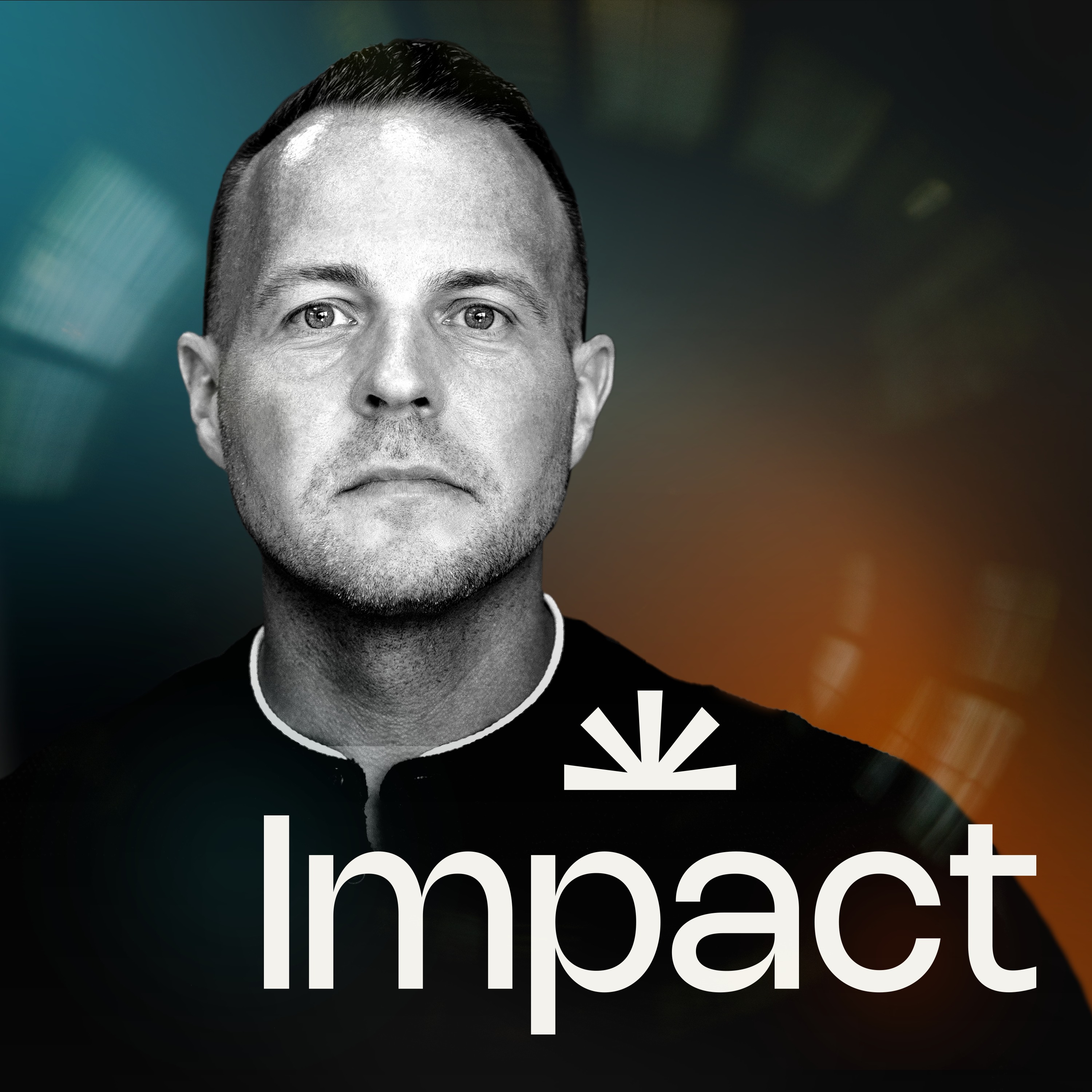
54 - From King of Exits to Builder of Leaders | Why Legacy Matters More Than Liquidity
About this Episode
In this episode of the Impact Podcast, Eddie Wilson shares a deeply personal shift in how he views success, leadership, and legacy. For years Eddie became known as the “King of Exits” after successfully building and selling multiple companies. But over time he began asking a deeper question. What actually matters when the exits are over? In this conversation Eddie explains why exits are only moments in time, while leadership and mentorship create a lasting legacy. He reflects on the difference between building companies and building people, and why developing leaders who no longer need you may be the greatest success a founder can achieve. If you are an entrepreneur, founder, or leader chasing the next milestone, this episode will challenge how you measure success and what you choose to build with the years ahead. This conversation explores leadership development, founder maturity, building systems that outlive you, and why the greatest impact often happens beyond the balance sheet.
TIMESTAMPS:
- 00:00 Why I Am No Longer the “King of Exits”
- 02:00 The Dangerous Trap of Defining Your Life by One Success
- 05:00 Why Leadership Is More Powerful Than Any Exit
- 06:30 The Problem With Being the Hero of the Story
- 09:00 What I Want My Legacy to Actually Be
- 11:20 Developing Leaders Who No Longer Need You
- 14:00 Building Systems That Outlive You
- 15:30 Why Founders Must Mature Beyond Money
- 17:00 From Transaction to Transformation
- 19:20 The Question Every Leader Must Answer
Hosted on Acast. See acast.com/privacy for more information.
Hosts & Guests
Transcript
Welcome to the Impact Podcast. I'm Eddie Wilson. Here to help you visualize what others cannot see.
Create opportunities where others have failed and push you to build empires where once there was empty space.
Let's embark on this journey together and make a difference in this world.
Welcome to the Impact Podcast with Eddie Wilson. I'm your host Eddie Wilson,
excited to have you on the podcast today. Today, I'm going to talk about a topic
that I'm passionate about and that's exiting businesses. However, I'm going to take a hard
left turn and tell you why I'm no longer the king of exits. Why am I no longer the king of exits?
Let me go back just a few years. Probably 2019, I had the ability and privilege to exit quite a few
companies. 2020 during COVID, I exited a company, 2021, exited some companies. And during that time
period, I was doing a lot of teaching and training and was being invited out to speak about my
experiences about exiting companies, growing companies, scaling companies, building companies.
And a guy with the name of Nick Long, who now runs a group called Founders,
great guy, does an amazing job helping people get to a place where they can exit, where they can
build their company and exit. He actually gave me the title. He was introducing me one day and he said,
let me introduce to you the king of exits. And it stuck during a lot of the interviews,
during that time period, whether it was a Forbes interview or some different interviews that you've
seen maybe on the news or whatever. There was this constant reference back to all the companies
that I had sold and exited. And for the longest time, that's what I've been known for. When somebody
brings me to the stage, they'll say the king of exits. But recently, I've really been thinking about
my life and legacy and what I'm trying to put into my life and what I'm trying to be known for and
what's the legacy of my life. As you grow older, you realize that your life is not, it's not another
dollar, it's not another vacation, it's not another house, it's really not another business or
it's not another brand you're building. What you realize is that your life is really the legacy,
it's the story that's told, it's the impact that was made and it's the long lasting
principles and impact that are adhered to or used long after you're gone. So many amazing people
through history have left legacy and they didn't do it because of just the accomplishments they had
in their life. They did it with the accomplishments they had in their life and what that ultimately
led to. The season of exiting the businesses and the season of growth that I experienced,
I'm not necessarily shedding that, it was an amazing season of life, it's not the season of life I'm
in. That season was amazing, the winds, the scaling, the journey, even the nickname, Nick giving me
that and then being known for that and being asked about that. I love it, I love buying businesses,
I love selling businesses, I love growing businesses and so I want to acknowledge that, that is
a part of my past. So is the college days and so are those days where I was grinding and I didn't
have any money. So were the days that I was scared and wondering if I could make payroll and
that's very much a part of my journey too. I never want a hyper focus on one singular outcome
and I think that this is more my attempt to help you truly understand who Eddie Wilson is,
but not just that, to really understand your own life, your own journey, that your life and your
journey are just that. Your entire life is a journey, it is highs, it is lows, it is a series of
winds, a series of losses, but in the end you don't want your life to be indicative of one moment
in time, one segment of time or one accomplishment in time. We're so much more than that, right?
And so the realization is this is that when I began to speak about this and obviously we've
been traveling the nation and speaking and teaching and training and the more I talk about the
exits or the more I talk about the business growth or the more I talk about the companies that I
was associated with, what I realized is that exits are really just events along that historical
pathway, right? Like they're just on the timeline, they're just an event that happened, but there
was so much more that happened just and often times I'll go to ask about a dollar amount or a very
specific company that I exited. And the fact of the matter is it's literally just a checkbox
along that pathway, but there was so much more that led up to that one moment and that leadership
is truly the legacy, right? Once the exit happens, it's done. It's a moment in time. It's a
it's a tally, right? And so people are asking how many companies have you sold and how many companies
have you exited from and how many companies have you put together? And the fact of the matter is
is each one of those are just individual tally points along this journey that I've been on that's
on this timeline that, you know, is is more important than one individual moment. But leadership
and what I have left behind is continuous and ongoing on that timeline. The exit is a done. It's
a check mark. It's a it's a point. It's a reference point, but leadership is lasting. It's it
exists beyond just that moment in time. And I also have realized that exits are events and
leadership is legacy. I've realized that liquidity or financial liquidity or wealth is not the
highest form of wealth, right? Like the amount of money in your bank account really doesn't prove
if you're wealthy or not. Somebody has one standard of wealth and maybe I have a standard of wealth
and you have a standard of wealth. But the fact of the matter is is you could exit make money
and still feel empty. You could exit and not make money and actually feel fulfilled.
But watching somebody who is mentored and watching somebody grow is always a win. There's something
about watching someone else succeed and you know that you've sewed something into their life
is more gratifying than any one of those moments in time. The cash, the liquidity, it still
brings emptiness. But watching somebody that you've mentored win, that compounds like that,
that's an exponential value that continues to keep giving over time.
The third thing that I realized is I really don't want to be the hero of the story.
There's a lot of teaching and I know Donald Miller really coins a lot of this phrasing but
it's like in every situation there is a hero, there's a villain and there's a guide.
And the fact of the matter is is when you're the hero of the story, when you're when you are being
touted as the hero, you feel an emptiness and an isolation. In every one of those business exits,
it wasn't because of my work. It was because of the work of the employees and the people that
they got under the weight of what we were trying to accomplish. It was the amazing men and women
that I worked tireless countless hours beside. It was them like they are who made the company.
I had the title, I had the position, I had the role but in the end like they're the ones that made
it happen. And so in that, I don't want to be the hero. I'd rather be the guide. I'd rather be
the person that helps a hero get where they want to go. I find so much more value. The king title
that Nick gave me while it's flattering really centers on me. But the fact of the matter is is
I may have had all these exits along this pathway. I may have had these business successes
but it's the individuals of every one of those businesses that made it possible.
So while I have the title, it really centers on me, but real leadership
decentralizes itself. The decentralization of Eddie Wilson is what I want. I want to almost
commoditize what things, these elements that I've created or I have advantage, I have the
advantage of being or having or possessing or learning that I spread them, that I share them.
And so instead of a central figure, what I want is for you to understand that there are principles
and there are people that led to every one of those successes. And for me to continue down that path
of even claiming it seems disingenuous. And so I think the pivot that I'm making in my own
personal life, I want you to understand because I think it's a pivot that many of us need to make.
And so I want you to understand that I'm not necessarily running away from the success,
but I want you to understand the power of that success and the principles of the people that it
took in order to get there. Because if the focus is there, then we all can win. There's so many
lessons to be taught there. And so I want to make a pivot in my personal brand and my personal
identity, not necessarily shedding the past, but evolving, growing and making sure that my legacy is
more than just a selection of companies that were sold over time. So what do I want to be known for?
If you ever had this exercise in your life, you're like, what do I want to be known for?
And you typically start with the inner circle around you, right? It's my three sons. I've got three
boys. I've got Skylar Titus and Maddox. And they are amazing young men. I could not ask God for
anything more in my life than those three boys. Those three boys are everything to me. And you start
with that little circle that's around you. And it's like, what do I want to be known for in their
eyes? And I had to make a list of what I want to be known for in their eyes. I had to make a list
for what I want to be known for in my family's eyes. I want to make a list of what I want to be
known for in my employees eyes. And then the greater circle of just the people that you influence and
the people that are either casually or intently watching you. And making sure that all of that is
congruent because if not, what happens is you're given a title, you go down a path, you speak the
language. But in the end, it's not necessarily what you want to be known for, right? And so I
wanted to get very intentional with that. And so what do I want to be known for? This is where I
want to define the new frame, right? And I think that all of us need to go through this work in our
life because instead of allowing everyone else to define you, intentionally define yourself so
the outcome is what you want. It's what you plan. So here are a couple of things that I want to
be known for. And I'd like for you mentally to go through this similar exercise. Number one,
I want to be known for developing leaders who do not need me. I think oftentimes as I look at
either my sons or I look at employees or I look at the people around me, the easiest thing to do
is to create co-dependence, right? To give them something so that they have to keep coming back,
right? It's feeding them a little so that they'll continue to come back. And we feel good when
we're needed. The human experience is oftentimes tied to this internal desire and need to be
needed, loved and wanted, you know, by other people. But I find that at the end of that road is
emptiness is that it's always a place of giving and really truly never receiving. And even though you
feel like you're receiving something you feel like, well, you know, wow, I feel like I'm receiving
this love and compassion for someone. It's not. It's a desire need. What is a greater feeling?
What is a greater accomplishment is to give them what they need and allow them to become
what they're going to become without ever needing you in the process. I struggle with that,
you know, as I raise my sons because, you know, as a, as a dad, you know, I watch my first son
Skyler build a company in college. And, you know, I remember when he would call me and he rarely
did, you know, call me about business. But when he would, it was just like I couldn't, I couldn't
wait. If he asked me a business question, man, I was all in. I wanted so bad to just so business
acumen in his life. But to create dependency there creates a limitation in his own life. And so to
allow him to explore on his own and to never insert myself and to only be there and ready when he's
willing and to to give little nuggets of truth. And maybe some bread crumbs along the way was the
way that I chose to go about it. And I think watching him succeed on his own with a little push
from me is so much more gratifying because a lot of what he's doing, he learned through osmosis
by observing versus me intentionally serving and pushing and prodding and along the way. He did
it himself. I guided. I contributed. But in the end, most of what he's learned was through osmosis.
It was through observing. So I don't be known. I want to be known for developing leaders.
You don't need me. I want to be known for building systems that outlive me. You know,
principles are things that exist outside of a timeline where they're only applicable in that
period of time. I want to build principles and systems or systems built on principles so that
these principles and systems can outlive. I think of, you know, in my book The Titan Doctrine,
I talked a lot about the Napoleonic Code and Napoleon. Well, Napoleon had a lot of his fair issues
and he had all kinds of issues with relationships and he had issues with trust. He had issues
with passing on his legacy. One thing that he did was he built a code. He built a system that even a
lot of our systems today are still built on the very foundations of the Napoleonic Code.
To me, I want to build systems that outlive me. Number three, I want to create impact beyond a
balance sheet. Oftentimes, we look at our impact based on our net worth or the value of what
we're building. Your balance sheet oftentimes represents the value of your company, not just the
profit and loss, but the true value. What's the value? What do you possess, right?
And the balance sheet of both my business and my life should be tied to intrinsic things
instead of tangible things. So I want to create impact beyond my balance sheet. And fourth,
I want to help founders mature, not just monetize. The question I get asked all the time is,
you know, how do I get more out of my company? How do I get more out of my time? How do I get more
out of what I'm doing? And typically they're talking about it from a monetary position. How do I
go from 5 million to 10 million, 10 million to 20 million, 20 million to 100 million? How do I
get to the 100 million or the billion dollar, 100 million to a billion dollar company? And I want
to take the next years of my life and teach people that yes, money matters and money is important.
And the monetary does create a scorecard and the more monetary value that you gain, the more
impact you can make, but I want them to not judge the success of their life by the monetary
impacts, but ultimately to look at their life in a maturing process where they begin to
to decentralize themselves, right? Like I want to decentralize myself and ultimately help founders
and leaders begin to decentralize as well. So I'm trying to shift from transaction to transformation.
I'm trying to shift from profit to multiplication. I'm trying to shift from exit to eternity.
So in this new season, what changes practically, right? So we're talking about all these kind of
philosophical things. What changes practically? What changes will you see in my life? What changes have
I already committed to that maybe you're already seeing in my life? Number one, more mentorship.
I want to sow into more people. If you heard what I just said, you should hear this passion and
desire to build other people while diminishing myself, right? I think that there is greatness
all around me. And I think my legacy will be the greatness that I've allowed others or pushed
others to achieve. I love the stoic philosophers, but I also love Socrates and Plato.
And oftentimes you know the names of Socrates and Plato because of the people that they built,
the leaders that came out of their teaching and their camp, right? And for me, that's what I want,
right? Like I want to create principles and timeless principles that lead into systems that then
build people that then show the success as multiply, more mentorship, more leadership development,
the more I want to teach and train and bring content to you, the more I want to develop your
leadership and leadership ability, more focus on character, you know, characters that underlining
role that all of us need to play and all of us need to get to success based on the character
that we possess, not by always playing in the gray, by spinning things, by being something
we're not. And then more spotlight on others. I think that you're going to see a very practical,
tactical shift where you're going to see me start to promote a lot of other people.
Even in the podcast, you know, in the days to come, the plans to bring additional people on,
not necessarily just to help and guide and train you, but also to promote them, right? Like
there's some amazing people that God has put in my pathway that have an abundance of wealth,
abundance of wealth of knowledge and wisdom that I want to bring to you. And so I want to spotlight
other people. I don't want to be the king of exits. I want to be the man that helps kings rise,
kings and queens that need to step into their rightful place. And to me, that's what I think my
practical step will be. I put already on a note that I've been looking at a lot is that I
don't want to be the king of exits. I want to be the man who helps the king's rise. In closing,
I want to ask you this, what are you chasing? What is it that you desire, right? Are you attaching your
life to an outcome or are you attaching your life to the process and the maturity towards the
outcome? Think about that timeline I talked about. Think about that 40 years of life that I lived
before the exits, right? And I had some exits early on in life, but before I was really known
for the exits that I had and all that I lived and all that I learned and all that I was exposed to
for my parents and grandparents to the businesses, to the wins, to the losses, to the people,
to the mentors that I had, to the people that I looked up to. All of that period of my life,
I don't want to be then put and position into these moments of time that are these exits of
business that all of us think, wow, that was amazing or that was a great success. I think the true
success will be what is my life in the next 25 years. So for you, are you attaching your success
to outcomes or are you attaching your success to the to the to the journey along the way and the
impact that you're making along that way? What will matter what will matter in 25 years for you?
What's going to matter for me in 25 years? I believe are not the exits. Yes, they're powerful,
but people because people are eternal and I want to choose the eternal. I hope you guys will go
with me along this journey. I would love to hear some feedback on that. I'd love to hear what you
guys are chasing. So through my social channels or through any way possible, I'd love to hear some
feedback from you. You can follow me on any of the social channels, Instagram, LinkedIn, TikTok,
Facebook, whatever it is that you typically go to and I'd love to hear some feedback from you.
I want to hear what you're chasing and I hope that you're chasing not something that's temporal,
something that's transactional, but something that's eternal. Thanks so much for being a part of
the podcast and for listening today. I'd love to connect with you further and you can connect with me
on social media at Eddie Wilson official on any of the social media channels.
More from Impact with Eddie Wilson
View all episodes →
56 - Heavy Is the Crown | The Emotional Cost of Leadership No One Talks About
Impact with Eddie Wilson
Apr 7, 2026·26:16·failed
55 - Same Event, Different Life | How to Turn Pain Into Power
Impact with Eddie Wilson
Mar 31, 2026·24:19·failed