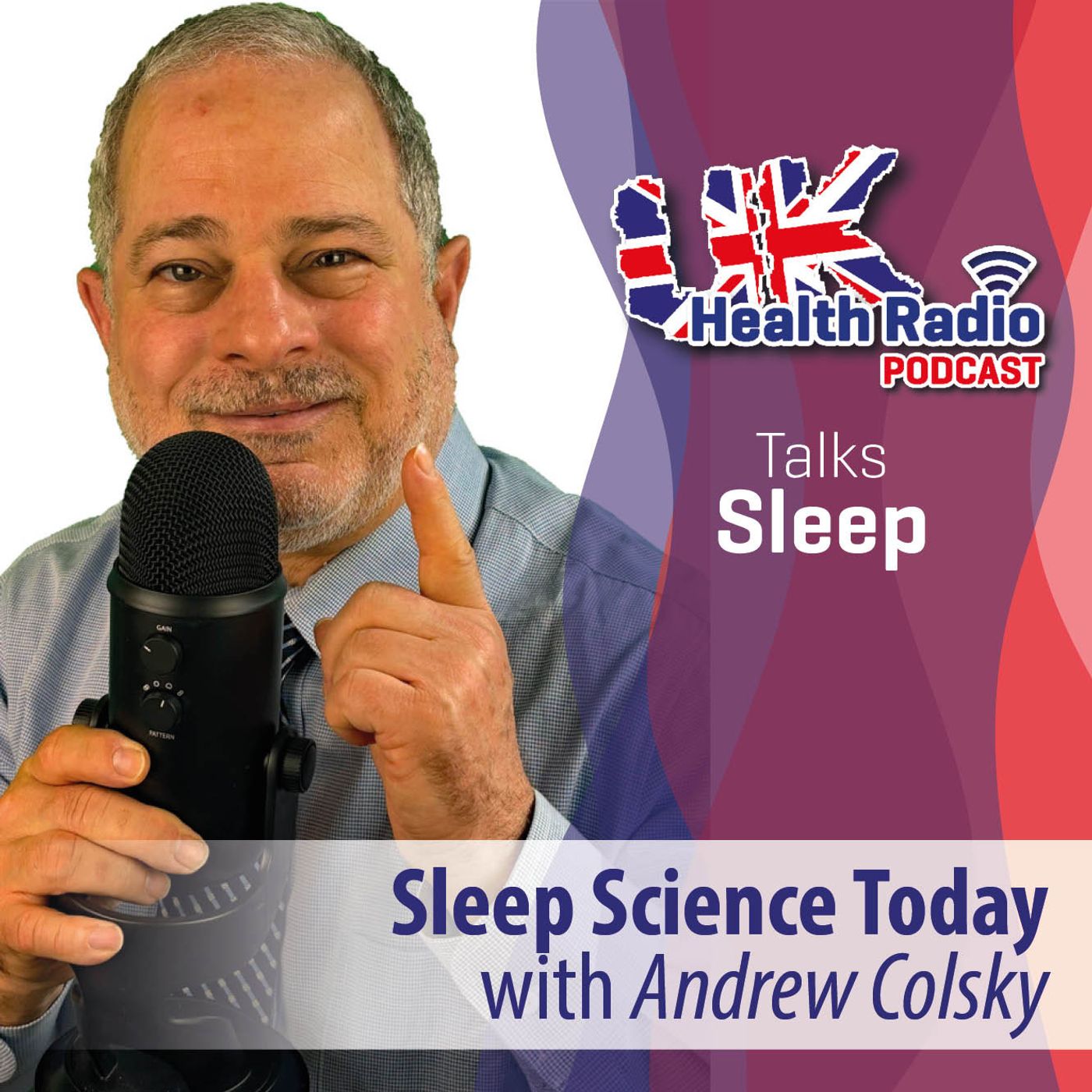
81: Sleep Science Today with Andrew Colsky - Episode 81
About this episode
Disclaimer: Please note that all information and content on the UK Health Radio Network, all its radio broadcasts and podcasts are provided by the authors, producers, presenters and companies themselves and is only intended as additional information to your general knowledge. As a service to our listeners/readers our programs/content are for general information and entertainment only. The UK Health Radio Network does not recommend, endorse, or object to the views, products or topics expressed or discussed by show hosts or their guests, authors and interviewees. We suggest you always consult with your own professional – personal, medical, financial or legal advisor. So please do not delay or disregard any professional – personal, medical, financial or legal advice received due to something you have heard or read on the UK Health Radio Network.
Get every episode summarized
Each time UK Health Radio Podcast publishes, we email you a written briefing from the transcript — the topics, who appeared, and any specific claims, with the ad reads skipped.
Email me new episodesFree for 3 shows. No card needed.
Hosts & guests
Transcript ready
564 searchable segments. Every word is indexed and playable.
Full transcript
UK Health Radio Podcast — 81: Sleep Science Today with Andrew Colsky - Episode 81. Machine-transcribed; use the interactive transcript above to jump the player to any line.
It's time to wake to sleep with a number one sleep authority sleep science today and sleep better tonight We all hear myths about sleep and sometimes it gets confusing to know what's true and what's not true You can find pretty much anything you want to find on the internet today But coming to sleep science today we are going to talk with Dr. Ishaan Shu and she is going to help us figure out some of these myths about sleep So I'm your host Andrew Kulski. This is sleep science today We have Dr. Ishaan Shu who is an adjunct faculty at standard sleep medicine center and founder of a multilingual mental health practice called mind and body garden psychology Welcome, Dr. Shu Hi, thank you for having me So we obviously talk all about sleep here and there's so many misperceptions out there and you know in my own practice and working with clients
When they first come in you know, they tell me all these things they've tried to do to improve their sleep and Sometimes you know, you can Clearly hear that they got that off of the internet somewhere and it's just not true stuff So I figured today we could talk about myths and kind of give the reality behind them so With that I am going to start off and I'm going to give you one of the most common ones I hear which is Everybody needs eight hours of sleep and if I don't have eight hours of sleep something must be wrong What's true what's not there That's a very common question and one thing I learned in sleep field is sleep It's such an individualized thing. There's no such thing that Everyone need absolutely the same lens of hours to sleep So in reality Everyone's different Someone may just need six to seven hours per night and they are totally fine
They are bring their body can only create that Many hours of sleep and they can function so well so energetic during the day But others may need eight nine some people may even need more than nine hours per night of sleep to feel more Recharged during the day and but we want to be careful if you constantly need a lot of sleep Like you constantly need nine to ten hours per day to sleep And you still feel like it may not be enough for you there may be some indications Something underlying wrong in your house. So actually sleep more is not necessarily a good thing And also there's type of Small percentage of people in the world. We call them short sleepers So genetically, they just cannot create that many hours of sleep and they don't need many hours sleep
For short sleepers, they may just need five hours sleep per day and they function perfectly So you can see everyone's so different and the problem is if we force someone who Can only sleep for six hours we force them to lay on bad for eight hours or more We may actually create insomnia problems for this person I see I see so So you mentioned you know the people who may be regularly needing ten hours or more of sleep There might be something else going on there First thing that came to mind for me was maybe they've got sleep apnea and they're not getting good sleep And so they're trying to kind of catch up with it what types of things might be going on in the background Yeah, sleep apnea definitely a vaccine because their sleep quality is poor and night It's not about how long you sleep is about the sleep quality you're getting and there are many other sleep disorders
Like I treat insomnia most sleep, but there are 90 more other type of sleep disorders in the picture they could all lead to Your body need more sleep But besides sleep disorders We may have other medical conditions that Your body may need more sleep more rest try to recover from that Maybe injury you got maybe some like medical procedures you went through Or some underlying house issues it could be very complicated different type of Medical or genetic problems that you are not aware of That need your body try to recover through sleep, but it may not actually be able to really do that And that need medical condition a medical attention Right right and I guess there's also the the other part here which is you know
We we talk about this generic concept of eight hours that people think about But different stages of life we're going to have different needs for sleep So a teenager or a newborn is going to be very different from someone who is in their 80s or 90s That's a very good point. I'm glad you mentioned that yes So babies need a lot longer sleep So two-thirds of their time positive spend in sleep as we grow older like children teenagers around 10 to 18 years old Of a lot of teenagers actually need more than eight hours sleep I'll average it just based on big data So but unfortunately nowadays in our school system a lot of teenagers They are not getting enough sleep. They are sleep deprived Um, not only how loud is sleep, but also teenagers tend to be more night out So they tend to sleep later. That's another problem
Um, but as we enter adulthood Our our body needs a little bit less sleep as we guess older at older age stage Um, we we may still be able to create certain amount of sleep But we may experience more night weeknings So the total sleep hours still reduce but in a different way So um, it's very solid point to your mentioning different life stage sleep change That means our expectation of how what what means a good sleep should change accordingly as well Mm-hmm Yeah, and you know you talk about the more middle and night awakenings as people age One of the things that is so common for me um, with with with my patients is when I get patients who are Let's say 70 years old and above roughly um, they have sleep changes such as more middle-of-the-night
Wakingings and also waking earlier than they used to the other parts of their life And so obviously, you know, there's this concern. Oh my gosh I can't sleep the way that I used to I'm getting up so early. What's wrong? What's happening? Is that kind of your your experience as well? Yes, uh totally and my suggestion would be you know It's not quite rational to expect your body sleep exactly the same when you are at 70 years old Compared to when you're 20 years old So sometimes we need adjust to the change in our body and maybe some medical conditions getting the way as well daily activities also different So try to understand how I sleep right now based on where I am in my sleep stage Whether we can build up more acceptance To this type of sleep Instead of thinking oh, I want to go back to how I slept 20 years back
That may be hard Right right. Yes And that that's pretty much, you know The the biggest part there is once they can accept the fact that their body changes over time That it's natural to wake up earlier than there are a lot more comfortable um, I think so good good point All right, let me let me let me go to a different one here. How about Well, you know, I can stay up all I want because I'll catch up with my sleep on the weekend Can people really catch up with their sleep? Yeah, it's a common myth we all think we can catch up on sleep But there are lots of research showing Actually, we cannot really catch up on sleep that well It's in sleep field. We have this concept of sleep that you accumulate your sleep that right Sleep actually spread out every day how how much sleep your body and bring gas you use to form a type of function during the day
If you sleep deprived yourself purposely throughout the week or for several weeks and then you count on several days to catch up Um, actually we find out through different research Your function your counting function level does not go back to the baseline. It takes more than seven days sometimes For your cognitive level your function to go back to your original baseline and it's really hard It's also not quite possible for people to just take seven or ten days sleep a lot try to catch up Um, so I think more reasonable way to think about this is yes, if you don't sleep enough Try to catch up on your sleep maybe can help a little bit But it won't restore 100% of what you lost Whatever sleep you lost you lost and impact your cognitive functioning also impact our immune system
It needs take a lot of time to recover and sometime it's very hard for a to recover fully bad Right, right. Yeah, I I heard somebody describe it one time in a way that I really It made it easy for me to understand which is if you were to go for a week and you Restricted the amount of food that you ate all weeks you ate a very little amount of food and then you said Well, I'll catch up on the weekend. I'll eat all the food that I didn't eat on the weekend The weekend comes you may eat more food because you might be hungry But you are not going to eat the amount of food that you Restricted during the week you you it would just be impossible for you to do Same thing with sleep you'll catch up on some But you're not going to catch up on all of it like you were saying Yeah, I love this metaphor. Yes, exactly. We always talk about you only have so big of a stomach And how much food you can really feel in right for sleep in a way Similarly your body and the brain can only generate so many hours of sleep per day
Even when you are super sleep-differently deprived for a while You can maybe sleep several hours more, but not that much more and another thing we don't know is what the quality Sleep quality look like when you try to catch up on sleep. That's not something you can just feel Um, so it's just You never whatever you lost in sleep. You never can get it back And your brain your body just gonna carry on with that I remember many many years back in the sleep science field There are very famous research talking about sleep definition And they find out for both human being and then they did this on um rats on animals after Long term of sleep deprivation Your mental health actually suffer a lot Uh, and your function really dropped Even when you um do that to animals and you also shift the schedule of the animals for a while
They just die early It's just impact your house in a lot different ways So we have to be careful about what is important in life, right? Does it worth it to to deprive your own sleep for other things? Right right well Yeah, and I know that so many people these days are much more in tune to dementia and other types of things and recognizing that sleep is such an important part to You know our overall health. It's you know, it's not just sleep compartmentalized, but it impacts us totally Yeah, just mention one quick thing on the other end We notice clinically if you can improve your sleep It actually helps to speed up your recovery in many other conditions for example depression anxiety different mental health issues and some of your medical health Like physical health issues. So sleep can be a really good
Factor to consider it to help a lot Right right Well, we are at a point to take our first break. So I'm going to take a break But when I come back from the break, I have some additional myths that I'd love to talk about. So Stay tuned on sleep plans today. We'll see you back after the break UK health radio station. I make you feel good You Feel good Be sure to visit sleep science today.com for access to all of our channels and special offers Sleep science today And sleep better tonight
All right, welcome back to sleep science today. I'm your host Andrew Kulski. We're talking with Dr. Shoe And we're talking about this and here's one that I hear a lot Well, you know, I'm I'm I'm not tired, but I know I need to sleep So what I do is I just drink a glass of wine and that puts me to sleep Prorecon So wine or any liquor is so interesting There's a lot of research around um, how a little bit wine can help us relax before bedtime That's true, but the problem is really after you fall asleep in the process of sleeping Any liquor you drink before bed. They're gonna start being digested by your body And they're gonna become different things different chemicals in your body Some of those actually is not quite good for our sleep quality
Uh, some research showing drinking wine or any type of liquor before bedtime actually Increase the chance of our sleep apnea symptoms when we fall asleep And sometimes the liquor you drink before bedtime including wine can Cause more weakening or poor sleep quality after you fall asleep So just be careful. I think it's not about black and white years and no necessarily like drink or not drink It's about a balance What is too much for you What is appropriate amount make you feel like just right for you to relax or it's a routine It's a bedtime routine. It's associated with mental soothing then just a little bit Half glass for example possibly okay for you Um, it's just you need to understand what works best for your body
Okay, great great. Thank you. So there's there's there's a related one Which is oh Well, I just go to the drugstore and I buy some melatonin gummies And I'll just take that right before bed and it'll knock me out. True or false Does it really knock you out right? In my clinic, I see a lot of people talk to me Melatonin does not work for me or there's some people eat a lot of melatonin and then in the mornings They feel so drowsy. They like just cannot wake up. They they thought they did not sleep well But melatonin has a lot problem Um, first melatonin is something our body naturally release So it's everyone we all have that and actually our body only release such a tiny dosage per night And it's something to help signal us. It's dark. It's nighttime. Be ready to go to sleep So melatonin itself, it's not something to knock you down put you to sleep
It's not the same thing as sleeping pill. It's really just the same thing in your body to signal you about being prepared for sleep Um, yeah, that Our body I think last time I read a research our body only released about point 08 milligram Um melatonin per night So that's not a lot But if you buy melatonin on the market in any drug stores It's huge dosage. It's like 5 milligram 10 milligram So that means a lot of people already release enough melatonin. You cannot sleep You cannot fall asleep. It's not because you don't have enough melatonin It's because many other things you worry about things right you your sleep habit is not very healthy So but you take melatonin you take too much it much more than what your body naturally release That means it's going to be your system until the morning is still going to be in your system So that caused a lot of problem in the morning. You cannot really wake up
You don't feel like refreshed and then you blame sleep You don't blame melatonin. So next day you do the same thing Yeah, so I think that's a problem another thing is several years back I think there's a research paper published by a Canada researcher team They studied handlers of melatonins on the market But they find out whatever labeled on the melatonin bottle that's not really match How many melatonin exactly in the pew your algorithm you're taking Sometimes the dosage of melatonin in that little pure gummy can be four hundred times more Or less And it also not only has melatonin in it. It has many other weird stuff Combined together into that melatonin you are taking so you actually don't know what you're exactly taking It's not the same as what labeled on the bottle. I think that's another problem Wow, well, that's certainly something to be aware of
um But yeah The fact like you said you go into the drugstore and typically you're right You're going to find five milligrams and ten milligrams and both of those are way too much And then like you said you people get caught up in this cycle because they think I didn't sleep Well, so I need more melatonin when it's the fact that you're taking too much melatonin Which is causing you to have the brain fog and you know sleepy during the day So Yeah, that that that's a very common one. I think that's a huge myth out there that people think that well I take that and it's like a sleeping pill and it is absolutely not So All right, let's let's try another one I love to watch tv in bed because it helps me relax so that I can fall asleep So I would say this does not work for everyone it depends and not those kind of very rigid sleep psychologists They definitely cannot do certain things. It's depends on what you need
So for people who watch tv before bedtime I think what they are trying to do is to do some wind down activity Which is great thing when we all should have some wind down activities Because our brain is not a life switch. It cannot just switch off Okay, it's sleep. We do need a period of time to slowly wind down from the busy mind during the daytime to a more calm mind So we are ready to sleep For some people watching tv or beyond their phone Or listening to music. It's a way for them trying to wind down and That's a good thing But you have to figure out the activities you're engaging in are they really Help you wind down or they are making you more awake more excited tv or any phone Um like social media stuff depends on the content For example, are you watching horror movies right before bedtime? That possibly gonna be too much right
Because that gonna stimulate your brain make it very excited right before bedtime But if you are watching something very soothing You really enjoy you feel like help you build up your sleep drive further make you feel more sleepy You're more ready to go to bed. Maybe that's not such a bad thing You just have to be careful Another about the content another thing is the blue light we all talk about So research showing tv actually the blue light is not as much as the phone or other Um, electronic device you're holding on your on your hand So tv is distance away But it's still gonna have some blue light blue light is a signal it suppress the release of melatoni because it triggers the brain believe Oh, it's still not dark enough. It's it's it's not ready. You don't have to be prepared for sleep yet It's a signal to wake us up somehow and our eye is a very important signal receptor
So we use light to decide To regulate our sleep center in our brain. That's the problem of blue light Um, yeah, so Another problem for tv is are you laying on bed to watch it or are you watching it in your living room? It's slightly different Because for for someone if you already have insomnia issues We want really help you build up sleep Uh equal bed equal sleep this equipment. We want your brain understand when you lay on your bed It's for sleep or sex not anything else So that help to train your brain to be ready to sleep every time you go on bed your brain Naturally, right help you to sleep, but if you lay on your bed watching tv and sleep and et and talking and do all kinds of things your brain will get confused
Um, there's you can see there's a lot of moving piece involved in this tv watching and we need Taylor eight out based on different individuals needs to understand Is this a good thing for you or does actually get in the way of a high quality sleep for you Mm-hmm. Yeah Yeah, no, you know, and along the same lines is is the sort of the follow-up question here, which is So if someone is in bed And they've got insomnia for example So they're laying in bed. They're awake and they They say well, I just need to try to sleep better And so they lay there in bed and they toss and they turn and they try to sleep I still don't know what try to sleep means um, but what What's going on with that is that a good thing if that they should stay in bed and just keep trying to sleep Based on what you described very likely. It's not a good idea. I think that goes back to
Our effort does not really uh lead to a good result So I see a lot of people with insomnia. They try so hard. They go to bed early They asked the whole family to be quiet to accommodate their needs for sleep And in the mornings, they don't want to get up. They try to lay on bed for longer time So basically they are trying to create longer time to be on bed Hopefully this can help them gain more hours of sleep, right? But this kind of effort really harm our sleep Clinically, we find out when people do that they actually sleep worse They they're sleep hours actually reduce because it caused a lot of anxiety in your brain For insomnia, I think one big factor to stop us from sleeping is sleep anxiety So that's type of anxiety directly related to our ability to sleep So if you allow yourself to be on bed for that long period of time
But your body and brain can only generate a smaller chunk of sleep Your brain will get so anxious. It will not trust your own ability to sleep It will start going to this survival mode and start Trying to analyze and make up series that all your your body must be broken And you can never get enough sleep. You're they gonna be horrible Whatever all this makes things worse for you So in this situation we actually want to help people do the opposite You should leave your bed and only go to your bed when you are really sleepy So we want help you shrink the time or restrict the time you are actually on bed And make sure when you're on bed most of the time you're asleep That you can sleep we call with you can increase what we call sleep efficiency
And That's a way to increase your sleep quality first So even you're on bed just for three hours, but you're asleep almost for three hours That's a good start. Let's start with that and slowly spend your sleeping hours So I always think sleep quality is over sleep quantity In the treatment of insomnia Yeah, yeah Yeah, so the like you like you said it's like if you're not sleeping and you know that you're not gonna be sleeping It's better to get out of bed so that you train yourself that the bed is only for sleep Not for laying there trying to sleep and building anxiety exactly exactly what I You know deal with all the time Okay related related to that is another question then Many people these days by sleep trackers. They've got an apple watch or they've got a fit bed or you know Whatever it is that they that they buy and these sleep trackers give them these sleep scores and some people get very very
um Obsessed if they don't have a perfect sleep score What's actually going on there? What should people be aware of? You think sleep trackers is not for everyone So what we saw is some people start using sleep trackers and then they start developing performance anxiety around sleep and There's a new word in the field called author's dominion is basically a type of insomnia caused by trackers Because you are trying to sleep in a certain way Then you are fitting your own sleep into that structure think that is good sleep if I'm not there I need to do whatever I can to increase my sleep Shift my sleep to that frame It's very hard to control it. I think Um The one I treating insomnia
I would ask all my patient stop using sleep tracker for several weeks until their sleep gets better And then because once you you don't have insomnia anymore You have more control over things you feel more empowered Then you may be able to keep a healthier relationship with your trackers But when you have sleep problems when you have some difficulties around sleep Plus sleep tracker it will make it really complicated and performance anxiety will make us not able to perform We see that a lot in sleep because deep down you cannot control your sleep Right anyone here listening if you ever been on bad tossing around you could not force yourself to sleep You know that you cannot force yourself to sleep So um if you You know you you want to control your sleep too much then sleep tracker may not be for you or at least not for you temporarily
Sleep tracker has another problem is Right now is a consumer side of sleep tracker. They are improving a lot over the years But it's still not 100% accurate Um, you cannot rely on it to tell a accurate story about your sleep And also you don't know how to explain some of the data And certain percentage of deep sleep does that means your deep sleep is poor From a per for professionals point of view maybe not it may be normal within the normal range But for consumers they may think oh no, I'm my deep sleep. It's not enough. I have to do something about it That create another level of anxiety Yeah, yeah No, that's the big thing like the anxiety and insomnia tied together So trying to to do better is actually making you do worse because you're increasing your anxiety. So Yes, uh important important point So we need to take our second break here. So we're going to take a break and we will be right back on sleep science today
UK health radio station. I make you feel good UK health radio station. I make you feel good You Be sure to visit sleep science today.com for access to all of our channels and special offers Sleep science today And sleep better tonight All right, welcome back to sleep science today. I'm your host Andrew Kulski We are talking with Dr. Shoe and we're talking about sleep myths Um how about this one Yeah, I know people tell me that I snore but snoring is harmless. It doesn't matter Yeah, I have a strong opinion about this because my old family members snores
And I remember as a child the young child. I was like so annoyed. I was like after two doors away Why I'm still hearing this so clearly a night I could not fall asleep and I also growing up thought it's normal Because a lot of people snore in China around when I grow up People are so interesting when something happened a lot around us and nobody questioned that we think it's normal Until I went to Stanford and studied sleep behavior sleep medicine Then I realized there's something called obstructive sleep apnea And the reason why we snore is because our airway claps and night when we are asleep Especially when we are in REM sleep when we are dreaming So the old muscle got relaxed and the airway tend to collapse And we cannot breathe well So our body trying so hard to get air through the airway And that's how we are making sound
So it's not necessarily not a healthy stay We're in when we sleep that actually lead to more problems more pressure to the heart to the brain And our oxygen level drops in our blood So a lot of this lead to severe health consequences if you snoring Years after years right and I after I studied sex therapy Recently years I also learned that if you snore for many years when you get to older age And it may even impact your erectile dysfunction And so it's just to have a lot of different type of sleep health consequences for people So be careful about snoring If you snore or your partner or your family member snore I strongly recommend you try to go to a sleep doctor check it out
Do a sleep study figure out how severe this is Is something you should pay attention to is something you should put intervention around it as soon as possible Yeah, yeah, and that that's that's so true and You know, I think one of the biggest issues is the person who snores But they're asleep. They don't they don't hear themselves snore They don't realize they're snoring and then if their bed partner says to them Wow, if you're snoring really loudly They don't think it's a big deal because you know, they don't they don't hear it And then I think also they don't realize that there is a lot of harm that can come from it Just like you were describing So it is so important You know if you if you sleep with someone who snores Courage them to be tested you can even do home sleep apnea tests You know, you just just wear a little thing at night. It's it's not a big deal But it's really important to know Because if you're if you have obstructive sleep apnea and you're not treating it
You you just heard about all the problems that you can have so That's an important one. Thank you. Thank you for sharing that. Yeah Um How about this one I want to make my bedroom nice and warm so that when I go to sleep I'll feel comfortable almost like I'm in the wound Tell us about bedroom temperature Yeah, so uh, it actually surprised us when you look at the research Your temperature is cooler bedroom temperature is better for sleep. Of course, you should not freeze yourself Uh, but as we fall asleep over the night our core body temperature is dropping And around Two hours two or three hours before we wake up in the morning It drops to the lowest point And then our body temperature start temperature start to increase slowly
And then we got waking up. So if your sleep environment is too warm or even hot It may wake you up in the middle of the night because temperature actually is a weakening cue for us Our body does it naturally and especially for women going through menopause That's also a issue. They have naturally they have hot flesh Uh hot flesh and that's a symptom and that kind of warm hot feeling in the middle of night Wake up them often So you don't want to sleep in a too hot a temperature and uh if you have a smart house Um, it's it's better for you to adjust it automatically maybe at certain point in the night the temperature can drop While to degree and uh, uh, when you wake up you can adjust it or you can set it up that way
Hmm interesting. Well, yeah Okay, so so the message there is cooler is better than warmer when you're sleeping so Okay, um Here's one that I saw going around the internet for a while Which was people who believe that they can train themselves to need less sleep Somehow it was a a badge of honor or a machismo type of thing that I don't need to have so much sleep I can fight it what's going on there true false I See that mostly around entrepreneurs Uh, I even I interviewed some very famous entrepreneurs um in America a long time ago He was so proud of getting up at 5 a.m. In the morning And I think there's a whole club about 5 a.m. Rising entrepreneurs somewhere around the internet
I would say depends on where you are in your life and what your body really needs From a scientific point of view I want to encourage everyone to think about What your body really needs if we can sleep matching our body's natural needs that's actually the best that's the highest quality most refreshing Um, and we possibly rest the best But I think the problem is many people use this kind of Restrict your own sleep as a way to in exchange of success productivity more work and if Your body needs more and you are restricting that that's really a type of sleep deprivation And as we talk about earlier Sleep deprivation is actually quite harmful You cannot catch up on those can sleep. It's also harmful to you long-term. It's impact your house
Impact how long you can live your longevity and it's It's a typical I think philosophy people think other things are more important than sleep. So I can sacrifice sleep To gain other things in life Um, when we restrict our sleep not only housey house-wise, we're going to suffer But emotionally we're going to suffer So when I treat couples I do couples therapy sometime Uh research shows if we don't sleep enough we tend to be more irritable We have less empathy To to our partners We we have a lower threshold of tolerance to to our children to our family members It's just the whole person may be more grumpy and grumpy people is hard to be around So it's just the spiral
Down to causing a lot of problems. I think it's all related The I think recently two years more research from Stanford and many other research team in the US showing Um, sleep actually become one of the key predictor of Suicideality that's a heavy topic But it's really think about mental health and whether you still want to live a meaningful life, right? If you don't sleep enough and that severely impact your mental health and just open a door for many many other possible negative consequences Right, right. Well Yeah, that's uh, uh, uh, you know The deep sleep that we get is is where so much good stuff happens and you know Whether we talk about mental health whether we talk about entrepreneurs even the You know all of the ideas and things kind of come together when you're in that stage three deep sleep
Where it's not going to happen when you're awake trying to force yourself to think So if you give yourself that opportunity to get the sleep that you need your brain is going to Process all those things that it needs to process and you don't have to force yourself But I think a lot of people miss miss that I just want to add one thing about that not only deep sleep is important every sleep stage Are important in their own way for example when we talk about mental health Ram sleep, which is what the sleep stage when we are dreaming It's very important to regulate emotions Because when we sleep that sleep stage help us to process our emotional memories And so uh, it's a very important stage of sleep deep sleep also important especially important for teenagers for children because deep stage of sleep is the stage Our body release grows hormone. That's when you can grow bigger taller
And that's very important for younger people Um, and all of course it helps you you know recovery or body tissues everything. So it's important for everyone A light stage of sleep actually is quite a lot in our daily nights sleep More than 50% of our each night sleep actually are light stage of sleep. They're important as well Um, so I just want to put that out is every structure like the whole architecture of our sleep every piece of that has its unique function And it just overall sleep is important for us Absolutely, absolutely Well, that's that's a very important message and that's the message that we're going to end up leaving our Our show with because we're out of time for the show But this has been very You know informative. I think we've covered a lot of the common questions that people have about sleep out there
And I appreciate your detailed answers and giving us the information that we need So um, I'll just ask if there's any last words you have before we close out the show Yeah, it depends on how much time there's one thing I want uh mention Another miss waiting on cover which I find very common among Asians uh and many others or The dream part like um One is when to sleep and one is whether dreamy and waking up in the middle of night is a good thing I just want to spend a little bit time working on that I just want let you know waking up in the middle of the night is very common for almost everyone So don't be afraid of that normal adults wake up more than 10 times per night. No matter you remember it or not. It's normal So regarding the sleep window Everyone is different. That's another Uh philosophy. I will always want to pass out to people is following your body's natural rhythm
If you can if you're night out then maybe your natural sleep window should be go to bed late and get up late If you're work your daytime activity allows it That's the best type of sleep for you You don't have to force yourself sleep like others if it's different for you. So just overall I think um sleep again sleep is an individualized thing I think it's very important for us to understand how our body prefers In sleep and then decide accordingly what we can do to adjust it accordingly if you A stuck you are having problems. There are a lot of great resources out there find a professional Find a well-tuned sleep doctor sleep psychologist to help you You know Optimize your sleep. I think resources are help out out there Um, but don't scare yourself too much don't
Uh put too much effort in the wrong direction with the right guidance Sleep issues can be solved you can recover Excellent excellent. Well, thank you for that. That's all important information We have to close out our show here. So thank you all for joining sleep science today And we'll see you on an upcoming episode Thank you, Dr. Sheen. Thank you You have been listening to sleep science today your number one sleep authority You Sleep science today And sleep better tonight
More episodes
More from UK Health Radio Podcast
102: Sleep Science Today with Andrew Colsky - Episode 102
UK Health Radio Podcast
95: The Hirschsprung’s Hour with Tom Richard - Episode 95
UK Health Radio Podcast
181: The Relaxback UK Show with Mike Dilke - Episode 181
UK Health Radio Podcast
13: The Smartest Doctor in the Room with Dean Mitchell, MD - Episode 13
UK Health Radio Podcast