About this episode
It’s been 35 days since I logged onto social media. Apart from some minor boredom, it hasn’t been that bad. During my time away, I’ve delved into research on how the socials work and spent time reevaluating my own relationship to them. Here are some lessons I’ve learned and how I’m going to change my behavior going forward.
Social media really is that bad. Virtually all the platforms I researched are designed for subscriber growth and profit over any sort of responsibility. Twitter/X is a cesspool of revenge porn and death threats. Instagram has been found legally liable in one case of teenaged suicide and accused in countless others. Facebook has been implicated in genocide in Myanmar and political violence in countries such as the Philippines and Ethiopia, to say nothing of its role in American political violence.
Heretic Hereafter is a reader-supported publication. To receive new posts and support my work, consider becoming a free or paid subscriber.
We’ve had whistleblower after whistleblower come forward to show that these sites prioritize user engagement over basic health and safety concerns and have a devil-may-care attitude towards election interference. As Sarah Wynn-Williams amply illustrated in Careless People, the people who run these platforms simply do not care.
This is wrong. The greater one’s power, the greater one’s responsibility. These companies (and the people who lead them) need to be held accountable for their reckless pursuit of profits over the safety of their fellow human beings.
I’m no longer a huge Bible quoter, but I can’t think of a more apt description for these folks than Matthew 6:24: “No one can serve two masters...You cannot serve God and be enslaved to money.”
Even overlooking the most extreme cases, these platforms are built on an amoral foundation which encourages polarization and vitriol over relationship building and lets people anonymously bully each other with zero accountability.
All that being said, I think there’s a strong moral case to be made for disengaging from social media as much as one can.
But I’ve also been thinking about Dietrich Bonhoeffer’s argument against moral purity, which Hanna Reichel summarizes in her great devotional book, For Such a Time is This:
“…when [authority] is rotten, personal integrity is also endangered. In his posthumously published Ethics, Bonhoeffer even denounces the desire to preserve one’s moral purity as a temptation. The only way to stay innocent, he muses, would be to have no part of history.”
Is leaving a platform akin to dropping out of a conversation we may have a positive influence on? By logging off, do we abdicate these platforms to the trolls and neo-Nazis? I, along with many other Liberals, quit Twitter/X after Elon Musk’s takeover, but our boycott barely registered. So I question whether simply deleting one’s account is the moral slam dunk it seems like.
Furthermore, as a person whose vocation is bound up in finding readers, quitting social media doesn’t feel like a realistic option. These platforms are incredibly flawed and skewed away from content like mine, but they are still discovery engines for creatives like me.
So, I plan on reengaging with social media once Lent is over. But I have come up with some new guidelines for myself and my kids around social media/screen time.
NEW RULES FOR MYSELF:
* Scroll mindfully. Before you open the app, name the reason you’re logging on and how you’re feeling at the moment. (Doing it aloud is a great trick for accountability!) Log on to complete a work-related post, then log off.
What I noticed most about the absence of social media this month was that I was longing for connection. The problem is, social media doesn’t provide the type of deep connection we need. Which brings me to my next rule:
* Opt for High-Context Communication. If I want to talk to someone, the best option is face-to-face. A phone call is next best; texting is a distant third. Recognize that social media creates parasocial relationships not real relationships. It can be a tool for keeping in touch with friends you’ve made IRL, but it’s not a good way to “meet” people. As a busy mom, one app I like for keeping in touch is Marco Polo, which lets you send video messages to friends to watch and respond to at their convenience.
* Resist Addiction. Recognize that social media was designed to be addictive. Turn off notifications. Log on for a purpose and severely limit time spent on social media using timers and apps (I like Minimalist Phone.) If you find yourself regularly going over your allotted time limit, make a contract with yourself such as, “If I go over ___ minutes, I will log off for __ days.”
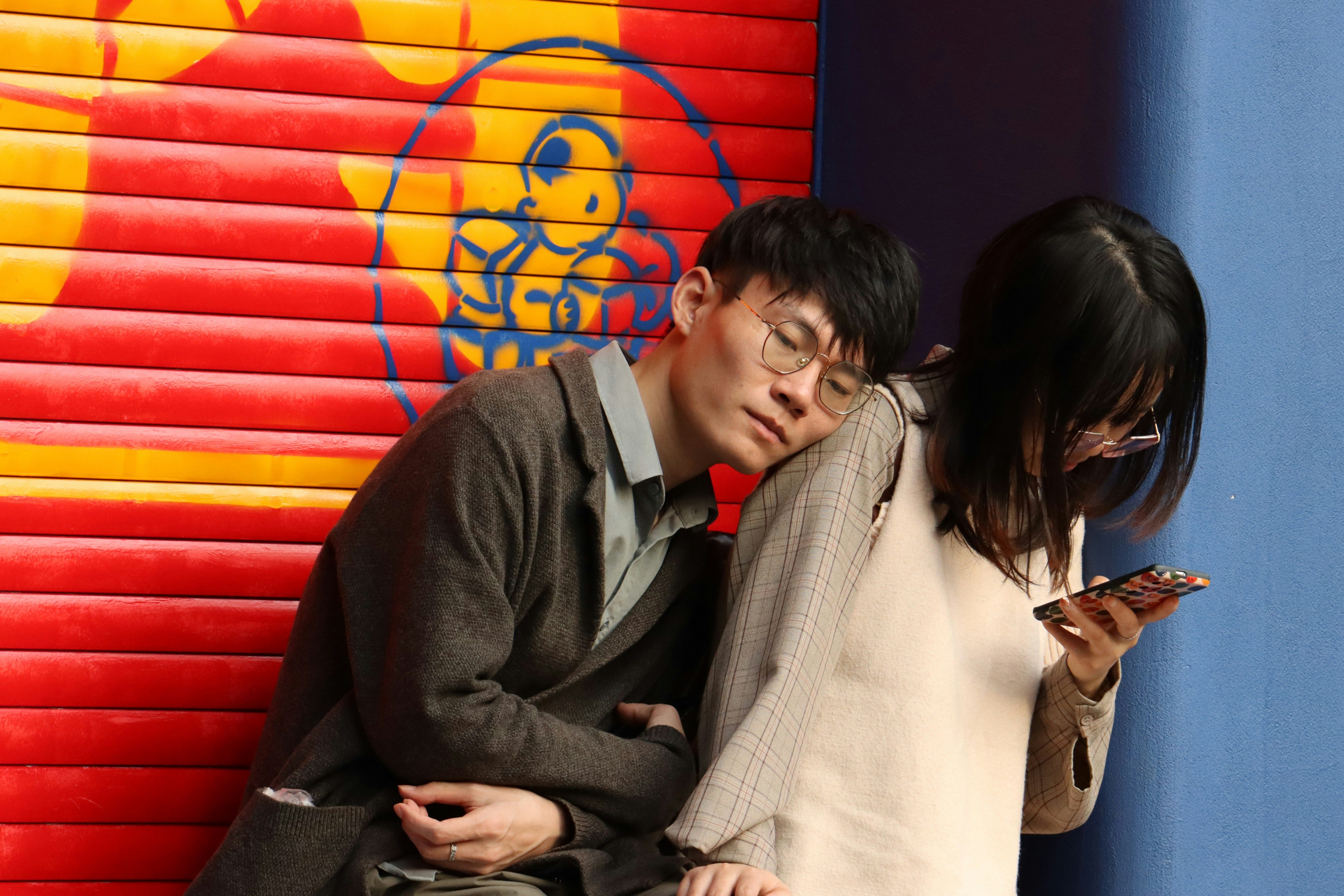
* No Phubbing. (aka “phone snubbing.”) If you’re lucky enough to be face-to-face with someone, put your phone away. Introduce phone-free zones in your home (such as the table) and times (such as meals.)
* Big Screens > Little Screens. Choose communal screentime over individual. The same goes for sharing a Bluetooth speaker rather than everyone retreating to their own set of headphones. Do I love my kids’ meme songs and James Bond marathons? Not exactly! But I also know that when we share media, we’re getting the opportunity to both broaden our tastes and connect on a deeper level.
* Support Politicians Who Hold Big Tech Accountable. The good news is that some politicians are FINALLY waking up to the threat of unregulated social media, particularly where it relates to kids. Keep an eye out for news about the Kids Internet and Digital Safety (KIDS) Act. This podcast discusses some current regulation attempts.
RULES FOR MY KIDS:
* This is Our Phone, Not Yours. My spouse and I gave our kids an old smart phone because we don’t have a LAN line and we wanted them to be able to reach us in an emergency, such as when I’m running errands and my son texts, “MOM WHERE IS THE CREM CHEESE?”
But when we gave it to them we said, this is our phone which we let you use. That means we have the right to review their activity, block apps, or take the phone away as we see fit. They’re allowed to use it for specific purposes at specific times. The fact that there is 1 phone and 2 of them also helps limit individual screen time.
* The Smart Phone Stays Home. My eldest might be the only kid in middle school who doesn’t take a phone or smartwatch to school. Has he gotten lost riding the city bus home? Yes, many times! But he’s always figured it out (just like we did as teens) and his dad and I feel great that he’s not being distracted at school or while hanging out with friends. Plus, he reads actual books on his commute!
* No Social Media Under 16. We know that social media is addictive, and we don’t give addictive substances to kids. Jonathan Haidt recommends this specific age limit; or to paraphrase the very wise Lisa Damour, PhD, “Is your child old enough to be trusted at a high school party?” If not, then they’re not ready for social media.
Our specific rule is that messaging with individuals or groups of IRL friends is fine, but broadcasting their lives to the world via social media is not an age-appropriate activity.
That’s the plan! Time will tell how well I can implement new routines and stick to my guns, but I’m hoping that reminding myself the bald facts about these platforms will strengthen my resolve.
What do you think of my rules? Is there anything I missed? Anything you think is completely unrealistic? Are you using any cool tricks or apps to limit your screen time?
As always, I love to hear your thoughts, ramblings, and rants in the comments or via email.
BONUS MATERIALS:
* have you ever fantasized about becoming an influencer? This memoir was a fascinating look at what it’s really like
* I cannot recommend this BBC podcast highly enough
Heretic Hereafter is a reader-supported publication. To receive new posts and support my work, consider becoming a free or paid subscriber.
Get full access to Heretic Hereafter at heretichereafter.substack.com/subscribe
Get every episode summarized
Each time Heretic Hereafter Podcast publishes, we email you a written briefing from the transcript — the topics, who appeared, and any specific claims, with the ad reads skipped.
Email me new episodesFree for 3 shows. No card needed.
Hosts & guests
No transcript yet
This episode has not been transcribed. Request it and it moves to the front of the queue.
More episodes
More from Heretic Hereafter Podcast

Progressives Need Better Stories
Heretic Hereafter Podcast

Easter for Doubters & Skeptics
Heretic Hereafter Podcast

"If I'd Just Done Good Things, I Would've Never Blown Up on the Internet"
Heretic Hereafter Podcast

Everything is TV Now
Heretic Hereafter Podcast