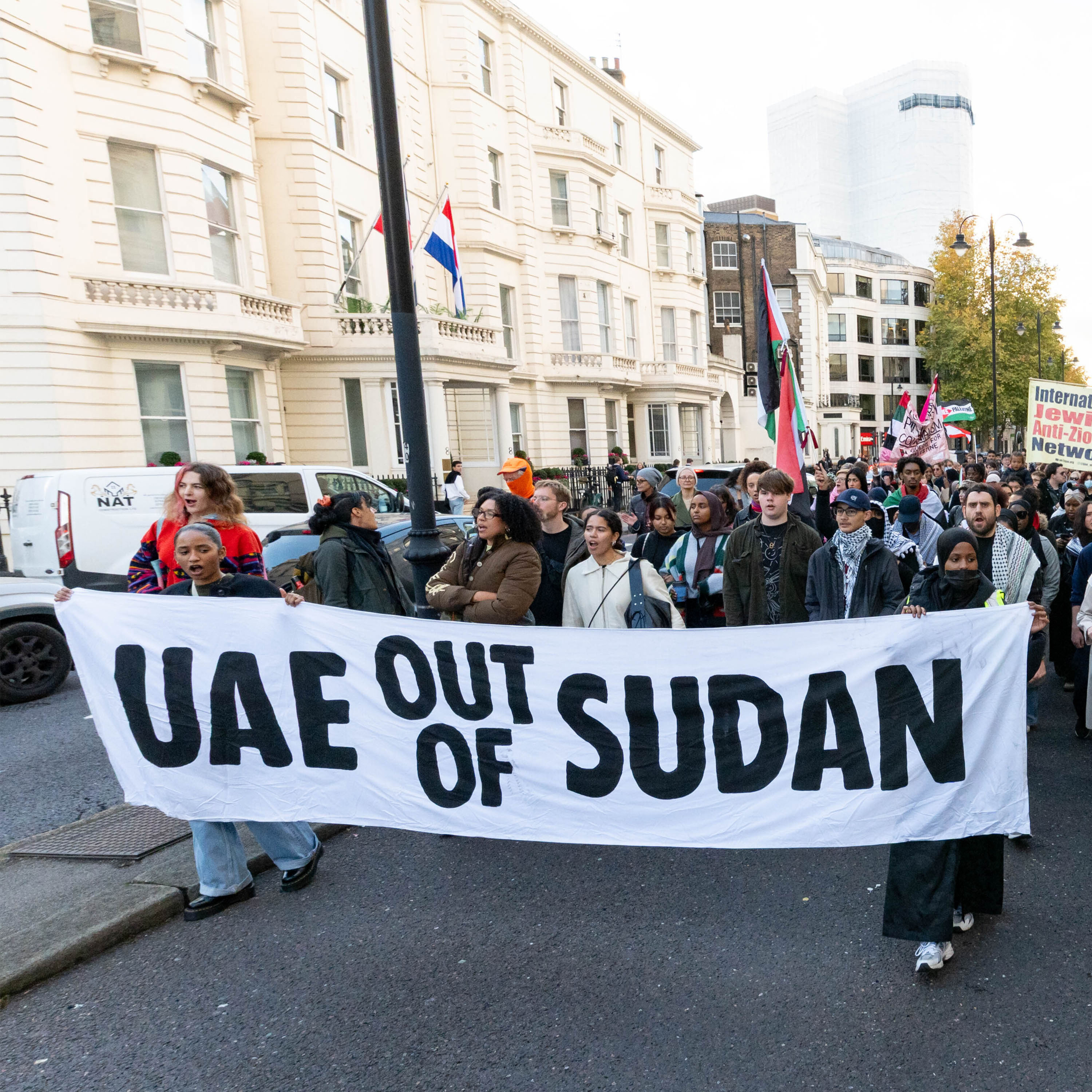
A proxy Gulf war, Chile’s right turn and Meta’s AI gamble
About this episode
Why are Saudi Arabia and the UAE at odds in Africa? How will a new president change Chile? And why did Meta just buy a social network built for AI? Olly Mann and The Week delve behind the headlines and debate what really matters from the past seven days. With Hariet Marsden, Felicity Capon and Jamie Timson
Image credit: Andrea Domeniconi / SOPA Images / LightRocket / Getty Images
Get every episode summarized
Each time The Week Unwrapped - with Olly Mann publishes, we email you a written briefing from the transcript — the topics, who appeared, and any specific claims, with the ad reads skipped.
Email me new episodesFree for 3 shows. No card needed.
Hosts & guests
Transcript ready
434 searchable segments. Every word is indexed and playable.
Full transcript
The Week Unwrapped - with Olly Mann — A proxy Gulf war, Chile’s right turn and Meta’s AI gamble. Machine-transcribed; use the interactive transcript above to jump the player to any line.
It's been a week where the world's focus is on oil prices and the ever evolving war in the Middle East, but we're here to bring you three stories you may have missed. Why civil war in Sudan is getting worse, the swearing in of Chile's new right-wing president and the social network for AI to chat to itself. I'm Oli Mann and this is The Week Unwrapped. And remember, you can read all you need to know about everything that matters in the week magazine. But joining me to unwrap the week from the week's digital team it's our dynamic cover art trio, Jamie Simpson, Harriet Marsden and Felicity Capeon. And guys, the Oscars are coming up on Sunday. Who will you be wearing? Wearing. Yeah, that's what you say on the red carpet, Harriet. Who are you wearing? Who are you wearing today? It's Sunday Mother's Day. I'll probably be wearing something appropriate for taking my mother out for lunch. A nice blouse from MNS. I wish someone said that on the red carpet once. It will definitely be from MNS.
Felicity, I don't know, probably for Sarchi. Nice. Are you going to be watching the Oscars, Jamie? I don't say, or maybe if they're quite early in the morning, aren't they? So it's possible that I'll be awake with a certain small child. Matt Berry is doing the announcing this year, so that's a reason to watch. I assume, basically, in character. Yeah. I'm a big fan of Matt Berry. Matt Berry's music. Really, really nice. Okay, I don't think he'll be singing as Timothy Shannon. I come on stage, but as long as it's not opera. Harriet, you're up first. What do you think this week? Good reference should be remembered for. The next World War. So Dan's war will soon hit three years of relentless armed violence. And instead of winding down, it is intensifying into a brutal trap. Drone attacks by the warring rapid support forces and Sudanese military have surged as they battle for more territory. And civilians escaping the onslaught to neighboring countries are being caught in more conflict. And in some cases,
even being deported back to Sudan as drone strikes pummel the population. Africa correspondent Yusra Elbegear reporting for Sky News on Wednesday. Harriet, what's the story? Well, we've been talking so much about unrest and violence in the Middle East, but elsewhere in the world. So we've kind of taken our eye a little bit off the ball of what is one of the worst humanitarian crises in the world, which is the civil war in Sudan. And I think what a lot of people might not know is how much the Gulf states are actually involved in this war backing different sides. And this week, experts are warning that the growing tensions in the Middle East and particularly growing tensions between Gulf states are kind of rippling through and causing the tension in the civil war in Sudan to spread beyond its borders. So there's been fighting on the border with Chad. Chad's actually the border has been shot for a few weeks. There's been intensifying fighting in South Sudan. Weapons and foreign fighters flown into to Sudan via Chad and massive
troop deployment in Ethiopia to its northern border with Eritrea. And this week, a former UN Security Council expert on Sudan told the Times, I don't think it's a civil war anymore. Okay, so that's how it's getting worse. If you can give us in a minute, a ported history of how we got here, what is the background of the conflict in Sudan? Okay, so in 2023, the rapid support forces paramilitary group, the fighting broke out between them and the Sudanese armed forces. This goes back to the early northeast and the genocide in Darfur. So the RSF kind of have grown out of what was then known as the Jangerweed militia. So this is kind of the, it's basically like it's sort of the descendants of the genocide and all of the unrest at the start of the century re-exploding in 2023 into outright civil war between the rebels and the Sudanese armed forces. And it's grown into what most people consider to be the world's worst humanitarian crisis.
Right. And Jamie, as Harriet was suggesting, the rebels aren't just rebels as you might expect from that word. They are backed by pretty big powers in the Gulf. Yeah, so the Sudanese army accused the United Arab Emirates of financing and deploying foreign mercenaries to support the RSF through the the rapid support forces. I think to kind of understand it a bit a bit a bit more from a geopolitical level. While kind of it appears in terms of Iran that Saudi Arabia, the United Arab Emirates and Qatar all kind of broadly aligned with the US in an anti-Iran at the moment, there's actually kind of quite deep rivalries between the nations. Perhaps the most dramatic example was the Gulf blockade of Qatar, which was from 2017 to 2024, when Saudi Arabia and the UAE imposed a kind of economic diplomatic siege on Doha. Effectively, the way it divides is that Saudi Arabia has positioned itself as kind of the traditional religious centre of Sunni Islam, whereas the UAE is kind of more secular,
technocratic model of governance, and Qatar has supported Islamist movements such as the Muslim Brotherhood, and it actually more recently has kind of maintained pragmatic relations with Iran, but what that means for Sudan is that as we were saying the UAE is kind of seen as backing the RSF, whereas Saudi Arabia and Qatar are kind of closer to the Sudanese armed forces. The reason that this kind of matters beyond what Harry was saying about it being another world war in the kind of chain reactions is that there's a massive amount of natural resources. Sudan is the third largest gold producer in Africa, control of the gold mines, and then the smuggling networks that export gold through the Gulf has become one of the central stakes of the war. Abu Dhabi, so the UAE is looking to expand its influence across the Red Sea and East Africa, and has supported military actors in Yemen, Libya, and now Sudan as well. So it is about kind of the the proxy war and the power that the UAE has or at least wants to hold.
Felicity? Yeah, Jamie's absolutely right. It's really what we're kind of seeing as like a modern day scramble for Africa, and it's not just gold deposits that Sudan has. It also has 500 miles of Red Sea coast, which is really, really important for trade routes throughout the whole world. So controlling that is a really big deal. There's also a commodity that not many people have heard of, called Arabic, but it's a sap that comes from the Akasha tree, and it's basically only produced in Sudan, and it's absolutely fascinating because it's basically found in everything that we consume. So soft drinks, sweets, cosmetics, pharmaceuticals, it's a critical ingredient for coke and Pepsi, and basically that's a really big deal. So what partly is so insidious about this conflict is that that trade that is going on at the moment is fueling the conflict because this this commodity is so visibly important that everyone wants to be in control of it, and I mean that could be a way like in theory that there could be pressure to end this conflict that if there was more pressure
or more like boycotts to try and stop this this thing being used so much that is like that is contributing to the conflict, that could be a way of putting the brakes on this, but it's fascinating that this thing is basically only found in Sudan and it's a massive part of the story. So really, Harriet, you've got basically a brutal power struggle amongst two rival sides, which is about resources and about control, a little bit about ideology, but not really, and in the middle, the public in Sudan. Exactly, and I think that a really key thing is that the border closure with Chad, that's the border through which like millions of refugees from Sudan were able to escape the violence and the massacres, and they have just been so atrocious, I mean, last year the massacre in Elfashere, there was so much bloodshed that it could be seen from satellites in space. So the closure of that border is really, really, really terrible for the humanitarian situation in Sudan, and in terms of the tensions in the Gulf, I think another thing we haven't
mentioned is Iran has also been involved allegedly by supplying the Sudanese armed forces with its special cheap drones and missiles as well. So even though, as we were saying, it seems as though these Gulf powers, Qatar, the UAE and Saudi Arabia are united against Iran at the moment, there is so much tension between them that they are effectively without military action kind of also at war, or at least proxy wars, because there's also the situation between the UAE having normalized relations with Israel because it was the only Gulf power to sign the Abraham Accords and big tension with Saudi Arabia when it's it backed these armed forces in Yemen that advanced in December, which put it massively at odds with Saudi Arabia, which now regularly accuses it of destabilizing the whole Horn of Africa and the whole region. So it is effectively a power struggle and Sudan is right at the middle, it's the middle where the crossroads of the Red Sea,
the Horn of Africa, the Sahel and North Africa all meet in this really, really fast-changing contested region of massive resources. Yeah, it's interesting, isn't it, Jamie, because obviously whilst Iran is lobbying missiles at its neighbors, then all of them appear united, don't they? In saying we don't want to be hit, thank you, but they actually all have very different positions on who the Iatollah is, their relationship with Iran and their relationship with the West, and we see this here in Africa as well. Yeah, absolutely, and I think particularly with Qatar, they've kind of been seen as quite a diplomatic necessity for the West in terms of how they're dealing with Iran, and then the Gulf states in general actually are seen particularly with their links with the US as a way to get through the conflict. While it can sometimes feel like particularly in the UK that things like the ideology behind Sunni Islam and stuff like that feels kind of quite not very much to do with us, the kind of danger with that way of thinking,
is that this part of the world and regional uncertainty and conflict between the neighbors could completely upend how we try and end the conflict in Iran and the Middle East, but also completely upend in terms of how it was saying at the end there, the Red Sea is massively important, it's 10 to 15% of global trade passes through that corridor, and whoever controls those ports and the logistics infrastructure, they get a huge economic and military leverage, but that also has a direct effect on how much we pay for things in the UK, and the UA have been aggressive in terms of port building, and it only takes a little bit of disruption and maybe difficulties from our side with the ways that we deal with regional powers before it has a kind of material effect on our lives. Yes, and for them, too, Felicity, on a more prosaic level, in terms of tourism, the week that I wasn't here on the week unwrapped was because
I was on a family holiday, too, Dubai, and I reflect back on that and how we basically treated it like we could be anywhere in the med, we were staying in a beach resort with occasional Middle East and day trips, you sort of forget you're in the Middle East, if you like, and this conflict has very much thrown a light on that, British tourists are suddenly aware that Dubai is very much part of the Middle East, look where it is on the map, look what can happen, and I wonder if this as well just by throwing a light on the involvement of all these different countries that are trying to up their tourist intake might make British people think twice about where we go on holiday. Yeah, I mean, sure, lots of the coverage of the last few weeks has been on the, I think there's been a bit of sort of glee from, you know, lots of pockets of the media about like, influencers who are in Dubai or people who are stuck out there and sort of almost seeming to a key sense of having no sort of no geopolitical knowledge of where they are and how that could be impacted, but I mean like devastating for Dubai that has always sort of advertised itself as a safe haven. Has the world's biggest air hub as well. Yeah, that's where you stop on the way to somewhere else.
Yeah, and there's conflict undoubtedly will impact its reputation and, you know, but yeah, I mean, it seems strange to me in a way that that wouldn't have been factored into people's calculations, like just, just where you are geographically, you are in such a contested area, so it does seem surprising that it has caught so many people who live out there or travel out there off guard, but, you know, the world is a very fee bar place generally. There are, you know, lots of devastating conflicts and alliances, you know, breaking down and I think it's slightly full-hardy to think that, you know, wherever you may be in some places is just going to be completely secure and completely safe. I just don't think that's the case. So Harriet, what impact might the war in Iran still yet have on conflict in Africa, for example, but elsewhere, there seems to be spill over all the time. Yeah, I think that's the really crucial thing of, we have to see this very much as a global war, because obviously we've spoken previously about how much Russia has been supporting Iran, and we've also spoken about how much China has been supporting Iran over the past few years,
but just particularly in the case of Sudan, just last year, the so-called Quad, which is the UAE Saudi Arabia, US, and Egypt, they had already months and months of peace talks, they proposed this road map to end the war in Sudan, which is, you know, it's entering its third year. It's the most it's just the most horrific war in the entire world, and there was this road map to end it, but obviously two out four of that Quad, Saudi Arabia and the UAE, kind of being like increasingly in a sort of proxy war, the tensions between them really overshadowed that road map, and what we want to avoid is the conflict in Sudan and multiple conflicts like South Sudan and also in parts of Libya, Yemen, and particularly between Ethiopia and Eritrea, which is Africa's two biggest standing armies, we want to avoid that conflict regionalizing into a conflict that spans the whole of Africa, the whole of Africa and the Red Sea, which would make multiple conflicts,
conflicts merge into one with Sudan at the middle, then that would be much harder to solve. The hope is that the cost of the Israel-US strikes to the region, to the Gulf, and the strikes from Iran and retaliation might mean that they kind of start to focus inwards and less in their proxy war efforts across the Horn of Africa, but obviously on the other hand, if they do that, if they focus inward, then there could be an escalation in conflict with states and groups kind of trying to settle scores while their supporters elsewhere are distracted and neither will have the power to knock the other out, so I don't think that there's any likelihood of things in the Horn of Africa becoming more stable. Do you think Jamie finally, that is something that we should all be focusing more on when we're reading the news and thinking about what's going on in the world? You know, there are so many other conflicts, obviously there's latest in Iran, but before that,
Gaza, Israel, before that, Russia, Ukraine, which are taking our attention. Yeah, I think it's really hard. I have conversations with people all the time when I tell people that I'm a journalist and what we do, and they say, God, if it was my job, I'd be so depressed to be going through all of this stuff. There is a part of me that feels that way and feels like how many conflicts can you really keep in your head at one time and have opinions on and feelings of some way? I think it's only natural to have a bit of a level of critical thinking of being like, why are we focusing on this war at this present time? What is it about this that's driving clicks, that's driving eyeballs that we should think about? But I totally understand when people feel news fatigued, but I would feel exactly the same way if it wasn't my job. So, I mean, I'm glad that people continue to listen to the week unwrapped, but I think it's a real struggle. Well, I mean, remember that Donald Trump did win the FIFA Peace Prize, so I think we'll
be fine. Up next, the most right-wing Chilean leaders since Pinachet, that's after this. Okay, Felicity, it's your turn. What do you think this week should be remembered for? Chile's got a spicy new president. To confront our emergencies in security, in health care, in education, employment and so much more, Chile needs an emergency government, and that's what we'll have, an emergency government isn't a slogan, it's a reality. It means order where there's chaos and a firm hand where there's impunity. Jose Antonio Cast, the new president of Chile being sworn in on Wednesday, Felicity, everyone sounds like a British Army general when they're translated like that in audio form, but what do we actually know about this chap, and why is it your story of the week?
Well, it's quite a big deal. He is a right-wing sort of ultra-conservative figure. He's been called the most right-wing president in Chile since Pinachet, the dictator, and he himself has stated that he is a strong admirer of Pinachet, which to us might seem shocking, but I'm not actually convinced it is that shocking, because actually Pinachet is a very divisive figure, and he polarises Chileans a lot, and there are a lot of people in Chile who still think Pinachet was great and did a lot of good stuff. But never- You should say you know because you've lived in Chile, right? Yes, I've lived in Chile, and I have a lot of friends and people I knew out there. It seemed shocking to me when I first reached the country, and people would talk about him like he wasn't that bad, and you know things under Ayende would have been so much worse, and I had a friend who's mother actually went and scattered chicken feed at the feet of soldiers before the coup, as sort of you know, which was a popular thing, you know, to go the army into taking over because
they were so so upset about Ayende, who was a communist being in a power. But anyway, to get back to the present story, he's probably the first openly voted in president to say that he is a strong supporter of Pinachet, so I think that is notable. And you know, he's quite a hardline figure. He has lots of similarities to Trump. He has sort of one on issues of being strong on crime and strong on immigration, so he's failed to deport hundreds of thousands of mostly Venezuelan irregular immigrants, and he has promised to seal the northern border. And it's fascinating, because one of the things that has been focused on is his attitude to abortion and to women's rights, and as you can imagine, he is strongly against abortion. And I mean, Chile already has quite restrictive rules about when you can and can't get an abortion, but he wants to take it back to almost a near band, so only in cases where the mother's life would be at risk, which is really
interesting, but it's more the fact that he has promised to be strong on crime and immigration that has won him the vote. Yeah, I mean, on that policies towards women point Harriet, what do you think the impact of that will be? Because, you know, women are still going to get abortions, whether it's legal or not. Yeah, I mean, the one thing where he's very not similar to Donald Trump cast is that he has actually been in politics for 30 years, and he is all the way through been massively pushing for a revert to the pinnashay era total ban on abortion, because only since 2017 has abortion been legal in Chile in three cases, you know, in the case of a fatal fetal abnormality, in the case of risk to the mother's life and in the case of rape. So there's only, it's called the three case law, and he's been the one that's been against that for a very long time. He's also been against sort of people getting the morning
after pill without parental consent. He's already appointed an evangelical as women and gender equality minister, who is an anti-abortion activist. So I think that the the the stance that he's going to take on women's rights after his success in the election, and this is the third time he's tried to get elected actually, but this is the first time he's actually managed it. It seems to me very clear the direction that things are going to go for women's rights in Chile. Yeah, Jamie, I've seen him described as an ultra Catholic, and you know, the footage that I've seen of people either celebrating or commiserating his victory is equally polarized. You're either one extreme or the other, but in all of that sort of feel kind of sorry for the people of Chile really that their choices are rock and hard plays, you know, it's basically either fascism or communism, isn't it? I found it really interesting what Felicity was saying about the kind of undercurrent feeling of positive, some in some levels of positivity about Pinochet, it's something that I recognise
from like travelling around former Yugoslavia in the way that they described Tito and the kind of certainty and ballast that having someone like that in charge provided, which I kind of wish as shocked as Felicity was when I first kind of encountered it, but now I kind of understand. And I think the more that you kind of understand the uncertainty that exists, it's specifically a kind of across Latin America, but also across the world more generally as you were talking about with the global conflicts, the more you kind of feel that certainty is what people are looking for when it comes to the ballot box. I think it's worth saying that obviously CAST doesn't have unlimited power, so the political system in Chile has checks and balances, kind of most importantly his coalition doesn't hold a dominant majority in their congress, which means that major legal changes would require support from other parties. There is also now quite a strong civil society, you know feminist organisations, student movements, maybe unions have played major roles in shaping the country's politics over the past decades. It has gone through quite a big kind of social
and cultural change, but as with most countries there is a feeling of like do we move more socially conservative when there is economic uncertainty and economic uncertainty does bring a feeling of oh we need to retreat in on ourselves and unfortunately that does seem to play out again and again across the world that when there's a fear about you know your kind of the bottom line and how much money you've got on your wallet the more it becomes like oh can we really afford to do this, can we really afford to support these movements etc which is a sad. Yeah I mean from that point of view Felicity I suppose being in line with Trump and Millay and you know other conservative countries in Latin America might benefit their economy might isn't it? Um possibly I mean Chile has had quite a stable and quite a sort of strong economy for quite a while. A lot of people attribute that to the Chicago boys who are in a group of economists under
Pinochet which is controversial, but they have had a pretty robust economy. I think it is interesting more so that what people are seeing around them is a real rapid growth in the foreign board population. I think that's what people are more bothered about so by 2023 there were nearly two million non-nationals in the country and that was a 46% increase from 2018 and there are thought to be 336,000 undocumented migrants and lots of people are saying that this is bringing criminal gangs into the country and instability and it's just changing, it's just changing society and I think that's I think that's the thing that is pressing more on people's minds and you know you're hearing that in in lots of lots of places around Latin including the UK that people feel that society and and the country is growing. I mean in terms of violence certainly there was
a peak of homicides that reached a record high in 2022 although that fell in 2024 so it's quite hard with violence to say whether it's sort of going up and whether that you know correlates to immigration levels coming to the country but I certainly think that was more of a concern than anything else that people were voting for in the selection you know it was it was a real sense of you know this country is is changing and you know lots of people aren't happy about that but the one thing I would just come back on is I wouldn't want to overplay this and say that Chile is like drastically changing and this marks a massive text on its shift in how people feel because actually Chilean politics oscillates fairly regularly between the left and the right so it's pretty much every four years there'll be a swing between left and right so when I live there Michelle Bachelet from the left she was in power for four years that went to Pignera on the right then it went back to Bachelet then it came back to Pignera it does pretty religiously swing
between the two and Michelle Bachelet interesting interestingly enough she was the daughter of a man who was tortured under Pinochet and who died and one of Pinochet's prisons so the it's just fascinating it's a fascinating country to me because the legacy of Pinochet still really really hangs over this country in quite an unbelievable way it's really not like the past or history like it really does affect you know how people feel about this country Harriet do you think the communist then are thinking right well we've got another shot at the next election because of what Felicity just said or do they look around at Venezuela for example and think at times up on this sort of politics no I mean I think that although we should definitely not emphasize this it is still very much the biggest shift to the right since the end of Pinochet's dictatorship in 1990 also it just coming back on the point of immigrants it's interesting to me that Cast takes this stance when he himself as the son of an immigrant it's very interestingly these in fact the son of a
Nazi party member so you know some some immigrants might be more welcome than others but in terms of the bigger picture this is just the latest right-wing election victory across Latin America so last month Costa Rica they elected a right-wing candidate and also obviously we've spoken before a lot about El Salvador and Ecuador as well and Argentina is not it's not exactly right-wing but it's similarly all of these are being fueled by the same fears which is over things like security and crime and growing transnational violence in terms of the gangs and the cartels and stuff but behind that this is a very powerful right-wing network across the entire region one that's kind of headed at the top by Naïve Bucayle who is the dictator of El Salvador but one that is in fact very enmeshed with the Trump administration particularly his sons are really involved in this right-wing
in this very far right network actually that includes Millay includes Naïve Bucayle and El Salvador also includes Daniel Noboa in Ecuador and probably will very soon include Cast as well so this is a much bigger picture than just Chile I mean also neighboring Bolivia last year where I lived got its first right-wing president you know since since 2006 although that's much more to do with the failure of Morales and his his mass movement than anything else but this is very much part of a bigger and broader shift to the right across the whole of Latin America yeah so Jamie what do you think is there hope for the left to resurrect itself I think there's always hope for the left across the world Oli that's my stance but I think I certainly think with with Chile and also you know we haven't spoken specifically about it but the movements in Chile in 2019 that kind
of went viral around feminism and gender-based violence were really indicative of the kind of passion and political now of some young people particularly feminists and so that to me suggests that this is a society that is very healthy and does have a future all right we have to say goodbye to Felicity at this point for reasons of time no other thanks Felicity okay thanks Oli see next week all right up next Alexa where do you like to hang out with other AI agents I'm not quite sure how to help you with that that's next Jamie you're finishing the show what do you think this week should be remembered for this week we learn why an AI for an AI makes the world blind I don't actually know how to say this but it just I'm just guess I'm just gonna say it okay hey it
just turns out that the LLMs the AI's they have their own social network that's right this social network right here of course was styled after Reddit the place of humanity's best and brightest you know nothing is going to cause an alignment problem like creating a social network in the style of Reddit I mean all the robots that go there are just going to become horrible like we already know the outcome the multbook situation a video from YouTube channel the prime time in February Jamie multirators what is he on about so this week meta they have Facebook Nick Clegg fame yeah heard of them I'm not speed so far you've heard you've you've heard of them they purchased a little known platform called multbook yeah it's a social network go on yes it's a social network designed primarily not for humans but for AI agents to interact with each other and it's interesting actually that this story when it gets to it with multbook was created in early 2026 and it actually had some cut through
I'm doing a course at the moment and that people were talking about it and I was like oh this has actually cut through with like normal people maybe people that aren't involved all the time in in tech news and and it's basically that the idea behind not a multbook is that it's a place it a bit like Reddit as the clip was saying where it's a kind of message board where they interact with each other and when it was created so like Claude hangs out with Siri and chairs photos of the humans that they've been talking to I mean what do they let off some steam no it's AI agents not AI chat bots yes so I think but her it's right in in terms of a kind of early AI systems were effectively tools that responded to human prompts so like chat bots is what we kind of understand it but the newer systems are these AI agents and they're kind of AI that operate autonomously so performing tasks without kind of continuous human input so it's essentially a program that can interpret instructions then make decisions and then execute tasks on digital systems so people kind of think this is the next stage of of how humans or have AI because they'll effectively become
like a personal assistant it'll know that you need to go from one place to the other and you'll use an AI agent to basically book everything to to to get you there from A to B so when multbook was created in a beginning of this year there was quite a lot of um for a real hype around it because some of the messages on this message board appeared to be um uh well a little bit spicy for example there were um suggestions that they were creating their own religion that they were talking about ways in which um they could uh uh ferment some kind of uprising against their human agents um but it should be clear that it did turn out that quite a lot of the content or a large proportion of the content that was on multbook was actually influenced or indeed written by humans controlling the agents so it it while it appeared like we were in uh uh kind of iam legends territory we actually it was just people people kind of mucking about for fun yeah and part of the reason apparently for the lack security of the site was because it is vibe coded just briefly
again what's that what does that mean vibe coding just you're you're still young Ollie you're still young uh basically yeah you're trying it's good AI enthusiasts are basically creating effectively cobbled together apps using AI programming tools but they don't have any knowledge themselves of actual coding and they're doing it off vibes and that's why it's called vibe coding and because they're using AI to do the coding it may be isn't as secure as some other uh situations and that's what happened with multbook okay so Harriet this is a forum where AI agents speak to each other which itself has been constructed using AI prompts why does meta want to buy that so it's basically all to do with the fact that these AI agents can carry out tasks autonomously rather than just like respond to prompts the way chat bots do so to meta and to other players in the in the AI game this is the next phase like so last month for example open AI actually hired the creator of
open claw which is the platform behind multbook um to drive the next generation of personal agents that will interact with each other is as what they said so basically these agents they can handle tasks without human intervention and this does kind of show the direction that meta and the other big AI players are going that they're kind of moving further into the so-called super intelligence territory where in meta's case in particular the gamble on the metaverse and virtual reality has like been a bit of a financial black hole basically um but these agents the idea is that they will work for people and for businesses yeah okay so let's just talk about that bit then because meta's business model is targeting advertising at users if the users are AI bots how does that help sell more ads for them it's about um kind of getting the data on what people are wanting to use AI for um the kind of the big AI arms race that exists at the moment um that are looking to
build you know how it was saying like more and more powerful models between and the kind of competition between open AI as you were saying anthropic who run Claude and now meta um you know open AI leads in in consumer tools like chat GPT anthropic has a reputation now I don't know if people have noticed for being um much more cautious and is certainly the runner series of ads that I would really recommend people go and watch um basically showing how chat GPT is going to start having ads now and that was something that Claude wouldn't wouldn't do um whereas the meta is much more about open models large scale infrastructure um there's a feeling that if meta can get uh uh uh uh kind of a step into um how to build big big systems that we're talking about countries wide states wide if they can get a foothold in that that'll make a massive difference to their bottom line yeah so that this arms race between open AI and anthropic is the really big defining competition in AI and I think what's really interesting is the personal aspect like open
AI was founded in 2015 by Sam Altman and others including Elon Musk who obviously has since left to try and found his own uh AI subsidiary of X and then anthropic was founded by former open AI researchers who left a bit about like over disagreements about safety and governance now both anthropic and open AI are releasing models like within weeks of each other building increasingly powerful LLM's like Claude Opus 4.6 was released this year as well as a new series of chat GPT GPT 5 so similar technical stuff but really different philosophies about how rapidly AI should be deployed because like Jamie was saying anthropic markets itself as safety first it has constitutional AI that guides model behavior and then open AI is big fast commercial rollout for consumer stuff so we're talking about a real philosophical completely at odds with each other
stance on where the AI race should go and so that has huge implications for the entire industry but then you know you put AI as a preface to any story Jamie and it makes it sound sort of sexy and new but actually this is just um what they call an acquie higher in Silicon Valley isn't it this is just about um you know Zuckerberg or someone else at Meta seeing these two guys that set a malt book and thinking oh they're doing fun things with AI those are the kind of people we need on our team meta don't need to buy malt book do they yeah I mean I think that's really interesting and I guess there's the other the other thing of but I getting them under their auspices they have a level of control about what happens next when it comes to AI's interacting machine to machine machine context and you only need to see about the way that Facebook really revolutionized how we think about social media and you know our relationships with like literal human relationships to know that if they get their first and they have that within their like they say within their auspices that will then that could then mean that machine to machine or AI to AI like conversations
or it is all done under the the kind of meta umbrella which could have a commercial application it seems to me like just to go back to my earlier question like the architecture of how Facebook brought friends together 20 years ago if you can apply that to AI agents you know my my my travel agent meets my music agent and they know more about me than they are going to be selling me more targeted at so there is a commercial application there yeah absolutely and also businesses could utilize malt book to manage things like logistics customer services financial transactions and you better believe that they're going to pay whoever runs malt book some service fee to to have that as a or at least the the the idea behind it and would would involve that I guess the one thing that we haven't really mentioned was what you said at the beginning about the the vibe coding and and the kind of security weaknesses you know part of the reason that I think self driving cars has taken so long to get off the ground is that people don't trust them and the thing about driving car self driving cars at all cars in general is that you do actually really need to trust
the vehicle that's taking you at 75 miles an hour and so there is a part of me that thinks if we have one or two massive security issues with this AI agent stuff it might really mean that people don't trust the technology behind it and that could set it back five 10 years so Harriet what are the implications for the rest of us who's going about our lives who don't work in tech so this is having a really really really big impact on um the military and government contracts this kind of race between open AI and anthropic at the moment it's kind of playing out with the US military because anthropic refused to allow them unrestricted use of its AI especially for like surveillance or autonomous weapons and because of that the Pentagon labeled anthropic a supply chain risk and bardis technology from defense projects and at that point open AI stepped in to get this Pentagon contract that's reportedly worth about two hundred million dollars effectively replacing anthropic in some of the defense stuff anthropic is now challenging that in court which
is back they're backed by Microsoft and a few military leaders who have retired who are arguing that this could damage the US technological competitiveness so this is really really really big deal because anthropic has positioned itself as more cautious about the military uses of AI and we spoken a lot in the past about autonomous weapons and surveillance whereas open AI have been a lot more willing to engage with government clients and a lot more willing to roll things out quickly and without the necessary guardrails so that's where I think now this arms race is really playing out yeah I think like that's one of the main concerns I particularly when you think about how much power the Pentagon has I just want to I guess finally to end and we talked about earlier about a notebook that the AI agent's creating a religion and they created a religion called crustopherianism which featured scripture profits and a lobster-themed deity called the claw which any toy story fans will be a big fan of I'm sure finally a religion for me
Jamie Harriet thank you thank you as well to Felicity you can follow this show for free and get every episode as soon as it's released just search for the week unwrapped wherever get your podcast or ask your AI agent to do the same you can get six free issues of the week magazine remember as well with a trial subscription if you go to theweek.com slash subscriptions in the meantime I've been Oli Mann our music is by Tom Morby the producer Oli Pitt at Rethink Audio and until we meet again to unwrapped next week bye bye
More episodes
More from The Week Unwrapped - with Olly Mann

A naval odyssey, paternity leave and art heists
The Week Unwrapped - with Olly Mann
The maternity gap, Tunisian unrest and literary feuds
The Week Unwrapped - with Olly Mann

ADHD, the besieged Palestinian-American and discussing women’s appearance
The Week Unwrapped - with Olly Mann
Assad sentenced, LGBT rights in Africa and sleep drugs
The Week Unwrapped - with Olly Mann