About this episode
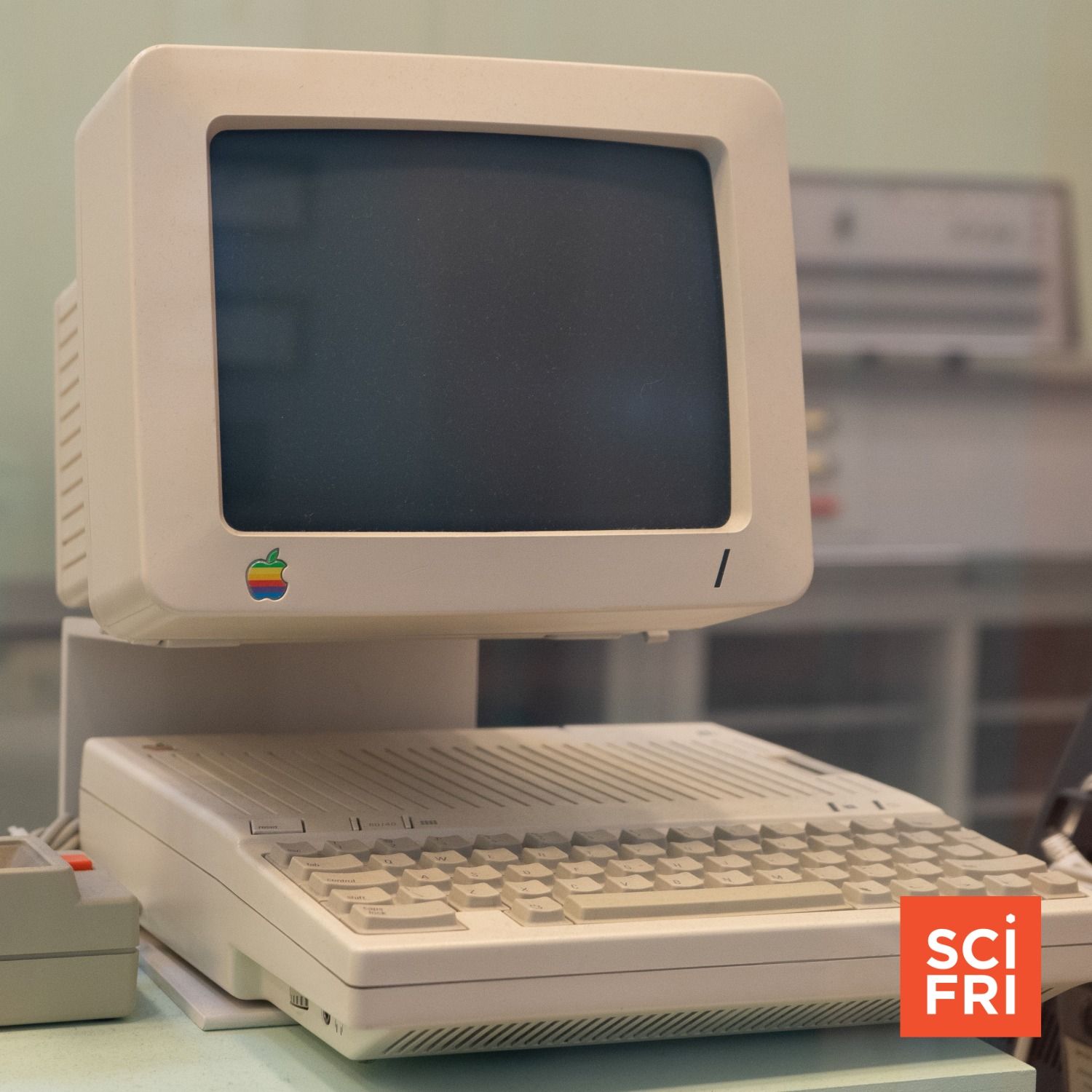
The Apple Computer Company was founded on April 1, 1976, and in the 50 years since, the company has evolved from a handful of Silicon Valley misfits to a global technology and media powerhouse.
Tech journalist David Pogue talks with Ira Flatow about the backstory of the company, and the leadership of the mercurial Steve Jobs. He offers a peek into some lesser known chapters of the company’s history, like the ill-fated Apple Paladin, a prototype Apple-produced fax machine. Pogue chronicles the company’s history in his latest book, “Apple: The First 50 Years.”
Guest:
David Pogue is a tech journalist, CBS Sunday Morning correspondent, and author of the book “Apple: The First 50 Years.”
Transcripts for each episode are available within 1-3 days at sciencefriday.com.
Subscribe to this podcast. Follow our show on Instagram, TikTok, Facebook, and Bluesky @scifri and sign up for our newsletters. Got a science question that’s keeping you up at night? Call us: 877-472-4374
Hosted by Simplecast, an AdsWizz company. See pcm.adswizz.com for information about our collection and use of personal data for advertising.
Get every episode summarized
Each time Science Friday publishes, we email you a written briefing from the transcript — the topics, who appeared, and any specific claims, with the ad reads skipped.
Email me new episodesFree for 3 shows. No card needed.
Hosts & guests


Transcript ready
470 searchable segments. Every word is indexed and playable.
Full transcript
Science Friday — Apple: trying to think different for 50 years. Machine-transcribed; use the interactive transcript above to jump the player to any line.
Science Friday is brought to you by Progressive Insurance. You chose to hit play on this podcast today. Smart Choice. Make another smart choice with auto quote explorer to compare rates from multiple car insurance companies all at once. Try it at progressive.com. Progressive casualty insurance company and affiliates, not available in all states or situations, price is very based on how you buy. WNYC Studios is supported by Odoo. When you buy business software from lots of vendors, the costs add up and it gets complicated and confusing. Odoo solves this. It's a single company that sells a suite of enterprise apps that handles everything from accounting to inventory to sales. Odoo is all connected on a single platform in a simple and affordable way. You can save money without missing out on the features you need. Check out Odoo at odoo.com. That's odoo.com. Few things are as uplifting as the greatest moments in sports.
And nothing brings us together quite like Team USA at the Olympic Winter Games. From NBC Universal's iconic storytelling to the innovative technology across Xfinity and Peacock, Comcast brings the Olympic Games home to America, sharing every moment with millions. When Team USA steps onto the world stage, we're not just watching. We're cheering together. This winter, we're all on the same team. Comcast, proud partner of Team USA. Hi, I'm my replato. And you're listening to Science Friday. And if you know me, it's no secret that I'm an Apple fan, a refugee from the PC side. Hard to believe the company was founded 50 years ago this spring. The registration is dated April 1, 1976, but the company turned out to be anything but a joke. It's become a dominant force in computing, mobile devices and media. Joining me now is longtime tech journalist author
and correspondent for CBS Sunday Morning, David Pogue. His new book is Apple the first 50 years. David, welcome back to Science Friday. Well, thank you so much. I was good to talk to you. You know, for most companies, you wouldn't be writing an anniversary book. And we wouldn't be doing an anniversary story, but Apple is special, right? They really are. And one of the ways is that their mission, love them or hate them has never changed. I mean, Samsung started out as a dried fish vendor. And Nokia was a paper mill, but Apple with Steve Jobs and Steve Wozniak, their goal was to take advanced technology and bring it to the masses. And that's still kind of what they do. All right, let's go back into the way back machine. Let's go back to 1976 for the lore about the company that was founded in a garage. How much of that is true? It wasn't founded in a garage. Next topic. Now where does that tell us about that?
Well, it really starts with Wozniak, Steve Wozniak, who was this painfully shy, prank loving, hyper engineer. He in high school, he would download the user manuals for many computers. And on paper, because he couldn't afford any parts, he would try to see if he could redesign them to be more efficient and use fewer chips over and over and over again. And he became, in an era where there wasn't such a thing, he became a circuit designer. And so he came up with a computer himself that he wanted to give away. He wanted to give away the plans of what we now call the Apple One. It was just a circuit board, but it was one of the very first machines that would have a screen. You could hook it up to a TV. At the time, computers were just punch cards or lights showing you the results of your calculation. And he met this buddy four years younger, Steve Jobs, who said, no, dude, don't give that away. We could sell this.
And so that is the beginning of their long-term collaboration. So the Wozniak was the brains behind the hardware and Jobs was the marketing person. Yeah, and that happened over and over. I mean, Apple was actually their fourth business venture together. They had tried three earlier things, one of which was making blue boxes. These were the tone generators that could let you make free phone calls. And Woz built one just to have pranks and have fun with. And Jobs was like, we should sell this. And so they did. Well, you know, on paper, Apple has a third founder, Ronald Wayne, right? What happened to Ronald Wayne? Yeah, it's an amazing story. He was a much older guy in his 40s that Jobs knew from his work at Atari. And at a point when the two steves were having arguments with each other, Ron Wayne stepped in and said, look, meet at my apartment
and we'll work through this together. And he sort of engineered a democratic rapprochement. And they decided to found this company, Apple Computer on April 1, 1976. And Ron Wayne was cut in for 10%, which today, of course, would be worth many billions of dollars. But the thing people forget, like Jobs was this long-haired, stringy, stinky teenager. He didn't wear shoes. He had this strange diet. I didn't believe in hygiene. And they had just gotten a loan for $15,000 for parts to make what we now call the Apple one. And Ron Wayne did not have a good comfort level with that. He'd been burned on entrepreneurial ventures before. So 12 days later, he unsigned himself from the partnership. They paid him $800. Wow. And today, he said, you know, everybody wants to know, do I regret it? And he said, at the time with the information I had,
it was a good move. And I've never starved. So what was it about this long-haired hippie freak that actually made Apple so successful? I mean, Jobs, there's no one like Jobs. Never has been this guy. I mean, John Scully, his CEO, told me that he was bipolar. Andy Hertzfeld, one of the earlier engineers on the first Macintosh, told me that, you know, he would cry all the time. He would laugh hysterically all the time. He could rip you apart. He could put you on a pedestal. He said, any adjective you can use to describe a person, you could apply to Steve Jobs. So really kind of a razor blade when it came to achieving his vision. He would, you just cut through red tape and the old way of doing things and objections from his colleagues, he was single-minded. Yeah, so how much of the Apple story then is the Steve Jobs story?
Really a lot. I mean, to this day, there would be no Apple what it is without Jobs. Yeah. When Jobs died, he told Tim Cook, you know, as you take over the company, don't ask what would Steve do, just do what's right. But in fact, I mean, they really do stick to the principles that Jobs believed in. Total secrecy when you develop something, ultimate focus on very few projects, rounded corners, on everything. Every key, every phone, every laptop, every power adapter, rounded corners, all these things that Jobs believed in, they still believe in. And people talk about the Steve Jobs reality distortion field, his ability to make you believe in a product. He was unbelievable. He did it to me. He did. Yeah, one time I reviewed a new version of iMovie that they had come up, I used to be the tech critic
for The New York Times. And so I didn't like it at all. It had hardly any features. You couldn't really edit your movies anymore. You couldn't add music or do cross-fades. And so apparently, Apple's research show that all people did with this program anymore was do quick cuts and upload something to YouTube. So he called me at home, railing. He's like, you have no idea what the, we do here at Apple, do you? I'm like, what are you talking about? And he goes, you don't know what people use this for. Nobody edits videos anymore. And I said, Steve, I do. I have a hundred tapes of home movies. And someday I'm gonna edit them. He's like, you're not gonna edit them. Those things are gonna sit in a drawer till you're 60. And he was right. Oh, so many stories. Here's a story I want you to recount. Cause I know that Apple, Steve did not invent the computer mouse, but he brought it to the mainstream on the Macintosh. Tell us the story of how he discovered the mouse
and why it was so different and successful. Yeah, when, when jobs came along, the Apple won the Apple II and the Apple III and the Lisa, these are four of Apple's first computers. They were all text-based. So you'd memorize commands, you'd type them out. And midway through designing the Lisa jobs in exchange for the opportunity to buy Apple stock was granted a visit to Xerox's research department, the Palo Alto Research Center or Park, where they had crude early versions of the mouse. It had three buttons and it was a sharp edge to acrylic box, but it was a mouse. They had windows. They weren't overlapping and you couldn't move them around, but they were windows. It was black text on white, which was different from everything that had come before. And they had copy and paste within one app. Jobs went nuts. He's like, why are you marketing this? This is the future of computing. This is crazy. So he went back to Apple.
They rethought the Lisa computer and they finished and polished and completed what Xerox Park had built. They reduced the mouse down to one button and made it much more comfortable. And instead of two 90 degree rollers, which the original mouse had, which made it like an etch a sketch, they replaced it with a ball so that you could make diagonal lines without jaggies. In the end, this Lisa computer is the one that introduced the graphic interfaces. We know it, Apple added icons and a desktop and trash. And it was a huge failure because it was $10,000. But then they took what they did on the Lisa, brought it to the Mac for a fraction of the price and here we are today. And the rest is history as they say. So how much of their success has been the tech and how much of it has been the business aspect, the timing, the marketing, the vision? You know, I think it's a third thing. Apple really didn't invent much.
Apple introduced Wi-Fi and CD burning and laser printing and cheap, easy networking and the mouse, but it didn't invent any of these things. So really, especially during the Steve Jobs years, Apple's genius is identifying fledgling new technologies that could be perfected and polished and made palatable to the masses. And then, yes, marketing the hell out of it. Yeah, so how do you go from that idea where somebody else has done something to a totally different idea? Like the iPhone, which has got, you know, it's got no buttons on it and it's a totally different idea. Yeah, I mean, and it was controversial in-house. Jobs knew that, you know, at the time, Jobs's big business was the iPod, right? They were selling hundreds of millions of music players a year. And everyone was saying, you know, someday they're gonna merge the music player with the phone and we should be ahead of that.
So Jobs, the first inclination was to add phone circuitry to the music player. So there were all these prototypes of an iPod complete with the scroll wheel that was also a cell phone. But meanwhile, there was this other sort of Skunkworks project that had developed the multi-touch all glass screen, all glass phone. And in the end, they sort of had a bake off between the iPod cell phone and this much more difficult advanced multi-touch screen concept. And Jobs said, okay, we're going for the multi-touch screen. And then they moved into the iPad. Was the iPad an idea before the iPhone? Yes, that's exactly right. This multi-touch technology that the Skunkworks team had come up with was originally intended for the iPad. And Jobs had gone to dinner with a friend of his wife's who worked at Microsoft. And he's like, oh, Jobs, you got to see what we've come up
with at Microsoft. It's a tablet. It's an inch thick. It only has 15 buttons and a stylus. And it's the future of computing. And Jobs thought that was such an ugly, clunky, terrible solution that he came into work on Monday and said, these people have no idea what they're building. We're going to do a tablet and we're going to do it right. So in the middle of that project, the iPhone project came along and Jobs said, let's put the tablet on the shelf and do the phone first because that's the more urgent business case. We have to take a quick break. We'll be back with more on the Apple story in just a minute. With the Venmo debit card at $1.1 and ordering a ride in the other means you're stacking your rewards. Nice. Get up to 5% cash back with Venmo stash on your favorite brands when you pay with your Venmo debit card. From take out to rides years, entertainment and more.
Pick a bundle with your go-to's and start earning cash back at those brands. Venmo stash bundle terms and exclusions apply. Seats terms at Venmo.me slash stash terms max $100 cash back from mom. Few things are as uplifting as the greatest moments in sports. And nothing brings us together quite like Team USA at the Olympic Winter Games. From NBC Universal's iconic storytelling to the innovative technology across Xfinity and Peacock, Comcast brings the Olympic Games home to America, sharing every moment with millions. When Team USA steps onto the world stage, we're not just watching, we're cheering together. This winter, we're all on the same team. Comcast, proud partner of Team USA. How does AI even work? Where does creativity come from? What's the secret to living longer? Ted RadioHour explores the biggest questions with some of the world's greatest thinkers. They will surprise, challenge, and even change you. Listen to NPR's Ted RadioHour, wherever you get your podcasts.
It's interesting how they parlayed all their tech work with the iPod and the iPhone into what we have now, which is a real media empire with Apple music and Apple TV, natural extensions, whose ideas were those? That's all part of Tim Cook's idea. When Steve Jobs died in 2011, Cook became the new CEO. And both as an author and as a fan, I'm mixed emotions. I did love those jobs years, where roughly every three years they would come up with another world-changing, historic platform, the iPod and then the iPad and the iMac and the iPhone and iMovie. That doesn't happen anymore. They have minor hits with the watch and the AirPods, but those are essentially accessories to the iPhone. Instead, Tim Cook took the company in this new direction of software and services hugely successful.
I mean, he's tripled the revenue and the headcount of the company, much more successful financially than it was under Steve Jobs. But I do miss the inventions of those super cool things. Speaking of inventions ever so often, there's a rumor that they're gonna enter a new field like cars or solar panels. Any truth, any of that? And do they actually have little skunk works that work on those things behind the scenes? They do and that's one of the throughlines of Apple through all 50 years that they're always supporting these little percolating side projects, the vast majority of which we never hear about because they don't pan out. But the car was a big one, project Titan. They spent 10 years, $10 billion on this thing, something like 1200 engineers that they poached from Tesla and Ford and Mercedes. And the idea was to come up with a beautiful living room on wheels. So self-driving, electric,
the prototypes look kind of like a beautiful, white, symmetrical, modern day version of like a Volkswagen bus. And in the end, after a decade, they didn't have the self-driving working flawlessly and they were pumping money into it and the profit margin on cars was slim. So ultimately, so Tim Cook killed it. That was the biggest one, but there really are little projects all the time. So there are a lot of other things that just didn't go anywhere. Yeah, I got to see when I was researching this book, I got to see the Apple Fax machine. The Apple Fax, there's a new idea. Product-paladin, I saw one. It was amazing. It was built around a Macintosh, so it had this beautiful screen and a keyboard so you could type out messages. But yeah, it didn't. Did Apple after Steve had passed away? Did Apple build something that Steve said, I don't ever want to build this? Oh, many things, yeah. First of all, he never wanted this whole catalog of iPhones, right?
He always was a believer in very simple model lineups and also look at the size of the iPhone today compared to the original one. The original one was like, the size of a bar of ivory soap is tiny and now these things almost require two hands. And Steve famously wanted to sell you songs, a dollar per song, radically changed the music industry with that idea, with the iTunes store. And he hated the idea of renting your music, of the Spotify model, paying a monthly fee where you have to pay every month to keep listen to music. But Tim Cook started that business and of course it is a huge business, it's bigger than Spotify now. Right. The book is entitled, The First 50 Years, any crystal ball you can gaze into for the future? There have been a number of leaks to journalists about the next step, which is clearly going to be glasses.
So there are two forms of smart glasses already on the market from companies like Google and Meta. There are kind with no screen, just microphone, camera and speech recognition. And then there's a kind with a little screen that hovers in front of one eye. So it can give you a translation of a sign you're looking at or driving directions without requiring your hands. So we understand that Apple, whether or not it sees the light of day, they're working hard on coming up with smart glasses of their own. Are they going to call that the Borg model? I do. Well, David, thank you for taking time to view with us today. David Pogue is long time tech journalist, author and correspondent for CBS Sunday Morning, his new book is Apple the first 50 years. It's a great read. Thank you, David. Good to talk to you again. Great to join you, Ira. This podcast was produced by Charles Berquist. And if you think Science Friday is insanely great, why not rate and review us wherever you get your podcasts?
I'm Ira Flato. Thanks for listening. WNYC Studios is supported by ODO. When you buy business software from lots of vendors, the cost's at up and it gets complicated and confusing. ODO solves this. It's a single company that sells a suite of enterprise apps that handles everything from accounting to inventory to sales. ODO is all connected on a single platform in a simple and affordable way. You can save money without missing out on the features you need. Check out ODO at odo.com. That's odo.com. How do you cash back with Chase Freedom Unlimited? Plights, booked, bags, packed, kids packed. Cashback on vacation mode. Earn 5% cashback on Chase Travel with Chase Freedom Unlimited. Restrictions and limitations apply. Car's are issued by JPMorgan Chase Bake and a member FDIC.
More episodes
More from Science Friday

Did scientists just find a dark matter particle? Maybe
Science Friday

Why physics and philosophy need each other
Science Friday

Recall rodeo: A food safety update + Why cars are catching fire
Science Friday

Is there science behind the ‘nervous system reset’?
Science Friday