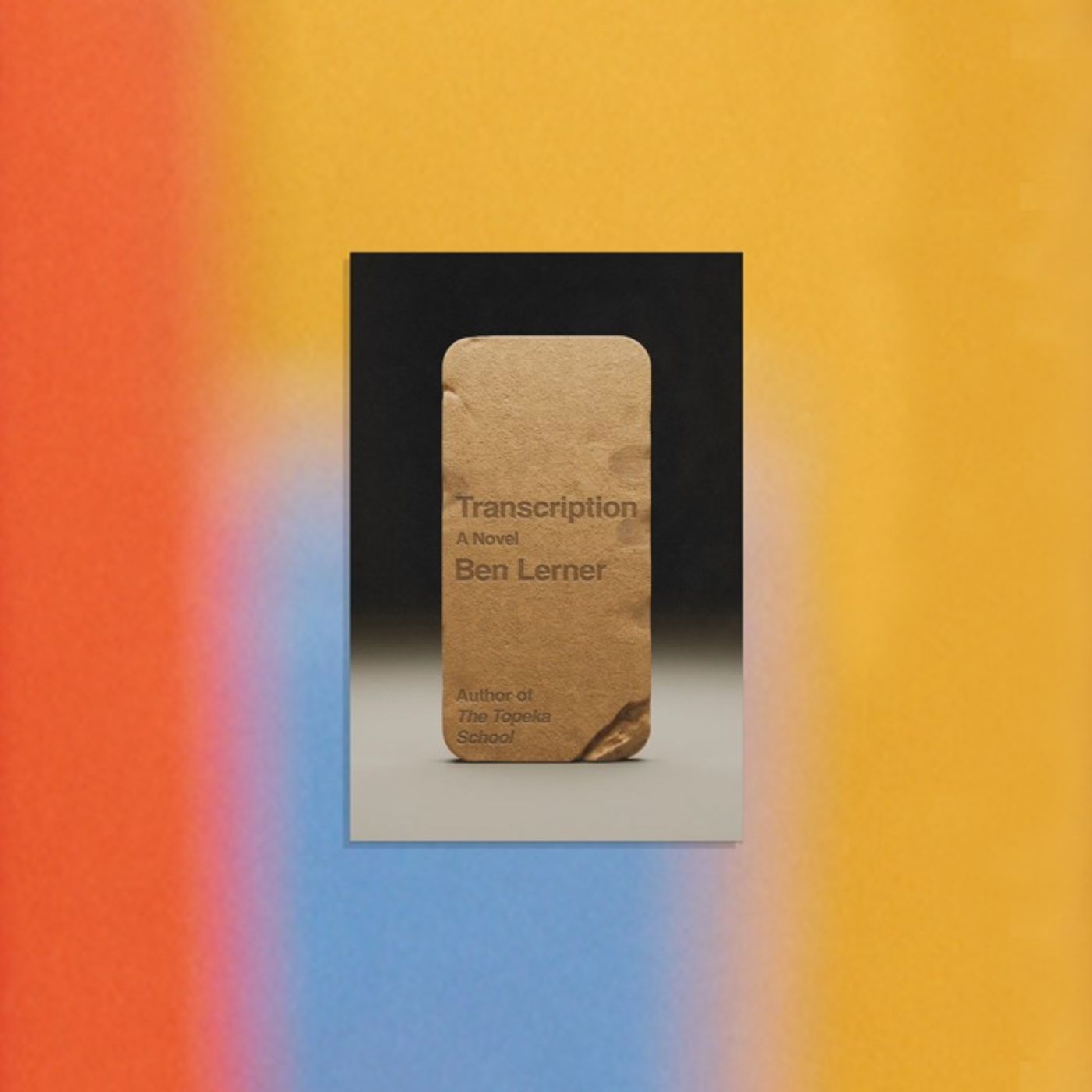
Book Club: Let's Talk About 'Transcription,' by Ben Lerner
About this episode
Ben Lerner’s slender new novel, “Transcription,” is just 130 pages long, yet it cracks open some of our most colossal and enduring philosophical questions.
The novel is told in three parts. We open with an unnamed narrator going to interview his mentor, Thomas — an acclaimed artist in his 90s who also happens to be the father of one of the narrator’s friends, Max — for a magazine. Before the interview, however, the narrator’s phone breaks and he has no way to record their conversation. Rather than reschedule, he proceeds with the interview and only pretends to record Thomas as they talk.
The second section flashes to the future. Thomas has died, and the article that our narrator wrote has become enshrined as the final interview with the iconic artist. At a symposium in Madrid, the narrator confesses that his interview was reconstructed rather than transcribed — a revelation that dismays the other guests and infuriates Max. Then we flash again. In the final section, the narrator talks to Max, who discusses his own complicated relationship with Thomas and technology, including how the internet and other digital tools impacted his family during several crises.
Through these scenes, “Transcription” asks a series of questions: How does technology mediate our lives? How does it bring us together or pull us apart? Is there a difference between what’s real and what’s true? It also becomes a potent and poignant study of fatherhood and what it means.
On this episode, MJ Franklin discusses “Transcription” with fellow Book Review editors Gregory Cowles and Alexandra Jacobs.
Other books mentioned in this episode:
- “Leaving the Atocha Station,” “10:04” and “The Topeka School,” by Ben Lerner
- “The Dance of Anger,” by Harriet Lerner
- “Reporting,” by Lillian Ross
- “Magic and Loss: The Internet as Art,” by Virginia Heffernan
- “In Love: A Memoir of Love and Loss,” by Amy Bloom
- “No One Is Talking About This,” by Patricia Lockwood
- “The Shallows” by Nicholas Carr
- “Universality,” by Natasha Brown
- “White Noise” and “The Body Artist,” by Don DeLillo
- “A Hunger Artist,” by Franz Kafka
- “A Visit From the Goon Squad,” by Jennifer Egan
- “Asymmetry,” by Lisa Halliday
- “Trust,” by Hernan Diaz
- “The Mezzanine” and “Vox,” by Nicholson Baker
- “Outline,” by Rachel Cusk
- The books of Virginia Woolf
Subscribe today at nytimes.com/podcasts or on Apple Podcasts and Spotify. You can also subscribe via your favorite podcast app here https://www.nytimes.com/activate-access/audio?source=podcatcher. For more podcasts and narrated articles, download The New York Times app at nytimes.com/app.
Hosted by Simplecast, an AdsWizz company. See pcm.adswizz.com for information about our collection and use of personal data for advertising.
Get every episode summarized
Each time The Book Review publishes, we email you a written briefing from the transcript — the topics, who appeared, and any specific claims, with the ad reads skipped.
Email me new episodesFree for 3 shows. No card needed.
Hosts & guests


No transcript yet
This episode has not been transcribed. Request it and it moves to the front of the queue.
More episodes
More from The Book Review

The Best Books of the 21st Century: Taffy Brodesser-Akner on ‘The Corrections’
The Book Review

It’s Time for a Big Ol’ Fall Book Preview
The Book Review

Book Club: Let’s Talk About ‘London Falling’
The Book Review

Why We Can’t Resist a Great Bookstore
The Book Review