Loading...
newsdaily
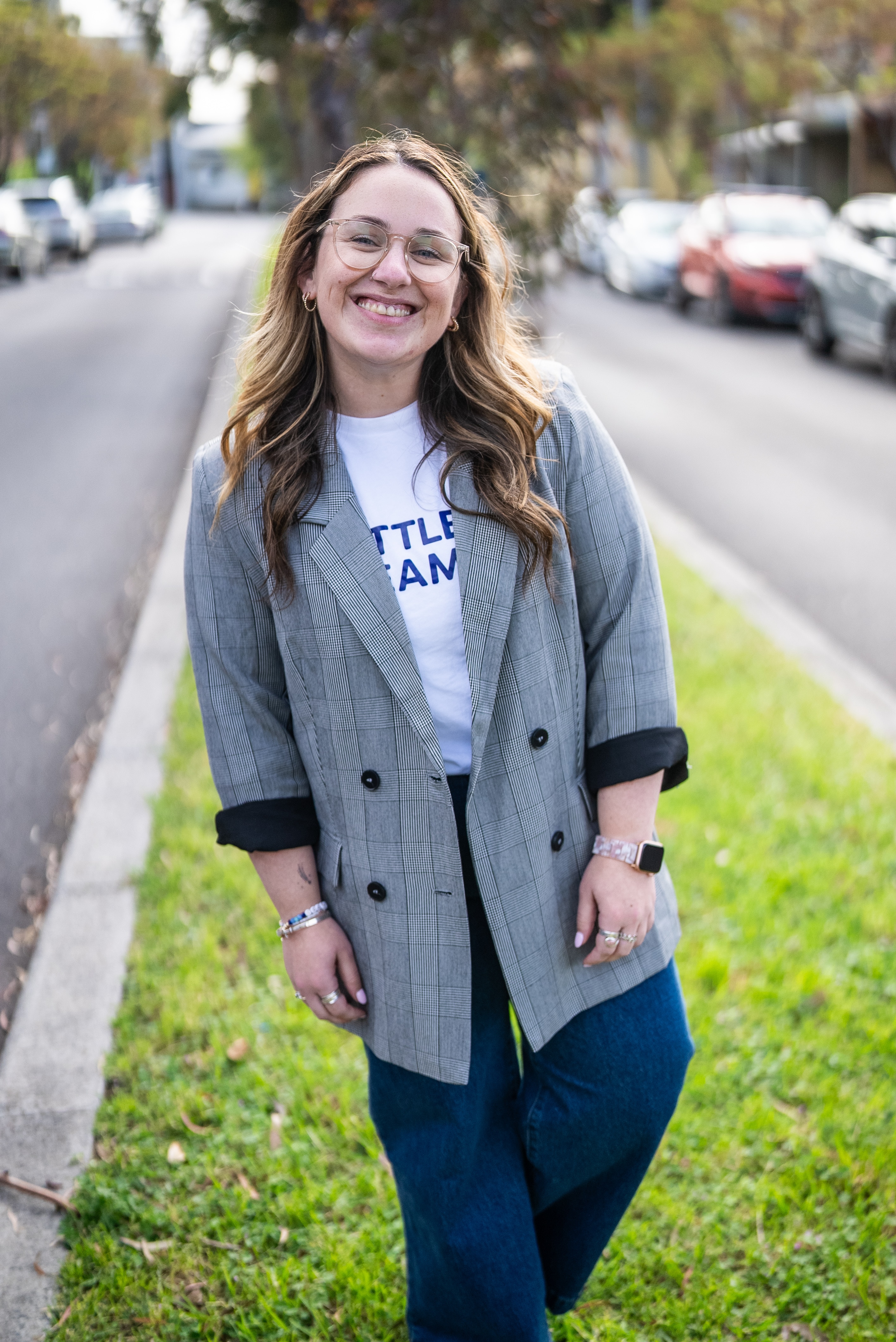
Changing Australia: Madeleine Buchner and caring for the young carers
About this Episode
The word carer might evoke a professional at a home, or an elderly person taking care of a spouse.
But thousands of carers across the country are much younger than you think, even as young as four years old.
Madeleine Buchner was a child when she was thrust into a caring role: first for her baby brother, and later for her mother and grandmother.
By the age of 16, she founded Little Dreamers, an organisation to help support young carers.
Guest: Madeleine Buchner, founder and CEO of Little Dreamers
Hosts & Guests
Transcript
What's time now for changing Australia?
And the word carer might evoke a professional at home
or an elderly person taking care of a spouse.
But thousands of carers across the country
are much, much younger than you think.
Some, as even as young as four years old.
Madeleine Buckner was a child
when she was first thrust into a caring role,
first for her baby brother and later
for her mum and grandmother.
By the age of 16, Madeleine was still in high school.
She founded an organization called Little Dreamers,
a group to support young carers.
And I'm very pleased to say that Madeleine Buckner
is my guest this morning on Changing Australia.
And Madeleine, welcome to you.
Thank you so much, Sally.
I'm so excited to be here.
We're delighted to have you.
Madeleine, you were only nine
when you had to start thinking about some of the support
that carers might need.
What was happening for you when you were nine?
When I was nine,
I had been already providing care for my little brother
for a very long time.
My brother is two and a half years younger than me.
And he grew up in and out of hospital a lot.
So I grew up then basically living in hospital wards
and nurses and doctors were my best friends.
And I knew how to make sure that the best TV
was in my brother's room for a little bit longer
than it was meant to.
I, at that point,
realized that kids who are growing up
with a very sick brother or sister
are often quite lonely
and I was definitely feeling that myself.
And so started fundraising for other organizations
to run sibling support programs for them.
And yeah, realized that that was something
that started giving me my own identity
outside of being my brother's big sister,
which was something really nice for me.
I wonder if you can kind of explain to me
some of the complexities of that role at a young age
because at a certain age,
a certain age is kids want all the attention
and focus on themselves.
As they grow older, that changes,
it goes backwards, it goes forwards.
How was it for you when a lot of the focus was on your brother?
You had this caring role.
Did you push back sometimes?
Oh, definitely.
I used to act out quite a bit.
I told really big lies
that I thought were getting me some attention.
I really didn't know how to deal with my own emotions.
So I slammed a lot of doors.
I ran away from home quite often.
It was, there was a lot in it
that I didn't know how to deal with what I was feeling
because my brother was so unwell
and all of the attention rightly so was on him.
And because of that,
I felt like nobody really cared about me.
And I think you're right in saying that at a very young age,
you're meant to be the center of your whole universe.
And it kind of felt like I wasn't
and I didn't really understand what that meant
or why that was the case at the time.
And so my days pouring out my brother's medicine
and monitoring his seizures
and helping pack hospital bags
looked very different to my friends.
And there was no service or support
that helped me to understand why that was the case.
It sounds like it is a complex mix of,
this sense of duty that you had.
There can be times of jealousy for kids
who are in this role not being able to articulate
what this mixture feels like
and seeing your friends having a very, very different
childhood medley.
Yeah, definitely.
I mean, my brother was lucky enough
to get a starlight experience when he was younger.
And we got to go and swim with the dolphins up in WA.
And it should have been the most incredible experience.
And I was just a moody teenager the whole time
because I was so jealous that once again,
all of the attention was all on him.
And there was no one really around me going,
oh, here's something that you need.
Or these emotions you're feeling make sense.
And I love my brother.
And I loved providing care for him
and supporting my parents in doing that.
But there was definitely moments
where I was super jealous of him.
And definitely times when I was in primary school
where I used to pretend that I was sick
because that's how I thought you got attention.
The school nurse and me were very close.
That's really interesting.
I was going to ask you about that
whether sometimes you wished that that was you
who was getting all the attention.
And sort of from what you're saying,
it sounds like as a kid, it was like,
well, that's the way it happens.
That's the way you could get that attention.
100%.
And I think that's why when I started
what was originally the Kennet Kids Club
and his now little dreamers,
I realized that there was a healthy outlet for me
to figure out who I was outside of the caring role
that I was providing at home.
And where I was able to figure out
what my identity looks like.
But so many kids and young people
who are growing up providing care,
especially from a really young age,
don't have the opportunity to figure out
what they want and who they are outside of that.
And it's really tricky when we don't
have the opportunities for that.
And as a kid yourself, you're a moving target.
Have you spoken with others who've cared at a young age?
Does it sometimes put things like adolescence on hold
and does that burst out later?
What does it do for the timeline
and the development of the kid who's doing the caring?
Often we see young people who are
care is growing up much faster than they should have to.
So they're taking on significant adult responsibilities
like managing household finances or medication
or communicating with doctors
or advocating in health services at a very, very young age.
And often what that means is that they might not have
as great social connections.
They might really struggle with making friends.
They might struggle with engagement and education
and with attending school.
50% of young carers don't attend school regularly
and miss school every week.
So there's a whole bunch of different long-term effects
that happen when you take on a caring role from a young age.
And we know what those impacts are
when you take on a caring role as an adult.
We know that you might lose your job
or not be able to hold a job
and there are changes to your superannuation balance.
But when you take on that caring role
from a much younger age,
your long-term trajectory is so much greater
and the potential for really challenging outcomes
of being a career have so much longer to happen, I guess.
What do the figures tell us
when we're talking about reduced attendants at school
for many young carers?
What does it mean a bit later on for employment
for young people who are in this caring role
and maybe can't get out and pursue some of that?
Yeah, so only 4% of primary young carers,
so if they're the main care in their family,
only 4% finish high school in Australia.
When? 4%?
4% the number is so low.
And we also know that 50% of young carers in their families
live below the poverty line here in Australia.
We know that when you get older,
there are significant gaps of $50 to $100,000
in your superannuation balance.
We know that two out of three young carers
have a mental illness of their own.
There's much higher rates of unemployment
and all of those things kind of lead on to one another, I guess.
When can young people start accessing things
like carers allowance?
Oh, good question.
It's technically from any age,
but most of the time,
they don't get it until they're over 18.
And it's really hard to prove
that you need a carer's payment or a centric payment
or carer's allowance when you're under 18.
The carer's payment in particular,
you need to be working or studying
or volunteering less than 100 hours per month.
So the carer's payment is higher than the carer's allowance,
and it means that if you're enrolled
in full-time school,
you're not actually eligible for the carer's payment.
And the carer's allowance is significantly less,
but equally very hard for young people to get access to.
You're listening to Changing Australia
on Radio National Breakfast.
I guess this morning is Madeleine Buckner,
who's looking and working to try to provide more support
for young carers.
As I mentioned in the introduction, Madeleine,
some of the carers are as young as four years of age.
Can you give a sense of what that looks like
when a kid is four,
and they already have some of these caring roles?
We work with a number of four-year-olds
who are providing care for a parent
who has a mental illness,
and their caring role might include
making sure that their parent has water
that they're getting out of bed every day,
that they're doing things around the house.
We also have four-year-olds
who are supporting a sibling
who might have an intellectual disability,
and their caring role might be helping with
patterning or helping with physiotexercises at home,
because that's what they see their parents doing.
We also have four-year-olds
who are providing emotional support in their home,
which is at a level that you wouldn't really expect
a four-year-old to be conscious of, I guess.
The fact that kids so young are having to take on
some of these caring roles
is this part of family life and life,
or does this indicate a failing in supports
that could or should take on these kinds of roles
and responsibilities?
I think no matter what support we have in the community,
there are always going to be young people
taking on caring roles in their home.
I don't think we're ever going to get to a point
where that's not something that happens.
However, I do think the level of care
that young people are providing,
I think that the amount of young people there are
and I think the lack of systemic support
for our young people is a failing,
but we also know that a certain level of care
in the home is very natural and very normal.
And so it's called the continuum of care
and it splits out hours per week
that a young person provides
and what's considered normal in a family life
and what is considered excessive or additional.
And so there is a spectrum
and you can measure young people against that.
You received a Churchill fellowship
and you traveled to the UK as part of that.
You had a look at what was happening
with Manchester City Council,
what were they doing and how effective was it?
There's a really interesting model in the UK
where most local councils have young care programs
and are required to have a young care support service.
Manchester City Council at the time when they launched
was their young care service was very controversial
but what they did was instead of running
their own young care service,
they trained everyone within their local community
to identify and support young careers in their own way.
So teachers, healthcare workers, hospitals,
social workers, community services,
it's this idea of mainstreaming young care support.
So how do we make sure that young careers
are not required to self-identify
and are not required to go to a specialist service
to get support but can actually get support
irrespective of what system they engage with
and the results of that have been phenomenal.
They've been much greater than anyone expected.
The rates of identification of young careers in schools
is very high compared to other areas in the UK.
The rates of young care health service usage is lower.
There are better mental healthcare outcomes,
there are school completion rates
and it's really interesting.
This concept of mainstreaming is one
that I'm really passionate about
getting happening in Australia
but getting other sectors and other areas
to care about young careers is much harder
than I ever expected.
Mm.
Well Madeline, it's so important to talk about this issue
because it often kind of goes unseen
but it's a huge role that young people
are playing in their families and communities.
Thank you very much for talking to me
this morning on Changing Australia.
Thank you so much for having me
and for talking about young careers
on this platform, it's really important.
It's Madeline, their founder of NCEO
of an organisation called Little Dreamers
and as you were hearing earlier,
Madeline's had her own experience as a young career
for a number of her family members
and now set up this organisation
and undertaken a church or fellowship
to look at what's happening in the UK.
More from Radio National Breakfast
View all episodes →
Corio refinery fire threatens already stretched national fuel supply
Radio National Breakfast
Apr 16, 2026·8:39·failed
Richard Marles says Australia hasn't received 'specific' request for assistance...
Radio National Breakfast
Apr 16, 2026·8:47·failed
Paterson calls for clarity on assistance requests from US
Radio National Breakfast