Could a $20 billion dollar insurance scheme get more Hormuz ships moving?
About this episode
A $20 billion push is now on to get tankers moving through the Strait of Hormuz. Meanwhile, Middle East tourism suffers as flights are cancelled, and skies remain closed. And how tens of thousands of people are kidnapped for ransom each year.
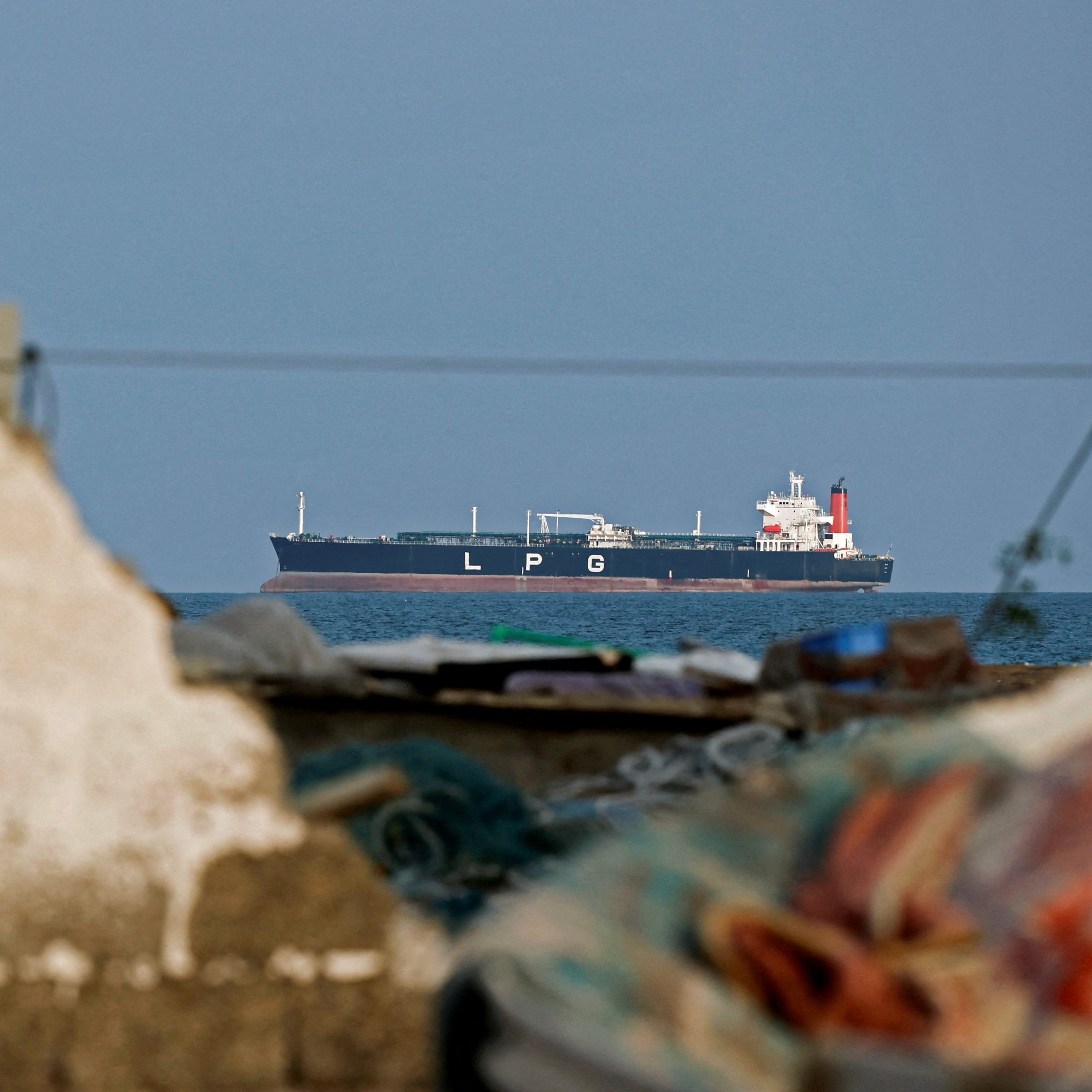
(Picture: An LPG gas tanker at anchor in the Strait of Hormuz, amid the U.S.-Israeli conflict with Iran, in Shinas, Oman, March 11, 2026. Credit: REUTERS/Benoit Tessier)
Get every episode summarized
Each time World Business Report publishes, we email you a written briefing from the transcript — the topics, who appeared, and any specific claims, with the ad reads skipped.
Email me new episodesFree for 3 shows. No card needed.
Hosts & guests

Transcript ready
580 searchable segments. Every word is indexed and playable.
Full transcript
World Business Report — Could a $20 billion dollar insurance scheme get more Hormuz ships moving?. Machine-transcribed; use the interactive transcript above to jump the player to any line.
This BBC podcast is supported by ads outside the UK. The best B2B marketing gets wasted on the wrong people, so when you want to reach the right professionals, use LinkedIn ads. LinkedIn has grown to a network of over one billion professionals, including 130 million decision makers, and that's where it stands apart from other ad buys. You can target your buyers by job title, industry, company, role, seniority, skills, company revenue, so you can stop wasting budget on the wrong audience. It's why LinkedIn ads generate the highest B2B return on ad spend of major ad networks. Spend $250 on your first campaign on LinkedIn ads and get $250 credit for the next one. Just go to LinkedIn.com slash broadcast. That's LinkedIn.com slash broadcast. Terms and conditions apply. Today's episode is sponsored by Smart Travel, a podcast from Nerdwallet. Do you have a friend who treats airfare like a puzzle and somehow always ends up with a first class upgrade? Smart Travel is like that friend. Minus the group texts.
Nerdwallet's travel journalist break down the pros and cons of travel decisions, like when lounge access is worth paying for, and which hotel loyalty programs actually pay off. Make your travel dollars work harder. Follow Smart Travel on your favorite podcast app. A $20 billion insurance shield to jump start the Strait of All News. Even if through what Trump is proposing, they are able to sort of relieve some of the financial pressure. It doesn't relieve the safety risk. It's World Business Report from the BBC World Service. I'm Vashada Sri Pathma. On the way, the billion dollar scheme aimed at restarting shipping routes, we'll ask if it's enough to get crews back to work. Plus, the murky world of kidnap and ransoms and the people living through it. After that major IEA announcement earlier,
releasing a record amount of oil to steady global supplies, there's another big development tonight aimed at getting energy moving again. Now, insurance giant Chubb has joined forces with the US International Development Finance Corporation on a $20 billion reinsurance scheme to coast commercial ships back through the Strait of All News. It offers war-risk cover for Hulls, Machinery and Cargo, with the DFC acting as the financial backstop and other US insurers also playing a role. Now, it's all designed to restart the tankers that have been avoiding the Strait since the conflict with Iran shutdown traffic. And as ever, the real test is whether crews feel safe enough to sail. The DFC is working with the US Central Command on that. But it's a second major push on Wednesday to get global energy flows moving again. Well, earlier I caught up with the BBC's North America Business Correspondent Michelle Flarey. If you go back to last week President Trump early on said that he wanted to try and ensure that the Strait of Humus
would keep moving through that commercial shipping could move through. But what's happened is that obviously with the conflict going on, boats don't think it's safe. And so they're not going through. And in fact, that view was obviously confirmed with three attacks on boats. And so what Donald Trump has suggested is that the US could provide some sort of re-insurance, essentially a backstop for insurance to try and help overcome some of the issues that has arisen because of the war with Iran. One of the things we've seen is that insurance costs have gone through the roof. So in normal times, if you are an oil tanker going through the Strait of Humus, you would have something like ship insurance, cargo insurance, crew insurance, maybe even third party insurance for things like if there was an environmental disaster. But the problem is, in the event of a conflict or a war, you get all of these contracts typically sort of thrown out and you get repricing going on.
If you can't sort of reroute, then you get repricing. And that's what has happened. And it has made policies so expensive that many ships can't afford the more unwilling to pay that price. And that is where Donald Trump is hoping to step in teaming up with the insurance, giant shove and this government agency, the US International Development Finance Corporation. And is this in practice easy to implement? Well, it's incredibly complicated in part because as I mentioned, there are typically multiple policies that shipping companies have in place. And what is being talked about here is only one. And that is essentially to cover the ship. There is talk about whether or not they might expand that or widen the coverage, but at this point, it is only that. The other thing to point out is that in times of conflict, you have special sort of war policies. And those cover not just sort of a blanket period of time,
but each specific journey. And those are available through loads of London, but they are just a lot more expensive. And so even if through what Trump is proposing, they are able to sort of relieve some of the financial pressure. It doesn't relieve the safety risk. There were, as we know on Wednesday, three attacks on tankers. And there is that personal danger. And so captains and crews may say, great, you've got insurance, but we don't feel comfortable accruing and captioning these ships. Seymour Shell flurry there are North America business correspondent. Our market's guest is Susan Schmidt from Capital Resources and Chicago High Season. Hello. So it's interesting today. We've had lots of developments. Do you think this tie-up is enough to move the dial to get tankers moving again, do you think? Well, investors don't seem to think it is based on the reaction and the price of oil.
And so there are a lot of concerns on putting your equipment into the straight of our news, how that would work. And the details around the insurance and the DCF plan that backstop for child insurance going to these ships still haven't been made exceptionally clear. Investors are skeptical. As a result, we still see in the price of oil remain elevated. People are concerned that that supply may not come back online and those ships may not be moving through very soon. Say something that might perhaps have more of an impact is that announcement by the International Energy Agency. Say 32 members of the IAA, including the US and the UK and lots of other rich countries, agreeing to release 400 million barrels. That's quite significant. But you're saying that oil markets didn't respond in the way that perhaps you'd expect. So another thing today that was announced that is very significant. So 400 million, that's the largest release they've ever declared. And that is meant to be a huge release from the market.
We think 20 million barrels of oil go through. The straight of removes every day. That's 20 days worth of supply. But we saw the price of oil ease slightly on the announcement. And then again, go back to levels that are still well elevated over where they were pre-aron conflict. We're not seeing the market believe that this is going to be enough to take care of the crisis. And there's still a lot of skepticism as to when this massive supply chain shift can come back so that these tankers and the streets of Hormuz and general global circulation of oil supply can get back in line and be able to deliver what's needed. Say the drawdown of the oil stockpiles is one way governments can try and reassert some control over energy prices. But what are the levers can those in powerful? It's a question I put to Krista Freeland, the former deputy prime minister and finance minister of Canada. Not just the volatility of oil prices, but the fact that they have jumped so much
is a concern for governments. You have people now starting to talk very seriously about the danger of stagflation. And so this action, which is a really, really big move, is an effort to try to give the market some predictability and try to keep the price from getting too high. Right, so energy prices feed into inflation and the cost of living. In fact, actually, of energy prices go up so do most things. What exactly can governments and interventions like these make a difference in, really, for households sort of facing potentially higher fuel and food bills? Well, look, releasing oil from the strategic reserves is a very strong action. It is something that can bring the prices down and can bring the price of energy, specifically the price of gas. It can bring that down. That is a powerful and important tool. One of the challenges, though, with a high energy price
is the fear that we get of stagflation so that you'll have an economy slowing down even as inflation is high. And that is one of the most challenging macro environments for policy makers to deal with. If you're dealing just with a straight recession, as we did at the beginning of the COVID pandemic, then central banks have a very powerful tool. They can lower interest rates, and that gives people relief. It helps the economy to keep going. But if you have an economic slowdown, which is something that high energy prices can create, but at the same time, consumers being hit by high energy prices, which causes inflation, that tool is not so available to central banks. We've heard from the UK Finance Minister that the energy price caper mechanism used to sort of cap bills here in the UK will remain at its current levels despite energy prices rising.
Do you think we'll see similar acts by other governments? I think governments are going to be working very, very hard to try to shield their people, to try to shield their consumers. The challenge there, though, is, and this is really a consequence of this being a third big shock in less than 20 years, is the fiscal capacity of a lot of governments is really, really limited. And in contrast, for example, with COVID, which was a time of very low interest rates, we have governments that have limited fiscal capacity, and we have a high interest rate environment, potentially one, which will go higher if inflation rises. So that makes it hard for governments to be spending the money that they will want to spend, may need to spend to shield consumers. That was Christa Freeland, the former Deputy Prime Minister and Finance Minister of Canada.
Well, the travel industry has had to hold its breath with the Middle East being a major transport hub for airlines. Now, the war is costing the region's travel and tourism sector, at least $600 million a day, according to the World Travel and Tourism Council. The WTTC says the losses are driven by a sharp drop in international visitor spending as widespread air travel disruption continues. Well, earlier, I spoke to its CEO, Gloria Goera. The Middle East was one of the fastest growing regions in terms of international spending in the world. Although the region represents 5% of the global international rivals, they handle 14% of the global international transit and traffic. And the fact that we don't have passengers traveling to the region or its minimum now, of course, does a significant impact. It's an example. Dubai, for instance, Dubai Airport has been growing significant. They have done a wonderful job.
It's the largest airport in the world in terms of international travelers. They manage around 261,000 passengers daily. So just imagine that those passengers are not connecting. They're not going through that very important global hub. And of course, there's a big disruption, similar because of Doha, Abu Dhabi, Bakrane, and the other. So that's a significant impact. And in our forecast, we were estimating the international visitors spend to have an additional growth this year, which we were thinking that it was going to be a little bit over 207 billion dollars. And that's why our numbers say that is 600 million daily. As you said there, it's a big transport hub in the Middle East. Lots of flights fly through the Middle East to connect to Asia or Europe. And we've seen airlines like British Airways, like Etihad, like Emirates, having to reschedule flights, having to cancel flights. And effectively rearrange their schedule for the next couple of weeks.
What impact is this having in terms of day to day business? Clearly, that's a cost. They're going to have to refund passengers, for example. But what does this mean for business models in tourism, whether it be hotels, whether it be package holidays or airlines? We see an impact in everything. From the passengers not connecting, so we're not connecting the global south as an example, or the east to the west, is being impacted due to these global hops being impacted, of course. And then on top of that is the travelers, the travelers to the Middle East as well. These are hotel rooms, are not being occupied. These are restaurants that they don't have the same amount of guests. And visitors, these are, of course, SMEs that are being impacted in the region. But not only in the Middle East, because, as I say, the impact is significant. I heard of people wanting to travel, for instance, from Australia to Europe. And they are struggling to find connectivity, or from India as an example, also coming to Europe.
They are having a challenge to connect. So the impact is not in the Middle East. The 600 million that we mentioned is daily in the Middle East. But then, of course, there's a domino effect in the impact in other parts of the world. With tourist data, books to come on holiday in the next few weeks, are you finding that they're canceling or are they waiting to see what happens? We are seeing interesting results. For instance, third-key, our members in third-key, the hotels, the tour freighters, they're telling us that they have seen an increase in bookings, as an example. We are seeing also some shifts to some other destinations. But also we're seeing, in the case of the Middle East, some people are waiting, waiting to see when this is going to end, because, according to the news, and what we heard from the Trump administration is that, hopefully, this is not going to last too long. So a lot of people are waiting, like, for instance, for bookings in May, in summer, and even in history, and people are waiting to see what's going to happen.
We have not seen a lot of cancellations for, like, next month or the next several months. Of course, for this month, yes. Everything is being canceled or rerouted. But I guess the pencil for those travelers coming from. And just one last question. In your view, from speaking to people in your industry or to businesses, to individuals, are they betting on this war ending by the Easter holidays? Well, nobody knows. We are hoping that this will end before the Easter holidays, right? That's what we're hoping, because that's what we keep hearing from the news. Now, I have to say, the crisis has been managed quite well by the sector. So because of that, we believe we're going to be recovering really fast. Traveling tourism is the most resilient sector. People will always travel. Gloria Guevara there on the impact the war is having on the tourism sector. Well, of course, rising oil prices tend to lead to higher inflation.
But in the US, consumers are also dealing with higher cost of imports, partly as a result of tariffs introduced by President Trump. Let's hear now from some American shoppers in Gainesville, in Florida. I'm a single mom of two boys. My grocery bill is ridiculously higher than it was. I don't necessarily like track it, but I'm not happy. I'm absolutely not happy. I haven't seen any prices falling except gas a little bit, but that happened seasonally, traditionally. But the Democrats caused this massive inflation and the massive gas prices, which I feel led to massive inflation. We have seen the prices go up. Instead of eating out as much, we cook more at home. My husband has a successful candy man business, so we had means to be able to eat, which I know a lot of other people don't. Okay, so some shoppers there in Florida. We had some US inflation figures out a bit earlier on, with annual consumer inflation unchanged at 2.4%.
Our markets' gas season smith is still with us. A season inflation figures at the moment's holding steady, but presumably predictions are going to edge a little bit upwards. Well, yes, data that was released today relates to February. It does look as if inflation is holding steady, which is a positive. Unfortunately, that data is no longer relevant. So investors are looking past this, really just washing their hands of today's report, despite it's being positive, because now we don't know what will happen with the price of oil. That's a big portion of inflation, and your consumer price index, the data reported today, that's what could cause a problem. As we see that spike, then also we can see price spikes overall. Sure, season, and of course it'll be interesting what this means for the Federal Reserve when it's down to making that to all-important decision about interest rates. You're with Well Business Report from the BBC World Service.
The best B2B marketing gets wasted on the wrong people, so when you want to reach the right professionals, use LinkedIn ads. LinkedIn has grown to a network of over 1 billion professionals, including 130 million decision makers, and that's where it stands apart from other ad buys. You can target your buyers by job title, industry, company, role, seniority, skills, company revenue, so you can stop wasting budget on the wrong audience. It's why LinkedIn ads generates the highest B2B return on ad spend of major ad networks. Spend $250 on your first campaign on LinkedIn ads and get $250 credit for the next one. Just go to LinkedIn.com slash broadcast. That's LinkedIn.com slash broadcast. Terms and conditions apply. Go to truenaturemeats.com, code freemeat for 20% off
plus free New York strip, Texas smoked brisket, and Mediterranean chicken with code freemeat at truenaturemeats.com. Now the sound there of the draping of the presidential sash from the ceremony in the National Congress. Well, the right-wing leader, now running chili, is expected to do a deal with the US over critical minerals in the coming days at the risk of sound relations with its biggest customer, China. The Professor Patricio Navier is Professor of Economics at MI University. He explained to me why the new president was able to clinch a tightly contested election. Democracy was restored in Chile in 1990. The US has been Chile's most strategic
and praise and political partner. Yet, for the past 15 years, China has been Chile's most important trade partner. This point, Chile sells more minerals, mostly copper, to China than to the United States. So that's once to strengthen relations with the United States, but he's going to have to be very careful to do that without alienating China precisely because China is Chile's most important trade partner at this point. How do people feel about their new presidents in Chile? Well, Chileans voted for Cass mostly because they were not very happy with the direction of the country. They thought the country was on the wrong track and thus they voted for an opposition candidate. Cass didn't really do that well in the first round vote. He won in the runoff because the alternative was a member of the Communist Party. So most Chileans see Cass as the lesser of two evils. Cass will have to deliver on some of his promises
and show that he can be the president for all Chileans in order for Chileans to start believing in him. But he mostly won because the alternative was perceived as a worse option by most Chileans. And so what are they hoping that he will achieve if he was the sort of better of two options? So President Cass agenda is very straightforward. It's not simple to implement, but it's a straightforward agenda. He's going to have to deal with rising levels of crime and the perception of insecurity with his Chile's most important concern at this point. He will also need to deal with undocumented immigration which has increased drastically. Now 10% of Chile's population is comprised of immigrants 20 years ago, it was only 1%. So immigration is a big problem in Chile. And third, he's going to have to jump start the economy. The economy hasn't been growing much for the past few years. And most Chileans associate economic growth
with employment creation and the expansion of opportunities. So tall order there. Do you think he'll be able to achieve those things because that sounds like an ambitious list? Yes, it's an ambitious list. Part of this will not depend on him. Cass is going to have to see what happens in world markets. Chile is very integrated into world markets. If the economy of the world is doing well, then Chile will sell more copper, more wine, more lithium, some of the things that Chile sells. So growth of Chile will depend to a large extent on what happens in the world. But Cass is also going to have to work eliminating some red tape in order for the domestic economy to grow much stronger. In terms of immigration and crime, the challenge is a bit more difficult because getting rid of immigrants is not an easy thing to do. It's difficult. So he's going to have to find some type of a compromise to legalize some of the undocumented immigrants
who now live in Chile and to foster the self deportation of others, something that seems unlikely. And in terms of crime, well, changes transcending the police and doing much more to prevent crime is going to produce results, not only in the long run, not in the short run. That was Professor Patricio Navier, Professor of Economics at New York University. Now, we're going to end the program at looking at the business of Ransom. Now, the UN estimates that tens of thousands of people every year are being kidnapped for Ransom, precise data is hard to come by because it's massively under-reported, especially in West Africa, where in some regions it's become a major criminal industry. Ed Butler has been looking into this and hearing from one of the region's victims. The sound there of African villages being beaten. This was a video taken last year by a criminal gang in Northern Nigeria
in order to persuade relatives or lawmakers to part with their cash. This taught my wife, if you don't want us to kill your husband, bring him money, they used to beat us, when they want to negotiate with our people. For them, you need money. Or else, they will kill you. Those are the words of one kidnap victim, Harayoya, who was taken with his daughter last year. Ransom was paid. Mariam was also taken in a separate incident when gunmen stopped the train that she was traveling on. More than scared, more than scared, because we were thinking it's a hand of time for us. Maybe probably we'll not see our families again. Some 20,000 Nigerians are estimated to have been kidnapped in this way over the last six years. It's a growing criminal crisis, fueled by Islamist violence in the North. Now, though most experts say it's become a free-for-all amongst all kinds of criminal gangs, making Nigeria a global hotspot.
It kind of has spread first to the border with Benin, spreading also into Ghana, so we have seen a spread, basically. That's Flora Belger, a researcher at the global initiative against transnational organized crime. Basically, the original, let's say, Nigerian bandits who started doing that, they have started recruiting younger member of their community when other countries, which basically facilitates the kidnapping. In the case of Northern Ghana, a lot of the concern, I suppose, around Northern Ghana is to do with what's going on in Bikina Faso to the North right now with an Islamist uprising with Jainim, a well-known al-Qaeda affiliate. Is there any sense that this kidnapping spree is associated with the rise of Islamist violence? Today, there is no evidence proving that the two phenomenon are linked, but we know from our other work that when Jainim infiltrates a new community,
a new territory, one of the first thing they do is kidnap local leaders that can influence their community or people who have specific intelligence information. So the kidnapping is a key part of this expansion strategy. This is a livestock market in eastern Ghana. And this is Ibrahim. He's a livestock herder, who often trades here. Last year, his life was turned upside down when kidnappers came knocking on his door. Well, you are like, don't tell me, can you? The day that they came to him, they came around 12 midnight. He's sleeping and they wake him up and then they tire their hands at the back. And he's so, so afraid. He's so, so afraid on that day. The kidnappers revealed their demands. 200,000 Ghanaian CDs or about $20,000. Ibrahim said he could only afford a fraction of that.
When I jumped in, he's not a wealthy man. And then he told them that he can't afford that man. And then they asked him, how much will you give us? And they told them that he will give them 5,000 CDs. They said, no, they told him that he's to give them 15,000 Ghana CDs. If he didn't afford that money, they should kill him. That report was from Ed Butler. And you can hear more by searching for Business Daily wherever you get your BBC podcasts. Well, it's almost the end of World Business Report. If you want to read more on the Iran War, you can head to our live page where we have all the latest updates from our reporters around the world. The latest post reports on the Amman civil defence and ambulance authority responding to Pfizer several few storage tankers in the port of Salah. That's it for World Business Report. Thanks for listening.
More episodes
More from World Business Report

Global shipping threatened by Houthi military advances
World Business Report
"It's like somebody turned the faucet off" - gas prices keep inflation high
World Business Report

China’s President to travel to the BRICS summit in India
World Business Report
ECB hikes rates to 2.5%
World Business Report