Loading...
About this Episode
It's a war between Israel, the US and Iran...but how did Lebanon get dragged into it?
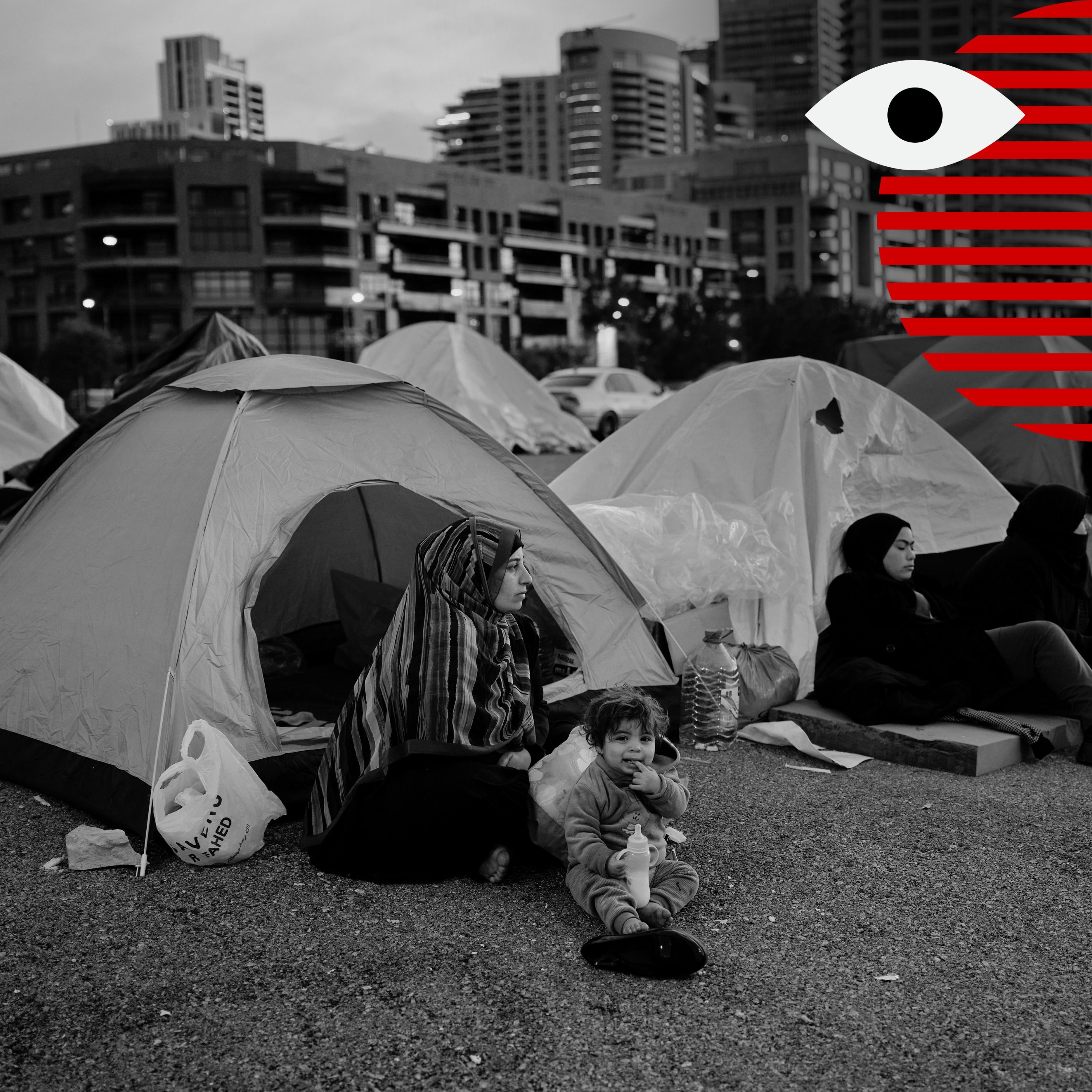
Its militia group, Hezbollah, is a loyal proxy of the Iranian regime, placing tens of millions of Lebanese citizens at risk in the name of loyalty to its top financier and ally. More than 1000 people have been killed, and more than a million have been displaced.
Earlier this week Israel's Defence Minister said his country plans on annexing a large portion of southern Lebanon for security purposes, a move Canada denounced.
Host Maria Kestane speaks to Aurel Braun, a political science and international relations professor at the University of Toronto to discuss the Lebanese government's complex relationship with Hezbollah, how Canada and other NATO countries could help the government dismantle the militia, and what comes next for its civilians.
We love feedback at The Big Story, as well as suggestions for future episodes. You can find us:
Through email at [email protected]
Or @thebigstory.bsky.social on Bluesky
Transcript
President Barack Obama. Virginia, we are counting on you. Republicans want to steal enough seats in
Congress to raid the next election and wield unchecked power for two more years. But you can stop
them by voting yes by April 21st. Help put our elections back on a level playing field and let
voters decide not politicians. Vote yes by April 21st. Paid for by Virginians for fair elections.
Frequency podcast network stories that matter podcast that resonate.
Iran, Israel and the US are now well into week four of their conflict with a constantly moving
and ambiguous finish line and no shortage of social media posts touting about wins or potential
next moves. But in the crossfire of this geopolitical power struggle remains the civilians of Lebanon
who more than a million of have been displaced across their country or broader region and more than
a thousand have been killed since the beginning of the conflict. So where does its government go
from here? Now that Israel claims it has its eye on a southern portion of its country and how will
the Lebanese armed forces stand a chance at protecting its sovereignty as Hezbollah leads its
military presence without much support from its government or the people for that matter.
I'm Maria Kastain and today on the big story I'm speaking to Oral Brown, a professor of
international relations and political science at the University of Toronto to break down Lebanon's
challenge of stabilizing national security amid Hezbollah's strength and dependence on Iran
and where Canada and other NATO countries could insert themselves to protect international order.
Professor Brown, thank you so much for joining me today. Thank you.
For those who have a better understanding of the geopolitical situation across the Middle East,
they know that Hezbollah is a militia group in Lebanon and they're a proxy to Iran. But for those
who maybe don't have the most comprehensive understanding of the ties between those groups,
including myself, I understand the surface level, but can you lay out for us why Lebanon is
involved in this war between Iran and the US and Israel? It is a similar question and in fact,
this is what the Lebanese people are asking, why are they involved? Because they made it very clear,
this is not their fight. This is Iran using a proxy, using Hezbollah, a heavily armed group that
has tried to take over the Lebanese state. And for us to better understand this war and it's
tragic when you see the images of the dislocation of people who are killed, it is horrific.
And so it is so important that we understand the context for this or what are the causal factors
because unless we get that big picture and we have that better understanding, then it is so
easy to disregard what those reasons are and it's so much more difficult to find a solution.
And I think the best way perhaps to describe what is happening is not to say what we as Western
analysts say about this, but why don't we allow the Lebanese leaders themselves to speak about this
and they have very recently and the Lebanese president who is a Christian and the Lebanese prime
minister who is a Muslim have both spoken out in a way in which they made it very clear that Hezbollah,
this heavily armed military group that has received perhaps as much as $700 million from Iran,
has not been acting in the interests of the Lebanese people. And perhaps this
quoting directly from the president of Lebanon where he said, Hezbollah is an armed faction
that places no value on Lebanon's interests nor on the life of its people. Hezbollah
he added wanted to achieve the fall of the state of Lebanon under aggression and chaos.
He accused the group of working for the sake of the calculations of the Iranian regime.
This is the president of Lebanon where did the prime minister Lebanon say a march second
and there was a decision by the cabinet where 22 out of 24 members including Shia and Muslim
members condemned Hezbollah and they said that the government confirms that the decision
of war in peace is only that of in the hand of the state. Hezbollah and his military activities
are illegal and it should be forced to hand over its weapons to the Lebanese state.
So here are the people of Lebanon speaking to their elected leadership saying that Hezbollah has
become an alien tool of the Iranian regime which is the largest support of terrorism in the world.
It has pushed Lebanon into an unnecessary conflict with Israel and we see that Hezbollah
has fired to date in this war over 3,500 rockets at Israel.
I mean this could be a stupid question but how did Hezbollah get dragged into it?
I mean I guess just generally speaking if they see one of their allies getting attacked
do they automatically just go and fight or does the Iranian regime do they call upon their
proxies like how does Hezbollah just jump into it I guess.
In fact this is also a very useful question because it's difficult to imagine that a
group within Lebanon would so act against the interests of their own compatriots
and it doesn't seem to be driven by logic or by any sense of the essence of patriotism.
Because here you have the elected leadership saying that this is illegal.
It's unnecessary that they're acting on behalf of a foreign entity, not the leaders of the Lebanese
people and the evidence that we're getting is that Hezbollah whatever its origins may have been
whatever it's initial intent to protect people in the southern part of Lebanon
that has largely evaporated and they have become a tool of the Iranian regime and we know
that so many Iranian agents, tiger from the al-Quds force have been found to be Lebanon because
there be reports of the death of various Iranian agents in this conflict what were they doing in
Lebanon and to add to this is the unusual development that the government of Lebanon
has taken the very rare step to expel the Iranian ambassador to Lebanon.
Now that the diplomatic step is taken only the most drastic situations what it means is that Iran
began to control Hezbollah and Hezbollah being dependent on Iran for training, for armaments,
for funding as being the willing executioner in a sense of the plans of the Iranian regime which
as we know not only attacks opponents or designated enemies outside but in January they killed perhaps
as many as 40,000 but their own people went to the streets asking for basic human dignity and freedom.
I'm curious to know what challenges does the Lebanese government have with Hezbollah's agenda
and how that risks national security I mean is there a future where the government dismantles
this militia group? There must be such a future because without that it's hard to envision how
the Lebanese state can survive and function. It is the norm in any country,
Canada, United States, Switzerland, that there are multiple military forces,
there's one that is responsive and responsible to the government. You cannot run a country
in any other way and this is what the Lebanese leadership is saying. This is why they are
dethroning that Hezbollah heading armaments is illegal that they must be disarmed. The problem is
that the Lebanese armed forces have been so badly neglected over a long period of time. Hezbollah
has been allowed to become so powerful that whatever good intentions the Lebanese government may have
they did not seem to have the capacity to act in this armed Hezbollah. If anybody needs proof
of that is the fact that despite the deal that was reached more than a year ago where Hezbollah
was supposed to be disarmed and Hezbollah was supposed to withdraw from any area south of the
Tani River that would be firing over 3,000 rockets. Why are they having this arsenal if they had
been disarmed? Why do they still have the capacity? Why do they have a presence in the south of
Lebanon? It means that the Lebanese government has been unable or for whatever political reasons
unwilling to take the steps that itself has declared to be actually necessary to be
a viable state. In Lebanon it has been a kind of multi-religious state. It was an example for many
years of a successful state where many ethnic groups lived together, thrived together,
were people who were re-orthodox, who were Armenians, who were Sunni and Shia and Christians
were able to get together and they built this magnificent city of Beirut and Hezbollah
basically has so undermined that it has in many ways destroyed the Lebanese state and it remains
at the age of not only for Israel but also for the Lebanese state as well. So if there is to be
peace in the Middle East, in that region it is very difficult to see how this can be accomplished
unless Lebanon becomes a normal state where Hezbollah ceases to be announced,
where Iran no longer controls the fate of Lebanon from a distance.
President Barack Obama. Virginia, we are counting on you. Republicans want to steal enough
seats in Congress to raid the next election and wield unchecked power for two more years but you
can stop them by voting yes by April 21st. Help put our elections back on a level playing field
and let voters decide not politicians. Vote yes by April 21st.
Earlier this week, Israel's Defense Minister said that Israel had its eyes on
seizing a significant portion of southern Lebanon for what he calls security reasons. I mean,
what security reasons you think could warrant or would warrant another country
feeling the need to take over such a significant part of an entirely different country?
Well, first, may I say that we're making an assumption that statements that are made by the
Defense Minister are Israeli policy and that I think is premature because there's no indication
that this is actually Israeli policy that is not more than perhaps what might say a hard-headed
minister getting ahead of himself and making these threats and saying, well, if our cities
in the North cannot have peace and they cannot live in peace, then you can have peace in Lebanon.
And we also have to look at the fact that when we talk about the right to sovereignty,
the right to sovereignty also carries obligations of sovereignty.
So if I may explain, we can go back in international law to the Caroline case which talks about
things such as the right of self-defense and in what circumstances can you have that.
One can, well imagine, let's say, a scenario in Canada where extremists in the United States
extreme right-wing forces that decide a Canada is an artificial state that it doesn't have the
right to exist, that it should be corporate in the United States and should be taken over by force.
And if these groups became heavily armed, you took over the border states,
Michigan and the New York and so on and they set up rockets and were firing thousands upon
thousands of rockets and citizens in Toronto, in Vancouver, in Windsor, were in shelters.
What exactly would the Canadian government do?
In other words, Lebanon also has an obligation as well as the right to sovereignty.
They have an obligation not to allow their territory to be used to attack another state because
if that happens, then the other state would have the right in terms of anticipatory self-defense
to protect itself as if it was the sovereign even though it isn't.
Now, if you are talking about actual annexation, then there will be also some problems with that.
But there is no indication that that is going to the policy of the Israeli government.
Is there anything that Canada or other NATO countries could do for that matter to pressure
Israel to not go through with it? I know you said that the words that the Israeli Defense
Minister posted, they are not concrete policy actions and we don't know if they will manifest
to be that way. But Canada, along with four other countries, have called for Israel to respect
Lebanon's sovereignty. Is there anything Canada could do in the situation to apply pressure
for Israel to not go through with the potential annexation?
It is perfectly fine for Canada and the other states to say to Israel,
you need to respect the sovereignty of Lebanon.
And I think that is not in the least inappropriate in terms of international law and international
relations. But is this more than a feel good statement? Because Mr. Karni talked about
having a realistic policy of dealing with the world as it is rather than as we wish it to be.
And can you say to Israel, you must respect the sovereignty of Lebanon or what are we doing in
Canada to allow Lebanon to fulfill its obligations of sovereignty? Are we supporting the Lebanese
government in disarming Hasbullah? Are we insisting on that disarmament? Are we providing
funds and training to the Lebanese armed forces to accomplish that? But suddenly the Lebanese
government has said to its president and through its prime minister and through its cabinet that
they wish to disarm Hasbullah that Hasbullah is acting against the interests of the Lebanese people.
In other words, you have a huge problem with the sovereignty of Lebanon
is being violated by Hasbullah in a way in which it poses a threat to Israel. So can you have a
unilateral condemnation? Or do you need to do much more than that? Then satisfying rhetoric
and basically say, yes, we do not want Israel to annex, to violate the sovereignty in the long
term of Lebanon. But at the same time, we also have another obligation to help the Lebanese
government ensure that there is only one armed force and that their armed force behaves in a
responsible way and that Hasbullah is no longer allowed to have its own army, use its weapons,
five thousands of rockets. And that would take commitment, that may take Canadian troops,
that may take training in money and armaments. And do we see Mr. Karni and others doing that?
Because if they're not prepared to do that, then what exactly is the fact of this except to
give perhaps a distorted picture that if we only could stop Israel from having whatever ambitions
or fantasies some people may have, then it will all be resolved. Hasbullah is not going to disappear.
Hasbullah remains a present threat. Hasbullah is a threat to peace in the region.
And so any statement, any step has to incorporate realistic plans and measures. And without that,
I'm afraid that these kinds of statements may not be all that helpful.
So what would those realistic plans look like? I mean, I know you mentioned that
Canada potentially sending troops on the ground to support Lebanon having only one army and being
from the Lebanese government, not from Hasbullah. What would those realistic plans look like then
for Karni to support his words online? The French government, Mr. Macron, who
makes lavish promises very often with very little delivery, and France has had a historical
relationship to Lebanon, has said that the France would be helping the Lebanese army
improve its position, increase its strength, so it put a better position to be able to
disarm Hasbullah. It hasn't done that. It takes a very significant investment. It means that
you need to provide far more financial support to increase the size of the Lebanese army.
You need to supply the Lebanese army with better equipment. Equipment that would allow it to
basically be stronger than Hasbullah. We can see the strength of Hasbullah. Despite the fact
they were supposed to disarm, despite the fact that they were not supposed to function
below the Lithuanian river, it would mean that perhaps the countries that really want to
see the Lebanese government succeed should actually send troops to help the Lebanese government,
the Sam Hasbullah. Are we prepared to do that in Canada? Is France prepared to do that? Or are we
just saying yes, it would be aspirationally, it would be something read beneficial Hasbullah
disarmed, but we would have to wait for the very weak Lebanese forces to do it, and even if we
attribute the best possible intentions to the Lebanese forces, the evidence, the evidence,
and again I bring you back to what Mr. Karni was saying, that you have to do the world as it is,
the evidence is that the Lebanese government has been unable to do that, and as long as the
Hasbullah forces are not disarmed, then the situation is no longer tentable in terms of having
peace in the region, it is that basic, and wonderful, evocative, well-many statements,
internationally, maybe satisfying, but they don't resolve the problem.
Let me ask you this as my final question, what concrete steps do you think the Lebanese government
and the Lebanese forces should take within the next coming weeks or coming months,
in the immediate, what next steps do you think they should take to move forward if they want to
keep the best interests of its citizens in mind? I wish there were simple steps, I wish
there would be merely a matter of the Lebanese forces turning up at various bases that Hasbullah has
in ordering them to hand over weapons, but Hasbullah is not about to do it, and so the Iranian
masters that they have in Tehran are not going to let them do it, and so the Lebanese forces
have to act with strength, and that means that they have to use force, and they have to use it
quickly, and they have to use it effectively, and I'm not sure that they're strong enough, and
this is why well-intentioned Western leaders just saying, you know, we want to ensure the sovereignty
of Lebanon, one of the biggest steps they could do is to help the Lebanese armed forces,
because it cannot be done peacefully, they've tried that, it hasn't worked.
I wish it would, I think war should be last resort, I'm a very strong believer in diplomacy,
I think war is unpredictable, war has so many innocent casualties, there's no surgical war,
there's no conflict where you can't restrict it only to the combatants, that is the reality of war,
and it would be tremendously good avoid conflict, but in this case, the reality is
that there has to be an armed measure, which is likely to be violent to disarm Hasbullah,
in Lebanon, by the Lebanese government, otherwise they'll desire to live in peace,
and they even mentioned that they may have diplomatic relations with Israel,
that could materialize, that could change the region, but it cannot happen unless Hasbullah
is disarmed. All right, well I'm going to leave it on that note, thank you so much Professor Brown,
I really appreciate your insights on this. Thank you for having me.
And that was the big story, if you have family in Lebanon or know someone that's been struggling
to get out of the region since the start of the war, please reach out to us, we'd love to chat with
you, you can send us an email at hello at thebigstoreypodcast.ca or find us on Blue Sky at the big story.
If you like this episode, be sure to share it with a friend or on social media, tag us at the big
story on Instagram, we publish new episodes every weekday morning and don't miss our weekend
lessons. I'm Maria Castain, thanks for listening, we'll talk to you tomorrow.
President Barack Obama. Virginia, we are counting on you. Republicans want to steal enough seats in
Congress to raid the next election and wield unchecked power for two more years, but you can stop them
by voting yes by April 21st. Help put our elections back on a level playing field and let voters
decide not politicians, vote yes by April 21st. Paid for by Virginians for fair elections.


