About this episode
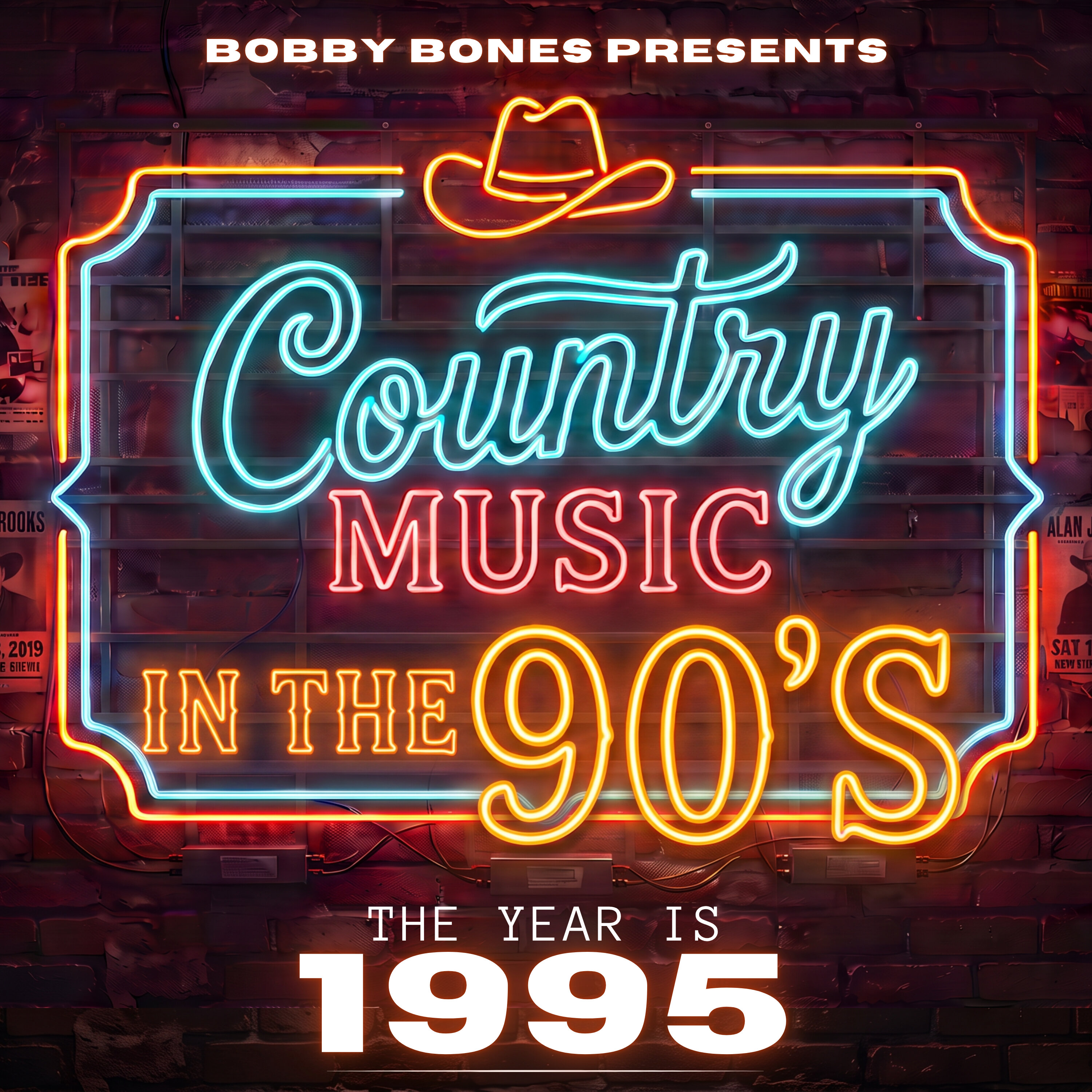
1995 was a year where country music was balancing tradition with major change. Bobby looks back at Shania Twain’s breakout with The Woman in Me, Alan Jackson winning Entertainer of the Year, Faith Hill’s rise, Martina McBride joining the Grand Ole Opry, Lonestar making their debut, and more. Plus, he shares artist conversations and mixes in the movies, music, and pop culture that made 1995 unforgettable.
Follow on Instagram: @TheBobbyCast
Follow on TikTok: @TheBobbyCast
See omnystudio.com/listener for privacy information.
Get every episode summarized
Each time The Bobby Bones Show publishes, we email you a written briefing from the transcript — the topics, who appeared, and any specific claims, with the ad reads skipped.
Email me new episodesFree for 3 shows. No card needed.
Hosts & guests


Transcript ready
1,154 searchable segments. Every word is indexed and playable.
Full transcript
The Bobby Bones Show — Country Music in the 90’s: The Year is 1995. Machine-transcribed; use the interactive transcript above to jump the player to any line.
This is an I Heart Podcast. Guaranteed Human. This episode sponsored by Ridwell. Doing the right thing shouldn't be so hard, but when it comes to recycling, it often is. Ridwell makes it simple to recycle more from anywhere. With Ridwell, you can recycle plastic bags, snack wrappers, pill bottles, bottle caps, and other items your curbside bin doesn't take. And unlike most recycling programs, Ridwell carefully tracks where your items go and reports back on what actually gets recycled. Getting started is easy. Order a starter kit, fill the bags with hard to recycle items, send them back for free, and Ridwell takes care of the rest. Start today at Ridwell.com College football will hijack your weekend, ruin your sleep, and break your heart. And that's why we make the Sullivan-verbal College football show. I'm Ty Hildenbrand. He's Dan Rubenstein. Every week we preview the games that matter in the story lines that are going to ignite your group chat. And you can join us in the aftermath as we react to what happened, why it matters, and how the sport went completely bonkers yet again.
Listen to the Sullivan-verbal College football show on the iHeart Radio app, Apple Podcasts, or wherever you get your podcasts. On Big Lives, we take a single cultural icon. People like Jane Fonda, George Michael, Little Richard. And we pull apart the story behind the image, discovering forgotten interviews that changed exactly how we see these giants of our culture. We hear for the messy, the brilliant, the human version of our heroes. I'm Emmanuel Jochi. At Kai Wright. And this is Big Lives. Listen to Big Lives on the iHeart Radio app, Apple Podcasts, or wherever you get your podcasts. Welcome to Decoding Women's Health. I'm Dr. Elizabeth Pointer, chair of Women's Health and Gynecology at the Adriah Health Institute in New York City. I'll be talking to top researchers and clinicians and bringing vital information about midlife women's health directly to you. A hundred percent of women go through menopause, even if it's natural why should we suffer through it? Listen to Decoding Women's Health with Dr. Elizabeth Pointer,
on the iHeart Radio app, Apple Podcasts, or wherever you get your podcasts. I'm working on a great deal of resistance with a 10-year or 100-thousand-mile powertrain limited warranty. Hurryin now for great deals during the Ram Drive-A-Dapal sales event. Exclude fully electric vehicles applied to 2026 model-year vehicles non-transferable. Visit moapart.com for complete details and a copy of the powertrain limited warranty. Come and visit registered trademark app, come and sing. Ram and Hemie are registered trademarks of FCA-US LLC. Welcome to another episode of the 90s country podcast on this episode. I'll be counting down the top 10 events and country music from 1995. That was a busy year of country music. Some artists were holding on to tradition.
Others were breaking into new territory and a few were just getting started. Together, they made that year a turning point for the genre. I'll also touch on some tragedy from 1995 and the movie that changed the way we thought about animation forever. So without giving up too much, let's get going. The year is 1995. Number 10. For much of the 1970s and 1980s, country music carried a reputation as a regional style of music. It had its legends, its oil audience, its own award shows, but it wasn't often part of a larger national conversation. By 1995, that had changed. Country had become part of the mainstream American life. One of the most visible signs was television. Garth Brooks had already established himself as a cultural figure by the mid 90s. He wasn't just performing at country festivals or country award shows. He was a regular guest on things like the Tonight Show, on Good Morning America, primetime specials that reached viewers well outside the genre's core fan base.
I mean, you didn't have to listen to country radio to know who Garth Brooks was. Reba McIntyre was also everywhere. She had grown into somebody who had a bunch of country music songs to one of the most recognizable personalities in the genre. By 1995, she was appearing on TV specials and talk shows and building the kind of recognition that would later support her acting career. And then there was CMT, country music television. It had launched more than a decade earlier, but by 1995, it was reaching more homes than ever. And that met a family in California or a New England. Could flip on TV and see Martina McBride or Alan Jackson or Brooks and Dunne on a daily basis. It gave country music a consistent national presence. Similar to what MTV had done for pop or for rock. And also Hollywood was starting to take notice. Country artist stepping into acting, I mean, it wasn't entirely new. Dolly Parton and Chris Christofferson had both done in the past. But in the mid 90s, it started happening more often. Do I yoke him was even beginning to carve out an acting career?
His breakout in Slingblade wouldn't come until the following year, but 1995 already had him showing up in roles that proved he could make the jump from music to film. Movie soundtracks had also began to feature country songs. Major studios realized the genre had an audience and a big one. And an audience that stretched more than just its traditional bass. A George Strait Ballad. A Vince Giltra could add to a film's reach. But the most obvious sign of country expansion came in retail. In the late 1980s, a country section in a record store, if you look, might be a few shelves tucked in the back. By 1995, it was front and center. Chains like Walmart and Kmart gave country albums the same space and attention as Pop and Rock. Cardboard displays promoted new releases and country CDs set alongside the biggest pop and rock and even hip-hop acts of the day. The ship was driven by sales. Garth Brooks had proven earlier in that decade that country fans would buy records and they would do it in big numbers.
So, stores wanted to make money adjusted accordingly. For longtime fans, it meant better access to new albums. For casual listeners, it meant more exposure. Even if you didn't plan on buying a country album, it was hard to not notice them stacked there by the checkout line. And the broader visibility meant that by 1995, country music was no longer something listeners had to seek out. It had come to them. It was on television. It was in the movies. It was at the front of the store and that presence changed how the genre was perceived. It wasn't limited to just country fans anymore. It had become part of not country culture but American culture. That shift set the stage for what came next. When Shania Twain released The Woman in Me in 1995 or when Faith Hill took her career to the next level later that year, those records didn't land in a vacuum. They landed in a world where country was already visible and accessible to the mainstream. That's why this moment belongs on this list.
It wasn't tied to one artist or one single song. It was about this genre itself stepping onto a bigger stage and staying there. Number nine. So here's something that might surprise you about 1995. While Garth was selling out stadiums and Reba was putting on Broadway level concerts, another artist was quietly making history. And she did it without pyro, rope swings or top 40 hits. Her name, Alison Kraus. Now Alison's story pretty wild. She was basically a prodigy. She signed her first deal at 14 years old. 14. By the time she was 18, she had already released her first solo album. And with her band Union Station, she became a force in bluegrass. A genre that Nashville had always sort of kept at arms length. People respected it but it wasn't filling arenas or rackin' up CMAs. But in 1995 that changed. Alison Kraus and Union Station won the CMA Horizon Award. The honor given to the best new artist. Here's the kicker she was only 23. The youngest person to ever win it at the time.
That moment put her and bluegrass on the same stage as the biggest mainstream stars in the business. Now why was this such a big deal? Well country music in the 90s was booming because of slick production, big had acts, power ballads. Bluegrass on the other hand was raw, roots the acoustic. It wasn't supposed to cross over. But Alison had a voice, a pure almost haunting voice. That made people stop and listen. Even folks who didn't think they liked bluegrass found themselves hooked. But she wasn't just winning in country circles. She was piling up Grammys. By the time the decade was over, she was well on her way to becoming the most awarded female artist in Grammy history across all genres. That CMA win in 1995 was like the warning shot. Pay attention. This woman is about to be a giant. Looking back, you can see how influential that moment was. It cracked the door open for a whole wave of roots based artists. Like Nickel Creek or The Rise of Americana. Even the O'Brother where art thou soundtrack.
And that was a crazed self in the early 2000s. You can trace a lot of that mainstream attention back to Alison Kraus. Showing up and showing out at the 95 CMAs. Accepting that Horizon Award, improving that bluegrass could stand shoulder to shoulder with country's biggest name. So yeah, 1995 wasn't just about superstars that we all know. It was also the year of a 23 year old fiddle player from Illinois who took bluegrass to the big stage and never looked back. Number 8. One of the more interesting storylines in 1995 is how two artists, Tim McGraw and Faith Hill, were both climbing the ladder at the same time. They weren't yet connected personally. But their careers were running side by side in a way that made their eventual partnership seem in hindsight almost inevitable. By the start of 1995, Tim McGraw was no longer the scrappy newcomer he had been just a few years earlier. His breakthrough came in 94 with the album Not A Moment Too Soon, which turned him from a little-known hat act into one of the hottest young stars in Nashville that record had songs like Indian Outlaw.
But a controversial song, but it got him noticed and I loved listening to it on the radio. Also, don't take the girl like the first song that ever made me feel. Yeah, I was a kid but I was like, dang, what happened to the girl? That was a heartfelt battle that proved he could do more than just have catchy songs. Like he could actually sing a song that made people cry, that made people feel. That success of McGraw spilled over into 95. Tim McGraw became a regular fixture on country radio and his presence touring even bigger than that. He started to build the kind of fan base that could sell out even bigger venues, setting him up for arenas. And for an artist then, that's quick. You know what's notable about Tim McGraw in this period is that he was still kind of finding his identity. He hadn't developed yet the mature sound that he'd been known to have even in the 2000s. But all the pieces were there, the charisma, the ear for catchy material, a knack for connecting emotionally with his audience. Now, Faith Hill, a little different, but no less impressive.
She had first appeared on the scene with her 1993 debut album, Take Me As I Am. That one had Wild One, Number One Song. That album introduced her as one of the most promising female artists of the decade. But by 1995, Faith Hill was preparing to release her second album, It Matters To Me. Now, the record wouldn't come out until later that year, but there was already starting to be a buzz about it. Now, she had already proven she could deliver hits. Now, the question was, could she build a career and did she have staying power? Like Tim McGraw, Faith Hill was at that crucial point where she had moved past being the new kid and was stepping into the role of an established star, but could she last? I mean, she had the voice. She had the stage presence. She had the appeal to reach a wide audience, but the key thing about 1995, Tim and Faith, rising at the same time, but independently. They hadn't yet joined forces, personally or professionally, and now wouldn't come until the next year when they toured together. By the way, the name of that tour, it was Tim McGraw's spontaneous combustion tour.
That's pretty much when they became one of the genre's most famous couples. Looking back though, 1995, definitely the setup for Tim and Faith. It was the year where both were establishing themselves. They were proven they weren't one-hit wonders. They were laying groundwork for their careers and the relationship that would dominate the headlines would come just years later. And when you talk about country music in the 90s, Tim McGraw, Faith Hill, those names just go together. They're inseparable. They became superstars. They toured together. Obviously, well, they got married. But before all that was 1995. The year where their stories were separate. But they were starting to move in the same direction. For both, it was a year of building momentum. One step closer to the spotlight, that they would have own and share soon enough. If you've ever wondered how and where Tim and Faith first met before they even started dating, I asked them that question when they came to the studio one day. Here's what they said. Those are the new faces show. And we were both doing the new faces show.
And Clay Walker was there. Yeah. He was still a good friend. I think so. But we were backstage and we did this big group picture. I was dating somebody at the time. And I met Faith. And when I left, the person I was dating says, I don't know if I want you to say how to hurt anymore. I should saw it immediately. That was immediate. Number seven. If 1995 was about parallel paths for Tim and Faith, it was also the year where Faith Hill broke through in a much bigger way. You know her album, which we talked about a second ago, it matters to me. That took her from promising newcomer to, okay, she's here to stay. She is now a full fledged country star. It did not come out until August of 1995. But it matters to me, built on the success of that first album. It expanded her audience. The title track became one of the biggest singles of her career up to that point. It was number one. It stayed there for multiple weeks. And it was a ballad. That struck a chord with listeners because, well, it was a great song.
And it was great storytelling. And what made the song work was Faith Hill's ability to balance strength and vulnerability in her voice. Man, she could go. But she knew not to over sing it. And she knew that if she didn't over sing it, that song had so much substance in it, the song could also do the work, the storytelling, right? This is the kind of stuff that artists just had. It was the kind of performance that made you stop and pay attention. Whether you were a diehard country fan or just someone flipping through radio stations. Other singles did well proving that, yeah, she had a lot of songs. She could sing. And she wasn't just writing momentum anymore. She was creating it. The success of that album also pushed her into bigger spaces. Bigger stages, national award shows, high profile tours. By the end of 95, she wasn't one to watch. She was one that you had been watching for a long time. She was there. Faith Hill's rise in 1995 marked a turning point for her and other females in the genre. Alongside artists like Shania and Martina, she helped show that female performers could sell records, headlined tours,
and draw major attention in a genre often dominated by men. Her career would grow in the years that followed, obviously. Eventually leading to massive crossover success, but in 1995, that was the year she planted that flag firmly. It matters to me wasn't just an album. It was a statement. And Faith Hill was saying in that statement, I am here to stay. Let's take a quick break from the countdown to talk about one of the most tragic moments of 1995. On April 19th, the US experienced the deadliest act of domestic terrorism. And it's history at that time. I'm talking about the Oklahoma City bombing. At 9.02 a.m., a truck packed with explosives detonated outside of federal building in downtown Oklahoma City. The blast ripped through the building, destroying a third of it instantly. 168 people were killed, including 19 children who were in a daycare on the second floor. More than 600 others were injured. The shock was immediate. Images of the destroyed building and the rescue efforts dominated television screens across the country.
From many Americans, this was the first time terrorism felt so close to home. Not from abroad, but carried out by people from within. In the days that followed, investigators worked quickly within 90 minutes of the explosion Timothy McVeigh was arrested for driving without a license plate. Before long evidence linked him to the bombing alongside accomplished Terry Nichols. Both men were connected to anti-government extremist groups and said they carried out the attack as revenge for the government's actions at wake time. The trial that followed was one of the most closely watched in the 1990s. McVeigh was sentenced to death and executed in 2001. Nichols received life in prison without parole. The Oklahoma City bombing left scars that went far beyond Oklahoma. It reshaped security at federal buildings. It changed the way Americans thought about domestic extremism and reminded the nation of the devastating cost of hate driven violence. 1995 had plenty of cultural highs, but this tragedy was one of its darkest moments and one that still resonates today.
If there's one artist who never quite fit into the clean lines of Nashville, you know, the painting in Nashville and the drawing in Nashville in the 1990s and exactly how the 90s of the country music was, that artist that didn't quite fit in a beautiful way was Dwight Yokem. In 1995, while the genre was moving into a more polished, crossover friendly direction, Yokem stood as proof there was still room for grit and twang in tradition. But Dwight wasn't just interested in repeating the past. He carried the Baker's Field Sound. That stripped down, a lectured guitar driven style made famous by Buck O'Onnes and Merle Haggard, and he took it into a new decade, while also experimenting enough to make it feel current, new. He even looked cool. In 1995, he found himself at an interesting crossroads, still rooted in hockey talk, but beginning to step into other parts of pop culture. By the time 95 hit Dwight Yokem had already been a star for nearly a decade, his 1986 debut, guitars, Cadillac, etc, etc, had introduced him as an outsider,
but something to say, and throughout the 80s and 90s he piled up a string of hits, like great songs too, Streets of Baker's Field, which was with Buck O'Onnes, guitars, Cadillac's, I sang Dixie, ain't that lonely yet. I mean, just transformative songs. Now he was never the biggest selling artist in Nashville, but he was respected, and perhaps more importantly, he had credibility both inside and outside of country music, rock critics loved him, traditionalists respected him, Younger fans saw him as a little different from the mainstream stars, and by 95 he had already won a Grammy, he had sold millions of records, but what really made him stand out was his refusal to follow trends. 1995 was the year of his album Gone. It didn't top the charts the way some of his other albums had, but it showed where he was headed creatively. Tracks like, nothing, sorry you asked, blended that Baker's Field sound, that foundation, with a slightly more experimental edge. The production was lean, but there were hints of rock and pop influences that did give it a very modern feel for the time.
Gone did not produce a string of number one songs, but it didn't need to. It reinforced White Yoke's identity as an artist's artist. Someone who was in it for the craft, not just the charts. For fans, the album was another reminder that Dwight Yokeum was always going to do things his way. He kind of didn't care what everybody else was doing. What made Yokeum so compelling in 1995 was the way he balanced tradition with freshness. The Baker's Field sound was decades old by then. Yokeum gave it new life. So while other artists were flying across stage or really changing an image to create a crossover appeal, Yokeum was still leaning on telecast guitar, shuffles, and lyrics about loneliness and heartbreak. But his sound did not sound dated. His style wasn't dated either. His style carried a coolness that made it accessible even for listeners who may not have grown up on country radio. You could have not liked country music. You could have even said, I don't like country music. And liked Dwight Yokeum. If you were a young fan in 1995, Dwight Yokeum might have been your bridge into the genre.
He looked apart. You saw him in New York's country because he had the hat and the tight jeans and the swagger. But he also looked like a rock star. And also he felt authentic. 1995 was the year Dwight Yokeum started making inroads into acting as well. He wasn't approaching it as a side gig or a vanity project. He was serious about it. And casting directors were taken notice. For Dwight Yokeum, that was important. He gave him another outlet for his creativity. And another way to reach audiences who might never listen to a country record. He wanted to become a multi-dimensional figure. And he did. 1995 was a year where he stayed true to himself while the rest of the genre shifted for whatever reason. He released Gone, an album that may not have been his biggest seller, but captured his willingness to experiment within the Baker's Field Framework. He started stepping into Hollywood, getting in the acting career that would become another defining piece of the legacy. And he showed fans that country didn't have to fit one mold.
For the genre, Yokeum's 1995 presence was a reminder that authenticity still had a place in the middle of a changing decade. His influence would ripple into the 2000s. Heck, even into today. And it would continue and still does continue younger acts that want to hold on to tradition while still sounding modern. Hang tight. The Bobby cast will be right back. College football will hijack your weekend, ruin your sleep and break your heart. And that's why we make the Sullivan-verbal College football show. I'm Ty Hildenbrand. He's Dan Rubenstein. How's it going? Every week we preview the games that matter, sort through the biggest storylines and tell you what to watch before kickoff. There's a lot to keep track of. Who's for real? Which upset is hiding in plain sight and which storyline is about to take over your group chat? And when the games are over, join us in the aftermath too. We're going to react to what happened, talk about the biggest results. Of course we'll cover the playoff picture.
And all the little details you might have missed while flipping between like 12 games at once. Whether you know every coach and coordinator or just want to understand why everybody is yelling, we're here to help make sense of the madness. Listen to the Solid Verbal College football show on the iHeart Radio App, Apple Podcasts or wherever you get your podcasts. The NFL never stops and neither does its newest podcast. The NFL report hosted by me, Andrew Sassimliano. It is your home for everything football. We're tapping the biggest news stories, giving you expert analysis, fantasy previews, game picks and more. We fly around every single play. We dominate every single play. Want to hear from the league's top stars? Add to the biggest matchups? We've got you covered.
That's a really good football team. We got to have all hands on deck. Join me and it'll all start cast of analysts for everything you need to know from around the league. Get new episodes of the NFL report Monday through Friday, all season long. Listen to the NFL report podcast on the iHeart Radio App, Apple Podcasts or wherever you get your podcasts. The new NFL season is here and you should be listening to NFL Daily as we march along to Super Bowl 61 last year. We had Mike McDonald, Sam Darno on the field after the game, but that was last year. If you're a football sickle like me, NFL Daily is your kind of show. It is in the name NFL Daily fresh content in your feed every day, all season long. Matthew Stafford coming off his MVPC on a dazzling darts from Matthew Stafford. Big time trades that shake up the NFL. And of course those Seahawks trying to run it back and win another Lombardi trophy.
The Seahawks win Super Bowl 60. They are bringing Lombardi back to the Northwest. If it's happening on a football field, NFL Daily will cover it. Listen to NFL Daily on the iHeart Radio App, Apple Podcasts or wherever you get your podcasts. I'm Britt Coleman and I'm Trevor Sikama. If you ever watched a game and wondered what really made the difference beyond the final score, that's exactly why we created NFL Pro. Every week we use exclusive next-gen stats insights and NFL content to break down the biggest stories, matchups and moments from around the league. We go beyond the box score to uncover the numbers, the tendencies and details that help explain what actually happened on the field. Fires it out but flat to bark Lee to Pete's one man, spins past another, leaps over a fudge. And don't worry, this isn't just a show for stats experts. We use advanced analytics to help tell the story behind the game,
turning the numbers into insights that every fan can understand and enjoy. So whether you're a casual fan learning more about football or a hardcore fan who can't get enough analysis, our goal is to help you see the game in a whole new way. If you've ever wanted to know why a playwork, how a matchup was won, or what most fans missed on Sunday, NFL Pro delivers insights you simply can't get anywhere else. Listen to NFL Pro on the iHeartRadio app, Apple Podcast or wherever you get your podcast. Number 5. Every Fall Nashville hosts the CMA Awards, Country Music's Biggest Night.
The ceremony has always been more than just trophies and performances. It's a snapshot of the genre in a single event, who's winning, who's breaking through, and how the industry is defining itself in the moment. In 1995, the CMAs captured a genre in transition. Country was still holding on to its traditional roots, but newer sounds and artists were just beginning to reshape the landscape. And at the center of it all was Alan Jackson, who took home the night's top honor of Entertainer of the Year. Alan already was one of the most respected names in country by 1995. He had released a string of hits through the 90s, like massive songs, like Chattahooji, Living On Love, Gone Country. When he won Entertainer of the Year, it felt like a moment of recognition for his consistency. Because he wasn't a crossover artist chasing a new trend, he was rooted in country's core. There was fiddle, there was still guitar, there was working class lyrics, yet he still connected with a huge audience all over the country.
His win wasn't just about sales or tickets or tours, it was about identity. Alan Jackson represented the kind of artist who could modernize traditional country music without losing its heart. Even though Alan Jackson took the top prize, Vince Gill was still a monster that night and a defining presence. By 1995 he had hosted the CMA several times. He was beloved for his mix of humor, humility, and he was just a great musician. He won male vocalist of the year once again, his fifth consecutive time taking home that award. That streak alone made CMA history. Vince Gill was the kind of artist that Nashville respected deeply, not just for his talent, but for how steady he'd been through all the changes happening in the industry. So while the spotlight shined on Alan Jackson for sure, Vince Gill was still the show's backbone, the host who set the tone, the musician, everybody admired, and the guy who somehow made a massive live broadcast, feel casual and personal.
The 1995 CMAs reflected the full spectrum of where the genre was at that point. The straight was still there, getting nominated for male vocalist year after year and serving as country music steady hand. Faith Hill was moving to bigger stages, making her rise from promising newcomer to legitimate star, Riva Brooks and Dunn, Alan Jackson all rounded out a show that balanced familiarity with fresh energy. There wasn't a year that was dominated by one artist, because that's happened for sure. But it was a year that showed just how wide the genre had become. In fact, the 1995 CMAs didn't deliver shocking upsets or overnight stars, but they did deliver a clear picture of the mid-90s, a genre balancing tradition and also growth. Alan Jackson's entertainer of the year went for like a statement that in a time of change, the industry still valued artists who carried the torch for country roots. Vince Gill's continued success reminded everybody that talent and reliability still counted.
Together, their presence defined what country music was in 1995, authentic professional and still deeply connected to its foundation, even as it looked toward a more modern horizon. So that's number five on the list, the 1995 CMA Awards, where Alan Jackson took home, entertainer of the year. Vince Gill continued his incredible run and both men symbolized the balance between old school and evolving new school. Number four. Let's go back to November 30, 1995, the Grand Ole Opry's 70th anniversary. In the middle of that show, Martina McBride was inducted as an opera member, simple set up, but big meaning. What stands out isn't hype, it's the specifics. Loretta Lynn handled the induction that matters because the operies built on continuity. You don't just get a plaque, a current member brings you in and that gesture ties you to that place and its expectations. Now, Martina was not a surprise pick, she first played the opera in 1992 and she kept coming back.
If you ever watched a set from the side of the stage there, you know how unforgiving that room can be and I can tell you from playing it 15 times myself. There's no fancy about it, there's no pyro, especially then there weren't any giant screens. There aren't a lot of bells and whistles, sonically, it's just a room and you just gotta do your thing. It's just a singer in the song and the band. And Martina's voice was that. Martina's voice carried and she treated each appearance like it was a massive deal for her, not just a box to check. By 1995, inviting her to join the opera felt like the opera catching up to the reality that was already in front of it. Context matters too. Mid-90s country was expanding, more radio stations, bigger tours, new faces. It would have been easy for the institution to drift into nostalgia or flip, chase whatever the trend was. The opera didn't do either. Inducting McBride during a milestone show, that anniversary show, said, we're current and we're selective.
And it also said not everything loud or new gets in. Not everything old stays by default. Membership is earned in full view of an audience that comes for the songs. Not the spectacle, again. There's no pyro. There's also the straightforward work story here. Early on, Martina and her husband, John McBride, did the unglamorous tour jobs. Merch, logistics, all the things you do behind the scenes, they were doing that. She was doing that before the spotlight found her consistently. And that mattered to the opera. The place values people who know the whole operation, loading in, waiting your turn, hitting your time, respecting the stage. Membership is partly about that reliability. Show up when you say you will, bring this song, leave the room better than you found it. And if you're wondering what member means beyond the shout out, it's a standing invitation and a standing responsibility. You return, you support younger artists.
You treat the circle on the floor like a work bench, not a pedestal. Plenty of artists have hits. Fewer choose to tie themselves to a place that asks you to come back over and over. You must. There must be consistency for decades. Martina said yes to that. The induction also plays differently when you remember who spoke the words. Loretta Lynn. She was not an ornament on the program, she represented a standard. It was clear. She had lived in perspective. She had the ability to turn a three minute cut into something you recognize is true. Welcoming Martina, an artist known for control and range, felt less ceremony and more like setting a new bar. So if you're building a list of 1995 and country moments that say something during this year, this belongs. It isn't splashy. It's institutional maintenance done in public. Where a respected venue added a voice that can carry the room without any slogans needed. Here's the takeaway I want to keep in for this. In a year crowded with big releases and bigger tours, the opera's 70th anniversary show paused to add one person to the roster.
That quiet decision is how traditions stay functional. Update the lineup with people who will actually show up. Martina McBride did that and then kept doing it and is still doing it. That's the story. You know, I was talking with Martina one time and I asked her what she remembers about that special night. Here's what she said. It was part of a television special. It was like an anniversary of the opera. Loretta is so funny. She came to do the rehearsal. They gave me a plaque. During rehearsal she said, Is this what I'm supposed to give you? This is what you get for joining the opera and I said, yeah, I guess so. And so she said she kind of laughed. And during the ceremony she said, welcome to the opera honey. This is what you get. That's super cool that it was her. Did you know that she was going to be inducting you before like rehearsals with it? Because sometimes the invite is a surprise. Was that a surprise to you? Yeah, but they didn't do it like they did. They didn't just show up and surprise you. They were performing. I got to work with her to get the first guest. They were like. So I was in charge of the first group of artists.
I was like, well, we are going to do a lunch with the head of the opera and he asked me at lunch. And then I got to ask who I wanted to induct me. So I showed that. So you chose right now. Man, being told it launched by someone who, on executives like being proposed on the phone. I was like, how many are still getting married. That's awesome. But you didn't even get on a knee. Yeah, I don't think they did it like that back then. Now I love how they do it now, where they. I got to be that person for Charlie Daniels. I got to ask him to join the opera. And he didn't know you were there. You guys kept it completely secret. My non-country, 1995, not talking about Garth or Shaniyak, because they're already all a part of this. But we're gonna talk about music in 1995 that actually meant a lot to me that wasn't that music. About my first two CDs ever with my own money in 1995. Now I had bought tapes, but now it's time for your boy to grow up and to buy compact discs. It's quite the purchase, but it was cool, because they were all thin.
It was like the artwork was bigger. You just felt more sophisticated. You felt more technologically advanced, savvy even. This little disc you put it in at a crappy CD player. But you know what, I went to them all. And the first two CDs I bought, 1995, Mariah Carey Daydream, an ACDC ballbreaker. Yeah, they really didn't go together, but I did love them both. Now Mariah Carey Daydream, fantasy, and a sweet, sweet fantasy baby. Or how about you'll always be my baby, and shoot it up. That was nothing, nothing compared to one sweet day. Mariah Carey and boys demand that song was number one forever. And I know you're shining down on me from heaven.
Like so many. That song was freaking awesome. I love that CD. That was one of the first CDs I ever bought. At the same time, ACDC ballbreaker. And at this point, ACDC was already a legacy act. Like all their hits, I guess they started in the 70s. Bond Scott was their lead singer. And then Brian Johnson hits. And then by the time it was 1995, like they were doing their thing, but it wasn't like they were new or people were begging them to put out music. But they had the song, hot as a rock. Bam. That was a jam. And I pulled up all the songs. I know any of them still. I listened to all of them, but I don't know any of them anymore. They had a song called Ballbreaker, but I didn't think I'd only know that because the album, I listened to that album a lot, but I don't think. And look, I don't have much of a main card anyway. I don't think I listened to that as much as I did Mariah Carey
because out Mariah Carey album was awesome. That ACD record, that was good. But first two, 1995. Now, two other albums that ended up being played so much, I didn't buy them new as it right when they came out, but I did eventually get them on CD, Oasis. What's the story, Morning Glory? Are you kidding me? I don't even know what to say except I was like, man, I guess I like British people. And you saw them on MTV, you know, they were brothers, like Wonderwall hit like crazy. And it was played an alternative radio, which I listened to. It was mostly country and alternative. I mean, a little bit of pop and like you'd catch some of the pop songs because they were just everywhere, but it was so big that it crossed over to pop. I guess it's literally called Britpop, but holy crap. Wonderwall, freaking, Bob,
champagne, supernova, Bob, Bob. My favorite song on the record was Don't Look Back in Anger. And so Sally can wait, she knows it's too late. That song was freaking awesome. So I put that as one of, and it did come out in 1995, one of the greatest albums of my life, but they came out in 1995, but I probably bought either at the end of 1995 or early 1996, but what a year for music. And I'm also gonna put in this freaking jagged little pill from a Lannister Morris set. Again, one of the greatest albums of all time. She launched out of nowhere. The music video with you ought to know you didn't even see your face. It was an alternative song. I think K-Rock and L.A. started playing it first, and boom, it blew up. MTV started playing the video, and you just saw her here, and when she go down on you in a theater,
and it was hardcore. So you ought to know hits, it's awesome. And you're like, what's she even about? It's probably widened by the album right when it came out because I was like, what's she even about? And I thought the song was cool, but it wasn't like my favorite song. I just thought it was cool. But then the hits keep coming, coming, and coming, coming, and coming, come in. The second song I think was you learn, I know it was on the album, but... You live, you learn, you try, you learn, you live, you learn. Jam, nothing though compared to, I got one handed in my pocket, and the other one is a monopsy sign. I loved handed my pocket, probably at that point of the three of the singles, my favorite. So you ought to know you learned handed my pocket, but whenever Ironic hit, everything was ironic.
Everything was ironic. The irony is the song's not even really ironic, but the music video she gets in the car, it's like an icy day and she's driving and then everybody else in the car is her. Isn't it ironic, don't you think? I think the line that goes, was afraid to fly. He packed his suitcase, kissed his kids goodbye, he waited his whole dang life to take that flight and as the playing crashed down, he thought, well isn't this nice? And isn't it ironic? And we're like, nah, that's so deep. Like 15. That's so deep. I was like 60, that's so deep. Ironic, awesome. And then she hit us with, I had no choice, but to do you, head over feet, jam. So far, that's five massive singles. And then all I really want, that was also on the record. Didn't, it wasn't as big, but it was still,
probably considered a successful song that was a single. There's five number one songs there. You ought to know you learned handed my pocket, ironic, head over feet, and I'll put all I really want on there because that song was a jam too. Not sure what it did on the charts, but it's always a click away. All I really want is a song by Canadian singer, songwriter, a Lannis Moore set. It was released by Maverick Records. Let's just see what all I really want was on the charts. Here we go. US alternative 14, okay, so, definitely wasn't a number one, but the other songs were freaking monsters. So when it comes to this year, 1995, it's the year I bought my first ever CDs and felt freaking cool. But then when I told people what I bought as my first CDs, they did not make me feel freaking cool because it was Mariah Carey and a band that my stepdad liked, which I liked to do and still do. And then it was the year of Oasis and a Lannis Moore set.
That was my parentheses, non-country, into parentheses, 1995. And now let's get back to the countdown. Number three, when you look back in 1995, it wasn't just a year of superstars tightening their grip on the genre. It was also a year where the seeds of the future were planted. Now alongside solo artists dominating the genre, something else was happening. The arrival of a brand new band that would go on to leave a big mark on country music. That band was Lone Star. And in 1995, that's the year they introduced themselves to the world, kind of like this. Hello, we're Lone Star, kind of. Lone Star's self-titled debut album was released in October of 1995. At first, it did not make a huge splash, at least not compared to other blockbusters of the year. But for a new group, it was a strong beginning. The kind of debut that put them on a map and possibly hinted at much bigger things to come. The lead single from that album, Tequila Talking,
was released earlier that year. Obviously before the first album came out, the single comes out. And it climbed into the top 10 on the Billboard Hot Country singles chart. It didn't go number one, but it was lighthearted. It was catchy. It wasn't gonna change the world, but it served its purpose. It got their name on the radio. And for a new act, that was everything. The band's first number one also came from that album. The song was called No News. Now the album itself leaned into a mix of traditional and contemporary sounds, or mixed out of that, because yet fiddle, yet still guitar. So you could play it next to George Strait or Alan Jackson, but there was also a bit of polish in the production and the harmonies that suggested Lone Star Head ambitions just beyond a traditional hockey-tongued band. Now what made Lone Star interesting in 1995 is that they were a true group in a landscape of really mostly just solo artists. By then, the biggest acts were Garth and Alan Jackson and George Strait and Reba and Vince. I mean, there were groups of course. Alabama had been massive since the 80s.
Diamond Ria was active in the early 90s and beyond, but there weren't many fresh bands breaking through at the time. Lone Star filled that gap. Fronted by Richie McDonald on lead vocals, they presented themselves as a unit, not just a singer with the background band. Their harmonies gave them a fuller, more layered sound, and their image as a full band gave them a different kind of appeal. Fans weren't just connecting with one star personally, it was the chemistry of five musicians. It was the sound of a band. Now breaking into country music in 1995 was not easy because radio was crowded with all those names I just told you about, very established names. And the market was booming with high profile releases one after the other. For Lone Star to land that first song, that top 10 debut single, that itself was no small achievement. The real significance of Lone Star's 1995 debut is how it set the stage for the future. Now fans that picked up that first album probably could not have guessed that just a few years later,
the band would release songs like Amazed 1999, which became one of the biggest songs ever. I mean, in country for sure, but just it was gigantic everywhere. It topped all the charts. They couldn't have known the band was gonna go on a score multiple platinum albums, a string of chart-topping singles, and a reputation as one of the defining groups of the late 90s and early 2000s. In hindsight though, you can trace it all the way back to 1995. The release of Lone Star, that self-titled debut album, gave the group a foothold. It introduced them to the industry and showed there was still an appetite for bands in country music. So why does Lone Star's arrival in 1995 deserve a spot? This high on the list, as a top 10 moment, because it represents the transition of generations. The early 90s had been about the guards, the Alan Jackson's, the Clint Black's, the solo acts. By the mid 90s, well, it's time for new stars. Shnaya Faith, Tim, in the background,
slowly crawling into your screen, Lone Star, the kind of band that would help carry this genre into the next era and the next decade. Their debut may not have dominated the charts, but it was the first chapter in a story that would soon include some of the most recognizable country songs of the late 90s. What's funny is, Lone Star was originally named Texas C, like a group from Texas, trying to make it in Tennessee. And I was talking to Richie McDonald, the lead singer of Lone Star. And I was like, hey, that name, not the greatest name, when did the name change come? Here's what he said. Well, we were actually in the studio recording our first album with Don Cook and Wally Wilson. And we're getting out the banter in the studio looking for songs and Costas had called Don Cook one morning and said, hey, he was out here that the labels asked him to ban the change or name. And he goes, they're off the text, and he goes, what about Lone Star?
So, pretty sure that's where that happened. Did people think that you guys were, and I'm not sure the environment then, but there's such a distinction now between Texas country and Nashville country. Whenever Lone Star was a ban, was Texas country such a definitive thing and do they think you guys fit in that category? You know what, I don't think, I really don't think it was, not when we started, not like it is now. And I just, I spent a week back in Texas, last week, and love Texas where I'm from, but it's in my mom, in a local TV show. But, you know, and listen to some of the local stations and the Texas music that is now, it's just, you know, it's its own animal, you know, but back then, I don't know that we were really categorized that we, just because we were from Texas and our name was Lone Star, I don't think it really put us in that category as Texas music, not like it is right now. Yeah, I think Lone Star was the right name choice for the ban.
Let's take a quick break from the countdown because in November of 1995, movie goers were introduced to something they had never seen before. A full-length feature film created entirely with computer animation. The movie was Toy Story and it didn't just entertain audiences, it changed the entire future of filmmaking. Toy Story came out of Pixar Animation Studios, a relatively small outfit. At the time it was a working partnership with Disney, the team spent years developing new technology that could animate entire worlds inside a computer, framed by frame. Now at the time, it was a massive gamble. Computer animation had been used in short sequences, but never for a full movie. Obviously, you know, the gamble paid off, Toy Story, box office hit, opening at number one and eventually earned over $350 million worldwide. And that was a whole lot back then. Critics praised it because it looked cool, Woody Buzz Lightyear. They were just like flashy computer graphics,
they were fully developed characters and they were also written smart and funny and emotional. The film's success established Pixar as a major force in Hollywood and kicked off a whole new era of animation. Traditional hand-drawn films would continue for a few years, but by the end of the decade, CGI had become the standard. Without Toy Story, there's no Shrek, no Finding Nemo, no wave of computer animated films that followed the grates, culturally it also gave us lines and characters that became instantly iconic, from buzzes to infinity and beyond, to Randy Newman's, you got a friend in me. Looking back, Toy Story wasn't just another kids movie from 1995. It was the start of a revolution in animation and one that blended cutting edge technology with timeless storytelling. And it forever changed the way audiences watched cartoons on the big screen. You are toy! You were the real buzz light, you're an action figure!
You are a child's play thing! You are a sad, strange little man. Hang tight, the bobby cast will be right back. ["The Bolly Caste"] Number two, when you look back at Country Music in 1995, it was a year of a lot of firsts. The genre was stepping out into new territory, while trying to keep its traditional roots as well. The next spot on this list is no different because 1995 brought some rookie and some veteran artists, they're very first number one song. Let's start with Ty Herndon and his song, What Mattered Most. Ty came in with the kind of ballad that works because it sounds lived in. The vocal felt honest, no extra seasoning, just the right tone at the right time. You don't even really need to know anything about him to get it. It's the, I've been there kind of song that Country fans love and reward.
But then there was David Lee Murphy with Dust on the bottle. There was nothing flashy about that song, just a chorus that lands and stays. It's kind of record you like to listen to when it matches well if you're having a good day, or if you're having a bad day and you want the day to be better. David Lee Murphy wrote this song by himself, so I asked him about the origin story of the song. Here's what he said. I wrote that the second day, the morning after we started recording my first album out with a bang. I had the title for the song and I was sitting at the kitchen tailor. I'm playing this thing and I was, you know, I'm like, I like that groove. And I remember I had this little idea written in in one of Spiral Notebooks, you know, a yellow Spiral Notebooks, Dust on the bottle. And I think I just might be a liftoffs on the bottle. And then I thought about this guy from my hometown named Creole Williams, who made homemade wine and the story just fell out.
That's a real dude, huh Creole? So he said, how did you feel about it? He's dead now. But I mean, was he alive with the road? Yeah. Yeah. So he's dead. But yeah. His sisters and his sisters thought it was pretty cool. He used to camp with my cousin. I crab orchard lake and southern Illinois. They used to camp and sit up, but tentally, they're all summer. Guys are crazy. Jeff Carson delivered an every man vocal that fit anywhere with his first number one, not on your love. First listen, not in the long. Second listen, the chorus is familiar. That's usually how momentum starts. Steady spins, zero fatigue. Then you have a weighed haze. And weighed check the box for people who wanted modern records with a traditional read in a song. Old enough to know better, great song. Song has clean telecaster lines, very clear phrasing and a melody that sticks really without leaning on gimmicks. Familiar, but not stale.
And that's tough line to walk, but he did walk it. And then there's Pam tell us. She had a song, Me Vita Loka, which is my crazy life. Now Pam wasn't new in 1995, but that you're finally put on as a number one artist. Now she had been turning in strong work, but this was the song, the cut that actually got her that first ever number one. And if you're wondering why these first cluster in the same year, I mean, there are a few practical reasons. Country radio was open to bigger hooks, little more sheen. But it's still valued clear storytelling as we've talked about in this episode. And music videos mattered. If your visual matched your song, it could actually take a song and push it over the line. And listeners were flexible. They were willing to hear something that could carry a Saturday night, but still makes sense on a Monday morning. If your record worked in both places, heck, you had a plan. In 1995, Ty Herndon brought heart without drama. Daivoli Murphy supplied Phil, Jeff brought steadiness,
Wade bridged new and classic, and Pam closed the loop with a veteran's payoff. Different approaches, same result. They're first tripped that number one spot. And if you're building a playlist from this, try them back to back to back to back. And listen for a common thread. Efficient writing, focus vocals, arrangements, they don't get in the way. And that's the through line. Trends come and go, but those three things usually win. Number one, one, one, one, one, one, one, one. That's not an effect. That's my voice. Number one. If there's one moment from 1995 that truly changed country music and the course of all music, it was the release of Shania Twain's second album, The Woman in Me. This was not just a hit record. This was a turning point. The moment when country music cracked wide open and embraced a new kind of star, Shania did not just score radio hits. She redefined what it meant to be a country artist, period.
And the ripple of that and that release of The Woman in Me. Those ripples are still felt today. Now, it's hard to really explain the significance because it was so long ago. But to understand, we have to rewind. Shania's self-titled debut album in 1993, as we mentioned before, did not set the world on fire. It did introduce her, but it didn't yet give her a clear artistic identity. At times, she was just another talented newcomer in a very crowded field. But what was happening behind the scenes would change everything. Shania had connected with producer Mutleng, known for his work with deaf leopard, ACDC, Brian Adams. Together, they began crafting an approach that didn't sound like anything else on country radio. Mutleng's influence brought in pop and rock sensibilities, layered production. It had soaring choruses like the big 80s stuff when I think about that, like deaf leopard, big, anthemic hooks.
And Shania brought the charisma, the voice, the confidence to carry it all off. By the time 1995 rolled around, they had built an album that was going to rewrite all the rules. Released in February of 1995, the woman in me did not perform well. It freaking exploded. The album sold more than 20 million copies worldwide, an unheard of number for a country record at the time. On the Billboard Country charts, multiple hits, who's bad, have you boozed, been under? You know that one, right? I asked Shania the origin story behind the day she wrote the song, and this is what she said. I wrote that in a little Bush cabin in Canada. My wood stove. Really? Yeah. Just like Abraham Lincoln. Just you. You wrote that song by yourself? Well, I wrote that before I met Mutl. And then when we met, that was one of the songs I pulled out of my hat. And then we finished it together. I don't really even remember what we did collaboratively on that, but we went to everything in the hat. At that point, you know, once we were collaborating a songwriter or so. Then there was Any Man of Mine. The song that became her breakout, reaching number one.
And that was like the first, oh, this is gonna be a force. And it wasn't just that our songs were hits. It was a sound of different. They were undeniably country, fiddle still twang. Yeah, all there. But they were packaged in a way that felt bigger, even slicker, and more accessible to non-country audiences. And a big part of that impact and a pill came from Shania herself. She wasn't just singing songs. She was embodying the songs. Her image is bold. It was glamorous. It was playful. It stood out in a genre where female artists were often expected to stick to a more traditional mold. Shania leaned into fashion and charisma and staged presence in ways that hadn't fully been embraced by Nashville before. For some traditionalists, this was controversial. I can only imagine how angry the old school people in Nashville were at the time. Oh my goodness. Was it too polished? Was it too pop? Was she stepping outside the balance of what country was supposed to be?
Those questions swirled around her, but they didn't slow her down. If anything, they made her more intriguing. For fans, especially women, Shania brought a sense of empowerment and relatability. Songs like Any Man of Mine, they weren't just catchy. They carried a confidence that felt fresh and modern. The numbers tell the story as good as anything else because you can't dispute them. By the end of 1995, the woman in me had become one of the best-selling country albums of all time. Shania took home the ACM for album of the year. She also won a Grammy. She also got a CMA. She was everywhere. For a sophomore album, from an artist who had been virtually unknown just two years earlier, the leap was staggering. Inside Nashville, her success created a lot of conversation. Some embraced her as the future. Others worried the genre was losing its identity. But whether people loved it or resisted it, no one could ignore it.
The woman in me changed the conversation. Suddenly, it was clear that country music could be marketed to a much wider audience. The line between country and pop was blurry or the never. And for Shania, that was exactly the point. Her success also raised a bar for female artists. And a genre often dominated by men. Should I approve that women could not only compete, but well, outsell and kind of crush everybody? That mattered. And it opened doors for others who followed. Beyond the charts and awards, Shania's breakthrough represented something larger. And that's a cultural shift. Now, if you were a casual listener in 1995, you might have first encountered her music on Country Radio. But it didn't stay there. You probably didn't got it walking through the mall or a pop station once it crossed over, or in living rooms that maybe would have never been on CMT otherwise, or even MTV. She made country cool for audiences who had previously written it off as old-fashioned or corny,
younger listeners. Even fans of rock and pop were now paying attention. That broad audience would only grow with her next album, which hit in 97, come on over. But the foundation was built with the woman in me. When we talk about the top country events of 1995, there's no doubt that Shania Twain's breakthrough belongs at number one. It wasn't just the album sales. It wasn't just the awards. It was about the way she changed the landscape. She brought in new fans. She challenged expectations of what a female artist in country could be. She blurred the boundaries between genres and ways that would influence the next two decades of music. And she did all of it while staying unapologetically herself. I asked Shania once how long it took until she felt like she had her first hit. And if she was ready for stardom, this is what she said. I did very fast. It was like a year. Did it sweep you up? Like, whoa, whoa, whoa, whoa, whoa, before you kind of realized what was going on,
and you were a star? I was so ready for it because, first of all, I was already. But the time I was really what you would consider famous, I was 30. I wasn't young. I spent my whole youth preparing for that. So it's not like all of a sudden I was 22 and famous. I was 30. I don't know. I didn't have any recording experience. I didn't have any fame experience. But I'd spent my whole childhood. And all of that, all of my 20s were working toward it. Singing in bars and any type of show that I could get into, festivals, writing, writing, writing, writing, writing. I really wrote all the time by myself. I was just a solo writer. So by the time I made it, I was so ready. I mean, by the time I met Munn and made that first record with him, I had a whole stash of songs. And it went very fast, that record. Were you told you're not a country? Like everybody's told now? Yeah, sure. I was. It was good for me that I really didn't know
that that would be the case. I didn't really know what the definition was or what was considered the definition of country. Because I grew up listening to such a, I think a different country than the country that maybe you guys grew up here in the US too, because in Canada, we had Gordon Light. We had a lot of folk singers, a lot of folk artists that were considered country. So my country was a lot of, you know, Joni Mitchell, Jim Croweyt to me was country. The Carpenters were considered country to me, Willie Nelson and Chris Christopherson, and even Elvis. So it was kind of odd that I sort of thought, I felt like I fit into that scope of the more sole folk type country. And of course, you know, my youth was 80s rock. So that was always in me anyway too. That's how the music came out, I think, in the end. That hybrid.
That's our look back at the top 10 moments of country music in 1995. It was a year of balance. Tradition on one side, change on the other, and plenty of new voices stepping in. Some of the stories we covered shaped the decade immediately, while others laid the groundwork for the years ahead. Thanks for listening. Make sure you follow us on socials at BobbiCast. Keep up with all the episodes. All right, we'll talk to you in 1996. Love this episode of the BobbiCast. Subscribe on I Heart Radio, Apple Podcasts, or wherever you listen to podcasts. This is an I Heart Podcast. Guaranteed Human.
More episodes
More from The Bobby Bones Show

SORE LOSERS - How Did Lunchbox Almost Die on Vacation?
The Bobby Bones Show

MOVIE MIKE'S MOVIE PODCAST - Top 10 Favorite A24 Films + Movie Review: The Dog S...
The Bobby Bones Show

FEELING THINGS - Airport Hammocks, Awkward Congrats & Accidental Reposts
The Bobby Bones Show

FRI PT 2: Would Amy Do A Racy Ad For $5 Million Dollars? + Should Wives Have Mal...
The Bobby Bones Show