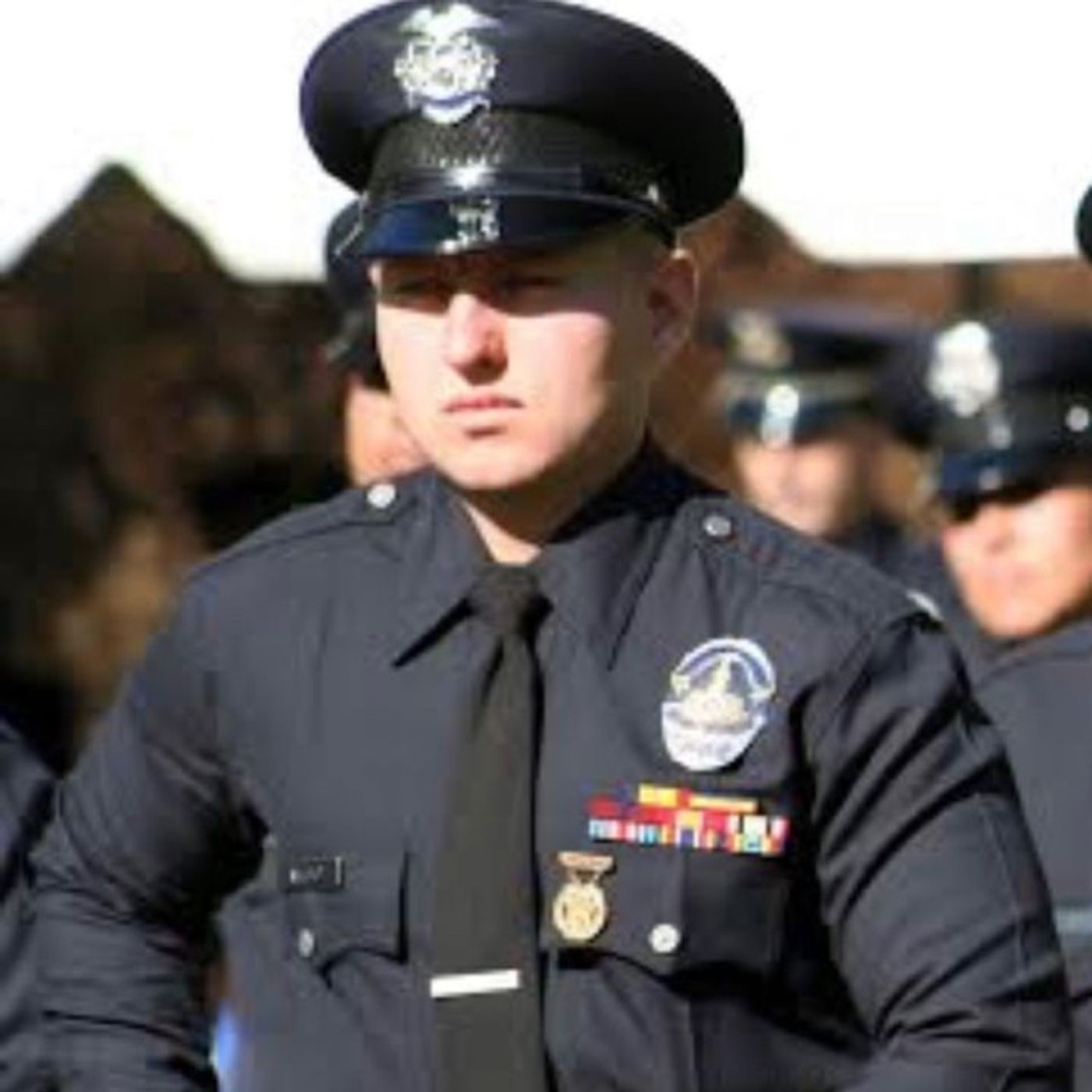
Dealing with Law Enforcement While Armed Traffic Stops Active Shooter Response Calls For Service
Get every episode summarized
Each time Gunfighter Life - Survival Guns Tactical & Hunting publishes, we email you a written briefing from the transcript — the topics, who appeared, and any specific claims, with the ad reads skipped.
Email me new episodesFree for 3 shows. No card needed.
About this episode
“With verbal care, help is always ready, before, during, and after your stay. We've planned for the plot twists, so support is always available. Because a great trip starts with peace of mind.”From the transcript
Patreon
https://bit.ly/3jcLDuZ
Bio:
Combat Veteran; U.S. Marine Corps Urban Warfare Instructor;
S.R.T. Commander Active Shooter Response Team
Law Enforcement Los Angeles Police (L.A.P.D.) Police Officer / Fugitive Recovery
F.B.I. Instructor N.R.A Instructor
Competition Shooter; Multi Time State Rifle Pistol Champion
Hunting; Life Long Hunter Proffessional Hunter and Guide
Private Security Contractor; Several Agencies, Current.
Patreon
https://bit.ly/3jcLDuZ
Become a supporter of this podcast: https://www.spreaker.com/podcast/gunfighter-life-survival-guns-ammo-hunting-defense-tactics--4187306/support.
Have a Blessed Day
Get every episode summarized
Each time Gunfighter Life - Survival Guns Tactical & Hunting publishes, we email you a written briefing from the transcript — the topics, who appeared, and any specific claims, with the ad reads skipped.
Email me new episodesFree for 3 shows. No card needed.
Hosts & guests
Transcript ready
570 searchable segments. Every word is indexed and playable.
Full transcript
Gunfighter Life - Survival Guns Tactical & Hunting — Dealing with Law Enforcement While Armed Traffic Stops Active Shooter Response Calls For Service. Machine-transcribed; use the interactive transcript above to jump the player to any line.
With verbal care, help is always ready, before, during, and after your stay. We've planned for the plot twists, so support is always available. Because a great trip starts with peace of mind. Interacting with police, cops, law enforcement, whatever term you want to use. That's what we're going to talk about today on Gum Fighter Life. Welcome to the podcast where we talk about guns and gun related topics. The right way with God Almighty at the center. Biblical, Judeo, Christian values, and real world firsthand experience. On that experience, obviously I'm going to draw heavily today from my law enforcement experience. I worked LAPD, if you guys don't know, as LAPD I was patrol, as all cops start out as, and then I was also on some specialized assignments. I was also attached to the feds doing other stuff in other places,
and that's all I'm really going to on that. But I know I'm away around law enforcement. I've interacted with many civilian. Obviously I've also been pulled over as a civilian and dealt with law enforcement. So, that's mostly the experience we're going to draw on for today. Interacting with law enforcement. Two big points I want with three. Now that I think about that, three big points that I want to hit on. It doesn't matter if somebody wears a badge or not, or if you wear a badge or not, right is right and wrong is wrong. The badge does not change that. All the laws of God still apply. You shall not murder, you shall not steal. You shall not covet your neighbor's house. You shall not cover your neighbor's wife, nor his male servant, nor his female servant, nor his ox, nor his donkey, nor anything that is your neighbor's. Do the whole commandment there. If a man is called breaking in and is struck so that he dies, there should be no guilt for his bloodshed.
And many others, right, those moral laws are written by God. And they're non-transient. They do not change. They do not go away because somebody does or does not have a badge. So, whatever side of this year on, you have to answer to a higher authority than a shiny tin star on somebody's chest. You have to answer to God one day we will all bow and face the judgment seat. That's what the Bible says every knee shall bow and every tongue shall confess. So, remember that. That's numero uno, right? God is number one. And you have to answer to him. Better for you to do the right thing and get punished for it, even if that means going to prison, then do the wrong thing and get away with it. There's an ultimate authority. It's not some do with the badge. It's not the, I don't know, California penal code or the Florida penal code or anything else. It's not US code 18, whatever, right? It's you will answer to an ultimate authority and right and wrong just not change,
based on your jurisdiction or your municipality. Well, that's a big overarching theme. The other one is cops are just people. The fact that they have a badge is not make them not a person. They still have their own idiosyncrasies. There are good people and bad people. And as much as you guys that are like thin blue line, the cops are heroes. Some cops are heroes. Some cops are child molesters. Some cops are heroes. Some cops are guilty of domestic violence and beat their wife. Some cops are honest. Some cops are crooked. Right? So, the fact that they have a badge is not make them a good person. Now, it does give them some degree of authority to exercise, but it doesn't make them like infallible as a person. They're still people. They're still tempted by all the things that human beings are tempted by. Greed lust.
Right? Those temptations don't go away because they have a badge. Greed lust. Those things are still there. Satan doesn't not go after them because they have a badge. Right? It's not a thing. It doesn't keep them away. It's not a talisman. So, there are still people. You could end up with a good cop. You could end up with a bad cop. You could end up with by the book, knows the penal code inside an out cop. You could end up with a cop that is a boot and just got out of basic training. You know, the academy two days ago and barely passed this penal code exams. Right? So, you could get a cop that really likes guns and is in the guns. You could get a cop that hates guns. How could a cop pay guns? Lots of cops are not gun people. Lots of cops don't even like guns. And if they could, there are many cops that would take your guns away. Yeah, because they don't like guns. The only reason you think they got the job is a cop because they like guns. A lot of them got the job as a cop because they got a college degree
and they wanted a job with a pension. You might not want to hear that because you're like thin blue line cops are heroes. Again, some cops are. Some cops will run into a burning building to save a little kid. Some cops won't. Some cops will stand by outside in a parking lot and let an actor shoot or kill a bunch of people because they don't want to go in. Some cops are cowards. Right? They're just people. That's the main point of this. You don't know what kind of cop you're going to get. You don't get the decide of a kind of cop you're going to get. But again, your right and wrong doesn't change either. A cop can do something really, really bad. You still have to do the right thing. You can't control what everybody else does. You can only control what you do. That being said, most cops are not morons. You have to have some degree of intelligence to be a cop. When somebody tells you they want to be a cop, one of the things you should ask yourself is do you like to write essays?
Because a lot of being a cop is writing essays. It's writing reports. You do a lot more report writing than you do firearms training. Way, way more. It's not like TV where you just kick down a door and arrest some bad dude and then you ride off into the sunset or whatever. I don't know what I don't have TV. But it's not like that. You kick down a door, you arrest a bad guy and then you have 8, 10, 12 hours of paperwork. That's how that works. So for the 30 seconds of excitement, you got 8 hours of paperwork, 10, 12 hours. And then court time where you're just sitting in a bench waiting to be called to the stand. They don't show that on TV because that's super boring, right? But that's the reality. Where was I? Cops are just people. You still have to do the right thing, whatever the cop does. But most cops aren't morons. Most cops are not going to lose their job, put their badge on the line and do something completely illegal, I said most. The vast majority are not going to do that because they're not stupid. Even if they wanted to do it, they're probably not going to do it because it's not worth them risking their job.
So that being said, generally, unless it's just something really egregious and it's really going to cause you to get hurt or killed or injured right away, just follow the directions of the police officer. If you think he is in fact doing something illegally and new slash cops do illegal stuff all the time, right? They're human beings. But if you think that is in fact the case, number one, he probably knows the law better than you. Even if you're a lawyer, he probably knows the law better and you because he deals it day in and day out, especially the kind of law he's dealing with because that's his job, unless you get just a brand new guy. But he knows the law, right? So if you really think he's doing something illegal or erroneous or something, then you fight that in court, right? You don't fight that on the side of the street because you're not going to win that fight. Even if you, what best case scenario, you beat up a cop and then what happens? Five other cops come and beat the crap out of you, right? That's how that works. You're not going to win that fight. You throw a fist, you're going to get up a ton.
You grab a weapon, you're going to get shot. Like that's how that works. You're not going to win that fight. So don't try that fight. Follow the instructions, go through the process, which yet may mean you get end up in jail. But it's better than ending up dead. That's the society we live in. I'm not saying I like that society, but we have decided to outsource our responsibility to police officers. Instead of handling our own issues within our own community, we hire people with a badge to handle them for us. And that's the system that we have, whether we like it or not. So follow the instructions of the police officer. Again, unless it's going to immediately get you killed or something, which those just circumstances are rare. You're never going to win anything, resisting the police. And even if you were innocent, resisting the police is in fact generally a crime, right? It's all done a police officer, you know, resisting arrests. So why would you even do that? You're not going to win that fight. So that is my number one advice to follow their instructions. My number two advice is you also are a person.
And although you might be even one of those cops or heroes, Tim Blue lines, you always do the right thing. They're, they're, you know, I don't know whatever you think about cops. That's probably not true. But even if you're that guy, you know, when you get pulled over, you're probably not that guy. Somebody that pulled over a lot of people. You're probably not like, you know what officer? I was driving like a cross-eyed autistic squirrel. Thank you for pulling me over. I was driving erratically and I wasn't paying attention and I was texting on my phone. And I deserve a ticket. Thank you so much. You're probably not, right? Even if you love the cops, that's probably not you because I don't remember that ever happening as a cop. All the people I pulled over from the, from the soccer mom or the blue-haired liberal lady to the, you know, uber-far-right cowboy hat wearing a dude in a pickup truck. None of them were like that. And I'm like, oh, thank you. Because I was totally out of line there. Thank you for this ticket. This $250 fine is totally worth it to keep me in line and paying the man and doing what I'm supposed to do.
Thank you so much. Like I've never, never had that, right? So you are probably that guy too that's mad and angry. So realize that you also are a person. The fact that you're emotional or angry or think why is this cop pulling me over when there's some, I don't know, child molester out there. Well, yeah, but he's, that's not where he is. He's there and you're doing something wrong. So you have to remember that you also are a person and you need to keep check of your emotions. Because if your emotions get the better of you, that's going to get you in a lot more trouble. So there, there's another one. Looking for skincare that actually delivers transformative results, you beauty combines breakthrough science with simplicity. The multitasking resurfacing compound replaces multiple steps with one powerful yet balanced formula, designed to visibly brighten, smooth, and even skin, while helping minimize the look of pores, dark spots, and fine lines, and it's gentle enough for sensitive skin. Add their super hydrator for up to 48 hours of multi-level hydration
that leaves skin looking plump, dewy, and glowing. Streamline your routine and see the difference for yourself. Shop now at ubuty.com. Now, what you guys are probably more curious about is interacting with firearms. And there are certain laws about this. You should know those laws. All requires you to disclose that you are concealed carrying, if you are concealed carrying, then you probably should disclose that because that's the law. If not, here's my general rule of thumb. I would not disclose it for a getting pulled over for a traffic violation. I would not disclose it unless you think you're going to get pulled out of the vehicle. I really hope that you're not driving intoxicated with a firearm for so many reasons. But, you know, at the point where the officer asks you to step out of the car, that's when I would say, hey officer, you probably know this already if you ran my license,
but I have a concealed carry permit and I am in fact carrying. Because if you have a carry permit, they're probably going to know. If you live in a constitutional carry state, which I do, but I still have a permit, you may be carrying without a permit lawfully. I wouldn't disclose that unless, again, you're required to, because it just, again, some cops don't like guns. Some cops are weirded out by guns. Some cops are hoplaphobes. They're afraid of guns. They think only they should have guns. That's some cops. So I wouldn't even bother disclosing that until you think you need to. And again, if you're getting pulled out of the car, you're probably going to get searched, which means you probably should disclose it. So my general rule of thumb is unless you're legally required to, I wouldn't disclose it if you're just getting a ticket. He doesn't need, what's the difference, right? Or if he's not going to write a ticket, just give him a warning. It's just going to make his job harder, your life harder. I wouldn't even mention it. You're obviously not going to do anything with it, you know, nefarious.
So I wouldn't even mention it. If he knows you have a concealed carry permit, he'll probably ask you. And that's fine. If you're not legally required to disclose it, you know, just keep your hands where he can see them. Obviously, keep your hands on the steering wheeler or somewhere where he can see them. So he's not nervous or anything, and it won't matter. But if you think he's going to pull you out of the car, the second he says he's going to, or he thinks you think he's going to, then you might want to disclose that, right? And don't be emotional about it. Again, going back to emotion, just say, hey, officer, I just, you know, I need you to know that I am waffly carrying a firearm. It's whatever it's loaded, it's here. I'm not going to reach for it. How do you want me to, how do you want me to proceed? Don't be like, oh, I've got a gun right here, and then reach over to show it to him. That's going to probably end up badly, potentially deadly. Don't do that, right? Don't reach for it. Don't go show it to him. Don't go tell him all about what kind of make a model it is. Like, I've got a firearm. I have it.
Don't point to it. Don't do anything. You say, I have a firearm, you know, whatever, three o'clock on my hip. It's covered by my shirt. How do you want me to proceed? And then who will tell you? And that will make him a lot calmer than you just randomly, like, oh, I have a gun and then reaching for something. That's not going to go well. Even if he's totally pro-gunned, that wouldn't go well with me. So keep your hands where, keep your hands somewhere and don't move them and ask him how you should proceed if you think that you need to disclose that to him. Obviously, be honest, if he asks you. So there's that. The only caveat I would put into this is, and hopefully you don't do this, but let's say you do care, like, you don't EDC a gun. You don't carry gun on you, but you have one like in your glove box. And that's also where you carry your, you know, driver's license registration, proof of insurance. If it's in the glove box with the gun, then obviously you really should disclose that before you open the glove box. But, you know, or the center console or XYZ, you get the idea. If it's in a location where when you reach for it and you go to grab your registration,
your gun's going to fall out or be visible. That obviously could end up badly. So number one, don't do that. If you, if you're here to have been doing that, stop it. You know, if you want to keep your gun in the glove box, that's up to you. But then put your paperwork with a rubber band on your visor. So you can just reach up there and grab it. It's nowhere near the gun. So don't keep those in the same place. And if you do, obviously, don't reach for that until you tell him. And probably he will tell you to reach or he will reach for it. He will grab it because he doesn't want you grabbing a glove box and a gun with the papers in there. Maybe he will, but I wouldn't probably so for obvious reasons. That would be a caveat there. Other things, not traffic stops, right? If you're out in public. Obviously, you're not going to walk up to every cop that is around and black. Hey, I just want you to know I'm carrying. I got your back. Like, don't do that. That's retarded. Don't do that. You should just keep your gun concealed. If you're open carrying, probably stop that unless you have a good reason to.
And you can seal carry. It's just better tactically. I'm not, I'm totally a pro to a guy. Like, if you want to walk around with your, I don't know, your full size revolver on your hip and leather holster because you think it looks cool. That's fine, but it's bad tactically. It's a bad tactical decision. So I'm giving you advice to help you stay alive. If you want to do it as a fashion statement, just you and I are very different people. But you do you. But as tactically, you should have it concealed. And if it's concealed, he doesn't need to know about it. If you're interacting with the police non voluntarily, like you're being detained. If he's detaining you, he can pat you down. Like, if he has a reason to detain you, he can at least do a cursory pat down search generally. So if you are being detained, and it should be pretty obvious that you're being detained because you're not free to leave. And you can even ask that, am I being detained? Like cops know, like they're not stupid. They will have to tell you the truth. If he says no, then you can just leave. If he says something to the effect of you are being detained, you're not free to leave.
Then you're being detained, which means you can be pated down for officer safety. Which means you absolutely need to disclose that you have a firearm. Even if it's, especially if it's lawful, right? Just tell him, yes, but I'm, I, if he says you were being detained, whether you, at that point, you assume you're going to get pated down. You should say, I have a firearm on me with your hands out to your side or up in the air or whatever it is. I, I have a firearm on me. I'm not going to reach for it. How do you want me to proceed? And then he'll tell you how to proceed. And again, follow instructions. Whether you like it or not, whether you want him to touch your gun and unload it or not, whether you want him to take it from you and put it in his car or not. At that point, you've told him, don't get into a fist fight over it, right? Don't, don't go grabbing for it. Don't try to pass it off to your wife. After you, he knows you have a gun, you follow his instructions. That's a good way to knock a shot in the face. Follow his instructions. You're almost never going to come out with anything other than a worse scenario if you resist arrest or resist the police. You're almost always going to come out with a worse option.
Whether or not you're armed, but it's way worse if you're armed. So don't resist arrest. If you're armed, you ought to be sensible and responsible. And part of that is not resisting arrest. Again, even if you think you're right and the cop is wrong, you may very well be correct in that. But you have to live long enough to prove that in court, right? And even if you're not armed, getting a butt weapon is not going to help your case. So fight that in court, right? As much as I don't like lawyers, like your tax money pays for a public defender. Get a better lawyer if you want one. But even if you think the cop is wrong and you are right, which again, sometimes happens. Go fight that in court. Don't fight that on the side of the road. And certainly don't fight for it if you have a gun on. So that's some advice there. If the cops come to your house, and this is a stupid thing I've seen recently with a whole all the ice stuff, but cops do not need a search warrant. So that is one of the five things that a cop can do to get around the fourth amendment.
The fourth amendment is your right to search and seizure. If you don't know your constitutional first ten amendments, you should know them. But your fourth one is the right against search and seizure. But there are five other circumstances in which somebody can do that and bypass your fourth amendment right. Probably will cause incident to arrest, consent, and exigent circumstances. You don't need a search warrant to be searched. One of the big ones, why I'm mentioning this is consent. Now, the cop, because it's a lot less paperwork, going back to paperwork and paperwork sucks. If the cop is smart, even if he has one of the other ones, if he asks, can I search? He's asking you for consent. You should say no. Even if you're innocent, even if you don't have anything, you should say no. That's my advice. You can do whatever you want. He can try and guilt you into him. Well, if you're not guilty, why can't I search? No, I do not give you consent to search. I don't care. That's my advice to you. You can take it or leave it.
But my advice to you is never grant consent to search anything ever. It's your fourth amendment right to not be searched. Now, he may search you anyway. Why? Because he has one of these other things. Probably not a search warrant unless he has a search warrant in which he's not even going to bother asking you because he has a search warrant. But it's less paperwork if he gets consent. If it's something like exigent circumstances, then he has to do a whole bunch of other report writing to prove that he actually has exigent circumstances. Otherwise, it's going to be fruit of a poisonous tree and anything he gets will be not admissible. I know that's a lot of legal jargon, but just trust me that unless the cop just doesn't know what he's doing, which, you know, a week out of the academy is probably going to sort that out, he probably has one of these others. So if you say no, you may not search and he still does, he's probably not going to lose his job by doing something unlawfully searching. He probably has one of the other reasons. Don't argue with him about it. If he searches you anyway, if you do go to court, you can just say I did not give consent to search and it may not matter because he had one of the other things.
Right, an example would be he gets a call of domestic violence. Maybe your wife and you weren't even fighting, but I don't know. I don't know. She grabs a pot of spaghetti off the stove and she really burnt her arms like really bad and she's screaming. And your neighbor hears your wife screaming. So he calls on you for domestic violence. The cops get there and you say no, you can't come in, but they hear your wife still screaming in pain. Well, they're probably going to come in because that's right, exigent circumstances. They hear somebody screaming in pain inside. They have exigent circumstances. Even if you don't grant a consent, they're still probably going to come in and they should. There's a reason that exists. But as far as you go, I would not grant consent. And don't be rude about it. Don't be mean about it. Just say no. I do not grant consent. If they do come into your home for whatever reason,
your domicile, if you have guns like locked in a safe, they don't even know that. There's none of their business. If you have like a gun out in the open, like if you locked in a my house, I generally have several guns out in the open because I drive viral. I practice a lot. I competition shoot a lot. I'm cleaning guns. Like there's generally guns out on the counter. If that's you, if they walk in and see a gun, obviously leave it alone. Don't go for it. Don't reach for it. Don't go to unload it. Leave it alone. If they want you to do something with the gun, they will tell you again how do they want you to proceed. You may not like it, but once they're in their house, once they're in your house, they're kind of in charge of that for officer safety. If they have a lawful reason to be in your house, and that gun is out in the open, you presume every gun's loaded, right? So they'll probably tell you how they want you to proceed. Again, you may not like them grabbing your gun, taking your gun, unloading it. They may not know what they're doing, but that's not your call. Once they're there, and once that gun is there, don't fight them about it.
Fighting with the police is not going to get you anywhere good. So, one thing I should get into is if you're ever involved in a shooting incident, defensive life for you or somebody else, hopefully your gun is stored before the police get there. A couple of, if you, in fact, call the police or have your wife or somebody else, call the police, make sure that you give them your description of what you're wearing, and that you're the good guy. That you're calling the police or they're calling the police on your behalf, and you're the good guy, and here's what you are wearing, so you don't get shot if they show up and you just love your gun out. That said, unless it's a really bad tactical decision, as soon as you hear cops coming, right? As soon as you see hear cops anywhere in the distance, anywhere coming close, unless you're actively being shot at, put your gun away. Put your concealed carrying and put it back concealed. If it's a truck gun, put it back in the truck. Whatever it is, don't have that gun out when the cops show up. Even with the best of intentions, that can go really wrong, really fast.
So there's that, and then obviously they're probably going to take that gun, which is fine, it's just a gun, right? No big deal. Until they figure out who the good guy bad guy is, and then maybe even longer than that. But you're only really required to give a public safety statement. You can say, yes, I fired this many rounds in this direction, roughly, if you even remember. Yes, I fired upon this person, and I fired this many rounds in this direction, and then shut up. I would like legal counsel before I talk any further, say I'm not going to say anything, say I play the fifth, but whatever you do, don't just blab out random stuff. Because people tend to do that, especially when they're nervous, right? They want to justify themselves. You don't justify yourselves to the cops. That's not your job. You just fire yourself to whoever the district attorney, right? The cop is going to do his report based on whatever he has, but give that public safety statement and no more. That's it. You can't really control what the witnesses will say,
what the witnesses will do, but you can control what you do, and you should give that public safety statement and no more. And that's basically generally all it's going to be most of the time. I fired this many rounds in this direction. This is where my gun is, and that's about it. If somebody else got shot and ran away, obviously you're going to give them that description of that person and where they went, but that's about it. After that shut up, don't say anything else. A lot of people misunderstand Miranda rights, and this cops use this to their advantage, because they do, right? It's not their fault. But a lot of people think because they watch too much TV, I guess. I don't know, I don't have TV, but they're like, oh, you didn't read me my Randirites. You need two things from Randirites, custody and interrogation. If you just blab something out, and the cops didn't interrogate you, it's admissible in court. They can write it down, or they can have it reported,
and it's totally admissible, because you need both those things from Randirites to be valid, custody plus interrogation. If you don't have both of those, not either or both of those, whatever you say can and will be used against you in court. Whether they read you Miranda rights or not, now if they have you in custody and are interrogating you, then they have to read you Miranda rights. But if not, they don't. If you're just in the back of the police car, and they're driving you, and you just blurt out, oh, I can't believe I had to shoot that dude. Or I can't believe this or that, right? They're gonna use that in court, right? That is admissible. You are in custody, but they're not interrogating you. They're not asking you questions about it. If you just randomly blurt it out, that's not a Miranda issue. Also, if they're asking you questions, but you're not in cuffs, then you're not in custody, right? So again, that you might feel like you have to answer their questions, but you, in fact, do not. So again, you give that public safety statement for other people's safety, and you shut up. You tell them you want legal counsel, and that's about it.
Okay, so that's gonna cover the big points. Obviously, every situation is fluid and dynamic, and it depends on a lot of situations. But that's a general overview of advice for dealing with police officers. I hope it was helpful. Oh, this is all kind of tips. I'm gonna skip the tactical tip of the day. A tactical verse of the day. You shall do no injustice and judgment, and measurements of length, weight, or volume. You shall have honest scales, honest weights, and honesty, fall, and honest ten. Another verse. You should not be partial to the poor, and are on the person of the mighty. In righteousness, you shall judge your neighbor. You shall not go about as a tail bearer among your people. So just some good all-around advice there. True justice, right? True fair justice. I think we all value that. Hopefully we all value that as a society, or at least we used to. So just keep that in mind. And again, right and wrong is right and wrong. It doesn't matter what uniform you wear or don't wear. So keep that in mind.
There is a higher authority that we answer to. Thanks for listening, and have a blessed day. Looking for skincare that actually delivers transformative results? UBeauty combines breakthrough science with simplicity. The multitasking, resurfacing compound replaces multiple steps with one powerful yet balanced formula, designed to visibly brighten, smooth, and even skin, while helping minimize the look of pores, dark spots, and fine lines. And it's gentle enough for sensitive skin. Add their super hydrator for up to 48 hours of multi-level hydration, that leaves skin looking plump, dewy, and glowing. Streamline your routine and see the difference for yourself. Shop now at UBeauty.com.
More episodes
More from Gunfighter Life - Survival Guns Tactical & Hunting

New Innovations in Firearms and Ammunition
Gunfighter Life - Survival Guns Tactical & Hunting

Bear Defense - Firearms v Bear Spray My Thoughts - Handguns Pistol Revolvers Sh...
Gunfighter Life - Survival Guns Tactical & Hunting

Most Flexible Guns - ReCast
Gunfighter Life - Survival Guns Tactical & Hunting
Micro Gear and Survival Items - Alpha Male Crossover
Gunfighter Life - Survival Guns Tactical & Hunting