About this episode
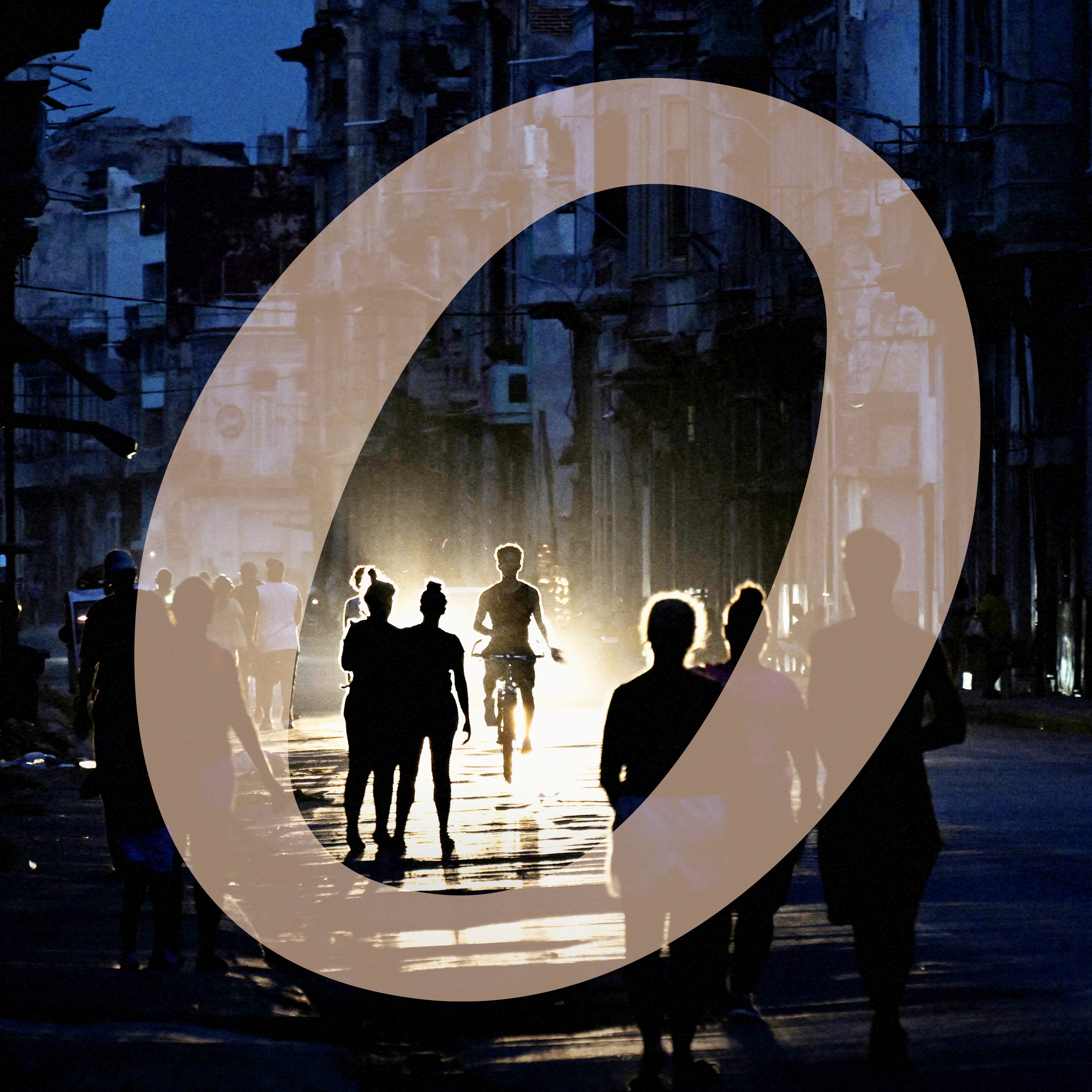
Why has a recent blackout in Cuba sparked questions about a potential conflict with the US? How concerned should we be about the spread of meningitis? And why did Kenya introduce menstrual leave for workers?
Jeevan Vasagar is joined by The Observer’s Evan Moffit, Elaine McCallig and James Tapper as they battle it out and pitch the top stories of the day.
**We want to hear what you think! Email us at: [email protected]
Follow us on Social Media:
- @ObserverUK on X
- @theobserveruk on Instagram and TikTok
- @theobserveruk.bsky.social on bluesky
Host: Jeevan Vasagar
Producer: Casey Magloire
Executive Producer: Matt Russell
To find out more about The Observer:
Subscribe to TheObserver+ on Apple Podcasts for early access and ad-free content
Head to our website observer.co.uk
Download the Observer app – for a listening experience curated by our journalists
Hosted on Acast. See acast.com/privacy for more information.
Get every episode summarized
Each time The News Meeting publishes, we email you a written briefing from the transcript — the topics, who appeared, and any specific claims, with the ad reads skipped.
Email me new episodesFree for 3 shows. No card needed.
Hosts & guests

Transcript ready
275 searchable segments. Every word is indexed and playable.
Full transcript
The News Meeting — Does the US have plans for Cuba?. Machine-transcribed; use the interactive transcript above to jump the player to any line.
My perfect day as sand saltwater and friends, but my moderate-to-severe plaque's rises can take me out of the moment. Now I'm all in with clearer skin thanks to SkyRizzy, risen chism at Risa, a prescription only 150 milligram injection for adults who are candidates for systemic or phototherapy. With SkyRizzy, most people saw a 90% clearer skin and many were even 100% plaque-free at 4 months. SkyRizzy is just four doses a year after two starter doses. Don't use if allergic to SkyRizzy, serious allergic reactions, increased infections, or lower ability to fight that may occur. Before treatment, get checked for infections and tuberculosis. Tell your doctor about any flu-like symptoms or vaccines. Thanks to SkyRizzy, there's nothing on my skin, and that means everything. Ask your doctor about SkyRizzy, the number one dermatologist prescribed biologic in psoriasis, visit SkyRizzy.com or call 1-866 SkyRizzy to learn more.
Hello, it's Thursday the 18th of March. I'm Jeevan Vaseger from the Observer. Welcome to the news meeting. The health secretary has called for anyone who visited the Canterbury nightclub at the center of a meningitis outbreak to come forward. $200 billion, I think that number could move. Obviously, it takes money to kill bad guys. In a joint statement, the leaders of the UK, France, Germany, Italy, the Netherlands and Japan have condemned in what they say are the strongest terms attacks by Iran on gas and oil installations. Before we get started, I want to quickly remind you that we're hosting an episode of the newsmeeting live on Thursday the 26th of March. It'll be right here in our newsroom
from 6.30 pm. They're always great fun. The competition gets more heated in front of an audience, so it's not one to miss. It's a chance to see all the best bits of this show up close and personal and with a free drink. If you'd like to join us, we've left a link in the episode description or you can book online at observer.co.uk forward slash our hyphen events. But right now, we have a show to do. I'm back in the hot seat and here to decide what should leave the news. And today, I'm joined by some of the observers finest. Firstly, Evan Moffat, who's in charge of curating our homepage. Hello. Hi. Reporter James Tapper. Hello. Hi, J even. And digital production editor Elaine McCallic. Hello. Right. I want to hear what today's guests would like to pitch. Let's start with long stories short. What are your headlines? Elaine. Pain in the Tom. Evan. La noche oscura del alma, or Cuba's Dark Night of the Soul. And James. Is it spreading? Evan, you're up first. Tell us about your story. Thanks, J even. On Tuesday night, Cuba emerged from a 29-hour blackout which affected almost
the entirety of the island. But most of the country's 11 million residents still dealing with blackouts lasting between 12 and 18 hours per day. This is for its hospitals, schools, and businesses to close. And it's also led to food shortages as trucks now can't deliver goods. This has happened because no fuel has reached Cuba since the abduction of Nicholas Maduro in early January. Cuba received most of its oil from Venezuela. And after season control, the Venezuelan oil industry, the US has cut off that supply entirely. Crisis has also been exacerbated by new restrictions put in place by the Trump administration that has made the embargo of the country that the US government has enforced since 1962 far more severe. And they've been enforcing this with a combination of tactics. There's a navy destroyer, the USS Stockdale, which is currently deployed in the Caribbean, which intercepted an oil tank or headed to Cuba in February. So Cuba's in crisis. It's Dark Night is literal. There are many ways to report this story, Evan. Tell me what appeals to you, what angles you want to pursue here.
So as we know, Donald Trump is waging war in Iran. We also know, of course, that he toppled Maduro's regime back in January. And it's been reported that the Trump administration was emboldened by that, well, quote unquote, success. I think that that's in the eye of the beholder still. And that pushed them to pursue regime change in Iran. The conflict in Iran does not seem to be going very well for the US. It appears based on recent statements made this week that Trump is keen to find an off ramp to the conflict, or at the very least, something to distract the American public. And the administration appears much more confident of its likelihood of success in Cuba, which is of course only 150 kilometers from military installations in Florida, and isn't a much weaker position than the Iranian regime. So the way you'd focus this story is to go inside the White House. I'd actually like to look at it from Cuba's perspective. I mean, I think it's important to take Trump at his word when he says, you know, I believe I will have the honor of taking Cuba.
I mean, whether I free it, take it, I think I can do anything I want. That's what he said on Monday. That said, you know, it's important to think about what this would actually look like and consider what's different about the Cuban regime from the government of Venezuela or Iran that would make a similar success a bit more complicated than perhaps the administration realizes. And how do you think we'd report that? Is that by trying to speak to insiders in the Cuban regime or to report from on the ground in Havana? Well, I'd love to go back to Havana. It's a beautiful place. But definitely by speaking to people there and also, you know, Cubans in and around the Gulf of Mexico who observed the situation in the government there very closely. Elaine, what do you think? I think it's a really strong story. I would be really interested in maybe a video diary or something for somebody on the ground there because, unfortunately, with all these things, it is always the normal people that pay the price and same with Trump's
other endeavors around the world about, you know, the price of gas in Europe is now more than double it at walls before the war with Iran. So it's always a normal people that suffer. And I think that that's what we should center in this story. James, what do you think of Evan's pitch? I think it's a really interesting development that, yeah, as he was saying, why now? Why is it that Trump has decided to raise this issue at this particular point when the war in Iran is going so badly for him? I think I've kind of answered the question by asking it there, haven't I? But it's a really interesting point and I'd also love to know a bit more about how people in Cuba are coping with things. Evan, the point that James just raised about the war in Iran is a salient one, isn't it, in terms of news attention. So obviously audiences around the wealth understandable reasons are completely focused on what's happening in the Middle East. How would you persuade our listeners and readers that they should actually be paying attention
to Cuba? Well, on the one hand, of course, Trump loves distracting us, right? And he loves keeping the world in suspense. On the one hand, Cuba might be a distraction from a war that's going badly in Iran. On the other hand, it's the kind of distraction that is already having very serious consequences for people on the ground, who can't access fuel, who can't access food, who can't access medical care. Thank you, Evan. We're going to take a short break and then we'll hear what James and Elaine think should lead the news. My perfect day as sand saltwater and friends, but my moderate to severe plaques rises can take me out of the moment. Now I'm all in with clearer skin thanks to SkyRizzy, risen chism at Rizah, a prescription only 150 milligram injection for adults who are candidates for systemic or photo therapy. With SkyRizzy, most people saw a 90% clearer skin and many were even 100% plaque free at four months. SkyRizzy is just four doses a year after two starter doses. Don't use if allergic to SkyRizzy, serious allergic reactions, increased infections,
or lower ability to fight that may occur. Before treatment, get checked for infections and tuberculosis. Tell your doctor about any flu-like symptoms or vaccines. Thanks to SkyRizzy, there's nothing on my skin and that means everything. Ask your doctor about SkyRizzy, the number one dermatologist prescribed biologic in psoriasis. Visit SkyRizzy.com or call 1-866 SkyRizzy to learn more. James, what do you think should leave the news?
So, is it spreading? This is a story about meningitis. I'm sure most people know now that there was an event in Canterbury and Kent on the 6th of March, so two Friday Saturdays go. And as a result, there's been an outbreak. Two people have died, a sixth former, Queen Elizabeth's Grammar School in Favisham, called Juliet, and a 21-year-old student at the University of Kent, whose name we don't know. And then today, the UK Health Security Agency has announced that the number of cases that they're aware of has risen to 27. It's the number of schools that it has affected is four, and there's a second higher education institution in London, which has now got a student at it. So, this is obviously a story with a human tragedy at its core. What do you think of the questions that our readers and listeners want answered here? Clearly, everybody's who's got family, and especially people with university-aged students, like I do, is going to be interested in knowing whether or not they're at risk. And the second question is, what can we do to prevent that risk to our children?
Do we understand why it's spreading so quickly? No, we don't really. It is unusual in that it has been spreading more quickly, according to where it's treating more quickly than other incidents. It could be that it's something to do with the nature of where the outbreak started, which was in a nightclub. So, people have been speculating that perhaps some of the people who've contracted the disease were sharing a vape. It's quite difficult. It's not like COVID, which is sort of both airborne and contact-driven. There's going to be quite prolonged contact for you to transmit or receive the manageritis, the bacteria that are responsible for this particular disease. And as ever with the public health story, there are a number of different ways to report this. There's the human side, the social side, the science part of it. Which of these elements interest you the most? Which of them do you think you want to really dig into? One of the interesting things about this is our response. So, when we talk about the risk and how
we can prevent it, vaccines are important. I mean, what's happening at the moment is you've got 5,000 students in Kent who have been receiving antibiotics and now they're starting to get vaccinated against the disease. Now, people with young children will know that they've been getting a vaccine against meningitis B, the strain of the bacteria that we're talking about. And they've been getting it since the age of 1, but that only started 10 years ago. So, we've got a cohort of children, roughly the age of 12, upwards to 18, 19, 20, who haven't received the vaccine routinely. So, should they? And that's something that's under consideration at the moment, but since it takes 18 months to brew a batch of the vaccine, it's not a simple matter of just changing the amount that we have. So, what do we do? What do we do? Your questions are around what the government's response should be and what are capacities are in terms of getting people vaccinated? Yeah. Okay. Elaine, what do you think? I think that when I saw pictures of young people in masks,
it instantly took me back to 2020. And these per-young people have, you know, they've had their schooling disrupted by it and now they have, there's another infectious disease. So, it just, I think it instantly brings everybody back to that time. In a way, we are kind of ready for it. Like, we all know what we're meant to do when there isn't an infectious disease spreading that we do wear masks and vaccines can help that. I think it's really interesting that there is a lot of, there are a lot of people who aren't vaccinated for it. And why don't we just vaccinate everybody for considering its spreads? And it seems to be a thing that pops up every now and then. How seriously should we take the risk of this spreading? It's a serious risk, but so far it would appear that none of the transmission of the of of meningitis has happened except in the nightclub. Although there are people at four schools in Kent who've benefacted, although there's another student at a higher education institution in London has been affected,
they appear to have picked up the disease at the nightclub. So, at this point, we can be hopeful that it hasn't spread. Evan, what do you think? I mean, I think it's a really important and urgent story since it seems to be the most pressing public health issue right now, at least in the south of England. I'd be really interested to hear more from public health officials how they're going to deal with vaccine skepticism given as you've noted that it takes so long for the vaccine to take effect that it's not as widespread as other vaccines. And we just saw, I think earlier this year, the loss of the UK's measles free status. Thanks, Evan. Elaine, last but never least, what do you want to talk about today? I want to talk about how Nairobi has introduced menstrual leave for their public employees. So, this was introduced last December by Governor Johnson-Sakaja. Half of his 18,000 strong workforce are women and so therefore are eligible for this leave. It's a two days no questions asked leave every single month if people want to take
it. How it came about, I think, is quite interesting because his friend is a gynecologist and he's doing a project where you kind of simulate period pain in men and the governor was so shocked by their reactions to it that he thought, okay, we need to do something about it. And he also, he spoke to BBC and he said- Finally, he took it seriously after happening to men. Yes, exactly. He also has sisters, he grew up with sisters, so I guess he's a bit clued in in that way as well. So, there are arguments for and against it. So, of course, increased productivity. I think morale as well, if you do work somewhere that recognizes the pain that women have every month, that's a good thing. But then there's also the arguments against. So, just last week in India, two top judges in the country ruled that it would make women less likely to be employed because they're just going to scave, you know, they're just going to take two days off a month. That'll be employer's perception anyway. Okay, how would you report this story, Elaine? How would you, it's been reported already, we know about it, how would you take it forwards?
How I would take it forward is I would love to know more about the women's experiences in Nairobi, the women who have taken it up. I couldn't find any numbers on how many women have used it so far, but also balancing that with Spain. Something really interesting about Spain and their menstrual leave policy is you actually need a doctor's note every month that you want to take a couple of days off. In Nairobi, there are no questions asked and you can just take it off. How much of a barrier is that doctor's note? In the first year that Spain had introduced it in 2023, only 1,500 women actually used it, whereas how does that compare to Nairobi? And when I think of the UK and my own experiences as well, the waiting list for an endometriosis diagnosis, for example, is nine years. So if you need, if there is a questions asked policy of well, you need to have some kind of pre-existing condition beyond just having really bad periods and that just automatically
locks them in out. And I guarantee that there are women taking these days anyway as sick days. And I think it's important that we recognise that. So I think putting the women front and center in this story and how there are different barriers. So although it seems like, well, this is a great win for women in Spain, is it actually? Yeah, so this is partly a story about a recognition of women's health, but also a story about the sort of shifting balance between employers and employees in terms of what seems acceptable reasons to take leave and how that contributes to productivity. Okay, and I like your approach of kind of following the women and I just wondered, you know, what period of time you think we should follow women over to have a true understanding of how well this policy is working? I think at least six months, to be honest, because every month is different for every woman, not every woman is the same, but I think if you have women over a period of, say, six months off, did you take up the menstrual leave and why not? Did you feel
weird asking your manager, like, what are the barriers to you taking that? Were you actually okay to go to work this month and you didn't need to take any time off at all? Because that's the thing as well, is that it is so different for every woman every month. And before we ask your fellow contestants what they think, is there a data aspect to this story? Definitely, yes. So it is there is some sort of menstrual leave policy in a number of countries around the world and I would love to get our data and graphics team on it to kind of visualize that, see how they all differ and how many women benefit from them, what the barriers might be. So I think that that would be really strong. Evan, what do you think? I think this is a really interesting story and we actually had one of these machines in our office just the other week. I did not have the displeasure of trying it myself, but our colleague, Charles Whitell, who often hosts this podcast did and he said that, you know, a fairly moderate pain level would disqualify him from being able to write. I think that also that statistic about endometriosis, diagnosis by the NHS is just staggering.
And it goes to the heart of a lot of reporting that we've done about, you know, the crisis of maternity care and women's health generally speaking in the country. So definitely important. And if you haven't seen the video of our deputy to Charles Whitell being put through the period machine, I recommend you look it up straight away. James, what do you think of this story? I was in the room when Charles was turning up, turning up the volume presumably. I mean, I played the fifth. But it's a really important story. I've precisely the reason that people will see if they watch the video because Charles is in the video, but also our colleague Phoebe Davis is in the video too and she has endometriosis and talks about the impacts on her. I think the one of the things I'm curious about, which I don't really know is how this would differ from sick leave. Why it's important that it would be a separate thing to that. I think it's important to call it what it is and to not classify it as a sickness because there's nothing wrong with you necessarily. You know, I don't think it should be
classed in that way. I think it's important that we say it, that say what it is, that that was the point of the governor in Nairobi. He toyed around with calling it wellness leave, but he said actually, no, let's just call it what it is. It's menstrual leave. And you know, we're all adults in the workforce. We are recognized that people have different things. Half the workforce has to deal with this one specific thing. So I think distinguishing it from sick leave is very important. Now I want to hear what you think should lead the news. There's only one rule you can't choose your own pitch. James. So two really strong stories. Don't want to be in your shoes, even. It's very difficult. I think Elaine's pitch about menstrual leave is very strong, but I think in the end I'm going to pop for Evan's idea about Cuba. Evan, what do you think? I'm going to have to return the favor. I think Elaine's pitch is fascinating and I would love to see a long reported read on this story looking at all of the case studies that she's highlighted and I think, you know, we could invest a couple weeks reporting into it. It's not going to
lead the news for me. So I will have to go with James's pitch about meningitis, which is a very fast-moving story. And I think we have to stay on top of it. Elaine. I agree with Evan. I think that James's meningitis story should lead the news because I can see it so quickly developing. And like, frankly, myself as someone who lives in London, I would quite like to know how at risk I am and people I love are because it is coming to London now. Thank you all. I'll say my decision after this short break. My perfect day as sand saltwater and friends, but my moderate to severe plaques rises can take me out of the moment. Now I'm all in with clearer skin thanks to Skyrizzy. Risenchism at Risa, a prescription only 150 milligram injection for adults who are candidates for systemic or phototherapy. With Skyrizzy, most people saw a 90 percent clearer skin and many were even 100 percent plaque free at four months. Skyrizzy is just four doses a year
after two starter doses. Don't use if allergic to Skyrizzy, serious allergic reactions, increased infections or lower ability to fight that may occur. Before treatment, get checked for infections into perkylosis. Tell your doctor about any flu-like symptoms or vaccines. I get to make the final decision and this is what I think. Evan, I thought you'll pitch on cubo I thought your pitch on cubo was compelling, but I think the challenge here is that our
focus in terms of what the White House is doing and in terms of conflict is really on the current conflict in the Middle East and I think for that reason it's hard for cubo to lead the news. That doesn't mean we shouldn't report it. We absolutely should, especially in terms that you outlined, but I don't think it leads the news. Elaine and James, it was hard to choose between your two stories. I was compelled by both pictures. I'm particularly interested, Elaine, in the effects of this policy. Once a policy is agreed and becomes law, to what extent does it work in practice? Who adopts it? How is it to adopt? I think the idea of following women in Kenya and speaking to them about their experiences and understanding, if someone has taken it up once but found it very difficult to take up, would they take it up again? The extent to which this spreads to society and becomes an established right is really interesting, but I don't think it leads the news. I think the compelling story of the moment is the meningitis outbreak. That's the story that here in the UK we do want to know about and there are so many unanswered questions.
So I think for that reason, James, you lead the news. All right. James, Elaine, thank you for joining me. Thank you. Thanks. It was great. Thank you. Don't forget, if you have thoughts on anything we spoke about today, send us an email to newsmeetingatobserver.co.uk. We'll be back with another episode on Monday. Until then, goodbye. The Observer. My perfect day as sand saltwater and friends, but my moderate to severe plaque rises can take me out of the moment. Now I'm all in with clearer skin thanks to SkyRizzy. Risenchism at Risa, a prescription only 150 milligram injection for adults who are candidates for systemic or phototherapy. With SkyRizzy, most people saw a 90 percent clearer skin and many were even 100 percent plaque free at four months. SkyRizzy is just four doses a year after two starter doses. Don't use if allergic to SkyRizzy, serious allergic reactions, increased
infections or lower ability to fight that may occur. Before treatment, get checked for infections and tuberculosis. Tell your doctor about any flu-like symptoms or vaccines. Thanks to SkyRizzy, there's nothing on my skin and that means everything. Ask your doctor about SkyRizzy, the number one dermatologist prescribed biologic in psoriasis. Visit SkyRizzy.com or call 1-866 SkyRizzy to learn more. Youth Mental Health is a complex challenge that requires comprehensive solutions. We must strengthen after-school programs. We must make digital literacy tools available in our schools. We must work with mental health professionals to support children. And we must empower mentors, educators and parents to keep kids happy. Learn more about our commitment to finding lasting solutions at EmpowerOurFutureCoalition.com slash solutions paid for by the Coalition to Empower OurFuture.
More episodes
More from The News Meeting

Will the fight for Keir Starmer’s seat make or break the Green Party?
The News Meeting

What’s behind the Nepal flash flood?
The News Meeting

Has Tupac Shakur’s murder finally been solved?
The News Meeting

How vulnerable is global shipping?
The News Meeting