Loading...
About this Episode
A special guided nature walk is taking place in Ennis this weekend, with a focus on the growing issue of invasive plant species and their impact on our environment.
Ennis Tidy Towns has teamed up with plant ecologist Dr Frances Giaquinto for a walk through the woods at Lees Road this Saturday, where people can learn how garden plants are escaping into the wild and affecting biodiversity, soil and water quality.
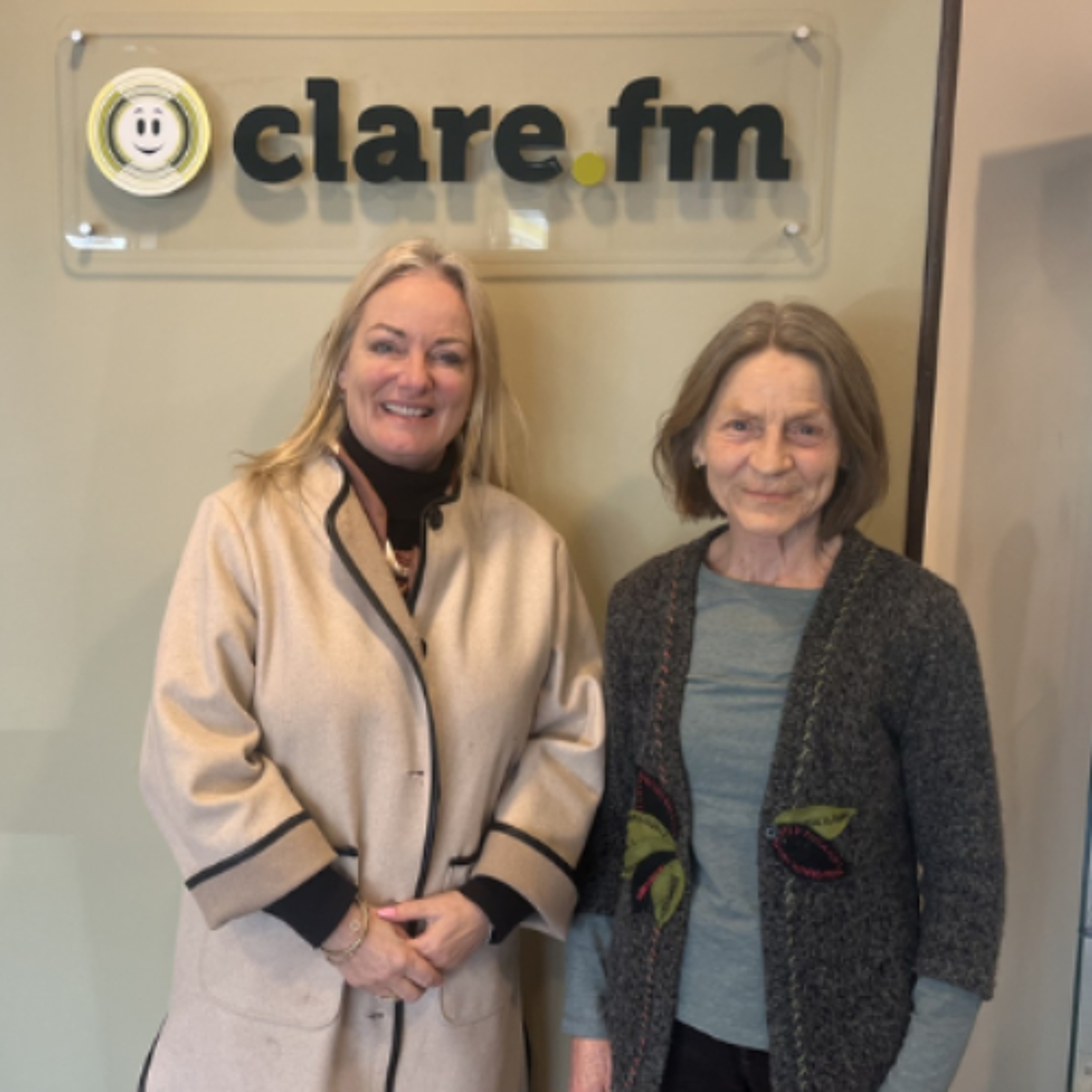
On Friday's Morning Focus, Alan Morrissey was joined in studio by Dr Frances Giaquinto and Mary Howard from Ennis Tidy Towns.
Hosts & Guests
Transcript
A special guided nature walk, which is happening at NS this weekend with a focus on the growing
issue of invasive plant species and their impact on our environment, NS Tide Towns, has teamed
up with Dr Francis G. Quinto, the plant ecologist botanist for a walk through the woods at
Lees Road this Saturday, and delighted to say that Francis joins me in studio as does Mary
Howard from NS Tide Towns.
Ladies, a very good morning.
Good morning.
Thanks very much for being with us and Mary from the NS Tide Towns, end of things.
Can you tell us how this walk at Lees Road came about?
That we worked with Dr Francis in the past, and I think part of the NS Tide Towns,
our part of the Tide Towns remit is to educate, and we see plants all the time, but we might
not realize that they could be a bit of a thug if they get into your garden, if they could be
toxic, or you know, they could be highly invasive.
So, and a lot of these plants, I suppose, come into Victorian gardens, you know, years ago,
people were traveling and they want to come back with something different,
but didn't realize that they could get rid of our native species.
We're living with the ramifications of them now.
Absolutely, and we see it everywhere.
So, it's just, this is an educational piece that NS Tide Towns are doing with Dr Francis,
to create awareness as to watch these plants look like.
They look harmless, but they're not harmless.
I was, we went for a cup of tea earlier and I was telling Dr Francis that I live in a very old
farmhouse, and we were the first children that were born in there, it's over 200 years old.
But my mother, you said to us when we were little, don't touch that, that's the nightshade,
don't eat that, that's the labyrinthum.
You know, she knew about these things.
So, I used to always say, it was a utri, and they'd have lovely little redberry that looked
like smarties.
And she used to always say, don't touch that.
But, and I say, why do the people here not like children?
You know, that all these poisonous stuff, because it is quite attractive out of these
poisonous plants.
So, it's to create awareness about that.
So, from a very young age, I was aware that you don't put in, then you don't know
into your mouth, you know, because like the labyrinthum, the seas looked like peas.
You've got your labyrinthum.
They're enticing, but yeah, as you say, you definitely find out all about it if you did touch
the marieta.
And Francis, you know, maybe can you give us a sense of just how much more is out there
that people should be aware of?
Because we think about invasive species, Mary's name, some of them.
I know we've spoken about, perhaps one of the most invasive of them all on the show before,
the Japanese knotweed.
What else is out there that people might see in terms of common invasive plants
that they should be aware of if they're not?
Well, yes, more and more, we're seeing partly as a result of climate change,
but invasive species of all kinds, not just plants, but animals, microorganisms,
fungi, bacteria and vertebrates.
There are many of them are becoming invasive, and invasive means they cause economic and
environmental harm.
And as Mary mentioned, the old gardens can be sources of invasive species, such as Japanese
knotweed and giant hogweed, which were introduced a long time ago, and nobody realised how
how problematic they could become.
But even now, people are, one of the things that I'd really like to kind of demonstrate tomorrow
is how anybody who is interested in gardening, home ownership, farming, angling, all these things
were coming across a lot of species that are becoming very problematic and impacting us directly.
Well, now one example would be cherry laurel.
Now it's probably one of the most popular of hedging plants, and it's great because it's cheap,
it's evergreen, it's very fast growing.
But what people don't realise is that it's very poisonous.
And a few years ago, I think it was in Cavern, 32 young cows died,
because they were allowed into a field which had a cherry laurel boundary.
And if you cut cherry laurel, and say you take the cherry laurel to an amenity landfill,
the prunings, you may find that you get a very bad headache, and that is because the cut foliage
of cherry laurel can actually release cyanide.
So, this is just one example of how invasive species without our knowing
but can become directly problematic for us.
Okay, well, yeah, when you hear cyanide, Mary, I was really serious.
I thought, ooh, I must put some cherry laurel.
I need to tell us more about the walk tomorrow.
When it's happening, what route it will take, will it be extensive, because I'm sure it sounds
like there is quite a lot to point out to make people not just to be aware of, but to be wary of.
Absolutely, that we're meeting tomorrow morning at 11 a.m. at the Car Park in Lees Road,
in the Jonathan Park. So, it'll be obvious, we'll be there.
Everybody's free to come and join us.
It'll be, it's starting at 11, we should be over by one o'clock.
It's a free event. It's for young and old people on their own, families.
It's an educational piece, and I'm actually looking forward to it, because I have met,
when I first met Dr. Francis, who was across the street here in Tesco about eight or nine years ago,
where in his tiny town, he said, a pop-up, and you had the vegetation there with you.
So, actually, to see it in his natural habitat, like I remember you showing me the straight edge
on the, the knot wheat, and ever since then, I can actually recognize knot wheat.
It's as big as your hand was going to straight back edge, as opposed to being a shape.
So, it's things like that that you pick up in your learning, don't forget them.
So, anybody who is anywhere interested, there are more than welcome to come and join us tomorrow
morning, so 11 in these road. Okay, and just to finish with yourself and this, Francis,
I mean, you, you, you be highlighting the various invasive species out there.
Will you be given people simple steps they can take to prevent these species from spreading?
Absolutely, and I think that's one of the most important aspects of tomorrow's walk.
It's, it's to show people how we can prevent them impacting our lives, how we can prevent them
from coming into our gardens, what we can do if they do become established, and the various
actions that we can take when we're out in the natural environment to protect ourselves,
to protect, and to protect the environment. So, absolutely, and we're also going to try and
make it fun, you know, so it'll be educational, but it'll be a fun morning as well.
Okay, brilliant, really worthwhile venture, because I'm sure there's a lot of us out there who
don't know just what's out there in terms of invasive species. Maybe we look at some of these
things on a daily basis, not knowing. Just so harmful, they have the potential to be.
And my thanks to Dr. Francis Chiequinto, and also from LSD, Mary Howard, Mary, thank you very
much for being with us this morning.