About this episode
A growing number of farmers can’t afford to plant their crops this year. It’s because of rising costs for diesel, fertilizer, and equipment parts — coupled with low crop prices. On today’s episode, we talk to an Ohio soybean and corn farmer. Plus, how our economic landscape has changed after four weeks of war. Also, we break down the new consumer sentiment survey. And finally, a New York City artist shares his experience with the job market and gig economy.
Every story has an economic angle. Want some in your inbox? Subscribe to our daily or weekly newsletter.
Marketplace is more than a radio show. Check out our original reporting and financial literacy content at marketplace.org — and consider making an investment in our future.
Get every episode summarized
Each time Marketplace publishes, we email you a written briefing from the transcript — the topics, who appeared, and any specific claims, with the ad reads skipped.
Email me new episodesFree for 3 shows. No card needed.
Hosts & guests

Transcript ready
293 searchable segments. Every word is indexed and playable.
Full transcript
Marketplace — Feeling down on the farm. Machine-transcribed; use the interactive transcript above to jump the player to any line.
This marketplace podcast is supported by VantageCore, the modern credit score used by nine of the 10 largest banks, over 3,700 companies, and now approved by Fannie Mae and Freddie Mac. VantageCore, trended data, alternative data, reduced risk. Running a business is hard enough, so why make it harder with a dozen different apps that don't talk to each other? Introducing ODU, the only business software you'll ever need. It's an all-to-one, fully integrated platform that makes your work easier. From CRM, accounting, inventory, e-commerce, and more. And the best part ODU replaces multiple expensive platforms for a fraction of the cost. This is why over thousands of businesses have made the switch. So why not you? Try ODU for free at ODU.com. That's ODOO.com. Oh, for a calmer time, huh? From American public media. This is Marketplace.
In Los Angeles, I'm Kai Rizal. It is Friday. Today, this one is the 27th of March. Good as always to have you along, everybody. One does have a certain yearning. Does one not for the days and weeks when the news of this economy was not this? These are obviously not though the days and weeks we are living in. So we are going to make sense of it as best we can. David Gerrard is at Bloomberg. Courtney Brown is at Axios. Hey, you too. Hey, Kai. Hey, Kai. Courtney, let me begin with you. And I'll begin on Monday of this week on this program. I said, and I believe I'm quoting myself here, the markets are an idiot. They were fallen for every head fake coming out of the White House and coming out of the president and his advisors about what was going to happen with this war and what the economic impacts were going to be. And I wonder if five days later now, four days later on a Friday afternoon, given today's action, maybe they're rising up. Which markets were you talking about? Were you excluding the bond market
from this? Hang on. We're going to get the bonds in a minute. I want to talk like equities in oil and all that. Now I'm coming back to bond. So go with the equities in oil. I mean, I think that's right. I think we saw some equities under pressure today. I think the stock market is kind of like that very hyper college student that's not exactly focused on what's happening right in front of them. I think that there is a war going on and every economist I talked to you and have talked to this week. The big question is how long is this conflict going to last? Is it going to widen? Is it going to escalate? What are going to be the what are going to be the implications for inflation? I mean, there's concerns out there. And depending on which day you're looking at the stock market, you may or may not see those concerns reflected in equities, right? Absolutely. So David, let me just point out here and this is not my
observation. It's pretty much everybody's. Lots of talk about an oil shock and what that's going to mean. It has to be said, this is not an oil shock. It is an everything shock, yes? Yes, absolutely. And I was talking with Amos Hockstein who was an advisor to President Biden on economic issues, energy issues. And he said the market is pricing at risk at this moment, but they haven't priced in the kind of disruption that we're getting. We really haven't seen something like this in an extremely long period of time. I think about the move that we saw in the equity markets. I think it probably stems from the fact that you've had a President who has felt that he has a lot of determinism over the course of this conflict. He thinks that he can set a deadline. He thinks that he can end this war when he wants to end this war. We even saw that pronouncement earlier this week. He was going to extend a pause on attacking power plants. Low Israel went ahead and did that today. I think it's an indication that there are limits to what he's able to do in terms of shaping the trajectory of this conflict. And while he's been somewhat successful, I think kind of managing the equity markets over the course of the first few weeks of this conflict, there's a reaction function that he has been unable to manage. And that's oil prices
and gas prices. And that's only gone in one direction since the start of this war. And so you're right, it's it's trickling across the economy. There were of course the first order effects. We see those at the gas pump, your pumping gas or diesel. But then there are all these other effects that I think everyone is now really having to reckon with the fact that transportation costs are going to go up capital costs for businesses are going to go up. Fertilizer is going to be more expensive. Consumer spending is bound to be impacted by all of this. And we're going to see kind of broader supply chain issues. So I think that there is, if not a reckoning at this point, a recognition of the fact that this duration variable is really something that's going to be squishier and squishier as all of this goes on. And that's bound to have this adverse effect on markets and on all of us. Yeah. And honestly, I forget whether it was Sun Zoo or Clause of it. But one of them said, best strategy in the world never survives first contact with the enemy and the Iranians get a vote here on all of these things that are going to happen. Courtney Brown, the bond market. I want you to explain to me why you think the bond market is a little different and you need to define a term premium, please. Okay. Why I think the bond market is different. I've always just respected
the bond market more because I just think bond investors are smarter. I hope that's a satisfying answer. I think they, they, everybody. Yes. Yeah. That's right. That's right. Letters that market play. No, I think there are considerations in the long term that I think play out in the bond market in a different way than in the stock market. I think this war is a perfect example of that. We are seeing that yields are going up. And for two reasons, right? There is kind of this uptake and inflation expectations, but there's also something called the term premium, which basically means that bond investors are demanding more payment for, you know, the, the, you know, the, the term opportunity to lend, yeah, exactly to learn to lend the government money. And so,
I think what's interesting this week is that there seems to be concerns about the government's fiscal situation. I mean, there are always concerns, but now there seems to be more concerns about, you know, how, how, how much money the government is going to have to spend on this war. And we learned in a great fiscal situation before. And is that fiscal situation going to get worse? And I think that's the big question on bond investors mind these days. Right. So, David, I'm going to play a piece of tape with the president here in just a second. And I will preface it by saying, in this very specific case, you do have to hand it to the president. Here's that tape. I thought frankly, I thought the old prices would go up more and I thought the stock market would go down more. The guy is right, right? Yes, he is right. But I don't think that we've seen the end of this story. So, so maybe he thought that in the near term. But again, I think as people get a grasp of sort of what's happening here and the kind of displacement that's taking place, we're bound to see more of a reaction than maybe he is kind of cheerfully acknowledging there
in those comments. Look, I think we saw from a handful of policymakers over the course of this week all around the world, them reckoning with the fact that this is not a war that's going to be measured in weeks, despite what the what the Secretary of State said today when he was in Europe. It does feel like this is going to last a lot longer. And so those policymakers are having to make preparations for, you know, living in a world in which oil is above $100 a barrel going forward and all the ramifications that that's going to have. Courtney, you get to go first on this question, David, you get to think about your answer because it's going to be the same one for the both of you. What are you looking, what's the tail going to be for? Let me back up for a minute. There is going to be lasting economic damage from this war. That's just going to happen. What are each of you looking for to know that that is coming, Courtney? I think that there are concerns in my conversations this week, something that kept coming up is that yes, there are a bunch of goods stuck essentially, right, in the street of formulas and that's going
to have ripple effects for the economy. But the big thing that folks were bringing up to me this week was, you know, what is the energy infrastructure situation looking like? Like if there is huge damage to actual energy infrastructure in the Middle East, which we've already started to see, like there is no on off switch, right? Like it will take time to build back that infrastructure, whether it be a liquefied natural gas facility or what have you. Those are the types of things that everything else equal. There will be less supply of a certain commodity while whatever infrastructure is being built back up. So what is the lasting damage from those types of effects? I think that's one of the big questions. David, 30 seconds. You're good to last word. Yeah, for me, I think it's indicators of consumer behavior, how they're feeling about this. We've got an indication of that today from the University of Michigan Survey. That sentence led to a three month low and we saw expectations for inflation rising among those who were surveyed. I think those data points, both soft and hard data
points are going to tell us how this is resonating and affecting Americans, folks around the world. Yeah, more on that consumer sentiment number coming from Nobisafo in just a couple of minutes. David Gara at Bloomberg, Courtney Brown at Act Show, thanks you too. Thank you. Thanks, Guy. Have a nice weekend. Weekends, speaking of them, the past four weeks or so have been active. Shall we say on the news front? Traders today decided they did not want to get stuck holding that bag. We will have the details when we do the numbers. There is nothing special about tomorrow, really, March of 28, except that it's four weeks to the day since the United States and Israel started waging their war on Iran. Obviously, those in harm's
way, everyone in harm's way in the Middle East are top of mind. But the American and global economies also look very different now than they did a month ago. Marketplaces Mitchell Harman has more on what a difference a war makes. I started with the proposition that there must be some aspect of our big broad economy that isn't suffering from all this tumult. But I was disappointed. The impact so far has been very negative. There's no upside to this. There's nothing but downside. Mark Zandy is chief economist at Moody's Analytics. Obviously, we're paying a lot more for gasoline. For all this, we were paying less than $3 a gallon. Now we're paying four in the direction of travel is pretty disconcerting. Inflation pressure is already reflected in sharply rising interest rates. If you want to go out and get a mortgage, you have to pay six and a half percent on a three year fix. That's up by the half a point. If you're a business, I wouldn't count on any more rate cuts by the Federal Reserve. Another place feeling the impact after four weeks of war, the stock market says Sam Stovall, chief investment strategist at CFRA research.
The market has taken a one, two punch and is staggering like an aging boxer. With all of the major indexes, S&P 500, Dow and Nasdaq all down sharply. Though that doesn't mean every sector suffering, energy stocks are up 25 percent and says Stovall. There's an old saying that when the going gets tough, the tough goat eating, smoking and drinking. So you have consumer staples, food, beverage, tobacco are down, but less than 1 percent. So far, we haven't seen much impact on the job market. Though it was already pretty weak, says Paul Christopher at the Wells Fargo Investment Institute. The job growth numbers have been some of the lowest that I've ever seen, but still the unemployment claims are also low. Unemployment is likely to rise, says Moody's Mark Zandy, as employers feel the pain of soaring energy prices and slower growth. Zandy sums up the current state of the economy this way. So far, the damage is manageable, but it's mounting. Is he talking the R word on the horizon?
Yeah, I think recessions are real risk. If the war and all its disruptions continue for another month, I'm Mitchell Hartman for Marketplace. All right. Here's another four weeks of war marker for this economy. Gura alluded to this. Good people at the University of Michigan released their latest survey of consumer sentiment today. I guess he did more than a lead to it, right? He flat out said it. There was a 6% decline this month, about which, yes, I know what consumers have been saying that we are cranky and what we have been doing, still spending, have not really lined up the past couple of years. But hear me out, because this new data shows sentiment fell even more among higher-income consumers, those same consumers who've been mostly propping up the economy.
Also, in related, we are all thinking inflation is going to be going up. Marketplaces Nova Sofow has today's, oh, that can't be good, explainer. Rewind to just before the US and Israel launched strikes on Iran and consumer sentiment was improving. Even in a couple of weeks right before the military conflict began, that trend was continuing. Joenshu runs the University of Michigan's consumer sentiment survey. She saw sharp trend reversal after the bombs started falling. Any gains that we saw in the previous weeks were lost in the weeks thereafter. By the time the survey closed on March 23rd, overall sentiment was down 6%. One source of positive news from this release, that the major deterioration was in short-run expectations. Meaning, consumers expect the Iran conflict to resolve relatively quickly. And that maybe why for now, consumer behavior has not changed much. Carnival cruise lines,
for example, just reported banner bookings. We are definitely seeing upper-income households powering the economy forward in terms of travel and dining and a lot of discretionary spending. Bank rate analysts had Rossman is still concerned, though, because the University of Michigan's sentiment survey showed a 9% drop among higher-income consumers threatening the case-shaped economy. What is potentially new is that if this situation is going to squeeze even people at the upper part of the K, that ultimately could be recessionary. Eventually, for now, the economy is still strong, Rossman says. Another warning sign is the rise in consumers' inflation expectations from 3.4 to 3.8% a year from now. Neil Mahoney is an economist at Stanford. Consumers were already pretty discouraged about the state of the economy and rising gas prices coupled with we're going to see rising airline prices and food prices over the course of the year is just going to make things
worse. Mahoney says some of this pain is already baked in. He expects consumer sentiment to sour further next month. I'm Nova Safo, for Marketplace. Coming up. Got to find new traditions, I guess. I don't know. Maybe that's what it'll be. We'll be doing gig work in the future and I'm ahead of the game. Good to have a head start, I guess. First though, let's do the numbers. Down in Delstrose, dive 700 and 93 points today. 1 and 7 tenths percent finished at 45,166 did the blue chips. The NASDAQ plunged 459 points. That is 2.2% 20,948. The S&P 500 sank 108 points. 1 and 7 tenths percent there as well. 63 and 68. Four of the five days gone by. The Dow declined. 9 tenths percent. The NASDAQ retreated 3.2%
the S&P 500 gave back to and 1 tenth of 1 percent. Nova Safo was talking about upper income consumers. So here's some stocks connected to discretionary spending cruise line operator Carnival Corporation, which reported earnings today that beat expectations at Nova said, fell 4 and 3 tenths of 1 percent. Door dash. Slowed 3 and a half percent. Darden restaurants. They own the upscale change. Ruth's Chris Stakehouse in the capital grill sank 3 and 2 tenths of 1 percent on the day today. Bond prices, why they fell. Thanks very much for asking. Courtney was talking about this. The yield on the 10 year Tino does rose 4.43 percent on the 10 year and you are listening to Marketplace. Work moves fast. Every email, report, and proposal counts. That's where Grammarly comes in. It's your one place to think, write, and finish. Grammarly's AI agents help you find natural phrasing, fine-tuned tone, and confidently write wherever you work. It's the premier writing tool that 93 percent of users trust to get more work done. In a world
of generic AI, don't sound like everyone else. With Grammarly, you never will. Download Grammarly for free at Grammarly.com. This Marketplace podcast is sponsored by the University of Illinois Geese College of Business. For many, the next step in their career is an MBA, but finding the time and budget can be a challenge. The University of Illinois Geese College of Business offers their online MBA, the IMBA. It's fully online, flexible, and delivered at a fraction of the cost of a traditional MBA. Students get the same world-class Illinois faculty and an interactive global network all designed to fit their lives. To learn more about the Geese IMBA, visit onlinemba.illinois.edu. Modern Enterprise. It's a lot of moving parts. Comcast Business helps you orchestrate it all. With SD-WAN working its scale to keep 150 hospital locations connected and working as one.
Plus Sassy and Zero Trust Security protecting financial data across a bank's 2,000 branches. And AI-powered networking that optimizes traffic across five continents. No one does business like Comcast Business. Early birds always rise to the occasion for summer vacation planning, because early gets you closer to the action. So don't be late. Book your next vacation early on Verbo and save over $120. Rise in shine. Ever savings $141 select homes only. This is Marketplace. I'm Cai Rizdon. Every time I talk to a farmer on this program, they remind me, gently, to be sure, that they are price takers, not price makers. They don't get to decide what their crops sell for. And farm math right now means 2026 is shaping up to be pretty rough. They're paying more for the inputs they need, like seed and fertilizer and equipment. And at the same time, many of them are getting less for the crops they grow because President Trump's tariffs have wrecked their export markets.
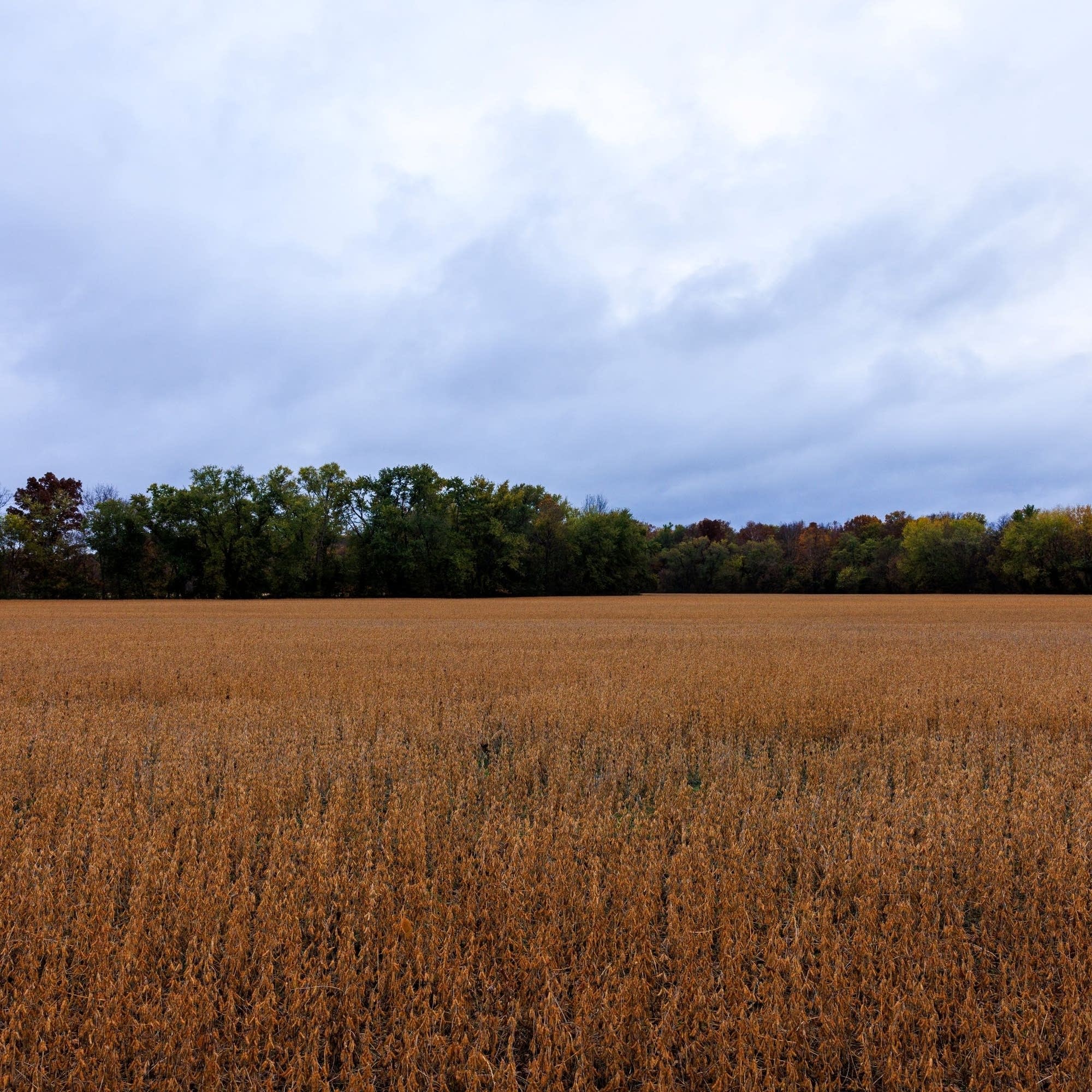
The American Farm Bureau of Federation says a growing number of farmers, in fact, just aren't going to be able to afford to plant this year. Marketplace's Kaley Wells took a road trip to talk farm balance sheets. Chris Gibbs already knows he's going to be in the red this year. Again, he's a farmer in Maplewood. Let's West Central Ohio. We farm and own and operate 560 acres. Growing mostly soybeans and corn, which get turned into vegetable oil, livestock feed and corn syrup, plus a bit of wheat and a few dozen cattle. In the driveway, he's got a semi-truck hauling 1,000 bushels of corn, ready to go to Dayton, Ohio tomorrow to get turned into syrup. A bunch of his costs have gone up this year. Since the war in the Middle East started, the price of diesel is up by more than 30 percent. Gibbs uses a lot, especially as he enters planting season. Fertilizer has gotten more expensive too. Eurea, prior to the war, was $665 a ton. Today, it's $852 a ton.
Tariffs are making things more expensive too. His equipment has foreign-made parts. Take his grain head, for example, which harvests soybeans and wheat. This piece of John Deerequipment made in Moline, Illinois doesn't get any more American and apple pie than that. But if you open it up, he points to a casting, a pulley, you can see right here, both made in China, just like the drive chain he replaced on his corn plant for last year. What do you believe farmers make things out of steel aluminum and lumber, which have been tariffed recently? So when you tariff China, when you tariff our trading partners, that hurts me because that makes these parts more expensive. And while his costs are up, his sale price is down. Because of the president's import taxes, countries aren't buying US crops like they used to. He's also got corn leftover from last year. And he's got to take whatever price his buyer offers, just like every other farmer. They kind of get stuck in the middle a lot of the times. Economist Faith Parham at
the American Farm Geo Federation says most corn wheat and soybean farmers haven't had a profitable year since 2023. We've seen rising number of farm closures. We've also seen some rising number of farm bankruptcies. Gibbs isn't that bad off yet, but he did delay buying fertilizer this year. Melinda Whitten with the Ohio Agribusiness Association says lots of farmers have been holding off. I was talking with an ag retailer the other days like my warehouse is still full and that's not common for this time of year. Gibbs expects to lose $100 for every acre he plants this year. He's been losing money since 2023. I asked him how much longer he can operate at a loss. Apparently we're going to find out. The Trump administration has sent out billions and bridge payments to farmers to get them through this year's harvest season. A program that Secretary of Agriculture Brooke Rollins said shows the quote, President Trump continues to put farmers first. Farmer Chris Gibbs does not like being reliant on government aid. I hate it. I hate it. I hate it.
But in the past two months, he's changed his stance. By golly, this administration owes me money because they've got me in this situation. The price is a diesel fuels up. That's going to cost me money. We're not making any trade to China. That's going to cost me money. Our nitrogen fertilizers have gone up because of the Iran war. That's going to cost me money. By God, you owe me money. Economist Faith Parham at the American Farm Bureau of Federation says even with a bailout from Washington, most corn, wheat, and soybean farmers will still lose money this year. In Maplewood, Ohio, I'm Kayley Wells from Marketplace. We'll get the March jobs important next Friday and update on the rate of course as well as how many jobs this economy added or lost. Last time around February 92,000 jobs lost and for anybody
entering the labor market at this particular moment, that is not an encouraging sign. Here's today's installment of our series, My Economy. My name is Virgil Warren. I would consider myself a working artist. I'm also a bartender and a cook. I'm currently at my apartment in Brooklyn with my cat, Monjiji. I had originally spent my entire life in the Bay Area, but then COVID came around and my family kind of splintered away from the Bay Area and just not really understanding what my next step would be. I applied to all of these graduate programs in New York. I got accepted into NYU. I got a Masters in Studio Art and I wanted to move into the art world in New York, you know, and since then I've just been kind of working my way towards getting there. Navigating the job market post-graduation has been an interesting task. I have to accept any job that is available to me, even if it's not necessarily the job I thought it was going to be
because there's no sense of consistency. There's very few full-time positions. A lot of these positions, they don't like to go over 31 hours a week because then they would have to offer health insurance or benefits of some kind. And even then you're stuck with this weird thing, where you have less hours, but it's still about like too many hours to work other positions. I find the more that you can hit the actual people who are posting these listings directly, get the much higher response rate. I get a lot more job opportunities off of Instagram and craigs less than I do anything else. And the level of competition, the fact that I'm not competing with just another 25-year-olds, I'm competing with 45-year-olds with 13 years of experience and a master's. And like I did an H&M interview to be a visual merchandiser and there was 60 people in the room of all ages and experience levels. I've probably applied to like, oh man, it must have
been at least 500 jobs that are just for like good applications, you know, like of those I've probably only interviewed for like 20 or 30 full-time positions. There used to be these paths that existed for life to just not be easy, but you could do it, you know, it was a sure-to degree, but even those traditional paths are disappearing. Got to find new traditions, I guess, I don't know. Maybe that's what it'll be, we'll be doing gig work in the future and I'm ahead of the game. That's what I'm hoping. Virgil Warren, they're a working artist with side hustles trying to get by in New York's gig economy. Take a minute if you are so inclined and do let us know what's going on with you. Marketplace.org slash my economy. This final note on the way out today in one in which rather one is required to quote article
one section nine clause seven of the Constitution of the United States to it. No money shall be drawn from the treasury, but in consequence of appropriations made by law. Told you that so I could tell you this. President Trump signed an executive order today directing DHS to pay TSA officers. He just ordered it. No law, no appropriation, no nothing. Our theme music was composed by BJ leaderman Marketplace's executive producer is Nancy Fargali. Joanne Griffith is the chief content officer. Neil Scarborough is the vice president and general manager. And I'm Kyle Rizdal. Have a great week and everybody. We'll see you back here on Monday, all right? This is APM. I'm Rene Mejres and this week on my podcast This is Uncomfortable. We're looking at the rise of prediction markets where you can bet on everything from sports and pop culture to political
headlines. A multi-billion dollar industry that's growing at a time when more Americans are questioning the traditional paths to wealth. I feel like the kind of quote unquote American dream is sort of breaking down like how could I possibly, you know, buy a home be able to afford having a family. And then they're also going online and seeing people that are claiming to make all this money doing these alternative paths to wealth. Be sure to listen to this week's episode of This is Uncomfortable on your favorite podcast app.
More episodes


